Testosterone and Metabolism: Guide to Hormonal Health
The most popular advice says low testosterone causes slow metabolism , so the fix must be to raise testosterone and the weight problem will sort itself out. That sounds tidy, but human metabolism is messier than that. Testosterone and metabolism affect each other in both directions, and the key question isn't whether testosterone matters, it's whether it's the main driver in your case.
That distinction matters because testosterone is not just a reproductive hormone . A 2013 review in Current Opinion in Endocrinology, Diabetes and Obesity describes testosterone as a hormone involved in carbohydrate, fat, and protein metabolism , and links deficiency with increased fat mass, especially central adiposity, reduced insulin sensitivity, impaired glucose tolerance, and an adverse lipid profile with higher triglycerides and cholesterol and lower HDL-cholesterol ( PubMed review). In other words, testosterone can sit inside the metabolic problem, not just beside it.
For patients, that changes the conversation. Some people do feel better on testosterone therapy. Some also see changes in body composition or labs. But the biology doesn't support the idea that testosterone is a universal shortcut to a faster metabolism. It's better understood as one part of a feedback loop that can either help or be suppressed by obesity, insulin resistance, and metabolic syndrome.
Why Testosterone Is More Than a Reproductive Hormone
For years, testosterone was taught as a sex hormone first and almost nothing else. That oversimplifies what clinicians see in practice. Testosterone also helps shape adiposity, glucose regulation, and lipid metabolism , so low levels can show up as a metabolic problem as much as a reproductive one ( 2013 review).
The metabolic role is real, but it isn't magic
Low testosterone is associated with more central fat, worse insulin sensitivity, poorer glucose tolerance, and a less favorable lipid profile. Those findings explain why a patient with low energy, abdominal weight gain, and abnormal labs is often evaluated for hormone issues and metabolic disease together. Testosterone sits inside that overlap.
A useful way to picture it is this. If metabolism is a furnace, testosterone helps determine how much lean tissue is feeding the fire, how the body handles fuel, and how readily fat is stored or released. Sleep, diet, activity, medications, and insulin resistance still shape the result.
Practical rule: if a clinic promises that testosterone alone will melt fat, improve blood sugar, and fix energy without changing anything else, the claim is too simple.
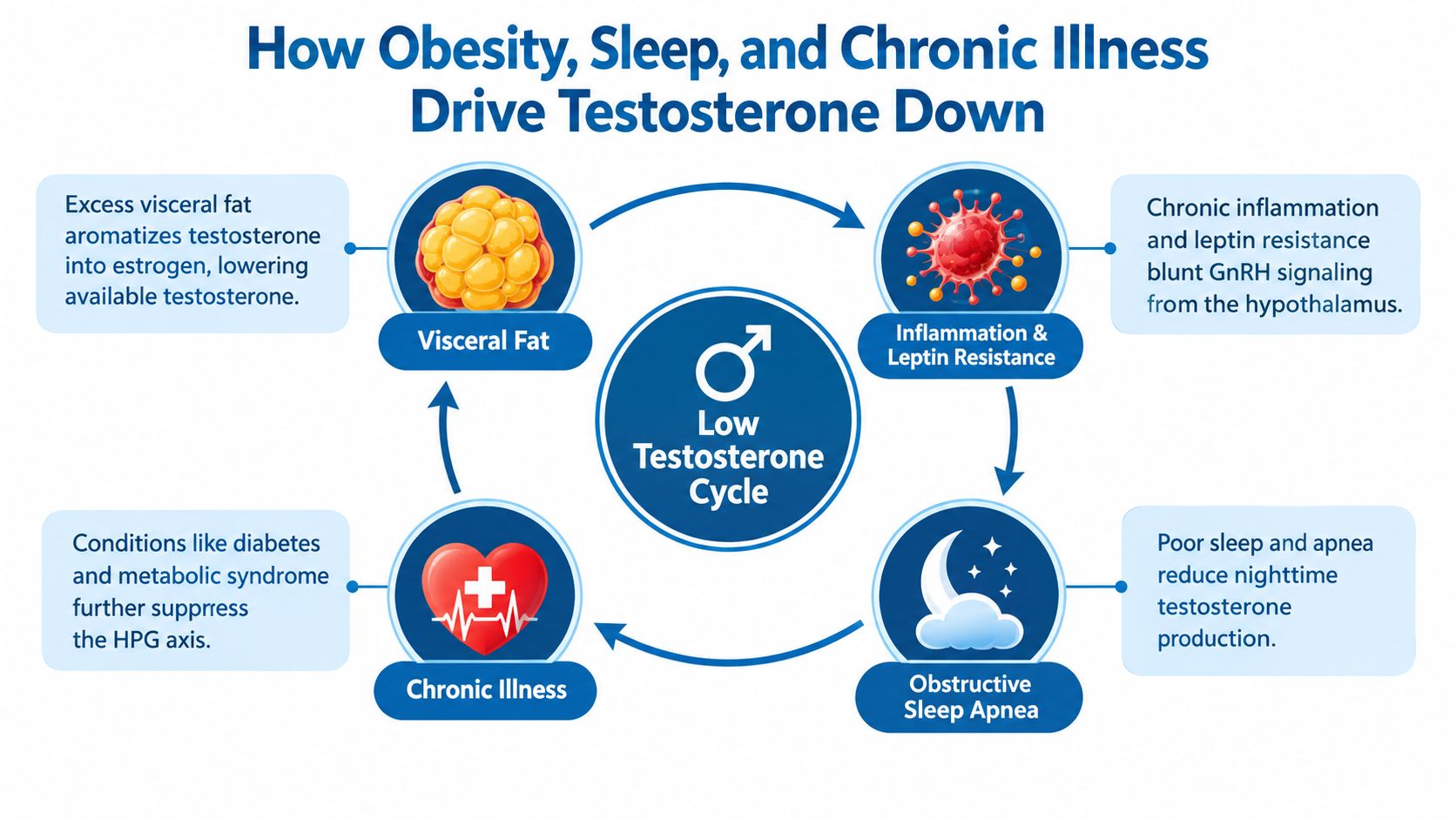
That is also why low testosterone and weight gain often travel together. The relationship is bidirectional , which means low testosterone can contribute to metabolic dysfunction, and metabolic dysfunction can also suppress testosterone. Treating only one side often leaves the other side in place.
Testosterone matters, but it works through specific pathways, and those pathways do not override every other driver of weight and metabolism.
Pause Medical's testosterone and men's health guide is useful if you want a broader look at how clinicians evaluate symptoms, labs, and treatment goals together.
How Testosterone Influences Four Key Metabolic Pathways

Testosterone affects metabolism through several connected routes, not one master switch. A clearer way to read the biology is to separate four pathways, basal metabolic rate, body composition, insulin sensitivity, and lipid handling . Each pathway can move differently depending on a person's age, activity level, body fat distribution, and baseline health.
Basal metabolic rate and lean mass
Testosterone helps preserve and build lean body mass , and lean tissue uses more energy at rest than fat tissue. That relationship is why the earlier 1992 study still matters. The rise in basal metabolic rate was mostly explained by the increase in lean tissue, which gives a practical clinical lesson. More muscle can raise resting energy expenditure, but the effect is usually indirect and modest rather than dramatic.
A useful comparison is a body with more idle engines running in the background. More lean mass raises the energy cost of maintaining the body, but it does not turn testosterone into a substitute for activity or nutrition. If someone remains sedentary and undernourished, testosterone cannot fully make up for those limits.
Body composition and fat storage
Testosterone has a tissue-specific effect on lipid partitioning and energy expenditure . A mechanistic review describes how it inhibits adipocyte lipoprotein lipase activity, which reduces triglyceride uptake into fat cells, and how it promotes β-adrenergic linked lipolysis while preferentially reducing visceral adiposity. In plain language, it influences whether calories are more likely to be stored in fat cells or used elsewhere.
Central fat is not only a cosmetic issue. It is metabolically active and linked to inflammation, insulin resistance, and less favorable risk markers. Testosterone's effect on fat distribution helps explain why body composition can improve even when scale weight changes little.
Insulin sensitivity and glucose handling
Testosterone is also described as an insulin-sensitizing metabolic hormone . In obese men with hypogonadism, the literature reports improved insulin sensitivity along with reduced fat mass, increased lean mass, lower free fatty acids, and reduced inflammatory signaling. At the cellular level, testosterone has been linked to higher expression and activity of insulin receptor β, insulin receptor substrate-1, AKT, GLUT4, and AMPK , which support glucose uptake and insulin signaling ( metabolic review).
That pathway often explains why patients report better day-to-day energy. The change is not just about hormones in isolation. It reflects how muscle and adipose tissue handle glucose and how efficiently the body shifts fuel after meals.
Lipids and fat fuel use
Testosterone also affects how the body handles fat. The same mechanistic literature describes less triglyceride uptake into fat cells and more lipolysis, which helps explain why some men notice shifts in waist size or triglycerides rather than dramatic total weight loss. These changes can matter clinically, but they do not mean testosterone can replace nutrition or exercise.
A question that often comes up is whether improving metabolic rate means chasing a number on a lab report. That is usually the wrong goal. Better clinical outcomes usually show up first in body composition and waistline markers , then in how a person feels and functions, which is why a medical overview like Pause Medical's guide to improving metabolic rate can be helpful when patients want to understand the bigger picture.
The Bidirectional Cycle Between Low Testosterone and Metabolic Disease

The hardest part for many patients is the chicken-or-egg question. Did low testosterone contribute to weight gain, or did weight gain push testosterone down? The honest answer is that either path can be true, and in many men both are happening at the same time.
How the cycle reinforces itself
Low testosterone is associated with central adiposity and insulin resistance , while obesity and metabolic syndrome can suppress the hypothalamic-pituitary-gonadal axis, which lowers testosterone further ( cycle review). The loop then feeds itself. Less testosterone can mean less lean mass and more fat storage. More visceral fat can then increase inflammation and insulin resistance, which pushes hormone function down again.
A simple way to understand this is to see testosterone and metabolism as two systems that keep talking to each other. When one side drifts off course, the other often follows. That is why a man with abdominal obesity, fatigue, and poor glucose control may need both hormone assessment and metabolic treatment, not just one or the other.
How common the overlap can be
Clinical overlap is common enough to matter. One review reported that nearly one quarter of men aged 20 to 59 had both low testosterone and metabolic syndrome at the same time ( cycle review). That finding does not tell us which condition came first. It does show that clinicians frequently see both problems together.
A low testosterone lab by itself is not the full story. Weight loss alone also does not guarantee that hormone function will normalize. Patients can get stuck when either side of the cycle is ignored, which is why a focused review like Pause Medical's page on weight gain and low testosterone can help connect the symptom pattern with the underlying metabolic picture.
Why the integrated approach works better
An integrated plan looks at hormones, nutrition, movement, sleep, and metabolic labs together. That matters because testosterone can be low as a cause, a consequence, or both. If insulin resistance is the stronger driver, treating insulin resistance first may matter more than focusing only on hormone numbers.
This is also where expectations need to stay realistic. Testosterone therapy may help some men feel better and preserve lean mass, but it does not replace the metabolic work that lowers visceral fat, improves glucose control, and supports long-term health.
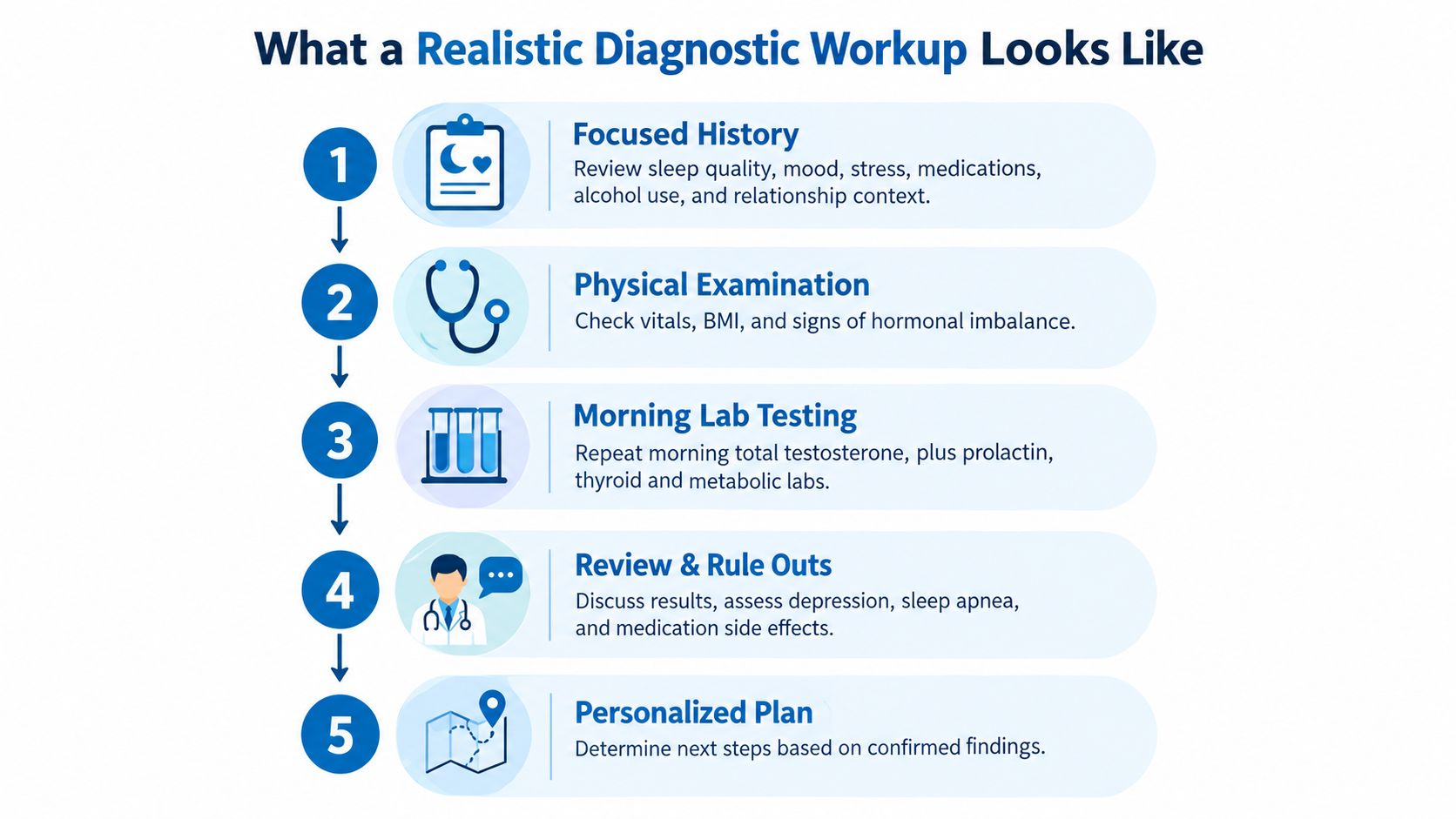
Clinical Signs and Testing for Hormone-Related Metabolic Issues
A lot of patients know something is off long before they see a lab report. Midsection weight gain, fatigue despite adequate sleep, losing muscle, and high fasting glucose or triglycerides can all point toward a hormone-metabolism connection. Those symptoms don't prove low testosterone, but they do justify a more complete look.
What to ask for in lab testing
The most useful evaluation usually includes total testosterone, free testosterone, SHBG, fasting insulin, HbA1c, and a lipid panel . Each one answers a different question. Total testosterone gives a broad picture, free testosterone helps show what's biologically available, SHBG affects how much hormone is bound, and the metabolic labs show whether glucose and lipids are already moving in the wrong direction.
| Key Lab Tests for Testosterone and Metabolic Evaluation | What It Measures | Why It Matters |
|---|---|---|
| Total testosterone | Overall circulating testosterone | Helps identify possible deficiency when paired with symptoms |
| Free testosterone | Unbound, biologically available testosterone | Clarifies hormone status when total levels are borderline |
| SHBG | Sex hormone binding globulin | Helps explain why total and free values may not match |
| Fasting insulin | Insulin level after fasting | Can reveal insulin resistance before glucose rises |
| HbA1c | Average blood sugar over time | Shows longer-term glucose control |
| Lipid panel | Triglycerides, cholesterol, HDL, and related markers | Helps assess cardiometabolic risk |
A single low testosterone reading isn't enough. Timing, repeat testing, symptoms, and the broader metabolic picture all matter. That's especially true when the complaint is fatigue or weight gain, because those symptoms can come from sleep issues, thyroid disease, medications, depression, insulin resistance, or low testosterone.
Ask for context, not just a number. The question isn't only “Is testosterone low?” It's also “What else is happening with glucose, lipids, body composition, and symptoms?”
If you're planning a proper workup, this guide to checking testosterone levels gives a straightforward way to think about the evaluation before you meet with a clinician.
What Testosterone Therapy Can and Cannot Do for Metabolic Health
Testosterone therapy can help some people, but it does not substitute for metabolic treatment. That distinction matters if the goal is better energy, weight control, or blood sugar, because those problems often have more than one cause.
What the newer evidence suggests
The most useful way to read the research is to separate symptom improvement from actual metabolic change. A 2024 randomized trial in older men with obesity and hypogonadism found that adding testosterone to intensive lifestyle intervention did not lead to significant extra improvements in cardiometabolic markers, and the authors concluded that weight loss and exercise remained the most important metabolic intervention ( 2024 randomized trial). That result sets a clear boundary. Testosterone may support a person who is deficient, but it does not replace the metabolic effect of changing diet, activity, and body weight.
A 2025 meta-analysis found statistically significant reductions in waist circumference and triglycerides with testosterone therapy in men with metabolic syndrome, and it also reported that parenteral preparations produced stronger standardized effect sizes than transdermal forms ( 2025 meta-analysis). That pattern suggests some measurable benefit, but the effect is modest and depends on the route used. In practical terms, TRT can nudge certain markers in the right direction, yet it does not do the work of nutrition, exercise, sleep, diabetes care, or weight-loss treatment.
That is the part many patients miss. Testosterone can improve how someone feels and may change body composition, but it is not a stand-alone fix for metabolic disease. For a closer look at how testosterone and weight goals are discussed in clinical care, Pause Medical's testosterone therapy and weight loss page lays out the role it can and cannot play. A different perspective, focused on symptom relief and quality of life, appears in testosterone for perimenopausal wellbeing, which helps show that testosterone is often used for different goals in different populations.

Where other treatments fit
Medically supervised weight loss and, for appropriate patients, GLP-1 medications often have a more direct effect on appetite, eating behavior, and body weight than testosterone does. If low testosterone is confirmed, TRT may belong in the plan, but it should sit alongside the treatments that address the underlying metabolic drivers.
The honest summary is straightforward. Testosterone therapy can improve body composition in some patients and may help selected metabolic markers. It cannot replace the core work of changing diet, increasing activity, treating insulin resistance, or managing diabetes when those problems are present.
Your Next Steps for Hormone and Metabolic Health in Mississippi
If you see yourself in these symptoms, don't settle for a single lab value and a quick conclusion. Ask for a full evaluation that includes hormones, glucose markers, and lipids, especially if abdominal weight gain, fatigue, or reduced muscle have been building over time. That's the kind of context that separates a true testosterone issue from a broader metabolic problem.
At Pause Medical, a board-certified provider can review your goals, discuss symptoms, and interpret labs in the context of your overall health. Patients in Oxford, Meridian, Tupelo, Flowood-Jackson, and Starkville can schedule care without insurance requirements, and the plan is built around ongoing follow-up rather than a one-time prescription.
If you're ready to stop guessing about testosterone and metabolism, book a consultation, bring your lab history if you have it, and ask how hormone treatment and medically supervised weight loss fit together for your situation.
If you're dealing with fatigue, weight gain, or questions about testosterone, Pause Medical offers board-certified hormone evaluation, medically supervised weight loss, and personalized follow-up for patients across Mississippi. Visit Pause Medical to schedule a consultation and get a clear plan for hormone and metabolic health.