Weight Loss Accountability: A Practical Guide That Works
You're doing the work, but the scale won't budge the way you expected. The pills are lined up, the walks are happening, and you still feel like one stressful week, one bad night of sleep, or one missed check-in can knock everything off track. That's where weight loss accountability stops being a buzzword and starts acting like a clinical tool, because the right structure can keep effort from leaking away when life gets messy.
Why Weight Loss Accountability Is a Clinical Tool, Not Just Motivation
A lot of people treat accountability as a matter of being tougher on themselves. In a clinic, the better question is whether the plan is built so progress can be seen, reviewed, and corrected before a stall turns into dropout. A 2024 review of accountability frameworks in medical weight-loss programs found that adding structured accountability components was associated with an additional −1.3 kg of weight loss, and the association was statistically significant ( p = 0.03 ) ( 2024 review).
That matters because accountability does more than offer encouragement. In supervised settings, regular weigh-ins, goal tracking, and follow-up contact improve adherence and outcomes, which is why clinics treat accountability as part of the treatment design rather than as a motivational extra. medical weight management behaves the same way in practice, since the structure has to fit the patient's life, not the other way around. A peer-reviewed review also showed that behavioral programs lose a substantial share of participants over time, which is a reminder that even motivated people can drift when the system around them is weak.
Practical rule: if a weight-loss plan can't tell you who checks your progress, when they check it, and what changes based on that check, it's not really an accountability system.

| What accountability actually changes in clinical programs | Measurable Effect |
|---|---|
| Structured accountability components | Additional −1.3 kg loss in supervised programs |
| Regular weigh-ins, goal tracking, follow-up contact | Better adherence and outcomes in supervised care |
| Retention-focused program design | Less drift, fewer silent dropouts |
The clinic-side lesson is straightforward. People often are not failing because they lack desire, they are failing because the structure around desire is weak. Cost, time, hormone shifts, and general fatigue can all interfere with adherence even when motivation is real, which is why stronger programs treat accountability as something you build around real life instead of something you ask people to generate on their own.
Setting Goals Your Accountability System Can Actually Verify
A goal like “lose weight” sounds clear until you try to verify it. Nobody can check whether you “ate better” in a meaningful way, and an accountability partner can't help much if the target is too vague to measure. The better goal is behavior-forward, because behaviors can be seen, logged, and adjusted.
Write the target so someone else could confirm it
A practical goal names the action, the frequency, and the setting. “Log meals on at least 20 days per month ” is a lot more workable than “be consistent,” and clinical education on self-monitoring links that level of logging, about three times per day on at least 20 days a month, with clinically meaningful weight loss over six months ( self-monitoring threshold). That kind of target gives your accountability partner something concrete to review.
A few examples work well in real life:
- Log breakfast, lunch, and dinner on workdays.
- Walk for 30 minutes twice before noon on weekdays.
- Take a progress photo every Sunday morning .
- Bring your medication list and questions to each follow-up visit .
- Write down late-night eating triggers on the same day they happen.
Good goals answer three questions: What exactly am I doing, how often am I doing it, and who can verify it?
Stress-test the goal before you commit
If a goal survives a busy Tuesday, it's probably usable. If it requires a perfect day, it will fall apart the first time you're tired, traveling, or dealing with a hormone-related sleep problem. That's especially important for adults in Mississippi who are balancing work, family, and medical care, because the goal has to fit the life you live.
Before you lock it in, use this quick check:
- Can it be measured? If not, rewrite it.
- Can it be repeated on your worst week? If not, scale it down.
- Can a provider, coach, or partner verify it without guessing? If not, it's too vague.
- Does it connect to a real health outcome, not just a feeling? If not, it may be busywork.
- Is it specific enough to review at the next visit? If not, it won't help you adapt.
If you want a clinic-friendly way to think about the body side of these goals, the overview of body composition analysis can help frame progress beyond scale weight alone.
Choosing the Right Accountability Partner for Your Situation
Not every accountability model fits every patient. A partner who's perfect for one person can be wrong for another, not because they're unhelpful, but because the life around the patient is different. Cost, scheduling friction, medical relevance, and emotional safety all matter.

Peer support works when consistency is the main issue
A peer or family partner is often the easiest place to start. It's low cost, usually low friction, and emotionally familiar. That makes it a good fit for someone whose barrier is follow-through, not medical complexity.
A thirty-eight-year-old woman who knows what to do but keeps losing momentum after a stressful week may do well with a structured support group or a spouse who checks in every evening. Qualitative obesity-treatment research found that adults often want stronger support groups because time and cost get in the way, even when motivation is already there ( qualitative obesity-treatment research). In that situation, the accountability partner isn't there to diagnose anything, just to keep the plan visible.
Medical team accountability fits when the plan changes with labs and symptoms
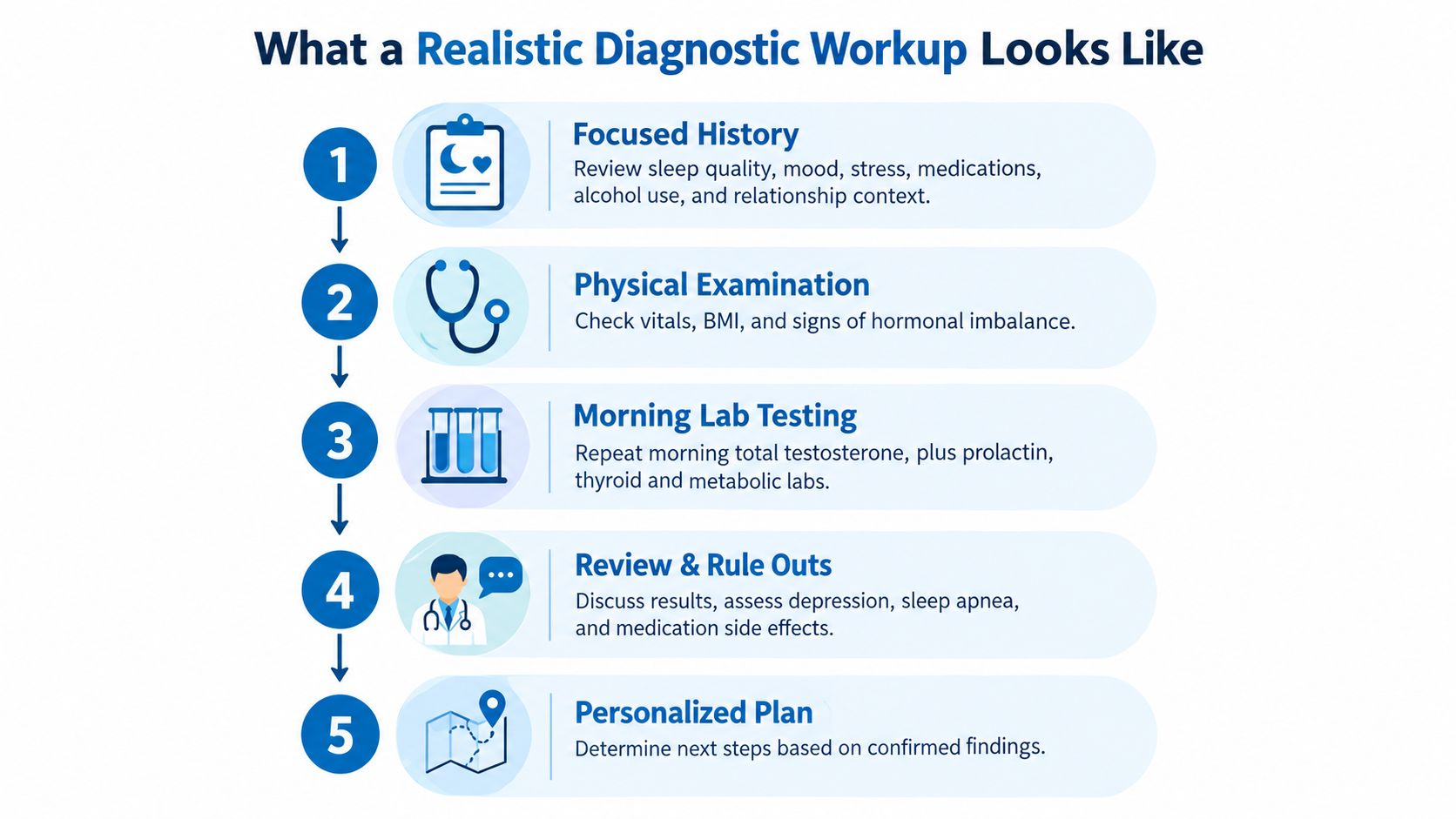
A paid coach can work well when behavior change is the main task and the patient wants more structure than a friend can give. A medical team is different. It fits people whose plan depends on symptoms, medications, or lab review, because the feedback loop has to be clinical, not just encouraging.
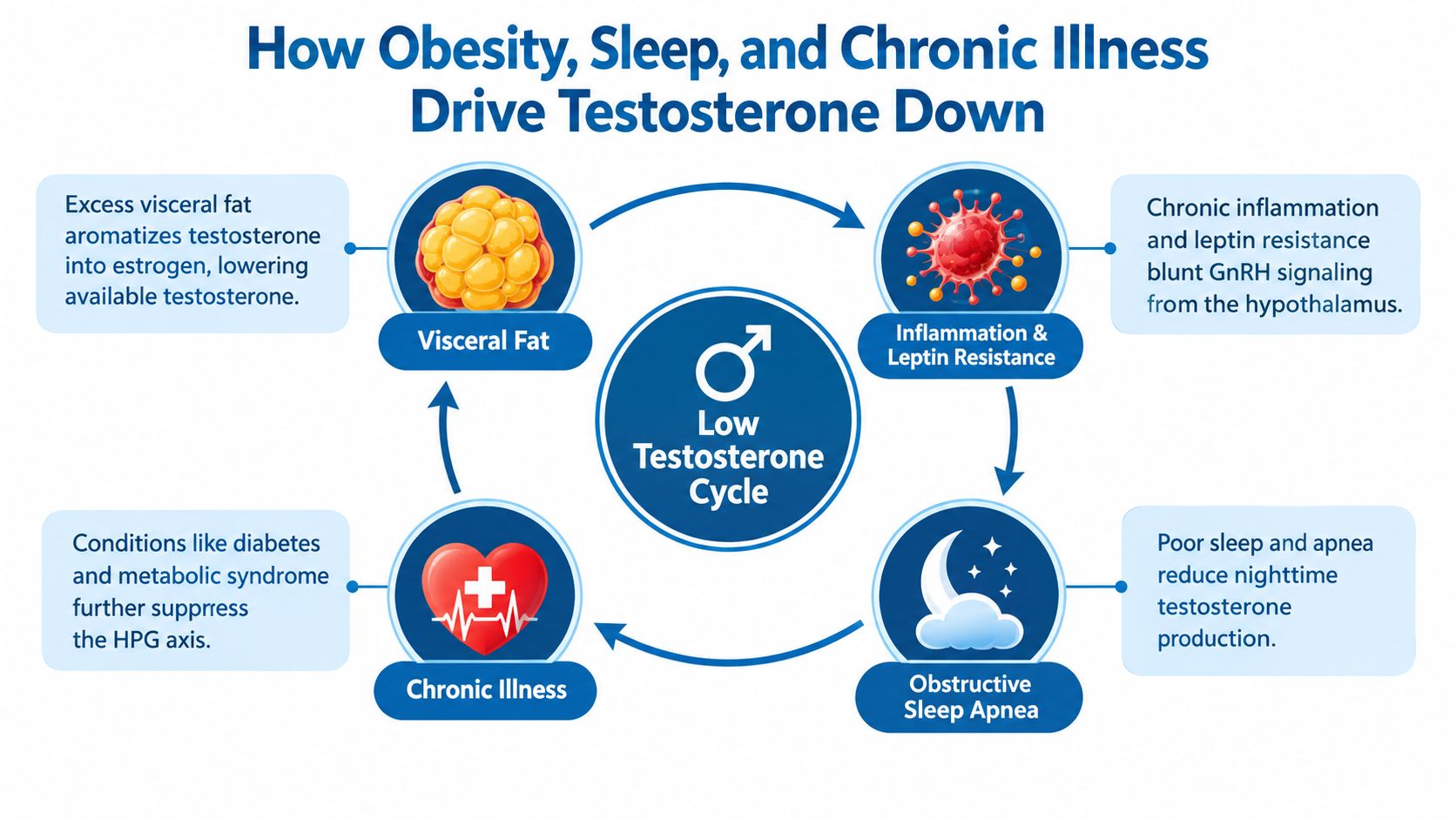
A fifty-two-year-old man on testosterone therapy is a good example. If labs, dose timing, and symptoms shape his weight plan, the medical team should drive the check-ins, because the relevant decisions aren't just about eating less or moving more. In Mississippi, that kind of follow-up is often easiest when the clinic handles the review, the adjustments, and the accountability in one place. Pause Medical's metabolic health coaching fits naturally into that model.
Use the simplest model that can still hold the plan together
The right question isn't which model sounds most supportive. It's which model can stay useful when the week gets hard. If the issue is missed meals, a peer partner may be enough. If the issue is medication management, menopause, low energy, or lab-guided treatment changes, the medical team needs to be in the loop.
Choose emotional closeness for encouragement. Choose clinical relevance for medication-driven plans.
Designing a Check-In Cadence That Survives Real Life
A lot of people picture accountability as a long weekly meeting. That sounds thorough, but it often fails because busy adults can't keep up with one more heavy appointment. A better cadence is shorter, more frequent, and tied to actions that matter.
A weekly weigh-in is often enough to keep the plan honest, especially when it sits inside a broader self-regulation routine. In a systematic review of self-weighing, self-weighing alone didn't clearly change weight loss, but adding self-weighing and self-regulation to multi-component behavioral programs produced an additional 1.7 kg of loss ( systematic review). The point isn't obsession. The point is feedback.
At the start of a medically supervised program, I like to think in short cycles, not endless commitments. A workable eight-week rhythm can look like this:
- Week 1: physician visit, baseline goals, daily self-log begins
- Week 2: coach or care-team check-in, review logging consistency
- Week 3: brief self-review, correct one friction point
- Week 4: physician touchpoint, weight trend and symptom review
- Week 5: coach check-in, reinforce one behavior only
- Week 6: self-log review, meal timing or sleep pattern check
- Week 7: prep questions, note any plateau or side effects
- Week 8: physician follow-up, adjust the plan if needed
A simple tracking sheet keeps the process from turning into clutter. One page is enough if it includes morning weight , meal log completion , sleep notes , medication taken , and one sentence about energy or cravings . If you want a visual habit tracker, track weight progress visually can be a useful layout reference without turning the process into a second job.
The value of the cadence is that it catches problems early. A patient might notice that she's “doing everything right,” but the check-in shows skipped meals, bad sleep, and more grazing at night. A medical team can then respond before the plan drifts.
For patients who prefer a broader periodic review, a quarterly stack check-in can serve as a useful reset point, especially when work stress or travel has made the routine less stable.
A simple record helps keep the rhythm tight. I've seen patients do well with a page that has four boxes, one for daily weight, one for meals, one for sleep, and one for notes to bring to the next visit. When they bring that page into the clinic, the conversation becomes specific instead of emotional.
Later in the program, a short video review can be a useful reminder of why the scale and the notes need to travel together.
Using Apps, Data, and Medical Support as One Feedback Loop
Apps help only when they change a decision. If a tool collects data but nobody looks at it, the patient just gets more numbers and less direction. The most useful system keeps the list short and ties each metric to a next step.
A good rule is to track two or three metrics that drive action. For many patients that means weekly average weight, meal consistency, and one symptom marker such as sleep quality or energy. In a medically supervised plan, hormone labs or medication review may belong in that same loop, because the provider needs objective signals before changing treatment.
That's where medical support adds accountability beyond self-tracking. For patients using GLP-1 weight loss medications or hormone replacement therapy , scheduled follow-up turns progress into something concrete. Doses, symptoms, and lab results stop being vague concerns and become review points the clinic can act on. Pause Medical's wellness lab panel is the kind of visit where that data can be tied back to the next clinical decision.
Keep the dashboard small
You don't need a dozen daily indicators. You need a few reliable ones that reveal whether the plan is working.
A simple filter helps:
- Log what you can act on at the next visit.
- Review what changed since the last check-in.
- Drop anything that creates stress without affecting the plan.
If your app tracks calories, steps, sleep, water, mood, and multiple body measurements, but none of those numbers changes what happens in clinic, the system is too noisy. If it helps you and your provider spot a medication issue, a hormone-related fatigue pattern, or a meal timing problem, it's useful.
A provider can also use app data to decide whether a patient needs more structure, a dose adjustment, or a different support model. That's the difference between data and feedback. Data sits there. Feedback changes care.
Troubleshooting Plateaus, Relapses, and Burnout Without Quitting
When progress stalls, individuals blame themselves too quickly. In reality, plateaus usually fall into one of three buckets, and each one needs a different response. If you can name the bucket, you can keep moving.
First check measurement noise
Sometimes the stall isn't a stall. It's a noisy stretch of normal fluctuation, inconsistent weigh-ins, or incomplete logging. In that case, the recovery move is to tighten the measurement rules before changing the whole plan.
Then look at adaptation or overload
If the trend is real, the next question is whether the body has adapted or whether life stress has overwhelmed the plan. A good accountability partner can help sort that out by asking what changed, not just what disappointed you. That's also where tracking coaching results that matter can be useful context, because the right metric is the one that shows whether the behavior or the outcome moved.
One patient came in after a six-week stall convinced she'd failed. The data showed the problem wasn't effort, it was sleep disruption from hot flashes, and a BHRT consultation changed the conversation from blame to treatment. Once the sleep issue was addressed, the plan had room to work again.
Reset instead of quitting
A short reset is often better than a dramatic restart. Keep the logging, reduce the friction, and schedule the next medical touchpoint before motivation fades. If the plan depends on hormones, medications, or symptoms, use the medical team to decide whether the fix is behavioral, clinical, or both.
The stall doesn't need to become the end of the program. It can be the point where accountability proves its value.
If you're ready for a weight-loss plan that uses real follow-up instead of vague encouragement, Pause Medical can help with medically supervised care, hormone evaluation, and structured accountability built around your symptoms and goals. Visit Pause Medical to schedule a consultation and talk through the support that fits your situation in Mississippi.