What Causes Low Testosterone in Men and What to Do
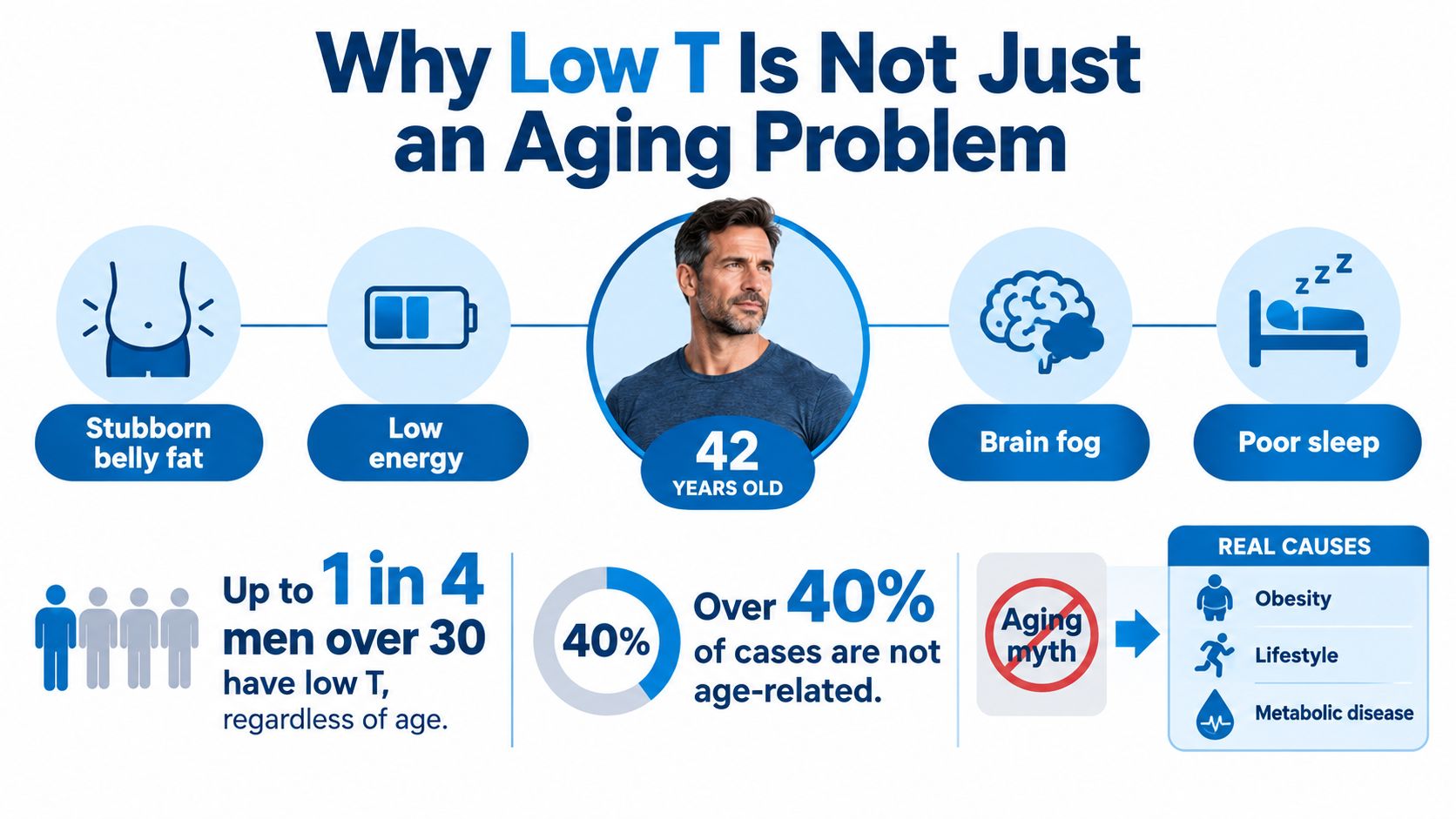
By the time many men look up what causes low testosterone in men, they're already dealing with a pattern they can't quite explain. Energy drops off in the afternoon. Gym progress stalls. Mood gets flatter. Sex drive may change, but sometimes it doesn't, which makes the whole picture more confusing.
A common example is the man in his late 40s who says, “I still work hard, but I don't feel like myself.” That feeling matters, but low testosterone isn't diagnosed from symptoms alone . It means consistently low morning testosterone on proper blood testing , not one rough week, one bad night's sleep, or one random lab draw.
Understanding Low Testosterone Today
A common clinic visit goes like this. A man notices lower energy, less interest in sex, slower recovery from workouts, or a general sense that something is off. He wonders if testosterone is the whole answer. Sometimes it is. Often, it is only part of the story.
Low testosterone is not one single problem. It is a lab finding with several possible causes, and the cause changes the treatment. That is the part many men never hear.
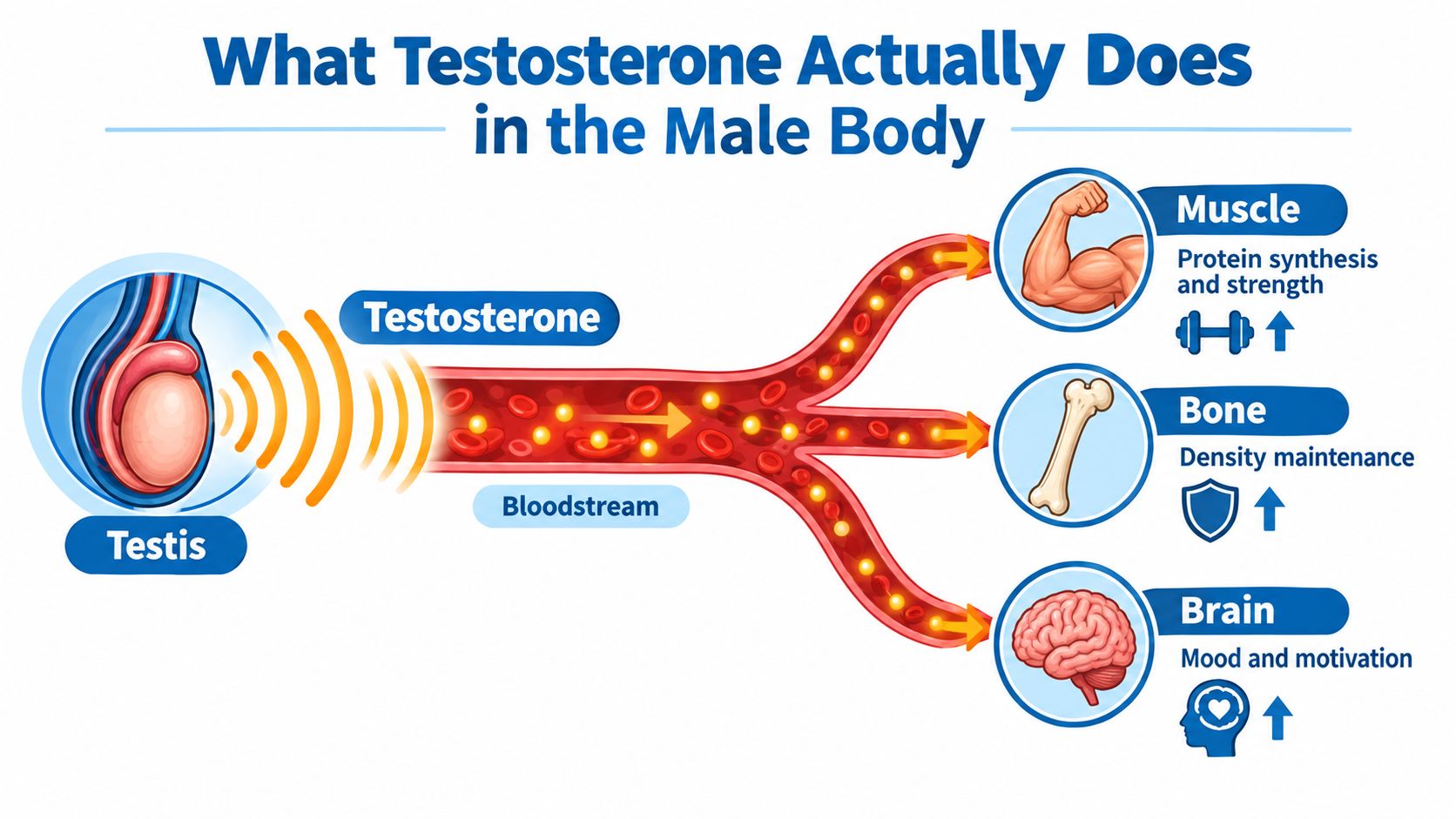
Testosterone affects more than sexual function. It also supports muscle mass, bone strength, mood, red blood cell production, and metabolic health. So when levels fall, the effects can show up in more than one body system, which is why the pattern may feel confusing at first.
Why one lab result rarely settles it
Doctors do not diagnose low testosterone from symptoms alone or from one random blood draw. The American Urological Association uses a total testosterone below 300 ng/dL as a reasonable cut-off , confirmed on at least two separate serum measurements drawn properly in the morning ( AUA guideline). That helps separate a true hormone problem from a temporary dip caused by poor sleep, acute illness, stress, or timing.
A single low result can be misleading. Testosterone follows a daily rhythm, and the number can shift with weight changes, medication use, untreated sleep apnea, heavy alcohol intake, and other health issues. One low value is a clue. It is not the full diagnosis.
Some men also explore lifestyle support while they sort out the medical side. If you're comparing non-prescription approaches, this collection of Testosterone Support NZ Supps products can help you see what ingredients are commonly marketed, though supplements should not replace a proper hormone evaluation.
Two broad patterns, two different first steps
A helpful way to sort low testosterone is to separate it into two categories.
- Functional low testosterone means the hormone system is being suppressed by something outside the testicles themselves, such as excess body fat, poor sleep, chronic stress, certain medications, or ongoing illness.
- Structural hypogonadism means there is a more direct problem in the testicles, pituitary gland, or hypothalamus, which are the organs that make and control testosterone.
This distinction matters because treatment should match the reason the number is low. Functional cases often improve when the pressure on the system is removed. Structural cases are more likely to need a focused endocrine evaluation and sometimes testosterone replacement.
A simple analogy helps. Testosterone production works like a thermostat connected to a furnace. In some men, the furnace is intact but the whole house is running under bad conditions, such as poor sleep, weight gain, or medication effects. In others, the wiring or the furnace itself has a mechanical problem. The first group needs the conditions corrected. The second group needs the hardware checked.
That is why the first question is not whether testosterone therapy is needed. The first question is what pushed testosterone down in the first place.
For men who want a broader overview of symptoms, testing, and treatment options before an appointment, this guide to testosterone and men's health offers useful background in plain language.
Why Testosterone Falls With Age
A common office visit goes like this. A man in his 50s says his energy is lower, workouts do less, and sex drive is not what it used to be. He assumes age is the whole explanation. Age does matter, but it usually acts more like background wear on the system than a single on-off switch.
Testosterone production works like a three-part relay between the brain, the pituitary, and the testes. Over time, that relay often becomes less crisp. The testes may respond less strongly to the same signal. The normal daily rhythm can also flatten, so the strong morning peak seen in younger men becomes less pronounced. Some older men also have shifts in binding proteins, which can change how much testosterone is biologically available even if the total level does not look dramatically different.
That gradual change helps explain why testosterone tends to drift down with age, as noted by UNC Men's Health on low testosterone. The pattern is real. The experience is highly individual.
Two men of the same age can look very different in clinic. One has no symptoms and normal function. Another has reduced libido, lower strength, anemia, or slower recovery after exercise. Age can set the stage, but symptoms and lab interpretation still matter.
This is also where many men get misled. Age-related decline is often modest by itself. The steeper drops are frequently driven by factors that pile onto aging, especially weight gain, sleep disruption, insulin resistance, chronic illness, and medication effects. In other words, age may lower the ceiling, while functional stressors push the number down faster.
That distinction matters because the first response should match the cause. A man with age-related change plus poor sleep and central weight gain needs those pressure points addressed first, not an automatic prescription. Men sorting out when hormone changes become medically relevant can read more about the best age to start HRT, but age alone is not a diagnosis.
Body composition often becomes part of this story. More abdominal fat can shift hormone signaling in the wrong direction and make age-related decline feel more noticeable. Men who want background on that relationship can review this visceral adiposity peptide study as general reading on abdominal fat and metabolic health.
So yes, testosterone often falls with age. The practical question is why this particular man's level is low, and whether the main driver is expected aging, a reversible functional burden, or a structural problem in the hormone pathway.
Primary and Secondary Hypogonadism Explained
A useful way to sort out low testosterone is to ask one simple question first: where is the slowdown happening?
The testosterone system works like a relay. The hypothalamus signals the pituitary. The pituitary releases LH and FSH. Those hormones tell the testes to make testosterone and support sperm production. If a doctor can tell which part of that relay is failing, the next step becomes much clearer.
Primary hypogonadism
In primary hypogonadism , the problem starts in the testes. The brain is sending the message, but the testes cannot respond normally. On labs, that usually looks like low testosterone with high LH and FSH . A clinical review on male hypogonadism describes this as the typical pattern of primary testicular failure ( PMC review on male hypogonadism).
Common causes include:
- Genetic conditions such as Klinefelter syndrome
- Undescended testes earlier in life
- Testicular injury from trauma or torsion
- Orchitis , including infection-related damage
- Chemotherapy or radiation
- Loss of testicular tissue or direct damage after surgery or other injury
This group tends to be more structural than reversible. If the testes have been permanently damaged, treatment often centers on confirming the diagnosis, discussing fertility if relevant, and deciding whether testosterone therapy fits the patient's goals and risks.
Secondary hypogonadism
In secondary hypogonadism , the testes may still be able to work, but the signal from the hypothalamus or pituitary is too weak. The usual lab clue is low testosterone with low or inappropriately normal LH and FSH .
That pattern pushes the evaluation upstream. Doctors then look for causes such as pituitary tumors, high prolactin, prior head trauma, infiltrative disorders such as hemochromatosis, or congenital problems that affect hormone signaling. The World Anti-Doping Agency physician guideline also lists recognized causes across both primary and secondary categories, including genetic abnormalities, trauma, orchitis, pituitary or hypothalamic tumors, radiation, chemotherapy, and infiltrative disorders ( WADA physician guideline PDF).
Some secondary causes are very treatable. A prolactin problem, a pituitary mass, or another endocrine disorder calls for finding and treating that condition first, not reflexively starting testosterone.
The third bucket doctors use every day
There is also a third category that matters a lot in real practice. Functional or mixed low testosterone .
This is the man whose hormone pathway is structurally intact, but suppressed. His LH and FSH may look low-normal rather than dramatic. His testes may not be the main problem at all. Instead, the system is getting dialed down by obesity, poor sleep, chronic illness, stress physiology, or medication effects.
A normal-looking LH does not prove the system is healthy. In clinic, it often means the signal is present but muted.
That distinction helps prevent a common mistake. Structural hypogonadism usually needs a workup aimed at the testes, pituitary, or both. Functional low testosterone usually improves when the upstream pressure is addressed first. The right first-line fix depends on which pattern a man has.
How Obesity, Sleep, and Chronic Illness Drive Testosterone Down
A common clinic scenario goes like this. A man in his 40s or 50s comes in for low energy, lower sex drive, and less exercise recovery than he used to have. Over the same few years, his waist size has increased, snoring has become routine, and his blood sugar or blood pressure has started to drift upward. In many cases, testosterone is dropping as part of that bigger health pattern.
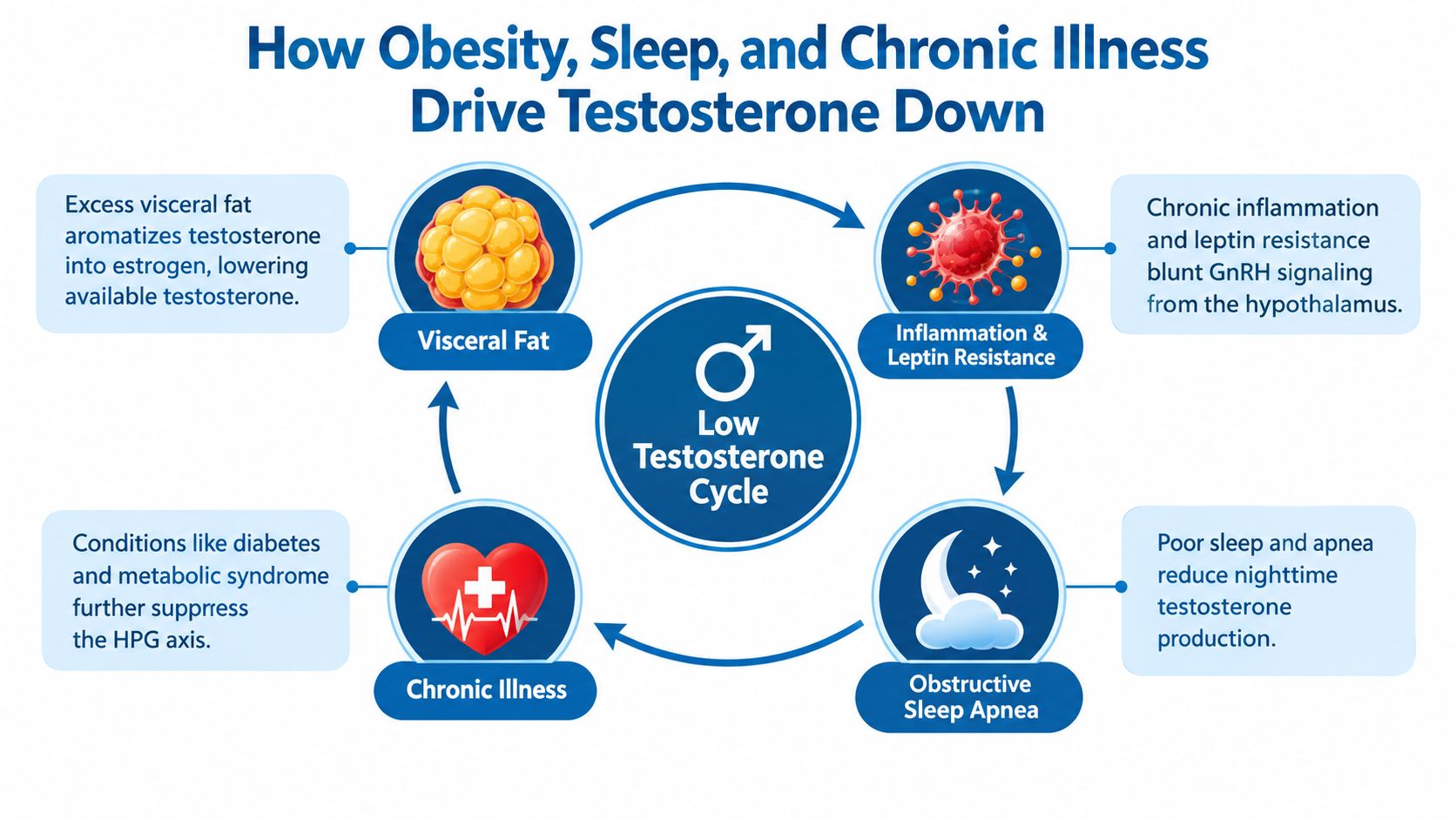
The first question is not only, "Is testosterone low?" The better question is, "Why is the hormone system being dialed down?"
The obesity and sleep loop
The hormone pathway that controls testosterone works like a thermostat with signals traveling from the brain to the testes. Excess body fat, poor sleep, and ongoing metabolic stress can turn that thermostat down. The testes may be capable of making testosterone, but they are not getting the same quality of signal.
The Endocrine Society lists obesity, sleep disorders, type 2 diabetes, chronic liver or kidney disease, HIV/AIDS, pituitary tumors, high prolactin, medications such as opiates and corticosteroids, and testicular injury, radiation, chemotherapy, or infection among recognized causes of low testosterone ( Endocrine Society patient resource).
Obesity often sits near the center of this pattern. Fat tissue changes hormone handling, worsens insulin resistance, and raises the odds of sleep apnea. Sleep apnea then fragments sleep and adds another layer of stress to the system. Cleveland Clinic notes that the relationship is more complicated than saying sleep apnea alone causes low testosterone, and discusses evidence that body weight may explain much of the association in some men ( Cleveland Clinic low testosterone overview).
An endocrine reference in the NCBI Bookshelf describes a mechanism that fits daily practice well. Obesity and obstructive sleep apnea can reduce luteinizing hormone pulse amplitude and lower serum LH and testosterone ( NCBI Bookshelf on male hypogonadism).
That helps explain a confusing lab pattern. A man can have symptoms and a low testosterone level with LH that looks low-normal rather than dramatically abnormal. The signaling system is present, but muted.
For readers working on the sleep side of the equation, this resource on understanding recovery sleep offers practical lifestyle context alongside medical care.
Functional low testosterone is common
Recent review literature uses a helpful term for this situation: functional low testosterone. The idea is simple. The hormone axis is suppressed by conditions such as obesity, type 2 diabetes, chronic illness, poor sleep, or chronic stress, often without permanent structural damage to the testes. A recent review also describes overweight and obesity as major drivers of testosterone decline ( functional hypogonadism review).
This is why cause matters so much.
If the main problem is functional suppression, the first-line fix is usually aimed upstream. Weight loss, better sleep, treatment of sleep apnea, tighter diabetes control, and management of the underlying illness may allow testosterone to recover or improve meaningfully. If the problem is structural hypogonadism, that recovery is much less likely without specific treatment.
Here's a short explainer that shows this loop visually in another format:
Men who notice weight gain and low energy together often need both hormone evaluation and metabolic care. This article on weight gain and low testosterone is a useful next read if that sounds familiar.
Medications and Lifestyle Habits That Suppress Testosterone
A common office story goes like this. A man comes in worried that his testosterone has "suddenly crashed." His testes are normal on exam. His prior imaging is normal. Then the medication and habit history fills in the picture. Chronic opioid use after a back injury. Poor sleep. More alcohol than he realizes. A pre-workout stack or past steroid cycle he almost forgot to mention.
That pattern matters because many of these cases are functional suppression, not permanent testicular failure. The hormone system works like a thermostat with signals traveling from the brain to the testes. Certain drugs and daily habits turn that signal down, even when the underlying organs are still intact.
Common medication and habit patterns
As noted earlier, opioids and corticosteroids are recognized causes of low testosterone. In everyday practice, clinicians also ask about anabolic steroids, testosterone bought outside medical care, and "muscle-building" supplements because outside hormones can switch off the body's own production for months.
| Common Medications and Lifestyle Factors That Lower Testosterone | How They Suppress Testosterone |
|---|---|
| Opioid pain medications | Reduce brain signaling to the pituitary, which lowers LH support to the testes |
| Anabolic steroids or non-prescribed androgens | Shut down the body's own HPT axis through feedback suppression |
| Corticosteroids | Can lower central hormone signaling, especially with ongoing use |
| Heavy alcohol use | Can impair testicular function and worsen sleep and metabolic strain |
| Chronic psychological stress | Often raises cortisol, disrupts sleep, and weakens normal hormone rhythms |
| Sedentary habits | Commonly travel with weight gain, insulin resistance, and lower physiologic drive |
| Extreme dieting or overtraining | Signal energy shortage and downshift reproductive hormone output |
The fix should match the cause.
If a man has structural hypogonadism, removing a medication or improving sleep usually will not fully correct the problem. If his testosterone is being held down by opioids, heavy drinking, chronic sleep loss, or repeated steroid exposure, the first step is often to address that suppressor before jumping straight to testosterone therapy.
The pattern matters more than the label
Two men may both report "pain medicine use" and have very different hormone pictures. One took a short course after dental surgery and has no endocrine issue. Another has been on daily opioids for months, with low libido, fatigue, and a low or inappropriately normal LH pattern that points to suppression from the brain side of the axis.
The same logic applies to exercise and dieting. Regular training usually supports hormone health. Overtraining while under-eating can do the opposite. The body reads that combination as a shortage and temporarily cuts back on reproductive signaling.
Clinical takeaway: Bring every prescription, over-the-counter product, workout enhancer, testosterone booster, and supplement to your visit. The missing clue is often in the bottle, not the blood test.
If stress, poor sleep, and a "wired but tired" pattern are part of the story, this guide on how to reduce cortisol levels can help you understand the lifestyle side of suppression.
How Doctors Actually Diagnose Low Testosterone
A common visit goes like this. A man feels more tired than usual, his sex drive is down, workouts are flat, and he wonders if the answer is simple: check testosterone, find one low number, start treatment.
Good diagnosis is slower and more precise than that.
Step one is matching symptoms to a pattern
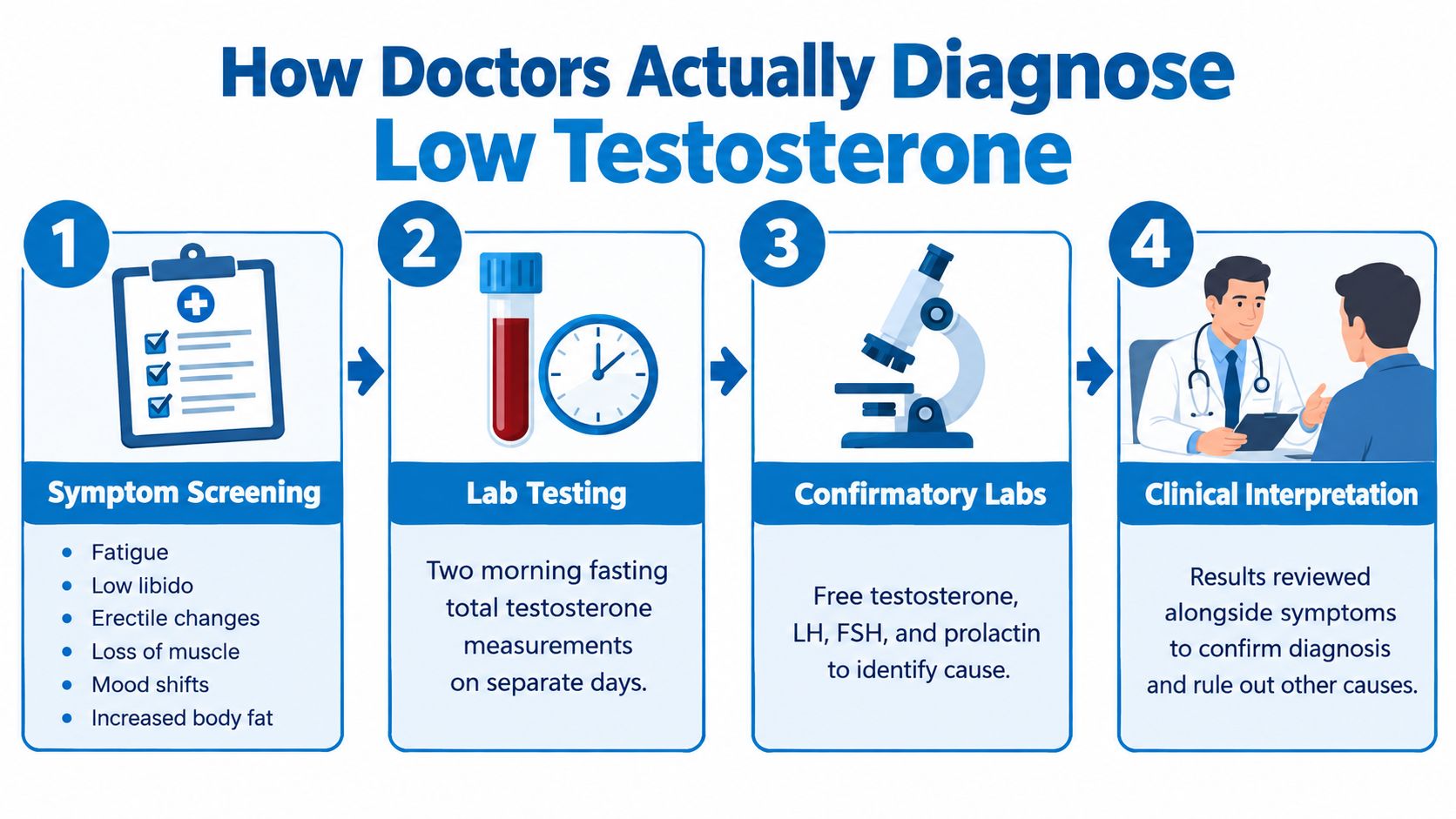
Doctors start with the story, because low testosterone is a pattern, not a single symptom. Fatigue alone can come from poor sleep, depression, shift work, anemia, medication effects, or chronic illness. Low libido, fewer morning erections, reduced strength, loss of muscle, rising body fat, and mood changes together make the hormone question more convincing.
The first job is to sort functional suppression from structural disease.
That distinction matters. If the body is temporarily turning hormone output down because of obesity, sleep apnea, heavy stress, illness, or a medication, the first fix is often to remove the brake. If the testes, pituitary, or hypothalamus are not working normally, the evaluation goes in a different direction.
Step two is getting the blood test the right way
Testosterone testing works a lot like checking blood pressure. One off reading can mislead you. Doctors usually want morning testing, and they usually repeat a low result on a separate day before calling it true hypogonadism.
That repeat step protects patients from being labeled on the basis of a bad night of sleep, a recent illness, timing differences, or short-term stress. It also helps explain why an online test result by itself rarely gives the full answer.
For patients who want the practical basics before an appointment, this guide on how to get testosterone level checked explains how testing is usually done.
Step three is locating where the problem starts
Once low testosterone is confirmed, the next question is where the signal is breaking down. The brain sends instructions through LH and FSH. The testes respond by making testosterone. That system works like a thermostat and furnace. If the room is cold, the thermostat should call for more heat. If testosterone is low, LH and FSH should usually rise.
Doctors use that logic when they order follow-up labs:
- LH and FSH help show whether the pattern points to a testicular problem or a brain-level suppression pattern
- Prolactin can identify a pituitary clue that changes the workup
- Thyroid and metabolic testing can uncover conditions that mimic low testosterone or contribute to it
- Additional hormone testing may help when total testosterone is borderline, symptoms are strong, or the picture is mixed
Step four is connecting the labs back to the cause
The diagnosis becomes useful.
A man with low testosterone and high LH may have primary hypogonadism, where the testes are not responding well. A man with low testosterone and low or inappropriately normal LH may have secondary hypogonadism or functional suppression from obesity, sleep loss, opioids, or other medical stressors. Same low testosterone. Different reason. Different first move.
The goal is not to chase a number. The goal is to identify whether the body needs replacement, recovery time, or removal of something that is suppressing the system.
Treatment Paths Matched to the Cause
A common scenario goes like this. A man sees a low testosterone result, feels worn down, and assumes the answer is testosterone right away. Sometimes that is the right treatment. Often, it is not the first one.
The better question is simpler. Is the body unable to make enough testosterone, or is the system being held down by something reversible?
That distinction shapes treatment.
Functional low testosterone often improves when the pressure on the system is removed
Functional low testosterone means the hormone system is intact but working under strain. Excess body fat, poor sleep, untreated sleep apnea, heavy alcohol use, chronic illness, and some medications can all lower output. In that setting, testosterone acts a bit like a dimmer switch turned down by the body, not a broken bulb.
The first-line plan usually aims at the driver:
- Weight loss and metabolic treatment when abdominal weight gain and insulin resistance are part of the picture
- Sleep apnea treatment , including CPAP if testing shows it is needed
- Resistance exercise, recovery, and sleep repair
- Medication review , especially for opioids, glucocorticoids, and prior androgen or steroid exposure
- Alcohol reduction and stress management
- Treatment of chronic medical problems that keep the body under inflammatory or metabolic stress
This approach matters because many men with low testosterone have this functional pattern rather than permanent failure of the testes or pituitary. If the cause is weight, sleep disruption, or a suppressive drug, the first fix is to correct that cause and then reassess symptoms and repeat labs.
Structural hypogonadism is different
Structural hypogonadism means part of the hormone pathway is not working normally in a more lasting way. That may involve the testes, the pituitary, or the hypothalamus. In those cases, testosterone replacement may be appropriate after the diagnosis is clear and fertility goals are reviewed first.
Treatment can include transdermal gels , injectable testosterone cypionate or enanthate , and in selected men, HCG-based approaches when preserving fertility is part of the plan.
A practical way to think about it is this. Functional suppression calls for removing the weight on the system. Structural hypogonadism often calls for replacement because the system cannot recover enough on its own.
One practical option for men seeking in-person evaluation in Mississippi is a clinic that offers physician review, blood work, and testosterone therapy when medically indicated. Pause Medical provides testosterone evaluation and treatment planning as part of broader hormone replacement therapy and medication management services.
| Treatment Choice by Cause of Low Testosterone | First-Line Treatment | When HRT Is Considered |
|---|---|---|
| Functional suppression | Weight loss, sleep treatment, medication review, exercise, alcohol reduction, chronic disease care | Considered if symptoms continue and repeat testing still shows deficiency after root causes are addressed |
| Primary hypogonadism | Identify the testicular cause and review long-term hormone needs | Often used when low testosterone is confirmed and the testes cannot maintain normal production |
| Secondary hypogonadism | Evaluate pituitary or hypothalamic causes, including prolactin testing and imaging when appropriate | Considered after the cause is evaluated, especially if the pattern is persistent and clinically significant |
| Androgen-exposure suppression | Stop non-prescribed androgen use and manage recovery carefully | Usually not the first move, especially when fertility or recovery of the hormone axis is a goal |
Men who may want future fertility should discuss that before starting testosterone. External testosterone can suppress sperm production.
Frequently Asked Questions About Low Testosterone in Men
A common clinic scenario is a man in his 30s, 40s, or 50s who feels more tired, has gained abdominal weight, and wonders if aging is the whole story. Sometimes age plays a role. Just as often, the bigger issue is functional suppression from sleep loss, excess body fat, stress, medication effects, or chronic illness.
Does low testosterone always mean I'm getting older
Age can contribute, but it is only one piece of the picture. A low testosterone result can also reflect a system under strain, much like a thermostat that turns down when the house is not running well. That is why doctors look beyond age and ask about weight change, sleep quality, alcohol use, medications, and medical conditions before assuming this is simple age-related decline.
Can I have low testosterone even if my libido seems okay
Yes. Sexual symptoms are common, but they are not the only pattern.
Some men notice reduced exercise recovery, lower energy, less muscle retention, increased body fat, poorer concentration, or a flatter mood first. Others have normal libido and still turn out to have low levels on repeat testing. Symptoms also overlap with sleep apnea, depression, thyroid disease, and overwork, which is one reason a careful evaluation matters.
Why do doctors repeat the blood test
Testosterone changes from day to day and even hour to hour. One low result can be a false alarm, especially if the blood draw happened later in the day, during an illness, or after a poor night of sleep.
Doctors usually confirm the pattern with repeat morning testing and interpret the number alongside symptoms, medications, and related labs. The goal is to separate a temporary dip from a persistent problem that needs treatment.
If I used anabolic steroids, should I just start testosterone
Prior anabolic steroid use changes the usual approach. External androgens can shut down the brain-to-testes signaling pathway, so the question is not only whether testosterone is low, but whether the axis may recover if the drugs are stopped.
That matters even more if fertility is a goal. In this setting, the first step is often a careful endocrine or urology evaluation rather than jumping straight to lifelong replacement.
What should I bring to a first visit
Bring a full medication and supplement list, including over-the-counter products, gym supplements, and any past testosterone or steroid use. Also bring prior lab results if you have them.
A short symptom timeline helps. So do notes about sleep, snoring, weight change, alcohol intake, chronic illnesses, and whether future fertility matters to you. Those details often point to the cause faster than the testosterone number alone.
Is testosterone therapy the answer for everyone with symptoms
Treatment works best when it matches the cause. Functional low testosterone often improves when the driver is addressed first, such as untreated sleep apnea, obesity, heavy alcohol use, opioid medication, or poorly controlled diabetes. Structural hypogonadism is different. If the testes or pituitary gland cannot support normal production, testosterone therapy may be appropriate after the diagnosis is confirmed.
This cause-first approach helps avoid treating a reversible problem as if it were permanent.
If you're in Mississippi and dealing with fatigue, low libido, stubborn weight gain, or other symptoms that could reflect low testosterone, Pause Medical offers in-person evaluation, lab review, hormone replacement therapy, medical weight loss, and medication management under board-certified medical oversight. To take the next step with a personalized plan that looks for root causes before jumping straight to treatment, visit Pause Medical.