Hormone Replacement Therapy During Perimenopause Guide
You wake after another restless night, heart racing from a hot flash, then spend the morning wondering why your period arrived early, your patience disappeared, and your usual energy feels out of reach. You may still be menstruating regularly enough to think perimenopause “can't” be the explanation. In reality, hormone fluctuations can begin well before the final menstrual period, and the symptoms can affect sleep, mood, concentration, sexual health, and daily confidence.
Hormone replacement therapy during perimenopause can help some people manage disruptive symptoms, but it isn't a single prescription or a decision that should be based on one hormone test. The most useful conversation considers your symptoms, menstrual pattern, age, medical history, uterus status, cardiovascular and clotting risks, and the safest route of delivery. This guide explains how clinicians think through those decisions, including the timing of treatment, estrogen and progestogen choices, monitoring, and alternatives when systemic therapy isn't appropriate.
Understanding the Physiology of Perimenopause
Perimenopause often feels less like a smooth transition and more like a thermostat that has lost its calibration. One day, your internal temperature control works normally. The next, a small change triggers a sudden wave of heat, sweating, or chills. Your ovaries are producing changing amounts of estrogen and progesterone, and those levels can swing unpredictably before eventually settling at a lower baseline.
That instability helps explain why symptoms can appear even while periods continue. Estrogen fluctuations can influence the brain pathways involved in temperature regulation, sleep, and mood. Progesterone changes may also affect sleep quality and emotional steadiness. A cycle that looks “almost normal” on a calendar doesn't prove that hormone activity is stable.

Why symptoms can arrive before periods stop
Consider someone whose cycles still occur most months but now vary in timing and flow. She may wake with night sweats, struggle to fall back asleep, and notice irritability that feels unlike her usual self. Those experiences are compatible with the menopausal transition, even if she hasn't gone twelve consecutive months without bleeding.
Common symptoms include hot flashes, night sweats, sleep disruption, mood changes, brain fog, vaginal discomfort, changes in sexual function, and cycle irregularity . Weight changes and fatigue can have several causes, so a thoughtful evaluation should also consider thyroid disease, anemia, medication effects, depression, anxiety, sleep disorders, and other health conditions.
A helpful reframe: You don't have to wait until your periods stop to seek care for symptoms that are affecting your life.
Perimenopause isn't an illness, but its symptoms deserve medical attention when they interfere with work, relationships, exercise, or sleep. The complete guide to what happens during perimenopause can help you organize what you're experiencing before a consultation. Your symptoms are real, and a clinician can help determine whether hormone therapy, a nonhormonal treatment, lifestyle measures, or another medical evaluation makes sense.
Recognizing Symptoms and Evaluating Candidacy
Many people assume they need a blood test to prove perimenopause before discussing treatment. For healthy people aged 45 and older, major guidance generally supports a clinical diagnosis based on symptoms, menstrual changes, and medical history , rather than routine FSH testing. Hormone levels fluctuate, so one blood draw may capture only a brief moment and may not reflect the pattern causing your symptoms. The NICE guidance on menopause diagnosis and management explains when laboratory testing may be useful and when it shouldn't be used routinely.
What to bring to the evaluation
Start with observations rather than trying to interpret lab values yourself. Write down changes in cycle timing, bleeding pattern, hot flashes, night sweats, sleep, mood, vaginal or sexual symptoms, medications, and any family or personal history of blood clots, breast cancer, cardiovascular disease, liver disease, or unexplained bleeding.
A consultation is especially appropriate when symptoms are persistent, worsening, or affecting quality of life. Testing may deserve more consideration in younger patients, people with atypical symptoms, or situations where another diagnosis needs to be excluded. The purpose of testing is to answer a specific clinical question, not to chase a fluctuating number.
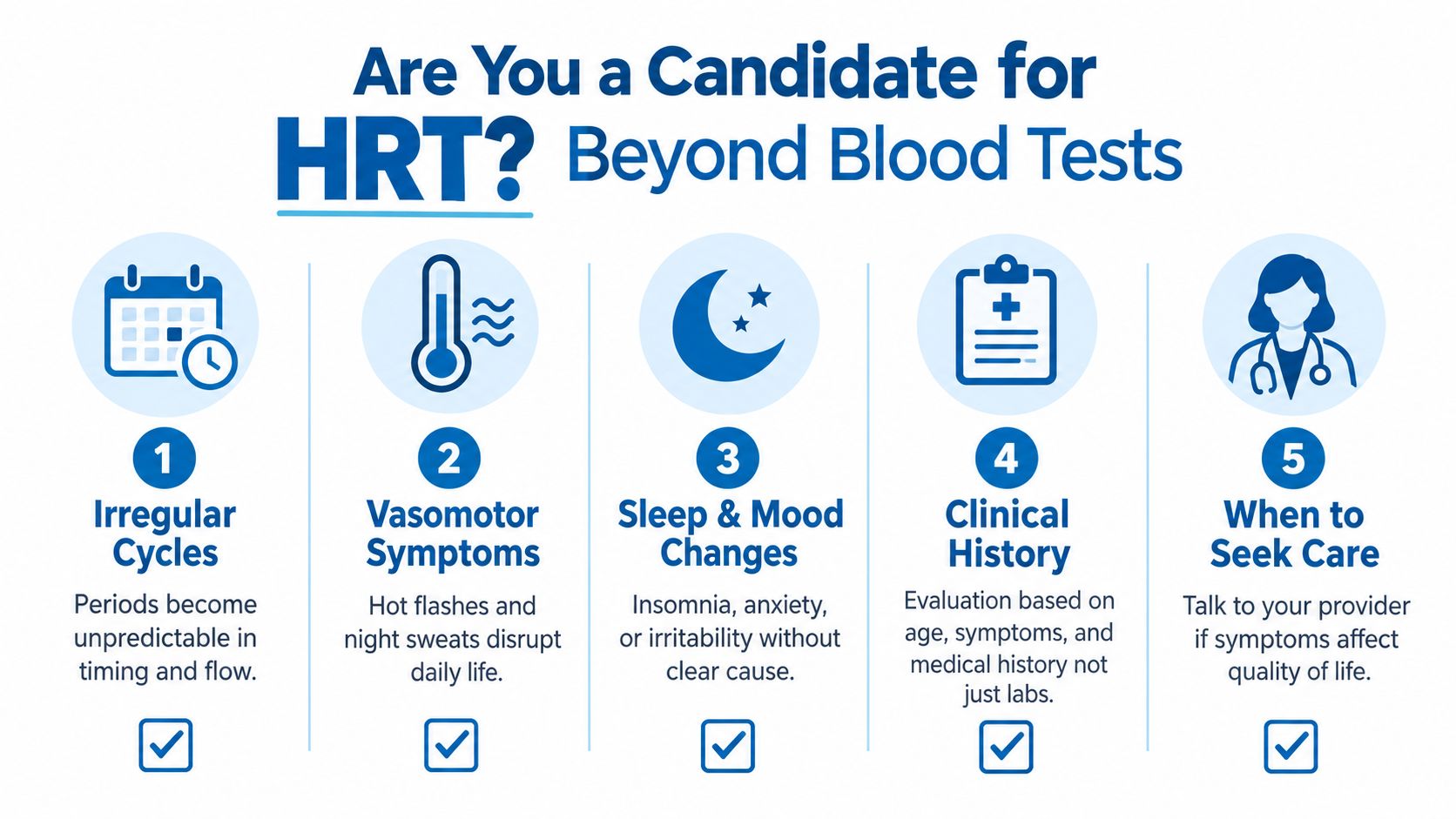
Use these questions to prepare:
- Cycles: Have your periods become unpredictable in timing, duration, or flow?
- Temperature symptoms: Do hot flashes or night sweats interrupt sleep or daily activities?
- Sleep and mood: Are insomnia, anxiety, irritability, or low mood new or difficult to explain?
- Genitourinary symptoms: Are vaginal dryness, painful sex, urinary discomfort, or reduced libido affecting you?
- Safety context: Do you have a history that could change the risks or choice of treatment?
A short educational video can provide additional background before you speak with a clinician.
The perimenopause symptom relief clinical action plan can also help you frame the discussion around the symptoms that matter most to you, rather than around a test result alone.
Types of Hormone Therapy and Delivery Methods
Choosing hormone replacement therapy during perimenopause involves several connected decisions. Estrogen treats many vasomotor symptoms , while people with an intact uterus generally need endometrial protection from a progestogen when using systemic estrogen. Estrogen-only therapy is usually considered only when the uterus isn't present or when a clinician has another specific reason for that regimen.
The route matters as well. Oral estrogen passes through the liver first, while patches, gels, and other transdermal forms avoid that first-pass pathway. Transdermal estrogen is often preferred for people with higher clotting risk, but the decision still depends on the full medical history. A treatment plan should also distinguish systemic therapy, which reaches the whole body, from low-dose local vaginal treatment aimed mainly at genitourinary symptoms.
Comparing options side by side
| Therapy Type | Delivery Route | Best Suited For |
|---|---|---|
| Estrogen-only therapy | Oral, patch, gel, or other prescribed form | People without a uterus, when systemic estrogen is clinically appropriate |
| Estrogen plus progestogen | Oral or transdermal estrogen with prescribed progestogen | People with an intact uterus who need systemic symptom treatment and endometrial protection |
| Micronized progesterone therapy | Oral, commonly taken at bedtime when prescribed | Selected patients with sleep-related symptoms or as part of endometrial protection |
| Local vaginal estrogen | Vaginal cream, tablet, or ring | Predominantly vaginal or urinary symptoms, based on clinician assessment |
| Transdermal estrogen | Patch or gel | People for whom avoiding first-pass liver metabolism is clinically desirable |
The timing of the regimen is important during perimenopause. Sequential or cyclical therapy is generally used initially , because continuous combined HRT isn't usually suitable during perimenopause or within twelve months of the last menstrual period. Continuous combined treatment can increase irregular bleeding during this stage, and a switch may be considered after someone becomes postmenopausal.
Micronized progesterone has been studied for night sweats and sleep symptoms in perimenopause. A randomized Canadian trial used 300 mg at bedtime daily and found reductions in perceived night sweats and improved sleep quality among early and late perimenopausal participants, as reported in the peer-reviewed trial report. That dose should not be copied as a personal prescription. For endometrial protection, Australian clinical guidance describes 200 mg for twelve days per cycle or 100 mg daily continuously , while noting that evidence doesn't justify routine progesterone escalation whenever estrogen doses rise.
People interested in options beyond conventional prescriptions may find a balanced overview of menopause alternatives from Lifeworks Integrative Health useful for preparing questions. Your clinician should still verify the safety, quality, dosing, and interactions of any product you're considering. The estrogen, progesterone, and testosterone combination therapy guide offers another framework for discussing how different hormones may or may not fit your symptoms and goals.
Weighing the Benefits and Risks of Early Intervention
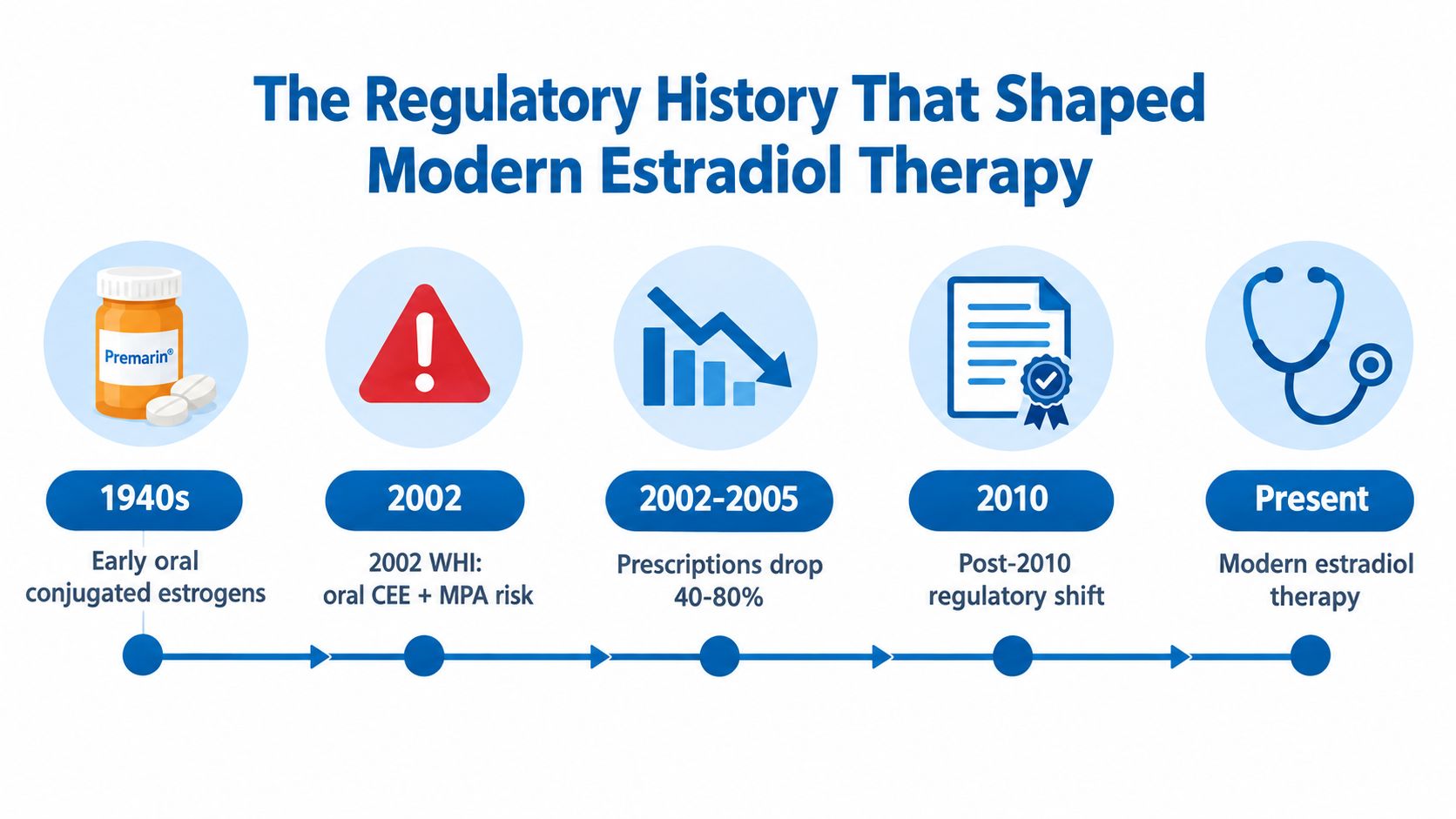
The fear surrounding HRT often traces back to the 2002 Women's Health Initiative announcement , which changed prescribing patterns and public perception. In a multi-racial and ethnic cohort of 3,018 women , menopausal hormone therapy initiation fell from 8.6% before the WHI report to 2.8% afterward , while continuation fell from 84.0% to 62.0% , with both changes reported as statistically significant in the study published at PMC. The decline in initiation continued to 6.3% in the first year after WHI and 1.9% after two years , and continuation also varied by menopausal stage, including a 9.0% decline in late perimenopause .
Those findings mattered, but later interpretation became more nuanced. The WHI combined estrogen-progestin arm included 16,608 women , while the estrogen-only arm included 10,739 women . Average treatment duration was 5.2 years in the combined arm and 7 years in the estrogen-only arm. By 2014, the studies recorded 7,489 deaths , with overall mortality of 27.1% after hormone therapy and 27.6% after placebo , as summarized in the WHI follow-up publication.
Why timing and route change the conversation
The modern timing principle is straightforward. MHT generally offers its most favorable benefit-risk profile when started during perimenopause or within the first 10 years after menopause , preferably before age 60 , according to current menopause guidance at PMC. This doesn't mean early treatment is automatically safe for everyone, and it doesn't mean later treatment is always forbidden. It means age, time since menopause, route, dose, and personal risk factors must be considered together.
The same WHI follow-up found that absolute adverse events with combined therapy rose with age, from 12 excess events per 10,000 women per year among ages 50 to 59 to 38 excess events per 10,000 women per year among ages 70 to 79 . For people beyond age 60 or more than 10 years from the final menstrual period, background risks of venous thromboembolism and stroke become less favorable, particularly with oral estrogen. Available guidance does not support transdermal estrogen as carrying the same increased risk profile described for oral estrogen in this context, as discussed in this endocrine review.
Breast and endometrial safety also depend on the regimen. The National Cancer Institute explains that estrogen plus progestin is associated with increased breast cancer risk during treatment and for at least a decade after stopping, while estrogen alone can raise endometrial cancer risk in someone with an intact uterus. The NCI hormone therapy fact sheet is a useful resource for reviewing those distinctions.
A 2025 Cochrane review found that estrogen-only therapy probably makes little to no difference to coronary events overall, but probably increases stroke risk, with RR 1.33 and a 95% confidence interval of 1.06 to 1.67 , and increases gallbladder disease requiring surgery. Combined therapy may increase thromboembolism and probably increases breast cancer risk. The review also noted that much of the evidence came from oral hormone studies and may not fully represent current practice, as detailed in the Cochrane review.
For a practical discussion of fatigue, sleep, and supportive care, resources on treatments for menopause tiredness from Venus Health Co. may help you identify questions to raise with your provider. A personalized risk review remains essential. The HRT risks and benefits guide can help you prepare for that conversation without treating population-level evidence as a personal verdict.
What to Expect When Starting Treatment
Starting HRT is a process of adjustment, not an overnight reset. A clinician usually begins with a treatment choice that matches your symptoms and safety profile, then reviews your response and side effects. The goal is to use the lowest effective dose for your treatment goals , while making changes based on clinical response rather than trying to force laboratory values into a target range.
During the first phase, some people notice breast tenderness, bloating, mood changes, or spotting. These effects can be manageable, but they shouldn't be dismissed if they're severe, persistent, or concerning. Unscheduled bleeding deserves a clear plan because the evaluation depends on the regimen, timing, amount of bleeding, and personal risk factors.
A practical adjustment roadmap
- Early adjustment: Take the medication exactly as prescribed and record hot flashes, night sweats, sleep, bleeding, breast symptoms, mood, and any new concerns.
- Symptom review: Bring the log to follow-up. Sleep and temperature symptoms may improve before mood, vaginal symptoms, or broader energy concerns.
- Regimen refinement: Your clinician may adjust the estrogen route, dose, progestogen schedule, or treatment focus. More progesterone isn't automatically safer or more effective, so changes should follow clinical reasoning.
- Safety monitoring: Seek prompt medical guidance for heavy or unusual bleeding, chest pain, sudden shortness of breath, one-sided leg swelling, severe headache, or neurologic symptoms.
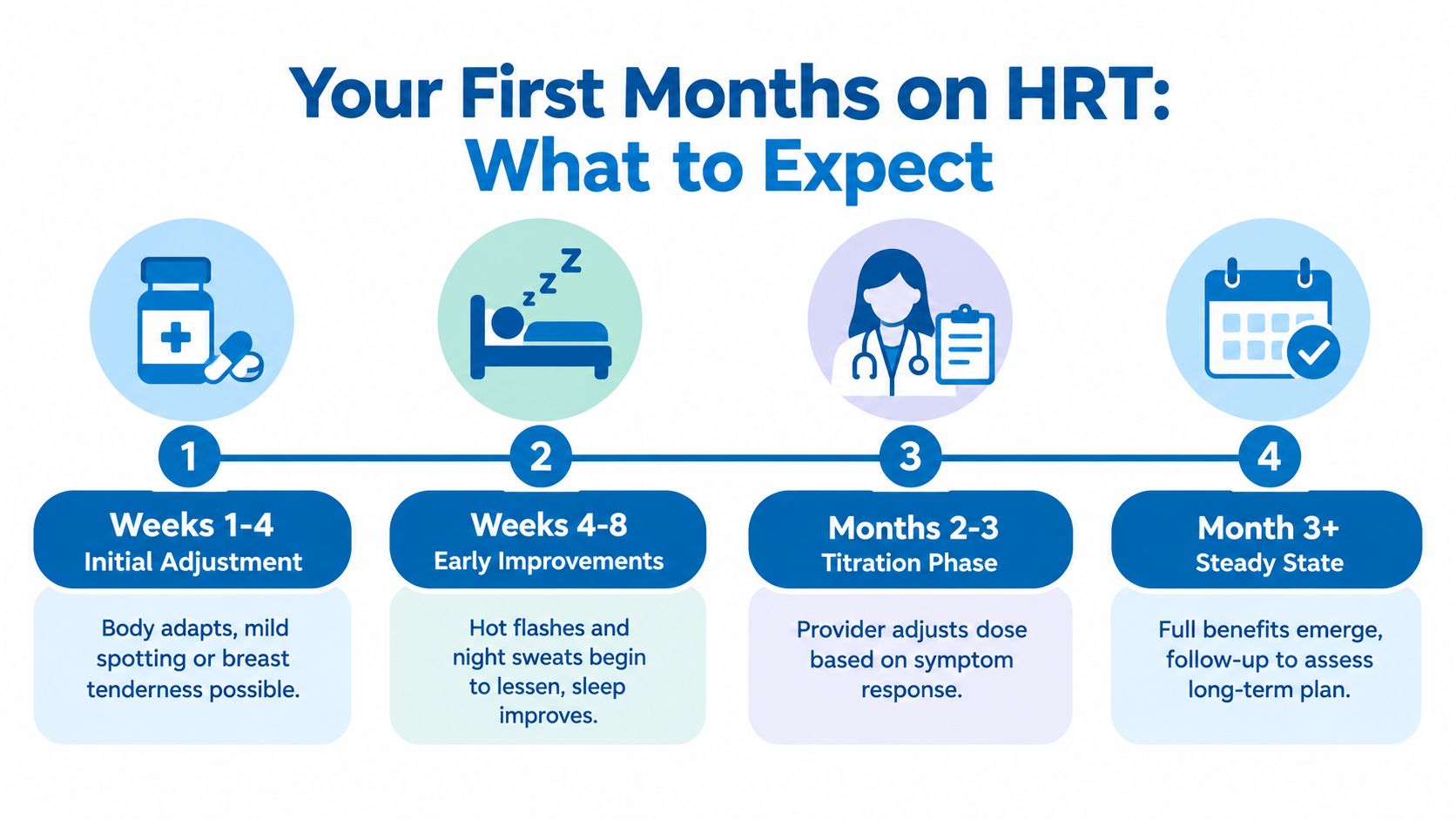
Treatment may need refinement because perimenopause itself continues to change. A regimen that feels appropriate while cycles remain active may require reconsideration as bleeding patterns evolve. The 2026 HRT relief timeline can help you understand why follow-up matters and why the first adjustment period shouldn't be judged by a single difficult day.
Symptoms may return after stopping HRT, and current guidance allows for restarting treatment when clinically appropriate. The decision to continue, taper, change, or stop should be individualized rather than driven by an arbitrary deadline.
Discussing Your Options with a Medical Provider
A productive HRT consultation is a two-way clinical conversation. You don't need to arrive with a preferred brand, a lab panel, or a diagnosis you've made online. Bring a clear description of what has changed and what you want to improve.
Questions that make the visit more useful
Ask which symptoms appear most consistent with perimenopause and which might warrant evaluation for another condition. Discuss whether your uterus is intact, whether you need endometrial protection, and whether a sequential or continuous regimen fits your current menstrual stage.
Ask about route as well as medication. A patch or gel may be preferable to oral estrogen for some risk profiles, but it isn't automatically the right choice for every patient. Ask what symptoms the treatment is expected to address, how bleeding will be monitored, and what should prompt an earlier call.
Your broader health belongs in the same conversation. Sleep, blood pressure, glucose regulation, thyroid function, body composition, stress, nutrition, physical activity, libido, and mental health can influence how you feel during the transition. Hormone therapy may address specific symptoms, but it shouldn't replace care for diabetes, thyroid disorders, metabolic syndrome, depression, or sleep apnea when those conditions are present.
Bring your priorities: Tell your provider whether your main goal is sleeping through the night, reducing hot flashes, improving vaginal comfort, stabilizing mood, or maintaining daily function. Treatment decisions become clearer when the goal is specific.
Personalized care also means discussing nonhormonal options. These may include behavioral strategies, targeted medications, pelvic health treatment, sleep support, and management of other medical contributors. Bioidentical hormones, including products marketed as compounded or “natural,” still require careful review of formulation, quality, dosing, and evidence. Board-certified medical oversight helps keep the plan grounded in safety rather than marketing language.
Reclaiming Your Vitality with Personalized Care
You don't have to earn medical support by suffering through years of disrupted sleep, unpredictable bleeding, hot flashes, low mood, or reduced intimacy. Perimenopause is a biological transition, but the degree to which it disrupts your life is not something you have to accept without discussion. A symptom-led evaluation can clarify whether hormone replacement therapy, a nonhormonal option, local treatment, lifestyle care, or evaluation for another condition is most appropriate.
The safest plan is rarely a universal protocol. It reflects when treatment begins, how estrogen is delivered, whether progestogen is needed, what your medical history shows, and which symptoms matter most to you . It also includes follow-up, especially when bleeding patterns change or treatment doesn't provide the expected benefit.
Pause Medical provides hormone replacement therapy, medically supervised weight loss, and disease management services for adults seeking individualized wellness care. For someone in Mississippi, an in-person consultation can create space to review symptoms, goals, medications, metabolic health, and risk factors together. Care may include discussion of bioidentical hormone options, symptom-specific treatment, medication management, and supportive strategies that address more than one contributing factor.
You can prepare by writing down your cycle history, the symptoms that interfere most with your day, medications and supplements, personal and family medical history, and the questions you want answered. That information gives your provider a practical starting point and helps turn uncertainty into a plan.
Visit Pause Medical to schedule a consultation for hormone replacement therapy during perimenopause in Mississippi. Their medical team can review your symptoms, treatment goals, risk factors, and delivery options, then help you decide whether personalized HRT or another approach fits your needs.