What Happens During Perimenopause a Complete Guide
You're in your mid-40s, your period showed up early, then skipped a month, and now you're waking at 3 a.m. with your mind racing. You might also notice that your body feels unfamiliar, your patience is thinner, and your sleep no longer feels restorative. That cluster of changes is often the first clue that perimenopause has started, and it's not a single moment so much as a multi-year hormonal transition .
What Perimenopause Means
A lot of people use the word “menopause” for every change in midlife, but the body does not move in one clean step. Perimenopause is the stretch of time before menopause, and it begins when menstrual cycles start to change. Menopause itself is defined as 12 months after the final menstrual period ( World Health Organization), which makes perimenopause the transition leading up to that point, not the endpoint itself.

A timeline, not a switch
One of the easiest ways to understand what happens during perimenopause is to picture a dimmer switch, not a light switch. The ovaries do not shut off on one day, and hormones do not fall in a neat line. They rise and fall from cycle to cycle, which is why one month can feel close to normal and the next can feel completely different.
That variability is why the timing looks different from one person to another. In major markets such as the U.S. and Australia, perimenopause most often begins in the mid-40s and typically lasts about 4 to 6 years , though some women experience it for up to 10 years or even 14 years ( World Health Organization). The same source notes that roughly 1.3 million U.S. women enter menopause each year , or about 6,000 per day ( World Health Organization), which shows how common this transition is.
Why the label matters
Perimenopause is not the same thing as premature ovarian insufficiency, which is a different clinical situation altogether. In perimenopause, the ovaries are still active but unpredictable. That is why the first clue is usually a change in bleeding pattern, not a lab result.
For many patients, the most helpful sentence is simple. You are not “done” yet, and you are not imagining things. You are likely in a recognized health phase that deserves attention, especially if symptoms are starting to affect work, sleep, or relationships. If you want a side-by-side explanation of symptoms during the transition, this perimenopause versus menopause guide is a useful companion.
Practical rule: If your cycle has started acting differently and you are also noticing new symptoms, perimenopause belongs on the short list, even if your labs look ordinary.
The Hormone Fluctuations Driving the Transition
A person can feel steady one month, then suddenly notice shorter cycles, heavier bleeding, poorer sleep, or a mood shift that seems to come out of nowhere. That pattern is the point where perimenopause becomes a hormone feedback problem, because the ovaries and brain are no longer talking to each other in a consistent way.
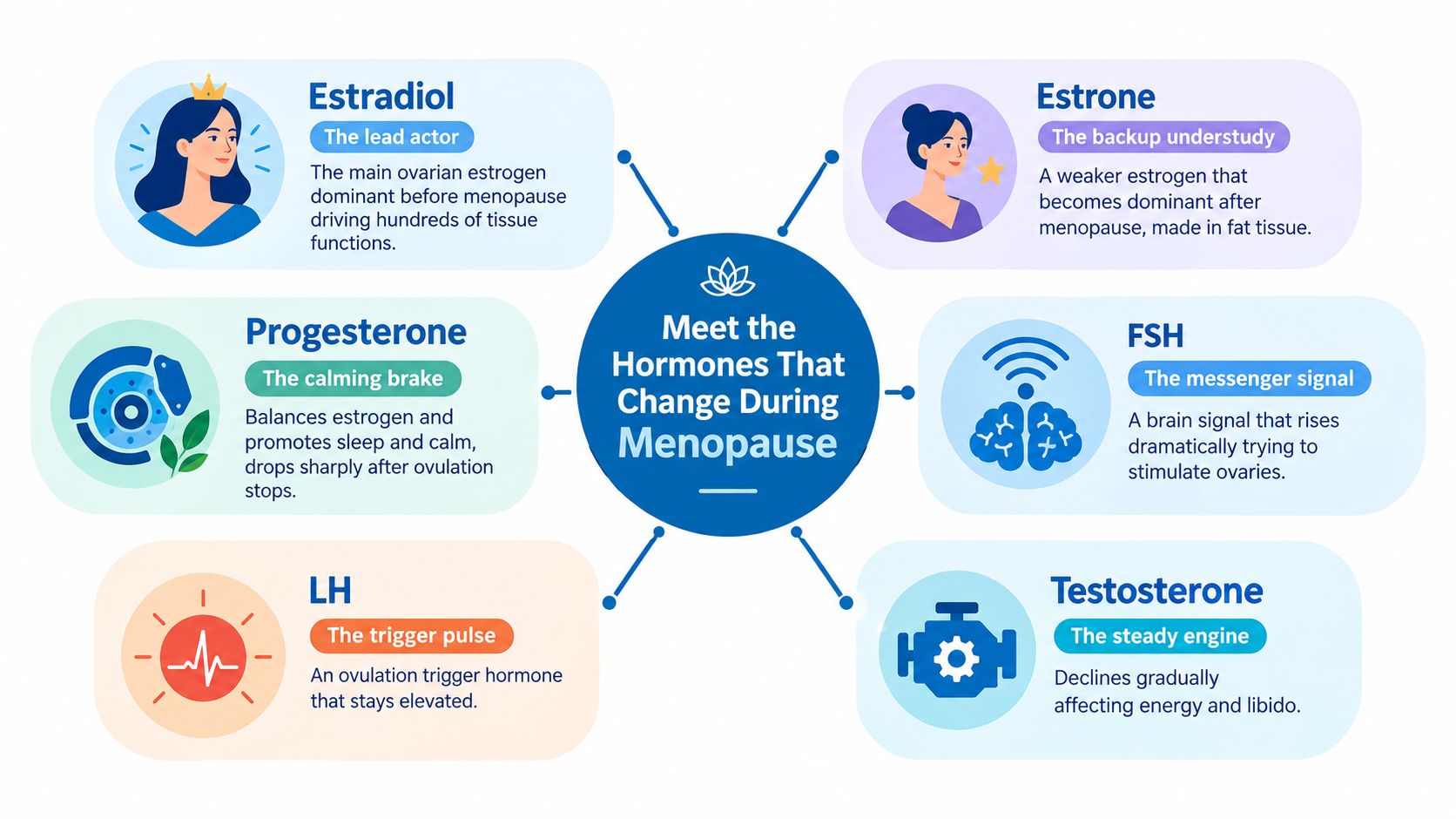
As follicle supply shrinks, inhibin B drops, the pituitary loses some restraint, and FSH begins to rise in an uneven way while estradiol moves up and down from cycle to cycle ( PMC). The result is not a straight-line decline. It is a back-and-forth signal pattern that can make symptoms feel confusing and inconsistent.

The feedback loop behaves like a thermostat
A thermostat is a better model than a fuel gauge. A fuel gauge keeps dropping in one direction. A thermostat responds to the room, corrects, overshoots, and then corrects again. Perimenopause works more like that thermostat loop, with the pituitary and ovaries reacting to one another cycle by cycle.
Expert reviews note that roughly one-third of perimenopausal cycles show a new luteal-phase estradiol surge, and that shift is linked to cycle shortening, heavy or prolonged bleeding, breast tenderness, migraine, fluid retention, and mood symptoms ( PMC). That is why a patient may say her cycle is “weird” long before any lab value looks obviously abnormal. The hormones are not falling in a straight line, they are oscillating in ways that affect the uterus, breasts, brain, and blood vessels at the same time.
Why progesterone changes too
Progesterone changes because ovulation becomes less reliable. Some cycles still release an egg, some do not, and some produce a weaker luteal phase than before. When ovulation is inconsistent, progesterone loses its usual balancing role, and that can show up as spotting, longer or heavier bleeding, or premenstrual symptoms that suddenly feel stronger or less predictable.
Bloodwork can help add context, but it rarely gives the full story on its own. If you want a clearer sense of how to read hormone labs without overinterpreting one result, the hormone blood test guide walks through what those numbers can and cannot show.
Plain-English version: perimenopause is a messy exchange of signals between the brain and ovaries, so symptoms can change before labs look dramatic.
Tissue changes happen too
The hormone shifts are not limited to the ovaries. Declining estrogen is associated with a systemic pro-inflammatory state and altered CNS immune signaling, and central thermoregulatory networks become more sensitive to sex-steroid withdrawal, which helps explain hot flashes and night sweats ( PMC). Reduced estrogen also lowers vaginal epithelial thickness, glycogen content, and lactobacilli support, which is why dryness and fragility often appear alongside vasomotor symptoms and sleep disruption ( PMC).
Those tissue effects help explain why perimenopause can feel so broad. A person may notice changes in bleeding, sleep, mood, memory, or vaginal comfort and assume each symptom is separate. In reality, they can all reflect the same shifting hormone environment acting on different parts of the body. The sleep changes in perimenopause are one clear example of how these signals reach beyond the reproductive system.
Everyday Symptoms Beyond Hot Flashes
A person may expect perimenopause to mean a few hot flashes and little else, then find that sleep, memory, mood, and bleeding are the parts that disrupt daily life. That mismatch is common. A global study found that fatigue , exhaustion , irritability , low mood , sleep problems , digestive issues , and anxiety were among the most common perimenopause symptoms ( Mayo Clinic News Network). Cognitive symptoms also show up often, with midlife women reporting forgetfulness during the transition.

The symptom map patients live with
Brain fog can feel like losing a word mid-sentence, rereading the same paragraph, or needing more time to hold onto a thought. Fatigue is a heavier problem than ordinary tiredness, because rest does not always clear it. Sleep disruption may show up as waking in the middle of the night and lying there alert, which can make the next day feel blurry and slow.
Mood symptoms deserve the same attention as physical ones. Some people feel more anxious, more reactive, or more tearful without an obvious reason, and that can be confusing when life otherwise looks unchanged. The point is not that symptoms are imagined, but that shifting hormones can change how the brain processes stress, sleep, and emotional control.
Bleeding changes belong on the symptom list too.
Bleeding changes are symptoms too
A change in bleeding pattern is often one of the first signs that the body has entered perimenopause. Periods may come more often or less often, become lighter or heavier, or be skipped altogether ( Cleveland Clinic). That uneven pattern is why a symptom log helps. A simple note in your phone, even just the date, flow, sleep quality, and mood, can show a pattern that is hard to see from memory alone.
For readers who are trying to connect restless nights with hormone shifts, sleep changes in perimenopause is a useful way to see how poor sleep fits into the larger transition. Sleep loss can also make brain fog, irritability, and appetite changes feel worse the next day, so one symptom often feeds the others.
The mistake many people make is treating hot flashes as the only symptom that counts. If you are anxious, exhausted, forgetful, or bleeding unpredictably, those changes still matter and still belong in the conversation. If you want a focused overview of symptom clusters that often start around midlife, the perimenopause symptoms at age 40 guide is a practical place to compare your experience with common patterns.
How Clinicians Diagnose and Stage Perimenopause
Perimenopause is diagnosed mostly from the story your body tells over time. The key milestone is menstrual irregularity , because perimenopause begins with changes in cycles and ends when menopause is reached, which is 12 months after the final menstrual period ( PMC). That means a clinician is looking for pattern, not perfection.
What gets reviewed in an appointment
A careful evaluation usually starts with a few practical questions. Are your periods shorter, longer, heavier, lighter, or missing? Are symptoms clustering around a certain part of the cycle? Is sleep worsening, mood changing, or bleeding becoming unpredictable?
Blood tests can help in selected situations, but they don't rule perimenopause in or out by themselves. Hormone levels can fluctuate from one day to the next, so a normal value doesn't erase the clinical picture. That's why the history matters more than a single lab draw.
What to bring with you
A simple log is often enough. Track the first day of each period, how heavy the flow is, and any symptoms that repeat. Add sleep, hot flashes, mood changes, headaches, or spotting if they're part of your pattern. Even a few months of notes can help a provider separate perimenopause from other causes of irregular cycles.
Useful shortcut: if the cycle pattern is changing and the symptoms are changing with it, the diagnosis is often clearer than patients expect.
A clinician may also ask about pregnancy risk, contraception, medications, family history, and whether bleeding has become unusual for you. That broader context matters because the goal isn't to label a number. The goal is to match care to what your body is doing.
If you've ever left an appointment feeling like your symptoms were “too vague” to count, that usually means the cycle history wasn't organized enough yet. A tidy symptom log often changes that conversation quickly.
Treatment Options From Lifestyle to Hormone Therapy
A treatment plan works best when it matches the symptom pattern, the bleeding changes, and the person's risk history. Perimenopause is not just a hot-flash problem. Estrogen shifts can affect temperature control, vaginal tissue, sleep, mood, and bleeding at the same time, so care often has to address vasomotor symptoms , genitourinary symptoms , and sleep or mood issues together.
Comparing the main options
| Option | Best for | Key consideration |
|---|---|---|
| Sleep, resistance training, protein-focused meals, alcohol moderation | Mild symptoms, weight drift, energy support | Helpful foundation, but often not enough for severe hot flashes, insomnia, or bleeding changes |
| SSRIs and SNRIs | Hot flashes plus mood symptoms | Useful when anxiety or low mood are part of the picture |
| Gabapentin | Night symptoms and sleep disruption | Often considered when nighttime symptoms are the main problem |
| Clonidine | Vasomotor symptoms in selected patients | Can be limited by side effects and is not the first fit for everyone |
| Oxybutynin | Hot flashes in some patients | May help, but side-effect review matters |
| Hormone replacement therapy, including bioidentical options | Multiple perimenopause symptoms, especially vasomotor and vaginal symptoms | Needs individualized review of risks, goals, and delivery method |
Picking the right lane
Lifestyle changes are not “nothing.” Better sleep habits, resistance training, and steady nutrition can make the transition easier to tolerate, much like giving your body a steadier foundation before you ask it to do harder work. But if symptoms are intense, or if bleeding and sleep are falling apart, many patients need medication support rather than more willpower.
Hormone replacement therapy, including bioidentical hormone approaches, can be an option when symptoms fit and a clinician decides the risk-benefit profile is appropriate. For a clear overview of that balance, the hormone therapy risks and benefits guide is a useful companion.
For people who want to pair internal symptom care with skin and self-care routines, the organic solutions for hormonal aging resource can be a useful nonmedical adjunct.
A practical way to think about treatment
Some people need sleep addressed first, because poor sleep makes hot flashes, mood changes, and fatigue feel louder. Others need bleeding reviewed first, because irregular flow affects daily life and raises a different set of questions. A few need both.
Pause Medical is one option that provides hormone replacement therapy and related hormone optimization services in a physician-guided setting, which can be useful when symptoms need an in-person review and a structured plan. For a broader discussion of symptom patterns and treatment choices, the earlier clinical overview helps frame why different options fit different people.
Treatment should make daily life easier. If a plan is not improving sleep, mood, bleeding, or comfort, it needs another look.
When to See a Provider Sooner
Some changes belong in the “watch and track” category, but others deserve a visit sooner. A bleeding pattern that shifts in a way that feels clearly off for you can be the first signal that something needs a closer look. Very heavy flow , periods lasting longer than 7 days , bleeding between periods , and bleeding after sexual intercourse are all reasons to contact a clinician promptly. If you're soaking through a pad or tampon hourly, that also deserves timely medical attention.

The decision rule I'd use
A helpful rule is simple, if bleeding is unusual for you, more than inconvenient, or paired with dizziness, weakness, or worsening fatigue, don't keep waiting without a plan. Sleep loss deserves attention too when it starts affecting work, mood, or relationships. Symptoms do not have to be dramatic to matter in clinic.
Pregnancy is still possible during perimenopause, even when cycles are irregular, so contraception should be an active conversation rather than an assumption. That point is easy to miss, along with abnormal bleeding, which is why clinician education has identified abnormal vaginal bleeding and weight management as priority curriculum gaps ( North American Menopause Society).
A quick self-check
- Bleeding pattern changed: schedule sooner if your period is suddenly much heavier, longer, or happening between cycles.
- Sleep is unraveling: book a visit if nights are repeatedly broken and the daytime fallout is affecting function.
- Mood feels off: get evaluated if anxiety, irritability, or low mood is beginning to shape your days.
- Pregnancy matters: ask about contraception if you're not ready for pregnancy, even if your cycles are irregular.
If you live in Mississippi and want a clinician to review the full picture, the Mississippi perimenopause treatment guide can help you understand what an in-person visit looks like. Midlife bleeding and symptom changes are common, but common does not mean automatically normal. If you're unsure, that is a good reason to ask rather than a reason to avoid care.
Personalized Care Through Pause Medical in Mississippi
A change in bleeding often shows up before anything else. Periods may come more often or less often, become lighter or heavier, or be skipped altogether, and those shifts matter even when they seem small at first. When that pattern shows up with sleep loss, mood changes, or body changes, a structured evaluation can cut through a lot of guesswork.
If you're in Mississippi and want a provider to review the full picture, the Mississippi perimenopause treatment guide can help you understand what an in-person visit looks like. Pause Medical offers board-certified oversight, symptom review, cycle history review, and personalized planning in locations including Oxford, Meridian, Tupelo, Flowood-Jackson, and Starkville .
What a patient-centered visit looks like
A good visit starts with your symptoms, your cycle changes, your goals, and the questions that keep coming up at home. A clinician can then sort out whether lifestyle support, nonhormonal medication, or hormone therapy fits your situation.
That kind of visit also leaves room for the concerns people often hesitate to name. Sleep disruption, brain fog, irritability, and unpredictable bleeding can all affect daily life, even when the changes feel hard to describe. In clinic, those complaints are not side notes. They are part of the story that guides treatment.
No-insurance-needed care matters for a lot of people because it lowers the friction to getting evaluated. It also makes it easier to have a real conversation about what is disruptive, what is tolerable, and what needs treatment now.
If you've been trying to white-knuckle your way through sleep disruption, unpredictable bleeding, or brain fog, you do not have to keep doing that alone. The right plan can be calm, personalized, and practical.
Pause Medical helps Mississippi patients sort out perimenopause symptoms with physician-guided evaluation, hormone therapy education, and individualized treatment planning. If your cycles, sleep, mood, or energy have changed, visit Pause Medical to schedule a consultation and talk through the options that fit your body and your goals.