How to Read Hormone Blood test Results: A Patient's Guide
When your hormone blood test results land in your inbox, it can feel like you've been handed a secret code. You're looking at a page full of abbreviations, numbers, and ranges that are supposed to mean something important, but what?
Let's cut through the confusion. The key is to know what you're looking at. Every report has four main parts: the hormone being tested, your actual result, the units it's measured in, and the lab's reference range. Getting a handle on these four pieces is the first real step toward having a productive chat with your provider.
Your First Look at a Hormone Lab Report
Getting your results back is a big moment. You finally have some hard data, but it's easy to feel overwhelmed. Don't be. Once you know the layout, every report starts to make sense. Think of it as learning the alphabet before you try to read the story your body is telling you.
At Pause Medical, we see patient education as a cornerstone of good medicine. Our board-certified providers will always walk you through your results, but we want you to feel empowered in those conversations. This guide is your cheat sheet for understanding that initial report and starting a meaningful dialogue about your health.
Decoding the Columns on Your Report
Most lab reports are laid out in a simple table. Here’s a quick breakdown of what those columns mean:
- Analyte or Test Name: This is just a medical term for what was measured in your blood. You’ll see things like "Testosterone, Total," "Estradiol (E2)," or "TSH."
- Result: This is your number. It’s the direct measurement of that hormone level in your blood sample.
- Units: This tells you how your result was measured. It could be ng/dL (nanograms per deciliter) or mIU/L (milli-international units per liter). The units are critical because they give the number its scale and meaning.
- Reference Range: This is the big one. It's the range of values the lab considers "normal" for a healthy person. But remember, this is a very broad average—it's not necessarily what's optimal for you and your specific symptoms.
These basic principles apply to almost any lab test you'll encounter. For example, if you were looking at vitamin levels, a resource like A Patient's Guide to the B12 Blood Test follows a similar logic of comparing your result to a standard range.
Quick Guide to Common Hormone Markers
Before diving deep into the numbers, it's helpful to know who the main players are. Your hormone panel will likely test several different markers, and each one has a specific job. Understanding what they do provides crucial context for your results.
At Pause Medical, we look at your lab report as a starting point, not the final word. Your symptoms, your lifestyle, and your personal health goals are what turn these numbers into a real, meaningful action plan.
Here’s a simple table breaking down some of the most common hormones we test for and why they matter. Think of this as your quick-reference guide for what each line item on your report is all about.
| Hormone Marker | What It Does | Common Reason for Testing |
|---|---|---|
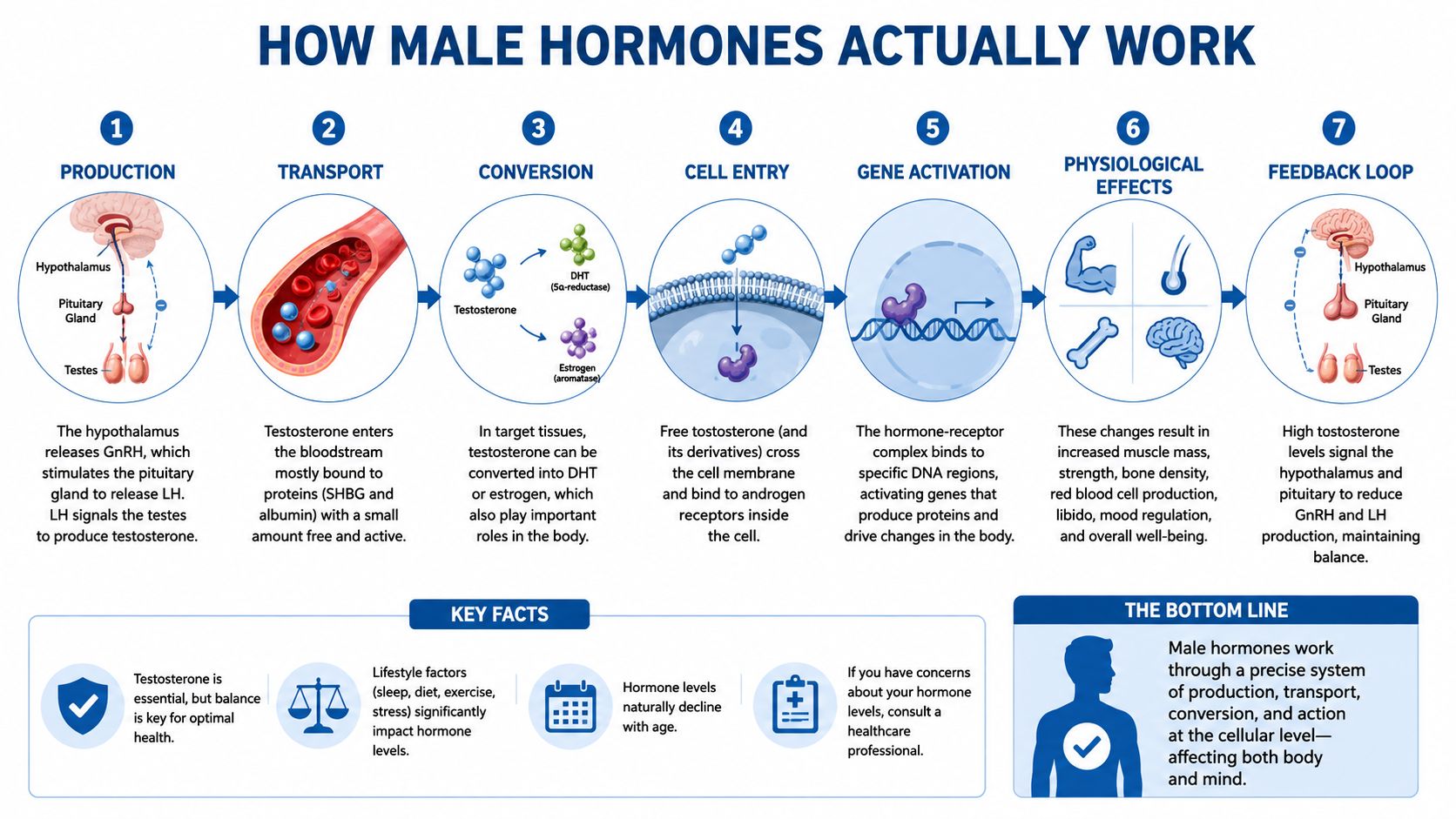
| Testosterone | Regulates libido, muscle mass, energy, and mood in all sexes. | Assessed for fatigue, low sex drive, and symptoms of andropause or menopause. |
| Estradiol (E2) | The primary female sex hormone, it regulates menstrual cycles and impacts bone health, mood, and skin. | Checked for menopause symptoms like hot flashes, irregular periods, and mood swings. |
| TSH (Thyroid-Stimulating Hormone) | Controls thyroid gland function, which governs your metabolism. | Tested to investigate symptoms like weight gain, fatigue, hair loss, and temperature sensitivity. |
| Cortisol | The body's primary stress hormone, it impacts energy, inflammation, and blood sugar. | Evaluated for chronic fatigue, sleep disturbances, and issues related to stress response. |
Each of these hormones tells a piece of your story. For a more detailed look at how they all work together, you can find more articles on our Pause Medical blog that cover these topics in greater depth.
Understanding Lab Ranges vs. Optimal Levels
So, you’ve got your hormone report, and your eyes immediately jump to the "range" column. It's natural to want to see if your numbers fall into the "normal" category. But here’s something our providers emphasize every day: a “normal” result isn’t always an “optimal” one.
This is probably the single biggest point of confusion when reading lab work, and it’s the key to understanding why you can feel completely off even when a doctor tells you your tests came back "fine."
The Problem with "Normal"
The reference range printed on your lab report is just a massive statistical average. It’s a bell curve pulled from a huge population, lumping everyone together—from the healthiest individuals to those on the verge of a diagnosis but still technically "in range."
Think of it like this: the average men's shoe size in the U.S. is around a 10.5. But if you’re a size 9, cramming your foot into a 10.5 isn't going to feel good. Your optimal shoe size is a 9, even though a 10.5 is perfectly "normal."
Hormones work the same way. The goal isn't just to land somewhere on that vast spectrum of normal; it's to pinpoint the specific level where your body functions best and your symptoms disappear. This is the core of our integrative medicine approach at Pause Medical—we use your labs as a roadmap to restore your personal, optimal balance.
A perfect real-world example is TSH (Thyroid-Stimulating Hormone). A lab might flag anything up to 4.5 mIU/L as normal. But in our clinical experience, many people with a TSH above 2.5 mIU/L are already struggling with classic hypothyroid symptoms like fatigue, brain fog, and weight gain that just won't budge.
Standard Lab Ranges vs. Optimal Wellness Ranges
Looking beyond the standard ranges is crucial for actually feeling better. The broad ranges are designed to catch outright disease, not to fine-tune health. The "optimal" ranges, on the other hand, are much narrower and are based on clinical experience with patients who report feeling their absolute best.
Here’s a table that breaks down this critical difference for a few key hormones:
| Hormone | Typical Lab Reference Range | Pause Medical Optimal Range | Symptoms When Sub-Optimal |
|---|---|---|---|
| TSH | 0.5 - 4.5 mIU/L | 0.5 - 2.0 mIU/L | Fatigue, weight gain, brain fog, hair loss, feeling cold |
| Free T4 | 0.8 - 1.8 ng/dL | 1.2 - 1.6 ng/dL | Similar to high TSH; indicates low thyroid hormone production |
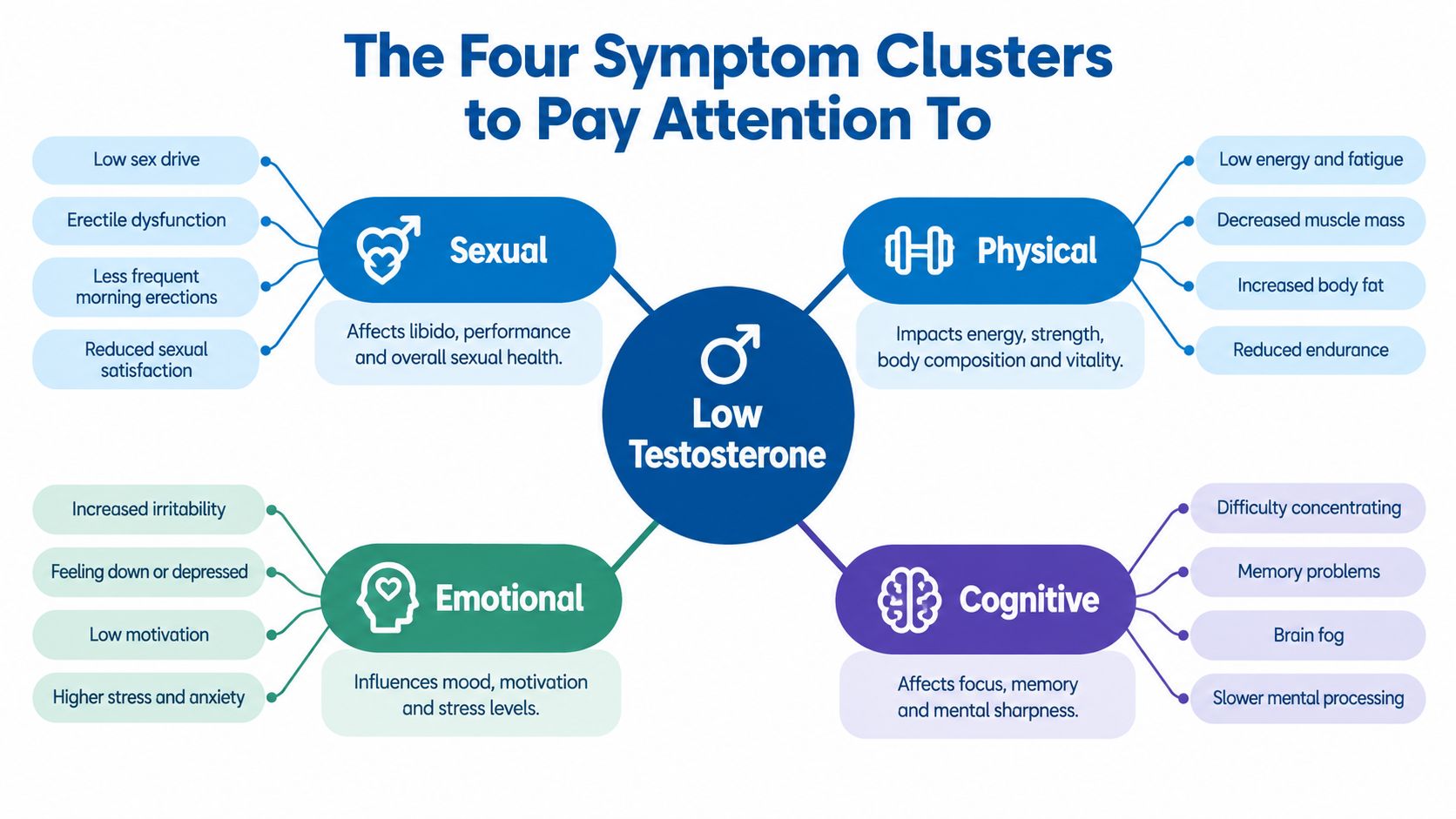
| Testosterone (M) | 250 - 1100 ng/dL | 600 - 900 ng/dL | Low libido, fatigue, poor muscle mass, mood swings, erectile dysfunction |
| Testosterone (F) | 8 - 60 ng/dL | 35 - 55 ng/dL | Low energy, low libido, poor motivation, difficulty building muscle |
| Estradiol (F) | Varies by cycle phase | 50 - 150 pg/mL (Postmeno) | Hot flashes, night sweats, vaginal dryness, mood changes, brain fog |
| Cortisol (AM) | 5 - 25 ug/dL | 10 - 18 ug/dL | High: anxiety, insomnia, weight gain. Low: chronic fatigue, burnout, low blood pressure |
This table illustrates why simply being "in range" might not be good enough. You could be at the low end of normal for testosterone and still feel all the symptoms of a deficiency. Aiming for that optimal sweet spot is what truly makes a difference.
The most valuable piece of data isn't just a number on a page—it's how you feel every day. We listen to your symptoms first, then use the lab results to confirm what’s going on and build a plan that brings you back to your best self.
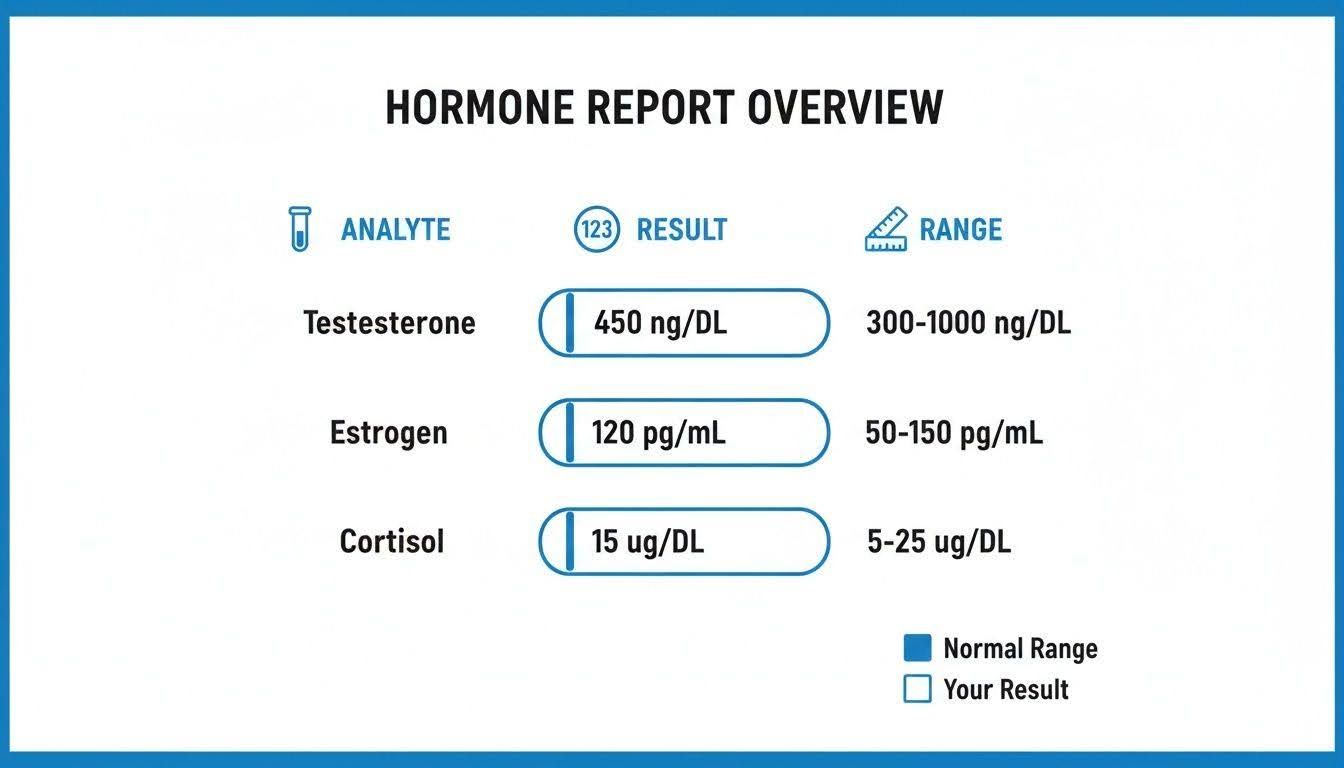
This image shows the typical layout of a lab report, but remember, the real story is found by looking beyond the printed "Range."
Why Optimal Ranges Matter For Your Health
By focusing on optimal levels, we can be proactive. We can address subtle imbalances before they snowball into more significant health problems. This is especially true for conditions like subclinical hypothyroidism, which affects about 5% of the global population and goes undiagnosed in up to 60% of cases because people are told their TSH is "normal," according to research published in the Journal of the American Medical Association.
The same idea applies to your sex hormones. A lab’s reference range for testosterone in women might be as wide as 8-60 ng/dL. But we have seen countless female patients who only feel their best—with restored energy and libido—when their level is consistently between 35-55 ng/dL.
It’s this detailed, personalized perspective that drives everything we do. Our goal is not just to nudge you back into a generic "normal" box. It's to help you achieve the vibrant health that comes from true hormonal balance. Understanding this difference is the first step toward advocating for your own well-being.
Our approach to preventative wellness solutions is built on this very foundation: interpreting your results through the lens of your personal health goals and daily experience.
Why Timing and Context Are Everything
A number on a lab report is meaningless without its story. When you're trying to figure out your hormone blood test results, the context behind those numbers is just as important as the numbers themselves. Think of it this way: a single hormone level is like one frame in a movie. Without seeing the frames before and after, you'll never understand the plot.
At Pause Medical, our board-certified providers would never dream of interpreting a lab value in a vacuum. We know that your age, sex, lifestyle, and even the time of day you got your blood drawn can completely change what your results mean. It’s all about seeing the full picture, not just an isolated snapshot.

Your Hormones Follow a Rhythm
Many of your hormones don’t just sit at one steady level. They ebb and flow in predictable cycles throughout the day or month. If you test at the wrong time, you can get a misleading result that sends you down a completely wrong path.
Cortisol, our main stress hormone, is a perfect example of this. It follows a diurnal rhythm, which is a medical term for a 24-hour cycle.
- Morning Peak: Cortisol is naturally highest in the morning, right after you wake up. This is what helps give you the energy to get your day started.
- Evening Trough: As the day goes on, it gradually drops, hitting its lowest point around midnight. This dip is crucial for allowing you to get restful sleep.
So, what happens if you test your cortisol in the afternoon? You could get a falsely low reading, which might lead to an incorrect assumption about your adrenal function. In fact, research suggests a significant number of patients are misdiagnosed with adrenal-related issues each year, partly due to poorly timed tests. You can find more about how timing impacts results by exploring the ways blood tests reveal your hormone health on readyhealth.co.uk.
This is precisely why your provider will always insist on a morning blood draw for a cortisol test—we need to catch it at its peak to get a truly accurate reading.
Why Your Cycle Matters for Women
For women who are still menstruating, the day of your cycle is another non-negotiable piece of the puzzle. Key reproductive hormones like estrogen, progesterone, LH, and FSH rise and fall dramatically throughout the month as they work to regulate ovulation and your period.
Testing these hormones on the wrong day can easily make a normal result look abnormal, or worse, make an abnormal result look perfectly fine.
Common Timing Guidelines for Female Hormones:
- FSH (Follicle-Stimulating Hormone): We typically test this on Day 3 of your cycle (the third day of your period). A high FSH on this day, often over 10 mIU/mL, can be an early sign of perimenopause, a transition that affects roughly 1 million US women every year, according to the North American Menopause Society.
- Progesterone: This one is best tested about a week after ovulation, which usually falls around Day 21 of a typical 28-day cycle. A nice, high level here confirms that you ovulated successfully—critical information if you're trying to conceive or figure out cycle irregularities.
Any provider who orders these tests without first asking where you are in your cycle is missing a huge piece of your health story.
The most insightful medical interpretation comes from weaving together three key threads: your lab results, your symptoms, and the specific context of your life. One without the others is an incomplete story.
Age and Sex: The Ultimate Context
Finally, we have to talk about age and sex. These two factors provide the fundamental backdrop against which all your hormone levels are judged. A testosterone level that’s perfectly healthy for a 30-year-old man would be a major red flag for a woman of the same age. Likewise, an FSH level that’s normal for a 55-year-old woman in menopause would be alarming in a 25-year-old.
This is especially critical when assessing hormones like testosterone. Many men come to us with symptoms of andropause (male menopause), and getting accurate, age-appropriate data is the key to helping them. For those considering their options, learning about our at-home testosterone therapy program can provide a clear path forward based on results that are interpreted correctly.
Ultimately, your lab report is a tool, not a diagnosis. It’s a set of clues that an experienced provider, like those here at Pause Medical, can use to investigate the root cause of what you’re feeling. By considering the timing of the test and the context of your life, we move beyond generic numbers and toward a personalized plan that actually works for you.
Connecting Your Lab Results to How You Actually Feel
This is where the rubber meets the road. You’ve got this lab report in your hand, full of numbers and ranges, but what does it all mean for your day-to-day life? The numbers are just data points; they don't tell the whole story. The most important piece of the puzzle is how you feel—that persistent fatigue, the brain fog, or those frustrating hot flashes.
Our entire philosophy is built on a simple idea: we treat people, not paper. Your symptoms aren't just minor complaints; they are critical clues that give context to your lab values. When we lay your report next to your lived experience, a clear picture finally starts to take shape.

Translating Symptoms into Hormonal Clues
So, let's connect the dots. An experienced provider can often see patterns in your symptoms that point directly toward specific hormonal imbalances. It’s like being a detective, piecing together the evidence to find the root cause.
Remember, the "normal" reference ranges on your report are based on broad population averages. They're a starting point, but they don't necessarily reflect your optimal level. For example, follicle-stimulating hormone (FSH) for a woman in her follicular phase is typically 3.5-12.5 IU/L, but that can jump to 4.7-21.5 IU/L at ovulation. These ranges are huge! Your "normal" might be someone else's "off."
The Thyroid and That "Tired All The Time" Feeling
One of the most common things we hear from patients is a deep, bone-weary fatigue that no amount of sleep can fix. It often comes with a side of stubborn weight gain, fuzzy thinking, and feeling cold when everyone else is comfortable.
- The Scenario: You hit a wall at 2 PM every day, you can’t shed a pound no matter what you eat or how much you exercise, and your mind just feels… slow.
- The Hormonal Clue: This immediately makes us think "thyroid." Even if your TSH is technically "in range"—say, at 3.8 mIU/L—it might be nowhere near optimal for you. We'd dig deeper, looking at Free T4 and Free T3 to see if your body is actually converting and using its thyroid hormone effectively.
Sex Hormones and Your Quality of Life
Estrogen, progesterone, and testosterone are the conductors of your daily orchestra. When they're out of tune, it affects everything from your mood and energy to your sleep and motivation.
- Low Libido and Motivation: If your get-up-and-go has gotten up and gone, it's a classic sign of low testosterone. This isn't just a "guy" hormone; it’s absolutely vital for a woman's energy, drive, and sense of vitality.
- Hot Flashes and Restless Nights: Waking up in a pool of sweat? Tossing and turning all night? This is often the calling card of declining estrogen and progesterone. Estrogen is key for regulating your internal thermostat, and progesterone is nature's valium—it helps you feel calm and promotes deep sleep.
- Mood Swings and Anxiety: Feeling irritable, weepy, or on edge for no good reason can be directly tied to estrogen fluctuations or low progesterone, which normally has a beautifully stabilizing effect on your mood.
Your lived experience is the most important diagnostic tool we have. When a patient tells us, "I just don't feel like myself anymore," we pay close attention. That feeling is almost always the first sign that something is hormonally off-key.
Insulin Resistance and Stubborn Weight
Another major frustration is that inability to lose weight, especially the fat that seems to collect around your middle. Even when you're doing everything right, the scale won't budge. This is a huge red flag for insulin resistance.
It’s a vicious cycle: your cells stop responding to insulin properly, so your body pumps out more and more of it. Unfortunately, high insulin levels are a powerful signal to your body to store fat. Understanding this metabolic dysfunction is a core part of our disease state management programs, where we look beyond a single hormone to see the entire metabolic picture.
By starting to see your symptoms as valuable information, you empower yourself. That fatigue isn't just "in your head," and your trouble with weight isn't a moral failing. They are clear signals from your body, telling you exactly what it needs.
Turning Your Results Into an Action Plan
Alright, you've made it through your report, you understand the difference between "normal" and "optimal," and you're starting to connect those numbers on the page to how you feel every day. This is the crucial turning point—where we move from just looking at data to actually doing something with it.
Think of your lab work not as a final verdict, but as the starting line. It’s the first concrete step toward figuring out what your body needs. The whole point is to turn that feeling of confusion or concern into a clear, proactive strategy for your health.
Spotting the Red Flags in Your Results
Most of the time, hormone results show subtle imbalances we can work on. But occasionally, a number will jump off the page that really needs immediate attention from a provider. These are the "red flags" that might signal a more significant underlying issue.
Here are a few examples of what we look for:
- Thyroid Alarms: A TSH that’s practically non-existent (think below 0.1 mIU/L) can be a strong indicator of hyperthyroidism. On the flip side, a TSH climbing over 10 mIU/L is a pretty clear sign of significant hypothyroidism. Neither should be ignored.
- Metabolic Warnings: If your fasting insulin is sky-high or your HbA1c is creeping into the prediabetic or diabetic range, that’s your body sending a clear distress signal about its ability to handle sugar. This needs a solid management plan to head off long-term problems.
- Cortisol Extremes: An unusually low morning cortisol level could point toward adrenal insufficiency, which is a serious condition. Conversely, if your cortisol is consistently high, it’s a sign that chronic stress is taking a major toll on your entire system.
These are just a handful of possibilities, but they show why you can't just rely on "Dr. Google." A qualified provider is essential to put these numbers into the context of your complete health picture.
Your lab report is a powerful tool, but it's most effective when we use it together. It’s the map we can use to navigate your path back to feeling like yourself again.
Building Your Personalized Path Forward
With your results in hand, you and your provider can finally get to the root of the problem instead of just chasing symptoms. At Pause Medical, we see this as a partnership, and the personalized treatment plan we build together can head in a few different directions.
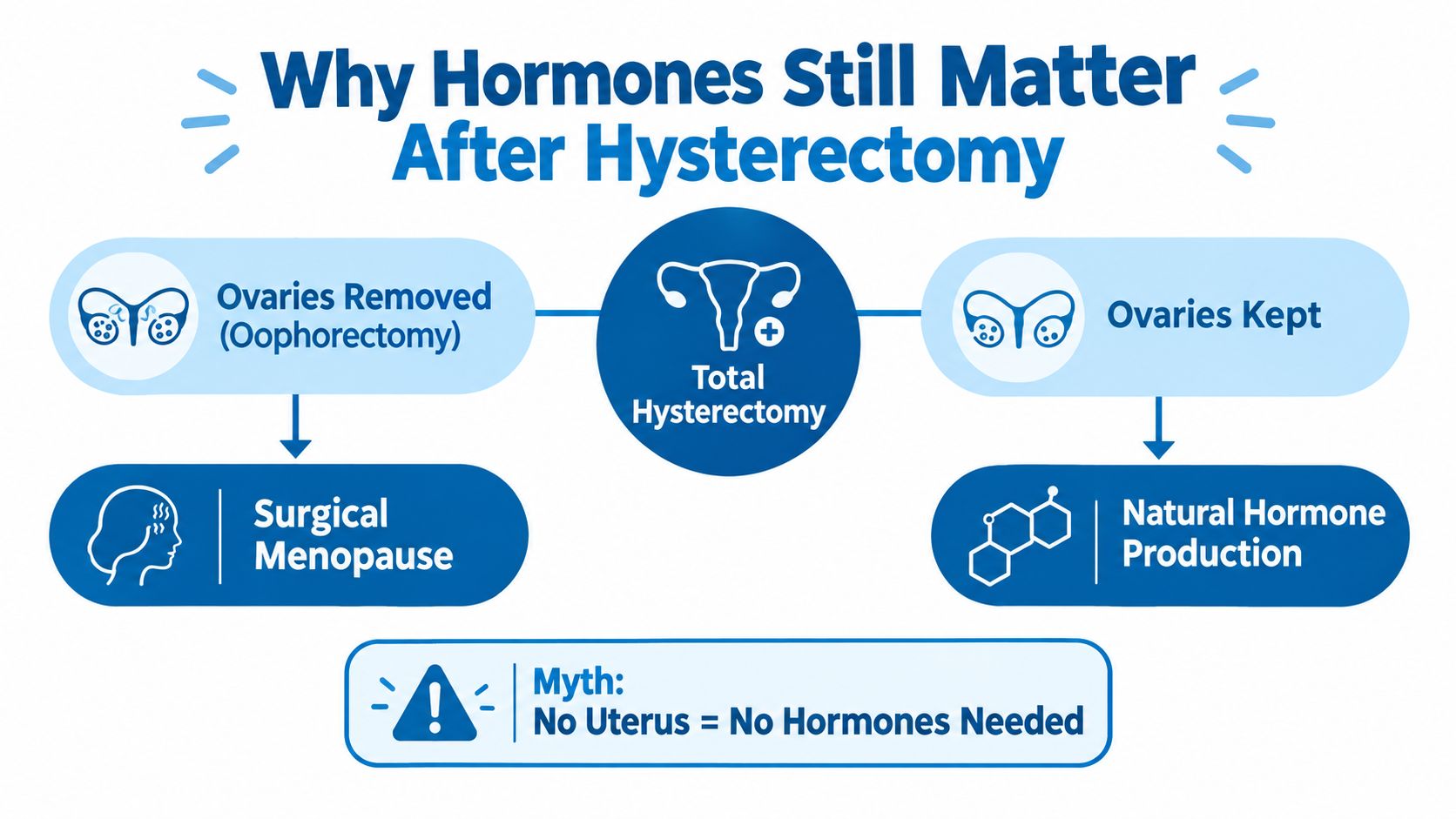
- Hormone Replacement Therapy (HRT): For many women in perimenopause or menopause, and men in andropause, the labs and symptoms clearly point to a hormone deficiency. A personalized HRT plan, often using bioidentical hormones, can be life-changing by restoring what your body is no longer making.
- Medical Weight Loss: If your results are screaming insulin resistance or metabolic syndrome, a structured approach is often the best way forward. This might involve tools like GLP-1 medications combined with expert nutritional and lifestyle coaching.
- Lifestyle and Nutritional Adjustments: Sometimes the answer isn't a prescription, but a targeted lifestyle shift. For example, if high cortisol is your main issue, we would start by exploring concrete strategies to manage stress. This guide on how to reduce cortisol levels naturally is a great starting point for that conversation.
Your journey is yours alone. Whether the best path involves hormone therapy, managing a chronic condition, or focusing on preventative wellness, it all begins with the data from your lab work. The next step is to schedule a consultation to talk about what these numbers truly mean for you and map out a plan to get your vitality back.
Common Questions We Hear About Hormone Testing
Getting your hormone lab results back is often the beginning of a new set of questions. It's one thing to see the numbers on a page, but it's another to understand what they mean for you and what to do next. Let's walk through some of the most frequent concerns we address with our patients at Pause Medical.
"My Doctor Said My Levels Are 'Normal,' But I Still Feel Terrible. What Gives?"
This is, without a doubt, one of the most common and frustrating scenarios we see. You're not imagining things. The "normal" reference ranges you see on a standard lab report are incredibly broad, designed to catch serious diseases, not to pinpoint where you feel your absolute best. It's entirely possible—and very common—to have symptoms of a hormone imbalance while your levels are still technically "in range."
At Pause Medical, we look beyond those wide goalposts. Our board-certified providers focus on finding your optimal levels. This is a much tighter, more personalized range where our patients report that their symptoms actually disappear and they start feeling like themselves again. We treat you, not just your lab report.
Your symptoms are real, valid data points. If you don't feel well, something is off, period. Our job is to listen and investigate, not to dismiss your experience because of a generic lab range.
"How Often Do I Need to Get My Hormones Checked?"
There’s no single right answer here; it really depends on where you are in your health journey. The goal is strategic testing, not constant blood draws.
- When starting a new treatment: If you're beginning a therapy like HRT, we'll usually check your levels again after the first few months. This lets us see how your body is responding and allows us to make small, precise adjustments to your plan.
- Once you're stable: When you're feeling great and your levels are holding steady, an annual check-in is typically all that's needed to ensure everything is still on track.
- If something changes: Of course, if new symptoms pop up or you feel like something has shifted, we'll want to re-test to see what’s going on and adjust your protocol.
Think of it as a roadmap—we check in at key points to make sure you're still heading in the right direction.
"Can I Balance My Hormones Without Taking HRT?"
Yes, absolutely. Lifestyle is a powerful first line of defense. The food you eat, how you move your body, the quality of your sleep, and how you manage stress have a massive impact on your hormonal equilibrium. For some people with milder imbalances, making dedicated changes in these areas is enough to get them back on track.
But for many others, especially those navigating significant hormonal shifts like menopause or andropause, lifestyle adjustments alone might not be enough to move the needle.
That's why we take an integrative approach at Pause Medical. We'll explore all your options, from targeted nutrition and supplement plans to advanced therapies like
bioidentical hormone replacement therapy (BHRT). Together, we'll build a plan that gets to the root cause of your symptoms in a way that feels right for you.
The journey from confusion to clarity starts with a conversation. At Pause Medical, our experienced providers are ready to help you interpret your results, understand your options, and build a personalized action plan to help you feel like yourself again. Schedule your consultation today at https://pausemedical.org.
Disclaimer: The information provided in this article is for educational purposes only and is not intended as a substitute for professional medical advice, diagnosis, or treatment. Always seek the advice of your physician or other qualified health provider with any questions you may have regarding a medical condition.