How to Improve Metabolic Rate: A Medical Guide for 2026
You're eating better. You've cut back on processed foods, started walking more, maybe even joined a gym. Yet your energy still feels low, the scale barely moves, and your body seems to respond differently than it used to.
That experience is common, and it's frustrating.
Many adults in Mississippi assume they've “damaged” their metabolism or that they need more willpower. In clinic, I'd tell you something more reassuring and more useful. Metabolism is not just about discipline. It's a body-wide system shaped by muscle mass, food intake, activity, sleep, stress, hydration, and often overlooked hormone signals.
If you've been searching for how to improve metabolic rate, the most helpful approach is to stop thinking of metabolism as a single speed setting. Think of it as your body's operating system. When the inputs are right, it runs smoothly. When key signals are off, especially hormone signals, progress can stall even when you're doing many things well.
Understanding Your Metabolism Beyond Calories
A lot of people hear “metabolism” and think only about how fast they burn calories. That's part of the story, but not the whole picture.
Your metabolism includes several moving parts. Basal metabolic rate or BMR is the energy your body uses to keep you alive at rest. Resting metabolic rate or RMR is similar and is often what people mean in practical settings. Thermic effect of food or TEF is the energy your body uses to digest what you eat. And non-exercise activity includes all the movement you do outside formal workouts, like cleaning, pacing, carrying groceries, and standing up throughout the day.

Why generic advice often falls short
Your metabolism doesn't work like a simple furnace. It behaves more like a coordinated network of signals. Age, genetics, body size, and muscle mass all matter. So does timing. Hormones help decide whether your body feels safe to burn energy freely, hold onto fuel, build muscle, or conserve resources.
That's why some people follow standard wellness advice and still feel stuck. Existing content on improving metabolism often misses the role of hormone timing and circadian rhythm. One review notes that misaligned cortisol and insulin rhythms can suppress metabolism by up to 25% , and 68% of adults with persistent metabolic slowdown have undiagnosed hormonal dysfunction according to data referenced by Baylor Scott & White Health's discussion of metabolism and hormones ( review the metabolic hormone connection).
Practical rule: If you're doing the basics well but still have fatigue, stubborn weight gain, or poor recovery, it's reasonable to look beyond calories alone.
What this means in daily life
Two people can eat similarly and exercise similarly, yet feel very different. One sleeps well, has stable thyroid function, and maintains muscle mass. The other deals with poor sleep, insulin resistance, or hormone shifts tied to menopause or andropause. Their bodies won't process energy the same way.
If you want a starting point, it helps to understand your metabolic rate with a calculator, then pair that estimate with symptoms and habits rather than treating the number as the full answer.
For a deeper patient-friendly overview of the bigger picture, this guide on improving metabolic health is a useful next read.
Build Your Metabolic Engine with Diet and Movement
If hormones are the control system, muscle and nutrition are the engine parts you can strengthen right away .
What's needed isn't more complicated tricks; it's a plan that supports lean mass, stabilizes energy, and avoids the common mistake of under-eating while over-exercising.

Start with resistance training
The strongest lifestyle lever for how to improve metabolic rate is building or preserving muscle.
Research summarized by NASM reports that people who do resistance training 3 to 6 times per week , using 2 to 4 exercises per body part for 3 to 5 sets of 6 to 12 repetitions at 75% to 85% intensity , can increase resting metabolic rate by up to 10% to 15% over time . In one study, participants' RMR increased by an average of 7.2% after 12 weeks of heavy lifting ( read the resistance training evidence).
That sounds technical, but the takeaway is simple. Challenge your muscles consistently.
A practical week might look like this:
- Two full-body sessions: Think squat or leg press, row, chest press, and a hinge movement such as Romanian deadlift.
- One or two extra sessions: Add lunges, shoulder press, lat pulldown, glute bridge, or resistance band work.
- Progressive effort: The last few reps should feel difficult while still allowing good form.
Protein raises the work your body does after eating
Food doesn't affect metabolism equally. Protein has the highest thermic effect of food.
According to Healthline's nutrition review, protein digestion accounts for 20% to 30% of energy expenditure from digestion, compared with 5% to 10% for carbohydrates and 0% to 3% for fats. Eating 20 to 30 grams of protein per meal can temporarily increase metabolism by 15% to 25% for 3 to 5 hours after eating. The same review notes that increasing protein intake from 15% to 30% of total daily calories was associated with a 9% rise in daily energy expenditure , roughly 150 to 200 calories per day , and active adults are often guided toward 1.2 to 1.6 grams per kilogram of body weight ( see the protein and metabolism summary).
Here's what 20 to 30 grams of protein can look like in real food:
| Meal idea | Approximate protein target |
|---|---|
| Greek yogurt with eggs | Reaches a meal-level protein serving |
| Chicken breast with roasted vegetables | Reaches a meal-level protein serving |
| Lentils plus fish or eggs | Reaches a meal-level protein serving |
| Cottage cheese with a side of turkey | Reaches a meal-level protein serving |
You don't need perfection. You need consistency across the day.
Try asking at each meal, “Where is my protein source?” That single question helps many patients eat in a way that supports muscle maintenance and steadier appetite.
Don't ignore movement outside the gym
Formal workouts matter, but so does everyday motion. If you lift weights three times a week but sit for most of the day, your total energy use can still stay lower than you expect.
Useful examples of daily movement include:
- Walking during phone calls
- Parking farther away
- Taking stairs when practical
- Doing housework by hand
- Standing up and stretching between tasks
If you're trying to build a sustainable plan, pair resistance training with a pattern you can maintain long term. This article on how to lose weight sustainably complements that approach well.
The Hidden Saboteurs Sleep Stress and Hydration
Some people do almost everything right with food and exercise, then accidentally undermine their progress at night and during the workday.
Poor sleep, chronic stress, and low fluid intake don't just make you feel bad. They change the body signals that regulate hunger, recovery, and energy use.
Sleep is metabolic medicine
A common pitfall is getting less than 7 to 8 hours of sleep , which is linked with increased stress hormones and a higher metabolic age. Prioritizing 7 to 9 hours of restful sleep supports hormone regulation and muscle recovery, and consistent hydration of about 2 liters of water daily matters because even mild dehydration can reduce caloric burning efficiency ( review the sleep and hydration guidance).
That matters because your body does repair work during sleep. It regulates appetite signals, recovery from training, and the stress response that can push people toward cravings and fatigue. If you're sleeping poorly, your metabolism often feels less flexible. Hunger feels louder. Energy feels flatter.
Stress changes what your body prioritizes
When stress stays high for long stretches, the body often shifts toward survival mode. In plain language, it becomes harder to recover, easier to overeat, and tougher to feel motivated for exercise.
You don't need a perfect meditation practice to improve this. Start with routines that are small enough to repeat:
- A wind-down ritual: Dim lights, put your phone away, and keep bedtime consistent.
- Short breathing breaks: Even a few quiet minutes can lower the sense of urgency your body is carrying.
- Gentle evening walks: These can ease mental stress without feeling like another workout.
- Caffeine boundaries: If sleep is poor, late-day caffeine may be part of the problem.
Protect sleep the way you'd protect a prescription. It's one of the most powerful non-drug tools for metabolic health.
For readers trying to connect lifestyle habits with the bigger hormonal picture, this resource on a holistic wellness approach for hormonal and metabolic health is worth reviewing.
When Hormones Are the Real Issue
There comes a point when “eat better and exercise more” stops being useful advice.
If you've improved your habits and still feel exhausted, cold, puffy, foggy, hungry, irritable, or stuck with weight gain around the midsection, a hormone-related issue may be part of the picture. That doesn't mean lifestyle habits don't matter. It means they may not be the only thing driving your symptoms.

Signs your metabolism may be affected by hormones
Patients often describe a cluster of symptoms rather than one single problem. Common examples include:
- Persistent fatigue: You're sleeping but still waking up drained.
- Unexplained weight gain: Especially when it seems out of proportion to your eating habits.
- Low libido: Often overlooked, but important.
- Mood changes: Irritability, low motivation, or feeling unlike yourself.
- Reduced exercise tolerance: Workouts that used to feel manageable now feel unusually hard.
Thyroid insulin cortisol and sex hormones
The thyroid acts like a master dial for metabolic pace. When thyroid function is low, many people notice fatigue, constipation, dry skin, slower thinking, and weight changes. If thyroid hormone is off, your body may not be getting the signal to run efficiently.
Insulin matters too. When cells become less responsive to insulin, blood sugar handling becomes less efficient, hunger can feel more intense, and fat storage often becomes easier. That's one reason metabolism and medical weight loss frequently overlap in clinical care.
Cortisol is your stress hormone. It helps you respond to demands, but chronic disruption in cortisol rhythm can make people feel wired and tired at the same time. Some notice poor sleep, belly weight gain, or more cravings during high-stress periods.
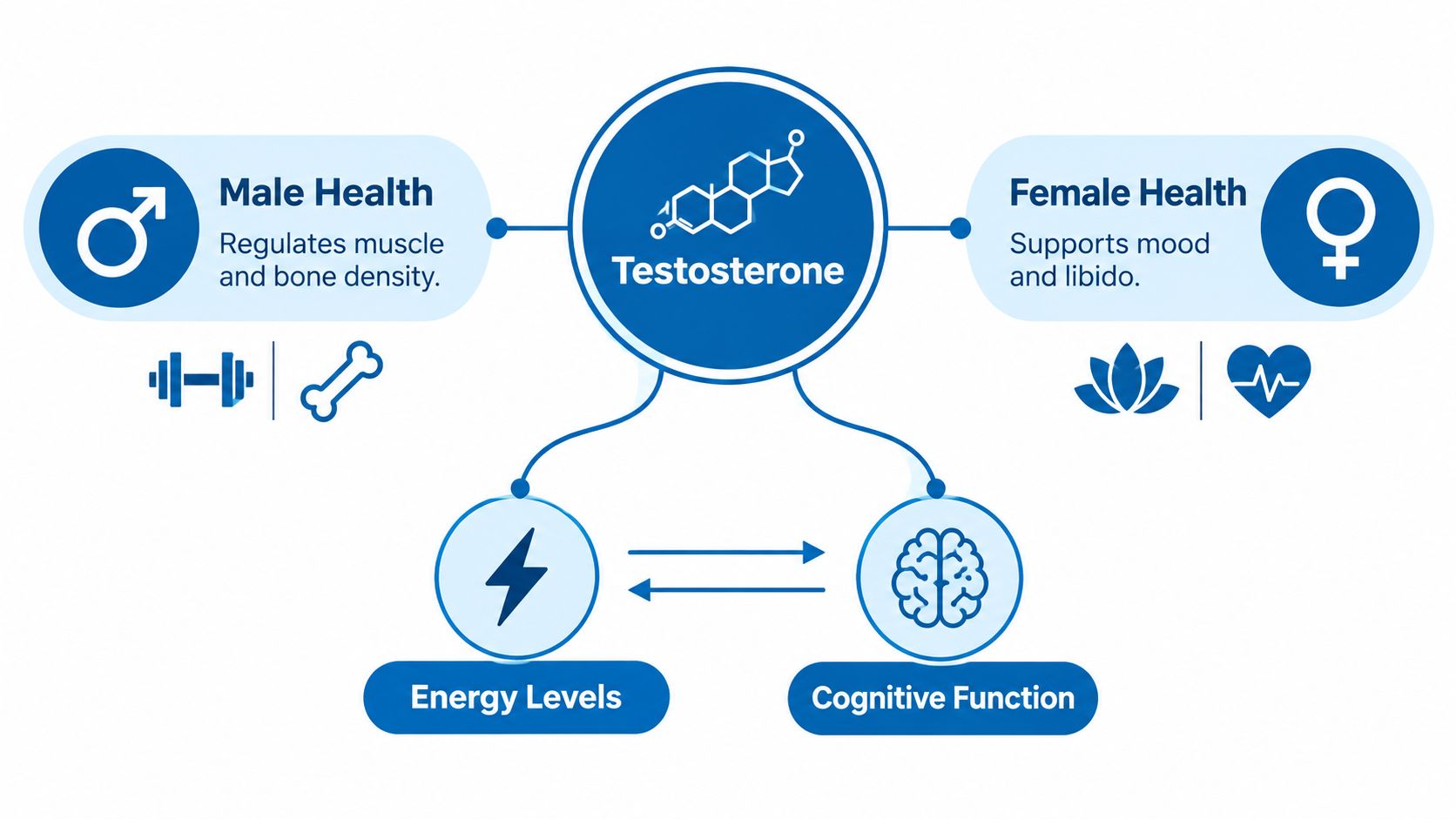
Sex hormones also influence body composition. During menopause, perimenopause, and andropause, shifts in estrogen, progesterone, and testosterone can change muscle mass, energy, sleep quality, and fat distribution.
Here's a helpful overview before a deeper discussion:
| Hormone area | What patients may notice |
|---|---|
| Thyroid | Slower energy, weight gain, feeling cold, sluggish recovery |
| Insulin | Cravings, energy dips, difficulty losing weight |
| Cortisol | Stress eating, poor sleep, central weight gain |
| Estrogen or testosterone | Lower muscle tone, lower libido, mood or body composition changes |
A short visual explanation can make this easier to understand.
When testing makes sense
You don't need to assume every symptom is hormonal. But you also shouldn't dismiss persistent symptoms just because standard advice hasn't worked.
Consider a medical evaluation if:
- You've made solid lifestyle changes and still aren't improving
- Your symptoms came on alongside menopause, perimenopause, or age-related hormone changes
- You have signs that suggest thyroid dysfunction or insulin resistance
- Your fatigue, low libido, or mood changes are affecting daily life
Treatment depends on the cause. Some people need thyroid medication. Others benefit from targeted nutrition, medication management, or a medically supervised weight loss plan. Some may be candidates for hormone replacement therapy or bioidentical hormone therapy after a proper evaluation.
The point is not to chase trends. The point is to identify the root cause. For readers who want a clinical overview of options, this page on hormone optimization therapy is a useful educational resource.
Your Action Plan for a Metabolic Reset
Once you understand the moving parts, the next step is to make your plan concrete.
You do not need a perfect month. You need a repeatable week.

A simple Week 1 framework
Use this as a starting point:
-
Protein at each meal
Build meals around a clear protein source first. -
Two or three resistance sessions
Focus on major muscle groups and keep the routine simple enough to repeat. -
Meet aerobic activity minimums
The Physical Activity Guidelines for Americans recommend at least 150 minutes of moderate aerobic activity or 75 minutes of vigorous aerobic activity per week , and 300 minutes or more of moderate activity may provide greater health benefits ( review the activity guidance). -
Protect sleep
Set a consistent bedtime and reduce late-night stimulation. -
Hydrate through the day
Don't wait until evening to realize you barely drank water. -
Track symptoms, not just weight
Notice energy, hunger, sleep, mood, and workout recovery.
Red flags that mean it's time for medical help
Self-management has limits. That's normal.
If you've tried these steps for 4 to 6 weeks with no improvement , or if you identify with the hormonal symptoms mentioned, it's time for personalized medical guidance.
A few common signs include:
- Weight gain that feels unexplained
- Fatigue that doesn't improve with sleep
- Low libido or mood changes
- Feeling colder, weaker, or mentally slower than usual
- A strong family history of thyroid disease, diabetes, or hormone-related issues
If you want another patient-friendly overview of lifestyle support, this guide to boosting metabolism for adults offers additional general education.
For a Mississippi-focused next step, this resource on metabolic health coaching for patients in Mississippi can help you think through what structured support may look like.
Frequently Asked Questions About Metabolic Health
Can green tea or spicy foods really boost metabolism
They can have a modest effect, but they're not the main driver. A meta-analysis discussed by Harvard Health found that consuming about 250 milligrams of EGCG , roughly the amount in three cups of green tea daily , increased metabolism enough to burn an average of 100 extra calories per day ( see the Harvard Health summary). That's helpful, but it won't replace muscle-building, sleep, nutrition, and medical evaluation when needed.
What is metabolic damage and can it be reversed
That term is often used to describe a body that seems resistant to weight loss after stress, restrictive dieting, poor sleep, or hormone disruption. In many cases, the better term is metabolic adaptation. The body becomes more conservative with energy. Fortunately, improvement often occurs with a smarter plan that includes adequate food, protein, resistance training, recovery, and evaluation for underlying hormone or thyroid issues.
Can medications affect metabolic rate
Yes. Some medications can influence appetite, fluid balance, fatigue, body weight, or how efficiently the body uses energy. If you noticed major changes after starting a medication, bring that timeline to your clinician. Don't stop prescribed medication on your own, but do ask whether alternatives or adjustments should be considered.
When should I stop trying to fix this by myself
If your symptoms are persistent, worsening, or affecting quality of life, it's time to get help. That's especially true if you have low energy, low libido, significant weight changes, poor sleep, or signs that suggest thyroid problems, insulin resistance, menopause, or andropause.
Medical disclaimer: This article is for education only and isn't a substitute for personal medical advice, diagnosis, or treatment. If you have concerning symptoms, talk with a qualified medical professional for an individualized evaluation.
If you're in Mississippi and you're tired of guessing why your metabolism feels off, Pause Medical offers board-certified, personalized care focused on hormone health, medical weight loss, medication management, and root-cause metabolic support. If lifestyle changes haven't been enough, you can schedule a consultation to discuss your symptoms, goals, and treatment options in a medically supervised plan.