How to Improve Metabolism After 40: A Guide for Mississippi
To get your metabolism firing on all cylinders after 40, the game plan boils down to two key things: building lean muscle through strength training and eating enough protein to make it happen. You've probably heard that your metabolism just tanks the second you turn 40, but that’s not the whole story. The real slowdown doesn't kick in until after 60, which means right now is your golden window to build a strong metabolic foundation for the future.
What's Really Going On With Your Metabolism After 40
It’s a story I hear all the time from my patients across Mississippi, from Oxford to Meridian. You hit your 40th birthday, and suddenly, it feels like your metabolism just packed its bags and left. The same routine that kept you in shape for years doesn’t seem to move the needle anymore, and you're left dealing with stubborn weight gain, especially around your middle.
But what if that story about a huge metabolic crash at 40 is more myth than fact?
The truth is a lot more complex—and honestly, a lot more encouraging. Your body is definitely changing, but that dramatic nosedive you're bracing for isn't inevitable. Once you understand what's really happening under the hood, you can start taking back control with a strategy that actually works.
Why It Feels Like Everything Slowed Down
The main reason your metabolism feels different in your 40s isn't some mysterious age-related switch. It's mostly driven by a few key physiological shifts that happen gradually over time. One of the biggest culprits is the slow, almost unnoticeable loss of lean muscle mass, a process called sarcopenia.
Think of muscle as your body's metabolic engine—it torches far more calories at rest than fat does. As we naturally start to lose a bit of that muscle each decade, our body's overall calorie-burning capacity dips. This is why it can feel like you’re fighting an uphill battle to maintain your weight, even when you haven’t changed a thing about your diet or exercise.
For many of us here in Mississippi, that biological shift gets a little help from our busy lives. When workouts get squeezed out by work and family, we lose even more of that precious muscle, and the metabolic slowdown gets a little worse.
"So many people walk in thinking their metabolism is just broken after 40. The reality is, it’s just responding to different signals. Your body is losing calorie-burning muscle and dealing with hormonal shifts. The trick is to change the signals you're sending it with the right kind of exercise and nutrition."
Your Critical Window of Opportunity
Now for the good news. Groundbreaking research has shown that your metabolism stays remarkably steady through your 20s, 30s, 40s, and even your 50s. A huge 2021 study revealed that the most significant metabolic drop-off doesn't really start until after age 60, and even then, it's only by about 0.7% per year.
This means the years between 40 and 60 aren't a metabolic death sentence—they're a crucial window of opportunity. The work you put in now to build muscle, fine-tune your nutrition, and manage hormonal changes will pay huge dividends for decades to come. You're not fighting a losing battle; you're proactively tuning up your metabolic engine for the long haul.
For men, there's another piece to this puzzle: hormones. Testosterone, which is essential for maintaining muscle, energy, and a healthy metabolism, starts its natural decline in this decade. This hormonal shift can make muscle loss happen faster and lead to that frustrating cycle of fatigue and weight gain.
To give you a clearer picture, let's break down the primary shifts that influence your metabolism as you enter your 40s.
Metabolic Shifts After 40: Key Areas of Change
| Area of Change | What Happens in Your 40s | Long-Term Metabolic Impact |
|---|---|---|
| Muscle Mass | Gradual, age-related muscle loss (sarcopenia) often begins, reducing metabolically active tissue. | A slower resting metabolic rate (RMR), as muscle burns more calories than fat, even at rest. |
| Hormonal Balance | For men, a steady decline in testosterone begins. For women, perimenopause brings estrogen/progesterone shifts. | Can lead to increased fat storage (especially visceral fat), lower energy, and difficulty building muscle. |
| Insulin Sensitivity | Cells may become less responsive to insulin, making it harder to manage blood sugar effectively. | Increased risk of fat storage and energy crashes; can be a precursor to metabolic syndrome if unmanaged. |
| Lifestyle Factors | Increased stress, less time for exercise, and changes in sleep patterns become more common. | Higher cortisol levels promote fat storage, while lack of sleep disrupts appetite-regulating hormones. |
These changes might sound daunting, but they are all things you can positively influence with the right approach. It's about working with your body, not against it.
If you're dealing with constant fatigue, weight that won't budge, or feel like you can't build muscle no matter what you do, it might be more than just getting older. Getting to the root cause is key. At Pause Medical, our expert providers across Mississippi can help you find clear answers. A simple consultation can tell us if hormonal changes, like low testosterone, or other issues are holding your metabolism back. You can learn more about how we help patients manage their long-term health through our Disease State Management programs and start the conversation today.
Build a Stronger Metabolic Engine with Smart Exercise
If you've noticed that the same old workout routine just isn't cutting it anymore, you're not imagining things. For many of us, hitting our 40s means it's time to get smarter about how we move. The goal isn't just about burning calories during a workout; it's about building a more powerful metabolic engine that works for you around the clock.
The absolute cornerstone of this strategy? Resistance training. It's your single most effective tool for fighting the age-related muscle loss that's putting the brakes on your metabolism.
You see, a big reason for that metabolic slowdown after 40 is sarcopenia—the natural decline in muscle mass. We typically lose about 3% to 5% of our muscle mass each decade after 30, and the process tends to pick up speed after 40. This is a huge deal because muscle is metabolically active tissue, burning far more calories at rest than fat does. You can learn more about the science behind metabolism and aging on WebMD.
This infographic does a great job of cutting through the myths and showing you what really matters.
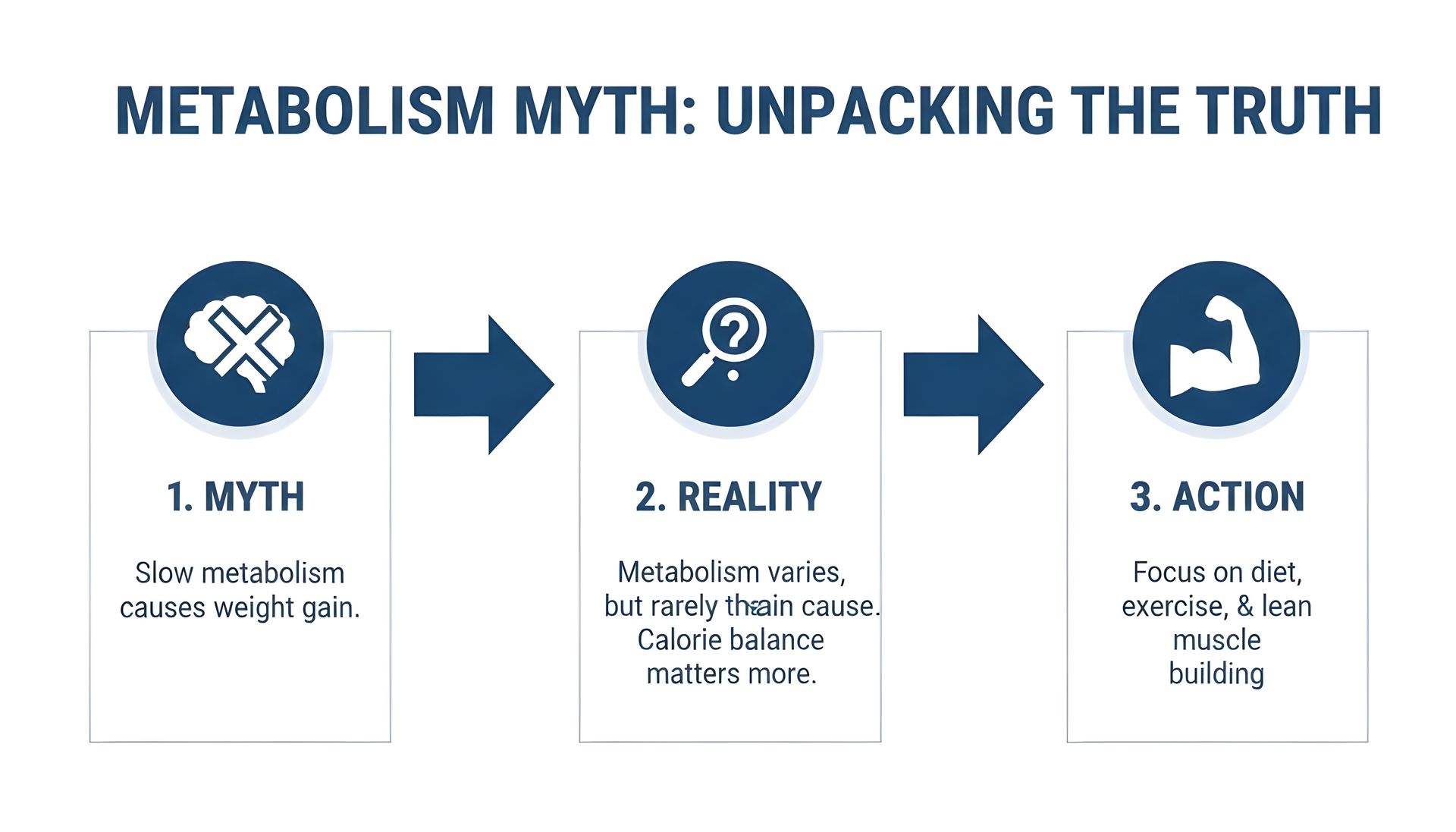
The most important thing to realize is that you have direct control over the biggest metabolic levers—especially building and keeping that calorie-burning muscle.
Your Resistance Training Blueprint
Forget the idea that you need to live in the gym. A smart, consistent plan will always beat a grueling, sporadic one. The key is to challenge your muscles just enough to trigger that all-important growth and repair cycle.
Here are a couple of effective ways to structure your weeks:
- Full-Body Workouts (2-3 times per week): This is the ultimate in efficiency. You’ll hit all the major muscle groups in one go with compound movements like squats, push-ups, rows, and overhead presses. It’s a fantastic way to get the job done without spending your life at the gym.
- Split Routines (3-4 times per week): If you prefer to focus your energy, a split routine is perfect. You could dedicate one day to your upper body (chest, back, shoulders, arms) and the next to your lower body (quads, hamstrings, glutes). This allows for a bit more volume for each muscle group.
Whichever path you choose, the secret sauce is progressive overload. That just means you're always finding ways to make it a little harder over time, whether that’s by lifting a bit heavier, doing one more rep, or adding another set.
Feeling a little lost on where to start with a strength program? You don't have to guess. At Pause Medical, our medically supervised weight loss programs can include personalized exercise guidance that’s built for your specific fitness level and health goals. Schedule a consultation at one of our Mississippi clinics by visiting pausemedical.org to create a plan that truly works for you.
Give Your Results a Boost with HIIT
While resistance training is building your long-term metabolic foundation, High-Intensity Interval Training (HIIT) is like hitting the turbo button. HIIT is all about short, intense bursts of effort followed by brief recovery periods.
A quick HIIT session could be as simple as this:
- Warm-up: 5 minutes of light jogging or cycling.
- Work Interval: 30 seconds of all-out effort (sprinting, burpees, fast bodyweight squats).
- Recovery: 60 seconds of walking or slow pedaling.
- Repeat: Go through this cycle for about 15-20 minutes.
The real magic of HIIT is the "afterburn effect," where your metabolism stays fired up for hours after your workout is over. Squeezing in just one or two of these sessions a week can make a huge difference without demanding a lot of your time. Some people also find that specific therapies can support their energy and recovery, making it worthwhile to explore the role of peptides in wellness as part of a total health plan.
Never Underestimate Everyday Movement
Finally, what you do outside of your scheduled workouts is just as important. We call this Non-Exercise Activity Thermogenesis (NEAT), and it’s the energy you burn from all the little things: walking the dog, doing yard work, taking the stairs, even fidgeting.
For most of us, NEAT actually accounts for a bigger slice of our daily calorie burn than our formal exercise. Making a conscious effort to increase it is a simple but incredibly powerful strategy.
- Pace around when you're on the phone.
- Take a 10-minute walk after lunch.
- Park a little farther from the entrance at the store.
- Get up and stretch every hour if you have a desk job.
These small actions really add up. When you combine them with smart strength training and a little HIIT, you've created a potent, well-rounded strategy to fire up your metabolism after 40.
Fueling Your Body for Lasting Metabolic Health

While smart exercise builds your metabolic engine, the right nutrition provides the high-quality fuel it needs to run at peak performance. After 40, what you eat—and when you eat it—becomes one of the most powerful levers you can pull for metabolic control.
This isn’t about chasing fad diets or so-called "miracle" metabolism-boosting foods. It's about building a sustainable, whole-foods approach that directly supports your body's changing needs.
Think of it this way: your body burns calories just by digesting the food you eat. This is called the Thermic Effect of Food (TEF). By making strategic food choices, you can actually increase this effect, giving your metabolism a small but consistent lift with every single meal.
We'll focus on three key pillars: prioritizing protein, filling up on fiber, and using nutrient timing to your advantage. Mastering these will create a nutritional framework that helps you maintain muscle, stabilize your blood sugar, and keep your energy steady all day long.
Make Protein Your Priority
If there's one non-negotiable for revving up your metabolism after 40, it's this: put protein at the center of every meal. Protein has the highest TEF of all macronutrients, which means your body has to work harder—and burn more calories—to break it down compared to fats and carbs.
Even more importantly, a steady stream of protein gives your muscles the essential building blocks they need to repair and grow after a strength workout. Since muscle is your body's metabolic furnace, keeping it well-fed is the key to keeping that furnace burning hot.
To get the full benefit, aim for high-quality protein sources throughout the day.
- Lean Meats: Chicken breast, turkey, and lean cuts of beef are fantastic staples.
- Fish: Salmon and tuna are loaded with both protein and healthy omega-3 fatty acids.
- Eggs & Dairy: You can't go wrong with eggs, Greek yogurt, or cottage cheese for a versatile protein punch.
- Plant-Based Options: For those here in Mississippi, adding local favorites like black-eyed peas, lentils, and quinoa to your plate is a great move.
By simply including a source of protein in every meal and snack, you support muscle preservation, increase satiety to prevent overeating, and give your metabolism a consistent, low-level boost all day long.
Load Up on Fiber for Stability
Fiber is the unsung hero of metabolic health. It slows down digestion, which is crucial for stabilizing blood sugar levels and preventing the energy spikes and crashes that lead to cravings for junk food. That stability helps manage insulin sensitivity, a major factor in how your body handles and stores fat.
On top of that, a diet rich in fiber promotes a healthy gut microbiome, and a thriving gut is directly linked to better metabolic function and overall well-being.
Here are some easy ways to get more fiber in your diet:
- Choose Whole Grains: Swap white bread and rice for brown rice, oats, and whole-wheat options.
- Eat More Legumes: Beans, lentils, and chickpeas are fiber powerhouses.
- Fill Half Your Plate with Veggies: Broccoli, Brussels sprouts, and leafy greens are excellent choices.
- Snack on Fruits and Nuts: An apple, a handful of berries, or some almonds make for a great high-fiber snack.
The Power of Nutrient Timing and Supplements
While what you eat is the most critical piece of the puzzle, when you eat can also make a real difference. Spreading your protein and fiber intake evenly across three main meals and one or two snacks helps keep your energy levels consistent and prevents the ravenous hunger that often leads to poor food choices.
For many men over 40, a solid diet is the foundation, but targeted supplements can help fill any remaining nutritional gaps. While no pill is a magic bullet, certain vitamins and minerals are vital for energy metabolism. To make sure you're getting everything you need, you can explore our curated selection of high-quality supplements at Pause Medical.
Trying to figure all this out on your own can feel overwhelming, especially if you aren't seeing the results you want. This is where professional guidance can change the game. The medically supervised weight loss programs at Pause Medical offer personalized nutrition plans designed specifically for your unique metabolic profile. With convenient locations across Mississippi, including Flowood-Jackson and Tupelo, our team is ready to help you build an eating strategy that delivers lasting results. Book your appointment at pausemedical.org to get started.
Confronting the Hidden Metabolism Saboteurs: Stress and Sleep

You can have a perfect diet and a dialed-in exercise plan, but if you’re constantly stressed and sleep-deprived, you’re basically trying to drive with the emergency brake on. Your metabolism is deeply connected to your entire lifestyle, and two of the most powerful—and often ignored—influences are stress and sleep.
For so many of us in Mississippi juggling work, family, and a dozen other commitments, both can feel like they're in short supply. Yet, getting a handle on these hidden saboteurs is non-negotiable if you want to improve your metabolism after 40. They aren't just "nice-to-haves"; they are fundamental pillars of metabolic health.
How Chronic Stress Grinds Your Metabolism to a Halt
When you’re under constant pressure, your body is pumping out a hormone called cortisol. While it’s helpful in short bursts for "fight or flight," chronically high cortisol is a disaster for your metabolism. This stress hormone essentially signals your body to store fat, particularly the dangerous visceral fat that accumulates around your abdomen.
High cortisol also messes with insulin function, making your cells less responsive to it. This can lead to blood sugar chaos, intense cravings for sugary and fatty foods, and a metabolic environment that favors storing fat over burning it. It's a frustrating cycle where stress not only makes you feel awful but actively works against your health goals.
If this sounds all too familiar, and you feel like stress is derailing your efforts, it's a sign that you need support. At Pause Medical, we take a complete view of your health. You can explore our patient-centered approach to total wellness on our website.
The Critical Connection Between Sleep and Your Metabolic Rate
While stress puts your body in fat-storage mode, poor sleep throws your hunger and fullness hormones completely out of whack. A lack of quality sleep messes with two key players:
- Ghrelin: Think of this as your "I'm hungry" hormone. When you're sleep-deprived, ghrelin levels surge, making you feel ravenous.
- Leptin: This is your "I'm full" hormone. With inadequate sleep, leptin levels plummet, so your brain never gets the signal to stop eating.
This hormonal chaos is exactly why a bad night's sleep can leave you craving high-calorie, low-nutrient foods the next day. Beyond the cravings, not getting enough sleep also reduces your resting metabolic rate, which means your body burns fewer calories just to exist.
For anyone over 40, prioritizing sleep isn't a luxury; it's a metabolic necessity. Getting between 7 to 9 hours of quality sleep each night is one of the most effective things you can do to support your metabolism.
Practical Steps to Reclaim Your Rest and Calm
The good news is that tackling stress and improving sleep doesn't require a total life overhaul. Small, consistent changes can make a massive impact.
Strategies for Stress Reduction:
- Mindful Movement: We're not talking about another grueling workout. This could be a simple walk through a local park, some gentle yoga, or a few minutes of stretching. Even 10-15 minutes a day can lower cortisol.
- Deep Breathing: When you feel overwhelmed, just stop and take five slow, deep breaths. This simple action can activate your body's natural relaxation response.
- Set Boundaries: Learning to say "no" to extra commitments is a powerful way to protect your time and reduce your mental load.
Tips for Better Sleep Hygiene:
- Consistent Schedule: Try to go to bed and wake up around the same time every day—even on weekends. This helps regulate your body's internal clock.
- Create a Relaxing Routine: Wind down for an hour before bed. Put the phone away and read a book, take a warm bath, or listen to calming music.
- Optimize Your Bedroom: Keep your room dark, quiet, and cool. This creates the best possible environment for deep, restorative sleep.
Managing stress and sleep is foundational to any successful health plan. If you've made these changes but still feel stuck, it may be time to look deeper. The expert providers at Pause Medical can help you create a personalized plan that addresses every aspect of your well-being. With convenient clinics across Mississippi, from Tupelo to Flowood-Jackson, support is nearby. Book your appointment today at pausemedical.org and take the next step toward reclaiming your vitality.
How Hormones Influence Your Metabolism After 40
While diet and exercise are cornerstones of a healthy metabolism, they don't paint the whole picture—especially for men over 40. There’s a powerful, often overlooked factor working behind the scenes that can sabotage your best efforts: your hormones.
If you feel like you’re doing everything right but are still fighting constant fatigue, stubborn weight gain, and a frustrating inability to build muscle, it’s probably time to look deeper into your hormonal health.
As men age, it’s completely normal for hormone levels to shift. The most significant of these changes is the steady, gradual decline in testosterone. This isn't just a number on a lab report; it's a fundamental change that directly affects how efficiently your body burns calories.
The Testosterone and Metabolism Connection
Think of testosterone as a key regulator for maintaining lean muscle mass—and as we’ve already covered, muscle is the metabolic engine of your body.
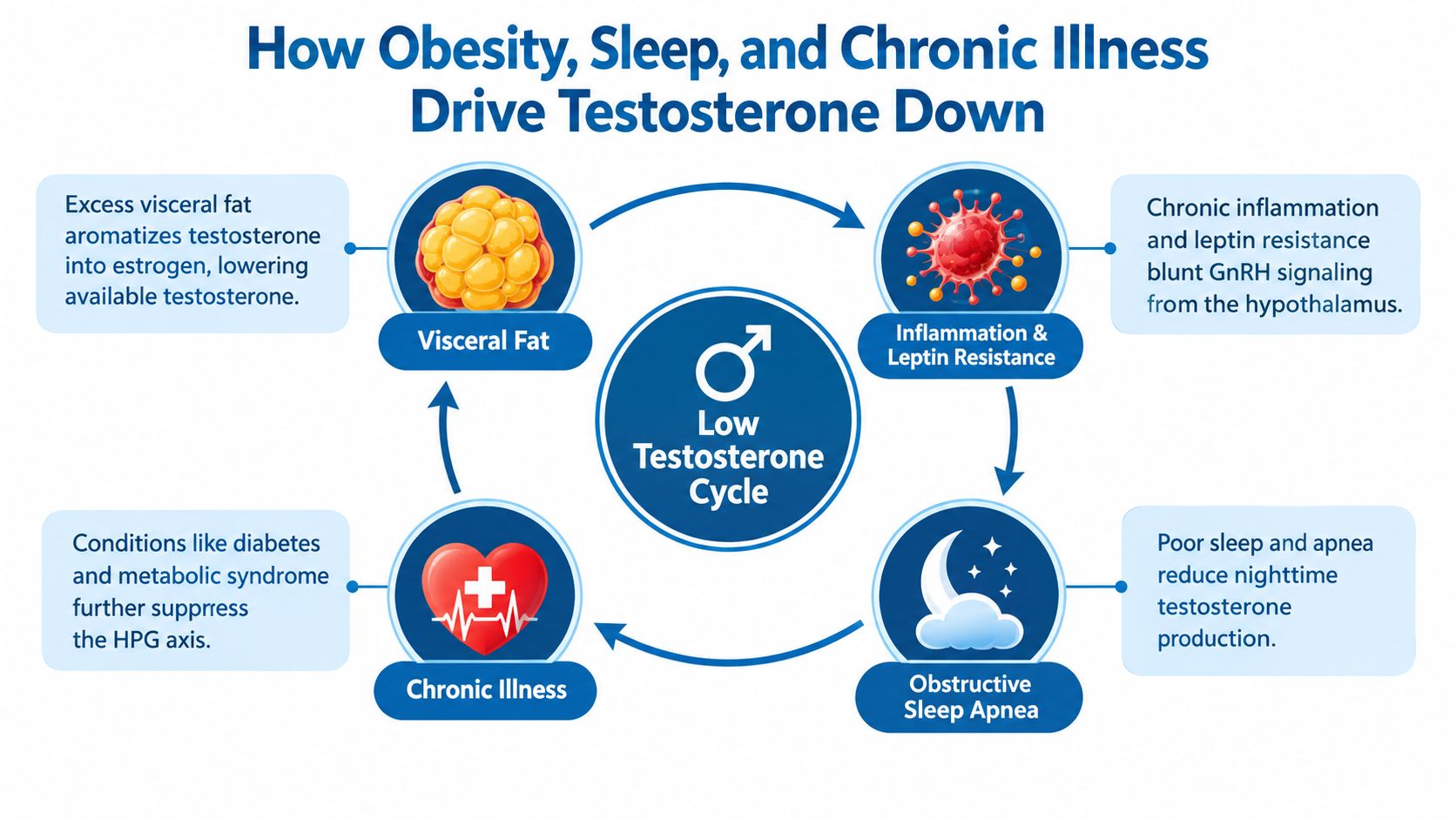
When testosterone levels dip, your body has a much tougher time building and preserving that calorie-burning muscle tissue. This can kick off a frustrating cycle: muscle loss slows your metabolism, which makes it easier to store fat and even harder to find the energy to work out.
This hormonal shift is precisely why many men in their 40s start noticing a real change in their body composition. They might see less muscle definition and more fat around the midsection, even if their diet and gym habits haven't changed at all.
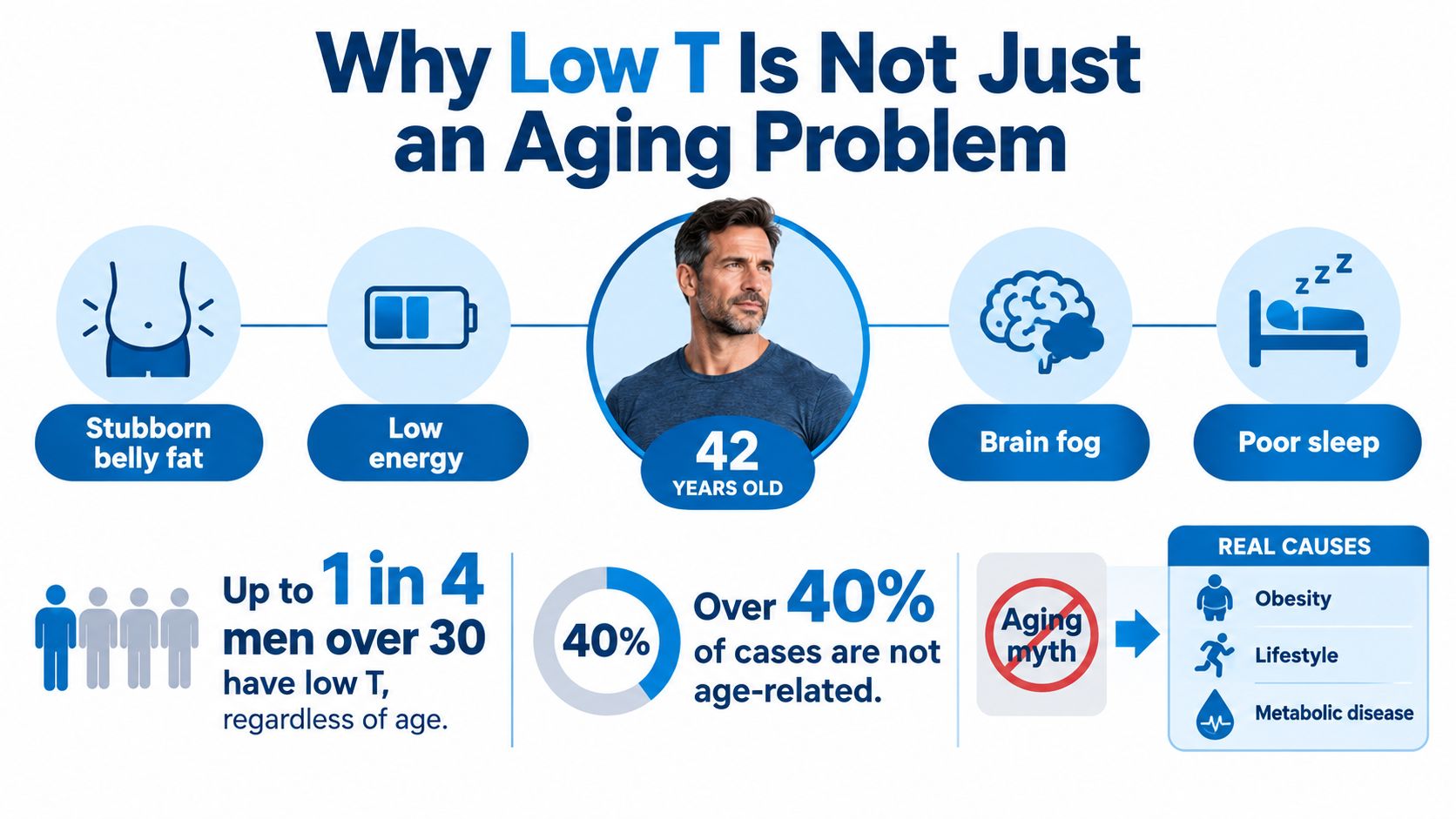
It's a common mistake to just write these changes off as "getting older." While aging is a factor, a significant hormonal imbalance is a medical issue that can be addressed—not just something you have to live with.
When Is It More Than Just Normal Aging?
So, how can you tell the difference between the normal, gradual changes of aging and a hormonal problem that needs medical attention? While a slow decline is expected, certain signs suggest your testosterone levels may have dropped to a point where they're actively hurting your quality of life.
Ask yourself if you're consistently experiencing several of these symptoms:
- Persistent Fatigue: A deep, nagging exhaustion that a good night's sleep just doesn't fix.
- Difficulty Building Muscle: You’re putting in the work at the gym but seeing little to no results in strength or size.
- Increased Body Fat: Especially that stubborn fat gain right around your belly.
- Low Motivation or Mood: A noticeable drop in your drive, focus, and general sense of well-being.
If this list hits close to home, it's a strong signal that it's time to get a professional assessment. Guessing what’s going on with your hormones isn't a strategy for success.
Getting Clear Answers and Taking Control
The only way to know for sure if a hormonal imbalance is undermining your metabolism is through a simple blood test and a conversation with a healthcare provider. This is where specialized care makes all the difference.
For many men, medically supervised hormone replacement therapy (HRT) is an evidence-based way to address these metabolic issues head-on.
Research has confirmed that hormonal changes during our 40s create real, measurable metabolic shifts that impact how our bodies burn calories and manage weight. As serum testosterone decreases with age, these fluctuations directly influence resting energy expenditure, body composition, and overall metabolic efficiency. You can read more about these biomolecular shifts at Stanford Medicine to understand the science.
At Pause Medical, we specialize in helping men across Mississippi understand and optimize their hormonal health. Our providers focus exclusively on testosterone replacement therapy to help you get your energy and metabolism back. We do not do anything for estrogen; our expertise is entirely dedicated to men's health through testosterone optimization. You can learn more by checking out our guide to hormone therapy services.
Don’t let a potential hormonal issue keep you from feeling your best. A simple consultation at one of our convenient Mississippi locations—from Oxford to Meridian and Starkville to Flowood-Jackson—can give you the clarity you need. Book your appointment at pausemedical.org to get tested, understand your numbers, and build a personalized plan to get your metabolism firing on all cylinders again.
Common Questions About Metabolism After 40
Let's be honest, trying to understand your metabolism after 40 can feel like wading through a sea of conflicting advice. It's a topic that brings up a lot of questions for the patients we see every day across Mississippi. Here are some of the most common ones, with practical, no-nonsense answers.
Can I Actually Speed Up My Metabolism?
This is the big one, and the answer is an emphatic yes. You can absolutely build a more powerful metabolic engine, even if you can't turn back the clock on aging itself.
The single most impactful thing you can do is increase your lean muscle mass. Think of muscle as your body's calorie-burning furnace; it's active tissue that torches calories even when you're just sitting on the couch. Fat, on the other hand, is mostly storage. By focusing on consistent strength training and eating enough protein to support muscle growth, you're not just fighting a decline—you're actively rebuilding your body's ability to burn energy efficiently.
How Do I Know if Hormones Are to Blame?
It’s rarely just one thing. A slowing metabolism is usually a mix of lifestyle habits and the natural hormonal shifts that come with age. But for men, certain red flags strongly suggest low testosterone might be a major piece of the puzzle.
Pay attention to these signs:
- Feeling wiped out all the time, even when you think you're getting enough sleep.
- Hitting the gym but struggling to build or even hang on to muscle.
- Gaining weight out of nowhere, especially around your stomach.
- Losing your drive, focus, or just feeling "off" emotionally.
If that list hits a little too close to home, it's time to get checked. You can't guess your hormone levels. The only way to know for sure is with a comprehensive blood panel and a talk with a medical professional. Here at our Pause Medical clinics in Mississippi, we can get to the bottom of it and see if testosterone optimization is the right move for you.
Don't let hormonal uncertainty hold you back. Getting clarity is the first step toward feeling like yourself again. It's easy to schedule your appointment at pausemedical.org.
How Long Until I Actually See Results?
This is a marathon, not a sprint. Consistency is everything. While everyone's body is different, most people start to feel a shift in their energy and focus within the first few weeks of making real changes to their diet, workouts, and sleep.
As for the changes you can see in the mirror? Noticeable improvements in muscle definition and a drop in body fat usually start showing up after about
8 to 12 weeks of consistent effort. The trick is to trust the process. Those small, daily habits are what build incredible momentum and lead to results that you can both see and feel for the long haul.
At Pause Medical, we offer the medical guidance and structured plans to help you make these changes stick. Whether that means a medically supervised weight loss program or exploring testosterone therapy, our team is here to help you succeed. With clinics from Tupelo down to the Jackson area, expert support is never far away. Book your consultation today at pausemedical.org and start rebuilding your metabolism.