Insulin Resistance Testing: A Complete Patient Guide
You've had the blood work, maybe even an A1C that came back “normal,” but you still feel off. Your energy is low, the weight keeps settling around your middle, cravings are harder to ignore, and no one has given you a clear answer that explains why you feel this way. That gap is exactly where insulin resistance testing can help, because insulin problems often show up long before routine labs look abnormal.
A common initial focus is on glucose. That makes sense, since glucose is what standard labs measure most often. But insulin resistance can be developing behind the scenes, and the body may be working much harder to keep blood sugar in range than a basic panel reveals. In real life, that's why people can feel unwell and still be told everything looks fine.
When Normal Labs Miss the Real Problem
A patient comes in after a yearly physical with reassuring numbers. The fasting glucose is fine, the A1C is fine, and the message from the visit is simple, “Nothing looks wrong.” Yet the story the patient tells is completely different, they're more tired than they used to be, they're gaining weight around the waist, and they feel like their body changed without asking permission.
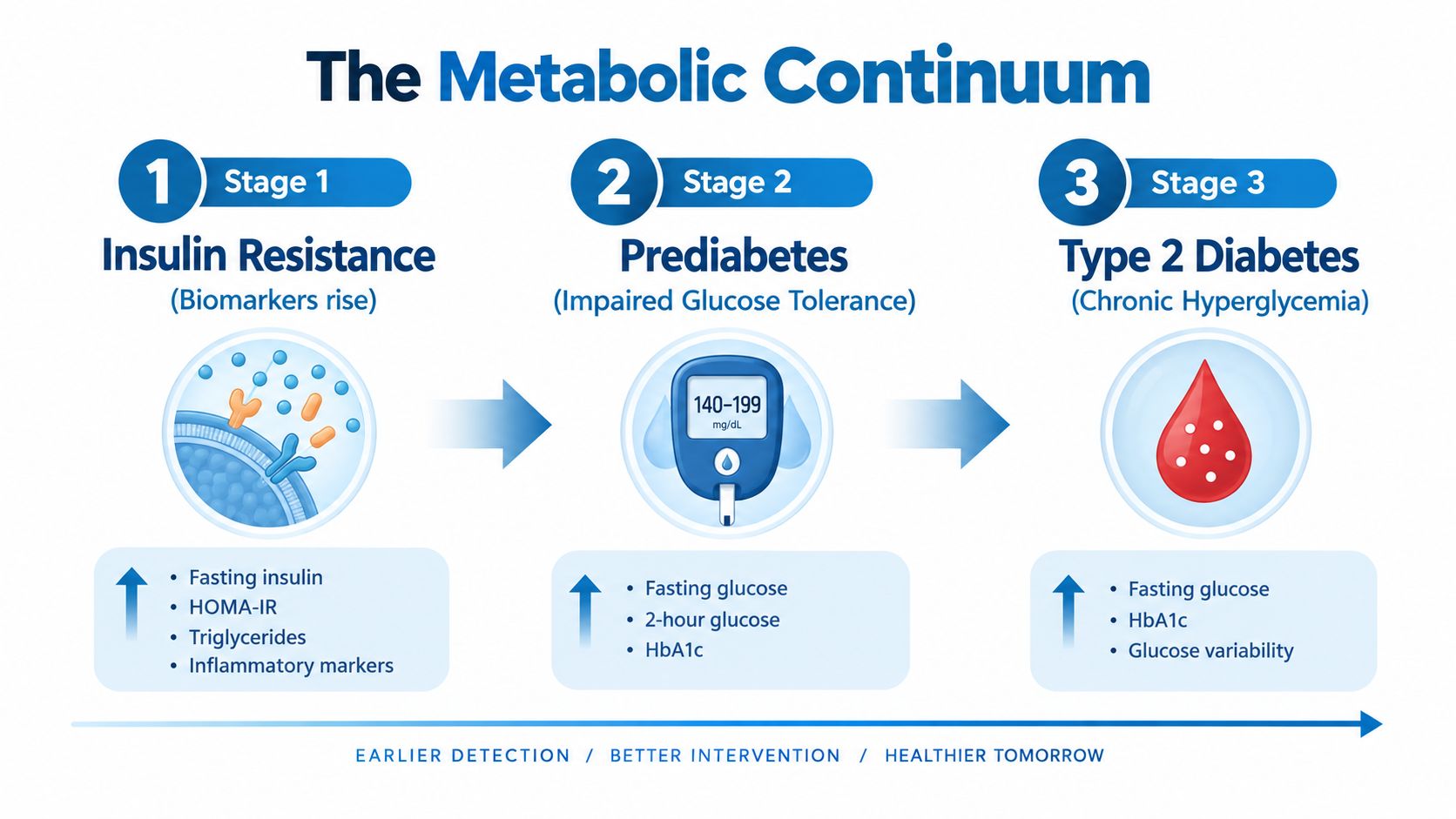
That mismatch is common. It happens because routine labs are designed to catch problems once blood sugar has already shifted, while insulin resistance can sit upstream for years. By the time glucose rises, the body has often been compensating for a long time, which is why earlier evaluation matters.
A fuller metabolic picture starts with asking a different question, not just “Is glucose normal?” but “How hard is the body working to keep glucose normal?” That's where insulin resistance testing becomes useful, especially when symptoms don't match a routine panel. For a basic overview of lab-based wellness screening, see the Wellness Lab Panel.
Practical rule: If symptoms suggest metabolic trouble and routine labs look reassuring, the next question is usually not whether the problem is real. It's which marker can show it earlier.
That's why this topic matters for patients who've been told to “watch it” but never got a satisfying explanation. It gives a way to connect how you feel with what's happening inside the body, instead of treating normal glucose as the end of the conversation.
What Insulin Resistance Actually Is
Insulin is the hormone that helps move glucose from the blood into cells so it can be used for energy. It works like a key, and the cell's doorway responds when the signal is working well.
With insulin resistance , the cells stop responding as well. The pancreas then has to make more insulin to get the same job done, and for a while that extra output can keep glucose numbers looking normal even while the system is under strain.
That is why insulin resistance can show up before diabetes and why it is linked with prediabetes , metabolic syndrome , weight gain, and conditions such as fatty liver and PCOS. The body may still keep glucose in the expected range, but it does so by asking the pancreas to work harder. Over time, that compensation may no longer be enough.

Why one lab number is never enough
Routine care does not have a single gold-standard test for insulin resistance, so clinicians usually rely on surrogate markers such as fasting insulin, fasting glucose, HOMA-IR , QUICKI , or related indices rather than a direct diagnostic assay. The research benchmark is the glucose clamp method, but it is too complex for everyday use, which is why simpler fasting-based tools became the practical answer ( StatPearls).
That gap matters. A normal glucose value may reflect how hard the pancreas is working, not whether metabolism is healthy. The lab can look calm while the underlying physiology is not.
The Main Tests Used to Detect Insulin Resistance
The useful way to think about testing is by the question each lab tries to answer. Some tests look at glucose exposure, some look at insulin output, and some combine both. None of them is perfect alone, which is why providers often look at the pattern instead of a single value.
Fasting glucose, fasting insulin, and HOMA-IR
A fasting glucose test asks whether blood sugar is already drifting upward after an overnight fast. A fasting insulin test asks how much insulin the body needed to hold that glucose in range. HOMA-IR combines both numbers into a simple estimate, which is one reason it became widely used after glucose-clamp research established the concept but not the practicality for routine care ( Diabetes Care).
That combination is helpful because glucose alone can miss early compensation. HOMA-IR is also the kind of test many patients hear about after a standard panel doesn't answer their question. If you're comparing metabolic and endocrine lab options, the thyroid and hormone testing overview can help frame why fasting markers are often paired together.
OGTT, HbA1c, C-peptide, and lipid markers
The oral glucose tolerance test (OGTT) checks how the body handles a measured glucose load over time, so it can show a different picture than a fasting draw. HbA1c reflects longer-term average glucose exposure, which is useful, but it still won't directly measure insulin response. C-peptide can help show how much insulin the pancreas is producing, and lipid markers such as triglycerides and HDL can add context when the metabolic pattern is starting to shift.
Clinical takeaway: The best test is the one that answers the question you actually have. If the question is “Is glucose already high?”, one test helps. If the question is “Is the body overproducing insulin to keep glucose normal?”, another test is more informative.
| Test | What It Measures | Preparation | Best At Showing |
|---|---|---|---|
| Fasting glucose | Blood sugar after an overnight fast | Fast beforehand | Whether glucose is already elevated |
| Fasting insulin | Circulating insulin after fasting | Fast beforehand | How hard the pancreas is working |
| HOMA-IR | Combined estimate from fasting glucose and insulin | Fast beforehand | Early insulin resistance pattern |
| OGTT | Glucose handling after a glucose drink | Fasting, then timed blood draws | How the body responds under challenge |
| HbA1c | Average glucose exposure over time | No special acute prep | Longer-term glucose trends |
| C-peptide | Insulin production signal from the pancreas | Often fasting or paired with glucose | Whether insulin output is high or low |
| Triglycerides, HDL, related lipid markers | Metabolic pattern in the blood | Often fasting | Clues that insulin resistance may be present |
The biggest limitation is that no single result tells the whole story. Labs can vary, and the meaning of a result depends on the context, symptoms, and the rest of the panel.
How to Read Your Results and What the Numbers Mean
Numbers calm some people and stress others, usually because no one explains what the threshold is really saying. A glucose result is not just “good” or “bad,” it's a clue about where the body sits on a continuum. The same is true for insulin and HOMA-IR.
The cutoffs you'll hear most often
Fasting glucose is often discussed in broad categories, normal, prediabetes, and diabetes. HbA1c is also grouped into those same clinical bands. The challenge is that these values show glucose exposure, not insulin resistance by itself, so a normal reading does not always rule out early metabolic strain.
Fasting insulin is harder to interpret because reference ranges vary by lab, and insulin assays are not standardized across institutions. HOMA-IR is similarly helpful but not universal, and readers will sometimes see HOMA1-IR and HOMA2-IR used as if they mean the same thing when they don't. That's one reason the exact method matters when a provider interprets your result.

What a “normal” result can still miss
A person can have normal fasting glucose and still have significant insulin resistance if the pancreas is working overtime to hold that glucose steady. That's why a result that looks fine on paper can still leave symptoms unexplained. The earlier section on testing patterns matters here, because the pattern often tells more than the standalone number.
For a patient-friendly way to think about lab interpretation alongside hormone workups, the how to read hormone blood test results guide is a useful companion. It reinforces a practical point, ranges help, but context decides meaning.
If you're reading your own report, ask two questions. First, which cutoff does this lab use? Second, does this result fit the symptoms I'm having?
Who Should Get Tested and When
People usually ask for insulin resistance testing when something doesn't add up. That might be central weight gain, frequent cravings, fatigue after meals, a family history of type 2 diabetes, PCOS, a history of gestational diabetes, or fatty liver. Certain medications can also change the picture, and symptoms often show up long before a routine panel does.
Public-health context makes that more important. More than 84 million U.S. adults have prediabetes, about 1 in 3 adults , and U.S. guidance recommends screening for prediabetes beginning at age 45 even without other risk factors ( Diabetes Care). That doesn't mean every person needs the same panel, but it does mean metabolic screening belongs in normal preventive care, not just in specialist offices.
A simple way to decide whether to bring it up is to look for mismatch. If the scale is changing, energy is dropping, or the waistline is shifting while standard labs stay reassuring, the conversation isn't over. It has just moved to earlier markers.
For a quick visual on how patients usually start that conversation, the video on getting hormone and metabolic labs can help frame the next step.
Why age matters, but symptoms matter too
Age-based screening is useful because risk rises over time. Symptoms matter because they often appear first. Both can be true at the same time, and either one is enough to justify a discussion with a clinician.
What Comes Next After the Results
A positive result is not the end of the story. It's the point where the plan becomes more specific. Nutrition, movement, sleep, and stress management are still the foundation, but they're no longer generic advice. They become targeted tools for improving insulin sensitivity.
When lifestyle is enough, and when medication enters the picture
Some people improve with structured lifestyle changes alone, especially when they catch the problem early. Others need medication support as well, and that can include metformin or, in the right setting, GLP-1 medications used for medical weight loss. The right choice depends on the full clinical picture, not just one lab value.
Hormone-related weight gain can change the strategy, too. Perimenopause, andropause, thyroid issues, and insulin resistance can overlap, so a plan may need to address more than glucose regulation. That's where integrated care matters, because fixing only one piece can leave the rest unchanged.
Useful frame: A lab result should lead to a decision, not just a label. If the decision is lifestyle change, medication support, or hormone evaluation, the plan should match the pattern you're seeing.
Turning the plan into something usable
A good treatment path should show what to do next, not just what went wrong. It should also fit your life, because habits that can't be maintained won't move the lab in a durable way. If you want a practical overview of reversal strategies, the how to reverse insulin resistance resource gives a patient-friendly starting point.
For teams that manage larger datasets or want to connect lab interpretation with digital workflows, the OMOPHub developer guide for EHR data is a helpful technical reference. It's not needed for a patient visit, but it shows how metabolic data can be organized more intelligently when clinics track patterns over time.
How Pause Medical Supports Evaluation and Treatment
A patient may come in with fatigue, weight gain, menstrual changes, or a fasting glucose that looks ordinary, yet still leave with the sense that something metabolic is being missed. Pause Medical works with patients in Mississippi who want a clinician to connect symptoms, labs, hormones, and weight changes in a single visit. The process is direct, online scheduling, an in-person evaluation with a board-certified provider, then a personalized plan built around the concern that brought you in. Depending on the clinical picture, that plan can include hormone replacement therapy, medically supervised weight loss, and ongoing medication management.
That approach matters when insulin resistance overlaps with menopause, andropause, thyroid concerns, or stubborn weight gain. A single lab result rarely explains the full pattern, so the evaluation needs to look at the endocrine system as a whole, with attention to which test answers which question. Pause Medical has locations in Oxford, Meridian, Tupelo, Flowood-Jackson, and Starkville , and it offers convenient, no-insurance care with a root-cause approach rather than a one-size-fits-all checklist.
The clinic also uses private blood testing, including a HOMA-IR fasting insulin resistance index test , when that is the right fit for the clinical question. A HOMA-IR result helps answer whether fasting insulin and glucose together suggest early insulin resistance, even when standard glucose markers have not changed yet. For a closer look at how advanced medical data can be used in care workflows, the AI agent for healthcare resource offers an interesting research perspective.
If you have been told your labs are normal but your body feels different, that is a reason to ask more precise questions. A consultation can help sort out whether insulin resistance testing, hormone testing, weight-loss support, or a broader medication review fits the pattern you are seeing.
Common Questions About Insulin Resistance Testing
How often should insulin resistance testing be repeated? If a treatment plan is started, repeat testing is often used to check whether the body is responding. The exact timing should be set by the clinician who ordered it, because the right interval depends on the test used and what changed in the plan.
Are at-home metabolic tests reliable? Some can provide useful screening information, but they don't replace a clinician's interpretation. Lab-based testing is still the better option when the question is clinical decision-making.
Is this usually covered by insurance? Coverage varies widely, and some insulin-focused tests are not treated the same way as standard glucose labs. Patients usually get the clearest answer by checking their plan before ordering.
What if my fasting glucose and HbA1c look normal but I still feel unwell? That's exactly when a broader look can help. Normal glucose markers don't always rule out early insulin resistance, especially if the symptoms point in that direction.
If your symptoms haven't matched your standard labs, Pause Medical can help you look deeper with board-certified evaluation, hormone and metabolic testing, and a plan built around what your body is doing. Visit Pause Medical to schedule a consultation and talk through whether insulin resistance testing, hormone care, or medically supervised weight loss is the right next step for you.