Does Testosterone Raise Your Blood Pressure? the 2026 Facts
You wake up tired even after a full night in bed. Your workouts don't feel the same. Your patience is shorter, your focus is off, and your sex drive isn't where it used to be. Then your labs suggest low testosterone, and suddenly a new question takes over your mind: does testosterone raise your blood pressure ?
If you live in Mississippi and you're already watching your heart health, that concern makes sense. A lot of men hear “testosterone” and think of steroid abuse, bodybuilders, swollen veins, and dangerous spikes in blood pressure. That image has scared many people away from asking reasonable questions about testosterone therapy , hormone replacement therapy , and whether treatment can be done safely.
The situation is more nuanced than the myths. Testosterone can affect blood pressure, but the effect depends heavily on dose, formulation, baseline health, and whether treatment is medically supervised. For some men with true hypogonadism, restoring testosterone to a physiologic range may even improve metabolic problems that contribute to high blood pressure in the first place.
Pause Medical provides care in Mississippi for patients seeking personalized support with hormone health, bioidentical hormones , medical weight loss , GLP-1 weight loss , chronic disease care, and medication management. If you're sorting through low energy, weight gain, low libido, sleep issues, or other symptoms that may overlap with andropause or metabolic dysfunction, this topic matters because blood pressure is never separate from the rest of your health.
The Hidden Question Behind Low T Treatment
A common version of this story goes like this. A man in Oxford, Tupelo, Meridian, Starkville, or the Flowood-Jackson area starts noticing he's not himself. He's dragging through the day, snapping at people he cares about, and losing motivation. He may have put on abdominal weight, and maybe his primary care visits now include tougher conversations about cholesterol, blood sugar, or blood pressure.

He starts reading about testosterone therapy and thinks, “This sounds like me.” Then he sees warnings online about blood pressure and heart risk, and the whole thing stalls out. He doesn't want to feel worse. He also doesn't want to ignore something treatable.
That hesitation is healthy.
A careful patient usually makes a safer patient. The goal isn't to rush into treatment. It's to understand what's actually risky and what's mostly confusion.
The hidden question behind low T treatment often isn't just “Will testosterone help my energy?” It's “Will I be trading one problem for another?” Men with symptoms of andropause, weight gain, fatigue, sleep trouble, and reduced libido are often also dealing with disease management issues like hypertension, insulin resistance, thyroid concerns, or early metabolic syndrome. Those conditions overlap. They also influence how a provider thinks about medication management .
Why this question gets so confusing
Public fear about testosterone often comes from two very different situations being blended together:
- Medically supervised TRT used to treat documented deficiency
- Non-medical androgen use at high doses, often with little or no monitoring
Those are not the same clinical situation. Not even close.
A man using physiologic replacement under physician supervision is trying to restore a hormone to an appropriate range. A person abusing supraphysiologic doses is pushing the body far beyond replacement. When people mix those together, the blood pressure conversation gets distorted fast.
The better way to think about it
Instead of asking whether testosterone is “good” or “bad” for blood pressure, ask better questions:
- What's your starting blood pressure?
- Do you have sleep apnea, obesity, or insulin resistance?
- What formulation is being used?
- Are labs and symptoms being monitored?
- Is the goal replacement or excess?
That's how a board-certified physician approaches this topic. Not with fear, and not with blind optimism. With individualized medicine.
Testosterone's Role in Your Cardiovascular System
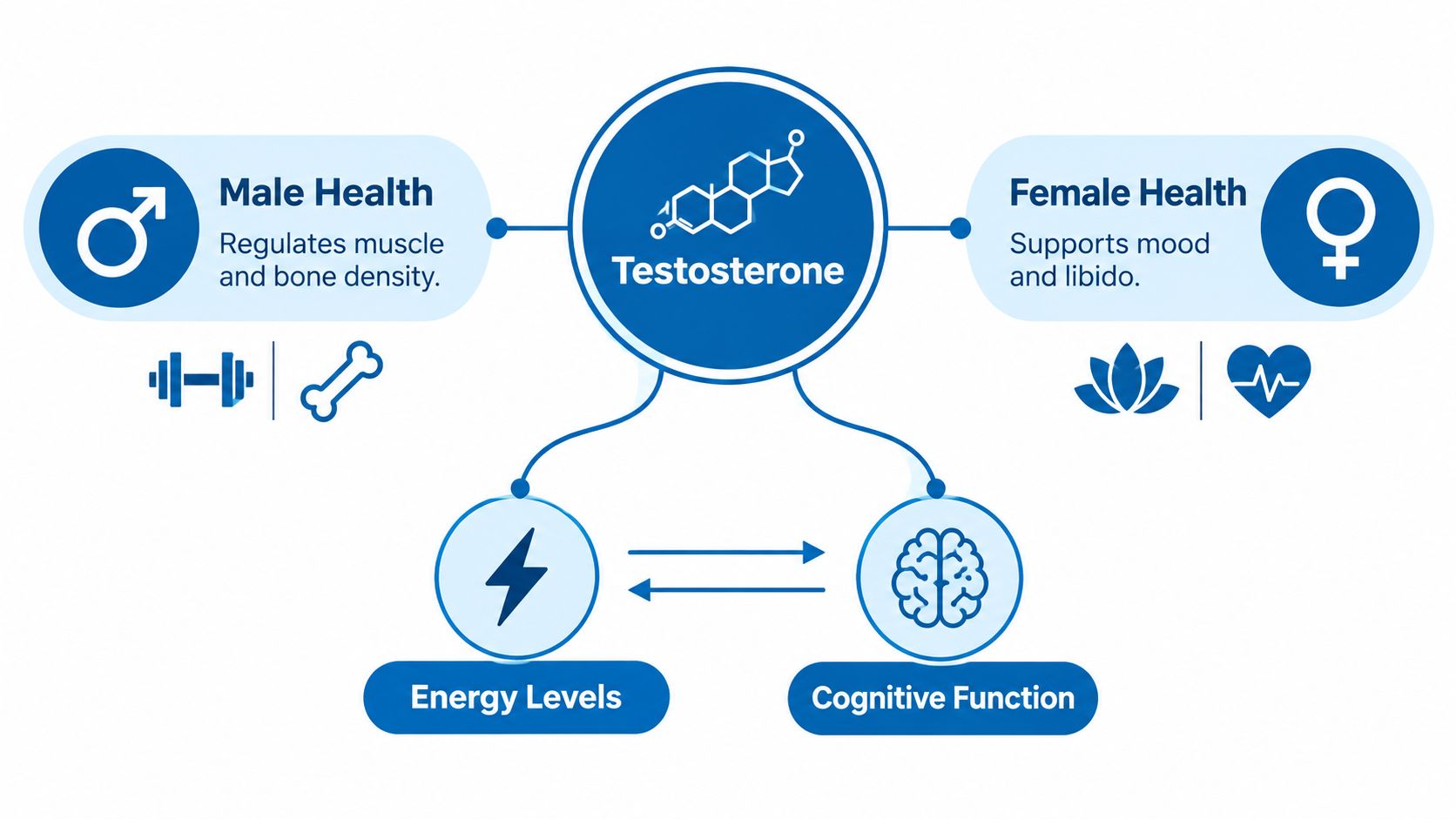
Testosterone doesn't act on just one organ. It affects blood vessels, red blood cell production, body composition, and metabolic function. That's why the blood pressure question isn't simple.

How testosterone can push blood pressure upward
One pathway involves red blood cell production . Testosterone can stimulate erythropoiesis. If red blood cell count and hematocrit rise too much, blood can become more viscous, which may increase vascular resistance and make blood pressure harder to control.
Another pathway is fluid and sodium retention . Some men, especially early in treatment or on less stable dosing, may retain more fluid. More circulating volume can mean higher blood pressure in susceptible patients.
These are real physiologic effects. They're part of why monitoring matters.
How testosterone may support cardiovascular function
Testosterone also interacts with blood vessel tone . At physiologic levels, it may support vasodilation and healthier endothelial function. It also influences body composition and metabolic health. That matters because excess visceral fat, insulin resistance, and lipid abnormalities are all linked with hypertension.
One of the most overlooked facts in this discussion is that low testosterone itself may contribute indirectly to high blood pressure risk . As summarized in this review on the link between testosterone and blood pressure, low testosterone is associated with higher body fat, insulin resistance, and dyslipidemia, and the relationship appears U-shaped , meaning both very low and very high levels can be problematic.
Practical rule: Blood pressure risk often rises at the extremes. Too little hormone can be a problem. Too much can be a problem. Replacement aims for the middle, not the extremes.
For coding and preventive documentation, some patients also find it helpful to understand how clinicians categorize cardiac risk assessment and screening for cardiovascular disease ICD 10 in routine medical workflows.
Why “normal range” matters more than hype
The safest frame is this: testosterone's cardiovascular effects depend on context .
| Situation | Likely blood pressure pattern |
|---|---|
| Untreated low testosterone with metabolic dysfunction | Indirectly higher BP risk may develop over time |
| Physiologic replacement with monitoring | Often stable, sometimes improved, occasionally needs adjustment |
| High-dose or poorly monitored use | Greater chance of BP elevation and related problems |
If you want a broader men's health overview beyond blood pressure alone, this testosterone and men's health guide is a useful starting point.
Decoding the Research What the Evidence Shows
A common scenario goes like this. A man finally gets an answer for fatigue, low libido, loss of muscle, and brain fog. His testosterone is low. Then he searches online, sees warnings about steroids, heart problems, and blood pressure, and wonders whether treatment will trade one problem for another.
That concern is reasonable. The research is easier to understand once you separate two very different situations: physiologic testosterone replacement for documented hypogonadism, and supraphysiologic androgen use such as anabolic steroid abuse. They are not biologically equivalent, and studies that blur them together create a lot of confusion.

What better studies suggest
The most useful clinical studies do not show a simple pattern where TRT predictably drives blood pressure upward in every patient. In properly selected men treated to normal physiologic levels, blood pressure often stays about the same. In some men, it improves indirectly as body composition, insulin sensitivity, energy, and waist circumference improve over time.
That makes physiologic TRT more like correcting a hormone deficiency than pressing a gas pedal. If a man starts treatment with low testosterone, visceral fat gain, poor sleep, low activity, and insulin resistance, the hormone problem is part of a larger metabolic picture. Correcting that deficiency does not guarantee lower blood pressure, but it can improve several contributors that push pressure up.
Why public fears often sound more dramatic than the evidence
Many online warnings come from reports about bodybuilding doses, stacked anabolic agents, or unsupervised testosterone use. Those exposures create higher peaks, more fluid retention, greater hematocrit rise, and more cardiovascular strain.
Clinical replacement works differently. The goal is to bring a deficient patient back into a normal range, then check whether the body is tolerating that dose. Dose, formulation, timing, sleep apnea status, and follow-up all shape the outcome.
Here is the practical distinction:
- Physiologic TRT aims to restore normal hormone levels in men with confirmed deficiency.
- Steroid abuse or poorly supervised use pushes levels beyond normal and raises the chance of side effects that can affect blood pressure.
- Monitoring gives clinicians the chance to adjust treatment before a mild trend becomes a larger problem.
That difference is the center of the blood pressure question.
What to take from the FDA warning
Testosterone product labeling now includes a warning that blood pressure can rise with treatment. Patients should take that seriously, but they should also understand what that warning does and does not mean.
A blood pressure warning means pressure should be measured and followed. It does not mean every man on TRT will develop hypertension. It also does not mean supervised replacement should be equated with steroid misuse. Good prescribing starts with the possibility of a pressure increase, then checks the individual response rather than assuming the outcome in advance.
This is one reason careful protocols matter. If you want to see what thoughtful prescribing and follow-up usually include, this patient guide to hormone replacement therapy guidelines offers a useful framework.
For readers interested in how technical safety data gets translated into clearer medical messaging, Innovating pharma scientific communications is a relevant example.
The most accurate question is not whether testosterone always raises blood pressure. The better question is whether this patient, on this dose, with this monitoring plan, is likely to stay in a safe physiologic range.
That is a much more precise, and much more useful, way to read the evidence.
Are You at Higher Risk Key Factors to Consider
The same testosterone plan won't fit every patient. A man with borderline blood pressure, untreated sleep apnea, central obesity, and a family history of heart disease needs a different level of caution than a younger, otherwise healthy man with documented deficiency and stable vitals.
Risk factors that change the conversation
Several issues make blood pressure changes more important to watch:
- Existing hypertension raises concern because there's less room for error if pressure climbs further.
- Obesity and metabolic syndrome matter because they often travel with insulin resistance, inflammation, and sleep-disordered breathing.
- Obstructive sleep apnea can worsen blood pressure on its own, even before hormones enter the picture.
- Kidney disease or fluid-sensitive conditions increase concern about volume retention.
- Family or personal cardiovascular history may call for a slower, more structured treatment plan.
One of the most common mistakes is thinking risk means “never treat.” Often it means “treat carefully.”
Clues that tell me someone needs a tighter plan
I get more cautious when a patient reports headaches, swelling, poor sleep, loud snoring, sudden weight gain, or inconsistent home blood pressure readings. None of those automatically rules out treatment. They do mean I want a more complete picture before making decisions.
A safer evaluation usually includes a review of symptoms, medications, blood pressure patterns, sleep quality, and overall metabolic health. In some men, the best first move isn't testosterone. It's addressing sleep apnea, weight, glucose control, or another root cause that's driving symptoms.
Some men don't need less evaluation. They need more of it.
If this overlap sounds familiar, this discussion of low testosterone and high blood pressure is worth reading because it focuses on the combined picture rather than treating each issue in isolation.
Safe TRT How Expert Monitoring and Personalization Protect You
A man starts testosterone because he is exhausted, gaining abdominal weight, and struggling with libido. What worries him most is not the prescription itself. It is the fear that treatment might push his blood pressure in the wrong direction.
That concern is reasonable. It is also where good medical care makes all the difference.

What expert monitoring actually looks like
Safe TRT starts with a simple principle. The goal is replacement, not excess.
That distinction gets lost in a lot of online discussion. Physiologic TRT aims to restore testosterone to a normal range for a man who is deficient. Steroid abuse pushes hormone levels far above normal, often with little or no monitoring. Those are very different situations, and they should not be treated as if they carry the same blood pressure risk.
A careful starting visit usually includes symptom review, repeat hormone testing when needed, blood pressure measurement, current medications, sleep history, and baseline labs. A clinician is asking a practical question: is this patient a good candidate for TRT now, and what needs to be watched closely once treatment begins?
Early follow-up matters because the first few weeks show how your body responds. Some men feel better with no blood pressure change. Some need a dose adjustment, a different formulation, or closer home readings before the plan settles in.
Formulation and dose affect the pressure response
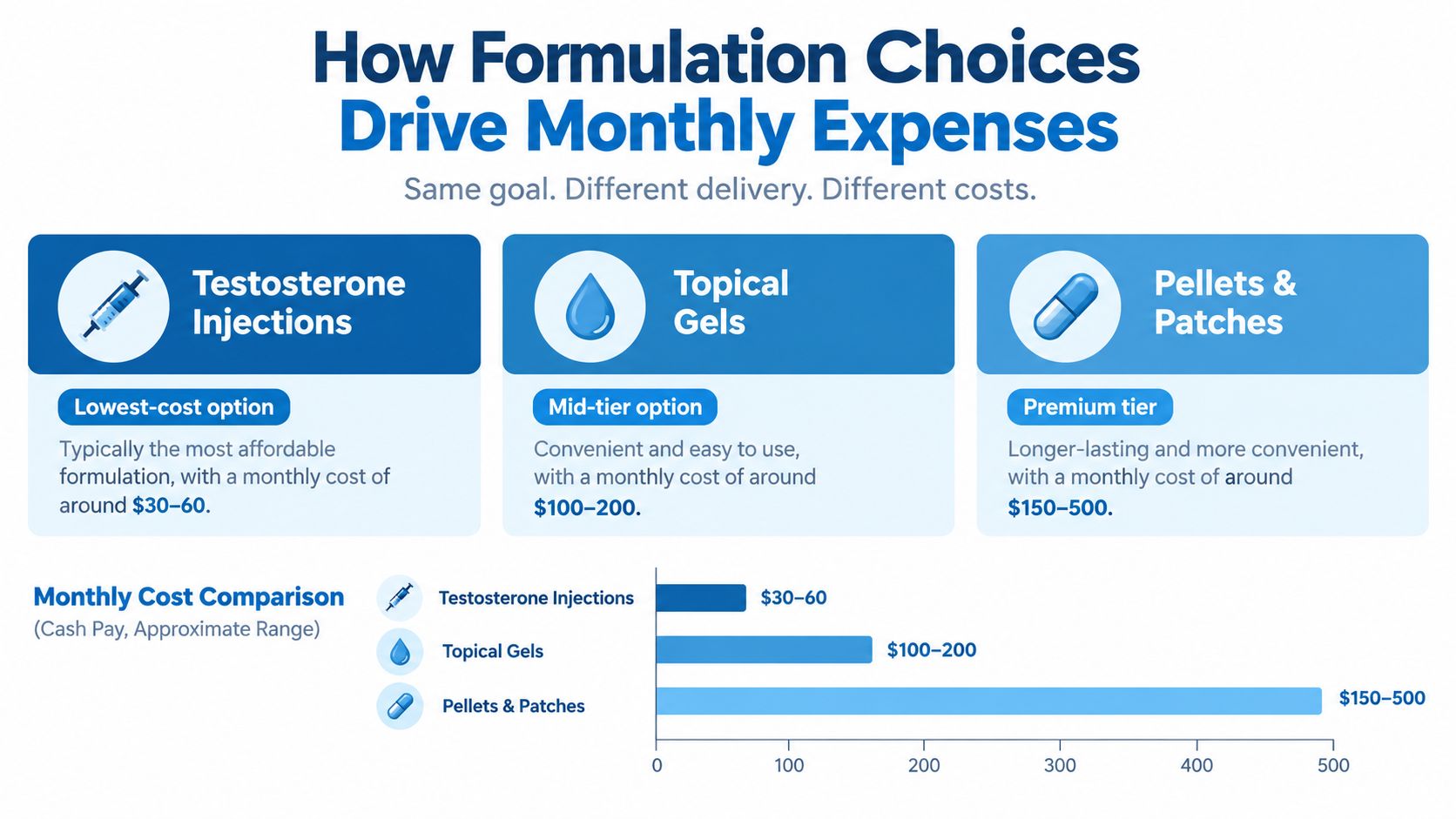
Testosterone is not one-size-fits-all. The delivery method changes how steady the hormone level is over time, and that can matter for side effects.
- Injections can create higher peaks and lower troughs, especially if the dosing schedule is too spread out for a given patient.
- Topical gels often provide steadier day-to-day absorption, though absorption can vary by person.
- Longer-acting options may help when the goal is to reduce fluctuation and simplify monitoring.
A useful analogy is a car ride. Smooth acceleration is easier on the system than repeated surges and hard braking. In the same way, keeping testosterone in a physiologic range is often easier on the body than allowing large swings.
For men with low testosterone tied to obesity, insulin resistance, or loss of muscle mass, treatment can sometimes improve parts of the metabolic picture that contribute to high blood pressure in the first place. That does not mean TRT is a blood pressure treatment. It means the full effect can be more nuanced than the myth that testosterone automatically raises pressure in every case.
One example in Mississippi is Pause Medical, which offers hormone replacement therapy, medical weight loss , support for metabolic concerns, and ongoing medication management for adults dealing with symptoms tied to andropause, menopause, weight gain, fatigue, low libido, and chronic disease care.
What should be monitored
Blood pressure is one checkpoint, not the whole dashboard. Safe treatment also means watching for changes that can explain why pressure might shift and whether the dose still fits the patient.
| What to track | Why it matters |
|---|---|
| Blood pressure | Detects early upward trends |
| Hematocrit | Helps catch an excessive red blood cell response |
| Testosterone level | Confirms treatment stays in a physiologic range |
| Symptoms | Flags headaches, swelling, dizziness, or sleep changes |
Patients also need to know what side effects deserve a call to the clinic and which ones are usually manageable with dose or formulation changes. This guide to hormone therapy side effects gives a practical overview.
For a quick visual explanation of monitoring and side effects, this video is helpful:
Good TRT care keeps treatment in a physiologic lane, looks for problems early, and adjusts the plan before a small issue becomes a bigger one.
Your Questions Answered on Testosterone and Blood Pressure
A common scenario goes like this. A man learns he has low testosterone, feels worn down for months, then notices he also has high blood pressure. His next question is understandable. “Is testosterone going to make this worse?”
Sometimes TRT can be started in someone who already has hypertension. The deciding issue is not a simple yes or no. It is whether the blood pressure is reasonably controlled, whether the low testosterone diagnosis is solid, and whether the treatment plan is built around physiologic replacement rather than the hormone extremes seen with anabolic steroid abuse.
That distinction matters. Properly prescribed TRT aims to restore testosterone to a normal range for men who are deficient. Steroid abuse pushes levels far above that range and creates a very different risk profile. Those two situations often get lumped together online, which causes a lot of unnecessary fear.
Can TRT be started if I already have high blood pressure
Yes, in many cases. Men with controlled hypertension are often treated safely with closer follow-up, while men with repeatedly high or unstable readings usually need the blood pressure issue addressed first.
Low testosterone also rarely exists in isolation. A patient may have excess weight, poor sleep, insulin resistance, or sleep apnea at the same time. Those conditions can push blood pressure up on their own. In that setting, treating hypogonadism is only one part of the plan. Weight management, sleep evaluation, nutrition, activity, and medication review often matter just as much.
What blood pressure reading is too high on TRT
Very high readings need prompt medical attention, whether you take testosterone or not. A home blood pressure around 160/100 mmHg or higher is generally a level where you should contact your clinician urgently, especially if the reading is persistent or you have symptoms such as chest pain, shortness of breath, severe headache, weakness, or vision changes.
Lower numbers still deserve attention if they are trending upward. Blood pressure behaves more like a pattern than a single snapshot. One isolated reading can be misleading. Several readings over days to weeks give a clearer picture.
Can starting TRT help me get off blood pressure medication
Sometimes, but it should not be the assumption going in.
Here is the part many articles miss. In men with true hypogonadism, physiologic TRT may improve some of the same metabolic problems that contribute to high blood pressure, including increased fat mass, low energy that limits exercise, and poor insulin sensitivity. Some studies have reported blood pressure improvement in hypogonadal men receiving testosterone treatment, particularly in those who started with higher baseline readings. That does not mean testosterone replaces blood pressure medication, and it does not mean every patient responds the same way.
A better way to look at it is this. TRT may remove one burden from the system in the right patient, but it is not a substitute for treating hypertension directly when medication is still needed.
How quickly can testosterone affect my blood pressure
Changes can appear within the first several weeks to months. That early phase deserves attention because dosing, formulation, fluid shifts, sleep changes, or rising hematocrit can all influence blood pressure.
Home monitoring helps here. A single office reading is like one frame of a movie. Home readings show the full sequence. They help your clinician tell the difference between a true trend and a stressful day.
What should I do before deciding
Start with a few practical questions:
- Was low testosterone confirmed correctly with symptoms, history, and appropriate lab testing?
- Is my blood pressure under reasonable control before treatment begins?
- Do I have other drivers of hypertension such as sleep apnea, weight gain, kidney disease, high alcohol intake, or stimulant use?
- What form of testosterone is being prescribed , and why does it fit my risk profile?
- What follow-up plan is in place for blood pressure, labs, and symptoms after treatment starts?
If you are still sorting through whether treatment fits your health picture, this guide to deciding if HRT is right for you can help you ask better questions at your visit.
Medical disclaimer: This article is for education only and is not a diagnosis or personal medical advice. Testosterone therapy, hormone treatment, medical weight loss medications, and chronic disease care should be prescribed and monitored by a qualified clinician who knows your medical history, exam findings, medications, and lab results.