Understanding low testosterone and high blood pressure: risks and solutions
If you're a man in Mississippi who's been feeling run down, noticed some weight creeping on, and just got a high blood pressure reading that made you sit up and take notice, you might be missing a key part of the story.
There’s a real, and often overlooked, link here. Low testosterone doesn't just tank your energy or sex drive—it can be a direct contributor to hypertension. Let's break down what's actually happening in your body and what you can do about it, right here in Mississippi.
The Hidden Link Between Low T and High Blood Pressure
For a lot of guys, high blood pressure seems to come out of the blue. It’s easy to blame it on stress or just getting older. But what if the real culprit is a hormone imbalance?
Think of testosterone as a key player in your body's metabolic and cardiovascular health. When levels are where they should be, testosterone helps keep your blood vessels relaxed and flexible, keeps inflammation in check, and helps manage body fat.
When those levels drop, the whole system can get thrown off kilter. This isn't just a small problem; it can trigger a chain reaction that directly sets the stage for high blood pressure.
How Low Testosterone Creates a Domino Effect
A drop in testosterone can create a real mess for your cardiovascular system. Here’s a play-by-play of how it all goes down:
- Impact on Blood Vessels: Testosterone plays a vital role in producing nitric oxide. This is the stuff that tells your blood vessels to relax and open up. With less testosterone, you get less nitric oxide, leading to stiffer arteries. Your heart then has to work much harder to push blood through this rigid plumbing.
- The Weight Gain Problem: Low T makes your body more likely to store visceral fat—that’s the unhealthy fat that accumulates deep in your belly and surrounds your organs. This fat isn't just sitting there; it actively pumps out inflammatory chemicals that can drive your blood pressure sky-high. Our medically supervised weight loss programs at Pause Medical are designed to tackle this exact issue.
- Metabolic Mayhem: There's a strong connection between low T and insulin resistance. That’s when your body’s cells don’t respond well to insulin, making it hard to control blood sugar. This not only puts you on the path to type 2 diabetes but is also a well-known driver of hypertension.
For men all over Mississippi, from the Delta to the Gulf Coast, seeing these connections is the first real step toward getting back in control. That fatigue you're feeling and that high BP reading could be two sides of the same coin: a hormonal issue that needs to be addressed.
Understanding this relationship is powerful. It means your high blood pressure might not be a standalone problem, but rather a symptom of something deeper that you can actually fix. At Pause Medical, we specialize in hormone therapy services that offer real answers and a clear plan for tackling the root of the issue.
How Low Testosterone Can Drive Up Your Blood Pressure
If you're dealing with both low testosterone and high blood pressure, it's easy to think of them as two separate health problems. But in reality, they're often deeply connected. One can directly fuel the other.
This isn't a coincidence. It's a biological chain reaction that kicks off when your body's main male hormone drops too low. Getting a handle on how this works is the first step toward finding a solution that actually lasts.
The link often starts with your blood vessels. Testosterone is a key player in producing nitric oxide, a crucial molecule that tells your arteries to relax and open up. Think of nitric oxide as the body's natural "Drano" for your plumbing—it keeps everything flowing smoothly.
When testosterone levels fall, so does nitric oxide production. This makes your blood vessels stiff and less flexible. As a result, your heart has to pump much harder to push blood through, which directly causes your blood pressure numbers to climb.
This concept map shows the clear pathway from low testosterone to metabolic problems and, ultimately, to high blood pressure.
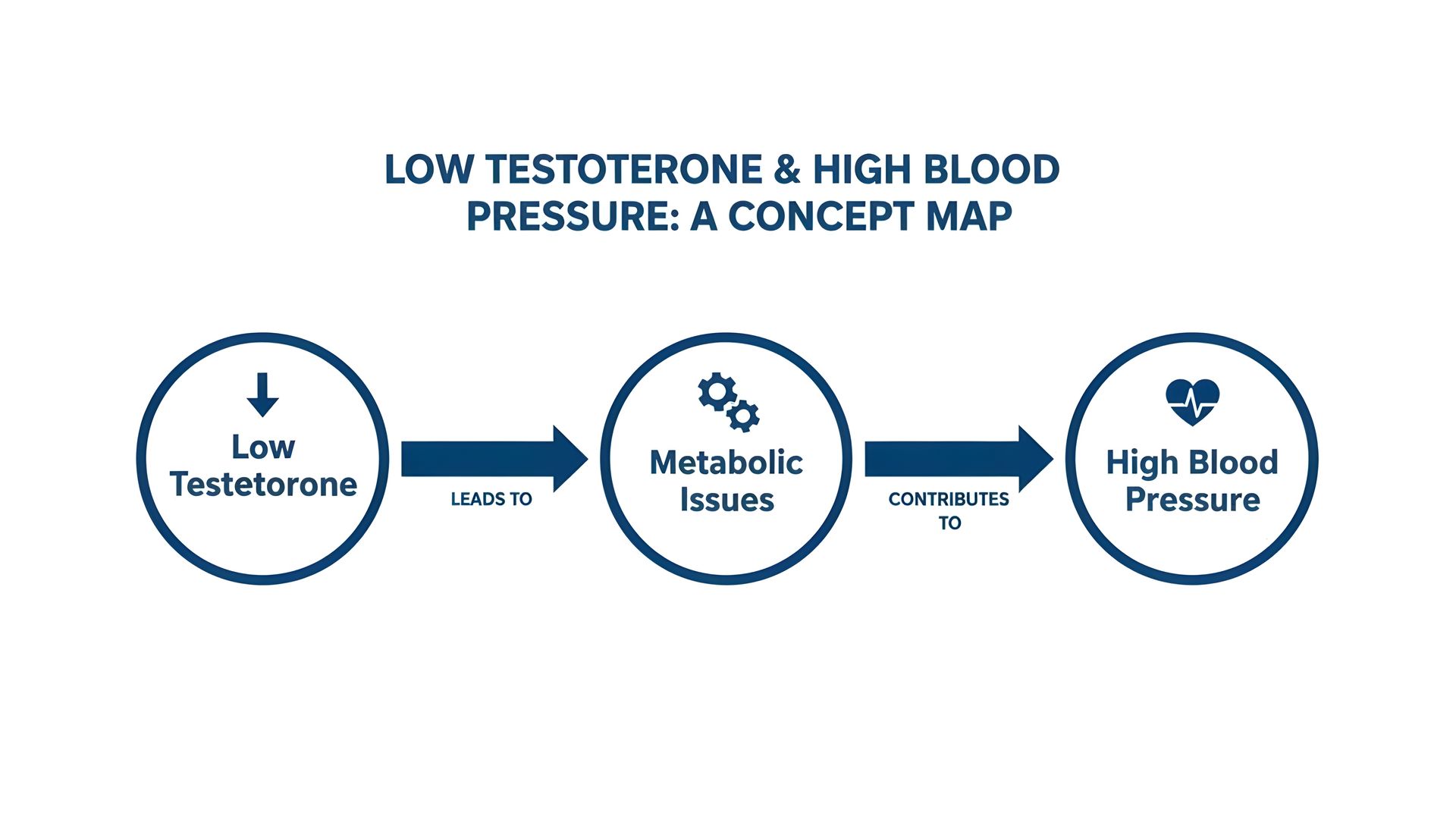
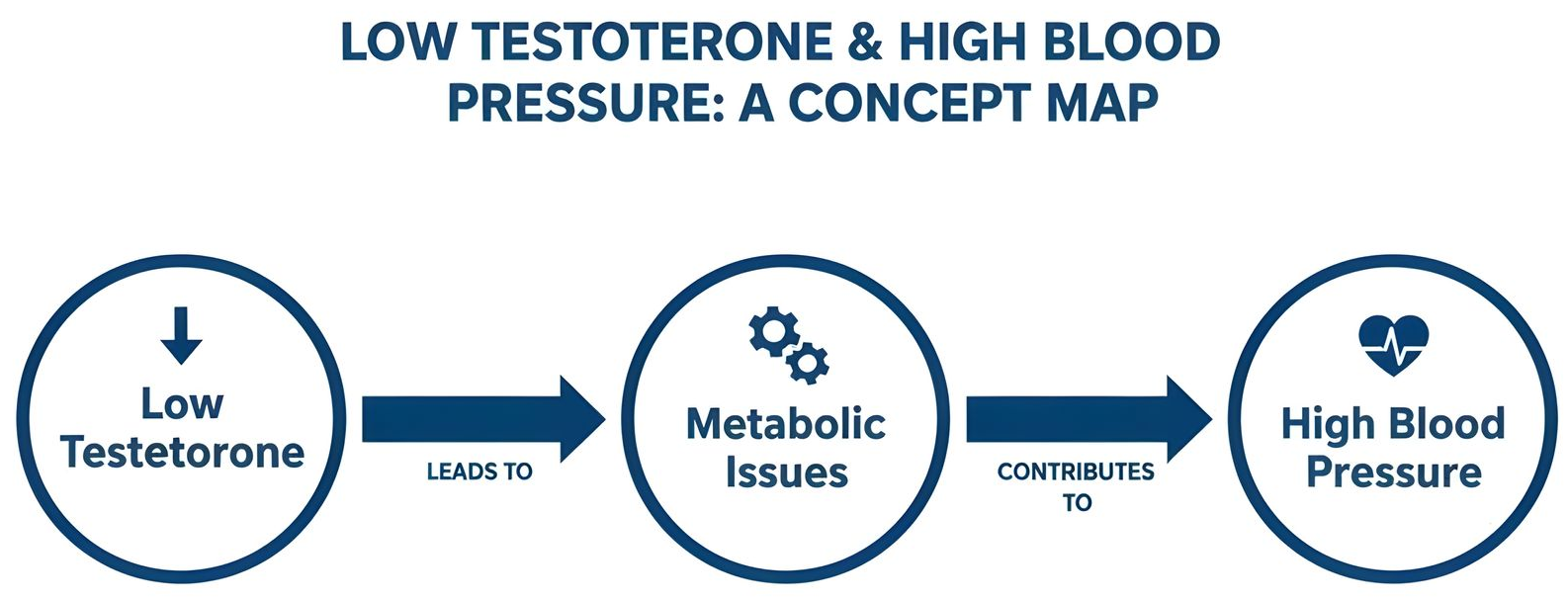
As you can see, the hormonal imbalance is often the starting line for a whole host of cardiovascular issues.
The Impact of Visceral Fat
Another huge piece of the puzzle is how low testosterone changes your body composition. It specifically encourages your body to store visceral fat—that dangerous, metabolically active fat that wraps itself around your internal organs.
This isn't the fat you can pinch on your stomach. It's an internal troublemaker that pumps out inflammatory compounds and throws your other hormones out of whack.
This buildup of visceral fat is a major driver of insulin resistance, a state where your cells stop responding properly to insulin. Your pancreas has to work overtime, your blood sugar rises, and this process damages the delicate lining of your blood vessels, contributing to hypertension. For many men we see in our Mississippi clinics, this underlying hormone issue is the missing link explaining their struggles with both weight and blood pressure.
It’s a frustrating cycle. You try to eat right and work out, but the low testosterone makes it incredibly hard to lose fat and build muscle. This just reinforces the very conditions that are pushing your blood pressure higher.
Disruption of Your Body's Fluid Balance
Finally, testosterone helps keep the renin-angiotensin system in check. This is a complex hormonal network that manages your body's fluid and sodium levels.
When low testosterone throws this system off balance, your body can start holding onto too much salt and water. This extra fluid volume inside your blood vessels physically increases the pressure against the vessel walls, leading straight to hypertension.
And the data backs this up. Studies have found a staggering 41% higher prevalence of hypertension in men with testosterone below 2.5 ng/ml compared to those with healthier levels. Another analysis of over 14,000 men revealed that 23.3% of those with low T had hypertension, while only 16.5% of men with normal levels did. That's a significant difference, even after accounting for other risk factors. You can read the full research on cardiovascular risk factors if you want to dive deeper into the data.
By addressing the root hormonal imbalance, you can start to reverse these trends. Restoring testosterone can lead to better body composition, a topic we explore more in our guide on how exercise and hormone health are connected.
Recognizing the Overlapping Warning Signs
It's one of the most frustrating parts of dealing with low testosterone and high blood pressure: the symptoms often blur together. You might write off feeling constantly drained as a consequence of long work weeks, or maybe you assume that "brain fog" is just a normal part of getting older. But these subtle shifts could be your body's way of signaling a much deeper hormonal and cardiovascular problem.
For so many men across Mississippi, these warning signs are easy to ignore until a routine health screening flags something more serious. Learning to spot the overlap is the first real step in connecting the dots between how you feel every day and your long-term heart health.
Overlapping Symptoms of Low Testosterone and High Blood Pressure
Because the symptoms can be so similar, it's easy to misinterpret what your body is trying to tell you. This table breaks down some of the most common signs and how they relate to each condition.
| Symptom | Common in Low Testosterone | Common in High Blood Pressure | Potential Connection |
|---|---|---|---|
| Fatigue/Low Energy | ✔️ | ✔️ | Poor cardiovascular function can cause fatigue, as can the metabolic slowdown from low T. |
| Brain Fog/Poor Focus | ✔️ | ✔️ | Can result from reduced blood flow to the brain (hypertension) or the neurological effects of low T. |
| Unexplained Weight Gain | ✔️ | ✔️ | Low T promotes visceral fat, a major driver of insulin resistance and high blood pressure. |
| Mood Swings/Irritability | ✔️ | ✔️ | Hormonal imbalances and the physical stress of hypertension both impact emotional regulation. |
| Erectile Dysfunction (ED) | ✔️ | ✔️ | A classic sign of both low T and vascular damage caused by high blood pressure. |
Seeing these symptoms laid out makes it clear why trying to guess the cause on your own is so difficult. They are deeply intertwined.
Why a Professional Diagnosis Is Crucial
High blood pressure is famously called the "silent killer" because it often shows no obvious signs until it's already causing damage. But the underlying metabolic issues that fuel both hypertension and low T often create a pattern of shared warning signs that you can feel.
Here are a few that often get overlooked:
- Persistent Fatigue and Low Energy: This isn’t just being tired. It’s a deep, bone-weary exhaustion that sleep can't seem to touch. This can be caused by your heart working overtime or by the metabolic drain of low testosterone.
- Difficulty Concentrating or "Brain Fog": If you're struggling to focus or feel like your thinking is cloudy, it could be a sign of poor blood flow to the brain from hypertension or a direct neurological effect of low T.
- Unexplained Weight Gain, Especially Around the Midsection: Low testosterone practically signals your body to store visceral fat (the dangerous kind around your organs), which in turn is a primary driver of high blood pressure.
- Mood Swings and Irritability: Feeling on edge or emotionally volatile isn't just a personality quirk. It can be a direct result of hormonal imbalances or the physiological stress of hypertension.
If that list sounds uncomfortably familiar, it’s probably time to stop guessing. Take the first step toward getting real answers by completing our brief online testosterone quiz to see if your symptoms point toward a potential hormone imbalance.
Trying to self-diagnose based on symptoms alone is a recipe for frustration and, worse, a missed opportunity for effective treatment. The overlap is just too significant to untangle without a professional look under the hood.
At Pause Medical, we see men from Oxford to Tupelo who have spent years feeling 'off' without understanding why. A comprehensive evaluation that looks at both your hormone levels and cardiovascular markers is the only way to get a clear and accurate picture of your health. With convenient clinics across the state, getting answers has never been easier.
Ignoring these signs won't make them go away. The longer low testosterone and high blood pressure go unaddressed, the greater the risk to your health down the road. Don't wait for a serious health event to finally take action.
The Cardiovascular Risks of Ignoring Low Testosterone
Putting off dealing with low testosterone isn't just about living with the symptoms—it’s a real gamble with your long-term cardiovascular health. While the connection to high blood pressure is a big deal, it's really just the tip of the iceberg. Over time, this hormonal imbalance can quietly weaken your heart health from the inside.
Think of healthy testosterone levels as a natural shield for your heart and arteries. When that shield is gone, your body is left open to a whole cascade of problems that can slowly build up for years.
More Than Just Blood Pressure
The danger goes way beyond a high number on the blood pressure machine. Letting low T fester can speed up the development of serious conditions that put your health and vitality on the line.
Here’s a look at what’s really going on under the hood:
- Accelerated Atherosclerosis: Low testosterone can cause your arteries to harden and narrow. It fuels inflammation and helps plaque build up, which chokes off blood flow and makes your heart work overtime just to keep up.
- Worsening Metabolic Syndrome: This is a nasty cluster of issues—high blood pressure, high blood sugar, extra belly fat, and out-of-whack cholesterol—that sets the stage for major diseases. Low T is a key player here, creating a vicious cycle that’s tough to escape without getting your hormones back on track.
- Elevated Risk of Major Cardiac Events: When you combine stiff arteries, metabolic chaos, and chronic inflammation, you dramatically increase your odds of a heart attack or stroke. For many men in Mississippi, it’s a silent threat they don’t connect to their symptoms until a crisis hits.
The point here isn't to scare you, but to arm you with the facts. Knowing the serious, long-term stakes is what makes proactive care and a proper diagnosis so incredibly important.
The Stakes Are Higher Than You Think
The link between low testosterone and bad heart outcomes isn't just a theory; it's backed by some pretty stark clinical data. Ignoring the hormone piece of the puzzle can have life-altering consequences, especially for men who are already dealing with some form of cardiovascular disease (CVD).
The latest findings are truly sobering. Research has revealed that men with low testosterone who also have existing CVD face up to a 93% increased risk of dying from any cause. This staggering risk holds true whether they have high blood pressure or not, highlighting just how crucial testosterone is for survival on its own. You can dive into the specifics of this comprehensive study on male CVD patients to really grasp the seriousness of the situation.
This data sends a clear message: getting your testosterone optimized isn't just about feeling better in the short term. It’s a foundational strategy for protecting your health for the long haul.
If these risks are on your mind, the first step is to get some real answers. Don’t wait for a health scare to make a move. The expert team at Pause Medical can give you a thorough evaluation to find out what’s really causing your symptoms. Book your appointment at pausemedical.org to get started with our compassionate, evidence-based approach.
For more on proactive health strategies, feel free to explore our other articles on the Pause Medical wellness blog. Taking charge of your hormonal health is one of the smartest investments you can make in your future.
A Modern Approach to Restoring Your Health
When you're dealing with both low testosterone and high blood pressure, it can feel like you're fighting a battle on two fronts. But the answer isn't just about chasing symptoms. The real solution lies in a modern, medically-guided strategy that targets the root of the problem, aiming to restore your body's natural balance and begin reversing the underlying metabolic issues. It's about making a powerful, positive shift in your health—one you can feel every day and see on your lab reports.

This is exactly what we specialize in at Pause Medical. We design personalized health plans to help men all across Mississippi get their vitality back. Your journey starts with a comprehensive, in-person consultation and advanced lab work at one of our clinics, whether you’re near Flowood-Jackson, Oxford, or any of our other locations.
A Personalized Plan Built for You
Our expert providers will create a strategy based on your unique biology and health goals. This is the opposite of a one-size-fits-all approach; it’s a blueprint built specifically for you.
A cornerstone of this plan may be Testosterone Replacement Therapy (TRT). The whole point of TRT is to bring your hormone levels back into an optimal range. Doing so can directly push back against many of the metabolic problems that are often driving up blood pressure in the first place.
For many of our patients, we combine this hormonal optimization with our medically supervised weight loss programs. The two work together in a powerful synergy, speeding up your results. TRT makes it much easier to build lean muscle and shed stubborn fat, while our weight loss guidance gives you the framework to make sure your efforts in the kitchen and gym really count.
This dual approach tackles the problem from both angles—the low testosterone that’s disrupting your metabolism and the excess weight that’s putting a strain on your heart.
Reassuring Data on TRT and Blood Pressure
It’s completely understandable for men with hypertension to be cautious about starting hormone therapy. But modern research offers a lot of reassurance. Here’s a game-changer: professionally managed TRT, particularly with treatments like testosterone undecanoate (TU), can actually help lower blood pressure in men with low T.
One detailed analysis found that TU treatment led to significant blood pressure reductions over time, especially in men who started with higher numbers. In fact, among a group of 214 untreated men with low T, a staggering 91.6% saw their systolic blood pressure climb higher. In contrast, the men receiving TU experienced controlled drops. This is compelling evidence that directly challenges outdated fears about TRT causing hypertension. You can discover more about the link between testosterone and blood pressure to see the science for yourself.
Our team at Pause Medical keeps up with the latest research. We use these evidence-based protocols to ensure your treatment is not just effective but also safe, and we monitor you carefully every step of the way.
By addressing the root hormonal cause, you’re not just masking symptoms—you’re rebuilding your health from the ground up, giving your body the tools it needs to function correctly again.
This integrated approach is the key to lasting change. It's a shift from simply managing high blood pressure to truly restoring the foundational health you've lost. To learn more about what this involves, take a look at our complete guide to Testosterone Replacement Therapy.
Ready for a real solution that gets real results? It’s time to break the cycle of fatigue, weight gain, and worrying health numbers. The path back to feeling like yourself again starts with a single step. Book your consultation at pausemedical.org today and let our team create a plan to help you feel your best.
Common Questions About Testosterone and Blood Pressure
Taking that first step toward hormone therapy is a big deal, especially when you're also managing high blood pressure. It’s completely normal to have a lot of questions. You want to know what to expect and feel confident you're making the right choice for your health.
We get it. We've talked with men all over Mississippi who are in the exact same boat. Here are some of the most common questions we hear, answered in a straightforward, non-judgmental way to help you see the path forward.
If I Start Testosterone Therapy, Will My Blood Pressure Automatically Go Down?
That’s a hope we hear a lot, and it makes sense. While many studies link normalized testosterone levels to better blood pressure, it's not an instant fix or a guarantee.
Think of it this way: testosterone replacement therapy (TRT) gets to one of the deep-seated root causes of the problem. It helps your body build more muscle and burn fat, cools down systemic inflammation, and improves how you handle insulin. Over time, all of these positive changes can absolutely help lower your blood pressure.
But TRT is one powerful tool in the toolbox, not the whole toolbox. At Pause Medical, we see hormone optimization as part of a bigger picture. We'll be keeping a close eye on your blood pressure, and we’ll almost certainly talk about lifestyle changes or even our medically supervised weight loss program to get the best, most lasting results. The real magic happens when all these pieces work together.
Is TRT Safe If I Already Have High Blood Pressure?
This is probably the most important question you can ask, and it highlights why you need to work with a medical expert. The short answer is yes—when managed by experienced providers like our team in Mississippi, TRT can be a safe and effective treatment for men with controlled hypertension.
Your safety is our absolute priority. Before anything else, we start with a complete evaluation of your health, paying special attention to your cardiovascular system and any medications you’re taking. This is non-negotiable.
Throughout your treatment at Pause Medical, we don’t just "set it and forget it." We schedule regular follow-ups and run labs to keep your hormone levels in that sweet spot. We also monitor key markers like your blood pressure and red blood cell count (hematocrit) to stay ahead of any potential issues. It's a hands-on, personalized approach designed to keep you safe and ensure the treatment works for you.
If you're wondering how TRT would fit with your current health situation, the best next step is a direct conversation. Schedule a consultation at pausemedical.org to talk one-on-one with a provider at one of our Mississippi clinics.
Can I Just Focus on Diet and Exercise Instead of Hormone Therapy?
Diet and exercise are the foundation of good health, period. We champion them for every single patient, and they are essential for managing blood pressure.
But here’s the frustrating reality for many men: if clinically low testosterone is what's driving your metabolic problems, diet and exercise alone often feel like spinning your wheels. You hit the gym and eat clean, but the weight won't budge and building muscle is a real struggle. It’s an incredibly discouraging cycle.
At Pause Medical, we help you break that cycle. By getting your hormones back in balance with TRT, we make all your hard work in the kitchen and the gym actually pay off. Think of it as giving your body the right tools to respond to your efforts.
How Do I Get Started with Pause Medical in Mississippi?
Getting started is simple. We've made it as convenient as possible because we know you're busy. You can book an appointment online right now at pausemedical.org for any of our Mississippi locations, including Oxford, Tupelo, Meridian, Flowood-Jackson, and Starkville.
Your first visit is an in-person consultation. You'll sit down with a provider who will listen to your goals and symptoms in a completely non-judgmental space.
We also believe in straightforward, upfront pricing with no insurance headaches. If you’re tired of guessing what’s wrong and ready for a clear plan to get your energy and vitality back, booking that first appointment is the most powerful step you can take.
At Pause Medical, our goal is to help you see the complete picture of your health. If you're wrestling with low testosterone and high blood pressure, our team is here to give you the expert guidance you deserve. Take control of your health journey by booking your appointment today at https://pausemedical.org.