Bioidentical Hormone Replacement Therapy for Males: A 2026
You may have noticed a gradual change rather than one dramatic symptom. Sleep doesn't restore you the way it once did, workouts require more recovery, motivation feels harder to access, and sexual interest has declined. You might wonder whether this is aging, stress, poor sleep, weight gain, or a hormone problem.
Bioidentical hormone replacement therapy for males can be part of that conversation, but it isn't a shortcut to more energy or a treatment based on one symptom. A responsible evaluation connects persistent symptoms with medical history, fertility goals, physical findings, and properly timed laboratory testing. This guide explains what bioidentical testosterone means, how delivery methods differ, what happens during a Mississippi clinic visit, and which safety discussions deserve your full attention.
When Energy and Drive Quietly Disappear
A man in his forties or fifties may notice a gradual shift. He continues working, caring for family, and exercising, yet sleep no longer restores him. Afternoon concentration fades, familiar activities feel like chores, and sexual interest declines. Muscle soreness may also last longer after training.
The change can feel personal. Some men label reduced drive as laziness and respond by pushing harder. That interpretation may delay medical care, particularly when fatigue, low mood, poor sleep, erectile changes, and reduced strength appear together.
These symptoms do not point to testosterone alone. Sleep apnea, depression, medication effects, thyroid disease, metabolic conditions, chronic stress, and insufficient recovery can produce a similar pattern. A hormone evaluation should sit within a broader health review, helping determine whether testosterone deficiency is one possible contributor.
A useful starting point: Symptoms justify investigation, not an automatic decision to begin testosterone therapy.
The clinical question is specific: Are compatible symptoms present, and is testosterone consistently low on appropriately timed testing? A recent review reports that testosterone deficiency prevalence varies across studies, from 2% to 77% , showing why one laboratory result cannot establish the diagnosis by itself ( review of testosterone deficiency and therapy).
Before a Mississippi clinic visit, record when the change began, how it has progressed, and which problems interfere with daily life. Reviewing the symptoms of low testosterone in men can help organize the conversation, but overlapping symptoms still require attention to sleep, medications, mood, medical history, and fertility plans. A clinician should assess the whole pattern before discussing whether bioidentical testosterone replacement fits.
What Bioidentical Actually Means
Bioidentical hormones have the same molecular structure as hormones produced by the human body. For men, bioidentical hormone replacement usually focuses on testosterone. The term describes the hormone's molecular structure. It does not, by itself, confirm a product's quality, approval status, dose, or safety.
A useful comparison is a generic medication. It may contain the same active ingredient as a branded medicine, while differing in inactive ingredients, manufacturing, labeling, or dosage form. Testosterone products can likewise contain structurally identical testosterone but differ in concentration, delivery method, absorption, duration, and regulatory review.
“Bioidentical” also does not mean an unprocessed or risk-free supplement. Prescription testosterone changes hormone exposure in the body and calls for clinical oversight. Its effects can include changes in reproductive function, blood counts, prostate monitoring, sleep-related conditions, and other areas of health.
Approved products versus compounded preparations
An FDA-approved prescription product is manufactured according to standardized specifications and includes labeling that has undergone regulatory review. A compounded preparation may be made for an individual medical need, but it does not undergo the same FDA review and approval before marketing. The distinction makes product consistency, supporting evidence, and follow-up monitoring important parts of the prescribing conversation.
As of 2020, eight FDA-approved prescription testosterone products were available for male hormone-therapy indications. Testosterone pellet therapy in men has been used since 1938 , and about 14 FDA-approved bioidentical hormone products overall were reported in a medical review ( history and regulatory overview of bioidentical hormone therapy).
That history places bioidentical male hormone treatment within established medical practice, while leaving important questions for an individual visit. In a Mississippi clinic, the discussion should cover whether treatment is medically indicated, which formulation has a clear rationale, how dosing and response will be monitored, and whether treatment fits fertility and long-term health goals. For a closer comparison of product categories, see this guide to bioidentical hormones versus synthetic hormones.
Injections, Gels, and Pellets Compared
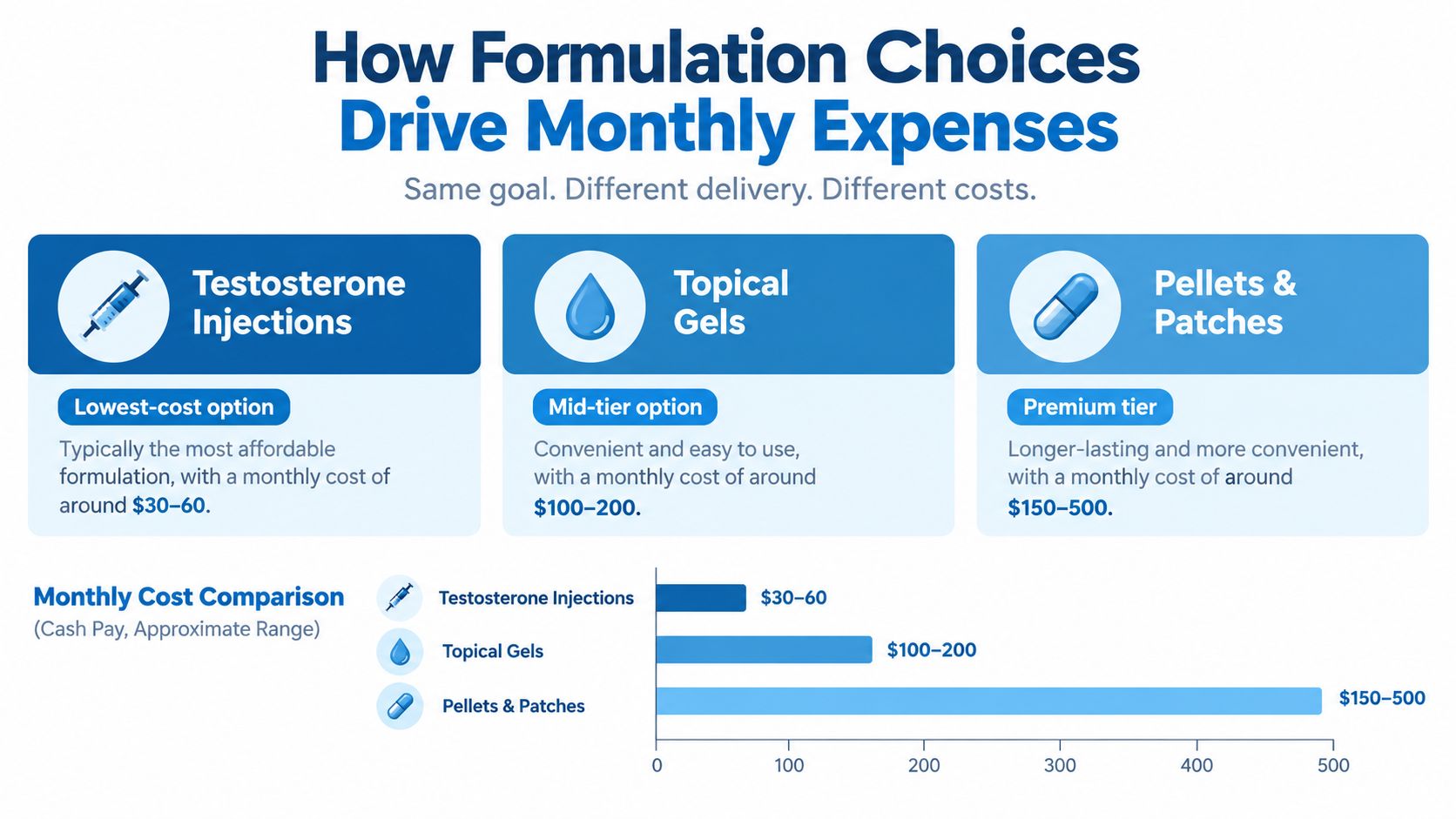
The delivery method changes how testosterone enters your system, how quickly levels rise and fall, and how easily a clinician can adjust treatment. There isn't one universally best option. The practical choice depends on laboratory results, treatment goals, comfort with administration, work and travel patterns, skin-contact concerns, and willingness to return for procedures.
Three common routes
Injections , commonly using testosterone cypionate or enanthate, offer a familiar prescription route and allow dose changes without waiting for an implant to dissolve. Levels can fluctuate between injections, so some men notice changes near the end of an interval. Injection supplies should be handled carefully, and patients who want general information about vial handling can review these glass injection vial tips. That resource doesn't replace instructions from the prescribing clinician or dispensing pharmacy.
Transdermal gels absorb through the skin and can provide a daily routine rather than an intermittent injection schedule. They may suit someone who prefers a noninjection option, but application requires consistency. The product must be kept away from unintended skin contact, and the clinician needs to explain washing, clothing, and transfer precautions.
Subcutaneous pellets release testosterone gradually from an implant placed under the skin. They may appeal to men who don't want daily application or recurring self-injections, but the dose is less immediately adjustable once inserted. Placement and removal are clinical procedures, and the treatment plan should include follow-up for response and adverse effects.
| Delivery Method | Typical Dosing Pattern | Lab Draw Timing | Key Practical Consideration |
|---|---|---|---|
| Injectable testosterone | Intermittent injections | Midway between injections | Flexible dose changes, with possible peak-and-trough variation |
| Transdermal gel | Daily skin application | 2 to 8 hours after application , after at least 1 week of therapy | Avoid unintended transfer and follow application instructions |
| Subcutaneous pellets | Implant-based release | Clinician-directed timing | Less day-to-day maintenance, but less immediate dose flexibility |
The route also determines when a blood test is meaningful. A result collected at the wrong point in the dosing cycle may make a stable treatment look excessive or make an excessive treatment appear acceptable. Read the complete patient guide to testosterone therapy for men before assuming that a dose can be compared across formulations as though every route behaves identically.
Lab Testing and Ongoing Monitoring
Laboratory testing is the engine of safe testosterone care, not a ceremonial step before the prescription. Men with possible testosterone deficiency generally need compatible symptoms and consistently low morning testosterone results, usually confirmed on separate morning draws. A clinician may also investigate whether the problem originates in the testes, pituitary system, medication exposure, sleep disruption, or another health condition.
A baseline evaluation can include total testosterone and, when clinically useful, free testosterone or sex hormone-binding globulin. Safety and look-alike conditions may lead a provider to consider a complete blood count with hematocrit, PSA when appropriate, thyroid markers, metabolic testing, or other targeted studies. The exact panel should answer a medical question rather than create a long list of numbers without a plan.
Timing changes the meaning of the result
For injectable testosterone enanthate or cypionate, serum testosterone should be checked midway between injections . Dose or frequency adjustment should be considered when the mid-interval level is above 600 ng/dL or below 350 ng/dL , according to formulation-specific recommendations ( testosterone monitoring recommendations).
For a transdermal gel, testing should occur 2 to 8 hours after application , after the patient has used therapy for at least 1 week . Those windows aren't interchangeable. An injection produces a different exposure curve from a daily gel, so the same laboratory value can have a different clinical meaning depending on when the sample was collected.
Ask before every follow-up draw: When was my last dose, and does this formulation require a specific collection window?
Monitoring also includes more than testosterone. A clinician should ask whether sleep, libido, erectile function, mood, strength, and energy are changing, while watching for adverse effects. Hematocrit and prostate-related evaluation may matter during treatment, and the plan should specify what would prompt a dose change, additional testing, or discontinuation. The guide to reading hormone blood test results can help you prepare questions, but it can't interpret your results outside your personal medical context.
What a Pause Medical Visit Actually Looks Like
A practical visit begins before the appointment. You schedule online, gather your medication and supplement list, and write down symptoms, treatment goals, prior testosterone results, sleep concerns, and fertility plans. At a Mississippi location, an in-person provider consultation gives the clinician an opportunity to assess the story behind the laboratory value rather than treating a number in isolation.

The discussion should cover symptoms, medical history, current medications, sleep, weight and metabolic health, prostate considerations, and reproductive goals. A provider may decide that testosterone deficiency is plausible, that another condition deserves attention first, or that additional morning testing is needed before treatment can be considered. That decision point is where individualized care differs from purchasing hormones based on a symptom checklist.
Pause Medical describes an insurance-free care model with locations in Oxford, Meridian, Tupelo, Flowood-Jackson, and Starkville , allowing Mississippi patients to meet with providers in person. Its services include hormone replacement therapy, testosterone replacement, medical weight loss, and disease-management support. Board-certified medical oversight and an integrative approach can help connect hormone symptoms with sleep, nutrition, chronic disease, thyroid concerns, and medication management.
Patients often understand medical quality more clearly when they know what the visit will feel like. For broader ideas about clear communication, preparation, and continuity, this guide to patient experience in your practice offers useful context.
After the evaluation and bloodwork, the provider can discuss whether treatment is appropriate, which route fits your routine, what improvement would look like, and how follow-up will work. Bring questions such as:
- Fertility: Could this treatment affect sperm production, and what alternatives exist?
- Monitoring: Which tests will be repeated, and when should they be collected?
- Daily life: How will injections, gels, or pellets fit my work and travel schedule?
- Decision points: What symptoms or laboratory findings would lead you to adjust or stop therapy?
The first month shouldn't be framed as a guaranteed transformation. It's a period for confirming the diagnosis, establishing a safe plan, observing response, and correcting course when the evidence points elsewhere.
Benefits, Risks, and the Conversations Most Articles Skip
A man may arrive at a Mississippi clinic describing lower sexual desire, persistent fatigue, reduced strength, or changes in physical function. Those symptoms can occur with low testosterone, but they can also reflect sleep problems, medication effects, thyroid issues, depression, or other health conditions. Treatment may improve symptoms when testosterone deficiency is confirmed and contributes to them. It does not promise restored youth, automatic fat loss, or an answer to every midlife change.
The risk discussion should be as specific as the benefit discussion. Exogenous testosterone can increase red blood cell production, so hematocrit monitoring matters. A clinician may also review cardiovascular history, untreated sleep apnea, prostate concerns, urinary symptoms, medication interactions, and alternative explanations for symptoms. Testosterone labeling has undergone regulatory scrutiny, including cardiovascular risk warnings added on January 31, 2014 . A balanced overview of these treatment decisions is available in this hormone therapy risks and benefits guide.
Fertility is not a side note
Family planning can change the treatment decision. Exogenous testosterone may suppress the body's reproductive signaling and sperm production, and it can cause azoospermia in up to 40% of users . Current guidelines advise against testosterone therapy for men who wish to father children ( guideline summary on testosterone and fertility).
A fertility goal does not mean symptoms must go untreated. It means the goal belongs in the first conversation, before a prescription is chosen. Ask about fertility-preserving approaches, possible recovery of sperm production, and referral when appropriate. Starting testosterone and discussing conception later can place symptom relief and reproductive plans in conflict.
Product quality matters too
Custom-compounded testosterone may be considered when an approved product cannot meet a specific medical need. “Compounded” and “bioidentical” do not, by themselves, mean safer or more effective. Ask why that formulation is recommended, how its dose will be verified, and which follow-up findings would indicate excessive exposure.
Online discussions may also mention peptides, including about Testagen peptide benefits. Such material is not a substitute for evidence-based testosterone evaluation. A peptide should not be added to a hormone plan without qualified clinical review.
Is BHRT Right for You and What to Do Next
A Mississippi clinic visit often starts with a practical question: are persistent symptoms coming from low testosterone, or from something else? A consultation makes sense when symptoms affect daily life and repeated morning testing supports deficiency. The clinician should also review hematocrit, prostate considerations, medications, sleep, cardiometabolic health, and fertility plans.
Treatment may need to wait when fertility is an active goal, an important medical condition remains untreated, or laboratory findings do not confirm deficiency. Testosterone should not be prescribed to address normal changes in energy or body composition when results are normal.
BHRT describes testosterone with the same molecular structure as the testosterone made by the body. That difference does not guarantee greater safety or effectiveness. Whether treatment is called bioidentical or conventional, sound care requires a clear reason for treatment, standardized prescribing, informed consent, formulation-specific testing, and follow-up that considers both symptoms and risks.
Estimates of testosterone deficiency differ widely across studies, so diagnosis should rest on compatible symptoms and properly interpreted laboratory results rather than one isolated value, as noted in the evidence review on testosterone deficiency. Speak with a qualified provider before starting, stopping, or changing hormone therapy.
Pause Medical provides in-person hormone replacement therapy and medically supervised testosterone evaluation for men across Mississippi. A consultation can address symptoms, laboratory findings, treatment preferences, fertility goals, monitoring, and next steps. Visit Pause Medical to schedule a consultation at a Mississippi location.