How to Find a Doctor Without Insurance: Affordable Care
Needing medical care when you do not have insurance can feel like getting stuck between urgency and cost. You know something is off. Maybe it is a lingering cough, rising blood pressure, hot flashes that are disrupting sleep, unexplained weight gain, low energy, or a refill you cannot keep putting off. At the same time, one question keeps coming up first. How much is this going to cost me?
That stress is common, and it changes how people make decisions. In 2023, nearly half of uninsured adults in the United States, 46.6%, reported not seeing a doctor in the past 12 months due to cost and access barriers, according to KFF’s overview of the uninsured population. If that has been your experience, you are not failing the system. The system is complex.
The good news is that uninsured care is not the same as no care. You can still go to the doctor without insurance, and in many cases you can do it in a more strategic, affordable way than you might expect. The key is choosing the right type of clinic for the type of problem you need to solve.
Some people need a basic primary care visit. Others need a low-cost screening, a same-day sick visit, or medication management. Some need more personalized support for hormone symptoms, metabolic health, or medically supervised weight loss. If you are trying to compare options near Mississippi, reviewing available Pause Medical locations can help you understand what kinds of direct-pay wellness clinics exist alongside community resources.
Navigating Healthcare Without Insurance Is Possible
A lot of uninsured patients start in the same place. They delay care, hope symptoms pass, then finally reach the point where waiting feels riskier than the bill. By then, anxiety is usually doing as much work as the symptoms themselves.

I tell patients to separate the problem into two parts. First, what kind of care do you need right now? Second, which setting gives you the best mix of access, safety, and price?
Start with the need, not the fear
If you need routine primary care, preventive services, a basic exam, or help getting pointed in the right direction, community-based options are often the strongest starting point. If you want more ongoing, personalized attention without insurance billing, direct-pay models can make care easier to budget. If your issue is simple and does not require a hands-on exam, telehealth may work well.
The cheapest option is not always the best option. The best option is the one that matches the problem you need solved.
That distinction matters. A patient with sinus symptoms and no red flags may do well with a low-cost virtual visit. A patient with persistent fatigue, weight changes, sleep disruption, and hormone-related concerns usually needs a more complete evaluation. Looking for the wrong setting often leads to repeat visits, fragmented advice, and more spending.
Common strategies for finding care
When people ask how to find a doctor without insurance, I usually recommend starting with a short decision process:
- If you need general care: look at community health centers and free or charitable clinics.
- If you want consistent access: consider direct primary care or another direct-pay practice.
- If you need specialized wellness care: search for clinics that clearly state they manage hormone therapy, medical weight loss, or chronic disease support.
- If you need emergency help: go to the emergency room. Cost concerns should not delay emergency care.
The path is rarely perfect, but it is workable. Patients do better when they stop assuming every uninsured medical visit will be financially impossible.
Your First Stop Community and Public Health Options
For many uninsured adults, community health centers, often called CHCs or FQHCs, are the most practical first call. They exist to provide care whether you have insurance or not, and they are built around access.
A useful benchmark is this: there are over 1,400 Community Health Centers in the U.S. serving 30 million patients annually. They operate on a sliding-scale fee, often based on the federal poverty level, with an average visit costing $50 to $150, which is 40 to 60% lower than typical private pay, based on the methodology summarized by OKPCA’s guide to seeing a quality doctor without insurance.
What these clinics are good at
Community clinics usually handle the basics very well. That includes:
- Primary care visits: routine checkups, blood pressure concerns, diabetes follow-up, sick visits.
- Preventive care: vaccines, health screenings, and basic counseling.
- Women’s health and family services: depending on the clinic.
- Dental or behavioral health referrals: available in some centers.
They are especially helpful if your first priority is getting in the door with a clinician and establishing a medical home.
For broader wellness support, some patients also compare services offered by dedicated clinics and preventive programs such as those listed on Pause Medical’s wellness page, then decide whether they need general primary care or more individualized follow-up.
A quick overview can help before you call:
How to use a community health center effectively
Do not just search “cheap doctor near me” and pick the first result. Be targeted.
- Find the clinic first
Use the HRSA health center finder or your state primary care association directory. Look for a clinic close enough that follow-up care is realistic. - Call before you go
Ask whether they accept uninsured patients, whether they use a sliding fee scale, and whether they offer the service you need. This step matters. Some patients waste time by booking with a clinic that does not handle their specific concern. - Bring the right paperwork
Most clinics will ask for basic identification and may request proof of income or residency to determine your fee. Bring what you have. If you do not have every document, call and ask what alternatives they accept. - Ask about total visit costs
The office visit may be affordable, but labs, imaging, or outside referrals can add cost. Ask what can be done in-house and what might be billed separately.
What community clinics do not always solve
Community health centers are excellent for access, but they are not the answer to every problem.
If your goal is highly personalized hormone management, body-composition-focused weight care, or a more intensive preventive wellness plan, a standard community clinic may not be the right fit.
That is not a criticism. It is a scope issue. These clinics carry a broad mission. They often prioritize core primary care needs for large patient populations. If your concern is straightforward, that is often exactly what you want. If your concern is specialized, you may need a different model.
Exploring Personalized Care with Direct-Pay Models
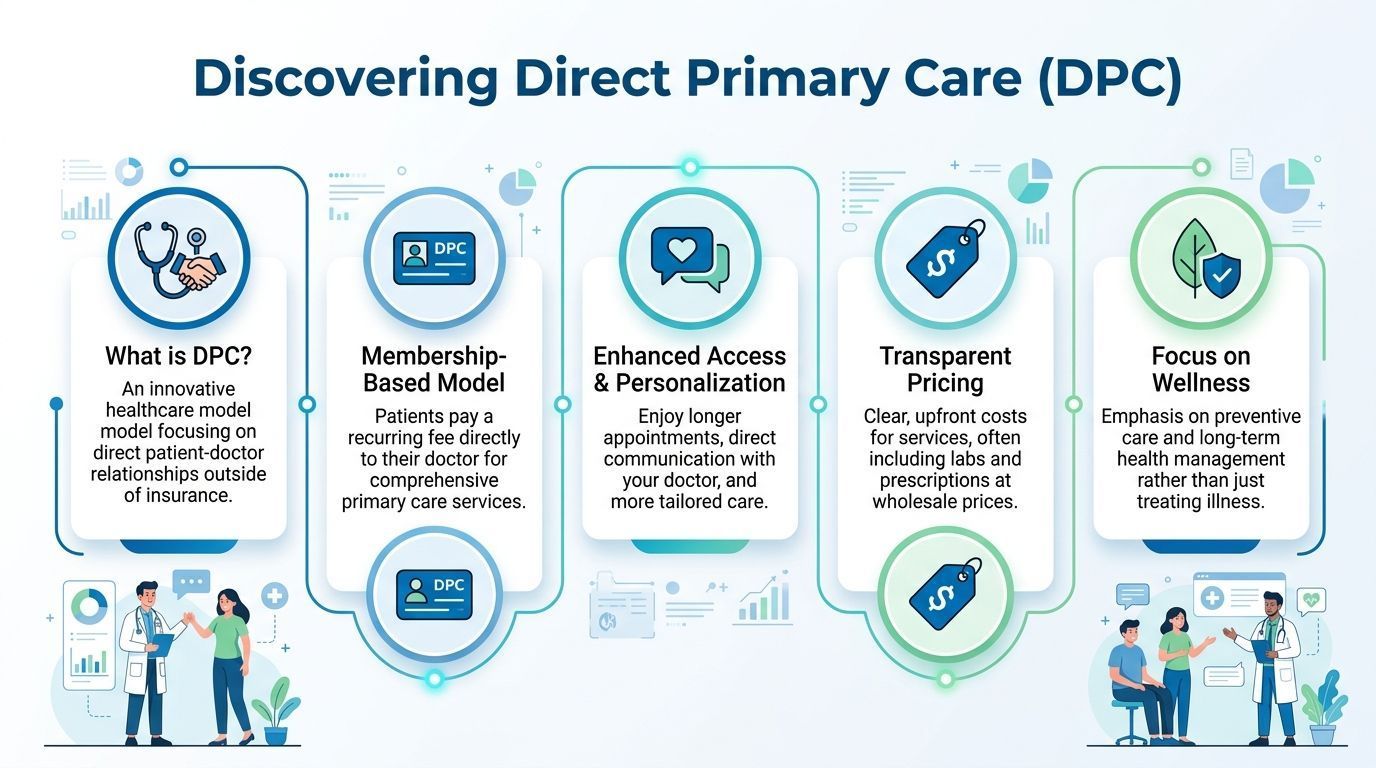
Some uninsured patients do not want to piece together care visit by visit. They want a continuing relationship with a clinician, predictable pricing, and fewer billing surprises. That is where direct-pay models come in.
One of the best-known versions is Direct Primary Care, or DPC. In this model, the patient pays the practice directly rather than running routine care through insurance. According to Healthgrades’ discussion of uninsured care options, DPC members report 92% satisfaction rates and an average of 35% cost savings, and these practices often charge a flat monthly fee of around $50 to $150.
Why direct-pay care appeals to uninsured patients
Traditional insurance-based medicine often pushes visits into shorter, narrower encounters. Patients feel rushed. Questions get deferred. Follow-up becomes fragmented.
Direct-pay care usually changes that dynamic. The core advantages are practical:
- Predictable pricing: you know the fee structure up front.
- More access: many practices offer easier communication and follow-up.
- Longer visits: useful when symptoms are layered, such as fatigue, poor sleep, low libido, weight gain, and mood changes happening together.
- Less administrative friction: fewer billing disputes and fewer insurance approvals.
That said, not every direct-pay clinic is the same. Some focus on broad primary care. Others build around a narrower area such as metabolic health, hormone care, or chronic disease support.
Primary care direct-pay versus specialty cash-pay care
Many guides stop too early here. They explain general low-cost care, but they do not address what uninsured patients should do when the need is more specialized.
Someone with a sore throat needs one kind of access. Someone dealing with menopause symptoms, andropause concerns, suspected low testosterone, thyroid-related complaints, or medically supervised weight loss needs another. Community clinics are valuable, but they mostly focus on primary care. For specialized services, uninsured patients often have to look at dedicated cash-pay practices.
Here is a practical comparison.
Comparing Your No-Insurance Healthcare Options
| Care Option | Typical Cost | Best For | Services Offered |
|---|---|---|---|
| Community Health Center | Average visit $50 to $150 | Basic primary care, preventive visits, routine sick care | Checkups, screenings, common illness care, some referrals |
| Direct Primary Care | Around $50 to $150 per month | Ongoing relationship-based general care | Office visits, follow-up, preventive care, basic chronic disease management |
| Specialized Cash-Pay Clinic | Varies by clinic and services | Hormone therapy, medical weight loss, focused wellness goals | Personalized evaluations, targeted treatment plans, ongoing specialty monitoring |
| Telehealth Visit | Varies by platform | Simple concerns, follow-ups, medication questions | Virtual consultations, advice, some prescription management |
What works and what does not
What works: choosing a clinic whose business model matches your needs. If you need continuity, transparency, and time with a clinician, direct-pay care can be a strong fit. If you need specialized wellness support, a focused cash-pay clinic often makes more sense than trying to force the issue through a basic walk-in setting.
What does not work: assuming every “affordable clinic” can handle endocrine, metabolic, or hormone-related concerns in a thorough way. Many cannot, even if they provide excellent primary care.
If you are weighing whether a more personalized model is worth it, reviewing a clinic’s philosophy, treatment scope, and care approach matters more than glossy marketing. A helpful place to evaluate what a specialty direct-pay practice should clearly explain is a page like why patients choose Pause Medical, where transparency around services and model design should be easy to find.
The best uninsured care model is not the cheapest line item. It is the one that prevents you from bouncing between incomplete answers.
Leveraging Telehealth for Affordable Consultations
Telehealth can be a smart tool when you use it for the right reasons. It is convenient, usually faster to schedule than an in-person visit, and often useful for lower-complexity problems.
It works especially well for medication questions, minor acute illnesses, simple follow-ups, reviewing symptoms, or deciding whether you need in-person evaluation. It can also be useful when a clinic uses virtual care to support a larger treatment plan.
When telehealth is a good fit
A virtual visit may be reasonable if you need help with:
- Cold, sinus, or allergy symptoms
- Rashes that can be seen on camera
- Prescription refill discussions
- Follow-up after a prior diagnosis
- General counseling about next steps
Telehealth is also appealing for patients who are trying to minimize transportation costs, missed work time, or childcare challenges.
Some specialty practices incorporate virtual follow-up into longer-term care plans. For example, patients exploring remote options for hormone management often look into services similar to at-home TRT support when appropriate and clinically safe.
When you should choose in-person care instead
Telehealth has clear limits. You need an in-person evaluation if the clinician needs to examine you physically, perform a procedure, obtain labs, or assess something that cannot be understood well over video.
Choose in-person care for:
- Chest pain, shortness of breath, or neurologic symptoms
- Severe abdominal pain
- Persistent or unexplained symptoms
- Problems that may require testing the same day
- Concerns involving hormone, thyroid, or metabolic issues that need a full workup
Telehealth is often best used as a first filter, not a complete substitute for hands-on medicine.
For uninsured patients, that distinction saves money. A good virtual visit can keep you from paying for an unnecessary in-person appointment. A poor use of telehealth can delay needed treatment and lead to duplicated costs.
Smart Strategies to Manage Your Medical Costs
Finding a doctor is only part of the problem. Managing the bill matters just as much.
Uninsured patients often assume pricing is fixed. It often is not. Clinics, labs, imaging centers, and hospitals may have self-pay rates, payment plans, or financial assistance options, but you usually have to ask.

Ask for the cash price before the visit
This is one of the simplest and most effective habits. When you call, ask:
- What is your self-pay rate for a new patient visit?
- Are labs billed separately or included?
- Do you offer a discount if I pay at the time of service?
- What happens if additional testing is recommended?
That last question is important. Many affordable visits become expensive because the patient only priced the appointment, not the follow-up plan.
Negotiate with specifics
Negotiation works best when you are polite, direct, and organized. If you already received a bill, ask for an itemized statement and review it line by line. Billing errors and duplicate charges can happen. Even when the bill is accurate, the provider may reduce it for prompt payment or set up a manageable plan.
If you want a practical walkthrough, this guide on how to negotiate medical bills without insurance gives a useful consumer perspective on the process.
Use language like this:
“I’m paying out of pocket and want to handle this responsibly. Do you offer a self-pay discount, prompt-pay discount, or payment plan? If not, is there someone in billing who can review the balance with me?”
Use prescription savings and screening programs
Medication costs can create as much stress as the visit itself. Ask whether the clinician can prescribe a lower-cost generic, a therapeutically similar option, or send the prescription to a pharmacy where discount programs are accepted. GoodRx and similar coupon tools can help lower some cash prices.
For preventive services, do not overlook public programs. The CDC’s National Breast and Cervical Cancer Early Detection Program has provided free screenings to millions of uninsured and low-income women since 1990, as explained in Patient Advocate Foundation’s guide to finding care while uninsured. Programs like that are a reminder that some very important care may be available at no cost if you know where to look.
Cost habits that usually pay off
- Request itemized bills: this helps you spot problems before paying.
- Compare lab and imaging sites: independent centers may price more clearly than hospital-based services.
- Ask what can wait: not every test has to happen the same day.
- Clarify follow-up frequency: a good plan should be medically sound and financially realistic.
How to Prepare for Your First Doctor Visit
The first uninsured visit goes better when you arrive prepared. That does not just reduce stress. It also helps you get more value from the time you are paying for.
A clinician can make better decisions when your history is clear, your priorities are organized, and your cost concerns are discussed early instead of at the end.
Bring the essentials
Write these down or keep them in your phone:
- Your main symptoms: when they started, what makes them better or worse, and what you are worried they might mean.
- Current medications and supplements: include doses if you know them.
- Past medical problems and surgeries: keep it brief and accurate.
- Allergies: especially medication allergies.
- Recent records or lab results: if another clinic has seen you before.
If your symptoms overlap several areas, rank them. For example, “fatigue first, then weight gain, then poor sleep.” That helps the visit stay focused.
Ask cost questions early
Patients often wait until checkout to ask what tests or follow-up visits will cost. Ask during the medical discussion instead.
Useful questions include:
- Do I need this test now, or can it wait?
- Is there a lower-cost version of this workup?
- What is the most important next step if my budget is limited?
- How often do you expect follow-up?
Being honest about money is not awkward from the clinician’s side. It is clinically useful information.
A good provider can often help prioritize. That does not mean cutting corners. It means building a plan that you can complete.
Make the visit easier on yourself
If you are nervous, bring a written list of questions. If you tend to forget details, bring a trusted friend or family member. If you know you may want ongoing care for a sensitive issue, choose a clinic where you feel comfortable asking direct questions.
When you are ready to schedule a visit and want to ask practical questions before booking, a contact page like Pause Medical’s contact page shows the kind of access points a transparent clinic should provide.
Common Questions About Uninsured Healthcare
Can I really see a doctor without insurance?
Yes. You can pay directly for care, use a community health center, visit a free or charitable clinic, use telehealth for appropriate concerns, or choose a direct-pay practice. The right route depends on whether you need basic care, urgent evaluation, or a more specialized plan.
What is usually the best first option?
For many people, a community clinic is the strongest first step because it offers broad access and sliding-scale pricing. If your needs are simple, that may be enough. If your needs are ongoing or specialized, another model may fit better.
Should I choose urgent care, telehealth, or a regular clinic?
Use telehealth for straightforward issues that do not require an exam. Use a regular clinic or community health center for preventive care, chronic issues, and non-emergency symptoms. Use urgent care when the problem is time-sensitive but not a true emergency. Use the ER for emergencies.
What if I need hormone therapy or medical weight loss without insurance?
Many patients get frustrated here. While community clinics are vital, they primarily focus on primary care. Data shows that finding specialized services like full hormone therapy or medically supervised weight loss programs without insurance is a significant challenge, which is why specialized cash-pay clinics have emerged to fill this critical gap in care, as discussed by Ubie Health’s review of no-insurance doctor options.
If your goal is specialized wellness care, look for a clinic that clearly states it evaluates and manages those services directly, explains pricing upfront, and provides ongoing follow-up rather than one-time advice.
If you are in Mississippi and want a clearer path to hormone care, medical weight loss, or personalized disease management without insurance, Pause Medical offers a direct-pay model designed for straightforward access, individualized treatment plans, and supportive follow-up. Schedule a consultation to discuss your symptoms, goals, and next steps with a provider who understands both the medical and financial side of care.