Does Marijuana Make You Sleepy? A Mississippi Medical Marijuana Guide
It's a common question we hear: "Will medical Marijuana make me sleepy?" The short answer is yes, it certainly can. But it's not a one-size-fits-all situation. The relaxing, sleep-inducing positive side effects come down to very specific compounds inside the plant that work with your body to signal that it's time to rest.
For many Mississippi residents, understanding how to utilize medical Marijuana for better sleep is a key part of their wellness journey.
Why Some Medical Marijuana Can Help You Sleep
For many folks here in Mississippi managing a qualifying health condition, a good night's sleep feels like a distant dream. When you're dealing with chronic pain or persistent anxiety, your body’s natural sleep cycle gets completely thrown off, leaving you exhausted and impacting your quality of life. This is precisely why so many are exploring the potential of medical Marijuana.
The idea that Marijuana can be a sleep aid isn't just hearsay; it’s backed by the plant's unique chemistry. The real magic lies in two types of compounds: cannabinoids and terpenes . These are the natural chemicals responsible for creating a sense of calm and drowsiness, which are positive side effects for those seeking rest.
The Role of Cannabinoids and Terpenes
Think of a Marijuana product as a complex recipe. The main ingredients are the cannabinoids, like THC (Tetrahydrocannabinol) and CBD (Cannabidiol). THC is often the compound that brings on that classic sedative feeling, helping you doze off. CBD , on the other hand, is better known for easing anxiety and promoting relaxation without a strong "high."
But that’s only part of the story. The "spices" in this recipe are the terpenes —the aromatic oils that give different Marijuana strains their unique scents, like pine, citrus, or lavender. Many terpenes have their own relaxing properties, and when they team up with cannabinoids, they can significantly enhance the sleepy effect.
This interaction explains why one product might feel like a lullaby while another might be more energizing.
The specific blend of cannabinoids and terpenes is what ultimately shapes your experience. For Mississippi patients looking for better sleep, understanding this synergy is the key to finding what works for you.
All of this happens through a fascinating internal network in your body. We dive much deeper into this in our guide on what the endocannabinoid system is and how it works. By choosing products with the right chemical profile, you can find a balanced option that both eases your symptoms and guides you toward a more peaceful night.
To make this a bit clearer, here's a quick breakdown of the key factors that influence Marijuana's sedative effects.
Key Factors Influencing Marijuana's Sedative Effects
This table summarizes the primary components that determine whether a medical Marijuana product is likely to help you feel sleepy.
| Factor | Role in Promoting Sleep | Example |
|---|---|---|
| Cannabinoids | The primary drivers of effect. THC is directly sedative in certain doses, while CBD can reduce anxiety that interferes with sleep. | A product with a higher ratio of THC to CBD is often more sedating. The presence of CBN (Cannabinol) can also enhance sleepiness. |
| Terpenes | Aromatic compounds that contribute to the "entourage effect." Certain terpenes have known sedative and relaxing properties. | Myrcene (earthy, musky scent) and Linalool (floral, lavender scent) are two terpenes widely recognized for their calming effects. |
| Dosage | The amount you consume is critical. Low doses of THC might be calming, while very high doses could cause anxiety or disrupt sleep patterns. | Starting with a low dose ( 2.5-5 mg of THC ) and slowly increasing is the safest way to find your ideal amount for sleep. |
| Strain Type | Often categorized as "Indica," "Sativa," or "Hybrid." Indica-dominant strains are traditionally associated with body relaxation and sedation. | A strain like Granddaddy Purple ( Indica ) is well-known for its sleepy effects, whereas a strain like Green Crack ( Sativa ) is known for energy. |
Understanding these factors empowers Mississippi patients to make more informed decisions when selecting a product. By working with a knowledgeable provider, you can navigate these variables to find a solution tailored to your specific sleep challenges.
How Marijuana Interacts with Your Body's Sleep Cycle
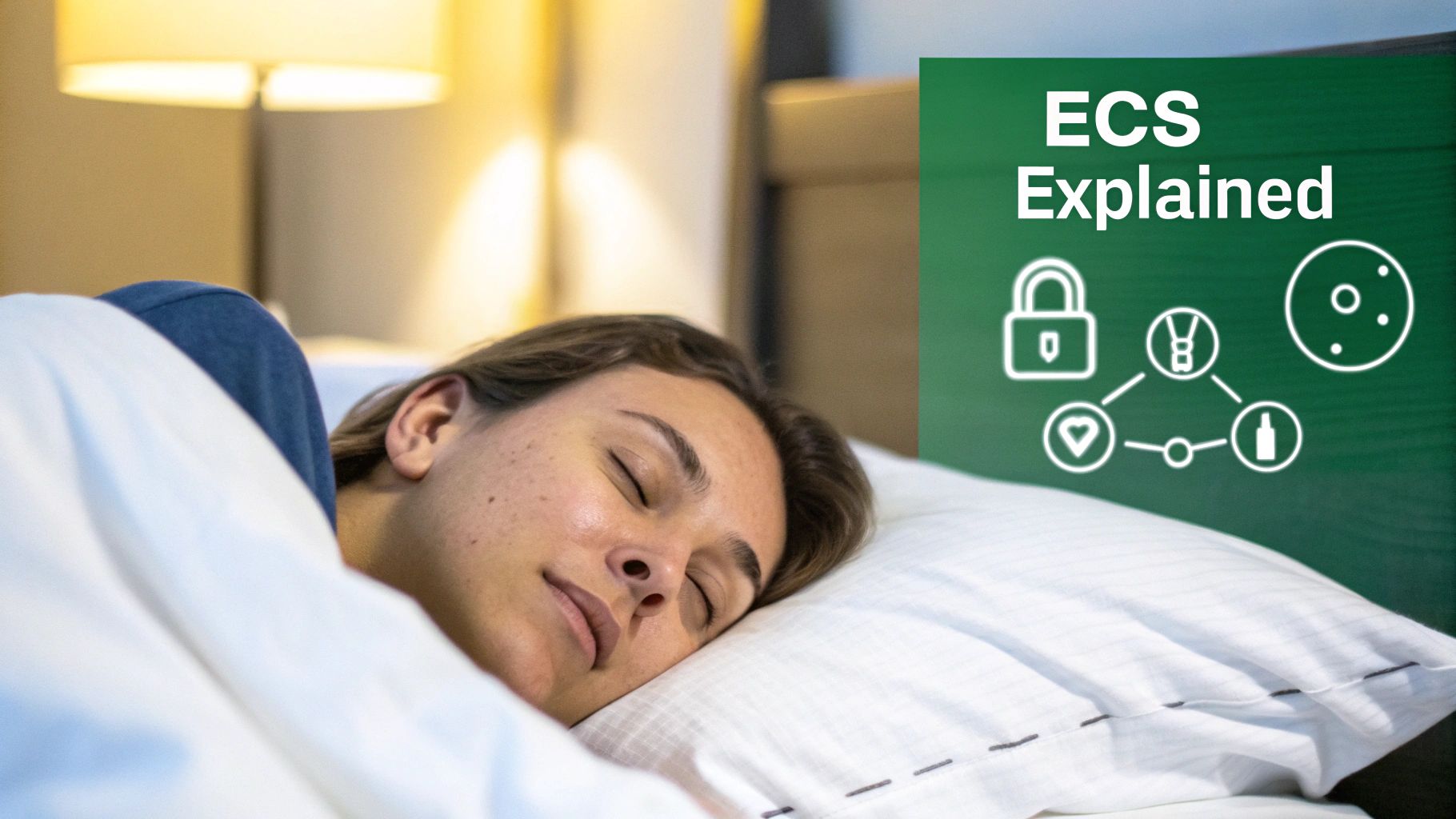
To really get why medical Marijuana can bring on that sleepy feeling, we need to peek under the hood at a remarkable network in our bodies: the endocannabinoid system (ECS) . It’s a bit like an internal regulator, constantly working to keep things like your mood, appetite, pain signals, and—you guessed it—your sleep-wake cycle in balance.
Think of the ECS as a vast system of locks found on cells all over your body. Your body makes its own "keys," called endocannabinoids, that fit these locks perfectly. When a key turns a lock, it sends a message that helps keep everything running on an even keel, signaling when it's time to feel alert and when it's time to wind down.
The Lock and Key Connection
Now, here's where it gets interesting. The compounds in the Marijuana plant, called cannabinoids, are so similar in shape to our body's own keys that they can also fit into those ECS locks. When they do, they influence the messages being sent.
The two main players you’ve probably heard of are THC (Tetrahydrocannabinol) and CBD (Cannabidiol). Each interacts with the ECS locks a little differently, which is why they produce distinct effects.
-
THC as a Sleep Initiator: THC has a knack for finding and fitting into the locks in your brain, especially the CB1 receptors . When THC binds to these receptors, it can set off a chain reaction that often results in drowsiness and relaxation, making it much easier to drift off. This is the main reason why certain Marijuana strains are known for making you sleepy.
-
CBD as a Sleep Supporter: While THC is busy turning the key to start the sleep process, CBD plays more of a supporting role. Instead of directly binding to the main receptors with the same force, CBD works to calm the nervous system. If anxiety or a racing mind is what’s keeping you up at night, CBD’s soothing effects can be a game-changer. It helps quiet the noise, creating a better environment for sleep to happen naturally.
For Mississippi medical Marijuana card holders, this "lock and key" mechanism is the whole story. It shows how compounds from a plant can work with your body’s own system to help regulate sleep.
Grasping this relationship is incredibly empowering. It takes you from simply asking "Does Marijuana make you tired?" to understanding how specific cannabinoid combinations can be used to tackle your personal sleep issues. By picking products with the right set of "keys," you can unlock the door to a more restful night.
The Big Three: How THC, CBD, and Terpenes Work Together to Promote Sleep
To really get why some Marijuana makes you feel sleepy, you can't just look at one ingredient. It’s a team effort. Think of it like a band: THC, CBD, and terpenes are the three key players, and each one contributes to the final sound—or in this case, the final feeling.
THC and CBD: The Power Couple
First up is THC (Tetrahydrocannabinol), the most famous compound in Marijuana. For many Mississippi patients struggling with insomnia tied to their qualifying condition, THC can be a huge help by simply shortening the time it takes to drift off. This is a significant positive side effect for those seeking better rest.
But THC doesn't act alone. Its partner, CBD (Cannabidiol), plays a fantastic supporting role. CBD isn't a sedative in the traditional sense; instead, it's a master at calming the nervous system. By easing anxiety and helping to shut down a racing mind—two of the biggest sleep thieves—CBD creates the perfect mental runway for rest.
Terpenes: The Aromatic Architects of Relaxation
The real secret sauce, though, comes from terpenes . These are the aromatic oils that give different Marijuana strains their unique smells, like pine, citrus, or lavender. But they do a lot more than just smell nice; they actively shape your entire experience.
Certain terpenes are well-known for their relaxing and even sedative properties. When they show up in a strain, they can seriously dial up its potential for promoting sleep. This teamwork between cannabinoids and terpenes is what we call the entourage effect .
The entourage effect is the theory that all the compounds in Marijuana work better together. It’s the reason two products with the exact same THC percentage can make you feel completely different.
For anyone in Mississippi trying to get better rest, looking at a product's terpene profile can be a total game-changer. Here are a few key ones to keep an eye out for:
- Myrcene: This is the most common terpene in Marijuana, often giving off an earthy, musky scent. It's famous for its sedative, "couch-lock" effects.
- Linalool: Found in lavender, this terpene has a lovely floral aroma and is known for its powerful anti-anxiety and calming properties.
- Caryophyllene: With a spicy, peppery kick, this unique terpene also helps reduce pain and inflammation, which can be another barrier to a good night's sleep.
Understanding this trio gives you the power to make much smarter choices. It's no wonder that using Marijuana for sleep is on the rise. To learn more about these fascinating aromatic compounds, check out our guide on what terpenes do. By looking at the whole picture—THC, CBD, and specific terpenes—you can zero in on a product that’s much more likely to help you get that peaceful night you're looking for.
Choosing the Right Medical Marijuana Product for Rest
If you’re a Mississippi medical Marijuana cardholder, walking into a dispensary can feel a bit overwhelming. With so many choices, how do you find the right one to help you get a good night's sleep? The good news is that with a little know-how, you can learn to match the right product to your specific needs and feel confident in your decision.
For years, the Marijuana world has relied on three simple categories: Indica , Sativa , and Hybrid . While we now know that a strain's terpene profile is a much better predictor of its effects, these labels are still a helpful starting point for Mississippi patients. Indica-dominant strains, for instance, are the classic recommendation for nighttime use because they’re known for a deep, full-body relaxation that can feel pretty sedative—perfect for winding down before bed.
This decision tree gives you a visual on how the main players—THC, CBD, and terpenes—work together to promote rest.
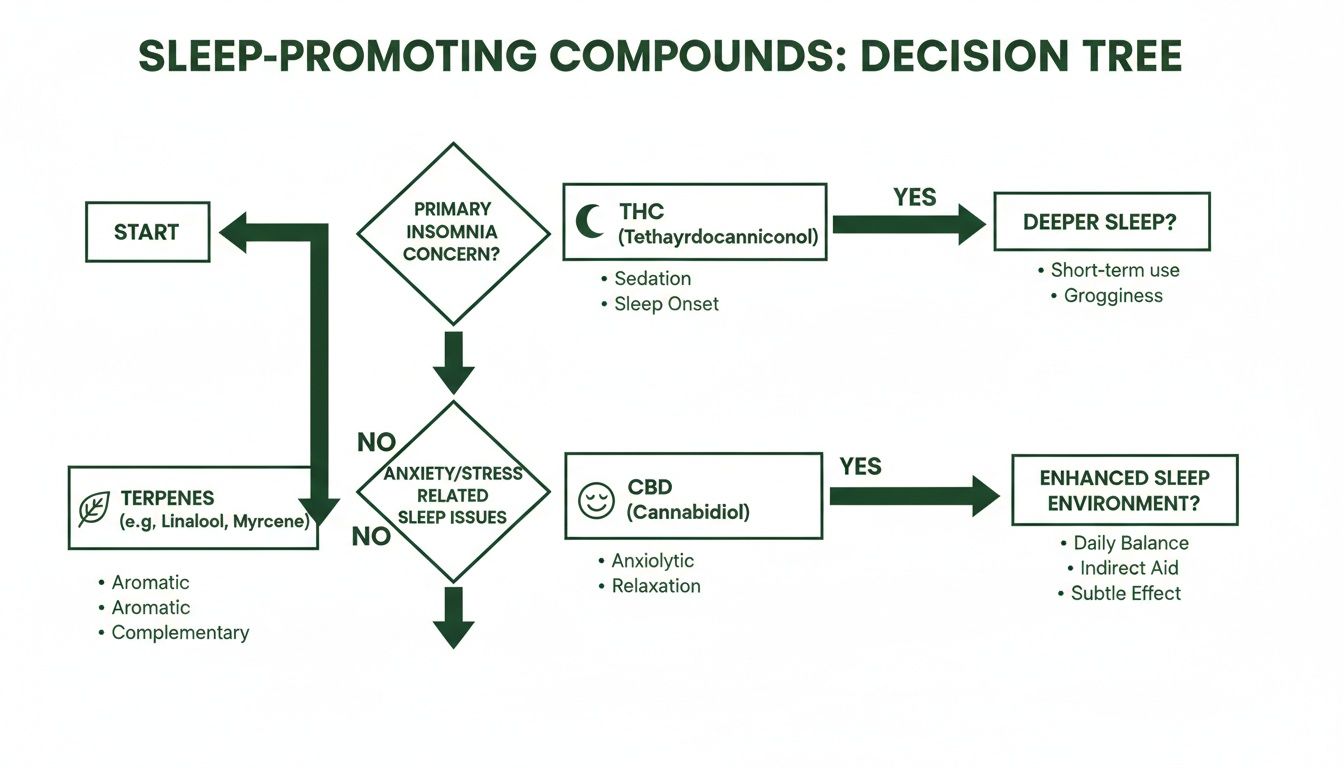
As you can see, the sweet spot for sleep often involves a mix: THC to bring on drowsiness, CBD to ease anxiety, and calming terpenes like linalool to encourage relaxation.
Matching Consumption Method to Your Sleep Needs
What you use is only half the equation; how you use it matters just as much. Your consumption method directly impacts how quickly you'll feel the effects ( onset ) and how long they'll stick around ( duration ).
- Inhalation (Vaporizing): This is your fastest route to relief, with effects kicking in within minutes. If your main problem is just getting to sleep in the first place, vaporizing can provide that immediate nudge you need.
- Edibles: Since they're processed through your digestive system, edibles are the slow-and-steady option. They can take anywhere from 30 minutes to two hours to fully kick in, but their effects last for hours. This makes them a great choice if you’re someone who falls asleep easily but can’t seem to stay asleep.
- Tinctures: These liquid extracts, dropped under the tongue, offer a great middle-ground. They're absorbed faster than an edible but last longer than inhalation, making them a versatile tool for both falling and staying asleep.
The most important rule for any Mississippi patient is to start low and go slow . Always begin with the smallest recommended dose and give it plenty of time to see how your body responds before even thinking about taking more. This simple approach is the best way to find what works for you without overdoing it.
Being an informed patient is key. If you're curious about specific compounds that aid sleep, our guide to strains containing the linalool terpene is a great next step.
Your Path to Better Sleep in Mississippi
Navigating your wellness journey in Mississippi is all about knowing how to use the available tools safely and effectively. When it comes to using medical Marijuana for sleep, the knowledge you now have is your most powerful asset. It really just boils down to a few key ideas that put you in control of your rest.
First, always remember it’s the specific compounds inside the plant that determine whether a product will make you feel sleepy. The unique dance between cannabinoids like THC and CBD, plus aromatic terpenes like myrcene and linalool, is what creates those sought-after calming effects. This is why grabbing just any product off the shelf won’t cut it; you need to find the right chemical profile for the job.
Making Informed Choices for Your Health
Next, how you use it and how much you take are just as critical as what you choose. The old saying "start low and go slow" is truly your best friend here. This simple principle helps you avoid unwanted side effects and dial in the precise amount that works for your unique body.
Whether you opt for an edible that provides long-lasting relief through the night or a vaporizer for a quicker effect, the goal is to match the product to your specific sleep problem. This thoughtful approach can lead to many positive outcomes for Mississippi residents with a medical card.
Medical Marijuana isn't just a product—it's a therapeutic tool. When used responsibly as part of a state-regulated program, it can be a powerful way to manage symptoms like insomnia and genuinely improve your quality of life.
Ultimately, this knowledge becomes most powerful when you pair it with guidance from a qualified medical professional who can issue a medical Marijuana certification in Mississippi. Building a treatment plan together ensures you're making safe, informed decisions that line up with your personal health goals. It’s all about feeling confident and supported as you find your way to better rest.
For anyone living in Mississippi, understanding the process is the first step toward finding that relief. If you're thinking about this path, getting familiar with the requirements is incredibly helpful. Check out our guide on how to get a Mississippi medical marijuana card in 2025 for a clear, step-by-step look at how it all works.
Your Questions About Marijuana and Sleep, Answered
To help you make clear, informed decisions on your path to better rest, we've gathered some of the most common questions we hear from Mississippi residents about using medical Marijuana for sleep.
Will Every Marijuana Product Make Me Drowsy?
Not at all. Whether a particular Marijuana product makes you sleepy depends entirely on its specific chemical makeup—the unique mix of cannabinoids and terpenes inside.
Products high in THC and packed with relaxing terpenes like myrcene are the ones most likely to help you wind down. But many other products are designed to do the exact opposite, providing energy and focus. The key is to read product labels carefully and seek information to find something that truly matches your goals.
Can I Become Dependent on Marijuana to Sleep?
It's a valid concern. While the risk of physical dependence on Marijuana is generally lower than with many prescription sleep aids, it's possible to start feeling like you need it to fall asleep. Over time, consistent use can also lead to tolerance , meaning you might need more to get the same effect.
The healthiest way to approach this is to think of medical Marijuana as just one tool in a larger sleep hygiene toolkit.
Think of medical Marijuana as a supportive tool, not a crutch. The goal is to find a sustainable balance. By monitoring your use and occasionally taking breaks, you can help ensure it remains effective for the long haul.
How Long Before Bed Should I Take It?
This really comes down to which type of product you're using. They all work on different timelines, so understanding how they're absorbed by your body is crucial for getting the timing right.
- Inhaled Products: When you use a vaporizer, the effects kick in fast—often within a few minutes. Using it 15 to 30 minutes before you want to be asleep is usually a good bet for helping you drift off quickly.
- Edibles and Tinctures: These products have a longer journey, as they need to pass through your digestive system first. You can expect them to take anywhere from 30 minutes to two hours to start working. A good starting point is to take them about one to two hours before your ideal bedtime.
It might take a little bit of careful trial and error to find what works best for you. Always start with a low dose, see how your body reacts, and then adjust your timing from there.
What if a Product Makes Me Anxious Instead of Sleepy?
This can happen. Sometimes, particularly with higher doses of THC, Marijuana can ramp up anxiety instead of calming it down, which is the last thing you want when you're trying to sleep.
If you find yourself in this situation, the first step is not to panic. Find a quiet, comfortable spot and just remind yourself that the feeling will pass. Simple breathing exercises can be a huge help in grounding you until the effects wear off.
To prevent this from happening again, always go with the lowest possible dose when trying a new product. You might also want to look for products with a more balanced ratio of CBD to THC, since CBD is known to soften some of THC’s more intense effects.
Does Marijuana Affect Dreams?
Yes, it definitely can. THC is known to reduce the amount of time you spend in REM (Rapid Eye Movement) sleep, which is the stage where most of our vivid dreaming happens. For many people, this translates to having fewer dreams or dreams that are far less intense.
This can be a welcome positive side effect for those who struggle with nightmares from conditions like PTSD. On the flip side, if you use Marijuana regularly and then stop, you might experience a "REM rebound," where your dreams become unusually vivid for a few days as your sleep cycles get back to normal.