Men Low Libido Causes: What Really Drives the Problem
You notice it in small ways. A weekend that once included intimacy now feels like another obligation. Morning motivation has thinned, and sex feels less like something you anticipate than something you might have to schedule. You may still care about your partner and recognize that your relationship is stable, yet the internal pull has become quieter.
That pattern can be unsettling, especially when the first explanation you hear is “low testosterone.” Testosterone matters, but men low libido causes rarely fit into one box. Desire depends on hormone signaling, brain chemistry, blood flow, sleep, medications, emotional health, relationships, and chronic disease. A careful evaluation looks for the combination that matches your timeline and symptoms.
What Changed and Why It Matters
Low desire usually develops gradually rather than disappearing overnight. A man may first notice fewer sexual thoughts, then less initiation, followed by weaker morning erections or a growing sense that intimacy requires effort. Because the change is slow, he may blame age, work, fatigue, or relationship tension without asking what changed first.
Consider a 42-year-old Mississippi man whose work stress increased during the same period that he began sleeping poorly and gained weight. He also started an antidepressant months before he noticed that sexual interest had faded. If he assumes testosterone is the only explanation, he may miss the medication, sleep, mood, and metabolic factors surrounding the symptom.
Population research shows that reduced male desire isn't rare. Reported rates include roughly 4.8% in the United States , 14–17% among men aged 18–44 in the National Health and Social Life Survey, 16% in a large Australian study of men aged 18–59 , and 16% in a Swedish sample of 1,475 men aged 18–74 . These findings are summarized in population research on male sexual dysfunction. The same source describes age patterns in which men aged 30–39 were most likely to report low sexual interest in one multi-country study, so the concern isn't limited to older men.
Start with the timeline
Ask yourself:
- What came first? Desire changes, erectile changes, fatigue, depressed mood, weight gain, or sleep disruption?
- Is the change general? Low interest in partnered sex and masturbation points toward a different evaluation than desire that appears only in a particular relationship context.
- What changed recently? New medication, illness, work pressure, alcohol use, pain, or a shift in sleep can be clinically important.
- What accompanies the symptom? Loss of morning erections, breast changes, headaches, reduced strength, anxiety, and persistent sadness each guide the next question.
Desire is a biological and psychological signal, not a character test. The pattern gives a clinician more useful information than a single lab result or a rushed assumption about aging.
The Hormone Layer
A man may notice less interest in sex, fewer spontaneous morning erections, lower energy, or reduced motivation. That pattern can fit low testosterone, but it does not prove that testosterone is the cause. Hormones work more like a control system than a single on/off switch. Testosterone helps set the baseline for sexual motivation, while prolactin and thyroid hormones can support normal function or apply a braking effect when abnormal.
Testosterone is important, but context matters
Total testosterone measures the amount circulating in the blood. Free testosterone estimates the portion available to tissues. These results can point in different directions because binding proteins and other health conditions affect how much hormone the body can use. A total result that appears acceptable may coexist with less helpful free testosterone, or the reverse.
Timing also matters. Testosterone changes during the day, so a morning sample generally offers more useful information than an afternoon sample when symptoms persist. The International Consultation on Sexual Medicine recommendations report that low libido was present in 27.5% of hypogonadal men in the EMAS cohort , and that each 1 nmol/L drop below 8 nmol/L was associated with a 48% higher risk of low libido . These findings support confirming a suspected hormone problem rather than treating one borderline result automatically.
For a plain-language list of symptoms that may accompany low testosterone, VitzAi.com on low T signs can help organize questions before an appointment. A broader explanation of the full picture behind low T in men shows why testosterone is only one possible driver.
Prolactin and thyroid hormones can change the signal
Prolactin can act like a brake when its level rises above a healthy range. Certain medications and pituitary disorders may increase it, sometimes along with erectile changes, headaches, or unexpected breast discharge.
Thyroid disease can reduce desire through a different route. An underactive thyroid may cause fatigue, low mood, and slowed metabolism. An overactive thyroid can bring anxiety, poor sleep, and physical exhaustion. Estradiol also contributes to male sexual health, so one low-testosterone result rarely explains every symptom.
| Hormone | Pattern | Symptoms |
|---|---|---|
| Testosterone | Confirmed low level with compatible symptoms | Reduced desire, fatigue, fewer morning erections |
| Prolactin | High level from medication or pituitary causes | Low desire, erectile changes, possible breast discharge |
| Thyroid hormones | Underactive or overactive thyroid pattern | Fatigue, mood changes, sleep disruption, reduced interest |
The useful question is not, “Is my testosterone low?” A clinician reviews testosterone, free or bioavailable testosterone, prolactin, thyroid function, symptoms, medications, and medical history together. That broader check helps separate a hormonal cause from medication effects, mood-related changes, or other contributors.
Stress, Mood, and the Brain-Body Link
A man may still care about intimacy yet notice that desire has faded during a demanding period at work, after several poor nights of sleep, or while worrying about sexual performance. Desire starts in the brain, where dopamine supports motivation and reward, serotonin influences arousal and orgasm, and cortisol rises during stress. Persistent pressure can make the brain prioritize threat detection, work, or basic survival over intimacy.
Stress also affects the body's hormone signals. Ongoing strain may suppress hypothalamic messages involved in testosterone production while disrupting sleep and concentration. The result can feel like a faulty switch: even with a hormone result inside the laboratory reference range, there may be less attention, energy, and reward available for sexual motivation. Learning strategies to reduce cortisol levels may help address one part of this pathway, but the cause still needs individual assessment.
Depression may show up first as reduced interest rather than obvious sadness. Research on men with erectile dysfunction found that depressive symptoms were linked with lower libido, and depressive symptoms occurred frequently across ages and other health conditions. The clinical summary is available through depression and erectile dysfunction research.
Anxiety can interrupt arousal
Performance anxiety follows another route. A man may want sex and have healthy hormone levels, yet lose arousal while checking erection firmness, expecting disappointment, or recalling an earlier difficulty. Fear activates the body's threat response, leaving less relaxed attention for sexual stimulation.
Burnout can resemble depression, although the two are not identical. CBT insights on burnout vs depression can help clarify whether work overload, emotional numbness, or broader mood symptoms deserve attention.
Poor sleep, shift work, and prolonged exhaustion can reduce sexual thoughts and initiation, while also affecting mood, energy, and testosterone, as described in this overview of low libido in men.
Practical rule: If desire changed with stress, insomnia, anxiety, or low mood, ask for evaluation of the brain-body pathway rather than assuming low testosterone is the whole explanation.
Medications, Substances, and Daily Habits
A medication may be the most overlooked explanation because the prescription often predates the sexual symptom by weeks or months. Don't stop a prescription on your own. Instead, ask whether the timing and mechanism fit your experience.
Common medication categories include:
- SSRIs and SNRIs: These can reduce libido, blunt arousal, and delay orgasm through serotonergic effects. A controlled review found significant reductions in libido, arousal, and orgasm intensity compared with pre-treatment baselines.
- Finasteride and related 5-alpha reductase inhibitors: These alter androgen pathways and may affect sexual desire or performance in some patients.
- Opioids: Chronic use can suppress hypothalamic-pituitary-gonadal signaling and contribute to low testosterone and reduced desire.
- Beta-blockers and some antihypertensives: These may affect arousal through vascular, nervous-system, or energy-related effects.
- Certain cancer therapies: Androgen deprivation treatment can reduce sexual desire by directly lowering androgen activity.
If an antidepressant seems involved, bring a detailed symptom timeline to the prescriber. A patient-friendly discussion of talking with a doctor about Viibryd and sexual side effects can help you prepare, but medication changes still require individualized medical supervision.
The substance and routine layer
Alcohol may lower inhibition briefly while worsening sleep, mood, and hormone signaling over time. Cannabis may affect motivation and attention differently from person to person, while nicotine can restrict vascular function and complicate arousal. Fragmented sleep, long sedentary days, late-night screens, and excess body fat can reinforce one another, leaving you tired before intimacy begins.
A medication and habit audit often identifies a likely contributor before extensive testing. Write down prescriptions, over-the-counter products, alcohol and substance use, bedtime, wake time, exercise, and the date desire began. That record gives your clinician something more useful than a general statement that libido is “just lower.”
| Category | Examples | How It Affects Desire | What to Ask |
|---|---|---|---|
| Antidepressants | SSRIs, SNRIs | May reduce desire and delay orgasm | Could the dose, timing, or medication be reviewed? |
| Hormone-related drugs | Finasteride | May alter androgen signaling | Did symptoms begin after starting treatment? |
| Pain medicines | Opioids | Can suppress reproductive hormone signaling | Is long-term use affecting hormones or sleep? |
| Cardiovascular drugs | Beta-blockers, antihypertensives | May affect energy, arousal, or vascular response | Are alternatives medically appropriate? |
| Daily exposures | Alcohol, nicotine, cannabis | Can affect sleep, motivation, or blood flow | Which change is safest to try first? |
Common Health Conditions That Quietly Drain Desire
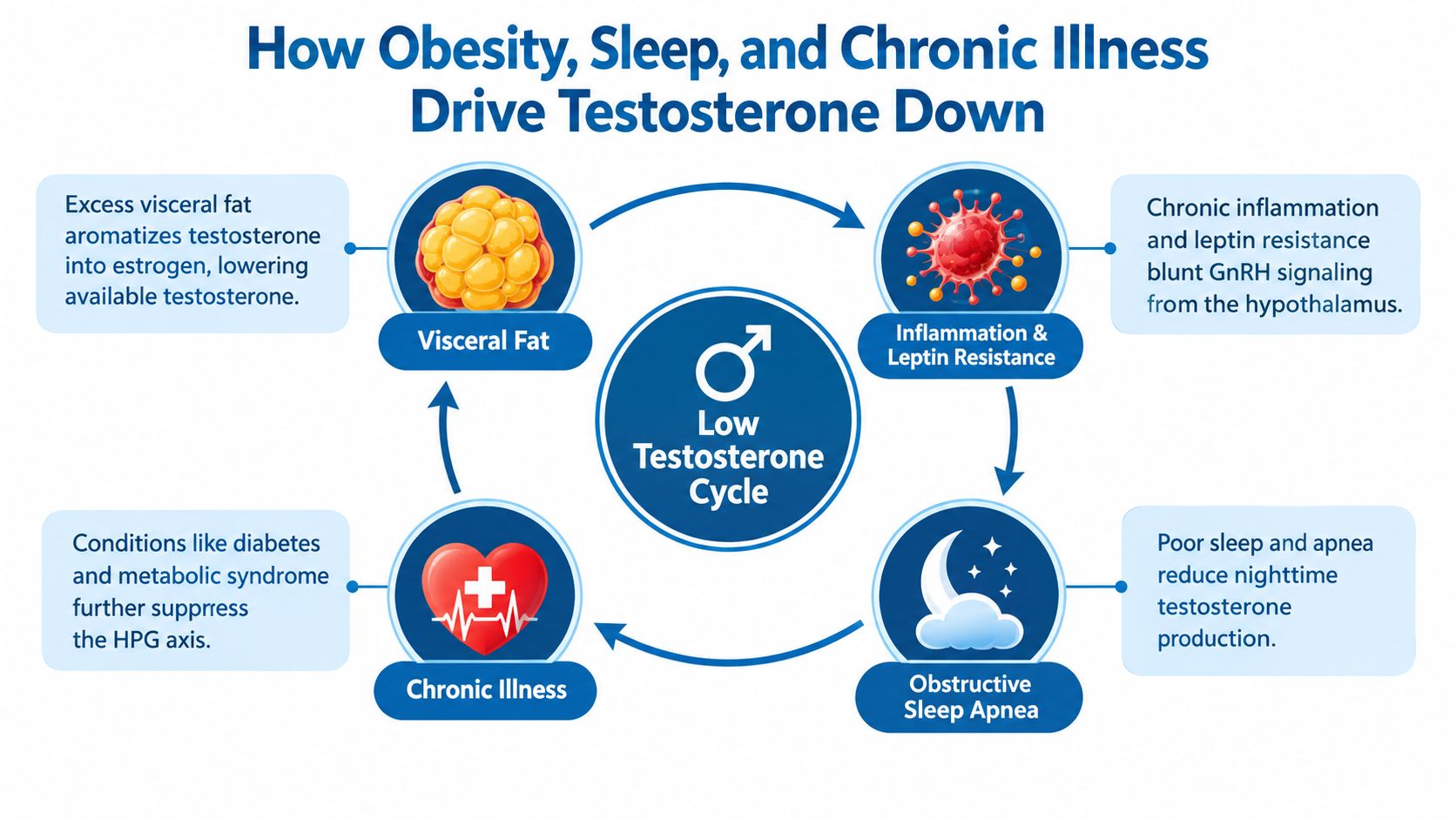
Low libido can be an early signal of broader health problems. Cardiometabolic disease matters because diabetes, metabolic syndrome, vascular disease, smoking, and poor overall health can affect endothelial function and pelvic blood flow. Erectile changes may appear before a person notices other cardiovascular symptoms, while the stress of repeated sexual difficulty can further reduce desire.
The European Association of Urology reports a 4.7% prevalence in a survey of 12,646 middle-aged German men and identifies higher risk with older age groups, vascular disease, smoking, depression, financial stress, relationship worry, poor health, and sex occurring less than once weekly. These findings appear in the EAU guidance on low sexual desire. They don't diagnose an individual patient, but they show why the surrounding health pattern matters.
Look beyond primary hypogonadism
Thyroid dysfunction and prolactin-secreting pituitary problems can impair desire without primary testicular failure. Obesity can suppress the hypothalamic-pituitary-gonadal axis, lower gonadotropins, and reduce total testosterone. Because sex hormone-binding globulin can also fall, free testosterone may remain normal in some men, and levels may improve when weight changes.
Sleep apnea is another hidden contributor. Repeated nighttime awakenings and disrupted REM sleep can impair energy, mood, and normal nighttime hormone rhythms. Chronic pain, kidney or liver disease, and cancer treatment, including androgen deprivation therapy, add further pathways.
Anemia can also contribute to exhaustion and reduced interest. If fatigue and low desire appear together, review whether anemia can cause low libido as part of a broader medical assessment rather than assuming testosterone is responsible.
What a Realistic Diagnostic Workup Looks Like
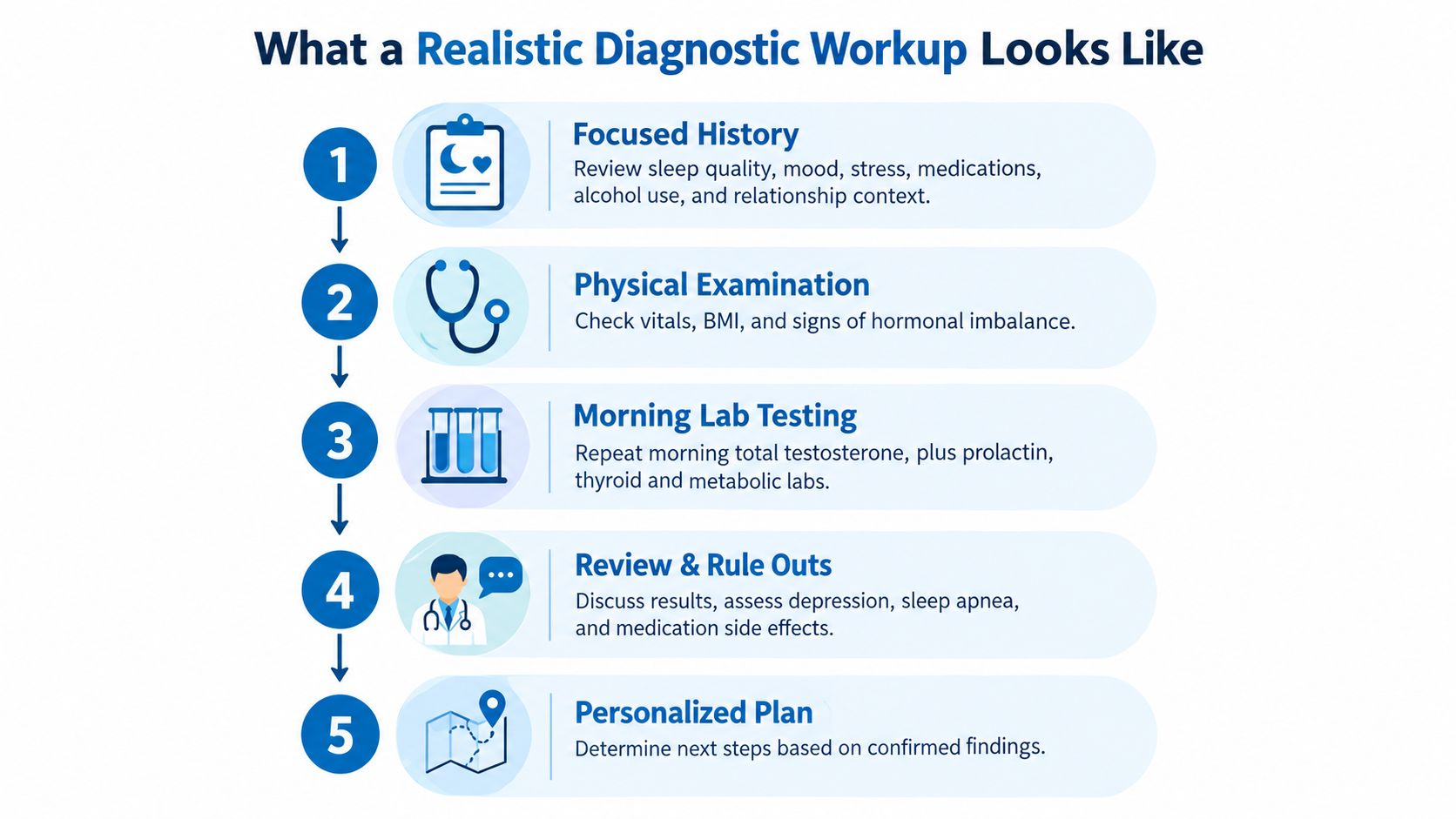
A good evaluation starts with conversation, not a prescription. Your clinician will ask when the change began, whether it affects masturbation and partnered sex, how you sleep, what medications and substances you use, whether mood or relationship stress changed, and whether erectile function, morning erections, energy, or body composition changed at the same time.
The physical examination adds context. Blood pressure, body mass index, and waist circumference can point toward cardiometabolic risk. Testicular size and secondary sexual characteristics may help distinguish long-standing endocrine problems from more recent changes. The clinician may also look for signs that suggest thyroid disease, pituitary dysfunction, or medication effects.
The laboratory sequence matters
When testosterone deficiency is suspected, guidance supports morning testing and confirmation rather than relying on a single result. The evaluation may include:
- Morning total testosterone , preferably before 10 a.m., repeated on two separate days.
- Free or bioavailable testosterone , when total testosterone doesn't match the symptoms or binding-protein changes are possible.
- LH and FSH , which help identify whether the problem originates primarily in the testes or in upstream signaling.
- Prolactin and TSH , to assess pituitary and thyroid contributors.
- Fasting glucose with HbA1c and a lipid panel , to identify metabolic and vascular risk.
- Basic metabolic and liver profiles , especially when chronic disease or medication effects are possible.
The testosterone level check guide can help you understand what to discuss before testing.
Primary care can often begin this process. Endocrinology may be appropriate for persistent hormonal abnormalities, urology for erectile or testicular concerns, sleep medicine for suspected apnea, and mental-health care for depression, anxiety, trauma, or performance fear. Pituitary MRI or vascular imaging isn't routine screening. Those tests are reserved for specific abnormal findings and clinical indications.
Evidence-Based Treatment Pathways and Next Steps
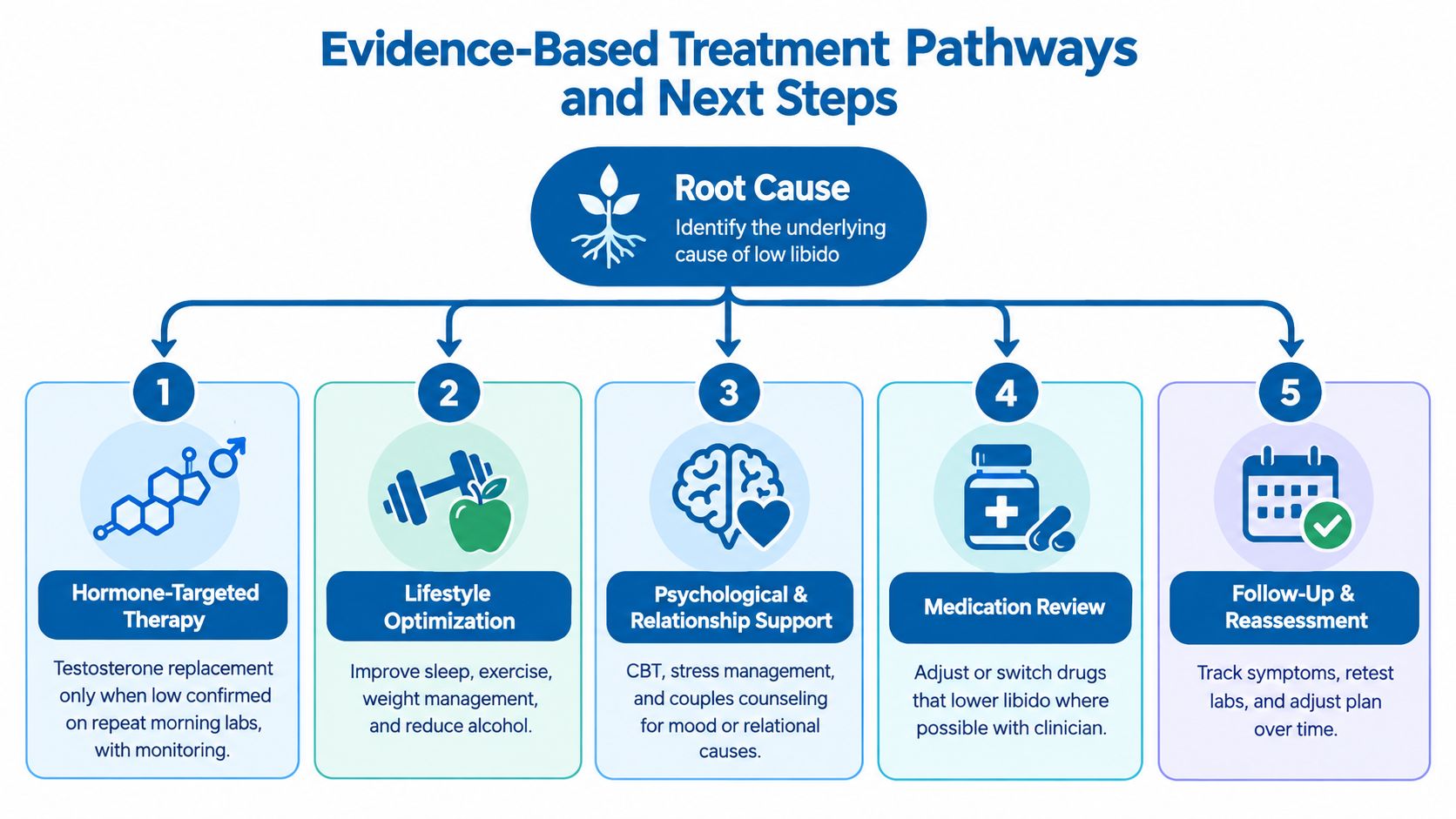
Treatment works best when it follows the driver. Testosterone replacement may be reasonable when symptoms fit and repeat morning testing confirms low testosterone. A threshold around 12.1 nmol/L, or 350 ng/dL , is clinically meaningful because hypogonadal symptoms become more common below it. Desire can also fall with diabetes, high prolactin, metabolic syndrome, vascular disease, bladder outlet obstruction, or medication effects, as described in clinical guidance on testosterone deficiency.
A high prolactin result calls for attention to pituitary or medication causes first. Abnormal TSH may point toward thyroid treatment. If a prescription appears to contribute, the prescriber may adjust its dose or timing, or choose another option. Some patients may discuss changing an SSRI to bupropion or using a different approach to a 5-alpha reductase inhibitor. The safe choice depends on the condition being treated.
For practical guidance on how to increase low libido, connect daily changes with the suspected cause rather than treating lifestyle care as a substitute for evaluation.
Build the plan around the driver
- Sleep: Keep a regular schedule and assess symptoms that suggest sleep apnea.
- Movement: Resistance training and regular activity can support energy, mood, metabolic health, and body composition.
- Weight management: For patients with excess weight, medically supervised weight loss may improve functional hypogonadism and related metabolic problems.
- Alcohol and substances: Reducing alcohol and reviewing nicotine or cannabis use may improve sleep, motivation, and sexual function.
- Relationships and mental health: Couples counseling, cognitive behavioral therapy for performance anxiety, and trauma-informed therapy can address barriers that laboratory tests cannot measure.
Pause Medical provides in-person evaluation, lab review, hormone replacement therapy, medically supervised weight management, and medication management for Mississippi patients seeking an individualized plan. A change lasting beyond several months despite reasonable adjustments warrants endocrine or urology input. Sudden onset with pain, breast changes, severe headache, or other alarming symptoms needs prompt medical evaluation.
Patient Questions Answered
When is low testosterone actually low?
A laboratory reference range isn't the same as a diagnosis. Symptoms, repeat morning results, free testosterone when appropriate, and related findings must be considered together. The reason for repeating testing is straightforward: one result may not represent your usual level, especially if you were ill, slept poorly, or tested later in the day.
Age changes expectations, but it doesn't make a distressing decline something you must accept. A clinician should still ask whether the change reflects hormones, medications, sleep, mood, chronic disease, or relationships.
Can pornography or masturbation affect desire?
The question isn't about morality. Some men notice that frequent novelty changes what feels stimulating, or that partnered intimacy becomes less engaging when arousal is strongly tied to a particular digital pattern. Others notice no meaningful effect. Track whether the habit is associated with reduced partnered interest, difficulty becoming aroused without it, or distress, then discuss the pattern without shame.
Will supplements fix low libido?
Most over-the-counter “testosterone boosters” don't have the same evidence or quality controls as prescribed treatment, and some products may contain undisclosed hormone-like or stimulant ingredients. Vitamin D, zinc, and ashwagandha may be relevant when deficiency or a specific clinical need exists, but they aren't universal solutions. Review supplements with a clinician before combining them with prescriptions.
Is low libido the same as erectile dysfunction?
No. Low libido means reduced interest or desire. Erectile dysfunction means difficulty getting or maintaining an erection. They can occur together, but a man may desire sex and have erection problems, or have reliable erections without wanting sexual activity. The treatment pathway depends on which problem appeared first and what sustains it.
How long does treatment take?
Medication changes may produce noticeable improvement over several weeks, while hormonal or weight-related changes often require a longer period of monitoring. If the plan doesn't help, report that clearly rather than adding products on your own. Persistent symptoms deserve reassessment and, when appropriate, a second opinion from endocrinology, urology, sleep medicine, or mental-health care.
This article is educational and isn't a diagnosis or substitute for an individual medical evaluation. Seek urgent care for severe symptoms, sudden neurological changes, significant pain, or other medical emergencies.
Pause Medical offers Mississippi patients personalized evaluation for reduced libido, hormone concerns, metabolic health, and medication-related symptoms, with in-person provider visits and ongoing treatment support. Visit Pause Medical to schedule a consultation and bring your symptom timeline, medication list, and questions about the next safe step.