What is Metabolic Syndrome? Symptoms, Causes, and How to Reverse It

The symptoms of metabolic syndrome can be tricky because many of them are silent. You can’t feel high blood pressure or abnormal cholesterol levels on a daily basis, so they often go unnoticed until a doctor’s visit. Instead, the most visible sign is often a cluster of conditions that, when they appear together, signal a deeper problem with how your body processes energy.
The most common red flags are a large waistline (abdominal obesity), high blood pressure, elevated blood sugar, high triglycerides, and low "good" HDL cholesterol. Spotting this pattern is the first step toward getting your metabolic health back on track, and at Pause Medical, our board-certified providers are experts in identifying and treating these interconnected issues.
Your Body's Subtle Warning System
It helps to think of metabolic syndrome not as a single disease, but as a collection of risk factors that dramatically increase your chances of developing serious health issues like heart disease, stroke, and type 2 diabetes.
This condition has quietly become a massive health crisis, affecting over a billion people—that's about one-quarter of the entire global population. To put that in perspective, this condition is roughly three times more common than diabetes, making it one of the most critical health concerns we face today.
So many of our patients come to us saying they just feel "off" but can't figure out why. They're dealing with constant fatigue, noticing their pants getting tighter around the middle, or struggling with new health concerns during menopause or andropause. It’s easy to chalk these things up to just getting older. In reality, these are often the most visible clues that your metabolism isn't functioning as it should, frequently due to underlying hormonal shifts or insulin resistance.
The 5 Key Markers of Metabolic Syndrome
For a formal diagnosis of metabolic syndrome, your doctor will look for a specific set of criteria. You must have at least three of the following five conditions. These are the "warning lights" that board-certified medical providers at Pause Medical check for during a comprehensive evaluation.
We've broken down these five official markers in the table below to show you exactly what we look for in our personalized assessments.
| Symptom / Marker | What It Means for Your Health | The Clinical Threshold |
|---|---|---|
| Abdominal Obesity | This is excess "visceral" fat around your waist. It's metabolically active, disrupts hormones, and fuels inflammation. | A waist circumference of 40+ inches for men or 35+ inches for women. |
| High Triglycerides | A type of fat in your blood that comes from excess calories. High levels can contribute to hardening of the arteries. | 150 milligrams per deciliter (mg/dL) or higher. |
| Low HDL Cholesterol | HDL is the "good" cholesterol that acts like a cleanup crew, removing bad cholesterol. Low levels mean less protection. | Less than 40 mg/dL for men or less than 50 mg/dL for women. |
| High Blood Pressure | The force of blood against your artery walls is too high, making your heart work overtime and causing damage. | 130/85 mmHg or higher, or being on medication for hypertension. |
| High Fasting Blood Sugar | Your body isn't using insulin well to manage blood sugar, a sign of insulin resistance and a precursor to diabetes. | 100 mg/dL or higher. |
Seeing these markers on a lab report can feel intimidating, but understanding them is the first step toward taking control.
A diagnosis of metabolic syndrome is not a life sentence—it's a crucial wake-up call. It's an opportunity to make meaningful, medically-guided changes that can reverse the condition and safeguard your long-term health.
If you're curious about your own risk factors, a tool like this Metabolic Syndrome Calculator can give you a preliminary idea of where you stand.
However, an online tool is no substitute for a professional evaluation. A definitive diagnosis requires a conversation with a provider who can create a personalized plan just for you. At Pause Medical, we specialize in preventative wellness solutions and disease state management programs to help you understand and manage these risks head-on.
Understanding the 5 Key Signs of Metabolic Syndrome
We know metabolic syndrome is a group of risk factors, not a single disease. But what do those five factors—a large waistline, high blood pressure, high triglycerides, low “good” HDL cholesterol, and high blood sugar—actually tell you about your health?
These aren't just numbers on a lab report. They’re clues that give our medical team a picture of what’s happening inside your body. Let's connect the dots between the data and how you actually feel day-to-day.
Abdominal Fat: More Than Meets the Eye
This first sign isn't about your total weight on the scale. It's specifically about visceral fat—the firm, deep-belly fat that wraps around your organs like your liver and intestines. This is very different from the soft, pinchable subcutaneous fat just under your skin.
The reason we focus on visceral fat is because it’s metabolically active. It acts like an unwanted gland, releasing inflammatory signals and hormones that throw your body's systems off balance, worsening insulin resistance. That's why a simple tape measure is such a powerful diagnostic tool. A waistline of 35 inches or more for women or 40 inches or more for men is considered a major red flag.
Your Cholesterol and Triglycerides: A Tale of Two Fats
Think of your arteries as a busy highway system. In this scenario, triglycerides and HDL cholesterol are two very different types of traffic.
- High Triglycerides (The Traffic Jam): Your body makes triglycerides from extra calories, especially from sugary foods and refined carbs. When your levels are high (150 mg/dL or greater), it’s like a massive traffic jam clogging up your arteries, contributing to their hardening and narrowing over time (atherosclerosis).
- Low HDL Cholesterol (The Road Crew): HDL is the "good" cholesterol, and its job is to be the road crew. It clears away excess "bad" LDL cholesterol, taking it back to the liver to be disposed of. When HDL is low (less than
50 mg/dL for women or
40 mg/dL for men), it means your cleanup crew isn't keeping up, and artery-clogging plaque can build up more easily.
This diagram helps illustrate how these core signs are interconnected.
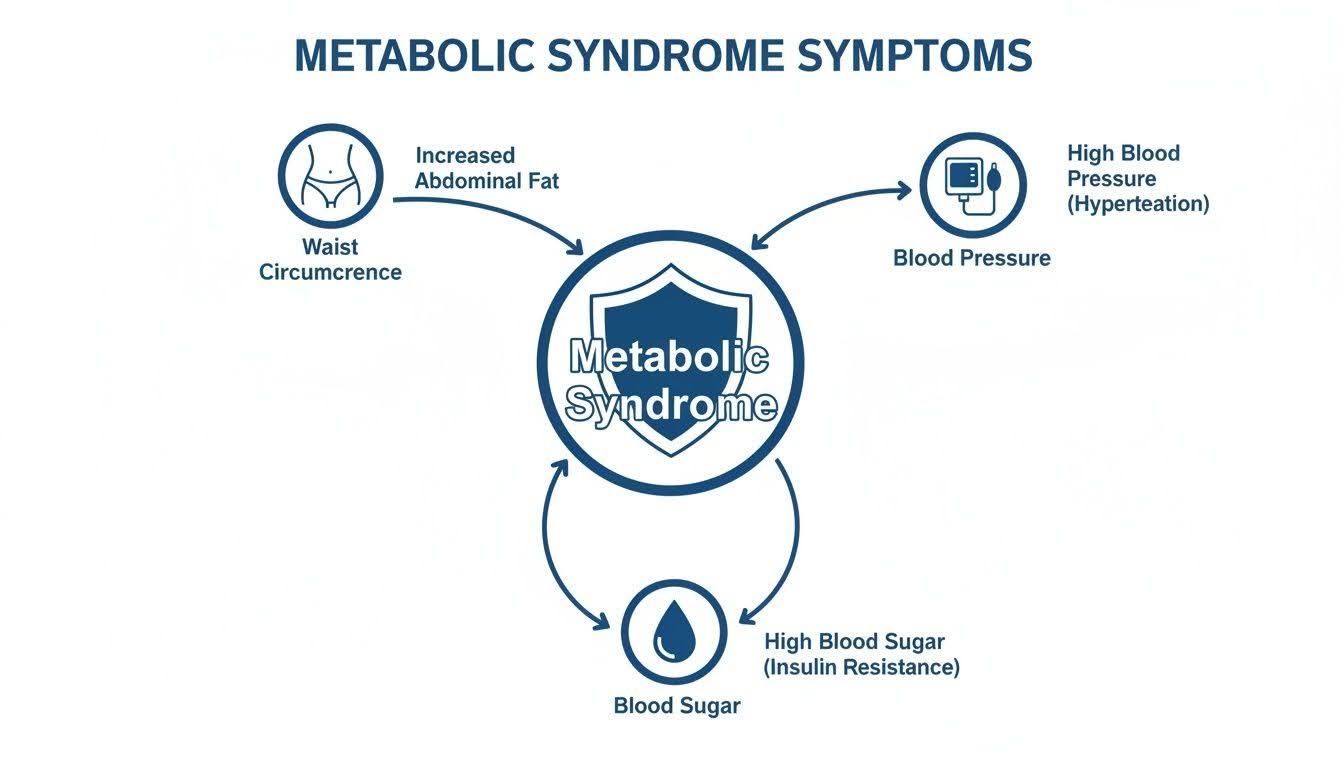
As you can see, a larger waist, high blood pressure, and high blood sugar are all central pieces of the same puzzle, often stemming from the same root cause.
The "Silent" Signals: Blood Pressure and Blood Sugar
The last two markers often have no obvious symptoms until they've caused significant damage, but they signal serious stress on your body.
A blood pressure reading of 130/85 mmHg or higher indicates your heart is working overtime to push blood through your body. This constant force puts a strain on your arteries, damaging their delicate lining and making it easier for plaque to take hold.
A fasting blood sugar level over 100 mg/dL is one of the clearest signs of underlying insulin resistance. It tells us the "key" that lets sugar into your cells for fuel is broken. That sugar gets left behind in the bloodstream, where it can cause widespread inflammation and damage over time.
And this isn't a rare problem. The latest data from the Journal of the American Medical Association is concerning, showing that the prevalence of metabolic syndrome jumped from 12.8% to 20.8% between 2012 and 2021 alone.
At Pause Medical, our goal is to help you understand the why behind each of these numbers. When you see how they're all connected through our integrative medicine approach, abstract medical terms become clear, actionable goals for your health. To learn more about related topics, feel free to explore other articles on the Pause Medical blog.
The Root Causes of Metabolic Dysfunction

Seeing the five signs of metabolic syndrome laid out is one thing, but the real question is why they show up in the first place. These markers might seem unrelated—what does blood pressure have to do with waist size?—but they all stem from a single, underlying problem: insulin resistance.
Think of insulin as the key that unlocks your body's cells, letting glucose (sugar) inside to be used for energy. It’s a beautifully simple system that keeps your blood sugar in check and your body running smoothly.
But with insulin resistance, the locks on your cells get "gummy" and stop responding properly to the key. Your pancreas senses the problem and goes into overdrive, pumping out more and more insulin to try and force those stubborn doors open. This is the exact point where your body's metabolic harmony begins to break down, triggering the cascade of issues we call metabolic syndrome.
Insulin Resistance: The Unifying Factor
Once your body starts ignoring insulin, a chain reaction kicks off. All that extra insulin and sugar floating around in your bloodstream begins to cause problems, directly leading to the five markers we've talked about.
It all connects like this:
- High Blood Sugar: This is the most obvious one. If sugar can't get into your cells, it has nowhere to go but up, leading to high fasting glucose levels.
- High Triglycerides: Your liver gets a signal from the excess insulin to take any unused sugar and turn it into fat—specifically, triglycerides, which then flood your bloodstream.
- Low HDL Cholesterol: At the same time, high insulin levels interfere with your body's production of "good" HDL cholesterol, which is responsible for clearing out the bad stuff.
- High Blood Pressure: Insulin resistance can make your blood vessels stiff and cause your body to hang onto extra salt and water, which naturally drives your blood pressure up.
- Abdominal Obesity: Insulin is a fat-storage hormone. When levels are chronically high, it encourages your body to store fat, especially that dangerous visceral fat right around your midsection. That belly fat then produces its own inflammatory compounds, making insulin resistance even worse. It’s a vicious cycle.
At its core, metabolic syndrome isn't just a collection of random symptoms. It's the downstream effect of a single metabolic malfunction—insulin resistance—that ripples through your entire system. This is why our integrative approach focuses on the root cause, not just managing symptoms.
The Role of Hormonal Imbalance
So, what flips the switch and starts this cycle of insulin resistance? While genetics, age, and a sedentary lifestyle certainly contribute, one of the biggest and most overlooked triggers is hormonal imbalance. This is especially true as we go through major life transitions like perimenopause, menopause, and andropause.
Hormones like estrogen and testosterone are powerful metabolic regulators. They play a crucial role in helping your body respond to insulin, telling it where to store fat, and maintaining overall metabolic balance.
When these hormone levels begin to decline, that delicate balance is thrown off.
- For women, the steep drop in estrogen during menopause is directly tied to worsening insulin resistance. It also causes a frustrating shift in fat storage, moving it from the hips and thighs right to the abdomen. This is why so many women find themselves battling new, stubborn belly fat during this time, a classic sign of hormone-related weight gain.
- For men, the gradual decline of testosterone during andropause can lead to less muscle, more body fat, and—you guessed it—poorer insulin sensitivity.
This is exactly why just trying to "eat less and move more" can feel like an impossible, uphill battle. If an underlying hormonal shift is working against you, your best efforts may not be enough. This is where getting expert guidance on treatments like hormone therapy becomes essential.
At Pause Medical, our board-certified providers see this connection every day. We understand that your metabolic symptoms are deeply tied to your hormonal health. By looking at your whole health picture, we can create a truly personalized treatment plan that gets to the foundation of the problem and helps you finally break the cycle.
Long-Term Health Risks of Unmanaged Metabolic Syndrome
Think of metabolic syndrome not as a single diagnosis, but as a collection of red flags your body is waving. It’s like seeing multiple warning lights flash on your car’s dashboard at once. You might keep driving for a bit, but a serious breakdown feels almost inevitable down the road. This condition sets the stage for several chronic diseases, but the good news is that seeing those warnings gives you a crucial opportunity to take the wheel and change direction with proactive medical oversight.
Knowing what you’re up against isn't meant to scare you—it's the first step to taking control. Once you understand the direct line between your current health and these future risks, you can find the motivation to get a proactive evaluation and prevent them from ever happening.
The Inevitable Path to Type 2 Diabetes
The progression from metabolic syndrome to type 2 diabetes is a slow burn, driven entirely by long-term insulin resistance. If you recall the "faulty key" analogy, your cells are no longer letting insulin do its job properly. In response, your pancreas works furiously, pumping out more and more insulin to try and force your blood sugar back into a healthy range.
But this can't go on forever. Eventually, that relentless effort wears out the specialized beta cells in your pancreas. They simply can't keep up with the overwhelming demand anymore.
This exhaustion of the pancreas is the tipping point. Blood sugar levels, once just a little high, begin to spike uncontrollably. This is when a diagnosis of type 2 diabetes is made. A study in Diabetes Care found that people with metabolic syndrome are five times more likely to develop type 2 diabetes.
The key here is that this is a gradual process, not an overnight event. Catching the signs of metabolic syndrome early gives you the power to step in with preventative wellness solutions and support your body before that damage becomes permanent.
Cardiovascular Disease: The Perfect Storm
Metabolic syndrome dramatically increases your risk for heart attack and stroke. The American Heart Association states that having metabolic syndrome doubles your risk of cardiovascular disease. The combination of high blood pressure, unhealthy cholesterol, and high blood sugar creates a truly destructive environment inside your blood vessels.
Here’s how it unfolds:
- Arterial Damage: High blood pressure constantly scours the delicate inner lining of your arteries, creating tiny points of injury and inflammation.
- Plaque Buildup: High triglycerides and low "good" HDL cholesterol allow sticky, fatty deposits (plaque) to latch onto these damaged areas. Over time, this buildup hardens and narrows your arteries, a process called atherosclerosis.
- Increased Clot Risk: High blood sugar makes your blood thicker and more prone to forming clots. A clot lodging in one of those already-narrowed arteries is exactly what triggers a heart attack or stroke.
The global impact of this condition is staggering. Driven by rising obesity rates, the market for metabolic syndrome treatments is expected to hit $120.69 billion by 2029, with North America representing nearly 40% of that market according to this detailed market report.
While these numbers show how widespread the problem is, the most powerful solutions begin with you. A proactive approach to disease state management programs, guided by medical experts, is your best defense against these dangerous outcomes. Your metabolic health isn't set in stone—it's a dynamic condition you can absolutely change with the right support.
A Modern Approach to Reversing Metabolic Syndrome

Here's the great news: metabolic syndrome isn't a life sentence. In many cases, it’s entirely reversible. But reversing it isn't about simply trying harder with the same old "eat less, move more" advice that often fails. At Pause Medical, we utilize a modern, evidence-based, and integrative approach that gets to the root of the problem.
Of course, a healthy lifestyle is the cornerstone of good health. Making smart food choices, like incorporating some easy diabetic meal prep recipes, can make a real difference. But often, that's not enough to overcome the powerful biological forces at play, especially when hormones and insulin resistance are working against you. Lasting change requires a smarter strategy that combines medical expertise with personalized lifestyle adjustments.
Beyond Diet and Exercise: Medical Weight Loss
For so many people, the biggest hurdle in reversing metabolic syndrome is insulin resistance, which can make losing weight feel like an uphill battle you can never win. This is exactly where our medically supervised weight loss programs come in, offering powerful tools that work with your body’s biology, not against it.
Some of the most effective tools we have today are GLP-1 receptor agonists (like Semaglutide and Tirzepatide). These medications were first developed to manage diabetes, but they’ve proven to be incredibly effective for medical weight loss.
- How They Work: GLP-1s mimic a hormone your gut naturally produces to regulate appetite and blood sugar. They slow down how quickly your stomach empties, so you feel full longer. They also send signals to your brain that you’re satisfied, which helps quiet constant cravings and reduce food intake.
- Targeting the Root Cause: Most importantly, these medications help your body become more sensitive to insulin again. By getting your cells to respond to insulin properly, they directly tackle the central issue that drives metabolic syndrome.
- Reducing Visceral Fat: As a result, patients often see a dramatic reduction in that dangerous visceral fat around their organs. This leads directly to a smaller waistline and better metabolic numbers all around.
When prescribed and monitored by a board-certified provider, these GLP-1 medications are a safe and powerful way to break the cycle of insulin resistance and achieve real, sustainable weight loss.
A medically supervised plan isn't a shortcut—it’s a strategic tool to reset your body's system. It helps you finally make those healthy lifestyle changes stick by removing the biological roadblocks that were holding you back.
The Critical Role of Hormone Balance
The other huge piece of the puzzle, especially for adults in midlife and beyond, is hormones. As we’ve covered, the dip in estrogen during menopause and testosterone during andropause can accelerate the development of metabolic syndrome. Trying to fix your metabolism without addressing your hormones is like trying to fix an engine without checking the oil.
Bioidentical Hormone Replacement Therapy (BHRT) is a specialized treatment that can correct these underlying imbalances. By restoring your hormones to their optimal levels using plant-derived hormones that are molecularly identical to your own, BHRT helps your body find its natural metabolic rhythm again.
For many of our patients, the benefits are life-changing:
- Improved Insulin Sensitivity: When hormones are balanced, your cells become more receptive to insulin, making blood sugar much easier to control.
- Reduced Abdominal Fat: Hormone therapy can help your body stop storing so much fat around your midsection, making it easier to lose that stubborn hormone-related belly fat.
- Increased Energy and Motivation: With balanced hormones, you simply feel better. You have more energy for exercise and more motivation to stick with your healthy habits, from improved sleep to a better mood.
At Pause Medical, we believe in a fully integrated approach. We combine advanced treatments like medically supervised weight loss and BHRT with practical, personalized lifestyle coaching. Our board-certified providers don’t just look at the numbers on your lab report—we focus on treating the root causes to help you build lasting metabolic health and get your vitality back.
Your Path to Metabolic Health With Pause Medical
Are you feeling stuck? Maybe it's the stubborn weight that won't budge, the fatigue that follows you all day, or just a nagging feeling that something isn’t right with your body. Recognizing the signs of metabolic syndrome is a huge first step, but turning that knowledge into action requires the right partner.
At Pause Medical, we understand your struggle. We created our practice to be a clear, supportive, and effective resource for people just like you dealing with the challenges of menopause, andropause, and chronic disease. Our goal isn't to just hand you a prescription and send you on your way; it's to provide real answers and a clear strategy for addressing the root causes of your symptoms.
Your Journey Starts Here
We've worked hard to take the complexity and frustration out of getting good medical care. We believe you should feel heard, understood, and confident in your personalized health plan from the very first conversation.
Here’s how simple it is to get started on your path to preventative wellness:
- Book Your Consultation Online. No more phone tag or waiting weeks for an opening. Our simple online system lets you schedule your first visit when it works for you.
- Have a Real Conversation. You’ll meet one-on-one with a board-certified provider at one of our Mississippi locations. This is your dedicated time to share your story, your symptoms, and what you hope to achieve. We listen.
- Get Your Personalized Roadmap. After a thorough evaluation and comprehensive lab work, we’ll design your personalized treatment plan. This is a detailed guide created specifically for your body’s needs, aimed at restoring your metabolic health, balancing your hormones, and getting your energy back.
The Pause Medical Difference
We’ve built a different kind of medical practice—one that puts you first. That means clear, straightforward pricing with no insurance headaches or surprise bills. We believe in treating the whole person, not just the numbers on a lab report, to understand the full picture of your health. By focusing on core issues like hormonal balance and insulin resistance with an integrative medicine approach, we help you achieve results that last.
We’re here to offer more than just treatment; we’re here to offer a clear path forward. Understanding what is metabolic syndrome symptoms is where it begins, but taking action with the right partner is how you truly take back control of your health.
Our team is passionate about providing the expert care and compassionate support you deserve to feel like yourself again. To see exactly what we mean by our patient-first philosophy, you can learn more about why to choose Pause Medical and what makes our approach different.
Don't let uncertainty dictate your health any longer. Take the first step toward reclaiming your vitality. Schedule your consultation with Pause Medical today.
Frequently Asked Questions About Metabolic Syndrome
When you're dealing with a new diagnosis like metabolic syndrome, it’s natural to have a lot of questions. We’ve heard them all from our patients, and we want to give you the clear, evidence-based answers you deserve.
Can I Have Metabolic Syndrome Even if I Am Not Overweight?
Yes, you absolutely can. While a large waist circumference is one of the classic signs, it's not a mandatory one. We often see patients who have what’s called “lean metabolic syndrome.”
This means that even though your body weight falls into a "normal" range, your internal systems are showing signs of distress—like high blood pressure, unhealthy cholesterol levels, and elevated blood sugar. It's a perfect example of why the number on the scale doesn't tell the whole story about your metabolic health.
How Long Does It Take to Reverse Metabolic Syndrome?
This is one of the most common questions we get, and the honest answer is: it’s different for everyone. Your personal timeline depends on your starting point, your body's unique biology, and the personalized treatment plan we create together.
That said, many patients are amazed to see real improvements in their lab results—and in how they feel—within just a few months of starting a comprehensive program. When we combine smart lifestyle adjustments with targeted medical treatments like GLP-1 weight loss medications or BHRT, the progress can be even faster. Our goal is to create a plan that works for you for the long haul.
Reversal is a journey, not a race. The goal is to make steady, lasting changes that restore your body's natural balance and improve your health for years to come.
Is Metabolic Syndrome the Same as Prediabetes?
They're closely related, but they aren't the same thing. Think of it this way: prediabetes is a specific diagnosis based on one metric—blood sugar that's higher than normal but not yet in the diabetic range.
Metabolic syndrome is a broader cluster of five different risk factors. High blood sugar (or prediabetes) is just one of those five. So, while most people with metabolic syndrome also have prediabetes (or at least some degree of insulin resistance), you can have prediabetes without having the other four issues. Metabolic syndrome is the big picture; prediabetes is a key part of it.
Why Are Hormones So Important for Treating Metabolic Syndrome?
Hormones are the powerful chemical messengers that run your body, and they have a massive impact on your metabolism. During the transitions of menopause and andropause, key hormones like estrogen and testosterone decline.
This hormonal shift can be a direct trigger for many of the problems linked to metabolic syndrome. It can cause
insulin resistance, lead to the accumulation of stubborn belly fat, and throw your cholesterol levels out of whack. By using Bioidentical Hormone Replacement Therapy (BHRT) to restore your body’s natural hormonal balance, we're addressing one of the root causes of the problem. This makes everything else—losing weight, feeling energetic, and reversing the condition—so much more achievable.
If you're ready to stop wondering and start taking control, the team at
Pause Medical is here for you. Our board-certified providers focus on evidence-based, personalized care to help you understand your body and get back to feeling your best. Take the first step by
scheduling your consultation.
Disclaimer: The information in this article is for educational purposes only and is not a substitute for professional medical advice, diagnosis, or treatment. Always seek the advice of your physician or another qualified health provider with any questions you may have regarding a medical condition. Never disregard professional medical advice or delay in seeking it because of something you have read here.