Hormone Pellet Therapy Side Effects: A Patient's Guide to What to Expect
If you're exploring solutions for hormonal imbalance, you've likely come across hormone pellet therapy. And if you have, one of your first questions is probably about the side effects. It's a question we hear often at Pause Medical, and we believe in providing a clear, honest answer. The good news is that while hormone pellet therapy side effects can occur, they are most often mild, directly related to the dosage, and manageable with expert medical oversight. Most patients experience either minor reactions at the insertion site or temporary hormonal shifts as their body adapts to its new, healthier balance.
This guide is designed to walk you through what to expect, from the simple insertion procedure to how your body adjusts, so you can make an informed, confident decision about your health.
A Balanced, Empathetic View on Hormone Pellet Side Effects
Starting any new medical treatment, especially one as personal as hormone therapy, can feel overwhelming. You're likely dealing with disruptive symptoms like fatigue, low libido, or hot flashes, and you want a solution that brings relief, not more problems. We understand that. At Pause Medical, our approach is built on empathy and patient education. We want to empower you with an evidence-based picture of what your journey could look like.
Think of it this way: when you start a new fitness routine, you expect some initial muscle soreness. It's not a sign that you're doing something wrong; it's a signal that your body is adapting and getting stronger. Similarly, when you reintroduce hormones, your body needs a short adjustment period to find its new equilibrium. This can sometimes cause temporary, minor effects before you settle into feeling great.
Two Main Categories of Side Effects
When we talk about side effects from hormone pellet therapy, they generally fall into two distinct categories: those related to the minor, in-office insertion procedure, and those connected to your body’s hormonal response as it recalibrates.
This infographic gives you a quick visual breakdown of what that looks like.
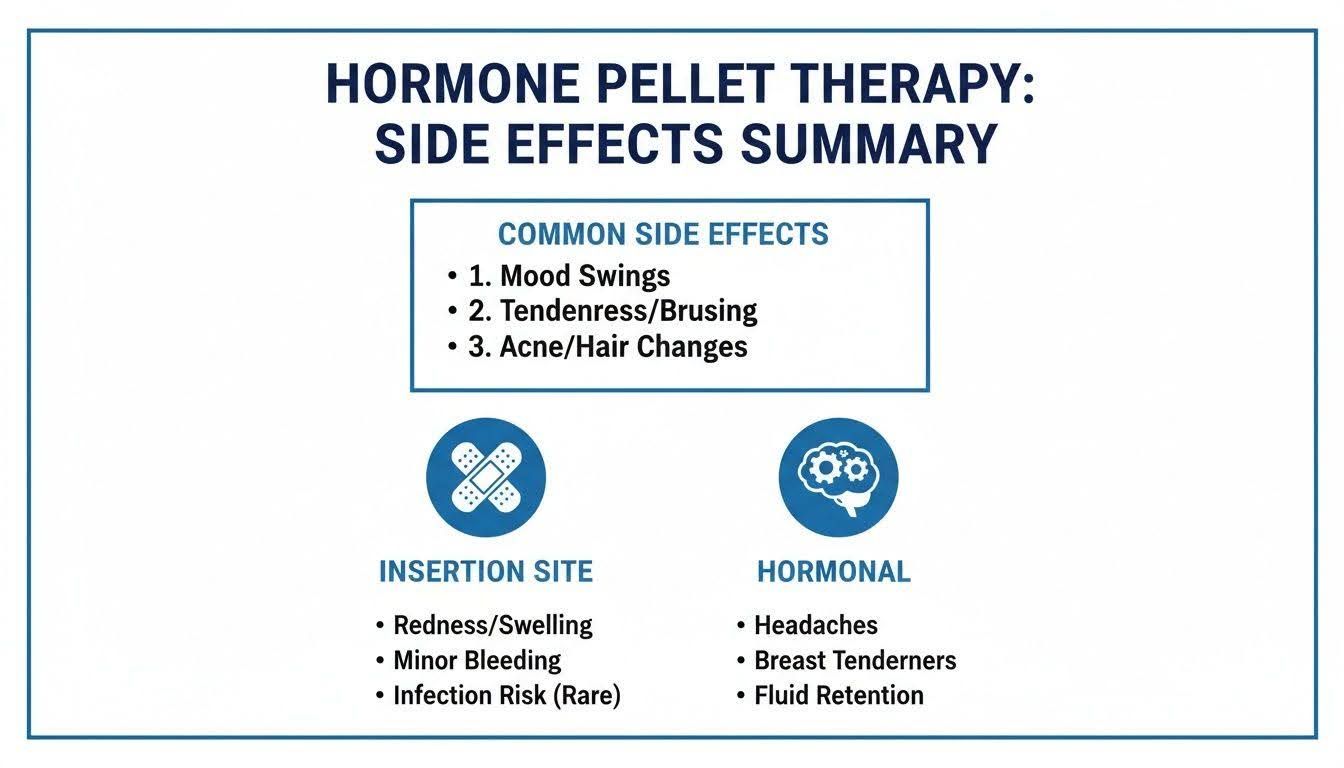
As you can see, any issues at the insertion site are typically minor and resolve on their own. The hormonal effects are simply signs that your body is recalibrating, and they usually fade as your system stabilizes under a personalized, medically supervised plan.
To give you a clearer picture, this table offers a quick summary of potential side effects, categorizing them for clarity and providing insight into what you might experience.
Hormone Pellet Side Effects at a Glance
| Side Effect Category | Common Examples | What to Expect |
|---|---|---|
| Insertion Site Reactions | Minor bruising, redness, tenderness, or swelling at the insertion site. | These are typically temporary, lasting just a few days as the site heals. Think of it like the aftermath of a routine blood draw. |
| Hormonal Adjustment Effects | Mild acne, breast tenderness, mood fluctuations, or temporary fluid retention. | These often occur as your body adjusts to new hormone levels and usually resolve on their own within the first few weeks as your system finds its new normal. |
| Dose-Related Effects | Hair thinning (rare), persistent acne, or ongoing moodiness. | These are signs that your dosage might be too high and needs adjustment. This is why ongoing monitoring by a board-certified provider is crucial. |
Ultimately, side effects from pellet therapy are almost always manageable. The key is working with a provider who listens to you and knows how to fine-tune your treatment to address the root cause of your symptoms, not just mask them.
The most important takeaway is that nearly all hormone pellet therapy side effects are directly related to the dose. This is precisely why a personalized treatment plan from a board-certified medical provider isn't just a nice-to-have—it's essential for a safe and successful outcome.
At Pause Medical, we don't believe in one-size-fits-all medicine. We always start with comprehensive lab work to get an exact picture of your hormonal baseline. From there, we follow a "start low and go slow" philosophy, using the lowest effective dose to help you achieve your wellness goals while minimizing risks.
This careful, patient-first approach is at the heart of our integrative medicine practice. By partnering with you and closely monitoring your progress, we can make precise adjustments to keep your therapy both effective and comfortable. You can learn more about our complete approach to bioidentical hormone replacement therapy on our main service page.
This dedication to personalized care and medical oversight is what sets a professional program apart and provides the peace of mind you deserve. In the next sections, we'll delve into the specifics of certain side effects, what's considered normal during recovery, and how our team works to keep your journey as smooth as possible.
Understanding Androgenic Side Effects Like Acne And Hair Growth
When people hear about potential side effects from hormone therapy, particularly testosterone, their minds often jump to things like acne or unwanted hair growth. These are known as "androgenic" effects because they are related to androgens. We understand this can be a significant concern, especially for our female patients. However, it's helpful to put these effects into perspective—they are not inevitable and are almost always a sign of incorrect dosing rather than an inherent flaw of the therapy itself.

Effects like oily skin, a few pimples, or some new, fine body hair happen when testosterone levels are pushed too high for your individual body. The most important thing to know is that these side effects are almost always tied directly to the dose. That’s why working with an experienced, board-certified medical provider who specializes in hormone optimization is non-negotiable.
Why Dose Precision Is So Important
Our goal with pellet therapy is to restore your hormone levels to an optimal range, similar to what you had in your prime—not to send them skyrocketing into supraphysiological territory. At Pause Medical, our board-certified providers follow a strict "start low and go slow" philosophy. We always begin with the lowest dose that we calculate will be effective for you based on thorough lab work and your specific symptoms, and we fine-tune it from there based on your feedback and follow-up testing.
This careful, methodical approach is all about finding your body's unique "sweet spot." It's that perfect balance where you feel all the amazing benefits—more energy, sharper focus, a healthy libido—while making those unwanted androgenic effects highly unlikely.
More dramatic changes, like a deepening voice or clitoromegaly in women, are incredibly rare. These are almost exclusively seen in cases where someone receives irresponsibly high doses without proper medical guidance. Our strict, evidence-based protocols are in place to ensure that never happens.
Acne and Unwanted Hair Growth Explained
So what's actually happening in your body? When testosterone levels are too high, they can overstimulate the oil glands (sebaceous glands) in your skin. When oil production kicks up a notch, it can lead to clogged pores and breakouts. In a similar way, it can also stimulate hair follicles, which might cause new, fine hairs to appear on the face or body.
While the goal is balance, sometimes even a well-planned dose can trigger these effects if your body is particularly sensitive. To dig deeper into the mechanics, you can read about what causes excessive hair growth in women from other experts in the field.
Think of mild acne or new hair growth as a signal from your body, not a red flag. It's simply an indication that your dose is too high for your system and needs to be adjusted. It's not a sign of failure—it's part of the collaborative process of dialing in your treatment perfectly.
Modern clinical research supports this dose-dependent view. While older studies on testosterone therapy may have shown a higher rate of acne and hair growth, they often used higher, less individualized doses. Newer studies using more refined, lower-dose strategies show a much lower incidence. For example, one 2021 study found that with optimized dosing, new facial hair only appeared in 5.3% of patients, and acne in just 2.6%.
Our Strategy for Minimizing Androgenic Effects
At Pause Medical, we have a clear, proactive plan if any androgenic side effects show up. We don't just treat the symptom; we address the root cause, which is the dose.
- Re-evaluation: We'll schedule a consultation to discuss your symptoms and run new labs to see exactly where your hormone levels are.
- Dosage Adjustment: The most direct and effective solution is a reduction in your next pellet dose. This almost always resolves the issue while keeping you in the optimal therapeutic range to feel your best.
- Supportive Care: While we adjust the dose, we can suggest simple skincare tweaks for temporary acne or provide guidance for managing any unwanted new hair.
This is a partnership. Your feedback is what allows us to tailor your treatment for the best possible outcome. For men seeking to optimize their hormones, you can learn more in our detailed guide on at-home testosterone replacement therapy (TRT).
At the end of the day, androgenic side effects aren't something you just have to accept. They are manageable possibilities that a skilled medical team can easily navigate with you, ensuring your journey to feeling your best is a smooth and successful one.
What Is Normal After Your Pellet Insertion?
The pellet insertion itself is a quick and simple procedure we handle right here in our comfortable Pause Medical office. Afterwards, it’s completely natural to wonder what your body will feel like as it heals. The best way to think about it is like recovering from a small scratch or even a routine vaccination—your body just needs a little time to adjust, and knowing what’s normal can provide significant peace of mind.
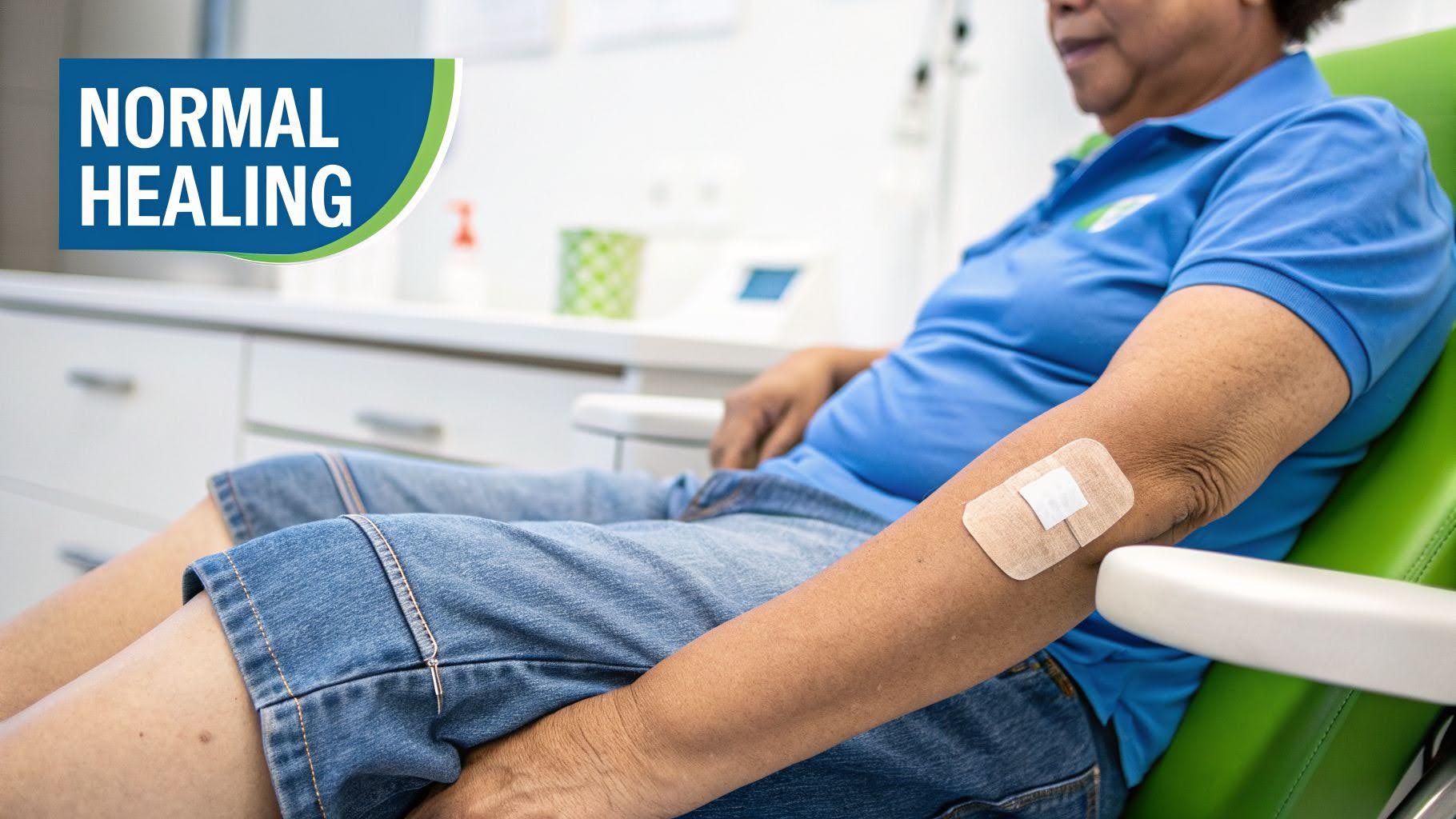
Let’s walk through what you can typically expect, so you can feel confident as you start your journey toward feeling like yourself again.
Your Guide to the Healing Process
Immediately after your pellet is placed through a tiny incision, our team will cover the area with a sterile dressing. For the first few days, what you feel will be localized to that small area and should be very mild.
Most of our patients report the following:
- Mild Tenderness or Soreness: The insertion site, usually on your hip or upper buttock, might feel a bit tender to the touch, much like a bruise. This almost always fades within a couple of days.
- Minor Bruising or Redness: It’s very common to see some light pinkness or a small bruise develop as the skin heals. This is a normal part of the body's inflammatory response to a minor procedure.
- Slight Itching: As the incision closes up, you might notice some mild itching. This is just a sign that your skin's healing process is right on track.
These feelings are simply your body’s way of saying it’s healing properly. At Pause Medical, we use strict sterile techniques and provide you with clear, straightforward aftercare instructions to make your recovery as smooth and uneventful as possible.
It's important to remember that significant pain is not a normal part of healing. While mild tenderness is expected, any severe, throbbing, or worsening pain is something you should call us about right away.
Following our post-procedure instructions is the key to a speedy recovery. We’ll ask you to hold off on strenuous lower-body workouts, hot tubs, baths, and swimming for a few days. This helps keep the area clean, reduces the risk of infection, and allows the incision to heal without interruption.
Red Flags That Warrant a Call
While true complications are incredibly rare—studies have shown infection rates as low as 0.028% in female procedures—your safety is our number one priority. We believe in being fully transparent so you know exactly what to look for.
Please get in touch with our office immediately if you experience any of these "red flags":
- Signs of Infection: This would include pus or drainage from the site, redness that spreads or gets worse, skin that feels unusually warm to the touch, or developing a fever.
- Pellet Extrusion: In extremely rare instances, the pellet can work its way out of the skin. Call us if you feel a hard bump pushing against the incision or can actually see the pellet.
- Unusual or Worsening Pain: Any pain that feels more intense than mild soreness or seems to be getting worse instead of better needs our attention.
Again, these situations are highly uncommon, but our team is always here to support you. Open communication is a cornerstone of our practice, and we are committed to making sure your experience with hormone pellet therapy is both safe and successful from start to finish.
How Your Body Adjusts to New Hormone Levels
So, you’ve had your hormone pellets placed. What happens now? Inside your body, a quiet but powerful recalibration process is beginning as the pellets start releasing a slow, steady stream of bioidentical hormones.
Think of it like nudging the thermostat in your home up to a cozier temperature. It doesn't heat up instantly. The system kicks on, and it takes a little while for the warmth to spread evenly and for everything to settle into that new, comfortable state. Your body works in a very similar way as it gets used to its new, more balanced hormonal environment.
During this initial phase, which can last a few weeks, it's pretty common to feel some temporary effects while your body finds its new equilibrium. This is completely normal and, honestly, a positive sign that your system is responding to the therapy.
Temporary Changes as Your Hormones Rebalance
As your body gets reacquainted with hormones it's been missing—sometimes for years—you might notice a few passing symptoms. These aren't signs that anything is wrong; they’re simply indications of the beneficial change taking place at a cellular level.
Here's what some people experience in the first few weeks:
- Mild Water Retention or Bloating: When estrogen levels begin to rise in women, it's common for the body to hold onto a little extra fluid at first. This is usually very mild and resolves once your system adjusts.
- Breast Tenderness: This is a classic response for women starting on estrogen therapy. It often feels similar to the tenderness you might experience during a normal menstrual cycle and typically fades within a few weeks as your body adapts.
- Mood Fluctuations: Hormones have a powerful effect on our emotions. Just as shifting hormones can cause mood swings during menopause or andropause, reintroducing them can lead to some temporary emotional ups and downs until your levels stabilize.
These effects are directly tied to the hormonal shift and almost always resolve on their own. At Pause Medical, our integrative approach means we prepare you for these possibilities beforehand so you know exactly what to expect and feel supported throughout the process.
Estrogen vs. Testosterone Adjustments
The kind of adjustment symptoms you might feel often depends on whether your body is adapting primarily to estrogen or testosterone.
For women, many of the initial effects, like breast tenderness and bloating, are related to the reintroduction of estrogen. For both men and women receiving testosterone, the experience can be a bit different. You might notice a temporary surge in energy or libido that feels a little intense at first before it levels out into your new, sustained normal.
The real beauty of pellets is their steady-state delivery. This consistent release is specifically designed to make the adjustment phase much smoother, avoiding the hormonal "roller coaster" that can happen with daily creams or weekly shots. Your system isn't being shocked by sudden spikes; it's being gently guided to a new, stable baseline.
This stability is one of the biggest advantages of pellet therapy and a key reason why it's so effective for symptom relief. Our goal is to bring back your vitality without those disruptive peaks and valleys. By creating a personalized plan based on your specific lab work, our medical team can tailor your therapy to help minimize these hormone pellet therapy side effects right from the start.
Our whole-person, integrative approach means we’re here to support your entire system through this transition. We want you to feel confident and informed every step of the way on your journey to long-term preventative wellness. Knowing how the body adapts helps you see these temporary feelings for what they are: a short stop on the path back to feeling your best.
A Transparent Look at Serious Risks and Discontinuation
At Pause Medical, we believe a trusted patient-provider partnership starts with honesty and transparency. So, while most side effects from hormone pellets are minor and resolve quickly, it's essential to have an open conversation about the more serious—though much less common—risks associated with any form of hormone replacement therapy (HRT). This allows you to make a truly informed decision about your health.
Frankly, any medical treatment that is effective enough to create positive change also carries some degree of risk. It's our job as your medical team to interpret the clinical data, place it in the context of your personal health profile, and highlight why having a board-certified expert in your corner is non-negotiable for safety.
Cardiovascular Risks and Blood Clots
Let's start with the most discussed concern: the potential impact on your heart and circulation. The primary worry here is the risk of venous thromboembolism (VTE), which includes deep vein thrombosis (DVT) in the leg or a pulmonary embolism (PE), where a clot travels to the lungs.
These concerns have been part of the HRT conversation for decades, regardless of the delivery method. Regulatory bodies like the FDA closely monitor these risks. In the past, FDA advisory committees have flagged safety issues with compounded therapies, including pellets, when administered without proper oversight, citing events like cardiovascular issues. You can read more on the FDA's advisory committee discussions to understand the regulatory perspective.
It's critical to understand that these risks are not exclusive to pellets; they are linked to hormone therapy in general, and the danger often lies in incorrect or unmonitored dosing.
Your Personal Risk Profile Matters. The chance of developing a complication isn't the same for everyone. Your unique medical history, family history of clotting, lifestyle factors like smoking, and other health conditions like metabolic syndrome or diabetes all play a significant role. This is exactly why we insist on a comprehensive evaluation by a board-certified provider before initiating any hormone therapy.
Why Ongoing Medical Oversight Is Essential
Hearing about these more serious hormone pellet therapy side effects isn't meant to cause fear. It’s meant to underscore why a strong, ongoing relationship with your provider is so critical to your safety. Our integrative approach is proactive, not reactive.
Our commitment to your safety means:
- Comprehensive Initial Screening: We begin with in-depth lab work and a thorough review of your personal and family medical history to identify any potential risk factors from day one.
- Personalized, Evidence-Based Dosing: Our philosophy is to use the lowest effective dose required to alleviate your symptoms and optimize your health. This is the most powerful strategy for minimizing risk.
- Continuous Monitoring and Partnership: We don't just "set it and forget it." Regular follow-up consultations and lab checks allow us to see exactly how your body is responding, so we can make precise adjustments and ensure the benefits continue to far outweigh any risks.
This diligent, medically supervised process is our most important tool for ensuring your safety. For patients managing interconnected health issues like thyroid disorders or diabetes, this level of expert oversight is even more vital. You can learn more about how we support patients through our comprehensive disease state management services.
Understanding Treatment Discontinuation
It's also important to be realistic about why a patient might choose to stop pellet therapy. While many of our patients find it life-changing and continue for years as part of their wellness strategy, it's not the perfect long-term fit for every single person.
Reasons for stopping treatment can vary. Sometimes it's because:
- Unresolved Side Effects: If minor issues like acne or mood swings persist despite dose adjustments, a patient might decide the trade-off isn't worth it for them.
- Lifestyle Changes: Life is dynamic. A shift in health status, personal priorities, or finances can lead a person to pause or stop therapy.
- A False Sense of "Cured": This is common. After feeling so much better, some people mistakenly believe they no longer need the therapy. The catch is that the symptoms of hormonal imbalance often return once the pellets wear off.
This kind of open, realistic dialogue is at the heart of our practice. Our goal is your health and well-being for the long haul. By understanding the complete picture—the benefits and the potential risks—you can work with your Pause Medical provider to navigate your health journey with confidence and clarity.
How to Minimize Your Risk of Side Effects

When it comes to hormone pellet therapy side effects, prevention is far better than reaction. The most effective way to ensure a smooth, positive, and safe experience is through a strong, collaborative partnership between you and a knowledgeable, board-certified provider who specializes in hormone health.
Your journey toward feeling better is deeply personal, and your treatment plan must reflect that. A customized, integrative approach—built on solid medical science, thorough diagnostics, and open communication—is your most powerful tool for success.
Building a Safe and Effective Treatment Plan
Think of your treatment plan like a prescription for glasses—it must be calibrated precisely for you to work perfectly. A one-size-fits-all dose, or one based on guesswork, simply doesn't cut it and is often where problems begin. Instead, at Pause Medical, we adhere to the gold standard of care for safe and effective hormone therapy.
Here's what our process looks like:
- Comprehensive Lab Work: We never guess. Before starting therapy, we run a detailed panel of blood tests to get a crystal-clear picture of your unique hormonal baseline and overall health markers. This data is the foundation of a truly personalized dose.
- The "Start Low, Go Slow" Philosophy: This is a cardinal rule in responsible hormone therapy. We always begin with the lowest possible dose calculated to effectively relieve your symptoms. From there, we make small, careful adjustments based on your feedback and follow-up labs.
- Consistent Follow-Up and Monitoring: Your body isn't static, so your treatment shouldn't be either. We schedule regular check-ins to discuss how you're feeling and conduct follow-up labs to ensure your hormone levels are in the optimal range—not too high, not too low.
- Open and Honest Communication: Ultimately, how you feel is the most important measure of success. We view you as a partner in your own health. By sharing any changes or concerns, you provide the crucial information we need to fine-tune your therapy and keep you feeling your best.
At its heart, effective hormone therapy is all about personalization. A generic approach not only falls short of delivering results but can actively increase the risk of unwanted side effects. Every decision we make is guided by your specific health history, symptoms, and wellness goals.
Why Pellets Help Avoid Hormonal Roller Coasters
One of the standout benefits of hormone pellets is their steady, consistent delivery system. This is a significant advantage over other methods like daily creams or weekly injections, which can create hormonal "peaks and valleys." It's often those drastic fluctuations that trigger side effects as your body struggles to keep up with the hormonal rollercoaster.
Because pellets release hormones gradually over several months, your body has time to adapt smoothly and maintain a stable hormonal state. The experience is simply more predictable and physiologic. To put this into perspective, we’ve put together a simple comparison.
Comparing HRT Delivery Methods and Side Effects
Understanding how different hormone therapies work can help you choose the right path for your lifestyle and goals. This table compares pellets, creams, and injections.
| Delivery Method | Hormone Release | Common Side Effect Profile | Key Considerationss |
|---|---|---|---|
| Pellets | Slow, consistent release over 3-6 months. | Minimal hormonal swings. Side effects are often mild, temporary, and directly related to the dose, making them highly manageable. | Offers a "set it and forget it" approach that promotes stability and avoids daily fluctuations. |
| Creams/Gels | Daily peaks and troughs based on application time and skin absorption. | Can cause daily mood or energy swings. Risk of skin irritation and transference to family members or pets. | Requires daily commitment and careful application to maintain steady levels. |
| Injections | A significant spike right after injection, followed by a gradual drop before the next dose. | Can create a "roller coaster" of symptoms tied to the high and low points of the injection cycle (e.g., irritability, fatigue). | Dosing schedule (weekly or bi-weekly) creates a cyclical pattern of hormone levels that can be disruptive. |
This comparison highlights why many patients find the stability of pellets so appealing. While our focus here is on hormone pellets, the principles of patient safety—like meticulous technique and managing expectations—are universal. You can see similar themes in guides on Dermal Filler Side Effects, for instance.
To further support your wellness journey, we also believe in an integrative approach that may include supplements that can complement your therapy.
In the end, choosing a provider who is committed to personalized dosing, medical oversight, and careful monitoring is the single most important step you can take. It’s how you minimize risks and unlock the incredible, life-changing benefits of balanced hormones.
Common Questions About Pellet Therapy Side Effects
It's completely normal to have questions when you're considering a new therapy. In our practice, we find that an open Q&A is the best way to ensure our patients feel confident and prepared. Let's walk through some of the most common questions we hear about the side effects of hormone pellets.
How Long Do Side Effects Usually Last?
This is one of the first questions patients ask, and the good news is that most side effects are temporary and mild, typically resolving on their own as your body adjusts.
- At the Insertion Site: You can expect some minor tenderness, bruising, or maybe a bit of itching right where the pellet was placed. This almost always fades within
3 to 7 days as the small incision heals completely.
- During Hormonal Adjustment: This is the recalibration phase. Systemic effects like mild water retention, breast tenderness, or mood fluctuations are most common in the first few weeks after your first insertion. These usually disappear once your system settles into its new, steady hormone level.
If any side effect persists or feels bothersome, it’s not something to ignore. It’s a signal to call us. This isn't a sign of failure—it's valuable information we use to make a precise adjustment to your next dose.
Are The Risks Different For Men And Women?
Yes, the risk profiles and potential side effects are different because we are optimizing for different hormonal balances. This is a key reason why a provider's expertise is so crucial.
For women receiving testosterone, precision is paramount. If the dose is even slightly too high for their body, they may notice androgenic effects like acne or new, unwanted hair growth.
Conversely, men on testosterone therapy whose bodies convert too much testosterone to estrogen may experience effects like nipple sensitivity or fluid retention.
A one-size-fits-all approach completely fails to account for these sex-specific nuances. A personalized plan from an experienced provider who understands the intricacies of male and female hormonal health is critical for your success and comfort.
What Is The Real Risk Of Serious Complications?
While serious complications are very uncommon, we believe in looking at the data with clear eyes. Large-scale analyses provide a reassuring picture of overall safety when procedures are performed correctly.
For example, a major review of over 1.2 million pellet procedures found that pellet extrusion (the pellet working its way out) happened in only 0.356% of cases. A skin infection like cellulitis was even rarer, occurring in just 0.028% of procedures in women. You can explore a consensus on compounded therapies by findings about compounded menopausal hormone therapy from the American College of Obstetricians and Gynecologists.
The surest way to minimize all risks—from minor to serious—is through a strong partnership with your medical provider. Consistent monitoring, starting with the lowest effective dose, and having open conversations about how you're feeling are the cornerstones of safe and effective treatment.
At Pause Medical, your safety and well-being are the foundation of everything we do. We are committed to an integrative, evidence-based approach that empowers you with the knowledge and support you need to move forward with total confidence.
Ready to stop struggling with symptoms of hormone imbalance and explore a solution that works? The expert team at Pause Medical is here to listen to your story and create a personalized, evidence-based plan that fits your life. Schedule your consultation today and discover how our patient-first, integrative approach can help you reclaim your health and vitality.
Disclaimer: This blog post is for informational purposes only and does not constitute medical advice. The information provided is not a substitute for professional medical consultation, diagnosis, or treatment. Always seek the advice of your physician or another qualified health provider with any questions you may have regarding a medical condition. Do not disregard professional medical advice or delay in seeking it because of something you have read here.