Diabetes and Testosterone: The Overlooked Connection Sabotaging Your Health
If you’re living with diabetes, you already know the daily discipline it takes to manage your blood sugar, diet, and energy levels. But what if a hidden factor is making that uphill battle even steeper? There's a critical, often-overlooked connection between diabetes and testosterone, where one problem actively makes the other worse.
At Pause Medical, we understand the immense frustration that comes with doing everything right for your health and still feeling like you’re falling short. Our board-certified medical experts specialize in integrative disease management, looking beyond the symptoms to find and treat the root cause. This guide is designed to empower you with the knowledge to understand this complex relationship and explore solutions that can truly restore your vitality.
The Vicious Cycle of Diabetes and Low Testosterone
For men with type 2 diabetes, feeling constantly drained, struggling with weight, and losing your sense of vitality might feel like an unavoidable part of the condition. We understand how defeating this can feel. The truth is, these aren't just symptoms of diabetes—they're classic signs of low testosterone.
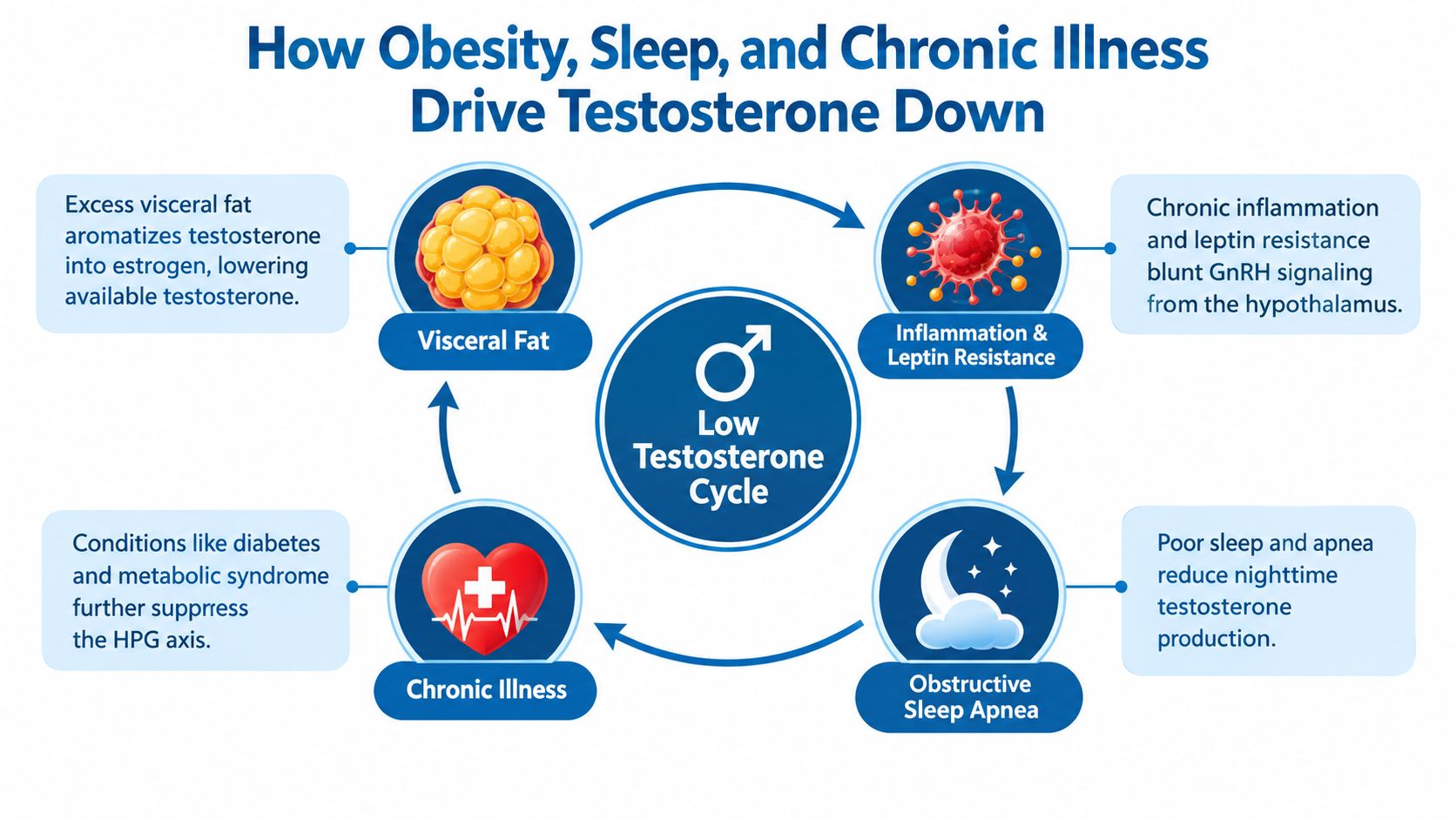
These two issues aren't just happening at the same time; they're locked in a damaging feedback loop. Think of it as a physiological trap. High blood sugar and the chronic inflammation that come with diabetes can directly suppress your body's ability to produce testosterone. In turn, low testosterone makes insulin resistance worse and encourages your body to store more fat, making it even harder to manage your blood sugar.
Each condition fuels the other, creating a downward spiral that's tough to escape.
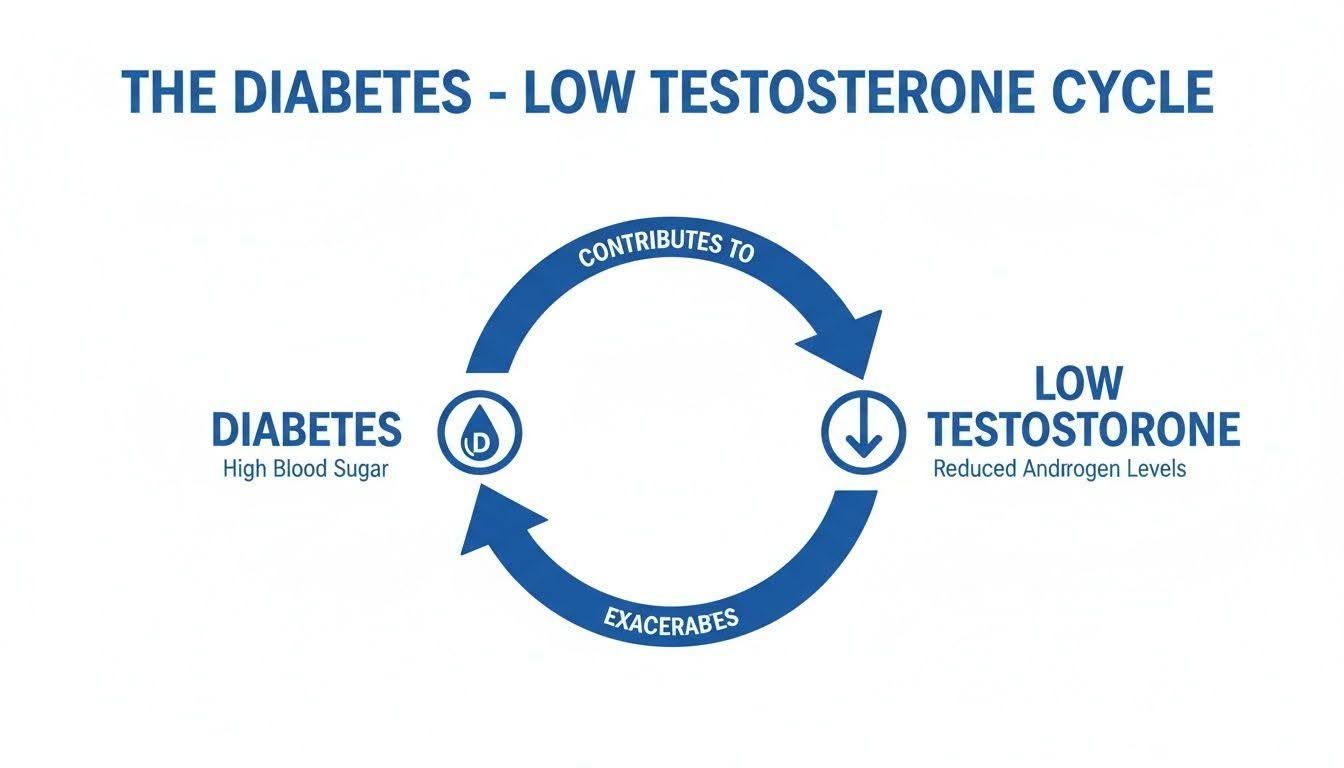
As you can see, you get stuck. Without addressing both your metabolic and hormonal health, you're only fighting half the battle.
A Common But Overlooked Problem
This isn't some rare complication; it's incredibly common. Two decades of medical research paint a very clear picture: roughly 40% of men with type 2 diabetes also have clinically low testosterone.
The consequences are serious. Studies have shown that having low testosterone can double the risk of death in men with diabetes and worsen related issues like cardiovascular disease. You can explore the full findings from this long-term research to understand just how deep this connection runs.
At Pause Medical, we see this all the time. Men come to us frustrated because they're doing everything right for their diabetes—watching their diet, taking their medication—but they still feel terrible. Our board-certified providers emphasize a personalized, integrative approach. Identifying and treating their low testosterone is often the missing piece that finally lets them feel healthy and in control again.
Why the Symptoms Get So Confusing
The real challenge for many men is that the symptoms of low testosterone and diabetes overlap so much. It's easy to blame fatigue, weight gain, or mood swings entirely on diabetes, never suspecting that a hormone deficiency is pouring fuel on the fire.
This table shows just how much the symptoms can blur together, making an accurate diagnosis tricky without a comprehensive look at your health.
Overlapping Symptoms of Low Testosterone and Diabetes
| Symptom | Common in Low Testosterone | Common in Diabetes | Why It's a Shared Concern |
|---|---|---|---|
| Persistent Fatigue | Yes | Yes | Both conditions disrupt the body's energy production, leading to a profound sense of exhaustion that sleep doesn't fix. |
| Weight Gain (Abdominal Fat) | Yes | Yes | Low T promotes fat storage, while diabetes-related insulin resistance makes it harder to lose weight, especially around the midsection. |
| Reduced Muscle Mass | Yes | Yes | Testosterone is key for muscle maintenance. Diabetes can also lead to muscle loss (sarcopenia), impairing glucose uptake. |
| Mood Changes & Irritability | Yes | Yes | Hormonal imbalances directly affect mood, while the stress and blood sugar swings of diabetes do the same. |
| Low Libido | Yes | No (but related) | While a direct symptom of low T, diabetes can cause nerve damage and poor circulation, leading to erectile dysfunction. |
Because of this overlap, trying to manage your health by focusing only on blood sugar is like mopping up a flooded floor without fixing the leaky pipe. You’re dealing with the symptoms, not the source. To truly break the cycle and feel like yourself again, you need an approach that addresses both your metabolic and hormonal health at the same time.
How Diabetes Lowers Your Testosterone Levels
It can be incredibly frustrating. You’re doing everything you can to manage your diabetes, yet you still feel drained, foggy, and just not yourself. If you're wondering how this metabolic condition can directly tank your vitality, you're asking the right question. Diabetes doesn't just happen to exist alongside low testosterone; it actively creates an environment where your body struggles to produce it.
Think of your hormone system as a finely tuned orchestra. Diabetes is like a constant, disruptive background noise that throws the key players off their rhythm. The result is a hormonal performance that feels flat and out of sync. Let's pull back the curtain on the three main ways this happens.
Understanding these connections is the first step toward reclaiming your health. It’s a crucial piece of the puzzle in effective disease management, where we look at how different systems in your body are all talking to one another.
Excess Body Fat Accelerates Testosterone Conversion
One of the biggest connections between diabetes and testosterone comes down to body fat. Type 2 diabetes often goes hand-in-hand with carrying extra weight, particularly visceral fat—the dangerous kind that accumulates around your abdominal organs.
This fatty tissue isn't just sitting there. It’s a hormonally active factory churning out an enzyme called aromatase.
The job of aromatase is to convert your testosterone into estrogen. So, the more belly fat you have, the more aromatase you produce. This process literally steals your testosterone and turns it into estrogen, creating a hormonal imbalance that fuels symptoms like fatigue, low motivation, and even gynecomastia (the development of male breast tissue).
This kicks off a vicious cycle: diabetes can lead to weight gain, which lowers testosterone, which in turn makes it even harder to lose weight and manage your blood sugar.
Insulin Resistance Disrupts Brain-to-Testes Signaling
Your body's hormone production is run by a command-and-control system. It starts in your brain, where the hypothalamus and pituitary gland act as mission control, sending out signals that tell your testes exactly how much testosterone to make.
This is where insulin resistance—the core issue in type 2 diabetes—throws a major wrench in the works.
- The Brain's Signals Get Muffled: Chronically high blood sugar and the resulting high insulin levels interfere with the brain's ability to send clear messages. The hormones released by the pituitary gland are the "messengers" that tell the testes to get to work.
- The Testes Don't Get the Memo: Because the signal is weak or garbled, the testes don't receive a strong, clear command. Over time, this constant communication breakdown leads to a steady decline in your body's natural testosterone output.
It's like trying to have a clear phone call with terrible reception. The critical messages from your brain just get drowned out by the metabolic static of insulin resistance.
Chronic Inflammation Acts as a Hormone Suppressor
At its core, diabetes is a state of chronic, low-grade inflammation. Persistently high blood sugar is abrasive to cells and tissues, which puts your immune system on a constant, simmering state of high alert.
This inflammatory environment is directly toxic to testosterone production. Inflammatory molecules, called cytokines, actively suppress the Leydig cells in your testes—the very cells responsible for making over 95% of your testosterone.
Your body essentially shifts into survival mode. It prioritizes managing the inflammatory threat over other "non-essential" functions like vitality and reproduction. This diverts energy and resources away from hormone synthesis, pushing your testosterone levels even lower. When these three forces work together, they create a perfect storm that systematically drains your testosterone, impacting your quality of life far beyond just blood sugar readings.
How Low Testosterone Worsens Your Metabolic Health
We've talked about how diabetes can drag down your hormone levels, but it’s not a one-sided fight. This relationship is a vicious two-way street. Low testosterone can actively sabotage your metabolic health, creating the perfect storm for insulin resistance to take hold and making blood sugar a nightmare to control. It's a source of immense frustration for many men who are doing everything right with their diabetes management but still can't shed weight or get their energy back.
It’s easy to pigeonhole testosterone as just a "male hormone" for sex drive and muscle, but that's a huge oversimplification. It's one of your body's most powerful metabolic regulators. When levels are low, your body's entire system for handling glucose and storing fat is thrown out of whack. Getting a handle on this connection is absolutely essential if you want to achieve true health and feel good, not just chase blood sugar numbers.
The Loss of Your Metabolic Engine
Think of your lean muscle as a furnace. It’s the single biggest user of sugar in your entire body, burning through the glucose from your meals to keep everything running. Testosterone is the master foreman in charge of building and maintaining that furnace.
When testosterone levels drop, you start losing that precious muscle mass. Your glucose furnace literally shrinks. This sets off a chain reaction with two devastating consequences:
- Poorer Blood Sugar Control: With less muscle to soak up the sugar from your food, more of it stays circulating in your blood. The result is higher, more stubborn blood sugar spikes.
- Reduced Insulin Sensitivity: Muscle tissue is a primary docking station for insulin to do its job. Less muscle means fewer places for insulin to work, which directly fuels worsening insulin resistance.
This is exactly why so many men with low T struggle to get their A1c down, no matter how carefully they eat or how much medication they take. They're fighting a metabolic war with a dwindling army.
The Rise of Visceral Fat
As testosterone declines, your body composition shifts in a really dangerous way. You don’t just lose muscle; you gain fat—and not just any fat. You gain visceral fat, the hard, inflammatory fat that settles deep in your belly and wraps around your internal organs.
This type of fat is a metabolic menace. It pumps out inflammatory compounds that directly interfere with how your insulin works, making insulin resistance dramatically worse. Knowing effective ways to lose belly fat is key, because this abdominal fat is a major driver of both insulin resistance and lower testosterone, locking you into that vicious cycle.
It's a textbook inverse relationship: as your testosterone drops, that dangerous belly fat climbs. This fat then tanks your testosterone even further by producing an enzyme called aromatase, which converts your testosterone into estrogen. You get trapped in a downward metabolic spiral.
Fresh medical research really drives home how protective healthy testosterone levels are. A study presented at ENDO 2024 showed that higher testosterone concentrations act as a powerful shield, significantly protecting overweight or obese men under 65 from developing type 2 diabetes. This protective effect was strong even after accounting for other risk factors like waist size and blood sugar. You can see the complete findings on testosterone's protective effects for yourself.
To break this cycle, you have to attack both problems at once: managing your blood sugar and restoring your hormonal health. At Pause Medical, we build personalized plans to do just that. By using proven treatments like hormone replacement therapy, our board-certified providers help patients rebuild their metabolic engine from the ground up so they can finally achieve the health they've been working so hard for.
Getting Diagnosed and Starting Treatment
Figuring out that your symptoms might be tied to the connection between diabetes and testosterone is a huge first step. But what comes next is just as important. If you feel stuck in a loop of exhaustion, weight gain, and low energy—even when you’re doing everything right to manage your diabetes—it's time for a proper diagnosis and a look at real, proven treatment options. Getting back to feeling like yourself again begins with a thorough evaluation that looks at the whole picture, not just a single number on a lab report.
Here at Pause Medical, we believe a full understanding of your hormonal and metabolic health is non-negotiable. It’s never about just seeing if your testosterone is "low"; it's about digging into why it's low and how that's affecting your quality of life. Our integrative medicine approach ensures we treat the root cause, not just the symptom.
The Diagnostic Process: Getting the Full Story
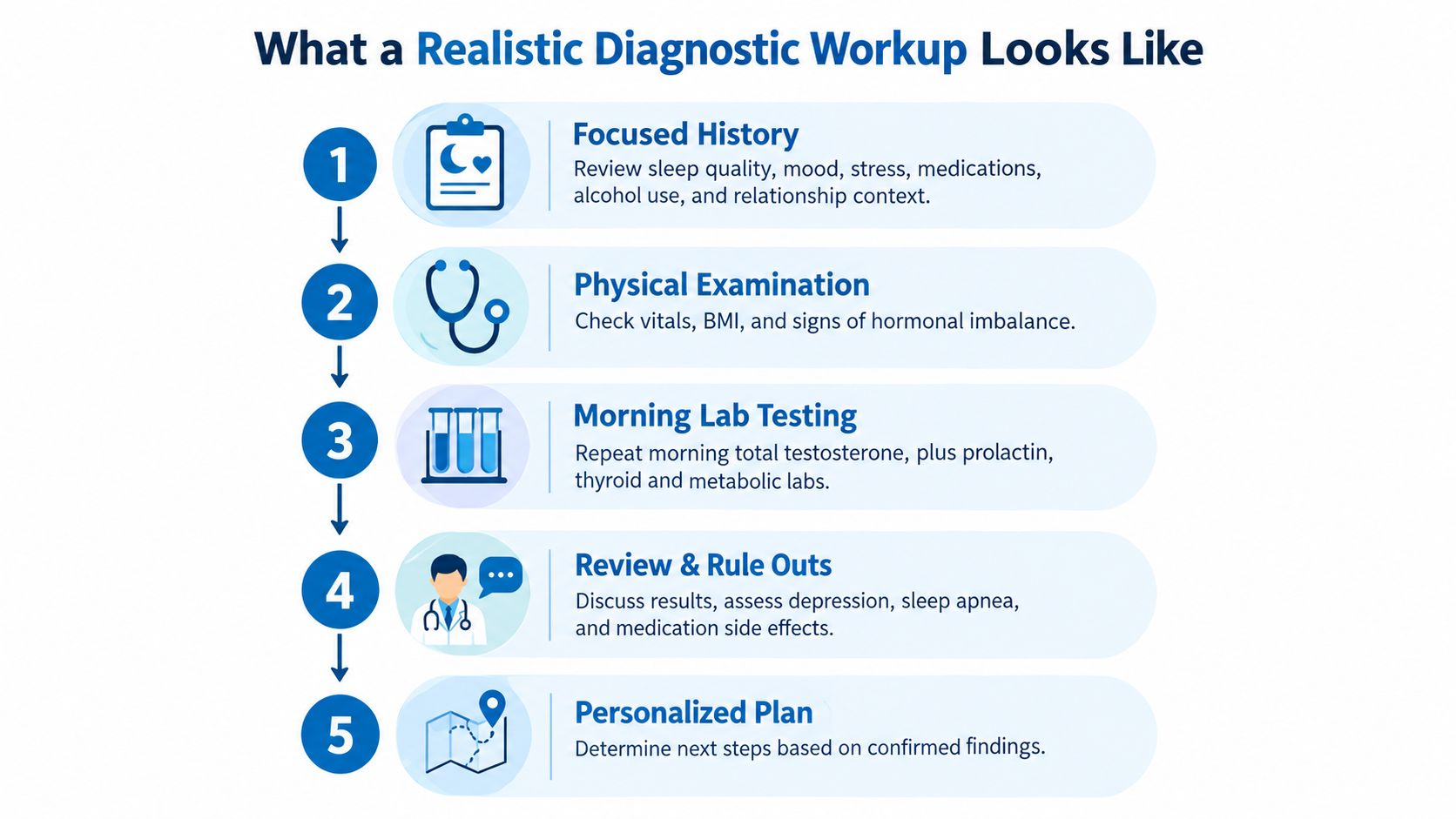
An accurate diagnosis for low testosterone, especially with diabetes in the mix, demands a careful and detailed approach. A simple blood test for total testosterone only gives you a fraction of the story. Our board-certified providers go much deeper with a complete evaluation.
This is what a comprehensive lab workup really looks like:
- Total Testosterone: This is the big-picture number, but a lot of this testosterone is attached to proteins, making it unusable by your body.
- Free Testosterone: This is the good stuff—the "active" testosterone that’s actually available for your body to use. It’s a far better gauge of your true hormonal status.
- Sex Hormone-Binding Globulin (SHBG): Think of SHBG as a sponge that soaks up testosterone and makes it inactive. Men with diabetes often have high levels of SHBG, which means you could have very little free testosterone even if your total number looks okay.
- Complete Blood Count (CBC) and Metabolic Panel: These essential tests give us a baseline of your overall health, checking things like red blood cells, kidney function, and liver health to make sure any treatment is both safe and right for you.
By looking at all these markers together, we can finally pinpoint the real source of your hormonal imbalance and build a personalized treatment plan that gets to the root cause of your symptoms.
Testosterone Replacement Therapy: A Proven Path Forward
Once we have a clear diagnosis, Testosterone Replacement Therapy (TRT) is an incredibly effective, well-researched treatment to break the cycle. For men managing type 2 diabetes, the benefits are about so much more than just boosting energy or libido. Study after study shows that bringing testosterone back to a healthy range can have a massive positive impact on your metabolic health.
Specifically, medical research shows TRT can deliver:
- Improved Insulin Sensitivity: By helping your body use insulin more effectively, TRT can directly lead to better blood sugar control and a lower A1c.
- Increased Lean Muscle Mass: Muscle is your body’s primary "glucose-burning engine." Rebuilding it helps you manage blood sugar much more efficiently.
- Reduced Body Fat: TRT is particularly good at helping reduce visceral belly fat, which is a major contributor to insulin resistance.
- A Brighter Mood and Outlook: When the underlying hormone deficiency is corrected, men often say they feel more motivated, focused, and simply more like themselves.
For men with diabetes, TRT isn't just about feeling good—it’s about giving your body the tools it needs to regulate itself properly again. Pause Medical offers convenient options, and you can learn more about our expert-guided at-home TRT programs.
Your TRT Journey with Pause Medical
Starting TRT is a big decision, and at Pause Medical, your safety and success are everything. We build our care around you, with constant monitoring from a board-certified provider. We don't just hand you a prescription; we become your partner on this journey.
Our philosophy is simple: treat the person, not the lab results. Your personalized treatment plan is designed to help you reach your goals safely, with ongoing adjustments and support to ensure you get the absolute best results. This commitment to board-certified medical oversight is central to our practice.
This dedication to safety and success is built into every step of our process. Here’s a sample timeline of what you can expect when working with our team.
Your TRT Journey with Pause Medical
A sample timeline illustrating our commitment to patient safety and treatment success through consistent, proactive monitoring.
| Timeframe | Key Actions and Assessments |
|---|---|
| Initial Consultation | We’ll have a comprehensive discussion about your symptoms, medical history, and goals with your board-certified provider. Your first set of labs will be ordered. |
| First 1-3 Months | Treatment begins. We'll schedule follow-up labs to see exactly how your body is responding and make precise tweaks to your dosage to find your optimal levels. |
| 3-6 Months | We continue to monitor your hormone levels and other key health markers (like your CBC). We'll also check in on your symptoms and fine-tune your plan as needed. |
| Ongoing (Every 6-12 Months) | Regular check-ins and lab work become a part of your routine to ensure your treatment stays safe, effective, and perfectly aligned with your long-term health. |
This consistent, hands-on monitoring is how we help you finally break free from the draining cycle of diabetes and low testosterone, so you can reclaim the energy and vitality you've been missing.
Lifestyle Strategies to Support Your Hormones and Metabolism

While Testosterone Replacement Therapy (TRT) can be a game-changer, it’s not a standalone solution. To get the best results, it needs to be paired with smart lifestyle choices that support both your hormones and your metabolism. Think of TRT as giving you the keys to a high-performance car; your diet and exercise habits are the premium fuel and regular maintenance that keep it running smoothly.
This is especially true for men dealing with both diabetes and low testosterone. You simply can’t out-medicate a poor diet or a sedentary lifestyle. The great thing is, the very habits that help you control your blood sugar are often the same ones that naturally boost testosterone, creating a positive cycle of better health.
At Pause Medical, our board-certified providers don't just write prescriptions. We build a complete, personalized plan around you, integrating medical treatment with practical, real-world guidance to achieve a full metabolic reset.
Fueling Your Body for Hormones and Health
What you put on your plate is one of the most powerful levers you can pull. The food you eat has a direct line to your insulin sensitivity, inflammation levels, and the very building blocks your body uses to make testosterone. This isn't about restrictive, miserable diets—it's about making smart, sustainable choices.
- Prioritize Protein: Protein is your best friend for building and keeping the lean muscle that acts like a glucose-burning engine. Make sure you get a quality source—think lean meat, fish, eggs, or legumes—with every meal. This will help with muscle health, keep you feeling full, and make managing both weight and blood sugar much easier.
- Manage Carbohydrates Wisely: Not all carbs are the enemy. The key is to choose complex, high-fiber ones like vegetables, beans, and whole grains. They provide steady energy without the blood sugar rollercoaster. A pro tip: timing your carbs around your workouts helps your body use them for immediate fuel instead of storing them as fat.
- Embrace Healthy Fats: Your body literally cannot produce testosterone without fat. Healthy sources like avocados, nuts, seeds, and olive oil give your body the raw materials it needs. Plus, they help fight inflammation, which is a major drag on hormone function.
Putting these changes into practice is the cornerstone of getting your health back on track. A little planning goes a long way, and looking into diabetic meal prep ideas can make it much simpler to eat well and keep your blood sugar stable all week.
The Power of Movement
If there’s one "magic bullet" for tackling both low testosterone and poor insulin sensitivity, it's exercise. Specifically, resistance training. Lifting weights sends a direct signal to your body: build more muscle and produce more testosterone.
The muscle you build through resistance training doesn't just make you stronger; it creates more "docks" for insulin to park, dramatically improving insulin sensitivity. At the same time, this type of exercise has been shown to provide a significant, natural boost to testosterone levels.
A balanced routine is best. By combining strength training (2-3 times per week) with regular cardio, you attack the problem from all angles—burning dangerous visceral fat, lowering inflammation, and improving your heart health. This one-two punch is how you break the vicious cycle, and it’s a core part of our medically supervised weight loss programs, where we tailor exercise to your specific needs.
Manage Stress and Prioritize Sleep
Never underestimate the damage that chronic stress and poor sleep can do to your hormones. When you're constantly stressed, your body is flooded with cortisol, the "fight-or-flight" hormone. Over time, high cortisol levels actively suppress testosterone production.
It's a similar story with sleep. Your body produces a huge chunk of its daily testosterone while you're sleeping. If you're consistently getting less than 7-8 hours a night, you're not just waking up tired—you're likely tanking your testosterone levels and making your insulin resistance worse.
Building routines to manage stress (like a short walk or mindfulness) and fiercely protecting your sleep schedule isn't a luxury. It’s a non-negotiable part of your treatment plan, working hand-in-hand with any medical therapy to help you reclaim your energy and vitality for good.
Take Control of Your Health with Pause Medical
If you’re juggling diabetes and the symptoms of low testosterone, you know just how frustrating it can be. The constant fatigue, the weight that won’t budge, the dips in your mood—it’s a heavy load to carry. It's easy to write it all off as "just the diabetes," but you don't have to keep fighting this uphill battle alone.
Often, the real breakthrough comes from addressing the hormonal piece of the puzzle. Pinpointing and treating low testosterone can be the key that finally unlocks better blood sugar control and helps you feel like yourself again. At Pause Medical, our board-certified providers look at the whole picture, not just isolated symptoms. We dig deep to find the root cause of the problem and build a personalized treatment plan that makes sense for your body.
You’ve seen how interconnected these conditions are. Now, it’s time to take that knowledge and turn it into action.
Don't let an undiagnosed hormone issue sabotage all the effort you put into managing your health every single day. We prioritize safe, effective, and closely monitored treatment plans. You can learn more about why to choose our expert-guided approach and see how we put your health first.
When you're ready to stop guessing and start feeling better, reach out. Schedule a consultation today with our team and let's get you back on track.
Your Questions About Diabetes and Testosterone, Answered
It's completely normal to have questions when you're trying to figure out the complex relationship between diabetes and testosterone. We hear a lot of the same concerns from patients, so we've gathered the most common ones here to give you clear, straightforward answers.
At Pause Medical, we believe patient education is paramount. Our job is to cut through the confusion and give you the real, evidence-based information you need to move forward with confidence.
Can Testosterone Replacement Therapy Cure My Type 2 Diabetes?
That’s one of the first questions most men ask, and the short answer is no, Testosterone Replacement Therapy (TRT) isn't a "cure" for type 2 diabetes. However, it can be an incredibly powerful tool for managing it.
Think of it this way: low testosterone is like a headwind that’s constantly pushing against your efforts to control your metabolism. TRT helps turn that headwind into a tailwind. By improving your body's sensitivity to insulin, helping you build lean muscle that burns more sugar, and cutting down on harmful visceral fat, TRT can make a huge difference in your blood sugar control. Many of our patients see their A1c numbers drop significantly and find they need less of their other diabetes medications over time, all under the careful supervision of our board-certified team.
What Are the First Signs of Low Testosterone I Should Look For?
This is a tricky one, because the symptoms of low testosterone often look a lot like the symptoms of diabetes itself. It's easy to just blame everything on your blood sugar and miss the real culprit.
Here are the key early warnings we tell our patients to watch for:
- Constant fatigue that a full night's sleep just doesn't seem to fix.
- A definite drop in your sex drive (libido) or issues with sexual performance.
- Struggling to build or even maintain muscle, no matter how much you work out.
- Gaining body fat, especially that stubborn fat right around your middle.
- Finding yourself with a short fuse, feeling down, or just generally irritable.
- That frustrating feeling of "brain fog" or not being able to concentrate.
If you're managing diabetes and more than a couple of these sound all too familiar, that's a huge red flag. It’s a strong sign that it's time to get your hormone levels checked by a professional. Don't wait—schedule a consultation today to get the answers you deserve.
Is TRT Safe If I Have Diabetes and Other Health Conditions?
Yes, when it's managed correctly by an experienced, board-certified medical provider, TRT is very safe for men with diabetes. In fact, because it helps improve things like insulin resistance and body composition, it can actually lower some of the cardiovascular risks associated with diabetes in the long run.
At Pause Medical, patient safety is our absolute top priority. We don't guess. We start with a comprehensive health evaluation, including in-depth blood work and a full review of your medical history, to make 100% sure TRT is a safe and appropriate choice for your personalized treatment plan.
Once you begin, we don't just send you on your way. We monitor you closely with regular check-ins and lab tests. This lets us fine-tune your treatment so you get all the benefits while we keep a close eye on any potential risks.
If I Lose Weight, Will My Testosterone Levels Go Back to Normal on Their Own?
Losing a significant amount of weight—especially that deep belly fat—can definitely give your natural testosterone production a boost. For some men, lifestyle changes alone are enough to get their levels back into a healthy range, which is a fantastic outcome.
But for many men who have been dealing with type 2 diabetes for a while, the problem is more established. In those cases, TRT can be the very thing that helps break a frustrating cycle. It often provides the energy, motivation, and metabolic kickstart you need to lose the weight and keep muscle in the first place. At Pause Medical, our integrative approach means we look at your specific lab work and health goals to figure out the smartest path for you, whether that's lifestyle coaching, medical weight loss, hormone therapy, or a combination.
Feeling caught in the loop between diabetes and testosterone is tough, but you absolutely don't have to figure it out alone. The expert team at Pause Medical is here to bring clarity to your situation and build a personalized plan to help you get your health and vitality back on track.
If you’re ready to see what’s possible, schedule a consultation today.
Medical Disclaimer: The information in this article is for educational purposes only and is not intended as a substitute for professional medical advice, diagnosis, or treatment. Always seek the advice of your physician or other qualified health provider with any questions you may have regarding a medical condition. Never disregard professional medical advice or delay in seeking it because of something you have read in this article. All treatments, including hormone replacement therapy and medical weight loss, have potential risks and benefits and require oversight by a qualified medical professional.