Perimenopause Symptoms Fatigue: A Practical Guide
You used to handle long workdays, dinner, errands, and a workout without thinking much about it. Then something changed. By midafternoon, your body starts bargaining with you. Grocery shopping feels oddly long. You sit down after work “for a minute” and realize you don't want to get back up. You sleep, but you don't feel restored.
That pattern is one of the most common reasons women in Mississippi start asking whether something deeper is going on. They're not lazy, out of shape, or “just stressed.” Often, they're in perimenopause, and fatigue is one of the clearest signals that this transition is underway.
When Energy Disappears in the Perimenopause Years
A woman in her mid-40s often describes this change the same way: “I'm tired, but it's not normal tired.” She still gets things done. She still shows up. But the margin is gone. A demanding workday that used to feel manageable now wipes her out. Evening plans start to disappear from the calendar because she doesn't have anything left.

Perimenopause is the transitional phase before menopause, when ovarian hormone patterns become less predictable. It often begins sometime between the late 30s and mid-50s. Periods may change first, but energy, sleep, mood, and concentration often shift right alongside them. If you want a broader overview of this stage, this complete guide to what happens during perimenopause can help place fatigue in context.
This isn't rare
A large global survey covering more than 12,000 women aged 35 and older found that 83% reported fatigue and 83% reported physical and mental exhaustion during the perimenopause experience. Among participants who identified as being in perimenopause, the burden was even higher, with 93% reporting fatigue and 95% reporting physical and mental exhaustion , according to Mayo Clinic's report on the global perimenopause survey.
That matters because many women still assume fatigue is secondary. In reality, it often sits near the center of the symptom picture.
Practical rule: If your energy has changed along with your cycles, sleep, mood, or temperature regulation, treat it as a real clinical clue, not a character flaw.
What makes perimenopause fatigue different
Ordinary tiredness usually has a clear reason. You slept less, worked harder, traveled, or got sick. Perimenopause fatigue feels more slippery than that. Rest doesn't fully fix it. Your stamina drops faster. Mental effort can feel as draining as physical effort.
That's why perimenopause symptoms fatigue deserves triage. Not panic. Not dismissal. Triage. The right next step depends on whether hormones are the main driver, or whether sleep disruption, iron loss, thyroid changes, mood strain, or metabolic shifts are piling on too.
How Hormonal Shifts Drain Your Energy
The hormone story in perimenopause isn't just “levels go down.” The harder part is that levels can swing. One week may feel almost normal. The next week, your sleep is lighter, your mood is shorter, and your body feels underpowered.
Estrogen and your daytime engine
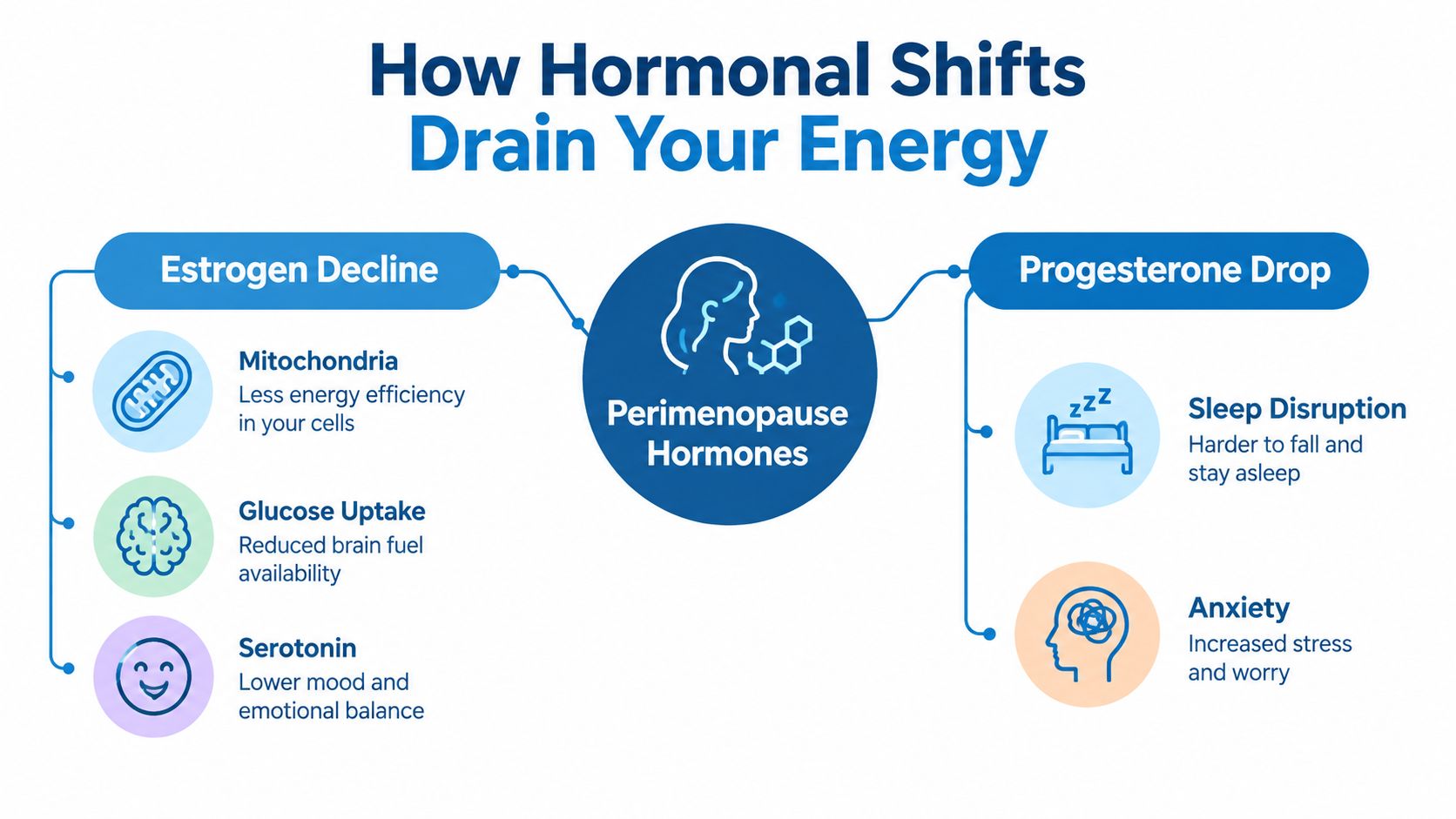
Estrogen helps regulate several systems involved in alertness. In plain language, it supports how efficiently cells make energy, how the brain uses glucose, and how signaling chemicals tied to motivation and mental steadiness function. A simple way to think about it is this: estrogen acts like a thermostat for daytime energy. When that thermostat becomes erratic, your energy setting wobbles too.
You may notice that as:
- Brain work feels heavier even when your to-do list hasn't changed
- Workouts feel harder than they used to
- Motivation drops suddenly , especially around cycle changes
- Irritability rises with fatigue , because mental strain and low energy often travel together
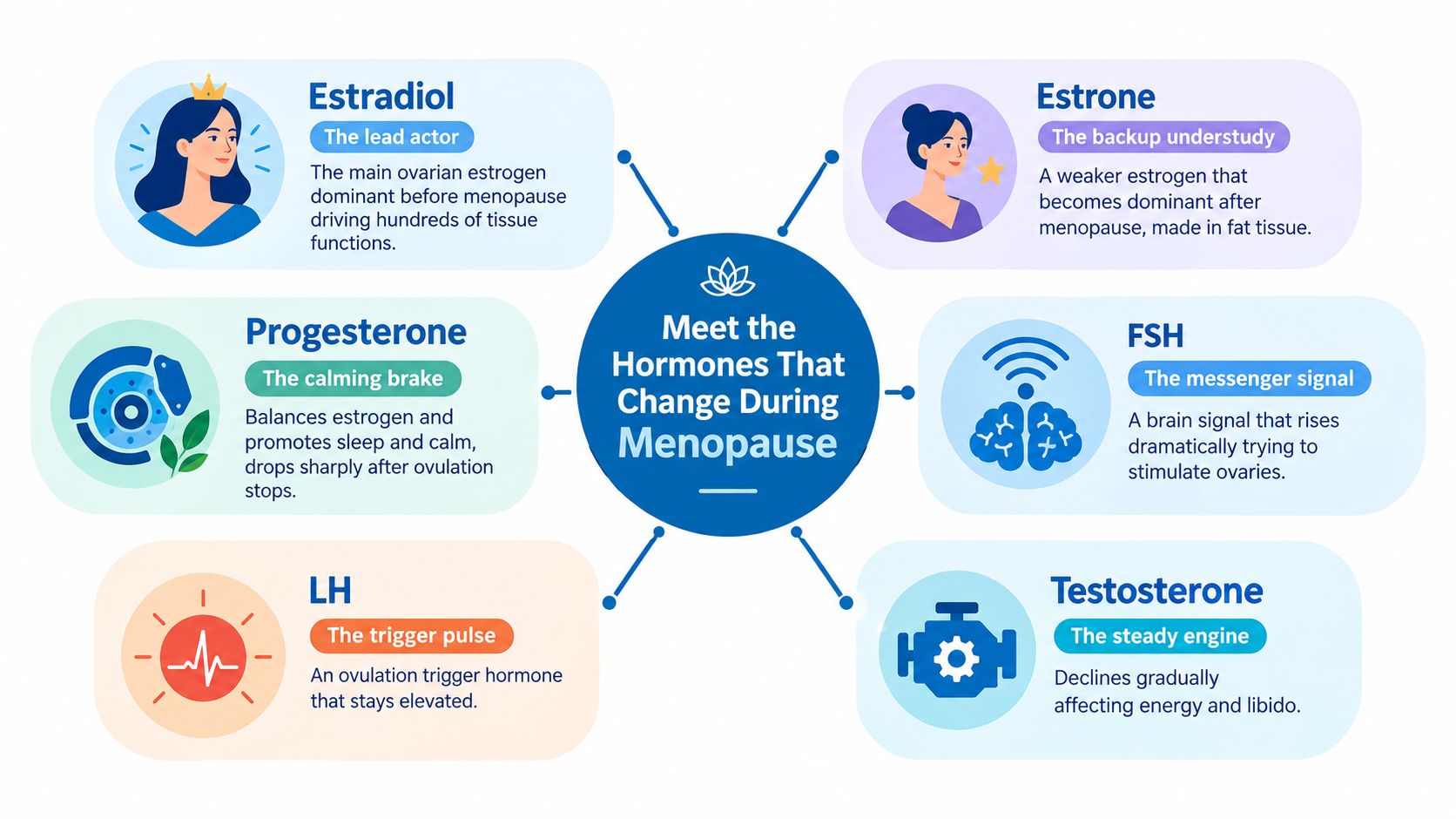
A rise in follicle-stimulating hormone, or FSH, often shows up during this transition, but it's more of a marker that the ovaries are changing than a direct cause of fatigue.
Progesterone and your overnight recovery
Progesterone has a calming influence on the brain. When it becomes erratic or declines, many women lose some of that settled, sleepy feeling that used to come more naturally at night. Sleep may become lighter, more fragmented, or less restorative.
Here's the key problem. You can spend enough hours in bed and still wake up tired if sleep quality has dropped.
A clinical review notes that changing estrogen and progesterone can reduce slow-wave sleep and increase nighttime arousals, lowering daytime alertness even when total sleep time looks adequate, as discussed in this review of sleep disturbance and menopause-related fatigue.
This short explainer can help if you want a visual overview of which hormones change during menopause and why.
After the basics, it helps to hear the concept explained aloud:
The quieter contributor
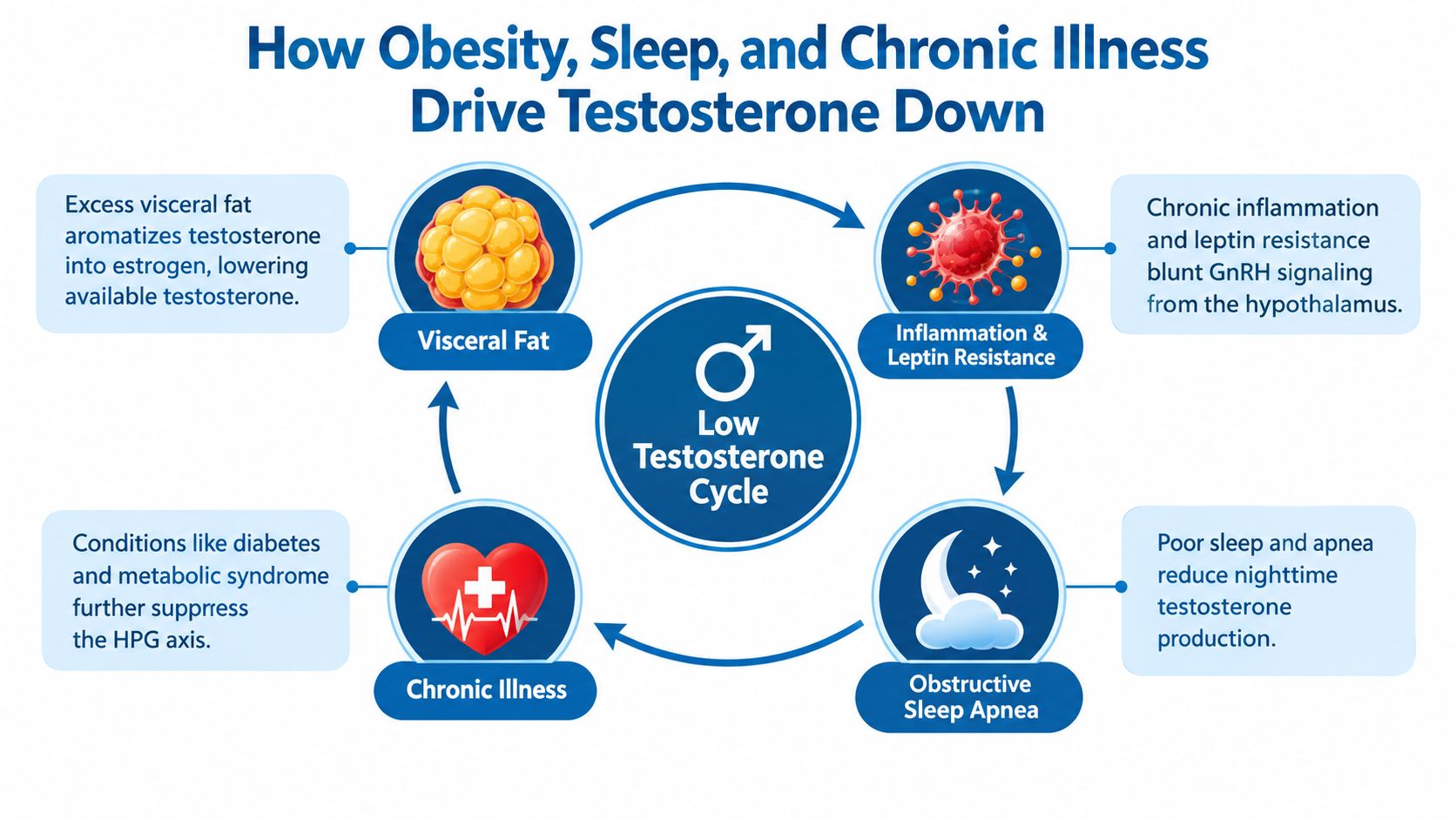
Testosterone also changes over time, and for some women that shows up less as sleep trouble and more as reduced drive, lower muscle stamina, or a sense that their “get up and go” has become much harder to access.
When women say, “I feel flat,” they're often describing a real physiologic shift, not a lack of discipline.
The Symptom Patterns Most Women Notice
Not all fatigue feels the same. That's useful. Patterns can point toward what's driving it.
Older and contemporary research both show that fatigue is common through the menopause transition. In one cross-sectional study of 300 women , 46.5% of perimenopausal women reported physical and mental exhaustion compared with 19.7% of premenopausal women , and the rate rose to 85.3% among postmenopausal women . Another study found fatigue in 74.8% of perimenopausal women in a symptom-log analysis of more than 145,000 entries , as summarized in this peer-reviewed review of menopausal symptoms and fatigue research.
Four patterns that come up often
Some women wake up already drained, then feel strangely more alert late at night. Others hit a heavy-limbed afternoon crash that comes with brain fog and short patience. Some feel a low-grade tiredness all month that never fully lifts. Others notice a predictable drop in the days before a period, when hormonal fluctuation is sharper.
Those experiences often cluster with other symptoms women don't always connect at first:
- Word-finding trouble
- Joint stiffness
- Feeling shaky or irritable when meals are delayed
- Sleep that looks long enough on paper but doesn't restore energy
Common Perimenopause Fatigue Patterns
| Pattern | How It Feels | Likely Driver |
|---|---|---|
| Morning exhausted, nighttime second wind | You're spent early, then more awake when you should be winding down | Circadian rhythm disruption and stress-hormone pattern changes |
| Afternoon body crash | Heavy arms and legs, reduced focus, need to sit down | Sleep debt, blood sugar swings, or layered hormonal strain |
| Low-grade all-day tiredness | You function, but everything feels harder | Multifactorial fatigue, often sleep plus hormones plus another contributor |
| Premenstrual energy dip | Clear worsening before bleeding starts | Cycle-linked hormone fluctuation |
What helps most is recognizing that these symptom clusters have a clinical shape. They're not random, and they're not evidence that you're failing at self-care.
Beyond Hormones Other Drivers of Perimenopause Fatigue
Hormones may open the door, but they're often not the only reason energy tanks. Fatigue usually works like layers on a stack. The baseline changes with perimenopause, then other issues pile on top until your day feels much harder than it should.
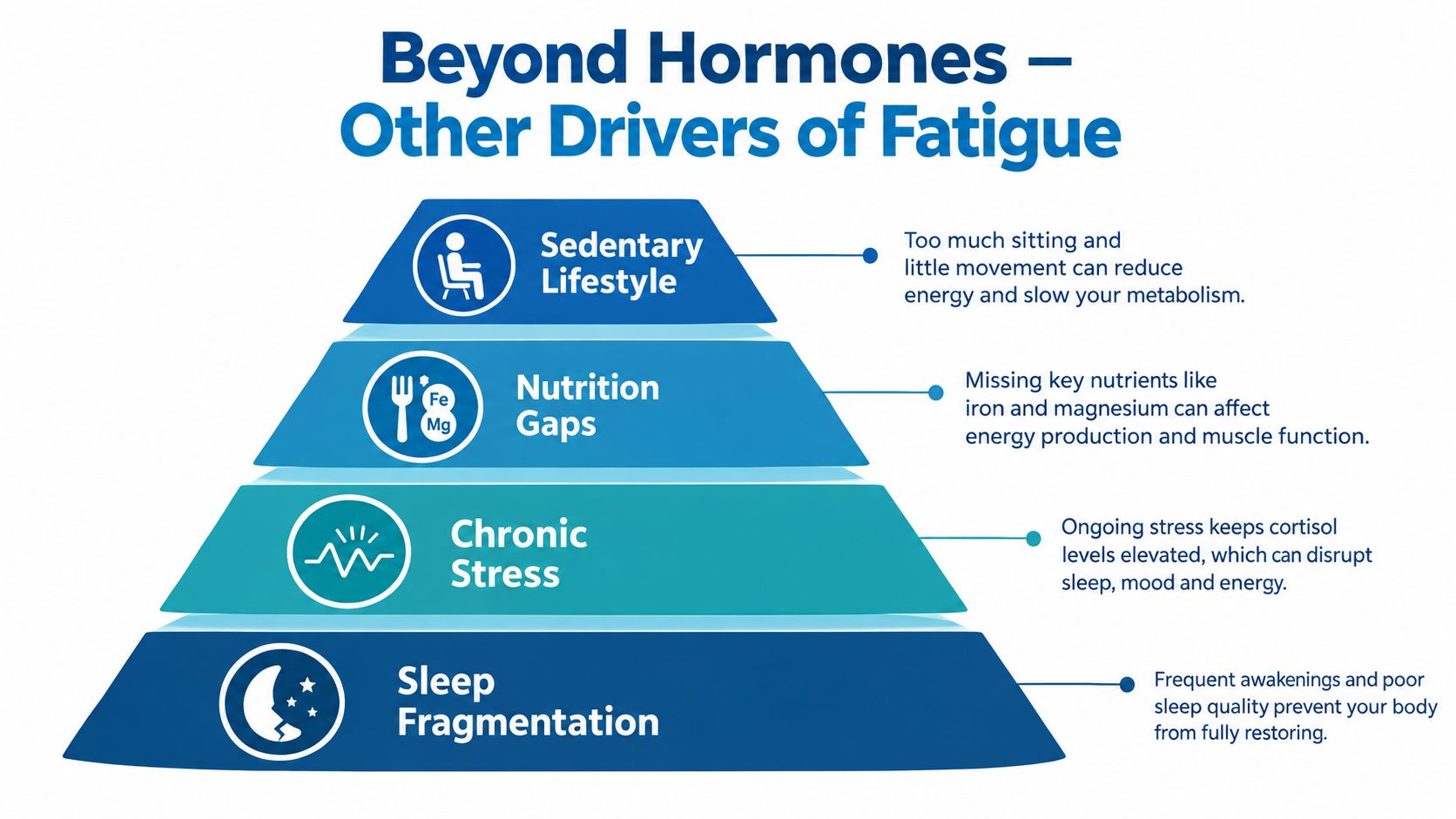
Sleep fragmentation is a major layer
You may not think of yourself as someone with insomnia. But if you wake repeatedly, toss after night sweats, sleep lightly, or snore and stop breathing at night, your brain may be collecting sleep debt anyway. That's one reason fatigue can seem out of proportion to your schedule.
Iron, thyroid, and metabolic contributors matter
Heavy or more frequent periods can lower iron stores and eventually lead to anemia. That changes oxygen delivery and can leave you tired, weak, breathless, or mentally foggy. Thyroid dysfunction can also mimic perimenopause closely, especially when low energy appears with constipation, feeling cold, dry skin, or unexplained weight changes.
A recent expert review on perimenopausal fatigue recommends considering iron deficiency or anemia from heavy menstrual bleeding, thyroid dysfunction, insulin resistance, and cortisol dysregulation , and supports using objective testing such as CBC, ferritin, TSH, and metabolic labs when fatigue is significant, as outlined in this review of endocrine and metabolic contributors to perimenopausal fatigue.
For a broader look at the overlap between hormones and low energy, this article on common causes of fatigue in women is a useful reference.
Other add-on causes clinicians think about
Some fatigue gets retriggered or worsened by factors that have little to do with ovarian hormones:
- Medication effects , including sedating medicines
- Alcohol at night , which can make sleep less restorative
- Recent viral illness , after which stamina may lag
- Chronic stress , which can flatten your morning energy and make recovery feel elusive
Fatigue in perimenopause is often real hormone-related fatigue. It's also very often hormone-related fatigue plus something else.
When Lifestyle Is Enough and When You Need a Workup
Some energy dips improve with a focused reset. Others deserve lab work and a clinician's eyes on the whole picture.
When self-care is a reasonable first move
If fatigue came on gradually, tracks with cycle changes, and isn't seriously disrupting work or daily function, it's reasonable to start with sleep repair, steadier meals, hydration, movement, and stress reduction. That's especially true if your mood is mostly stable, your bleeding isn't unusually heavy, and you don't have symptoms that suggest anemia or thyroid disease.
When to book an evaluation
If fatigue is lasting more than a few weeks, worsening, or making normal tasks hard, it's time to get checked. The same goes for heavy bleeding, palpitations, shortness of breath, unexplained weight change, low mood that won't lift, or brain fog that starts interfering with work.
Self-Care vs Clinical Workup How to Decide
| Signal | Likely First Step | Why |
|---|---|---|
| Mild fatigue tied to cycle shifts | Self-care trial | A patterned change may reflect transition-related fluctuation |
| Tired but still functioning | Sleep and nutrition cleanup | Basic routines often reveal whether the issue is recoverable at home |
| Heavy periods or breathlessness | Clinical workup | Iron deficiency or anemia may be contributing |
| Feeling cold, constipated, or unexpectedly gaining weight | Clinical workup | Thyroid dysfunction can look a lot like perimenopause |
| Brain fog, mood decline, or work impairment | Clinical workup | Function loss usually means more than watchful waiting |
Common labs that often help include TSH and free T4, ferritin, CBC, vitamin D, and a metabolic panel . Depending on the story, a clinician may also review glucose markers and reproductive hormones. This thyroid and hormone testing page gives a practical sense of how that kind of evaluation is approached.
Evidence-Based Strategies to Rebuild Energy
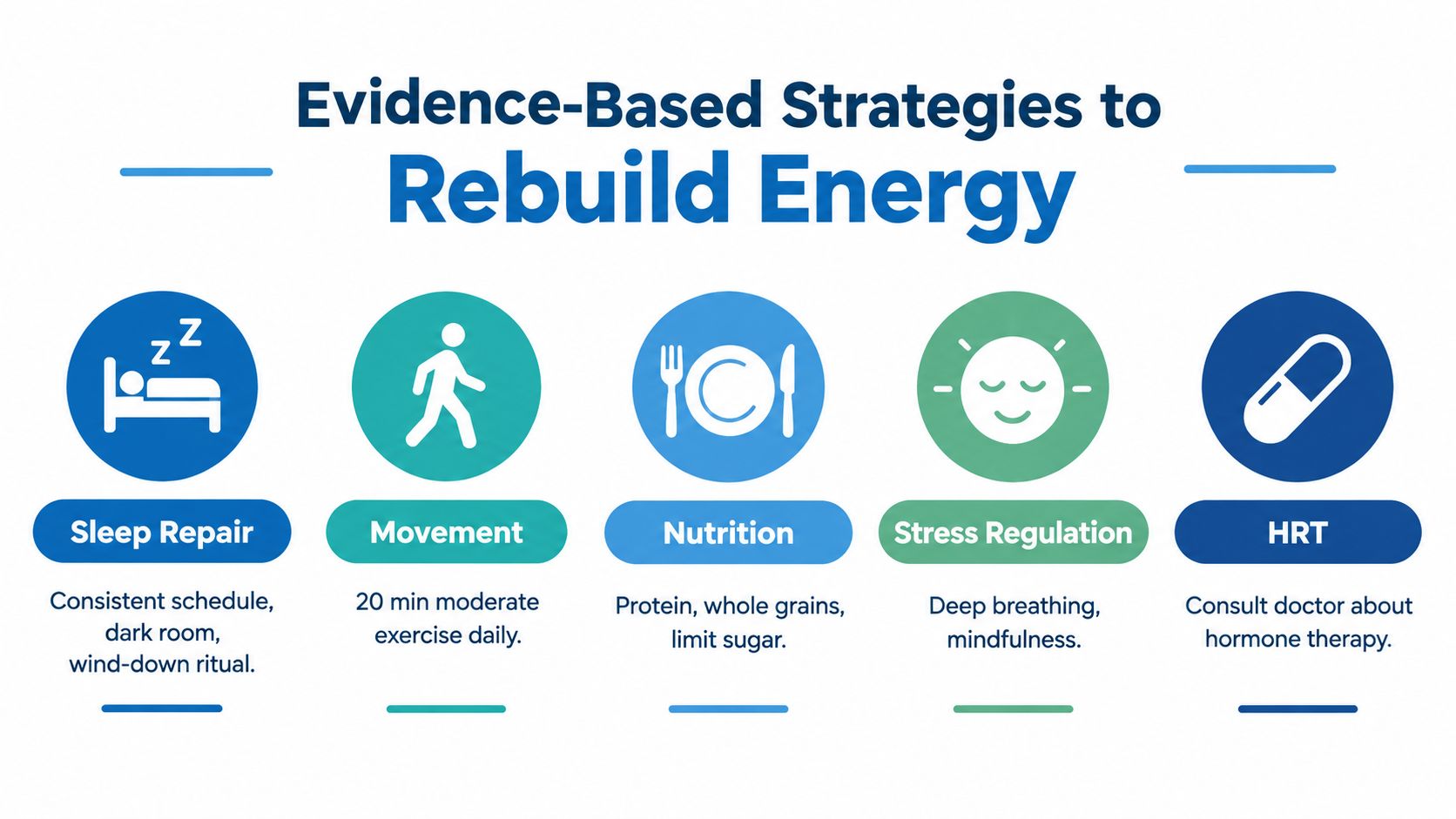
The most effective plan usually isn't one big fix. It's a coordinated reset. Sleep has to improve enough for your brain to recover. Food has to stop causing energy whiplash. Muscles need enough work to stay metabolically active. Stress has to come down enough that your body can stop acting like every day is an emergency.
Start with sleep repair
Pick a consistent wake time and protect it. Morning light helps anchor your body clock. Keep caffeine earlier in the day if it's interfering with nighttime sleep. If night sweats or frequent awakenings are part of the picture, treating those matters because broken sleep often sits at the center of perimenopausal exhaustion.
Build energy with movement and meals
Resistance training can be especially helpful during this phase because it supports muscle mass and insulin sensitivity. You don't need an extreme program. A realistic routine done regularly beats a perfect plan you can't sustain.
Meals matter too. Protein-forward breakfasts and balanced meals can reduce the midafternoon crash many women mistake for “just hormones.” When blood sugar swings less, energy often becomes more predictable.
Calm the stress system
Stress doesn't need to be dramatic to drain you. Low-grade overload counts. Short walks, breathing drills, counseling, and better boundaries can all help lower the day-to-day physiological strain that makes fatigue feel stickier.
If your exhaustion also has a burnout flavor, this counseling resource on how to heal from burnout gently offers a thoughtful, non-shaming complement to medical care.
Where hormone therapy fits
Hormone therapy can help some women substantially, especially when fatigue is tied to hot flashes, night sweats, poor sleep, and broader perimenopausal symptom clusters. The North American Menopause Society states that hormone therapy is the most effective treatment for vasomotor symptoms and the genitourinary syndrome of menopause , and that benefits can include improved sleep, well-being, and quality of life , according to the NAMS 2022 hormone therapy position statement.
That doesn't mean hormone therapy fixes every case of fatigue. If your low energy is being driven by iron deficiency, thyroid dysfunction, depression, sleep apnea, or blood sugar instability, hormones alone won't solve the whole problem.
For some patients, clinician-guided care may include lifestyle treatment, lab evaluation, medication management, and discussion of hormone replacement therapy or bioidentical hormones when appropriate. One example in Mississippi is Pause Medical, which offers in-person evaluation and personalized planning for menopause-related symptoms, including fatigue.
A related issue many women ask about is weight change. If fatigue and metabolic slowing have also made weight management harder, there are medical weight loss options to discuss. A 2025 systematic review and meta-analysis of 47 randomized controlled trials found that GLP-1 receptor agonists produced a mean weight change of −4.57 kg , mean BMI change of −2.07 kg/m² , and mean waist circumference change of −4.55 cm , with newer evidence showing placebo-subtracted weight loss up to roughly 19% for tirzepatide and about 15% for semaglutide , according to this systematic review of GLP-1 weight loss outcomes.
Questions Patients Ask About Perimenopause Fatigue
What labs do clinicians usually order?
That depends on the pattern, but common starting points include thyroid testing, iron studies, a CBC, and metabolic labs. Some clinicians also check reproductive hormones such as FSH and estradiol, but those results can be tricky in perimenopause because hormone levels may swing rather than follow a stable pattern. If blood sugar concerns are part of the picture, many clinicians also consider HbA1c.
How long does it take to feel better?
That varies by cause. If sleep fragmentation is the main issue, some people notice change within several weeks once night sweats, bedtime timing, and wake time are addressed. When fatigue has multiple drivers, energy often recalibrates more slowly because each layer has to improve enough to matter in daily life.
Is HRT safe?
Current guidance is more nuanced than many women were led to believe years ago. NAMS reports that for most healthy symptomatic women younger than 60 and within 10 years of menopause onset, the benefits of hormone therapy outweigh the risks . The balance shifts toward greater risk when therapy is started more than 10 to 20 years after menopause or at age 60 or older , including risks such as heart disease, stroke, blood clots, and dementia, according to the NAMS summary on hormone therapy risks and timing.
Is this just affecting how I feel, or also how I function?
It affects both. A 2025 analysis found that perimenopausal symptoms, particularly fatigue and sleep disturbance, were linked to about 22.5% average work impairment and an estimated annual productivity loss of roughly $6,000 per affected U.S. worker , based on this Menopause Society press release on work impact and symptom burden.
Can Mississippi patients get help through telehealth or in-person care?
Many women start with a consultation and lab review, then continue with in-person follow-up, medication management, or a hybrid approach depending on the clinic. Access points vary, so it helps to ask about local Mississippi locations, visit requirements, and follow-up structure when you schedule.
Reclaiming Your Energy With Personalized Care
Perimenopausal fatigue isn't something you have to wave off as “just getting older.” It's a solvable clinical problem when you separate the pieces. The most useful starting point is often simple: track your energy for two weeks, note when the crashes happen, write down sleep quality, bleeding changes, mood shifts, and anything that makes the fatigue better or worse.
That record helps a clinician sort the three questions that matter most. Is this primarily sleep-related. Is there a non-hormonal driver such as iron loss, thyroid dysfunction, or metabolic strain. Would individualized hormone therapy be appropriate based on symptoms and history.
If you're considering treatment, this guide to hormone replacement therapy during perimenopause can help you understand the options. The goal isn't to chase a generic “balance.” It's to figure out why your energy changed and build a plan that fits your biology, your risks, and your daily life.
If perimenopause fatigue is affecting your work, sleep, or ability to feel like yourself, Pause Medical offers Mississippi patients in-person evaluation, hormone therapy education, medical weight loss support, and medication management with personalized treatment planning. Their team can help sort whether your low energy points to hormone changes, thyroid or metabolic issues, iron loss, or a combination that needs a more targeted plan.