
What Causes Fatigue in Women: A Guide to Uncovering the Root Cause
If you're a woman who feels bone-deep tired all the time, you're not just "busy" or "stressed." What you're feeling is real, and it’s often a sign that something is out of balance within your body's intricate systems. This isn't a personal failure; it's a medical issue that deserves a thorough investigation, especially for women navigating the changes of perimenopause, menopause, and beyond.
At Pause Medical, our board-certified medical providers specialize in getting to the root cause of fatigue. We understand the complex interplay between your hormones, your metabolism, and your nutrient levels, and we're here to help you find a clear path back to feeling like yourself again.
Decoding the Widespread Exhaustion in Women
That feeling of being completely drained, day in and day out, isn't something you have to accept as your new normal. For so many women, exhaustion goes far beyond needing a good night's sleep. It's a persistent, heavy state that seeps into every corner of life, impacting work, relationships, and overall well-being.
Yet, this profound fatigue is often brushed aside. Worse, there's a proven gender bias in how tiredness is taken seriously. A revealing NASA study found that when women report feeling fatigued, observers consistently underestimate it compared to when men report the same thing. This can lead to frustrating delays in getting the right diagnosis and care. You can read more about these findings on women's tiredness to see just how deep this disparity runs.
Think of your body's energy system like a city's power grid. For the lights to stay on, every component has to work together seamlessly. If one power station falters—whether it's your hormones, thyroid, or cellular fuel supply—it can cause rolling blackouts across the entire system.
The Core Components of Female Energy
Your energy levels are powered by a few key, interconnected systems. When one is out of sync, it can throw everything else off. Our integrative approach at Pause Medical focuses on understanding how these systems work together to create a personalized treatment plan.
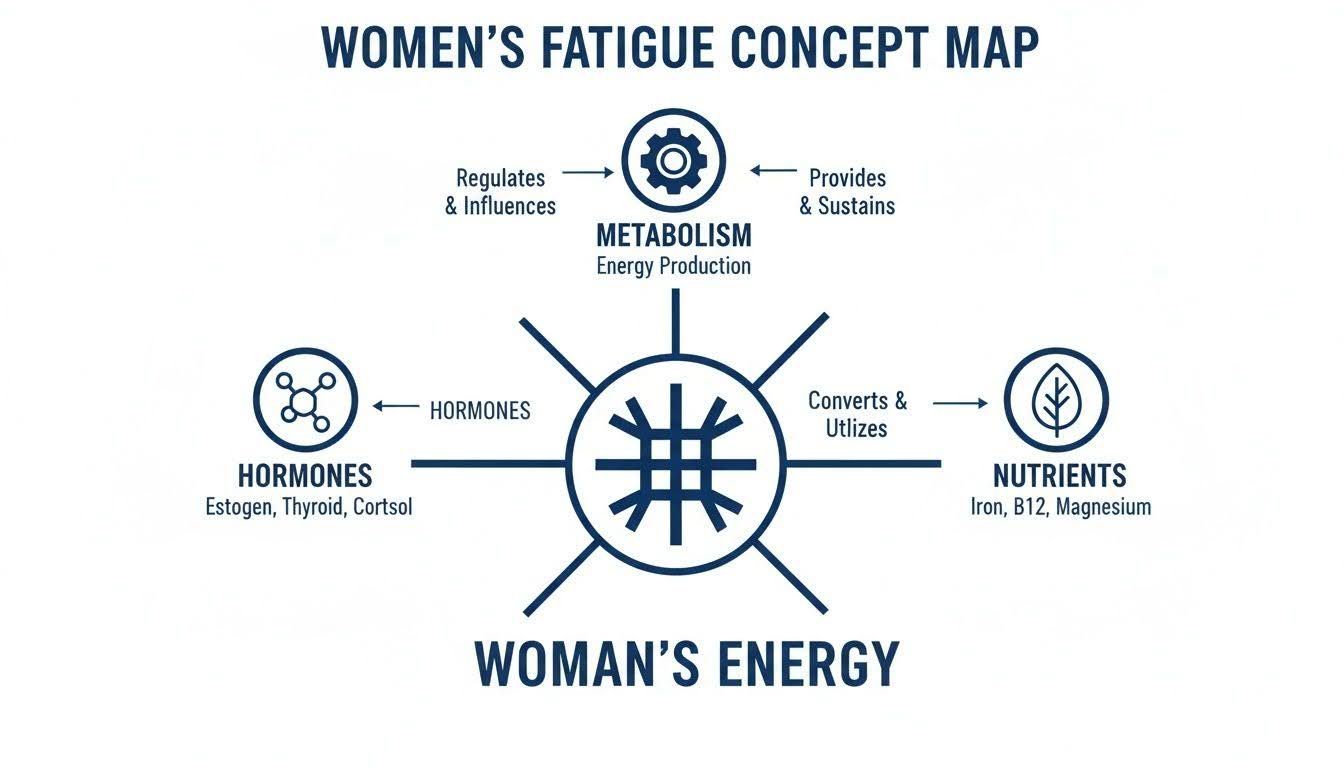
As you can see, your hormones, metabolism, and nutrient status are the three pillars holding up your vitality. A problem in any one of these areas can drain your energy reserves and leave you feeling exhausted.
Let’s take a closer look at these core drivers:
- Hormonal Balance: Think of hormones like estrogen, progesterone, thyroid hormone, and cortisol as the master conductors of your body's orchestra. They dictate how your body produces and uses energy. When they fluctuate wildly during perimenopause or menopause, the whole system can fall out of tune, leading to persistent fatigue.
- Metabolic Function: Your metabolism is the engine that converts the food you eat into usable fuel for your cells. Conditions like insulin resistance or a slow thyroid can clog up this engine, leaving you feeling sluggish and running on fumes.
- Nutrient Availability: Key vitamins and minerals—like iron, vitamin B12, and vitamin D—are the actual raw materials your body needs to create energy. If you’re running low on these, it’s like trying to build a house without enough bricks.
This guide will serve as your roadmap. We're going to dive deep into each of these factors to help you pinpoint the true source of your fatigue. To get started, here is a quick overview of the key areas we'll be exploring.
Key Contributors to Fatigue in Women at a Glance
| Category of Cause | Primary Examples | Who It Affects Most |
|---|---|---|
| Hormonal Disorders | Perimenopause, menopause, thyroid disease (hypothyroidism), adrenal dysfunction | Women in their late 30s and beyond, or those with thyroid conditions at any age. |
| Nutrient Deficiencies | Iron (anemia), Vitamin B12, Vitamin D, Magnesium | Menstruating women, vegans/vegetarians, individuals with digestive issues. |
| Metabolic Factors | Insulin resistance, pre-diabetes, metabolic syndrome, hormone-related weight gain | Individuals with a family history of diabetes, PCOS, or a sedentary lifestyle. |
| Chronic Health Issues | Autoimmune diseases (e.g., Hashimoto's, Lupus), fibromyalgia, long COVID | Varies widely depending on the specific condition. |
| Sleep Disorders | Insomnia, sleep apnea, restless legs syndrome | Anyone, but sleep apnea risk increases with age and weight. |
| Mental Health | Depression, anxiety, chronic stress, burnout | Can affect any woman at any stage of life, often linked to life changes or stress. |
| Medications | Blood pressure medications, antidepressants, antihistamines | Individuals taking long-term prescription or over-the-counter medications. |
| Lifestyle Factors | Overtraining, chronic undereating, dehydration, excessive alcohol use | Women with demanding schedules, athletes, or those with restrictive diets. |
This table is just the starting point. As we continue, we’ll break down each of these categories so you can feel empowered with the knowledge to start a meaningful conversation with a trusted medical provider and get the answers you deserve.
How Hormones Dictate Your Energy Levels

If you feel like you’re constantly running on empty, your hormones are one of the first places to look. Think of hormones like estrogen, progesterone, and cortisol as your body's energy management system. When they're balanced and working together, you feel vibrant, rested, and ready for the day.
But when their levels start to dip and become erratic—a classic sign of perimenopause and menopause—it’s like the system goes haywire. This imbalance sends a cascade of confusing signals throughout your body, messing with your sleep, mood, and metabolism. The result? A profound, deep-seated fatigue that disrupts your life.
This isn’t just being “a little tired.” The exhaustion that comes from hormonal shifts is a bone-deep weariness that a good night’s sleep often can’t fix. For millions of women, this frustrating decline in energy lines up perfectly with the hormonal changes that kick in during their late 30s and 40s.
How Perimenopause and Menopause Hijack Your Energy
The journey into menopause, known as perimenopause, can last for 7-10 years before your periods stop for good. Throughout this time, your hormone production becomes completely unpredictable, which is why it's a primary suspect when we investigate what causes fatigue in women.
The main culprits are estrogen and progesterone. Instead of a smooth, gradual decline, their levels begin to fall erratically. It’s less of a gentle slope and more of a wild rollercoaster, with jarring peaks and valleys that directly torpedo your energy.
Medical Insight: Estrogen is a key player in managing brain chemicals like serotonin, which helps regulate your sleep-wake cycle. As estrogen levels bounce all over the place, that delicate cycle gets thrown off, leading to restless nights and less restorative sleep.
This hormonal chaos is what triggers a handful of well-known symptoms, each one contributing to a relentless cycle of exhaustion.
The Domino Effect of Hormonal Symptoms
Hormonal imbalance is sneaky. It doesn’t just make you feel tired directly; it also creates a whole host of other symptoms that prevent you from getting the rest you desperately need. This sets off a domino effect where one issue feeds the next, leaving you completely drained.
Let’s break down how this happens:
- Night Sweats and Hot Flashes: Imagine being jolted awake multiple times a night by a sudden, intense wave of heat. It's incredibly disruptive. In fact, research shows that 56% of perimenopausal women struggle with insomnia, and it’s strongly linked to how often they experience hot flashes. Each interruption shatters your sleep, keeping you from reaching those deep, restorative stages.
- Anxiety and Mood Swings: Progesterone is nature’s calming agent; it helps you relax and sleep. As it declines, you might find yourself feeling more anxious, irritable, or just plain on edge, especially when you’re trying to wind down. This can make it impossible to fall asleep or cause you to wake up in the middle of the night with a racing mind.
- Brain Fog and Cognitive Slips: Estrogen is also vital for keeping your mind sharp. As it dwindles, you might experience that frustrating "brain fog" that makes it hard to concentrate or find the right word. This constant mental effort is surprisingly draining and adds to your overall sense of fatigue.
- Skyrocketing Cortisol: During perimenopause, your body’s levels of cortisol—the main "stress hormone"—tend to climb. Elevated cortisol messes with your internal clock, raising your heart rate and body temperature at night, which directly interferes with your ability to get sound, deep sleep.
This perfect storm of physical and emotional symptoms is a recipe for chronic exhaustion. You crawl into bed already feeling wired, get woken up by night sweats, and then try to tackle the next day with a fuzzy brain—all of which just digs you deeper into a fatigue hole.
Finding Balance and Restoring Your Vitality
Simply understanding that your hormones are at the root of this fatigue is a powerful first step. The great news is that this kind of exhaustion is absolutely treatable. By getting to the source of the problem—the hormonal imbalance itself—you can finally break the cycle of draining days and sleepless nights.
At Pause Medical, our board-certified medical providers specialize in figuring out the specific hormonal shifts that are depleting your energy. We don't believe in one-size-fits-all solutions; we create personalized treatment plans focused on restoring your natural balance.
For many women, this includes carefully managed Hormone Replacement Therapy (HRT), often using bioidentical hormones, which has been proven to lead to less fragmented sleep and a significant reduction in nighttime wakefulness. By replenishing the very hormones your body is missing, we can help dial down the night sweats, stabilize your mood, and clear away the brain fog.
You can learn more about how our approach to hormone therapy helps women restore their vitality and start feeling like themselves again. A comprehensive evaluation with one of our experts is the key to creating your personal roadmap back to sustained energy and well-being.
Looking Beyond Hormones for Fatigue Causes

While hormonal shifts are a major player in why women feel so tired, they’re rarely the only thing going on. Think of it this way: your energy is like a bank account, and hormones are just one of several factors making withdrawals. To truly get to the bottom of your exhaustion, we have to look at the whole clinical picture.
Often, other biological issues are quietly draining your reserves, either on their own or by teaming up with hormonal changes. Understanding what’s causing your fatigue means digging into the systems that run your metabolism and power your cells. Three of the most common culprits are an underperforming thyroid, anemia, and key nutrient gaps.
At Pause Medical, our board-certified medical providers take a whole-person, integrative medicine approach. We use thorough diagnostics to uncover these hidden energy thieves, allowing us to create a personalized plan that addresses the real reasons you feel so wiped out.
When Your Thyroid Slows Down
Imagine your thyroid as the control pedal for your body's engine. This small, butterfly-shaped gland in your neck produces hormones that set the pace for every single cell. If it's not producing enough of these hormones—a condition called hypothyroidism—your entire system gets stuck in first gear.
Everything just... slows... down. Your cellular engines are running on fumes, which shows up as bone-deep fatigue, stubborn weight gain, brain fog, and always feeling cold. This is a huge issue for women, who are five to eight times more likely than men to have thyroid problems.
Medical Insight: A very common reason for hypothyroidism is Hashimoto's disease. This is an autoimmune condition where your immune system gets confused and attacks your thyroid gland. Over time, this chronic assault damages the thyroid, making it harder and harder for it to do its job.
Because the symptoms of an underactive thyroid look a lot like those of perimenopause, it’s easy to get a misdiagnosis. The good news? A simple blood test can quickly tell us if your thyroid is contributing to your fatigue.
The Impact of Anemia and Iron Deficiency
Your body needs iron to make hemoglobin, the protein in red blood cells that acts like an oxygen delivery truck. It picks up oxygen from your lungs and drops it off at every cell in your body. When you're low on iron, you can't build enough of these trucks, and you develop iron-deficiency anemia.
Now, picture your cells as tiny factories that need oxygen to create energy. With anemia, that oxygen delivery system breaks down. Your cells are essentially suffocating, which leads to profound weakness, shortness of breath, dizziness, and a kind of exhaustion that sleep can't touch.
Women are especially at risk for iron deficiency for a few key reasons:
- Menstruation: We lose iron every month through blood loss, especially with heavy periods.
- Pregnancy: The demand for iron goes through the roof to support a growing baby.
- Diet: Not getting enough iron-rich foods, like red meat or dark leafy greens, can slowly deplete your stores.
Iron is so fundamental to feeling energized that correcting a deficiency can be life-changing. Identifying and treating anemia is a critical part of our comprehensive approach. You can learn more about how we tackle underlying health issues through our disease state management services.
Key Nutrient Gaps That Drain Your Battery
Beyond iron, a few other vitamins and minerals are absolute must-haves for turning food into fuel. If you're running low on them, it’s like trying to run a high-performance car on cheap, watered-down gas. It just won't work well. Two of the most important for women's energy are Vitamin B12 and Vitamin D.
Vitamin B12 is essential for making red blood cells and for converting what you eat into usable energy. A deficiency can cause a specific type of anemia that leads to crushing fatigue and weakness. This is a common issue for vegetarians and vegans, since B12 is found almost exclusively in animal products.
Vitamin D, the famous "sunshine vitamin," is a key player in how well our cellular powerhouses—the mitochondria—function. Shockingly, low levels of Vitamin D are a global problem, affecting an estimated 1 billion people worldwide. This deficiency has been directly linked to symptoms of fatigue and muscle weakness.
By pinpointing these gaps with targeted lab work, we can build a precise plan with supplements and dietary tweaks. The goal is simple: to recharge your body's batteries and get you back to feeling like yourself again.
How Metabolic Health and Weight Impact Your Energy

Your metabolism is essentially your body's engine, converting food into the fuel you need for everything from breathing to thinking. When that engine is humming along, you feel vibrant and full of life. But when your metabolic health starts to sputter, it often becomes a major, yet frequently overlooked, source of debilitating fatigue in women.
Hormonal shifts, especially around menopause, can throw a wrench in your metabolic machinery. This makes it harder for your body to regulate blood sugar and maintain a healthy weight, creating a frustrating loop where exhaustion and hormone-related weight gain feed off each other, leaving you feeling completely drained.
The Blood Sugar Rollercoaster and Insulin Resistance
Imagine your blood sugar is the immediate fuel available for your cells to use. After a meal, your blood sugar goes up, and your pancreas releases insulin. Insulin acts like a key, unlocking your cells so they can take in that sugar for energy. Ideally, this process is seamless.
However, a diet high in processed foods or the natural metabolic slowdown in midlife can lead to insulin resistance. This is when your cells start to tune out insulin's message. It’s as if the locks on your cell doors get rusty, and the key just doesn't work as well anymore.
Your pancreas works overtime, pumping out more and more insulin to get the job done. This leads to a sharp spike in blood sugar, followed by a hard crash. This rollercoaster isn't just a figure of speech; it's a physically draining experience that directly causes fatigue, intense cravings, and brain fog.
Medical Insight: When your cells can't get the glucose they need for energy because of insulin resistance, your body is left feeling starved of fuel—no matter how much you eat. This cellular-level energy crisis is a primary driver of metabolic fatigue.
How Weight Gain Fuels the Fatigue Fire
The link between weight and energy is deeply biological. Excess body weight, particularly the visceral fat that gathers around your abdomen, isn’t just dormant tissue. It's metabolically active, functioning like a little factory that constantly churns out inflammatory signals called cytokines.
This chronic, low-grade inflammation puts your immune system on a constant low-level alert, which is incredibly draining on your body's energy reserves. It's the same reason you feel so completely wiped out when you have the flu—your body is pouring all its resources into fighting what it sees as a threat.
This inflammation also makes insulin resistance even worse, locking you into a vicious cycle:
- Hormonal changes slow metabolism, leading to weight gain.
- Excess fat tissue increases body-wide inflammation.
- Inflammation worsens insulin resistance.
- Worsening insulin resistance encourages more fat storage and deepens fatigue.
Breaking out of this cycle is absolutely critical if you want to get your energy back.
To help you connect the dots between various health issues and the fatigue you're feeling, here's a quick look at how some of the conditions we've discussed directly drain your energy.
How Key Conditions Directly Cause Fatigue
| Condition | How It Causes Fatigue | Common Associated Symptoms |
|---|---|---|
| Hypothyroidism | Slows down the body's entire metabolism, reducing the rate at which cells produce energy from food. | Weight gain, cold intolerance, dry skin, hair loss, constipation, brain fog. |
| Anemia (Iron Deficiency) | Reduces the blood's oxygen-carrying capacity, starving tissues and muscles of the oxygen they need to function. | Pale skin, shortness of breath, dizziness, cold hands and feet, brittle nails. |
| Insulin Resistance | Prevents cells from effectively using glucose (sugar) for fuel, leading to a cellular energy crisis despite high blood sugar. | Intense sugar cravings, brain fog, increased belly fat, skin tags. |
| Chronic Inflammation | Keeps the immune system constantly activated, diverting significant energy resources to fight a perceived threat. | Aches and pains, digestive issues, skin problems (like psoriasis or rashes). |
| Adrenal Dysfunction | Disrupts cortisol rhythms, leading to a mismatch between energy production and the body's daily needs. | Feeling "wired but tired," sleep disturbances, salt cravings, low blood pressure. |
Seeing these connections can be the first step toward understanding that your fatigue isn't just "in your head"—it has a real, biological origin that we can address.
Restoring Your Metabolic Engine for Lasting Energy
Tackling metabolic fatigue requires a strategic, evidence-based approach that goes beyond generic diet advice. It calls for a medical plan that gets to the root causes of the imbalance, which is where a structured, physician-guided program can make all the difference.
At Pause Medical, our board-certified medical providers know that managing weight is a crucial part of restoring your overall health and energy. By focusing on improving your metabolic function with personalized plans that may include tools like GLP-1 medications, we can help you finally break free from the exhausting cycle of weight gain and fatigue.
Our programs are designed to help restore insulin sensitivity and lower inflammation, letting your body’s engine run efficiently once more. You can learn more about how our approach to medical weight loss can help you not only reach a healthier weight but also unlock a new level of sustainable energy.
The Unseen Weight of Stress and Lifestyle
While biological issues are a huge piece of the puzzle, they rarely tell the whole story. For so many women, the real answer to "what causes fatigue in women?" lies at the intersection of chronic stress, sleepless nights, and the immense mental load we carry day in and day out.
These aren't just feelings—they create a powerful physiological cascade that can leave you feeling physically and emotionally drained.
When you're under constant pressure, your body gets stuck in a state of high alert. This perpetual "fight or flight" mode can exhaust your adrenal system and throw your main stress hormone, cortisol, completely out of whack. Instead of a healthy rhythm that gives you a boost in the morning and lets you wind down at night, your cortisol levels can become erratic. The result? You feel simultaneously wired and completely spent.
This state of chronic stress isn't just a mental burden. It biochemically saps your energy reserves, making it an essential factor to address in any plan to get your vitality back.
When Stress Becomes a Physical Burden
It's so important to understand that conditions like anxiety and depression aren't separate from your physical health—they are biochemically linked to low energy. These mental health challenges can directly alter the very neurotransmitters in your brain that regulate your mood, motivation, and sleep patterns. This is precisely why hearing "just relax" is not only unhelpful but completely misses the point.
For many of us, the stress is piled on by a major imbalance in daily responsibilities. Research consistently shows how the pressure of juggling careers and family duties leads to profound exhaustion. In fact, one study found that women spend an average of 4.5 hours daily on household and care duties, compared to just 1 hour and 23 minutes for men. This stark disparity is directly tied to higher rates of fatigue. You can explore the research on work-life balance and women's mental health to dig deeper into this connection.
This relentless demand on your time and energy creates a vicious cycle: stress ruins your sleep, and poor sleep makes you less able to cope with stress.
A Whole-Person Path to Reclaiming Your Energy
Tackling this kind of deep-seated fatigue requires a compassionate, integrated approach. Just trying to manage stress often isn't enough, especially if an underlying medical issue like a thyroid disorder or a hormonal imbalance is also draining your tank. The only way to find lasting relief is to address the root causes on all fronts.
Our Integrative Philosophy: An integrative medicine approach recognizes that your mental, emotional, and physical health are completely intertwined. True relief from fatigue comes from addressing the hormonal imbalances while also implementing real-world strategies to manage stress and restore sleep quality.
This is why a comprehensive wellness strategy is so powerful. At Pause Medical, our board-certified medical providers work with you to build a plan that looks at the complete picture of your health. By combining proven medical treatments with actionable lifestyle support, we help you finally break the cycle of exhaustion.
Our goal is to treat you as a whole person, not just a collection of symptoms. By understanding how your lifestyle impacts your biology, we can create a truly personalized roadmap to renewed energy. Take a look at our approach to integrative wellness solutions to see how we can help.
Your Path to Reclaiming Your Energy
Throughout this guide, we hope one message has come through loud and clear: the persistent, bone-deep exhaustion so many of us experience is a valid medical signal. It’s not a character flaw or something to push through. It’s your body’s way of telling you that something is out of balance.
Feeling constantly drained isn't just a part of getting older you have to accept. The data backs this up. Global statistics show women are hit harder by exhaustion, with 18.3% reporting total fatigue compared to just 14.6% of men. For women over 45, the numbers are even more telling—we are 1.89 times more likely to experience chronic fatigue. If you're curious, you can read the full research on gender differences in fatigue for a deeper dive.
This is precisely why getting a comprehensive diagnosis isn't just a good idea; it's absolutely essential for reclaiming your life.
Your Action Plan for Getting Answers
Taking back control of your health often starts with a simple, reassuring process that moves you from feeling dismissed to finally feeling heard. Your journey to renewed energy begins with one decisive step.
Here’s a practical roadmap to get the answers you deserve:
- Schedule a Consultation: The most important first move is to book a thorough evaluation with a board-certified provider who truly understands women’s health, hormones, and metabolic function. This is your time to share your full story in an empathetic, supportive environment.
- Undergo Comprehensive Testing: After listening to you, your provider will recommend targeted lab work. This isn't just the standard stuff. It’s a deep look into specific hormone levels, full thyroid function, key nutrient markers like iron and Vitamin D, and other metabolic indicators.
- Receive a Personalized Treatment Plan: Once we have a clear clinical picture, you'll get a plan built for your unique biology. This could involve bioidentical hormone replacement therapy (BHRT), thyroid medication, targeted nutritional support, or a medically supervised weight loss program. Sometimes, a great starting point is exploring our high-quality nutritional supplements to provide foundational support.
The goal here is simple: to help you move from a state of exhaustion to a place of empowerment. By partnering with a medical expert who listens and investigates, you can finally address the root cause of your fatigue and start feeling energized, clear-headed, and like yourself again.
Your Questions About Fatigue, Answered (FAQs)
As experts in women's health, we hear these questions often. We’ve gathered the most common concerns from patients to provide clear, evidence-based answers and help you take the next step with confidence.
Is It Normal To Be This Tired During Perimenopause?
While it is extremely common, it is not something you have to accept as "normal." A staggering 95% of women report experiencing significant fatigue during the perimenopausal transition. Think of it as a perfect storm: the rollercoaster of estrogen and progesterone disrupts sleep architecture, hot flashes and night sweats cause frequent awakenings, and stress hormones like cortisol can run high. It all adds up to profound exhaustion, but it's absolutely a treatable medical symptom.
How Do I Know If My Fatigue Is Hormones Or Something Else?
This is the central question for many women. It’s tough to untangle on your own because the symptoms of hormone imbalance, hypothyroidism, and anemia often overlap. While hormonal shifts are a major culprit for fatigue in women over 35, it could also be an underactive thyroid, low iron levels, or even a vitamin D or B12 deficiency. The only way to get a clear, accurate answer is through comprehensive blood work interpreted by a knowledgeable clinician who can connect your lab results to your personal health story.
Can Losing Weight Really Help With Fatigue?
It absolutely can, especially when the weight gain is tied to metabolic issues like insulin resistance. When this happens, it kicks off a vicious cycle. Excess weight, particularly around your middle, fuels body-wide inflammation, which is incredibly draining on your energy reserves. A medically supervised weight-loss program isn't just about the number on the scale; it's about reducing that inflammation and helping your body's cells use energy efficiently again. Many women are amazed by how much their energy rebounds once their metabolic health improves.
Should I Just Force Myself To Exercise More?
It’s a tempting thought, but it can backfire. While gentle, consistent movement is usually beneficial, pushing yourself too hard can make things much worse if the fatigue is caused by an underlying medical condition like severe anemia, a thyroid disorder, or post-exertional malaise (a hallmark of chronic fatigue syndrome and Long COVID). The smartest, safest approach is to get a diagnosis first. Once you know what you’re treating, you can work with your provider to build a fitness plan that supports your healing instead of setting you back.
At Pause Medical, our board-certified medical providers don't just treat symptoms—we find and address the root cause of your fatigue. Through advanced diagnostics and personalized care, we'll create an integrative plan to help you feel like yourself again. It’s time to stop guessing and start getting answers.
Schedule Your Consultation at Pause Medical Today
Disclaimer: This article is for informational purposes only and does not constitute medical advice. Please consult with a qualified healthcare professional for any health concerns or before making any decisions related to your health or treatment.


