7 Medical Weight Loss Reviews for Mississippi Patients
What should you trust more in a weight-loss review, the medication name, or the care model behind it? For medical weight loss reviews , the better question is who is overseeing treatment, how the patient is assessed, whether labs and medication are billed separately, what follow-up looks like, and how well the program fits your access, budget, and commitment level. This article is for Mississippi readers, and any real treatment decision still needs a qualified provider to review your history, eligibility, and risks. If you want a fast answer, look for clinical supervision, transparent costs, medication source, monitoring, and ongoing support , not just testimonials or brand names. For a quick framework on how to compare offers, see nutrition label reading tips.
The FDA has not endorsed every statement some clinics make about outcomes, so results, timelines, and side effects vary by individual. Use this as an educational comparison, not a substitute for medical advice.
1. Pause Medical
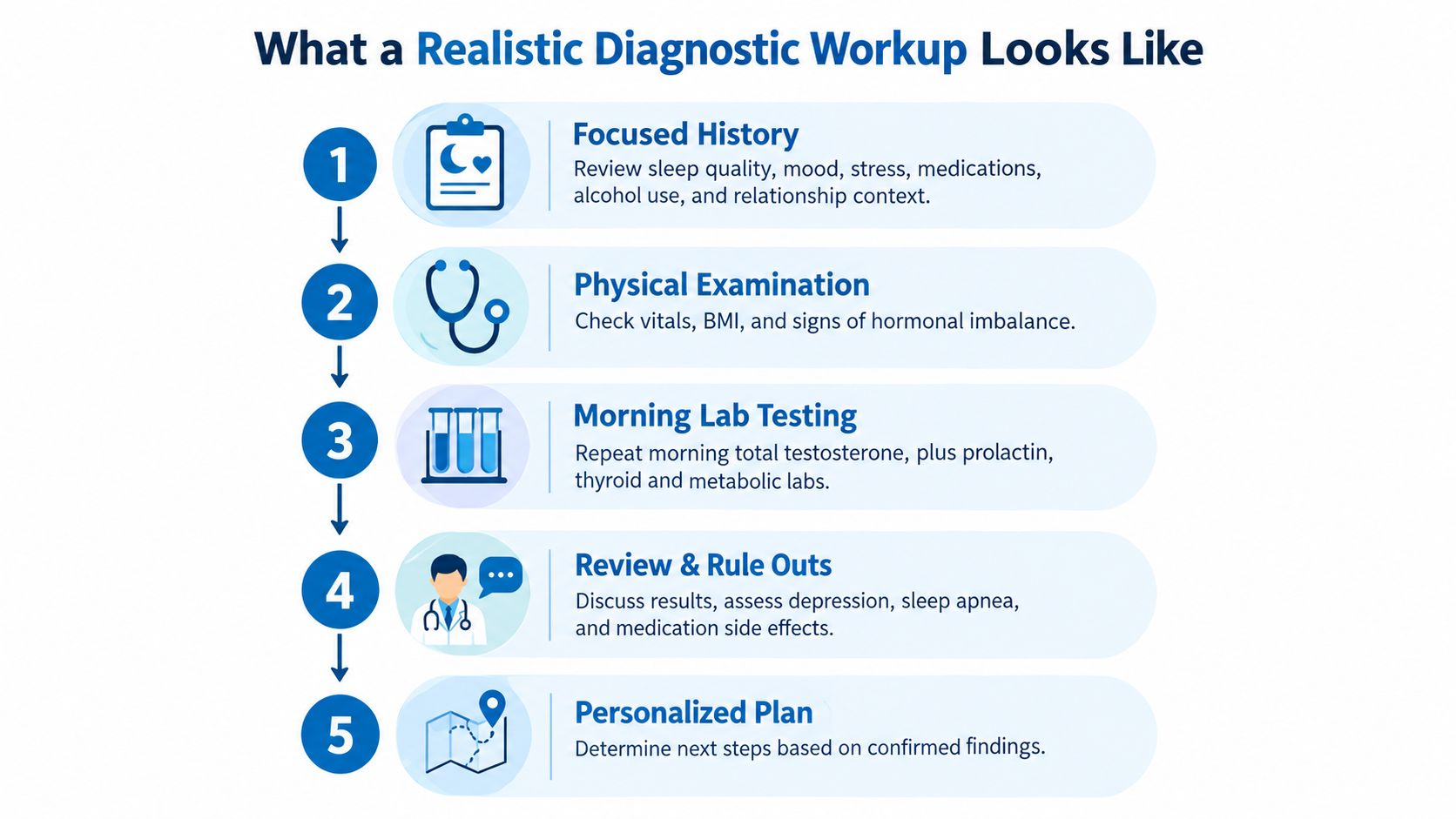
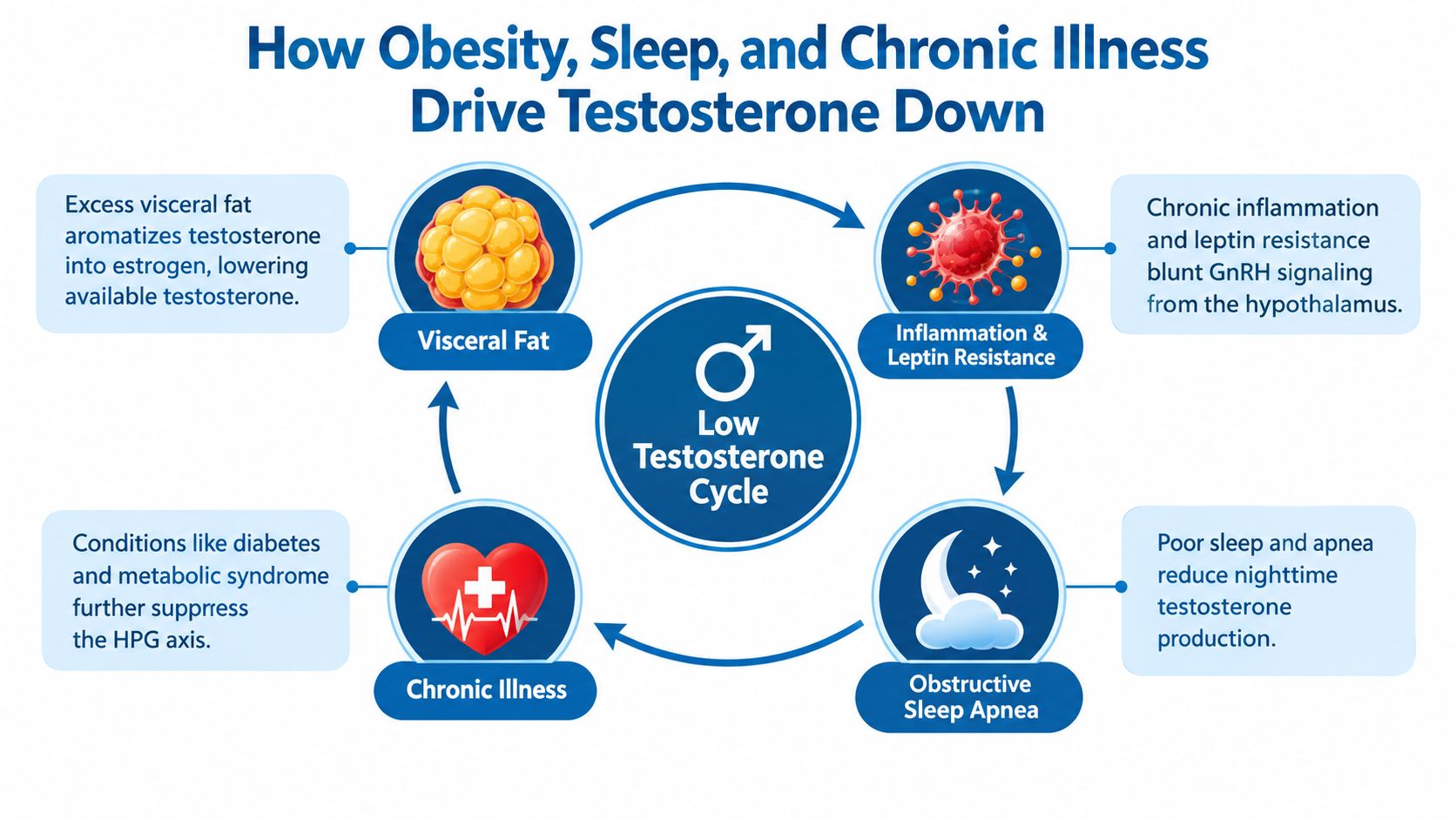
For Mississippi patients comparing medical weight loss reviews , Pause Medical is best assessed as a local, clinician-led option rather than an app-based prescription service. Its care model combines hormone replacement therapy , medical weight loss , and medication management with provider evaluation, lab review, and follow-up. That structure may suit patients whose weight concerns overlap with menopause, andropause, metabolic issues, or other health factors requiring broader assessment.
Why it stands out for Mississippi patients
Access is the program's clearest differentiator. Pause Medical lists locations in Oxford, Meridian, Tupelo, Flowood-Jackson, and Starkville , along with statewide weight-loss coverage and an at-home TRT option. Patients who prefer appointments in a clinic can therefore maintain a local relationship with a provider instead of relying on a remote telehealth queue.
The program uses a self-pay workflow. The site offers online scheduling and phone booking at 833-940-5060 , lists a Wellness Lab Panel for $199 , and provides weekday hours. A guided intake can help examine whether hormonal changes, insulin resistance, or another factor may contribute to weight gain. Eligibility and treatment decisions still depend on the clinician's assessment, and the clinic notes that results and timelines vary.
Practical rule: A complete weight-loss program should explain how it evaluates eligibility, monitors labs, and manages follow-up.
Pause Medical's no-insurance policy affects the cost decision. Self-pay can make the payment route easier to identify before treatment, but patients must account for their own out-of-pocket exposure and confirm which services, medications, and follow-up visits are included. The approach may work for someone prioritizing local supervision and predictable access, while a patient relying on insurance benefits may prefer a different model.
The internal service page for Mississippi medical weight-loss care gives readers a relevant starting point for reviewing local access, personalized goals, and in-person adjustments.
Pros
- Personalized, medically supervised care: In-person evaluation, defined goals, and ongoing education.
- Strong Mississippi access: Multiple clinic locations and at-home TRT support.
- Evidence-based workflow: Bioidentical hormones when appropriate, FDA-approved weight-management medications, and lab-based assessment.
- Clear access model: Online booking, phone scheduling, and self-pay care.
Cons
- Self-pay only: The clinic does not accept insurance.
- Regional focus: The model is centered on Mississippi, limiting access for patients elsewhere.
2. Form Health
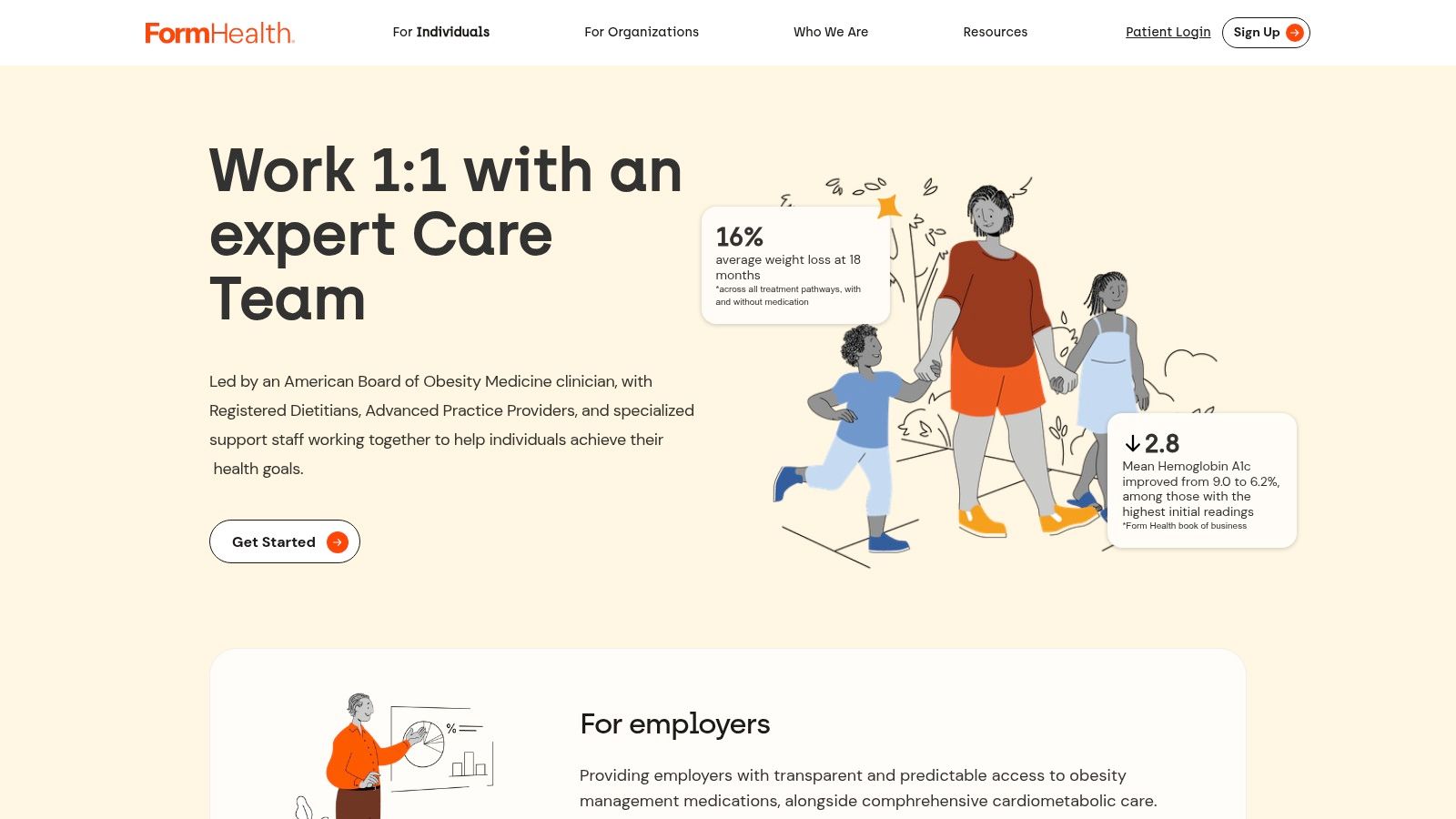
Form Health suits patients seeking insurance-forward telehealth with an organized clinical team rather than a prescription-only service. An ABOM-certified physician and a Registered Dietitian work with each patient, supported by monthly video visits, messaging, and medication management when appropriate. The model therefore connects obesity medicine, nutrition counseling, and follow-up within one care relationship.
The patient-decision question is how that structure affects access and cost. Physician oversight and dietitian input can help address medication choices, nutrition, and adherence together. Monthly visits and messaging also provide a defined monitoring pathway, although patients should confirm what follow-up includes and how often treatment plans are reviewed.
Form's payment model requires closer cost planning. Membership details may be easier to interpret than those of some direct-to-consumer services, but labs and prescriptions are billed through insurance . Total spending can therefore vary with the patient's benefits, pharmacy coverage, deductible, and medication pathway. Patients without useful coverage may face more uncertainty than those whose plans support both visits and treatment.
For Mississippi patients, the related Pause Medical guide on GLP-1 weight-loss medication options offers a comparison point for local medication discussions versus a distributed telehealth team. The practical choice is between local visits and a remote model that coordinates care around insurance. Eligibility, results, timelines, and total costs still require individual assessment.
Strengths
- MD-led and dietitian-supported: Physician supervision and nutrition counseling address the same treatment plan.
- Ongoing contact: Monthly video visits and messaging create regular opportunities to review progress.
- Insurance coordination: Visits and medications are billed through insurance, with Medicare acceptance noted.
- Integrated nutrition therapy: Adds behavioral and dietary support to medication care.
Trade-offs
- Separate expenses: Membership does not bundle medications and labs.
- Coverage dependence: Uninsured patients may find the total monthly cost less predictable.
3. Found
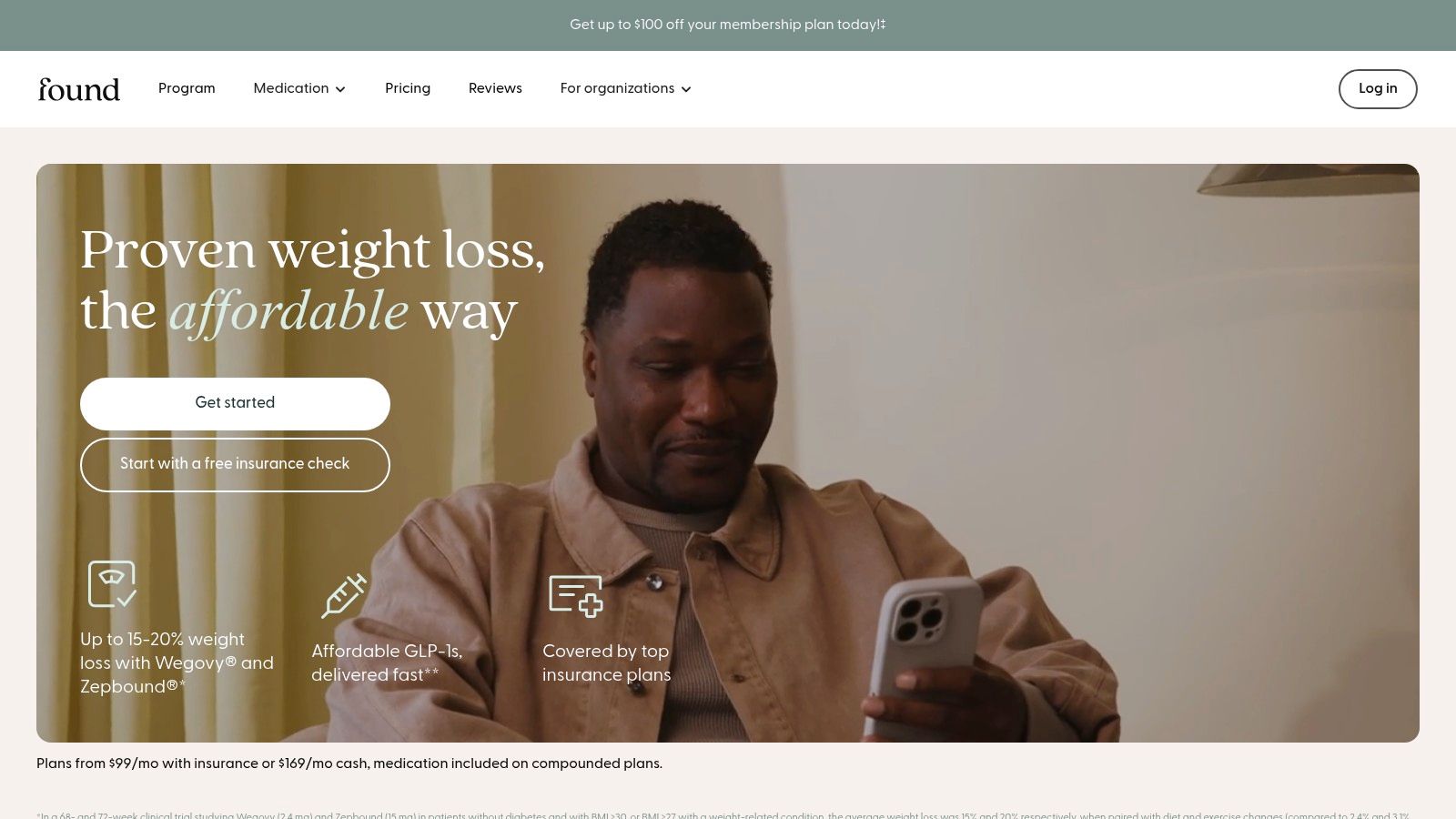
How should patients judge Found beyond its medication menu? The relevant questions are clinical supervision, monitoring, medication sourcing, behavioral support, access, cost exposure, and fit for Mississippi patients. Found is designed for people who want digital accountability alongside medication access. Its model combines insurance and cash-pay pathways, app-based coaching, check-ins, community features, and an AI companion called Aimee . The result is a broader digital weight-care service rather than a single telehealth consultation.
Found's clearest advantage is access flexibility. Cash plans may offer branded GLP-1s and compounded GLP-1 options , which can matter for patients facing insurance exclusions or pharmacy barriers. Found also explains insurance and cash pricing in comparatively clear terms. Patients should still calculate the full exposure, since membership, medication, laboratory work, and follow-up needs may not fall under one charge.
Medication sourcing deserves a separate decision point. Compounded medications are not FDA-approved products . Anyone considering that pathway should ask which pharmacy supplies the medication, what clinical oversight applies, how monitoring is handled, and whether the lower-friction access justifies the additional uncertainty. Eligibility, results, treatment timelines, and total costs vary by patient and coverage.
For Mississippi patients, the Pause Medical guide on a personalized weight loss plan and medical guide for 2026 provides a useful comparison. Local care may offer more direct provider judgment and in-person monitoring, while Found prioritizes remote access, app engagement, and multiple medication routes. Neither model fits every patient. The better choice depends on how much supervision, structure, and local contact a patient expects to sustain treatment.
Found may suit patients who value coaching and app support, provided medication sourcing and total cost are reviewed before enrollment.
Key advantages
- Flexible medication access: Branded and compounded pathways.
- Digital engagement: App tools, check-ins, community, and AI support.
- Insurance or cash: More than one payment route.
- Scalable telehealth model: Remote access across locations.
Main limitations
- Compounded options require scrutiny: Pharmacy sourcing and oversight matter.
- Separate treatment expenses: Membership does not remove medication costs.
4. WeightWatchers Clinic
WeightWatchers Clinic combines medical prescribing with a behavior-change platform , so its value depends on whether a patient will use both parts. Clinicians assess eligibility and manage treatment, while the WW app supports meal logging, injection tracking, protein and fiber guidance, and side-effect tracking. The arrangement connects medication decisions with daily routines rather than treating prescribing as a standalone service.
The main patient-decision question is commitment. Regular app use can provide accountability between clinical contacts, but patients seeking occasional prescription management may find the program more involved than necessary. Its insurance coverage estimator can help patients review possible out-of-pocket medication costs before enrollment, although the estimate cannot replace a coverage check tied to the prescribed treatment.
Mississippi patients should also examine the care pathway. The medical group provides clinical oversight, while the platform supplies digital tools and community-based engagement. That combination may suit someone who wants structured support and remote access. It may fit less well for a patient who prefers a local clinician, minimal app participation, or a simpler prescription relationship. Eligibility, results, treatment timelines, and total costs vary with medical circumstances, insurance, medication, and dose.
For context, what is a medically supervised weight loss program explains how ongoing assessment and monitoring differ from wellness features alone. That distinction helps patients judge whether the program's added structure matches their needs.

Where it may fit
- Integrated behavior support: Tracking and nutrition guidance sit alongside clinical care.
- Coverage planning: The estimator offers an early view of medication expenses.
- Accountability: Community and app features support ongoing participation.
- Remote access: Patients can use a national digital model.
Points to verify
- Medication costs remain separate: Insurance, treatment choice, and dose affect the final total.
- Participation is part of the model: Patients wanting episodic prescribing may prefer a less structured service.
5. Ro Body Program
Could Ro Body's bundled care justify its recurring membership cost? The answer depends on how much help a patient needs with clinical follow-up, insurance paperwork, and medication access. The program offers FDA-approved GLP-1s if prescribed , regular clinical check-ins, 1:1 clinician messaging, coaching, and support with prior authorization.
Its main distinction is workflow. Ro brings assessment, coverage checks, clinician communication, and coaching into one membership rather than leaving patients to coordinate each step independently. That structure may help Mississippi patients who want remote access and assistance with insurer requirements. It may fit less well for someone whose local primary care clinician already manages prescriptions and lab work.
Medication literacy still matters. Ro's companion resource on how semaglutide works can help readers understand the treatment before comparing service models. Eligibility, results, timelines, and follow-up needs vary, so a medication pathway should be judged alongside clinical monitoring, not by availability alone.
Ro publishes pricing information and FAQs that separate insured and cash routes. This makes the cost structure easier to examine, although the final expense can still vary with membership, medication, labs, insurance coverage, treatment choice, and dose. Patients should confirm which services are included and how refills, prior authorization, and follow-up are handled.
Where Ro may fit
- Coverage assistance: Staff help with prior authorization and insurance questions.
- Centralized care: Messaging, check-ins, coaching, and medication coordination share one portal.
- Remote access: The model may suit patients who do not need in-person visits.
- Clinician-guided medication: Treatment depends on clinical appropriateness and prescribing review.
Trade-offs to weigh
- Recurring membership cost: A local clinician may offer a lower-cost route for patients who need prescription management only.
- Separate treatment expenses: Medication and lab charges may affect the total.
- Higher participation requirement: The bundled model suits patients seeking ongoing support more than episodic prescribing.
6. Calibrate
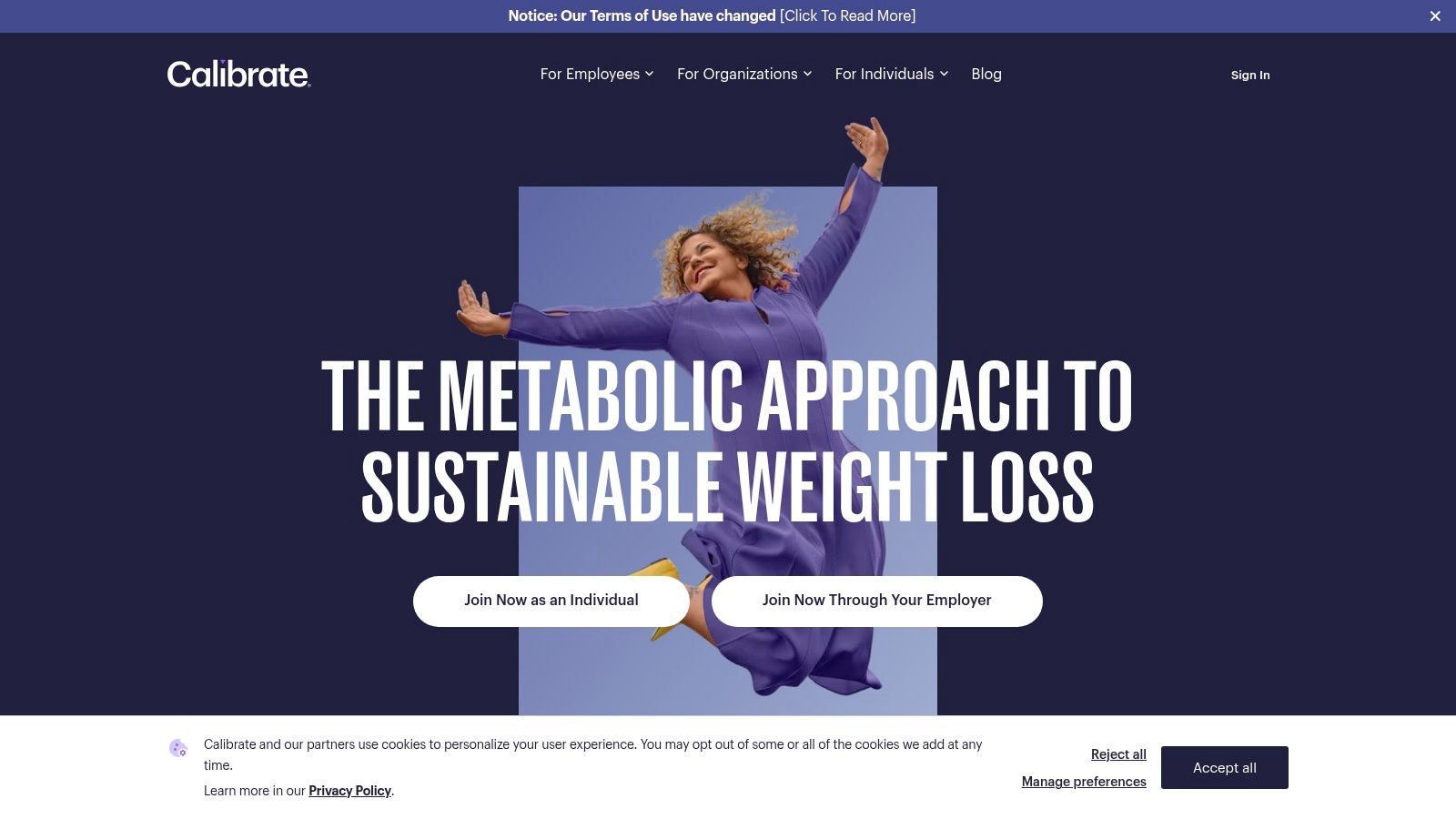
Could Calibrate's curriculum-first model suit patients who want clinical review and behavior change addressed before medication access? Its process combines lab work, medical evaluation, app-based lessons, and one-to-one coaching, with GLP-1 prescribing through insurance when clinically appropriate. The sequence makes the program distinct from services that begin with prescription access, although eligibility and treatment timing still depend on the patient's assessment, coverage, and clinician review.
The main decision factor is how much structure a patient will use. Coaching and coursework may help someone who previously pursued medication without consistent behavioral support. Patients should ask how often coaches respond, what monitoring follows the initial evaluation, and how dose changes or side effects are handled. The program's clinical supervision matters only if those follow-up processes are clear and consistent.
Calibrate separates membership charges from medication costs, which makes the cost structure easier to examine. The total expense can still rise when insurance contributes little toward medication, and coverage rules may affect access. Confirm what the membership includes, whether labs are billed separately, and how refills and prior authorization are managed before enrolling.
For Mississippi patients comparing Calibrate's sequencing with local care, ask how its published outcomes reports and coaching cadence compare with in-person lab review and dose-adjustment timelines. That comparison focuses on access, monitoring, and follow-up rather than medication availability alone.
Potential advantages
- Clinical screening first: Evaluation and labs precede prescribing decisions.
- Structured support: Coaching and coursework require ongoing participation.
- Separate cost categories: Membership and medication expenses are listed separately.
- Insurance pathway: Staff may help route GLP-1 treatment through benefits when possible.
Trade-offs
- Medication is extra: Coverage and treatment choice shape the final cost.
- Participation takes time: The model may fit patients seeking continuing support, not occasional prescription management.
7. Medi-Weightloss
Unlike app-first programs, Medi-Weightloss uses in-person visits that may include labs, EKG, body-composition analysis, and individualized nutrition and medication planning . That setup gives clinicians more information before treatment decisions, which may suit patients whose weight concerns intersect with chronic conditions, medication interactions, or the need for closer observation.
Why in-person diagnostics still matter
On-site assessment can identify clinical factors that a remote intake may not fully evaluate. It also creates a scheduled setting for accountability and follow-up. The trade-off is time and access: patients must travel to a clinic, and pricing is not published centrally, so local quotes are necessary.
Reviews should therefore separate the program's care model from its medication availability. A physical clinic may offer more direct assessment, while telehealth can reduce travel and speed enrollment. Neither approach guarantees better results. The relevant questions are whether the evaluation is appropriate, how monitoring is handled, what support continues after prescribing, and whether the visit schedule fits the patient's routine.
For Mississippi patients, clinic location and travel distance may shape the practical value of the model. Longwelle's AI-powered guidance offers another way to compare how programs organize coaching and follow-up. Examine the full care system, including assessment, medication access, behavioral support, and total cost, rather than reviewing the medication alone.
Pros
- Thorough first visit: Labs, EKG, and body-composition testing may inform the plan.
- In-person accountability: Scheduled clinic care suits patients who prefer direct contact.
- Individualized planning: Nutrition and medication decisions are considered together.
- Nationwide network: A broad location footprint may improve access.
Cons
- Pricing isn't centralized: Patients need a quote from the local clinic.
- Can be more time-intensive: In-person visits add scheduling and travel demands.
Medical Weight-Loss Programs: 7-Way Comparison
| Provider | Implementation complexity 🔄 | Resource requirements ⚡ | Expected outcomes ⭐📊 | Ideal use cases 💡 | Key advantages |
|---|---|---|---|---|---|
| Pause Medical | 🔄 Medium, in‑person visits + lab monitoring | ⚡ Moderate, self‑pay model; Wellness Lab $199; local travel | ⭐⭐⭐⭐ · 📊 Personalized HRT & weight‑loss plans; monitored results, timelines vary | Local patients in MS seeking hands‑on, medically supervised care | In‑person provider exams, lab‑based personalization, multiple MS clinics |
| Form Health | 🔄 Medium, telehealth with MD + RD coordination | ⚡ Moderate, labs/meds billed to insurance (self‑pay path exists) | ⭐⭐⭐⭐ · 📊 Longitudinal medical + nutrition oversight; outcomes tied to coverage | Insured patients wanting ABOM‑led, evidence‑based obesity care with RD support | ABOM‑certified physicians, integrated dietitian, insurance navigation |
| Found | 🔄 Low–Medium, app‑forward med matching + digital support | ⚡ Flexible, cash or insurance; branded & compounded GLP‑1 options | ⭐⭐⭐ · 📊 Medication‑centric with digital coaching; results vary by med access | Nationwide users needing flexible payment paths and continuous digital engagement | Broad medication toolbox, AI companion, scalable telehealth model |
| WW Clinic | 🔄 Medium, telehealth prescribing + WW behavior platform | ⚡ Moderate, meds typically billed separately; app tools included | ⭐⭐⭐⭐ · 📊 Combines GLP‑1 oversight with structured behavior change and tracking | Users who want medical prescribing paired with an established behavior program | WW app integration, coverage estimator, pharmacy integrations |
| Ro Body Program | 🔄 Medium, membership + insurance concierge and check‑ins | ⚡ Moderate–High, membership fee plus medication costs (insured or cash) | ⭐⭐⭐ · 📊 End‑to‑end membership experience; transparent pricing but total cost varies | People wanting unified portal for coverage checks, coaching, and prescription management | Clear pricing hub, insurance navigation, centralized follow‑up portal |
| Calibrate | 🔄 Medium–High, structured curriculum + 1:1 coaching and labs | ⚡ Moderate, membership separate from medication costs; insurance billed for meds | ⭐⭐⭐⭐ · 📊 Publishes outcomes reports; emphasis on clinical evaluation before Rx | Patients seeking structured behavior program with clinical/lab rigor and coaching | Strong lab focus, published outcome data, regular 1:1 coaching cadence |
| Medi‑Weightloss | 🔄 High, in‑person full diagnostic workup and phased program | ⚡ High, on‑site labs, EKG, body‑composition testing; variable clinic pricing | ⭐⭐⭐⭐ · 📊 Hands‑on diagnostics enable individualized plans; outcomes vary by adherence | People preferring face‑to‑face care and comprehensive initial evaluation | Large national clinic network, in‑person diagnostics, physician supervision |
Choose the Care Model You Can Sustain
The best medical weight loss reviews don't end with “who has the strongest medication.” They ask which model you can sustain. If you're in Mississippi and want face-to-face care, Pause Medical is the most relevant starting point because it combines local access, self-pay clarity, in-person evaluation, and ongoing monitoring. If you need insurance navigation, digital accountability, app-based coaching, or a more diagnostic clinic flow, the other programs above may fit better.
Before you book, use a simple pre-consultation checklist. Confirm provider credentials , whether you meet eligibility criteria , where the medication comes from , what labs are required, how often follow-up happens, who helps with side effects , how refills are handled, whether there are membership fees in addition to medication costs, and what the cancellation terms are. Ask how the clinic handles dose changes, missed appointments, and delays in pharmacy access. Those details shape the experience more than the homepage headline.
For Mississippi patients, also verify current location availability, current pricing, and whether a clinic's services still match the conditions listed on its website. Treatment suitability, results, risks, and timelines vary by individual, and that's especially true in a market where costs, access, and medication pathways are changing quickly. Use the provider's current consult process to test whether the care model is built for your goals.
If you're comparing medical weight loss with hormone care, metabolic support, or symptom-driven treatment in Mississippi, Pause Medical is worth a direct conversation.
Pause Medical offers medically supervised weight loss, hormone replacement therapy, and individualized medication management from Mississippi clinics that put provider oversight first. If you want a structured review of your goals, labs, and treatment options, visit Pause Medical and schedule a consultation to see whether its approach fits your needs.