Insulin Resistance Medication for Weight Loss: A Comparison
You've cut back on sweets, tried walking after dinner, and followed more than one diet plan. Still, the weight returns, your energy dips, and lab results may show blood sugar or cholesterol concerns. If that sounds familiar, you're not failing. Insulin resistance can make weight management harder by changing how your body responds to insulin , and the right treatment may involve more than calorie counting.
For Mississippi adults, an insulin resistance medication for weight loss may be one part of a broader plan that includes nutrition, movement, sleep, lab monitoring, and treatment for related conditions. The goal is a lower number on the scale. It's better metabolic health, preserved muscle, fewer symptoms, and a plan you can maintain with medical guidance.
The Hidden Struggle of Metabolic Health
A patient in Oxford may start the week determined. Breakfast is lighter, lunch is packed from home, and an evening walk feels manageable. By Friday, work stress, poor sleep, hunger, and fatigue have taken over. The scale barely changes, or it rises again. After enough attempts, it's easy to believe the problem is motivation.
That conclusion is often unfair. Insulin helps move glucose from the bloodstream into cells for energy. When cells respond poorly, the pancreas may release more insulin, while glucose remains harder to manage. This pattern can affect hunger, fat storage, energy, and the body's response to weight-loss efforts.
A difficult weight-loss history is medical information, not a character judgment.
A careful evaluation looks at the full picture. That can include weight history, waist size, blood pressure, glucose-related labs, medications, sleep, hormonal symptoms, nutrition, activity, and family history. A medication may help, but it works best when the treatment plan also addresses the factors that make weight loss difficult.
Patients researching options may find helpful educational material about GLP-1 therapy and metabolic health, including how these medicines fit into medically supervised care. Pause Medical provides hormone replacement therapy, medical weight loss, and disease management services for Mississippi patients dealing with weight gain, menopause, andropause, chronic disease, or preventative wellness needs. The emphasis is on understanding the cause of the problem before choosing a treatment.
Understanding Insulin Resistance and Metabolic Syndrome
Insulin resistance means the body's cells don't respond efficiently to insulin. The pancreas may compensate by producing more insulin, but over time, blood sugar regulation can become more difficult. Weight gain and insulin resistance can reinforce each other, especially when excess abdominal fat, limited activity, poor sleep, or other health conditions are present.
Metabolic syndrome is a useful screening framework. A person commonly meets the definition when at least three of five criteria are present, according to the National Center for Biotechnology Information overview of metabolic syndrome:
- Waist circumference: Over 40 inches in men or 35 inches in women
- Triglycerides: 150 mg/dL or higher
- HDL cholesterol: Below 40 mg/dL in men or 50 mg/dL in women
- Blood pressure: 130/85 mm Hg or higher
- Fasting glucose: 100 mg/dL or higher
These measurements don't explain everything about your health, and they aren't a substitute for a clinician's assessment. They do show why weight management shouldn't be judged by the scale alone. Blood pressure, glucose, triglycerides, HDL cholesterol, and waist circumference can all provide important clues.
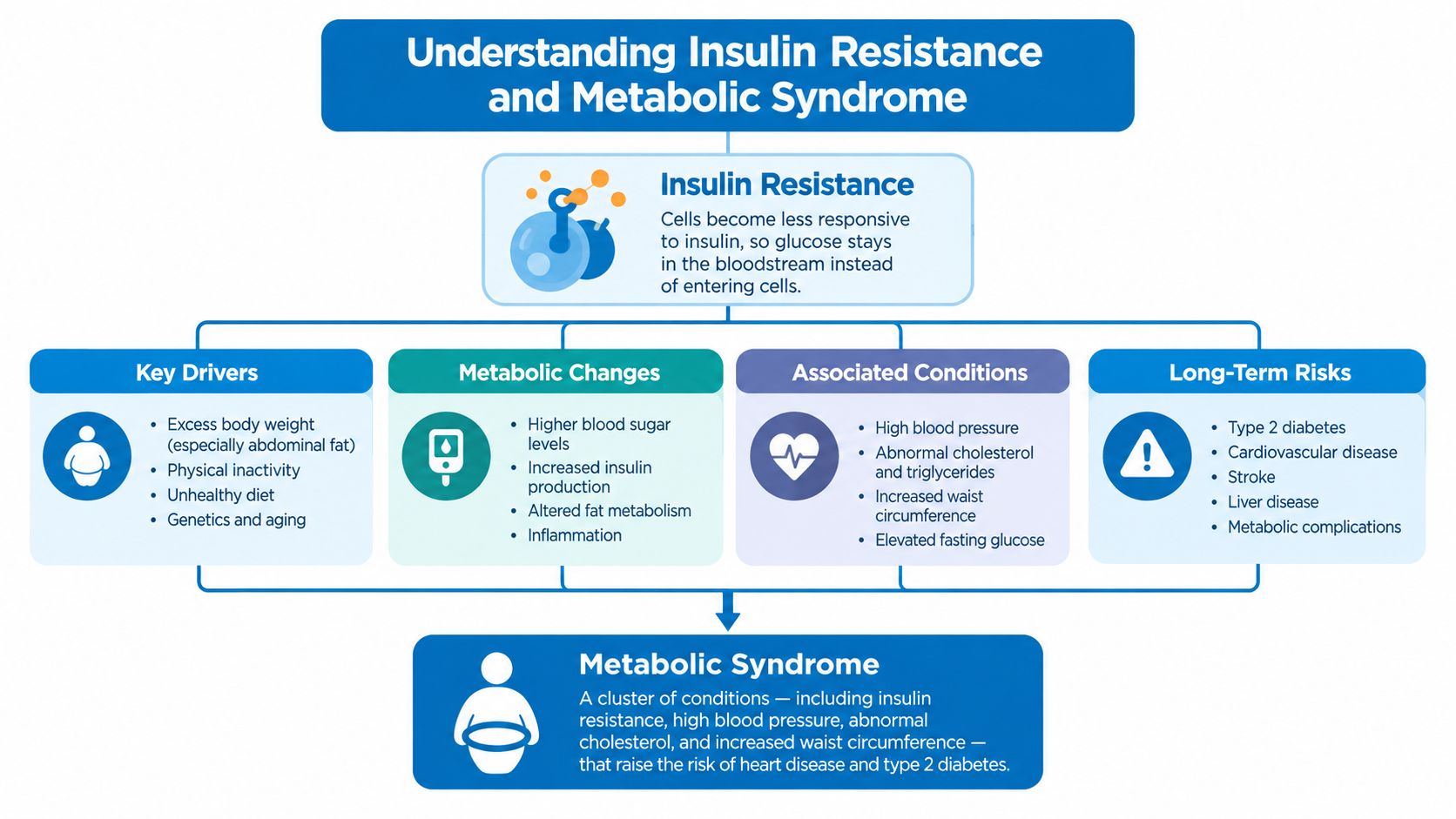
For a plain-language explanation of the condition, see what insulin resistance is and why it matters. A provider can then determine whether medication is appropriate, which labs need attention, and whether symptoms such as fatigue or changing body composition point to another issue.
Why Weight Loss Reverses Insulin Resistance
Weight loss and insulin sensitivity are closely connected. As excess body weight decreases, the body may handle insulin more effectively, which can support healthier glucose regulation and reduce some of the metabolic strain associated with obesity.
A 2025 review of progressive weight-loss effects found that remission of insulin resistance and hyperinsulinemia increased as weight loss increased, reaching 100% when weight loss exceeded 30% in the reviewed population. That finding doesn't mean every patient needs or should pursue that amount of weight loss. It does show why treatment plans focus on meaningful metabolic improvement rather than a cosmetic target alone. The review is available through this peer-reviewed analysis of weight loss and insulin resistance.
Medication can support this process by making weight loss more achievable. In a 2026 systematic review of 16 placebo-controlled trials , 78.54% of participants using GLP-1-based medicines lost weight compared with 26.53% receiving placebo, and the pooled odds ratio for achieving weight loss was 11.37 . Those results describe groups in clinical trials, not a guarantee for an individual patient.
The reasoning is straightforward:
- Insulin resistance can complicate appetite and energy regulation.
- Medication may help some patients reduce weight more effectively.
- Weight reduction can improve insulin resistance and related metabolic markers.
- Ongoing monitoring determines whether the treatment is helping the patient, not just lowering scale weight.
Semaglutide, tirzepatide, and liraglutide are now central evidence-based anti-obesity medicines associated with insulin-resistance improvement. Their FDA approvals for weight management occurred in 2014, 2021, and 2023 , respectively, and trial outcomes differ by medication, dose, and patient population, as summarized in the peer-reviewed review of anti-obesity medicines.
Comparing Metformin and GLP-1 Medications
A patient may take metformin and hear about GLP-1 medicines during the same visit, yet they serve different purposes. Metformin mainly improves insulin sensitivity and usually has a modest effect on weight. GLP-1-based medicines target appetite and weight management more directly, so clinical trials generally show larger reductions.
| Medication | Class | Average weight effect | Key benefit |
|---|---|---|---|
| Metformin | Insulin-sensitizing medication | Mean BMI reduction of −0.98 kg/m² overall in a 21-trial obesity meta-analysis | Long-established option with modest weight effects |
| Liraglutide | GLP-1 receptor agonist | About 5% mean weight loss in a landmark trial population without diabetes | Daily GLP-1 treatment with weight-management evidence |
| Semaglutide | GLP-1 receptor agonist | About 12% in the reviewed trial population without diabetes | Larger average weight loss with weekly treatment |
| Tirzepatide | Dual GIP and GLP-1 receptor agonist | About 18% in the reviewed trial population without diabetes | Highest average weight-loss result among the compared agents |
The metformin result is a BMI measure, not a direct kilogram or percentage estimate. Its effect also differs across patient groups. A meta-analysis found a mean BMI reduction of −0.98 kg/m² , with the strongest effect in simple obesity at −1.31 kg/m² . In the Diabetes Prevention Program, average weight loss was 2.1 kg over 2.8 years , compared with 0.1 kg with placebo. A separate 2024 review found metformin reduced BMI by 0.56 kg/m² compared with placebo at doses from 500 to 2550 mg per day , with a 2.53% BMI reduction around 1700 mg per day . These findings come from the metformin obesity meta-analysis and the 2024 systematic review of metformin and weight.
GLP-1 medicines show a larger average effect in the cited trials. Semaglutide produced an average body-weight reduction of 14.9% at 68 weeks , compared with 2.4% for placebo in STEP 1, according to the American College of Cardiology summary. In a randomized comparison, semaglutide produced a mean change of −15.8% , compared with −6.4% for liraglutide at 68 weeks, as reported in JAMA.
For practical education about treatment choices and the future of weight loss medications, patients can review reliable educational material and discuss questions with a clinician. Pause Medical also provides information about weight-loss medication and GLP-1 support. The right choice depends on diabetes status, weight-related conditions, gastrointestinal tolerance, treatment goals, contraindications, and the monitoring needed over time. A personalized plan should also ask what happens after initial loss, including how treatment will be adjusted or maintained.
Addressing Non-Response and Body Composition
A prescription isn't a promise that every patient will respond in the same way. In clinical trials, between 9% and one-third of participants lost less than 5% of body weight , depending on the drug and dose, according to reporting on GLP-1 non-response. That range matters because a patient may have insulin resistance and still experience limited weight loss from a particular medicine.
Non-response can result from many factors. The dose may not be tolerated or optimized, the diagnosis may be incomplete, another medication may promote weight gain, or the treatment may not match the patient's metabolic profile. A clinician may need to review adherence, nutrition, sleep, activity, side effects, laboratory findings, and other possible causes before deciding whether to continue, adjust, or change treatment.
The scale also doesn't reveal what kind of weight was lost. Kaiser Permanente reporting has highlighted that up to 40% of weight lost on GLP-1 medicines may be lean muscle mass , while also discussing severe gastrointestinal problems, pancreatitis, and possible mood-related harms. The Kaiser Permanente discussion of GLP-1 risks and muscle loss should be reviewed alongside individualized medical advice.
A successful plan tracks metabolic health and body composition, not only pounds.
That means resistance exercise, adequate protein, symptom review, and appropriate follow-up deserve attention. Body composition analysis and why it matters can help patients and providers ask a better question: Is the treatment reducing harmful fat while preserving strength and function?
The Reality of Long-Term Maintenance
Starting medication is only the first decision. Patients also need to understand what may happen if treatment is stopped, whether maintenance treatment is appropriate, and how lifestyle support will continue after the initial weight-loss phase.
A 2026 analysis of more than 9,000 patients reported that people who stopped semaglutide or tirzepatide regained nearly 2 pounds per month . A separate 2026 review found that roughly two-thirds of lost weight was regained within one year after stopping GLP-1 therapy. These findings were summarized by Stanford Medicine's review of GLP-1 use, safety, and weight regain.
That doesn't mean stopping is always wrong. It means discontinuation should be planned rather than assumed. Some patients may need ongoing treatment, while others may transition to another medication or a structured maintenance plan. A provider should consider appetite changes, glucose control, weight trajectory, side effects, access, pregnancy-related considerations, and the patient's preferences.
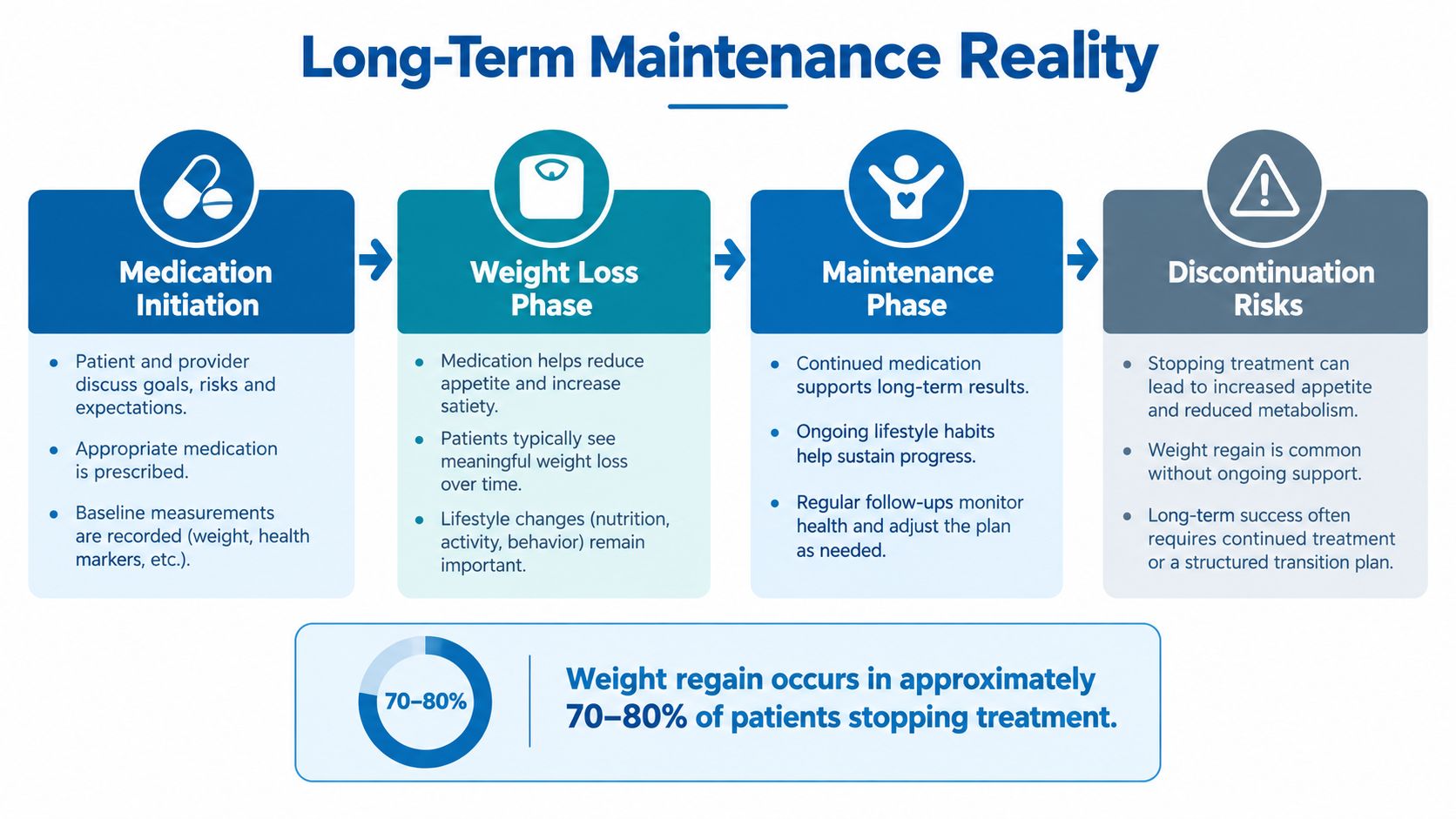
A maintenance conversation should address:
- Medication planning: Whether the same treatment, a different agent, or no medication is appropriate
- Lifestyle support: How meals, resistance training, sleep, and stress management will continue
- Early warning signs: Rising hunger, worsening glucose markers, fatigue, or rapid regain
- Follow-up: When the next clinical review and laboratory evaluation should occur
Patients can explore medical weight management and lasting results before making changes. Never stop or taper a prescription without speaking with the clinician who manages it.
The Pause Medical Approach to Personalized Care
Online medication access can seem simple, but insulin resistance and weight gain rarely have a simple explanation. A responsible evaluation considers the patient's medical history, symptoms, current medicines, metabolic markers, body composition, and treatment goals before recommending an option.
Pause Medical offers personalized evaluation for insulin resistance, medically supervised weight loss, GLP-1 medication support, hormone replacement therapy, and disease management in Mississippi. Its care model includes scheduling, a provider evaluation, an individualized plan, and ongoing support. That structure gives patients a place to discuss side effects, response, nutrition, muscle preservation, and long-term maintenance instead of making medication decisions alone.
Hormonal symptoms may also matter. Menopause, andropause, low energy, sleep issues, mood changes, and reduced libido can overlap with weight and metabolic concerns, but hormone therapy isn't a substitute for appropriate metabolic evaluation. A clinician can determine whether hormone replacement therapy, testosterone therapy, bioidentical hormones, weight-loss medication, or another approach belongs in the plan.
Pause Medical's guide to a personalized weight-loss plan offers additional context for patients who want a structured approach. The important principle is alignment. The medication, monitoring schedule, nutrition strategy, and activity plan should fit the patient's health status and daily life.
Taking Your Next Step Toward Better Health
If you're concerned about insulin resistance, begin with information rather than self-blame. Write down your weight history, symptoms, current medications, previous diet attempts, sleep concerns, and any recent laboratory results. Bring that information to a qualified provider so the evaluation can focus on patterns instead of a single appointment snapshot.
Your consultation may include a review of:
- Metabolic markers: Glucose-related results, lipids, blood pressure, and waist measurement
- Treatment history: What you've tried, what helped, and what caused side effects
- Body composition: Whether weight changes are affecting muscle as well as fat
- Daily barriers: Work schedule, food access, stress, sleep, mobility, and family responsibilities
- Maintenance preferences: Whether you're considering long-term treatment or eventual discontinuation
Medical weight loss is not a shortcut around healthy habits. It's a supervised tool that may help address the biological barriers making those habits difficult to sustain. The best plan also leaves room to adjust when a medication isn't effective, isn't tolerated, or no longer matches your goals.
Mississippi patients can schedule consultations with Pause Medical in locations including Oxford, Meridian, Tupelo, Flowood-Jackson, and Starkville . The process is designed to move from scheduling to provider evaluation and personalized planning with clear education along the way. You don't have to decide on an insulin resistance medication for weight loss before your appointment. Your role is to bring your questions and your experience.
Pause Medical offers medically supervised weight loss, GLP-1 support, hormone replacement therapy, and disease management aligned with Mississippi patients' goals and health needs. Visit Pause Medical to schedule a consultation and discuss a safe, personalized plan for improving insulin resistance and long-term metabolic health.