How to Lose Belly Fat After Menopause: A Medically Guided Plan
Losing belly fat after menopause isn't about trying harder—it's about trying smarter. You need a strategy that directly counters the hormonal shifts that are literally reprogramming your body's fat storage system. For many women, even the most dedicated efforts with diet and exercise fall short, leading to immense frustration. This is because the root cause is biological, not a lack of willpower.
An effective, evidence-based plan often integrates several key components: strength training to rebuild your metabolism, a diet rich in protein and fiber to manage blood sugar and hunger, and smart stress management to cool down cortisol.
However, for many women, the real breakthrough happens when they address the hormonal root cause with medically supervised options like hormone therapy or medical weight loss. Under the guidance of a board-certified provider, these treatments can be the missing piece of the puzzle, allowing your lifestyle efforts to finally deliver the results you deserve.
Why Does Belly Fat Accumulate After Menopause?
If you feel like your body staged a coup overnight the moment perimenopause or menopause hit, you're not alone. We hear it from our patients all the time: the same diet and exercise routine that kept them in shape for decades suddenly stops working, and a stubborn roll of fat appears around their middle. This is an incredibly common, shared experience, and it has a clear biological explanation. It is absolutely not a personal failure.
That "menopause belly" isn't just a sign of getting older. It's a direct result of powerful hormonal changes, with the most significant being the nosedive your estrogen levels take. While menopause itself doesn't automatically make you gain weight, it fundamentally changes where your body decides to store fat.
The Great Hormonal Shift: From "Pear" to "Apple"
Before menopause, your body was wired by estrogen to store fat on your hips, buttocks, and thighs—creating the classic "pear" shape. But as estrogen production plummets, your body's internal GPS for fat storage gets a major update. Fat that once would have landed on your lower body now gets rerouted straight to your abdomen.
This isn't just a cosmetic issue. The type of fat you're gaining matters a great deal. There are two kinds of fat in your midsection:
- Subcutaneous Fat: This is the soft, pinchable fat right under your skin. While it can be frustrating, it’s less metabolically harmful.
- Visceral Fat: This is the real danger. It's a "deeper" fat that wraps itself around your internal organs like your liver and intestines. You can't see or pinch it, but it creates a firmer, more protruded belly.
Key Insight: Visceral fat is the true health villain in menopausal weight gain. It’s metabolically active, functioning almost like an organ that pumps out inflammatory compounds, disrupts your hormones, and dramatically increases your risk for serious health conditions like heart disease, type 2 diabetes, and certain cancers.
This isn't just a theory; it's well-documented. Many women notice a major shift in their body composition during menopause, even if the number on the scale doesn't change much. Research shows that women gain an average of 1 pound per year during their midlife transition, and a significant portion of that settles deep in the abdomen as visceral fat. This accumulation is directly linked to a higher risk for hypertension and cardiovascular disease—which is the #1 killer of postmenopausal women. The International Menopause Society provides detailed findings on this critical connection.
Hormonal Culprits and Their Impact on Belly Fat
Several hormones are the key players behind menopausal belly fat. Understanding their roles is the first step in creating a plan that actually works. A board-certified provider can help you decipher what's happening in your body and create a personalized treatment plan to address these root causes.
Here’s a breakdown of the major players:
| Hormonal Change | Impact on the Body | Contribution to Belly Fat |
|---|---|---|
| Decreased Estrogen | Signals the body to completely change its fat storage patterns from the lower body to the midsection. | The primary driver behind fat redistribution, causing it to accumulate in the abdomen and favoring dangerous visceral fat storage. |
| Relatively Higher Testosterone | As estrogen falls, the effects of your existing testosterone become more dominant. | Promotes a more "android" or male-like fat storage pattern, which is concentrated squarely around the belly. |
| Increased Cortisol | Chronic stress, poor sleep, and disruptive hot flashes can all keep cortisol levels chronically elevated. | This "stress hormone" is notorious for signaling the body to store calories as fat, specifically in the abdominal region. |
| Insulin Resistance | Your body's cells become less sensitive to the hormone insulin, which manages blood sugar. | Makes it far easier for the body to convert excess blood sugar into fat (especially visceral fat) instead of burning it for energy. |
When you look at it this way, it becomes clear that the battle against menopausal belly fat isn't about willpower—it's about biology. Recognizing this allows you to stop spinning your wheels with generic advice and shift your focus to a targeted, evidence-based plan that works with your new physiology, not against it.
At Pause Medical, our board-certified experts specialize in integrative medicine approaches that tackle these underlying hormonal issues head-on, helping you finally regain control over your body and your health.
The Science Behind Menopausal Body Changes
If you're finding it harder to manage your weight and notice fat settling around your middle, we want you to know one thing: it's not a failure of willpower. Your body is undergoing a profound biological shift, and understanding the science behind it is the first step toward getting back in control.
It all starts with your metabolism. Many people blame a slowing metabolism on age, but for women in midlife, it's more specific. It's directly tied to sarcopenia, the loss of muscle mass that accelerates during the menopausal transition. Muscle is your body's metabolic engine—it burns calories 24/7. When you lose it, that engine doesn't run as hot, and your natural calorie-burning ability takes a nosedive.
The Visceral Fat Takeover: What the Data Shows
The statistics are staggering and validating. We see that 65.5% of women aged 40-59 and a staggering 73.8% of those over 60 are dealing with abdominal obesity. It’s common for women to gain about 1.5 kg (roughly 3.3 pounds) per year during perimenopause.
But this isn't just about gaining weight. It's about where the fat goes. Your body's entire fat-storage strategy changes, and suddenly, the belly becomes prime real estate. As Dr. Mary Claire Haver explains, this isn't just your imagination; the menopausal belly is a real, hormonally-driven phenomenon.
The most concerning part of this shift is the increase in visceral fat. In postmenopause, visceral fat can double, jumping from 5-8% of your total body fat to as much as 10-20%. Think of this deep-belly fat as an unwanted, metabolically active organ that produces inflammatory substances and drives disease risk.
Insulin Resistance and Cortisol's Role
Another key player in this process is insulin sensitivity. Imagine your cells have tiny doors that insulin unlocks to let sugar in for energy. During menopause, those locks get rusty. Your cells become resistant, forcing your pancreas to work overtime and pump out more insulin to get the message through.
This state, known as insulin resistance, is a direct signal to your body to store any extra sugar as fat—and its favorite storage spot becomes your abdomen. It’s a huge piece of the puzzle when it comes to metabolic syndrome, a condition that significantly raises your risk for heart disease and diabetes. If this sounds familiar, it's so important to consider professional disease state management with a trusted, board-certified provider.
A Board-Certified Provider's Perspective: "We see this every day. Women come to us frustrated, convinced they are doing something wrong. The first thing we do is explain that their body is following a predictable biological script. By understanding the hormonal drivers—estrogen loss, insulin resistance, cortisol spikes—we can build a personalized plan that works with their new physiology instead of fighting a losing battle against it. Our integrative approach addresses the root cause, not just the symptom of weight gain."
The infographic below brings these changes to life, showing exactly what's happening on a larger scale.
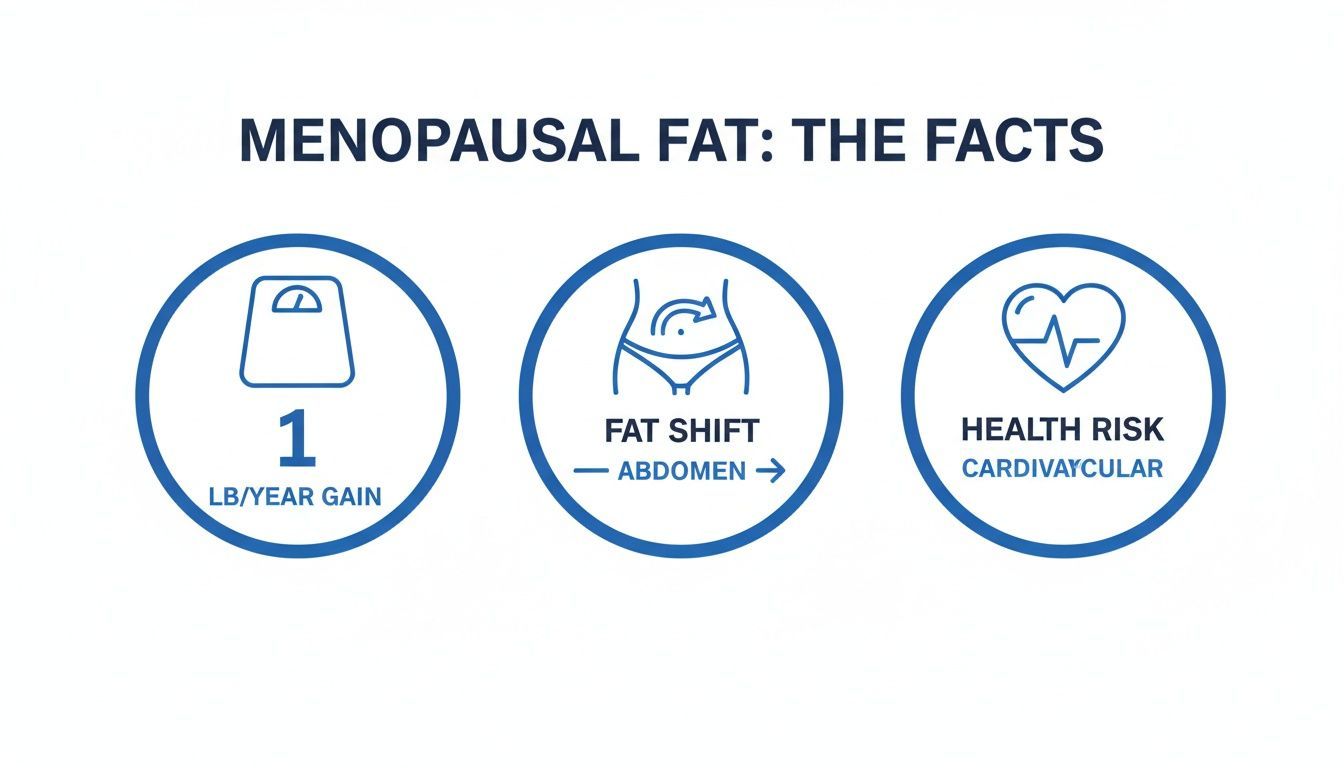
Seeing these statistics shouldn't be discouraging. In fact, it should be empowering. It confirms that what you're experiencing is real, it has a biological basis, and it's shared by millions of women. This trifecta of a slower metabolism, new fat storage patterns, and insulin resistance is what makes losing belly fat after menopause so challenging. But it’s a challenge that can absolutely be met with the right knowledge and a targeted, personalized strategy.
Rethinking Your Plate: Nutrition to Counteract Hormonal Fat
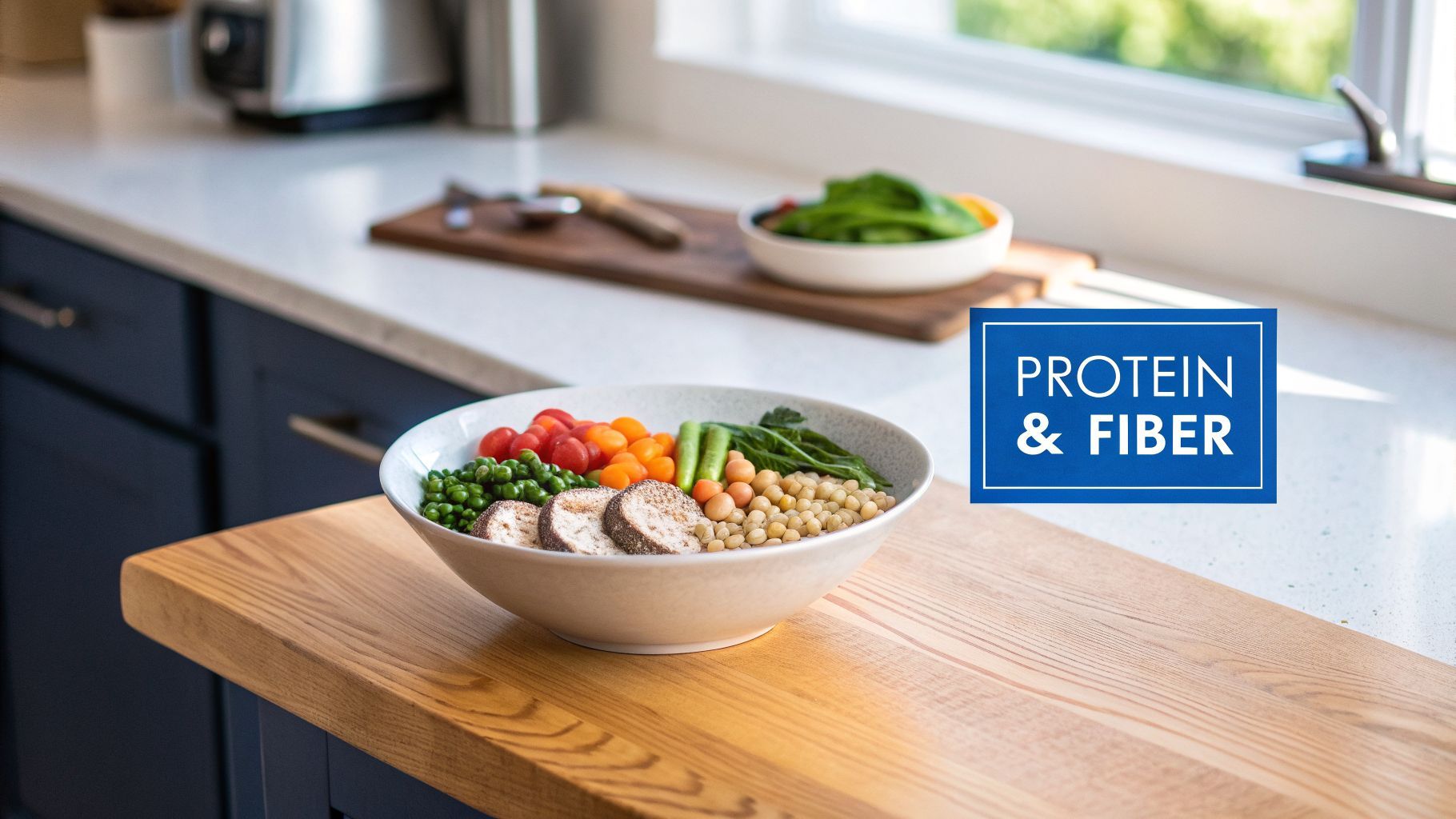
If you're trying to lose belly fat after menopause, you've probably realized that simply "eating less" isn't cutting it anymore. That's because your body is playing by a new set of hormonal rules, and your nutrition strategy must adapt to keep up. This isn't about deprivation; it's about making smart, strategic choices that work with your new physiology.
The goal is to rebalance your plate to fight back against muscle loss, insulin resistance, and low-grade inflammation. To do that, we shift our focus to three key areas: protein, fiber, and anti-inflammatory foods.
Prioritize Protein to Preserve Your Metabolism
Protein becomes your single most important nutrient during and after menopause. The age-related muscle loss known as sarcopenia picks up speed, and since muscle is what burns calories, losing it slows your metabolism to a crawl. Fighting this process is non-negotiable.
Eating enough protein provides the essential building blocks to preserve lean muscle—and even build more with strength training. As a bonus, protein has a high thermic effect of food (TEF), meaning your body burns more calories just digesting it. It also promotes satiety, a huge help in managing cravings and overall calorie intake.
So, how much is enough? A great target for most women in this life stage is 1.2 to 1.6 grams of protein per kilogram of your ideal body weight. For a woman whose goal weight is 150 lbs (68 kg), that's about 82-109 grams of protein per day.
A Common Mistake: Many women try to cram all their protein into dinner. To effectively build and maintain muscle, it's far better to spread your intake evenly throughout the day, aiming for about 25-35 grams with each meal.
Fill Up with Fiber for Blood Sugar Control
Next up is fiber, another crucial ally. As insulin resistance becomes more of a factor, keeping your blood sugar stable is essential for preventing your body from storing energy as visceral fat. Fiber, especially the soluble kind, slows down sugar absorption and helps your body use insulin more effectively.
This dietary hero also makes you feel full and satisfied, which naturally helps you manage your calorie intake without constant hunger. Aim for a daily intake of at least 30-35 grams of fiber.
Here are some simple ways to hit that number:
- Swap your usual breakfast for a bowl of oatmeal or chia seed pudding.
- Toss chickpeas or lentils into your salads and soups.
- Snack on an apple (with the skin!) or a handful of raspberries.
- Choose whole grains like quinoa or farro instead of white rice or pasta.
Fight Fat with Anti-Inflammatory Foods
That stubborn visceral fat isn't just sitting there; it's metabolically active, churning out inflammatory compounds that create a vicious cycle. More inflammation can lead to more fat storage, which in turn creates more inflammation. You can help break this cycle by loading up your diet with foods that cool things down.
An anti-inflammatory diet is full of antioxidants and healthy fats that combat the chronic, low-grade inflammation linked not just to belly fat, but to long-term health risks as well.
Menopausal Power Foods to Add to Your Plate:
| Food Category | Examples | Why They Help |
|---|---|---|
| Lean Proteins | Chicken breast, turkey, fish, Greek yogurt, tofu, lentils | Provides essential amino acids to build and preserve metabolically active muscle mass. |
| Fatty Fish | Salmon, mackerel, sardines | Rich in omega-3 fatty acids, powerful anti-inflammatory agents that help reduce visceral fat. |
| Leafy Greens | Spinach, kale, Swiss chard | Packed with fiber, vitamins, and antioxidants to combat inflammation and support overall health. |
| Cruciferous Veggies | Broccoli, cauliflower, Brussels sprouts | High in fiber and compounds that support healthy hormone metabolism. |
| Berries | Blueberries, strawberries, raspberries | Low in sugar and loaded with antioxidants (anthocyanins) that fight oxidative stress. |
| Healthy Fats | Avocado, olive oil, nuts, seeds | Helps with satiety, hormone production, and provides anti-inflammatory benefits. |
Making these nutritional shifts helps create a biological environment that discourages fat storage and supports a leaner, stronger body. While diet is a powerful tool, some women find that targeted nutrients provide extra support. You can learn more about high-quality nutritional supplements for menopausal health designed to complement a healthy diet. A personalized plan from a board-certified provider is the best way to integrate these strategies for maximum effect.
How to Exercise for Menopausal Belly Fat

Many women we work with believe that losing belly fat after menopause means endless hours on the treadmill and a thousand crunches a day. It’s an old-school approach that, frankly, doesn't work. It often just leads to burnout, injury, and frustration because it ignores the hormonal shifts that have changed the game.
To effectively target that stubborn midsection fat, you need to exercise smarter. The most effective approach combines three specific types of movement, each designed to counteract the unique changes happening in your menopausal body.
Rebuild Your Metabolism with Strength Training
If you take away only one thing, let it be this: strength training is non-negotiable during and after menopause. It's your number one tool for fighting back against sarcopenia—the natural (and hormonally accelerated) muscle loss that tanks your metabolism.
Think of muscle as your body’s metabolic furnace. The more lean muscle you have, the more calories you burn around the clock, even at rest. Building that muscle also improves insulin sensitivity, which is key to telling your body to stop storing fat and start burning it.
This isn't about becoming a bodybuilder. It's about building a strong, capable, and metabolically active body.
How to Get Started:
- Focus on Compound Exercises: Prioritize multi-joint movements like squats, lunges, deadlifts, push-ups, and overhead presses. They work multiple muscle groups at once, giving you the best metabolic return on your time.
- Be Consistent: Aim for two to three 30-minute sessions per week. Schedule them on non-consecutive days to give your muscles time to repair and grow stronger.
- Practice Progressive Overload: To keep making progress, you have to consistently challenge your muscles. This means gradually making things a little harder over time—by adding more weight, doing one more repetition, or shortening your rest periods.
Don't be intimidated if you're a complete beginner. You can start with just your body weight. As you get stronger, introduce resistance bands or light dumbbells. The goal is consistent, challenging effort.
Target Visceral Fat with HIIT
While a nice long walk is great for your health, High-Intensity Interval Training (HIIT) is uniquely powerful for burning the dangerous visceral fat that settles deep in your abdomen. HIIT involves short, all-out bursts of effort followed by brief periods of rest.
What makes HIIT so effective is its ability to rapidly improve insulin sensitivity and torch a massive number of calories in a very short workout. In fact, studies show that for postmenopausal women, HIIT can be more effective at reducing abdominal fat than longer, moderate-paced cardio sessions.
Here’s what a HIIT session could look like on a stationary bike:
- Warm up for 5 minutes at a relaxed pace.
- Go all out—pedal as fast and hard as you can—for 30 seconds.
- Recover by pedaling slowly for 60 seconds.
- Repeat that cycle 8-10 times.
- Cool down for 5 minutes.
You can apply this principle to almost any activity: running sprints, swimming laps, or doing bodyweight moves like burpees or jumping jacks. Just one or two HIIT sessions a week is plenty.
Calm Cortisol with Restorative Movement
The final piece of the puzzle is the one most people skip: managing stress. Chronic stress jacks up your cortisol levels, and cortisol is the hormone that tells your body to store fat around your middle.
Even "good" stress from intense exercise needs to be balanced. That's where restorative activities come in.
Activities like yoga, gentle stretching, tai chi, or simply taking a quiet walk in nature can work wonders for lowering cortisol. This helps you sleep better and calms the hormonal signals that drive belly fat storage.
A Board-Certified Provider's Perspective: "I often tell my patients that their workout routine isn't complete without restorative activities. A woman can be diligent with strength training and HIIT, but if her cortisol is chronically high from stress and poor sleep, her body will fight her every step of the way. We emphasize that prioritizing a 20-minute walk or a gentle yoga session is just as important for fat loss as lifting weights."
A well-rounded exercise plan is a powerful tool. But if you’ve put these lifestyle changes in place and still feel stuck, it may be time for more support. A medically supervised weight loss program can add the metabolic support you need to finally see results, creating a personalized plan that truly understands the physiology of menopause.
The Overlooked Role Of Sleep And Stress

You can have the perfect diet and exercise plan, but if you’re ignoring sleep and stress, you're fighting for your health with one arm tied behind your back. We have seen it time and again with our patients: this is often the missing piece of the puzzle for so many women navigating menopause.
Chronic stress and poor sleep create a hormonal firestorm that directly encourages your body to store belly fat. When you’re stressed or sleep-deprived, your body defaults to survival mode and pumps out cortisol, our primary stress hormone. High cortisol levels are a biological command telling your body to hoard energy as fat—and its favorite storage spot is right around your abdomen.
The chaos doesn't stop there. A lack of sleep also throws your appetite-regulating hormones out of whack. It cranks up ghrelin (the "I'm hungry" hormone) and suppresses leptin (the "I'm full" hormone). This double-whammy leaves you fighting intense cravings for sugary, high-fat foods while feeling hungrier than usual, and your body is primed to store any extra calories as visceral fat.
Taming The Stress Hormone Cortisol
Getting a handle on your stress is a non-negotiable strategy for losing belly fat after menopause. When cortisol is chronically elevated, your body is biologically programmed to resist fat loss. The encouraging part is that small, consistent daily practices can make a profound impact.
Techniques like mindfulness, meditation, and simple deep breathing exercises are proven to lower cortisol. In fact, just five minutes of focused, slow breathing can shift your body out of its "fight-or-flight" state and into a calmer "rest-and-digest" mode.
A Real-World Scenario: A patient came to us feeling deeply frustrated. She was diligent with her diet and workouts but couldn't get the scale to budge, especially around her middle. We dug deeper and discovered she was under immense pressure at work and sleeping horribly. We had her start a 10-minute morning meditation and add a short walk after lunch. Within a month, she felt calmer, her sleep improved, and the fat around her waist finally started to decrease. This is a perfect example of our integrative approach—addressing the root cause for real results.
Reclaiming Your Sleep From Menopause
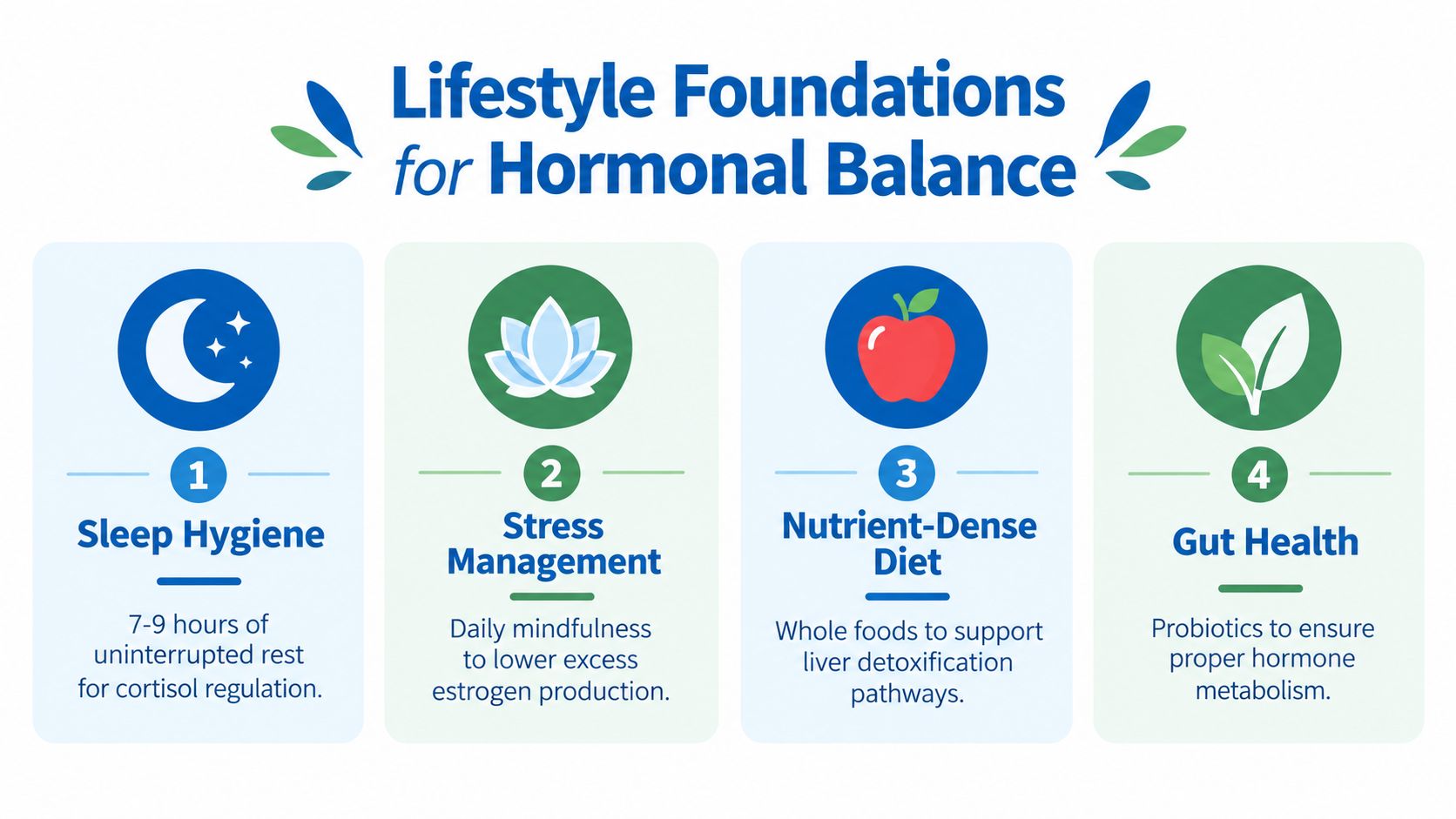
Menopause itself can feel like a direct assault on a good night's rest. Between night sweats, anxiety, and sleep disturbances, getting the recommended 7-9 hours of quality sleep can feel like a fantasy. But by creating a solid sleep routine, you can regain a surprising amount of control.
Making sleep a priority is one of the most powerful things you can do for hormonal balance. A well-rested body is far more efficient at managing blood sugar, controlling appetite, and keeping cortisol in check.
Here are a few practical strategies to get started tonight:
- Create a Cool Oasis: Keep your bedroom cool, dark, and quiet. Since night sweats are often triggered by heat, lowering the thermostat and using breathable bedding can be a game-changer.
- Implement a "Power-Down" Hour: For the last hour before bed, shut down all screens. The blue light from phones, tablets, and TVs actively suppresses melatonin—the hormone that signals sleep. Try reading a book, taking a warm bath, or listening to calming music instead.
- Stick to a Schedule: Aim to go to bed and wake up around the same time every day, even on weekends. This reinforces your body’s natural sleep-wake cycle, making it easier to fall asleep and stay asleep.
Tackling sleep and stress is fundamental not only to your weight management goals but to your overall health and well-being. For a more comprehensive look at creating this kind of balanced lifestyle, you can explore our approach to preventative wellness solutions. A board-certified provider at Pause Medical can work with you to build a personalized plan that addresses these root causes, ensuring your efforts are finally rewarded.
When It’s Time to Look Beyond Diet and Exercise
You’ve been doing everything "right." You’re eating clean, you’re committed to your workouts, you’re managing your stress... but that stubborn belly fat just won't budge. If this sounds familiar, we want you to hear something loud and clear: This is not a personal failure.
It’s a sign that your body’s underlying biology has shifted so dramatically that lifestyle changes alone aren't enough. When you’ve put in the work and still feel stuck, it’s not time to give up; it’s time to get targeted, medical support. This is where medically supervised options can become a complete game-changer.
Getting to the Root Cause with Hormone Replacement Therapy
We often think of Hormone Replacement Therapy (HRT) for hot flashes and night sweats, and it is highly effective for those symptoms. But its role goes much deeper, right down to the metabolic reasons behind menopausal weight gain. Restoring estrogen can directly counter your body's new hormonal programming to store fat around your midsection.
The research here is compelling. Postmenopause often triggers a body composition crisis. Even in women with a "normal" BMI, we see lean muscle mass decline as abdominal fat takes over. One pivotal study showed that women with a normal weight saw their body fat jump from 24.8% to 28.8% after menopause, with a significant increase in visceral fat. This isn't random; the loss of estrogen actually ramps up an enzyme that specifically promotes belly fat. You can read more about the study on body composition changes here.
A Board-Certified Provider's Perspective: "We see HRT as a way to re-establish metabolic equilibrium. By carefully restoring estrogen to premenopausal levels with bioidentical hormones, we can often stop the accumulation of visceral fat in its tracks. It gives a woman's body a fighting chance to actually respond to her healthy lifestyle efforts, addressing the root hormonal cause of the problem."
By addressing the estrogen deficiency, HRT helps your diet and exercise efforts finally start working again. It helps press the reset button on your body's fat-storage signals, making it easier not only to lose abdominal fat but to keep it off. You can learn more about how a personalized hormone therapy plan can become the foundation of your wellness strategy.
Advanced Support with Medical Weight-Loss Programs
For some women, the metabolic slowdown and insulin resistance are so deeply entrenched that even HRT isn't quite enough. This is especially true if significant weight has already been gained. In these cases, medical weight-loss programs, especially those that include medications like GLP-1 agonists, can provide the necessary support.
GLP-1s (glucagon-like peptide-1 agonists) like Semaglutide and Tirzepatide are powerful metabolic tools. They work by:
- Improving Insulin Sensitivity: They help your body use blood sugar more efficiently, which dials down the signal to store it as fat.
- Slowing Digestion & Reducing Appetite: They help you feel fuller for longer, a huge help for managing appetite and reducing calorie intake without feeling deprived.
- Targeting Visceral Fat: Studies have shown that these medications are particularly effective at reducing the dangerous, inflammatory fat wrapped around your internal organs.
What’s really exciting is the synergy we’re seeing when HRT and GLP-1s are combined. A 2024 study found that postmenopausal women using both treatments lost substantially more weight than those on a GLP-1 medication alone. It’s a true two-pronged attack: HRT corrects the hormonal signals telling your body to store belly fat, while the GLP-1 provides powerful metabolic support to accelerate the loss.
The Power of a Personalized, Integrative Plan
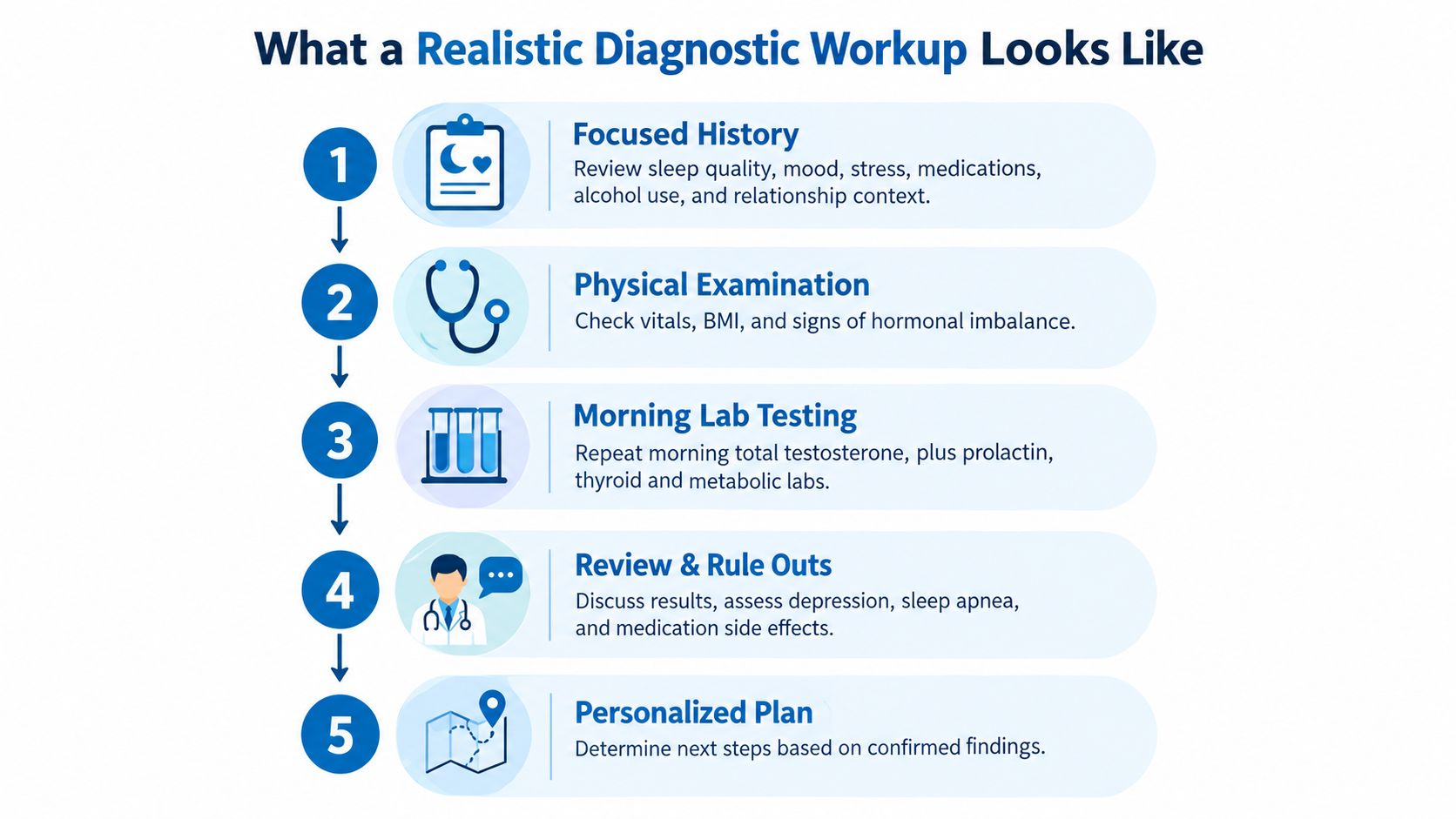
Embarking on any medical treatment, whether it’s HRT or a medical weight-loss program, must be done under the care of a board-certified expert. A specialist in this field will start with a thorough evaluation and comprehensive lab work. This is the only way to create a plan that is safe, effective, and tailored specifically to your unique biology and health history.
At Pause Medical, we don’t just treat symptoms. We build an integrative plan that gets to the root cause, ensuring that any medication is part of a holistic strategy for your long-term health and vitality. Our approach combines evidence-based medicine with personalized lifestyle guidance to empower you on your health journey.
Frequently Asked Questions (FAQs)
Q: Is it really possible to lose belly fat after menopause?
A: Absolutely. While it is more challenging due to hormonal shifts, it is entirely possible with a targeted strategy. Success requires addressing the root causes: rebuilding muscle through strength training, eating a protein- and fiber-rich diet, managing cortisol through stress reduction, and, for many women, correcting the underlying hormone imbalances with medical support like HRT.
Q: Can I just do crunches to lose belly fat?
A: No, you cannot spot-reduce fat. Crunches will strengthen your abdominal muscles, but they won't burn the visceral or subcutaneous fat covering them. A comprehensive approach that includes total-body strength training, HIIT, and a proper diet is necessary to reduce overall body fat, including from your midsection.
Q: What is the first step if I think I need medical help?
A: The first step is to schedule a consultation with a board-certified medical provider who specializes in menopause and metabolic health. At Pause Medical, our process begins with a comprehensive health review and advanced lab testing to understand your unique hormonal and metabolic profile. This allows us to create a truly personalized and effective treatment plan for you.
If you’re tired of the frustration and ready for a personalized plan that addresses the real reasons behind menopausal belly fat, Pause Medical is here to guide you. Our board-certified providers specialize in creating customized, integrative treatment plans that may include hormone therapy and medical weight loss to help you reclaim your health. Schedule your consultation today to get started.
Disclaimer:
This article is for informational purposes only and does not constitute medical advice. The content is not intended to be a substitute for professional medical advice, diagnosis, or treatment. Always seek the advice of your physician or other qualified health provider with any questions you may have regarding a medical condition. Never disregard professional medical advice or delay in seeking it because of something you have read in this article. The use of any information provided in this article is solely at your own risk.