How to Manage Hot Flashes Naturally: An Evidence-Based Guide
If you’re looking for how to manage hot flashes naturally, the first step is understanding what you’re up against. These intense surges of heat are a direct result of fluctuating estrogen levels, which disrupt your body's internal thermostat—the hypothalamus. The good news is that with smart lifestyle adjustments, evidence-based dietary changes, and stress management, you can often dial down their frequency and intensity. However, when natural methods aren't enough, it's crucial to know that powerful, medically-supervised options are available.
At Pause Medical, our board-certified providers are committed to patient education and creating personalized, integrative treatment plans. We understand how disruptive symptoms like hot flashes can be, and our goal is to help you find lasting relief by addressing the root cause, not just the symptoms.
Understanding Why Hot Flashes Happen

That sudden, creeping wave of heat that blooms across your chest, neck, and face is an incredibly common part of the menopausal journey. Yet, when it happens during an important meeting or jolts you awake at 2 a.m., it feels anything but normal. It's a frustrating, and sometimes embarrassing, experience that up to 80% of women go through during perimenopause and menopause.
So what's really going on? During this transition, your ovaries begin producing estrogen more erratically, and eventually, those levels decline significantly. Your brain's hypothalamus, which acts as your body's command center for temperature regulation, gets confused by this hormonal shift. It becomes overly sensitive to even minor changes in your core temperature, mistakenly believing you're overheating and triggering a full-blown "flash" to cool you down—fast.
The Science Behind The Sudden Heat
Think of it like having an overly sensitive thermostat in your house. The slightest change in temperature makes it blast the air conditioning at full power. That’s essentially what your body is doing. This emergency cool-down response sets off a cascade of physiological events:
- A sudden, intense feeling of heat that usually starts in the chest and spreads upward.
- A flushed, red appearance as blood vessels near your skin's surface dilate to release heat.
- Profuse sweating, which is your body’s most effective way to cool down.
- A racing heart or palpitations as your system goes on high alert.
Then, just as quickly as it began, the flash subsides, often leaving you feeling chilled from the sweat. When this cycle happens at night, we call them night sweats—a notorious culprit for ruining a good night's sleep and impacting your daily energy and mood.
Understanding the 'why' behind your hot flashes is the first, most empowering step toward regaining control. It transforms the experience from a mysterious attack into a physiological process you can learn to manage.
This guide is designed to give you evidence-based, natural strategies to cool things down and reclaim your comfort. But it’s also important to know when to ask for help. If your symptoms are consistently disrupting your life, seeking professional guidance is a sign of strength. Our board-certified providers at Pause Medical are here to help you explore a personalized plan and find lasting total wellness with compassionate, expert care.
Make Your Plate a Tool for Cooling Down

The old saying "eat to beat the heat" holds a lot of truth when it comes to managing hot flashes. What you choose to put on your plate can genuinely influence your body's internal thermostat. This isn't about following a strict, joyless diet; it’s about making smart, evidence-based swaps and understanding how to make your food work for you.
Medical research highlights the significant impact of diet on menopausal symptoms. A large review of 66 different studies found that while up to 46% of women in North America deal with these vasomotor symptoms (hot flashes), the rate in Japan is just 18%. Experts believe this dramatic difference is strongly linked to diet, especially the soy-rich foods common in Japanese cuisine.
Add Phytoestrogens to Your Diet
One of the most effective nutritional strategies is boosting your intake of phytoestrogens. These are plant-derived compounds that have a weak, estrogen-like effect on the body. They can help create a buffer against the sharp hormonal drops that are the root cause of hot flashes.
Think of them as your dietary allies. The most powerful ones are isoflavones, found in foods like:
- Soy Products: Tofu, edamame, and soy milk are fantastic sources. Research shows that getting around 50-100mg of isoflavones each day can significantly reduce the frequency and severity of hot flashes.
- Flaxseeds: These little powerhouses contain another type of phytoestrogen called lignans. Just two tablespoons of ground flaxseed (your body can't absorb the nutrients from whole seeds) sprinkled over oatmeal or in a smoothie is a great start.
- Chickpeas and Lentils: Incredibly versatile, you can toss them into salads, soups, or stews for a healthy dose of both phytoestrogens and fiber.
When you incorporate these foods, you're not just changing your menu. You're giving your body the natural tools it needs to find a better, more stable hormonal balance, addressing the root cause from within.
Know Your Personal Triggers
Just as some foods can cool you down, others can act like throwing gasoline on a fire. Learning to spot your personal triggers is one of the most empowering things you can do. While everyone is different, a few usual suspects are known for cranking up the heat.
For a quick reference, here’s a look at some common foods that can either trigger a hot flash or help soothe your system.
Hot Flash Trigger Foods vs Soothing Foods
| Food Category | Potential Trigger Foods (Limit or Avoid) | Soothing Foods (Incorporate More) |
|---|---|---|
| Spices & Seasonings | Hot peppers (jalapeños, habaneros), cayenne, spicy curries | "Cooling" herbs like mint, parsley, and cilantro |
| Beverages | Caffeinated coffee and tea, alcohol (especially red wine), sugary sodas | Cool water, herbal teas (peppermint, chamomile), unsweetened soy milk |
| Protein Sources | Fatty, processed meats (sausage, bacon) | Plant-based proteins (tofu, edamame, lentils), lean poultry, cold-water fish |
| Protein | Forms the flexible collagen matrix of bone. | 1.0-1.2 g/kg of body weight |
| Potassium | Neutralizes acids that can deplete bone calcium. | 2,600-3,400 mg |
| Fats & Sugars | High-sugar desserts, fried foods, processed snacks | Healthy fats from avocados, nuts, and seeds (especially flaxseeds) |
| Fruits & Vegetables | (Generally well-tolerated) | Water-rich options like cucumber, watermelon, celery, and leafy greens |
This table is a starting point. The best way to identify your specific triggers is to keep a simple journal for a week or two, noting what you ate and when a hot flash occurred. You might be surprised by the patterns you find.
Managing weight is also a critical piece of the puzzle, as excess body fat can exacerbate hormonal imbalances and worsen hot flashes. A diet centered on whole foods, fiber, and lean protein supports both goals. If you feel like you're doing everything right but still aren't seeing results, we can help. Our team creates a personalized medical weight loss plan that integrates with your overall health strategy, often using advanced options like GLP-1 medications under board-certified medical oversight.
Building a Cooler Lifestyle and a Calmer Mind

What you eat is only half the battle. Your daily habits and mindset are incredibly powerful tools for managing hot flashes naturally. Think of it as creating a lifestyle that works with your body, not against it, helping to calm the stress response that so often pours gasoline on the fire.
For up to 80% of women in the menopausal transition, hot flashes are an unwelcome reality. But integrating mindful movement and stress management can be a game-changer. For example, studies have shown that women who engage in regular aerobic exercise, even something as simple as brisk walking, report fewer and less severe hot flashes than those who are more sedentary.
Move Your Body to Cool It Down
Regular, moderate exercise does more than keep you fit—it actually helps recalibrate your body's internal thermostat. By consistently getting your heart rate up, you train your system to become much more efficient at handling temperature swings.
This doesn't mean you need to start training for a marathon tomorrow.
A great place to start is with a brisk 30-minute walk about five days a week. It’s a simple, accessible habit that has been proven to improve thermoregulation and can noticeably cut down the frequency of hot flashes over time.
Other fantastic options include:
- Swimming: The cool water offers immediate relief while providing a fantastic full-body workout.
- Cycling: A great low-impact cardio choice, whether you’re hitting the trails or using a stationary bike at home.
- Yoga: This is a powerful two-for-one. It combines physical movement with calming breathwork that directly targets both the physical and mental sides of a hot flash.
Calm Your Mind with In-the-Moment Techniques
It’s no secret that stress is a huge trigger for hot flashes. When we're anxious, our bodies flood with cortisol, a stress hormone that can easily disrupt our already sensitive internal thermostat. Learning to put the brakes on stress is absolutely fundamental to managing hot flashes naturally.
One of the most effective tools we recommend is paced respiration—a simple, mindful breathing technique you can do absolutely anywhere. The second you feel that familiar warmth creeping up your neck, give this a try:
Gently breathe in through your nose for a slow count of five, then breathe out just as slowly through your mouth for another count of five. Continue this slow, even rhythm for a few minutes until you feel the intensity start to fade.
This simple act helps activate your body's parasympathetic nervous system (the "rest and digest" response), directly counteracting the panic signal that often makes a hot flash feel so much worse.
Your breath is a powerful anchor. By focusing on slow, deliberate breathing, you can interrupt the stress-heat cycle and regain a sense of control, even when a hot flash is at its peak.
Make Simple Environmental Adjustments
Sometimes, the simplest changes in your immediate environment can provide the biggest relief. We encourage our patients to think like tactical cooling experts—always be prepared.
- Dress in Layers: Stick to breathable fabrics like cotton, linen, or bamboo. Wearing layers you can easily shed is your first line of defense when a flash hits.
- Optimize Your Bedroom: Keep your room as cool as possible for sleep. A fan to circulate the air is a must, and many women swear by cooling pillows or mattress toppers.
- Carry a Portable Fan: A small, battery-operated or handheld fan can feel like an absolute lifesaver when you're hit with a sudden wave of heat in a meeting or on public transit.
When you start combining these lifestyle habits with the dietary changes we’ve talked about, you create a powerful, multi-layered strategy for taking back control. You can find more practical tips and expert insights on our Pause Medical blog.
Navigating Natural Supplements with Confidence
Walking down the supplement aisle can feel overwhelming. With so many bottles promising relief, it's hard to know what actually works and what’s just hype. Let's look at some of the most-studied natural options for managing hot flashes, examining the science and how to use them safely under medical guidance.
A common misconception is that "natural" always means "safe." These supplements can be quite powerful and may interact with medications or be unsuitable for certain health conditions. That’s why you should always consult with a qualified healthcare provider before starting any new supplement.
A Closer Look at Key Herbal Supplements
A handful of herbs have a solid track record in clinical studies for easing those sudden heat waves. Here are a few that our providers often discuss with patients.
- Black Cohosh: A staple in European medicine for menopause, black cohosh is one of the most-researched herbs for hot flashes. Studies have found that taking
40mg per day may reduce their frequency by as much as
26%. The mechanism is thought to involve its influence on serotonin pathways in the brain, which help regulate body temperature.
- Green Tea Extract: More than just a comforting drink, green tea is loaded with potent antioxidants called catechins. Research suggests that getting around
500mg of catechins daily can lead to a significant reduction in hot flashes. Its anti-inflammatory compounds appear to help stabilize blood vessels, making them less reactive to hormonal shifts.
- Evening Primrose Oil: This oil is rich in gamma-linolenic acid (GLA), a fatty acid that helps the body produce prostaglandins, which are hormone-like substances involved in regulating inflammation. While clinical research is mixed, many women find it helps reduce the
intensity of their hot flashes, even if it doesn't decrease the number.
These symptoms are far from a minor nuisance. A major global survey revealed just how disruptive they are, with women in Europe reporting an average of 4.6 episodes per day and women in the US experiencing 3.8. You can dive deeper into these international findings and see how lifestyle plays a role by reading the full research.
The goal with natural supplements is not to force a dramatic change overnight. It’s about gently supporting your body as it finds a new equilibrium, ideally as part of a comprehensive, medically-supervised plan.
Safety First: Always Seek Medical Guidance
There is no "one-size-fits-all" supplement. Your personal health history—including any medications for conditions like thyroid disorders, high blood pressure, or diabetes—is the most important factor in determining what’s safe and appropriate for you.
Before you buy a single bottle, schedule a consultation. At Pause Medical, our board-certified providers are experts in creating medically supervised, integrative plans. We can help you weigh all your options, from targeted natural support to other advanced therapies. You can see how we approach integrative supplement strategies and what that process looks like under expert medical oversight.
When It’s Time to Consider Medical Support for Hot Flashes
Trying natural remedies is a fantastic first step, and for many, it provides real relief. But what happens when you’ve done everything "right"—you’ve changed your diet, you're managing stress, you're exercising—and the hot flashes just won't quit?
First, know that this isn't a failure. It’s simply a sign that your body's hormonal shifts are significant enough that they require a different level of support. Considering medical options is a powerful, proactive step toward reclaiming your quality of life
.
This decision guide can help you visualize when it might be time to escalate your approach, moving from self-care to seeking professional medical advice.
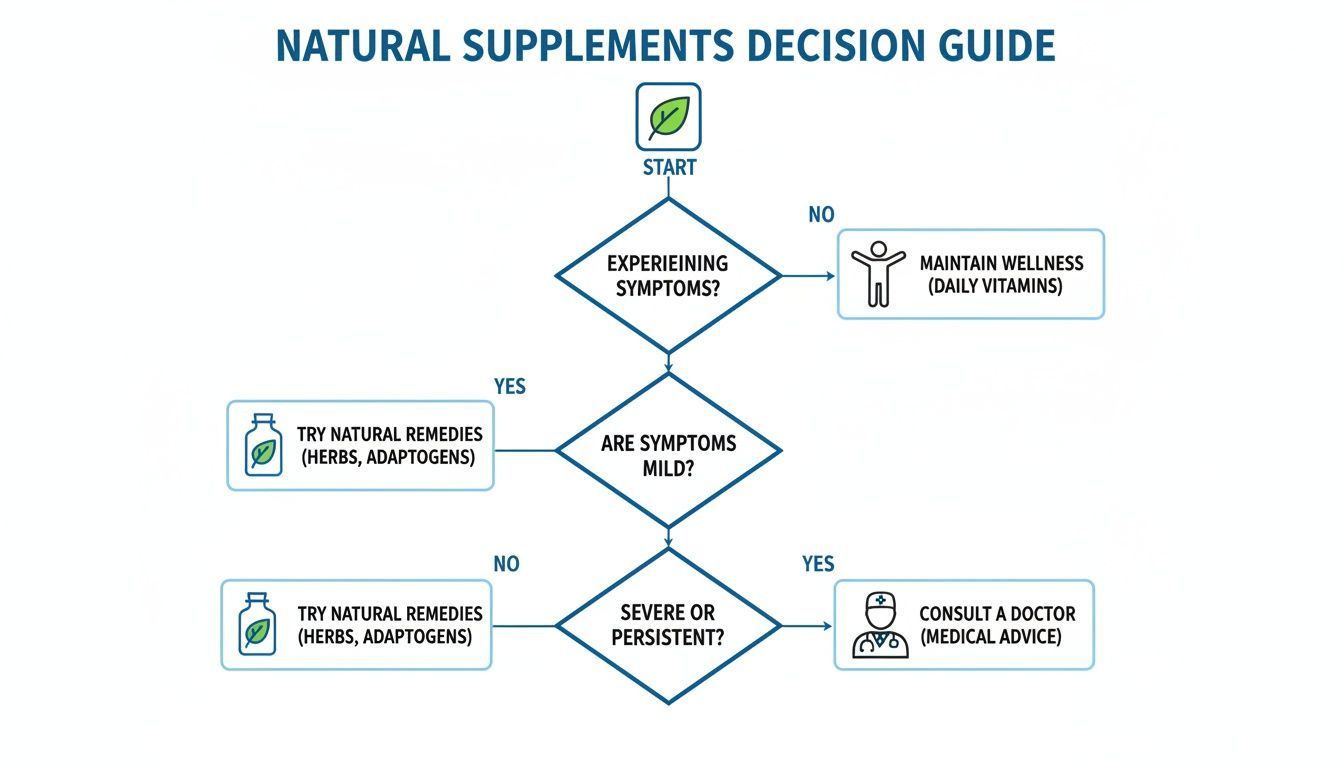
As you can see, the path forward depends on how much your symptoms are impacting your daily life.
What "Severe" Hot Flashes Actually Look Like
When do symptoms cross the line from annoying to "severe"? While everyone’s tolerance is different, we consider symptoms severe when they truly start to control your life.
A good rule of thumb is if you're experiencing:
- Seven or more significant hot flashes during the day.
- Night sweats that consistently destroy your sleep quality, leading to daytime fatigue.
- Symptoms that negatively affect your job, relationships, or overall mental well-being.
If you find yourself canceling plans, dreading presentations because you might flush, or feeling constantly exhausted and irritable, your symptoms are severe. It's time for a new, more effective game plan.
Why a Medical Evaluation Is Non-Negotiable
When hot flashes are this persistent, a comprehensive medical evaluation is crucial. A qualified provider can run lab tests to get a clear picture of your hormonal status and, just as importantly, rule out other conditions that can mimic menopause symptoms, like thyroid disorders or metabolic syndrome.
This isn't about jumping to conclusions; it's about being thorough so you get the right treatment for the right diagnosis.
Deciding between continuing with natural methods and seeking medical intervention can feel overwhelming. This table breaks down the decision-making process based on your symptom level to give you a clearer path forward.
Natural vs Medical Intervention for Hot Flashes
| Symptom Level | Recommended Approach | Potential Next Steps |
|---|---|---|
| Mild to Moderate | Continue with lifestyle, dietary, and natural supplement strategies. Focus on consistency. | If no improvement after 3-6 months, consider a wellness consultation to optimize your current plan and ensure there are no underlying issues. |
| Severe & Disruptive | Schedule a comprehensive medical evaluation with a menopause-aware provider. | Discuss your complete health history, get baseline lab work done, and explore evidence-based medical treatments like hormone therapy. |
| Impacting Quality of Life | Prioritize seeking medical support immediately. Your well-being is the top concern. | Work with a provider to create a personalized treatment plan that may include HRT/BHRT and supportive lifestyle adjustments. |
Ultimately, if natural approaches aren't providing the relief you need to live your life fully, it’s a clear signal to explore what modern medicine has to offer.
Understanding Hormone Therapy
For women struggling with persistent, severe hot flashes, Hormone Replacement Therapy (HRT) is the most effective treatment available, according to major medical organizations. It gets right to the root of the problem by replenishing the estrogen your body is no longer making, which helps re-stabilize your internal thermostat and provides profound relief.
At Pause Medical, we specialize in Bioidentical Hormone Replacement Therapy (BHRT). These are plant-derived hormones that are molecularly identical to the ones your own body produces. This structure allows for a highly personalized approach to restoring your natural hormonal balance under strict medical supervision.
Seeking medical intervention like HRT or BHRT isn't just about masking symptoms. It's about correcting the root hormonal imbalance, which allows your body to function properly again and provides profound, lasting relief from hot flashes and other menopausal symptoms.
We start by listening. Your board-certified provider will conduct a thorough review of your symptoms, health history, and wellness goals. Based on this conversation and detailed lab work, we’ll build a treatment plan that is 100% unique to you.
This might involve BHRT, but we also integrate ongoing lifestyle coaching, nutritional guidance, and other therapies to ensure you feel supported from every angle. Our goal is to give you a clear, hopeful, and effective path forward.
If you’ve hit a wall with natural strategies, it may be time to see how targeted hormone therapy can help. You absolutely do not have to "just deal with" symptoms that disrupt your life. Schedule a consultation to learn about the effective, medically supervised treatments that can make all the difference in helping you feel like yourself again.
Common Questions About Managing Hot Flashes Naturally
When you start researching how to manage hot flashes naturally, it’s easy to feel overwhelmed. Let’s clear things up. We’ve gathered some of the most common questions we hear at Pause Medical, with straightforward, evidence-based answers to help you feel more confident and in control.
How Long Should I Try Natural Remedies Before Seeing Results?
This is a key question, and the honest answer is: it requires patience. When making consistent dietary and exercise changes, most women begin to notice an improvement within 4 to 8 weeks. For herbal supplements, you may need a bit more time—often 8 to 12 weeks—to accurately gauge their full effect. The key is consistency. If you’ve given it a solid three months and your quality of life is still suffering, that’s an excellent signal to consult a provider to discuss more effective, medically-supervised options.
Can Losing Weight Really Get Rid of My Hot Flashes?
For many women, yes. Reaching and maintaining a healthy weight is one of the most effective natural strategies. Research has shown that losing just 10% of your body weight can significantly reduce the frequency and severity of hot flashes. Excess body fat can contribute to hormonal imbalances and interfere with the body's ability to regulate temperature. By reducing weight, you help restore this balance. It’s why our medical weight loss programs, which are always medically supervised and can include options like GLP-1 medications, are often a core part of a comprehensive menopause treatment plan.
Are "Natural" Phytoestrogens from Soy Safer Than Medical HRT?
This is a fantastic question that gets to the heart of personalized medicine. Phytoestrogens from food sources like soy and flaxseed are generally very safe as part of a balanced diet and can be effective for mild symptoms. However, "natural" does not automatically mean "safer" or "better" for everyone. For moderate to severe symptoms, medically prescribed Hormone Replacement Therapy (HRT), especially bioidentical HRT (BHRT), is a more direct, potent, and often more effective way to restore hormonal balance under a doctor's supervision. The "safest" and most effective choice is entirely personal. It depends on your unique health history, the severity of your symptoms, and your wellness goals, which is why a consultation with a board-certified provider is so important.
What Is the Difference Between a Hot Flash and a Night Sweat?
A night sweat is simply a hot flash that occurs during sleep. The physiological mechanism is exactly the same: estrogen fluctuations disrupt the brain's temperature-control center. The primary difference is the impact. Night sweats are notoriously disruptive to sleep, causing you to wake up drenched in sweat, which can lead to changing pajamas or even sheets. This repeated interruption of the sleep cycle is a major cause of daytime fatigue, brain fog, and irritability. The good news is that the same strategies that help with daytime hot flashes—like keeping your bedroom cool, wearing breathable cotton, and avoiding triggers like sugar or alcohol before bed—can significantly improve your sleep quality.
Navigating menopause can be challenging, but you don't have to do it alone. If natural strategies aren't providing the relief you need to live your life to the fullest, it may be time to explore other options. The team at Pause Medical is here to provide expert, compassionate care tailored to your specific needs. Schedule a consultation today to create a personalized plan and reclaim your comfort and vitality. https://pausemedical.org
Disclaimer:
The information in this article is for educational purposes only and is not intended to be a substitute for professional medical advice, diagnosis, or treatment. Always seek the advice of your physician or other qualified health provider with any questions you may have regarding a medical condition. Do not disregard professional medical advice or delay in seeking it because of something you have read in this article.