How to Improve Bone Density Naturally: An Evidence-Based Guide
If you’re concerned about bone loss, you’re not alone. The journey to improve bone density naturally can feel overwhelming, but it often comes down to a powerful combination of smart exercise, targeted nutrition, and key lifestyle adjustments. The goal is to apply beneficial stress to your bones to signal the need for strength, and then provide the essential building blocks—like calcium, vitamin D, and protein—to rebuild a resilient frame.
At Pause Medical, we understand that protecting your bones is about more than just preventing fractures; it’s about safeguarding your independence, vitality, and ability to live life to the fullest. This guide, written with our empathetic, evidence-based approach, will empower you with the knowledge to take control of your bone health.
Understanding Bone Density and Why It Matters
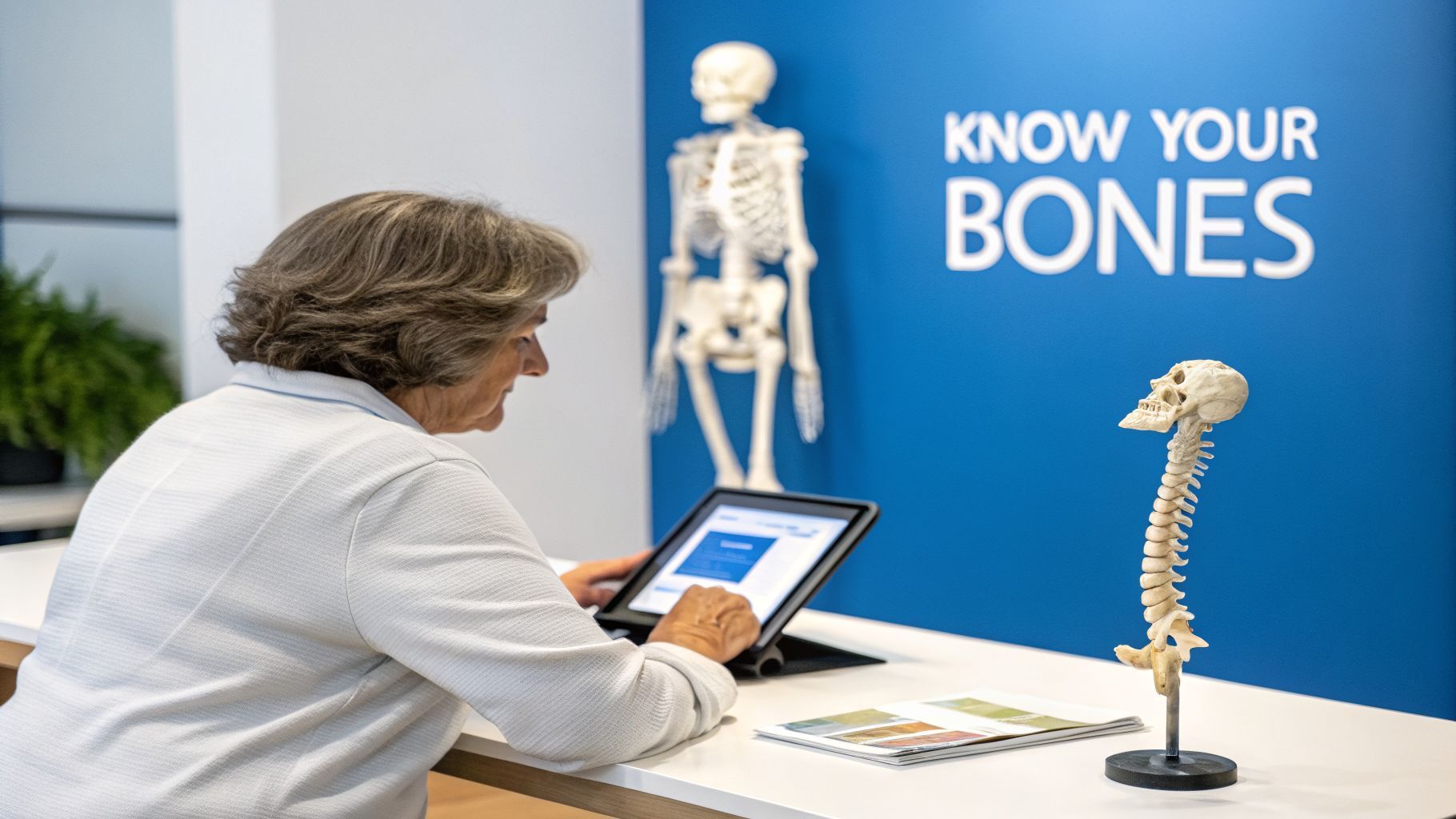
When you hear "bone density," it’s easy to picture a complex medical chart. But the concept is simple and vital to how you live. Think of your bones not as static scaffolding, but as living, dynamic tissue that is constantly renewing itself.
This natural cycle is called bone remodeling. It’s a beautifully balanced process where your body clears out old, worn-out bone tissue and replaces it with fresh, strong bone. In our youth, we build bone faster than we lose it, making deposits into our "bone bank." This process culminates in peak bone mass around age 30, representing the strongest our skeleton will ever be.
The Shift in Bone Balance
After our thirties, that delicate balance starts to shift. For many, the process of clearing out old bone begins to outpace the creation of new bone. This is where we see our skeletal framework become more porous and fragile, leading to two well-known conditions:
- Osteopenia: Think of this as the initial warning sign. Your bone density is lower than ideal for your age, placing you at a higher risk for fractures, but you are not yet in the highest-risk zone.
- Osteoporosis: This is a more serious stage where bones have become significantly porous and brittle, making them vulnerable to fractures from a simple fall, a hard sneeze, or even bending over.
This is a significant global health issue. Osteoporosis affects a staggering 200 million people worldwide and is responsible for an estimated 8.9 million fractures annually. The projections are even more sobering: by 2050, the global incidence of hip fractures is expected to climb by 310% in men and 240% in women compared to 1990 levels. These statistics underscore why proactive bone health strategies are critical.
We see the real-world impact of these numbers every day. It's about so much more than just preventing broken bones. It's about protecting your independence and your ability to live a full, active life—whether that means traveling, playing with your grandkids, or simply moving through your day with confidence and without fear.
Hormones as the Master Regulators
So, what causes this shift from building bone to losing it? While genetics and lifestyle play a role, hormones are one of the most powerful drivers. Estrogen and testosterone are key regulators of the bone-remodeling cycle.
When a woman enters perimenopause and menopause, the dramatic drop in estrogen can trigger a period of rapid bone loss. Men experience a similar, albeit more gradual, process as their testosterone levels decline with age (a condition known as andropause). This is precisely why any comprehensive bone health strategy must include a conversation about hormonal balance. We explore this critical connection in more detail on the Pause Medical blog.
Understanding these fundamentals is your first and most important step. It empowers you to move beyond a diagnosis and become an active, informed partner in your own health, armed with the knowledge to build a stronger frame for the future.
Building Stronger Bones with Strategic Exercise
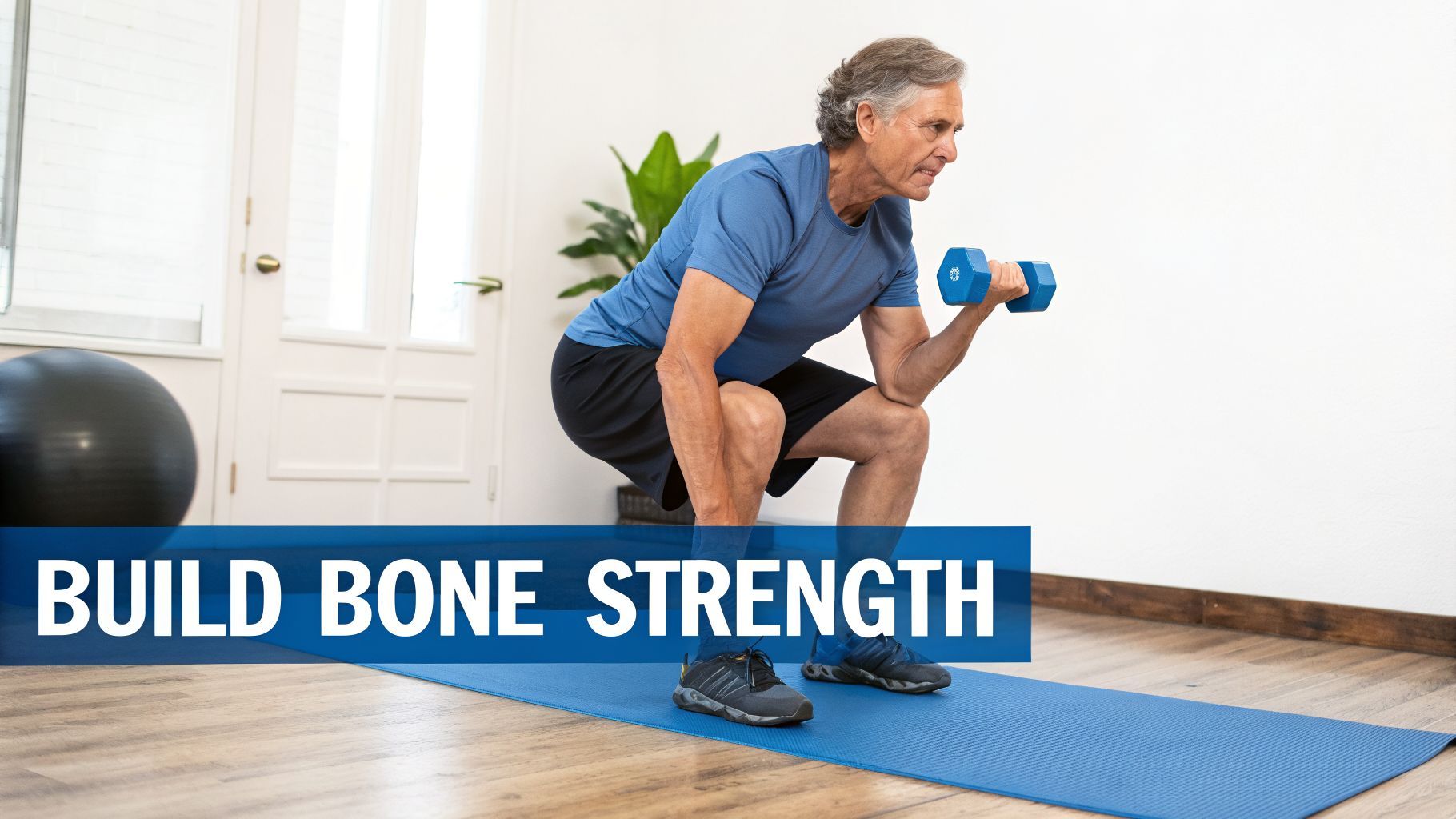
While a good diet provides the raw materials for strong bones, exercise is the catalyst. It’s the signal that tells your body to put those building blocks to good use. Think of it as placing a demand on your skeleton that forces it to adapt and grow stronger.
This beneficial stress awakens your bone-building cells, called osteoblasts, prompting them to reinforce your entire frame. However, not just any movement will do. To effectively boost bone density, you need to be strategic and focus on two specific types of activity: weight-bearing exercise and resistance training. These are the most proven methods for stimulating bone growth and slowing the natural decline that comes with aging.
The Power of Weight-Bearing Exercise
This is any activity performed on your feet, where your bones and muscles work against gravity to support your body weight. Each time your foot strikes the ground, it sends a productive stress signal up through your legs and spine, encouraging your bones to become denser.
We can categorize these exercises into two groups.
High-Impact Weight-Bearing Exercises
These deliver a potent bone-building message but are best suited for individuals with healthy joints and no pre-existing fractures.
- Jogging or Running: Even short, consistent runs can significantly impact bone density.
- Dancing: Activities like Zumba, or even just dancing to your favorite music at home, provide varied impact.
- Jumping Jacks or Jump Rope: Classic, high-impact movements you can perform almost anywhere.
- Tennis or Pickleball: The quick starts, stops, and lateral movements are fantastic for hip and spine strength.
Low-Impact Weight-Bearing Exercises
If you have joint pain, are new to exercise, or have been diagnosed with osteoporosis, these are excellent, safer alternatives.
- Brisk Walking or Hiking: The key is "brisk"—you want to elevate your heart rate and challenge your body.
- Using an Elliptical Machine: This simulates running without the jarring impact on your knees and hips.
- Stair Climbing: A surprisingly effective bone-builder, whether on a machine or the stairs at home.
The most important factor is consistency. Finding an activity you enjoy makes it easier to stick with. Aiming for 30 minutes a day of moderate weight-bearing movement can make a real difference in preserving your bone mass.
Adding Resistance for Maximum Benefit
While weight-bearing activities strengthen your skeleton globally, resistance training offers a more targeted approach. When your muscles contract and pull on the bones they are attached to, it stimulates bone growth in that specific area. This is invaluable for reinforcing common fracture sites like the hips, spine, and wrists.
You don’t need to become a bodybuilder. The goal is progressive overload—gradually making the exercises more challenging so your body must continually adapt and strengthen.
Think of it this way: Your bones respond to new and varied demands. Simply walking the same route at the same pace every day eventually becomes less effective. Introducing new stresses, like carrying light weights or adding hills, keeps the bone-building signals strong.
Here are some of the most effective ways to add resistance to your routine:
- Lifting Weights: Free weights (dumbbells, barbells) or weight machines allow you to target specific muscle groups. A great starting point is choosing a weight you can lift for 8-12 repetitions while maintaining good form.
- Using Resistance Bands: These are fantastic because they're portable, affordable, and incredibly versatile for everything from squats to upper-body rows.
- Bodyweight Exercises: Never underestimate the power of your own body. Foundational movements like push-ups (on knees or toes), planks, squats, and lunges build serious strength without any equipment.
For older adults, adopting routines designed for safety and efficacy is key. There are well-established, smart approaches to strength training over 60 that prioritize building muscle while protecting joints.
Creating Your Bone-Building Routine
Remember, consistency will always beat sporadic, high intensity. Aim for 2-3 resistance training sessions per week on non-consecutive days. This gives your muscles and bones the crucial time they need to recover, repair, and come back stronger.
Here’s what a balanced week might look like:
- Monday, Wednesday, Friday: 30 minutes of brisk walking or elliptical training.
- Tuesday, Thursday: 30 minutes of resistance training, focusing on major muscle groups (squats, lunges, push-ups, rows).
- Saturday: Active recovery, like a gentle walk, stretching, or yoga.
- Sunday: Rest.
Before starting any new exercise program, it is essential to speak with a medical professional, especially if you have existing health conditions or known osteoporosis. They can help you craft a plan that is both safe and effective for your unique needs.
At Pause Medical, our integrative, board-certified approach recognizes that exercise is a cornerstone of any wellness plan. By combining strategic physical activity with personalized medical guidance, we help patients build a resilient foundation for long-term health. To discuss a plan that’s right for you, schedule a consultation with our expert team.
Eating For Stronger Bones: The Nutrients That Matter Most
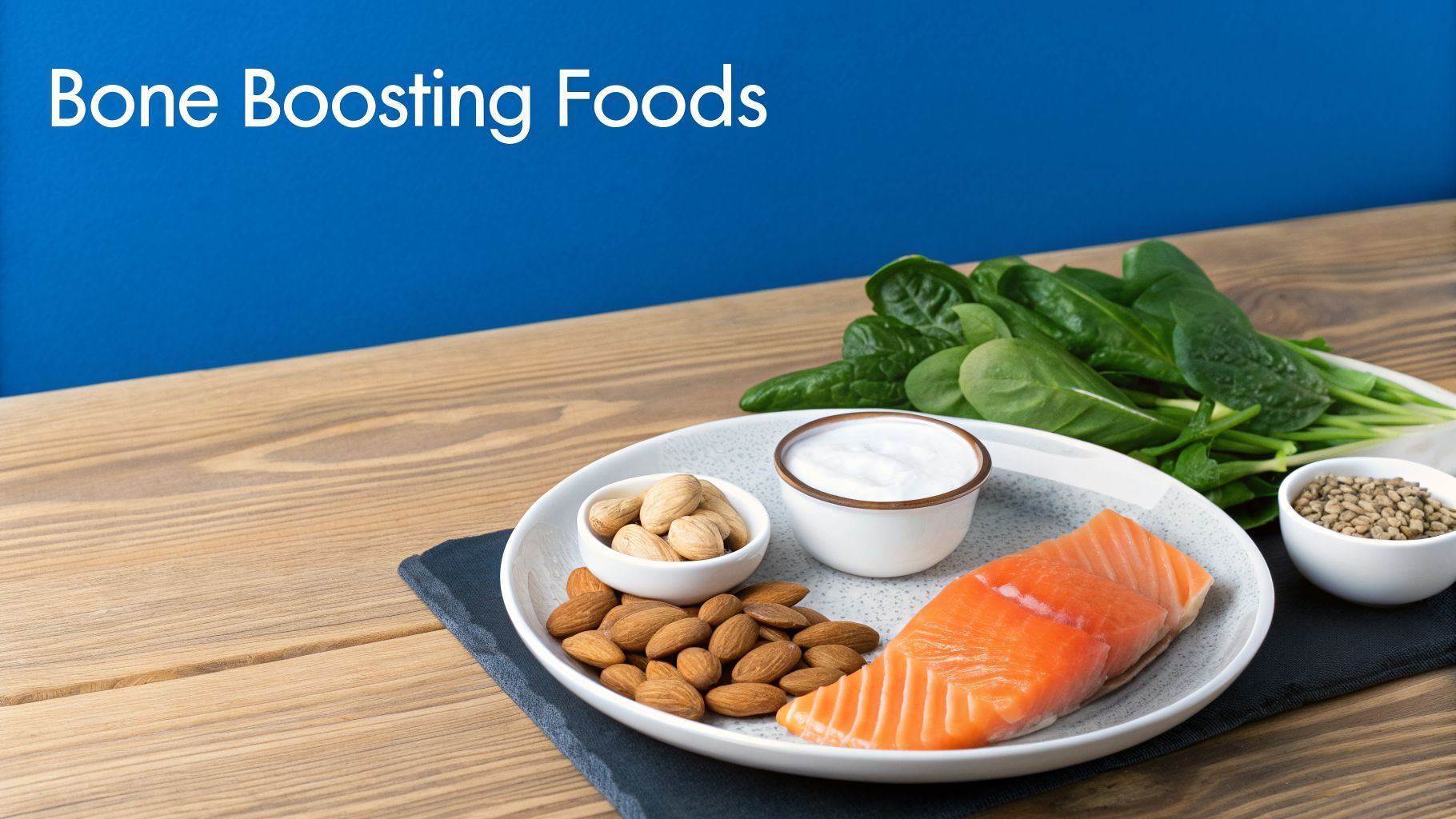
Think of exercise as the architect for stronger bones—it draws up the blueprints. But your diet? That’s the supply truck delivering all the raw materials needed to actually build the structure.
Focusing on what you eat is one of the most direct and effective ways to naturally improve your bone density. This isn’t about fixating on one magic nutrient. It’s about understanding how a whole team of vitamins and minerals works synergistically to keep your skeleton strong and resilient for the long haul.
The Dynamic Duo: Calcium and Vitamin D
When it comes to bone health, you've probably heard about calcium and vitamin D more than anything else. There's a good reason for that. Calcium is the primary mineral that gives your bones their hardness and strength, but it can’t get into the bone on its own.
Vitamin D is the essential gatekeeper that allows your body to absorb calcium from the food you eat. Without enough vitamin D, even a diet packed with calcium won't do you much good.
The science on this partnership is crystal clear. Studies show that a daily intake of 1,200 mg of calcium and 800-2,000 IU of vitamin D can increase bone mineral density (BMD) by 1-2% each year and slash fracture risk by 15-20%. One major review of over 50,000 women found that those who supplemented properly increased their spine BMD by 2.1% in just three years—a huge jump compared to the 0.2% increase in those who didn't.
Here’s how to get them on your plate:
- Calcium-Rich Foods: Greek yogurt, milk, and hard cheeses are fantastic dairy sources. If you're dairy-free, look to fortified plant milks, tofu, sardines (with the bones!), and dark leafy greens like kale and collard greens.
- Vitamin D Sources: Your body makes vitamin D from sun exposure, but that's often not enough, especially in the winter or if you wear sunscreen. Fatty fish like salmon and mackerel are great food sources, but many of us need to rely on fortified foods or a supplement to hit the ideal levels.
The Unsung Heroes of Bone Health
While calcium and vitamin D get the spotlight, they rely on a crucial supporting cast. Overlooking these other nutrients is a common mistake that can seriously undermine your efforts.
Magnesium
This mineral is a true multi-tasker. It helps convert vitamin D into its active form and also plays a key role in calcium transport, making sure the calcium gets delivered to your bones instead of ending up where it shouldn't. You can learn more about finding the right form for you by reading
Magnesium Decoded: Which Type is Right for You.
Vitamin K2
Think of Vitamin K2 as the traffic cop for calcium. It activates proteins that help bind calcium directly to your bone matrix. Just as importantly, it helps keep calcium out of your arteries, which is a win for both your skeleton and your heart.
Protein
Did you know that about
50% of your bone volume is actually protein? It creates the flexible collagen framework that minerals like calcium then harden. Getting enough quality protein from lean meats, fish, beans, and lentils is absolutely fundamental for building and maintaining your bone structure.
Potassium
This mineral helps neutralize metabolic acids in your body that can otherwise leach calcium from your bones. By creating a more alkaline-friendly environment, potassium essentially protects your body’s calcium reserves.
To get these powerful nutrients on your plate, a well-rounded diet is key. The following table breaks down the essentials for building and maintaining strong bones, including how much you need and where to find them.
Essential Nutrients for Optimal Bone Density
This table outlines the key vitamins and minerals crucial for building and maintaining strong bones, including recommended daily intake and the best food sources to incorporate into your diet.
| Nutrient | Why It's Important for Bones | Recommended Daily Intake | Excellent Food Sources |
|---|---|---|---|
| Calcium | The primary building block of bone, providing strength and structure. | 1,200 mg (for women over 50) | Dairy products, fortified plant milks, leafy greens, sardines, tofu. |
| Vitamin D | Essential for calcium absorption in the gut. | 800-2,000 IU | Sunlight, fatty fish (salmon, mackerel), fortified milk, egg yolks. |
| Vitamin K2 | Directs calcium to the bones and away from arteries. | 90-120 mcg | Natto, hard cheeses (Gouda), egg yolks, dark chicken meat. |
| Protein | Forms the flexible collagen matrix of bone. | 1.0-1.2 g/kg of body weight | Lean meats, fish, eggs, dairy, legumes, tofu, quinoa. |
| Potassium | Neutralizes acids that can deplete bone calcium. | 2,600-3,400 mg | Sweet potatoes, bananas, avocados, white beans, spinach. |
Making sure you hit these targets through food is the best first step.
Think of your bone-building diet as a team sport. Calcium is the star player, but it can't win the game without assists from Vitamin D, Magnesium, and Vitamin K. Every nutrient has a role, and they all need to be on the field for you to win.
Simple Ways to Build a Bone-Smart Diet
Putting this into practice doesn't need to feel overwhelming. Small, consistent changes can make a massive difference over time.
- Eat the Rainbow: Make a point to fill your plate with colorful fruits and vegetables. This variety ensures you're getting a broad spectrum of the vitamins, minerals, and antioxidants your bones crave.
- Power Up with Prunes: I know it sounds specific, but emerging research is compelling. Eating just 5-6 prunes a day has been shown to help prevent bone loss and even improve density, thanks to their unique blend of vitamin K, potassium, and antioxidants.
- Get a Professional Assessment: A food-first approach is always best, but the reality is that many of us struggle to get everything we need from diet alone. At Pause Medical, our board-certified providers can run targeted lab tests to identify any deficiencies and recommend a personalized plan. This may include high-quality, physician-grade supplements and nutraceuticals to fill in the gaps and ensure you are meeting your body's needs.
By consciously nourishing your body with these critical building blocks, you give it exactly what it needs to build and maintain a strong, healthy skeleton for life.
The Hormone Connection: How Balance Shapes Your Bones
You might think of hormones in terms of mood or energy, but their influence runs much deeper—right down to your bones. Your skeleton is a dynamic, living tissue that's constantly being remodeled, and hormones are the primary signals telling it when to build up and when to break down.
When your hormones are in balance, this remodeling process keeps your skeleton strong. But when key hormones decline, that balance is thrown off, and bone loss can accelerate faster than you might expect.
Menopause and the Estrogen Cliff
For women, the link between hormones and bone health becomes crystal clear during perimenopause and menopause. Estrogen acts as a powerful guardian for your skeleton, keeping the cells that break down bone (called osteoclasts) in check.
As you enter menopause, estrogen levels don't just dip—they plummet. This "estrogen cliff" essentially removes the brakes on bone resorption. The result is often a period of rapid bone density loss. In fact, many women can lose up to 20% of their bone mass in the first five to seven years after menopause, which is what pushes many from healthy bone density into osteopenia or osteoporosis.
This isn't just a slow, unavoidable part of aging. It's an accelerated process driven directly by hormonal shifts. That’s why just focusing on calcium and exercise, while important, often isn't enough to stop the loss.
Andropause and Gradual Bone Loss in Men
Men go through a similar, though usually more gradual, hormonal change known as andropause. As men get older, testosterone levels naturally decline. Because a portion of a man's testosterone is converted into bone-protecting estrogen, this decrease also weakens the skeleton's defenses over time.
While the loss isn't typically as sudden as what women experience, it's a steady decline that significantly increases the risk of fractures in later life. Many men don't realize this is happening until a fracture occurs, which is why being proactive is so important.
Natural Strategies and Medical Solutions
Understanding this hormonal link is the key to creating a truly effective plan. A great starting point is to support your body's endocrine system through your diet. Incorporating foods rich in phytoestrogens—plant-based compounds that can have a mild estrogen-like effect—can be helpful.
For example, one study with 400 Japanese women found that a daily intake of 50-100mg of soy isoflavones increased their lumbar bone density by 2.4% over two years and reduced fracture rates by 30%. You can dig deeper into the data on hormonal factors and fracture risk in this detailed overview from the Osteoporosis Foundation.
While lifestyle and diet are foundational, they often can't fully compensate for a significant hormonal deficit. This is where modern medicine offers a direct and powerful solution.
At Pause Medical, we view Bioidentical Hormone Replacement Therapy (BHRT) as a cornerstone of bone health for many of our patients. By restoring your hormones to their optimal levels, BHRT tackles the root cause of accelerated bone loss. This makes all your other efforts—like diet and weight-bearing exercise—far more effective because you're no longer fighting an uphill battle. Our board-certified providers design our hormone therapy to be fully customized to your unique physiology and health goals.
A consultation with one of our providers can determine if hormonal imbalance is driving your bone health issues. From there, we can build a personalized plan that combines the best of natural strategies with proven medical therapies to help you build a stronger, more resilient future.
The Daily Habits That Make or Break Your Bones
What you eat and how you move are the cornerstones of bone health, but they don't tell the whole story. The small choices you make every single day—how you manage stress, whether you smoke, your body weight—can either fortify your skeleton or slowly chip away at its strength.
Think of it this way: your daily habits create the environment your bones live in. You want to make that environment as supportive and nourishing as possible.
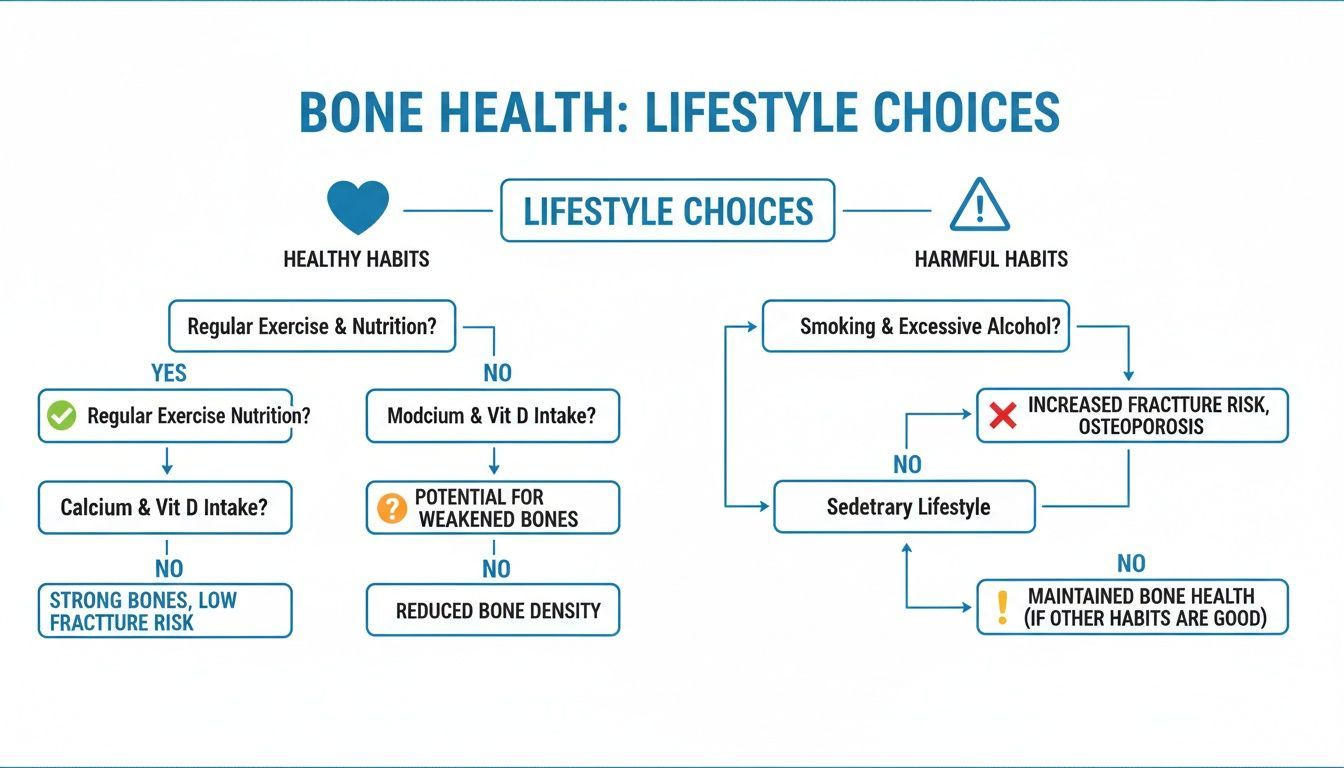
As you can see, certain lifestyle choices pave a direct path to strong bones, while others lead straight toward osteoporosis.
Smoking and Alcohol: The Bone Breakers
We all know smoking and excessive drinking are bad for our health. For your skeleton, though, they are particularly destructive.
- Smoking is a direct poison to your bone-building cells, the osteoblasts. Nicotine also chokes off blood flow to your bones, starving them of vital nutrients, and even blocks your body's ability to absorb the calcium you're so carefully consuming.
- Excessive alcohol—that means more than
one drink a day for women or
two for men—throws your body's calcium balance out of whack. It also messes with vitamin D production, which is critical for calcium absorption. Chronic heavy drinking is a major, well-documented risk factor for osteoporosis.
If you do either, cutting back or quitting is one of the single most impactful things you can do to protect your "bone bank" for the future.
Find Your Healthy Weight
Body weight has a surprisingly complex relationship with bone health. While many people worry about the strain of extra weight on their joints, being underweight is a significant and often-overlooked danger for your bones.
A very low Body Mass Index (BMI), typically below 18.5, is a double threat. It means you likely have less bone mass to begin with, and you also have less natural padding to cushion you if you fall. This combination dramatically increases your fracture risk.
The goal isn't just a number on the scale. It's about finding a healthy, stable weight for your frame, supported by good nutrition and regular exercise. This gives your skeleton the physical support and the raw materials it needs to stay resilient.
Manage the Silent Damage of Stress
Chronic stress isn't just in your head; it triggers a very real, physical response that can silently sabotage your bones. When you're constantly frazzled, your body pumps out the stress hormone cortisol.
High cortisol levels speed up bone breakdown and disrupt your bone-building cells. Over time, this hormonal imbalance can quietly erode your bone density. That makes stress management a non-negotiable part of any serious bone health strategy.
Here are a few practical ways to get your cortisol in check:
- Mindfulness & Meditation: Just 10 minutes a day has been shown to lower stress hormones.
- Yoga or Tai Chi: These are fantastic because they hit all the marks—gentle movement, balance training, and built-in mindfulness.
- Prioritize Sleep: Aim for 7-9 hours of quality sleep. This is when your body does its most important hormonal regulation and repair work.
These habits are all interconnected. Taking a whole-body approach creates an internal environment where your bones don't just survive, they thrive. At Pause Medical, we focus on supporting every facet of your health, which you can see in our unique approach to preventative wellness solutions.
When to Partner with a Medical Expert
While you can do so much on your own to support your bones, the best results almost always come from a team effort. Think of it as a partnership—you’re in the driver’s seat with your daily habits, and a medical expert is your trusted navigator, helping you read the map and avoid potential roadblocks.
Knowing when to bring in that expert guidance is key to protecting your skeleton for the long haul. Just like you get your heart checked, your bones need professional attention, too. This is especially true if you have certain risk factors or are going through the major hormonal shifts of perimenopause and menopause. A board-certified provider can help you look past the symptoms and get to the real root cause of bone loss.
Understanding the DEXA Scan
The go-to tool for measuring bone health is the DEXA scan, which is short for Dual-Energy X-ray Absorptiometry. It’s a simple and painless scan that uses very low-dose X-rays to measure the mineral content in your bones, usually at the hip and spine. The result gives us a clear, objective snapshot of your current bone density.
After the scan, you'll get what's called a T-score. This number is a comparison of your bone density to that of a healthy 30-year-old (when bone mass is typically at its peak).
- T-score of -1.0 or higher: This is considered normal bone density.
- T-score between -1.0 and -2.5: This range is called osteopenia, which means your bone density is lower than normal and you're at increased risk.
- T-score of -2.5 or lower: This indicates osteoporosis, a condition where bones are porous and the risk of fracture is high.
A DEXA scan is generally recommended for all women over 65 and men over 70. But if you have risk factors, your doctor should be ordering one much sooner.
Are You at Higher Risk for Bone Loss?
Age is a universal factor, but some people are on a faster track for bone loss. It's time to have a serious conversation with a medical professional if any of the following apply to you:
- You are a postmenopausal woman, particularly if you went through menopause early (before age 45). The drop in estrogen has a direct impact on bone density.
- You have a family history of osteoporosis or hip fractures.
- You've been on certain medications long-term, like steroids (prednisone), some anti-seizure drugs, or proton pump inhibitors.
- You live with a medical condition tied to bone loss, such as a thyroid disorder, rheumatoid arthritis, or a malabsorption issue like celiac disease.
- You have a low body weight or a history of an eating disorder.
- You’ve had a fracture from a minor fall or seemingly insignificant incident—this is a major red flag.
If you nodded along to any of these points, that’s your cue to seek a professional assessment.
Waiting for a fracture to happen is not a strategy. A proactive consultation allows you to get ahead of potential problems, understand your personal risk profile, and create a defensive plan that works.
This is precisely where the expertise at Pause Medical comes in. Our board-certified providers don't just glance at a T-score; we see the whole person. We work to connect the dots between your DEXA results, your hormone levels, your lifestyle, and your complete medical history.
This comprehensive picture lets us build a plan that is truly yours. For many of our patients, this means pairing the natural strategies we’ve talked about with advanced medical therapies. Bioidentical Hormone Replacement Therapy (BHRT), for example, can address the underlying hormonal drivers of bone loss. An integrated strategy like this is often a critical part of effective disease state management for osteoporosis.
When you partner with a medical expert, you trade uncertainty for clarity. You gain a dedicated ally who can help you build and maintain a strong, resilient foundation for a vibrant and active life.
Are you ready to stop guessing and start building a real plan for your bone health? The board-certified team at
Pause Medical is here to provide expert testing, personalized guidance, and an integrative plan that addresses the root cause of bone loss.
Schedule your consultation today and take the first step toward a stronger future.