Insulin Resistance Explained: Reclaim Your Health With a Personalized Plan
If you’ve ever felt like your body is working against you—constantly tired, struggling with stubborn weight, or hit with intense sugar cravings—you might be dealing with insulin resistance. It’s not just a medical term; it’s a critical sign from your body that its metabolic communication system is starting to break down, and it's a journey you don't have to navigate alone.
At Pause Medical, we understand how frustrating these symptoms can be. Our board-certified medical providers specialize in creating personalized plans that address the root causes of metabolic issues, helping patients of all ages find lasting solutions. This guide is your first step toward understanding what’s happening in your body and how you can reclaim your health.
What Is Insulin Resistance and Why It Matters
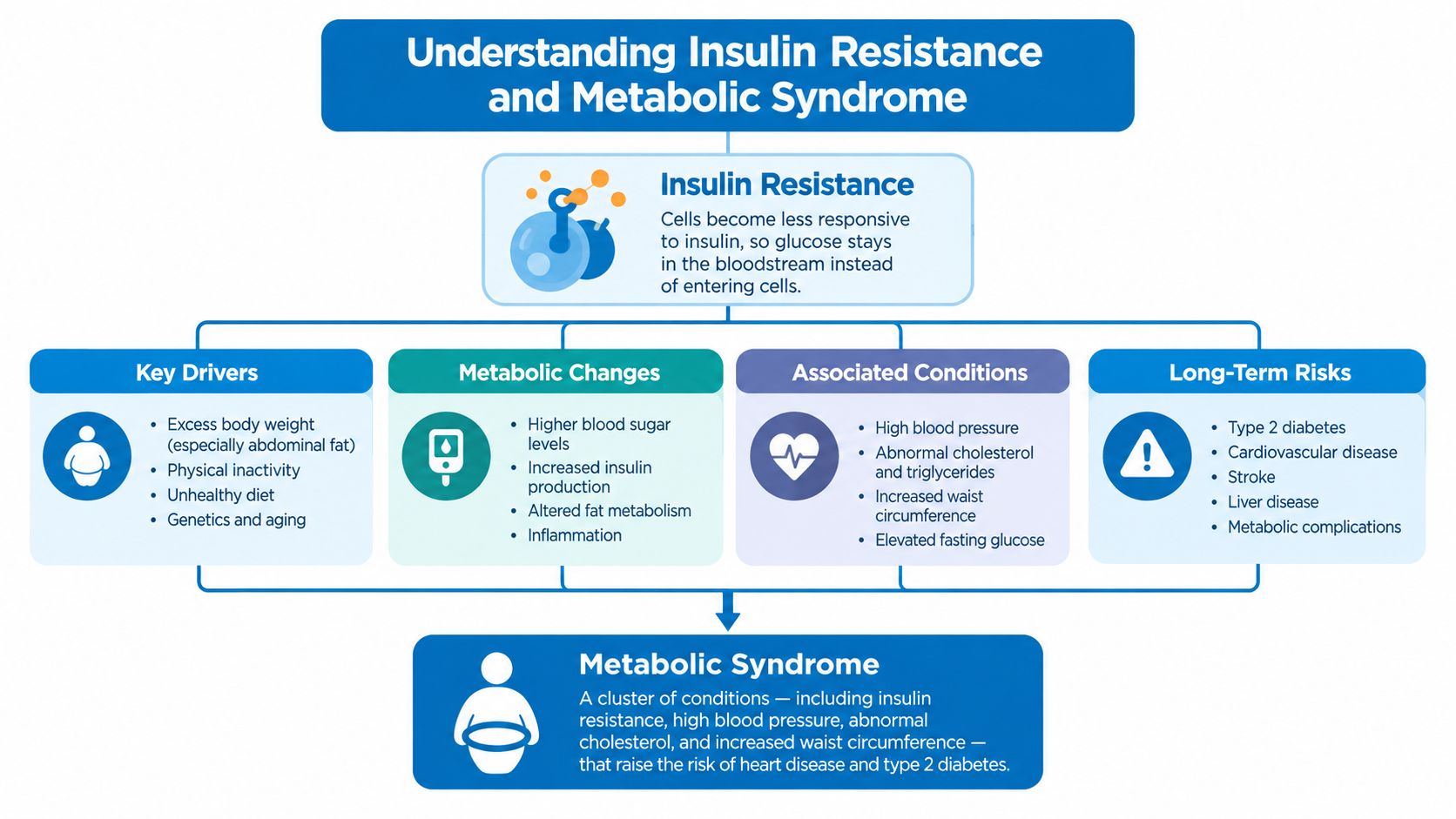
Let’s think of how your body is supposed to get energy. When you eat, your food is broken down into glucose (sugar), which enters your bloodstream. This signals your pancreas to release a hormone called insulin.
Think of insulin as a key. Its job is to unlock the doors to your body’s cells, letting glucose inside to be used for fuel. It's a beautifully efficient process that powers everything you do.
But with insulin resistance, those cellular locks get "sticky." The insulin key is there, but it struggles to open the door. Your cells become less responsive, leaving too much glucose stuck in the bloodstream with nowhere to go.
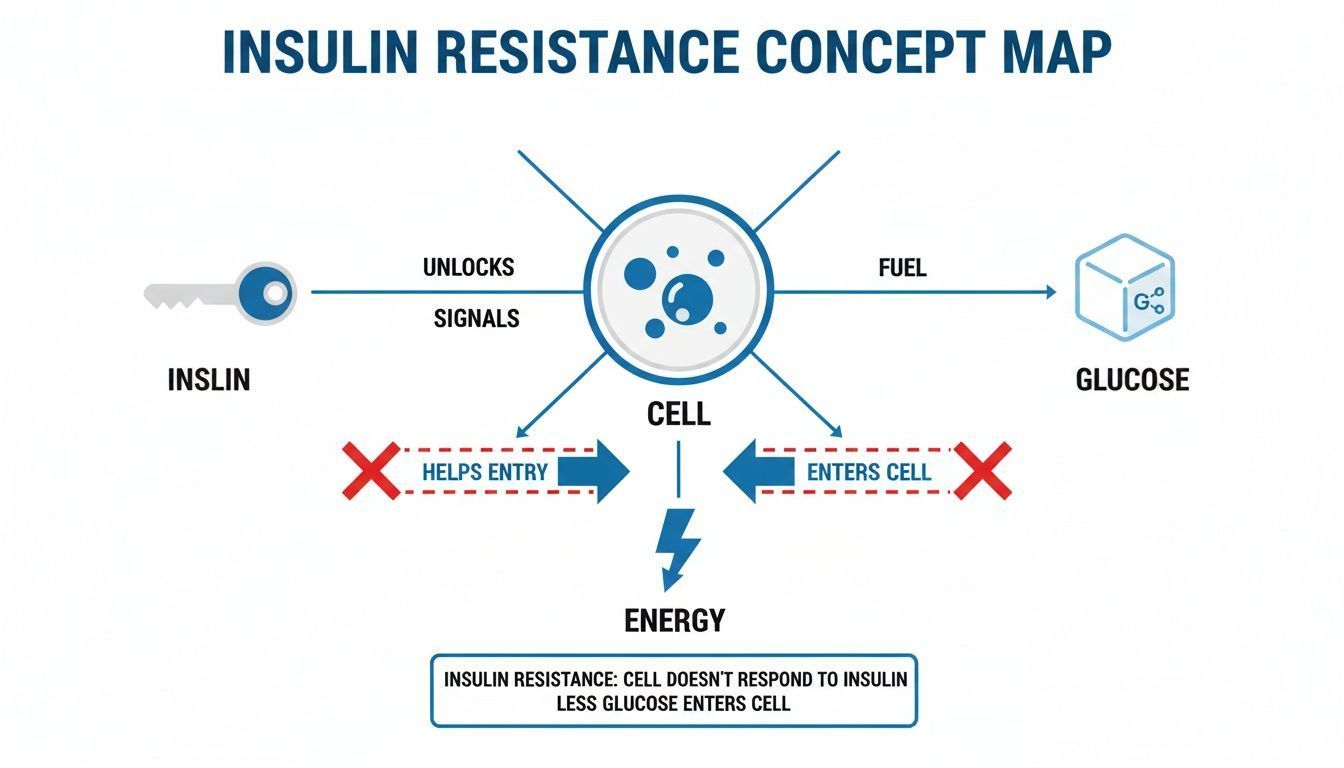
In a desperate attempt to get the job done, your pancreas starts working overtime. It pumps out more and more insulin to force those stubborn cell doors open. This is a condition called hyperinsulinemia, or chronically high insulin. While it might keep your blood sugar in a normal range for a while, this constant flood of insulin creates its own set of serious problems. This is where professional medical guidance becomes crucial.
Insulin's Role At A Glance: Normal Vs. Resistant
This simple table breaks down the difference between a healthy response and an insulin-resistant one. It highlights how a single breakdown in the process can lead to a cascade of issues that can be managed with the right medical support.
| Process | Normal Insulin Sensitivity (Healthy) | Insulin Resistance (Unhealthy) |
|---|---|---|
| Eating & Digestion | Food breaks down into glucose, entering the blood. | Food breaks down into glucose, entering the blood. |
| Pancreas Response | Pancreas releases a normal amount of insulin. | Pancreas releases an excessive amount of insulin to compensate. |
| Cellular Response | Insulin "unlocks" cells easily. | Cells are resistant; insulin struggles to "unlock" them. |
| Glucose Uptake | Glucose enters cells efficiently for energy. | Glucose has a hard time entering cells, staying in the blood. |
| Result | Stable energy, balanced blood sugar, healthy metabolism. | High insulin, fatigue, fat storage, and elevated health risks. |
As you can see, the core problem isn't the glucose itself, but the body's dysfunctional response to it. This is why just "eating less" often doesn't solve the problem and why an integrative, medically-supervised approach is so effective.
The Problem With Too Much Insulin
Having constantly high insulin is far from harmless. It’s a powerful hormone that sends some very unhelpful signals throughout your body, creating a vicious cycle of symptoms often dismissed as just "part of aging."
- Stubborn Weight Gain: Insulin is your body's primary fat-storage hormone. High levels essentially shout, "Store fat!" This is especially true for belly fat. It also blocks your body from burning stored fat, which is why weight loss can feel impossible without addressing the hormonal root cause.
- Constant Fatigue: If glucose can’t get into your cells, they can't make energy. The result is a deep, persistent exhaustion that sleep doesn’t seem to fix. You're running on an empty tank, even after eating.
- Intense Cravings: Your brain and body are literally starved for energy. This triggers powerful, almost primal, cravings for the quickest fuel source available: sugar and refined carbs. Giving in only perpetuates the cycle.
This isn't a rare issue. It’s a silent epidemic. A major 2022 meta-analysis published in Endocrine and Metabolic Science revealed that a staggering 37.3% of the global adult population is living with insulin resistance. Millions are navigating these symptoms without knowing the root cause.
Understanding insulin resistance is the first step toward taking back control. It reframes symptoms like fatigue and weight gain not as personal failings, but as biological signals that your body needs support.
Recognizing these signs is your cue to seek help. The good news is that with the right medical guidance and lifestyle strategies, you can significantly improve your insulin sensitivity. At Pause Medical, our entire approach to disease state management is built on identifying and reversing these underlying metabolic issues with personalized, physician-led care so you can finally feel energized, healthy, and in control of your body again.
The Hidden Signs Of Insulin Resistance
The tricky thing about insulin resistance is that it rarely announces itself. Instead, its signs creep up on you so slowly over months, or even years, that it's easy to write them off. You might blame stress, getting older, or just feeling "run down." We see patients every day who have struggled for years, feeling dismissed or unheard. We're here to listen and connect the dots.

These symptoms aren't just random annoyances—they're all clues pointing to the same underlying metabolic problem. Learning to spot them is the first real step toward getting your energy and vitality back. Once you start connecting the dots with the help of a knowledgeable medical team, you can finally move past the confusion and start taking meaningful action.
Unexplained Weight Gain and Stubborn Belly Fat
Does it feel like the number on the scale is ticking upward, even though you haven't really changed your diet or exercise routine? This is a classic hallmark of high insulin levels. Because insulin’s main job is to manage fuel, it acts as the body's primary fat-storage hormone. When there's too much of it circulating, it essentially flips a switch that puts your body into storage mode, making it nearly impossible to burn fat for energy.
This effect is especially pronounced around the midsection. High insulin is notorious for promoting visceral fat—the unhealthy fat that wraps around your internal organs. This is exactly why so many people with insulin resistance struggle with stubborn belly fat that just won't budge. Our medical weight loss programs are specifically designed to break this hormonal cycle.
Intense Cravings for Sugar and Carbs
Have you ever finished a meal and immediately felt like you needed something sweet? Or maybe you get hit with an afternoon energy slump that has you reaching for a sugary drink or a handful of crackers. This isn't a failure of willpower. It's a biological cry for help from a body whose cells are literally starving for energy.
Even with plenty of glucose floating around in your blood, your resistant cells can’t get to it. Your brain senses this energy gap and sends out an urgent signal for a quick fix, triggering intense cravings for sugar and simple carbs. This kicks off a vicious cycle: you eat the carbs, your insulin spikes even higher, your cells become even more resistant, and the cravings come roaring back.
Constant Fatigue and Brain Fog
Feeling exhausted all the time is easily one of the most common and frustrating symptoms of insulin resistance. We're not talking about normal tiredness; this is a deep, bone-weary fatigue that a good night's sleep just can't seem to touch. Your body is working overtime, but the fuel (glucose) simply can't get into the cells where it's needed.
This cellular energy crisis hits your brain hard, too. It often shows up as:
- Brain fog and a feeling of being mentally "stuck"
- Difficulty concentrating or thinking clearly
- Noticeable memory lapses or forgetfulness
These cognitive issues can be incredibly disruptive, affecting your performance at work and your personal relationships. For many people, simply understanding that this mental fog is a physical symptom—not a personal failing—is a huge relief. Our integrative approach addresses these symptoms as part of a whole-body solution.
"The persistent fatigue associated with insulin resistance isn't just 'being tired.' It's a cellular energy crisis. Your body has the fuel, but your cells can't access it, leaving you feeling drained no matter how much you rest."
Skin Changes and Hormonal Disruptions
Chronically high insulin levels can even show up on your skin. They trigger an overgrowth of skin cells, which can lead to skin tags—those small, soft bits of skin that often appear on the neck, under the arms, or in the groin area.
Another tell-tale sign is a condition called acanthosis nigricans. This presents as dark, velvety patches of skin, most commonly on the back of the neck, in the armpits, or other body folds. These patches are a direct visual sign of high insulin circulating in your bloodstream.
On top of that, high insulin throws your other hormones out of whack. In women, it can fuel conditions like PCOS by telling the ovaries to produce more testosterone, which contributes to irregular periods and fertility issues. In men, it can lead to lower testosterone, impacting everything from libido and energy to muscle mass. People can wrestle with these hormonal problems for years without ever realizing the metabolic root cause, a topic we explore more on the Pause Medical blog.
Lifestyle Factors That Drive Insulin Resistance
While your genes might play a small part, insulin resistance is almost always a story of modern life clashing with our ancient biology. It doesn't just show up one day. Instead, it’s the slow, cumulative result of everyday habits that we all have the power to change. Getting a handle on these drivers with expert guidance is your first, most important step toward reclaiming your metabolic health.

Let's start with the biggest piece of the puzzle: our diet. A steady diet of highly processed foods, refined carbs, and sugary drinks essentially floods your system with glucose. To cope, your pancreas goes into overdrive, pumping out insulin. Eventually, your cells start to ignore the constant signal—much like you'd tune out a nagging alarm that never shuts off.
The Role of Diet and Unhealthy Fats
But it’s not just about sugar. Diets loaded with unhealthy fats, especially the trans fats and excessive omega-6 fatty acids found in many packaged snacks and vegetable oils, fan the flames of low-grade inflammation. This internal inflammation acts like static on a phone line, garbling the communication between insulin and your cells, making them less and less responsive.
A diet that’s missing enough fiber and protein makes things worse. Fiber is brilliant at slowing down sugar absorption, preventing those sharp, damaging blood glucose spikes. Protein helps you feel full and is crucial for maintaining muscle. Without these key players, your metabolic system is left to deal with a constant onslaught of glucose, which only speeds up the journey toward resistance.
Your daily food choices are the single most powerful tool you have. It’s not about perfection but about progress—shifting the balance away from foods that overwhelm your system and toward those that nourish and support it. Our medical team provides personalized nutritional guidance to make this process manageable and effective.
Physical Inactivity and Muscle's Importance
Think of your muscles as the body's biggest glucose sponges. When you’re active, your muscles eagerly pull glucose from the blood for energy, and they can do it with much less insulin. Sometimes, they don't need any insulin at all! A sedentary lifestyle completely robs you of this powerful metabolic advantage.
When we're inactive, a few things happen:
- Glucose Stays Put: Your muscles simply don’t need the fuel, so glucose has nowhere to go but to hang around in your bloodstream.
- Cells Become "Deaf": Inactive muscle cells become less sensitive to insulin's knock at the door.
- Muscles Shrink: Over time, inactivity causes you to lose muscle tissue, which means you're losing the primary place your body has to "dispose" of extra glucose.
You don't have to become a marathon runner to see a difference. As a 2021 study in the Journal of Clinical Endocrinology & Metabolism showed, even moderate exercise significantly improves insulin sensitivity. It’s all about getting that conversation between insulin and your cells flowing again.
The Impact of Chronic Stress and Poor Sleep
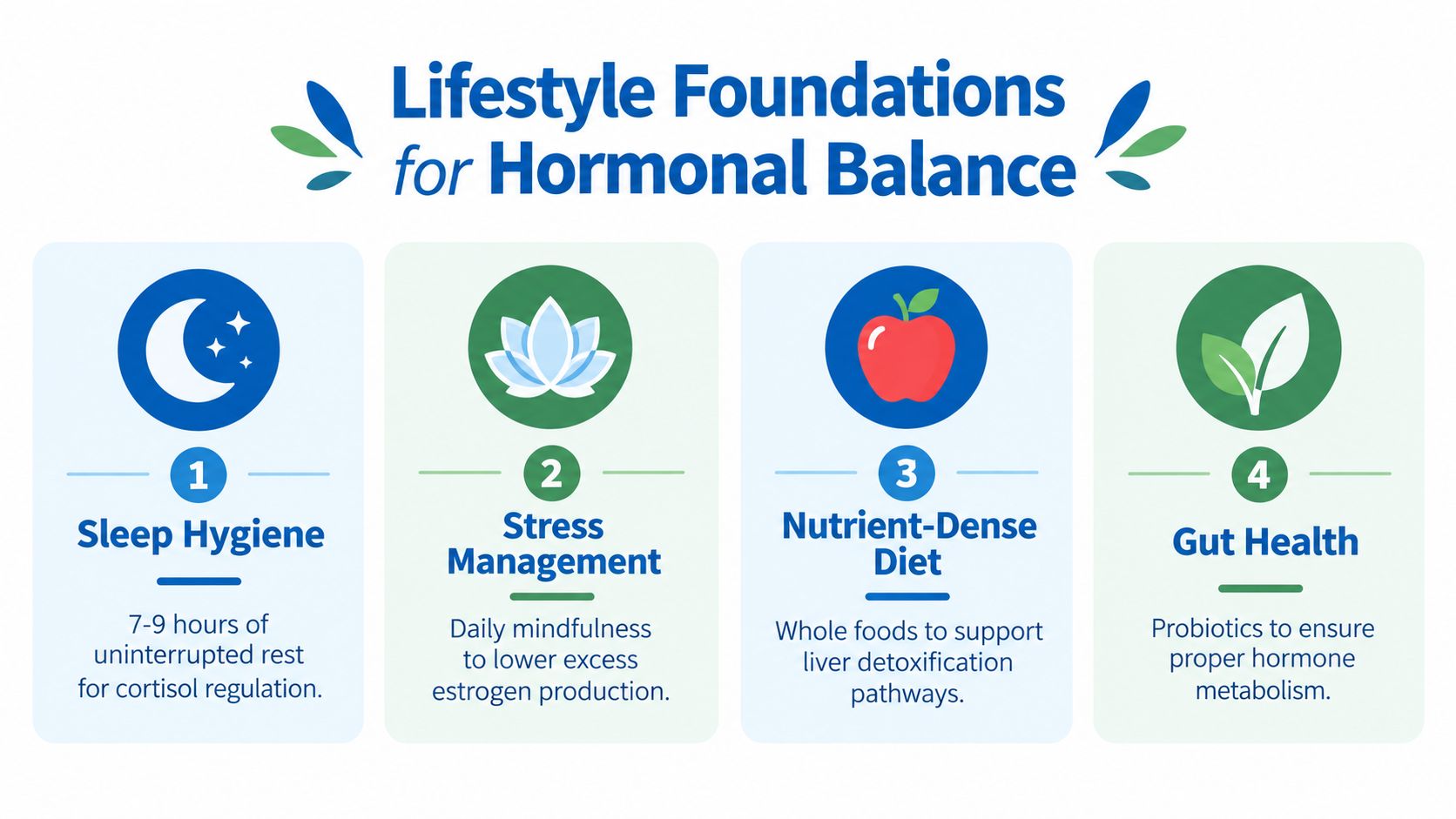
Modern life feels like a constant state of "fight or flight." This chronic stress triggers the release of cortisol, a hormone that tells your liver to dump more glucose into your blood to prepare for a threat that never comes. This constant glucose drip forces your pancreas to work harder, directly fueling insulin resistance.
Poor sleep does something eerily similar. Shockingly, research from the University of Chicago shows that just one week of poor sleep can significantly impair insulin sensitivity. When poor sleep becomes a regular thing, that temporary problem can become a chronic, long-term disruption to the very hormones that regulate your appetite and metabolism.
At Pause Medical, we know that truly addressing insulin resistance means looking at the whole picture, not just what’s on your plate. Our medical weight loss programs are created by board-certified providers to help you build sustainable habits that target all these root causes. We work with you to create a personalized plan for lasting metabolic health.
The Serious Health Risks Of Untreated Insulin Resistance
Think of insulin resistance as a slow leak in your home’s foundation. At first, you might not notice anything is wrong. But over time, that seemingly small issue can quietly destabilize the entire structure, leading to serious, widespread damage. In the same way, untreated insulin resistance is a critical turning point for your health, setting the stage for a host of chronic diseases.
Knowing these risks isn't about causing alarm—it's about understanding the incredible power you have when you take action early. When you see insulin resistance for what it is, a major health crossroads, you can find the motivation to make changes that protect your future vitality. This is your chance to invest in a future where you feel strong, healthy, and in control, with the right medical team by your side.
The Path To Prediabetes And Type 2 Diabetes
The most direct route from insulin resistance leads straight to prediabetes and, eventually, type 2 diabetes. As your cells become more and more “deaf” to insulin’s signals, your pancreas has to work overtime, pumping out more of the hormone to get the job done. For years, this heroic effort can successfully keep your blood sugar in a normal range, completely hiding the metabolic chaos happening behind the scenes.
But eventually, your pancreas can’t keep up. It gets exhausted, and its ability to produce insulin begins to fall. At that point, blood sugar starts to creep up—first into the prediabetic range, and then, if left unchecked, into the full-blown diabetic range. What’s frightening is how many people cross this line without ever realizing it, as the symptoms can be incredibly subtle until significant damage is already done. Early, proactive medical intervention is key.
Metabolic Syndrome: A Dangerous Cluster Of Conditions
Insulin resistance is the main driver behind a condition called metabolic syndrome. This isn't a single disease, but a cluster of five risk factors that, when they appear together, dramatically increase your risk for heart disease, stroke, and diabetes. A diagnosis of metabolic syndrome is made when you have at least three of these five conditions:
- High Blood Pressure: Excess insulin can make your body hold onto sodium and water, which stiffens your arteries and raises blood pressure.
- High Blood Sugar: This is the most direct outcome when your cells can no longer absorb glucose from your blood effectively.
- Excess Belly Fat: Insulin is a fat-storage hormone, and high levels tend to shuttle fat storage directly to your midsection (visceral fat).
- High Triglycerides: High insulin signals your liver to ramp up its production of triglycerides, a type of fat that circulates in your blood.
- Low "Good" HDL Cholesterol: Insulin resistance is also tied to lower levels of HDL, the "good" cholesterol that helps clear out harmful cholesterol from your arteries.
The rise of insulin resistance is more than just an individual health problem; it's a looming global crisis. Projections estimate that by 2050, an incredible half of the global population could be insulin resistant or prediabetic. You can learn more about this staggering forecast on Fortune, which highlights just how urgent proactive health management has become.
Broader Risks To Your Heart, Liver, And Overall Health
The damage caused by constantly high insulin and blood sugar reaches far beyond diabetes. It fuels a low-grade, chronic inflammation that harms organs and blood vessels throughout your body.
Some of the most serious long-term consequences include:
- Cardiovascular Disease: Insulin resistance is a major, independent risk factor for heart attacks and strokes. It promotes the buildup of plaque in your arteries (atherosclerosis), raises blood pressure, and creates an inflammatory state that is toxic to your heart.
- Non-Alcoholic Fatty Liver Disease (NAFLD): When your system is flooded with excess insulin and glucose, your liver starts converting that sugar into fat for storage. Over time, that fat accumulates in the liver itself, leading to inflammation and damage that can progress to cirrhosis and even liver failure.
- Increased Cancer Risk: A growing body of research has linked high insulin levels to an increased risk for several cancers, including breast, colon, and pancreatic. Because insulin is a growth-promoting hormone, elevated levels can unfortunately fuel the growth of cancer cells.
Taking control of insulin resistance is one of the most powerful forms of preventative medicine you can practice. By tackling the root of the problem, you aren't just managing one condition; you're actively shielding your entire body from a cascade of serious health issues. The supportive, evidence-based approach in Pause Medical's preventative wellness solutions is designed to give you the expert guidance and medical oversight you need to make this crucial investment in your long-term health.
How We Get to the Root of Your Metabolic Health
Feeling off but not sure why? It’s a frustrating place to be. Moving from vague symptoms to a real solution starts with a solid diagnosis. Guessing you have insulin resistance isn’t enough—you need to know for sure. At Pause Medical, we skip the guesswork. Our board-certified medical team uses a comprehensive set of diagnostic tools to get a truly clear picture of what’s happening with your metabolism.
This process gives us the data we need to build a plan that targets the actual cause of your symptoms. It's the foundation for making changes that stick.
Why Standard Blood Sugar Tests Don't Tell the Whole Story
Many of our patients are confused when they first come to us. They’ve been told their standard lab work, like fasting blood glucose or even an HbA1c, is "normal," yet they still feel terrible. While these tests are useful, they often miss the early, subtle signs of insulin resistance.
- Fasting Glucose: This is just a snapshot of your blood sugar at one specific moment after you’ve fasted. Your body is smart, and for years, it can overproduce insulin to keep this number in the normal range.
- Hemoglobin A1c (HbA1c): This gives you a three-month average of your blood sugar. It's a great tool for spotting prediabetes and type 2 diabetes, but it's a lagging indicator. By the time your A1c starts to climb, insulin resistance has likely been a problem for quite a while.
Relying only on these tests is like looking at the water level of a reservoir and saying everything is fine, all while ignoring the immense pressure building up on the dam wall. Your blood sugar might look stable, but your pancreas (the dam) is working overtime to keep it that way.
Seeing the Full Picture with Advanced Diagnostics
To really understand what’s going on, we have to measure that pressure—your insulin levels. This is why we go a step further, using more sensitive tests that can catch insulin resistance in its earliest stages, often years before your blood sugar becomes a problem.
Think of it like this: a standard test is like checking your car's engine while it's idling in the driveway. Our approach is a full diagnostic on a test track, revealing how your engine actually performs under real-world stress. This proactive method is a big part of why patients choose Pause Medical for their care.
We often rely on a few key data points to get this complete view. These results, viewed together, provide a much more sensitive and accurate assessment of how well your body is responding to insulin.
Before we dive into the specifics, here’s a quick overview of the most important lab tests we use to get a clear picture of your metabolic health.
Key Lab Tests For Insulin Resistance
| Test Name | What It Measures | What May Indicate Insulin Resistance |
|---|---|---|
| Fasting Glucose | Your blood sugar level after an overnight fast. | Often normal, but a level over 100 mg/dL is a red flag. |
| Hemoglobin A1c (HbA1c) | Your average blood sugar over the past 2-3 months. | A value of 5.7% or higher indicates prediabetes. |
| Fasting Insulin | The amount of insulin in your blood while fasting. | An elevated level (often over 8-10 µIU/mL) with normal glucose is a classic sign. |
| HOMA-IR | A calculation using fasting glucose and insulin to score your degree of insulin resistance. | A score over 1.9 suggests early insulin resistance; over 2.9 is significant. |
These numbers aren't just data; they are the key that unlocks a precise understanding of your body. We use them to establish a baseline and, more importantly, to track your progress as we implement a personalized treatment plan. An elevated fasting insulin level, for instance, is a direct signal that your body is working too hard.
Similarly, the
HOMA-IR (Homeostatic Model Assessment of Insulin Resistance) score gives us an incredibly sensitive benchmark. Seeing this number go down is one of the most rewarding ways to see that your lifestyle changes are making a real, measurable difference.
A Personalized Plan To Reverse Insulin Resistance
Figuring out you have insulin resistance is a huge first step. The next, and far more empowering, step is knowing exactly what to do about it. The problem is, generic advice like "eat less and move more" rarely gets to the root of the issue because it ignores the complex web of metabolic and hormonal signals that are really in control.
A plan that actually works isn’t a one-size-fits-all prescription. It’s a strategy built around your unique body, lifestyle, and health goals—and it should always be guided by a board-certified medical provider. At Pause Medical, we don’t just treat symptoms; we dig deeper to reverse the underlying drivers of insulin resistance so you can get your energy and vitality back for good.
The Foundational Pillars of Your Plan
Your journey back to metabolic health starts by building a strong foundation. These are the core habits that work together to reset your metabolism, stabilize your blood sugar, and ultimately, help your cells listen to insulin again.
- Strategic Nutrition: This is about so much more than just counting calories. We focus on the quality of your food, helping you build meals that balance
protein (to keep you full and preserve muscle) with high-fiber foods (to slow down sugar absorption). The goal is to get off the insulin rollercoaster by reducing the processed foods, refined carbs, and sugary drinks that keep it going.
- Targeted Exercise: Think of physical activity as making your muscles hungry for glucose. When you exercise, your muscles can pull sugar from your bloodstream without needing much insulin, which takes a huge burden off your pancreas. A smart routine blends
resistance training to build metabolically active muscle with
cardiovascular exercise for overall heart health.
- Lifestyle Optimization: Chronic stress and poor sleep are silent partners in driving insulin resistance. We'll work with you on practical stress-reduction techniques and simple ways to improve your
sleep hygiene. You’d be surprised how much even small improvements here can impact your hormones and metabolism.
Reversing insulin resistance isn't about extreme diets or punishing workouts. It's about consistently making smart choices that nourish your body and restore its natural balance, one day at a time, with expert medical supervision.
Advanced Medical Interventions for Lasting Success
For many people, lifestyle changes are a powerful start, but they aren't quite enough to break the cycle—especially if significant weight loss or hormonal imbalances are part of the picture. This is where medically supervised interventions can be a true game-changer, helping you see results faster and making them stick.
Our providers at Pause Medical are experts in using these advanced therapies to finally get you off the metabolic hamster wheel.
The Role of Medication in Restoring Sensitivity
When used correctly, certain medications can give your body the boost it needs to reset its metabolic function. Think of them not as a magic bullet, but as a powerful tool that makes all your lifestyle efforts even more effective.
- Metformin: Often the first medication a doctor will consider, Metformin works in two ways: it tells your liver to produce less glucose and helps your muscle cells become more receptive to insulin. This helps bring down both your fasting and after-meal blood sugar levels.
- GLP-1 Agonists: This class of medications (including Semaglutide and Tirzepatide) has been a breakthrough for metabolic health. They mimic a natural gut hormone that helps your body release insulin more effectively, dials down your appetite, and slows down digestion so you feel fuller longer. The result is better blood sugar control and, for many, significant and sustainable weight loss—directly tackling the fat storage driven by insulin resistance.
Our medical weight loss programs are designed by our medical team to see if these medications are a safe and effective option for you.
Hormone Replacement Therapy: The Missing Link
Hormonal shifts, especially during perimenopause, menopause, and andropause in men, are deeply connected to metabolic health. As estrogen and testosterone levels decline, insulin resistance often gets worse, making it incredibly frustrating to manage your weight and energy. This is a critical piece of the puzzle that often gets missed.
Hormone Replacement Therapy (HRT) can be instrumental in breaking this cycle. By restoring key hormones to optimal levels, HRT can:
- Directly improve your body’s sensitivity to insulin.
- Help you lose stubborn visceral fat (the dangerous fat around your organs).
- Increase muscle mass, which acts like a sponge for blood sugar.
- Boost your energy and motivation to stick with your new nutrition and exercise habits.
When your hormones are balanced, every other part of your plan just works better. As a leader in hormone replacement therapy, our team at Pause Medical creates personalized HRT plans that address the root hormonal causes of your metabolic struggles.
Your path to reversing insulin resistance starts with a conversation. Schedule your consultation today to meet with one of our board-certified providers and begin building your personalized plan for a healthier, more energetic future.
Common Questions About Insulin Resistance
Learning you have insulin resistance can feel overwhelming, and it's natural to have a lot of questions. What does this really mean for my health? Can I fix it? What comes next?
We get it. At Pause Medical, we believe patient education is key. Here are some of the most common questions our own patients ask, with straight-to-the-point answers from our medical experts to give you clarity and confidence.

Can I Actually Reverse Insulin Resistance?
Yes, absolutely. For the vast majority of people, insulin resistance is not a permanent condition. With a dedicated, evidence-based approach, you can significantly improve your body's sensitivity to insulin and, in many cases, fully reverse the condition.
The key is a comprehensive, personalized plan that combines strategic nutrition, targeted exercise, stress and sleep management, and when appropriate, medical therapies like Metformin, GLP-1 agonists, or HRT. Working with a board-certified provider at Pause Medical ensures you’re addressing the true root causes for results that actually last.
How Long Until I Start Seeing a Difference?
While everyone's body is different, many people start to feel better within just a few weeks of starting a personalized plan. They often report having more stable energy, clearer thinking, and fewer intense food cravings.
As for the numbers, measurable improvements in lab tests like HOMA-IR and fasting insulin can often be seen in as little as three months. We track your progress closely with follow-up testing and fine-tune your plan along the way, ensuring you're making real, tangible progress toward your health goals.
Is This Really Just Another Way of Saying "Lose Weight"?
No, and that’s a really important distinction to make. While healthy weight loss is often a positive outcome of improving insulin resistance, our primary focus is on fixing your underlying metabolic function, not just chasing a number on the scale.
In fact, research shows that losing just 5-7% of your body weight can have a massive impact on improving insulin sensitivity. Our medical weight loss programs are designed for sustainable fat loss that specifically targets the metabolic dysfunction driving your symptoms.
We go beyond weight to correct the hormonal and metabolic signals firing incorrectly in your body. This integrative approach is how we achieve true, long-term improvements in your health and well-being.
You don't have to let insulin resistance dictate how you feel every day. At Pause Medical, our board-certified providers build personalized plans that get to the root cause of your symptoms, helping you reclaim your energy and vitality. We combine advanced diagnostics with a compassionate, integrative approach to deliver care that changes lives.
Ready to take control of your metabolic health? Schedule your consultation today and start your journey.
Medical Disclaimer:
The information provided in this article is for educational purposes only and is not a substitute for professional medical advice, diagnosis, or treatment. Always seek the advice of your physician or other qualified health provider with any questions you may have regarding a medical condition. Never disregard professional medical advice or delay in seeking it because of something you have read in this article.