Tirzepatide Weight Loss Results: A Medical Guide
Many people start researching tirzepatide weight loss results after years of trying to do everything “right” and still feeling stuck. That frustration is real. It’s also why the data around this medication has gotten so much attention.
One trial result stands out. In the SURMOUNT-3 phase 3 trial, people who continued tirzepatide maintained an overall mean weight reduction of 25.3% from baseline by week 88, while those switched to placebo were at 9.9% (JAMA trial data). For patients who’ve repeatedly lost weight only to regain it, that finding changes the conversation.
Tirzepatide isn’t magic, and it isn’t the right fit for everyone. But it is a powerful metabolic tool. It works best when patients understand what it can do, what it can’t do, and why real-world outcomes often look different from headline-grabbing trial numbers.
If you’re exploring medical weight loss options, the most helpful question isn’t “How much weight do people lose?” It’s “What results are realistic for someone like me, and what helps those results last?”
That’s the perspective I want to offer here. Not hype. Not fear. Just a clear, medically grounded explanation of tirzepatide weight loss results, how the medication works, what the clinical trials showed, why everyday results can be lower, and how to think about this as part of a long-term health plan.
Introduction The Promise of Tirzepatide for Weight Management
Tirzepatide has changed how many physicians think about obesity treatment. For the right patient, it can produce weight loss that goes far beyond what many individuals achieve with willpower alone.
That matters because excess weight is rarely just about food choices. Appetite signaling, insulin response, stress, sleep, hormonal shifts, and prior dieting all shape what happens on the scale. Many patients blame themselves for a biologic problem.
Tirzepatide helps because it targets the biology driving hunger and weight regain. In plain language, it can make “eating less” feel more possible by reducing the constant push to overeat.
Still, confusion often arises for readers at this stage. They see dramatic numbers online and assume those results happen quickly, automatically, and the same way for everyone. That’s not how medicine works.
Why the excitement is real
The strongest trial data shows that tirzepatide can support large reductions in body weight under controlled conditions. Those are meaningful results, and they explain why so many hopeful patients ask about this medication.
But being hopeful and being cautious can exist together. They should.
Tirzepatide is best understood as a treatment for chronic metabolic disease, not a short-term hack for fast cosmetic weight loss.
Why expectations need context
Clinical trials happen in structured environments. Patients are followed closely. Dosing is guided carefully. Adherence is monitored. Real life is messier.
People miss doses. Side effects interfere. Supply interruptions happen. Some patients stay at lower doses longer. Others stop treatment before the medication has enough time to do its full job.
That gap between ideal conditions and everyday life is one of the most important things to understand about tirzepatide weight loss results. If you know that from the start, you’re less likely to feel disappointed or assume something is “wrong” if your experience doesn’t match a social media post.
How Tirzepatide Supports Weight Loss
Tirzepatide works by activating two pathways involved in appetite and metabolism. It’s a dual GLP-1 and GIP receptor agonist. That sounds technical, but the core idea is simple.
Think of your body as having a hunger-and-fullness control center that’s been set too high for years. Tirzepatide helps turn that setting down. You still choose what to eat, but the medication may reduce the internal drive that makes those choices feel like a battle all day.

What GLP-1 and GIP are doing
GLP-1 and GIP are hormone signals involved in how your body responds to food. Tirzepatide interacts with both.
In practical terms, this can lead to:
- Less hunger: Many patients notice they aren’t thinking about food as constantly.
- Earlier fullness: Meals that used to feel “normal” may suddenly feel too large.
- Steadier metabolic signaling: The body may handle calorie intake differently when appetite and insulin-related pathways are better regulated.
The manufacturer’s clinical data describes tirzepatide’s mechanism this way: its dual GLP-1 and GIP receptor agonism creates sustained appetite suppression and improved metabolic homeostasis, and the 15 mg dose achieved a mean body weight reduction of 20.9% compared with 3.1% with placebo over 72 weeks (clinical data from Lilly).
Why dual action matters
Older medications in this category focused on GLP-1 alone. Tirzepatide’s added GIP activity may be one reason the weight loss results have been so strong in studies.
You don’t need to memorize receptor names to understand the practical point. This medication doesn’t just tell patients to “be disciplined.” It changes the physiologic environment in which discipline happens.
For patients who like to understand the broader science of GLP-1 weight loss mechanisms, that resource gives a useful explanation of how appetite regulation, digestion, and body composition can interact during treatment.
Why dose affects outcomes
Tirzepatide also shows a dose-response pattern. In general, higher therapeutic doses have produced greater average weight loss in trials.
That doesn’t mean every patient should rush to the highest dose. It means the dose often needs to be matched to tolerance, side effects, goals, and the pace of treatment.
A thoughtful clinician doesn’t chase the biggest dose on paper. They look for the lowest effective dose that a patient can realistically stay on.
Some patients also ask whether tirzepatide belongs in the broader conversation around peptides and metabolic medicine. If you’re trying to place it in that context, this overview of https://pausemedical.org/peptides can help clarify how these therapies are discussed in medical wellness settings.
Decoding the Clinical Trial Results for Tirzepatide
In the best-known study of tirzepatide for obesity, participants at the highest dose lost about one-fifth of their body weight over 72 weeks. That number is impressive. It is also easy to misunderstand if you are trying to predict what will happen in your own life.
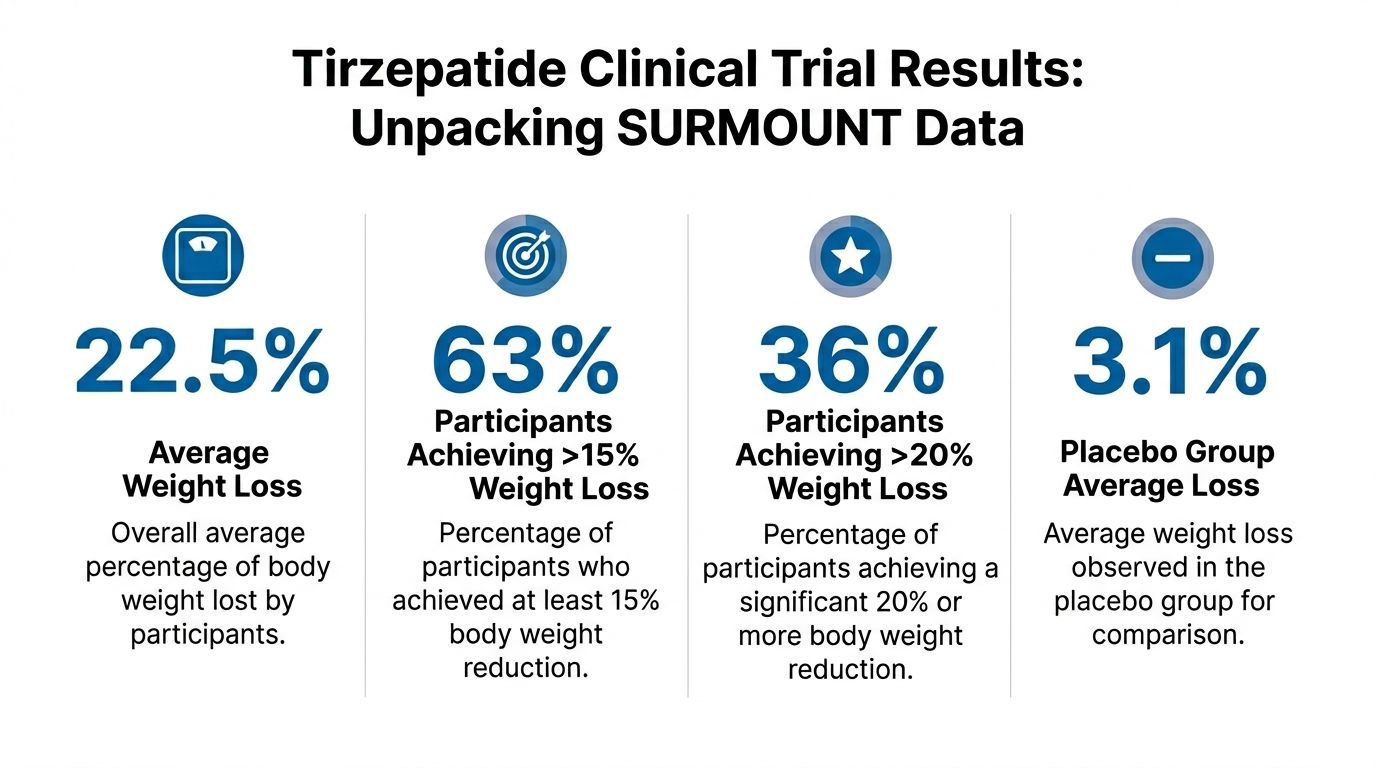
Clinical trials are built to answer a focused question: what can this medication do under carefully controlled conditions? Participants usually receive regular follow-up, structured dose increases, and close monitoring for side effects. That matters, because real life rarely looks that tidy.
A better way to read trial results is to treat them as a ceiling for what many patients may hope for, not a promise. In clinic, outcomes depend on whether a person can tolerate dose increases, stay consistent through plateaus, maintain protein and hydration, and get timely help when nausea, constipation, or appetite changes start to interfere with daily life.
What the strongest numbers mean
The clearest takeaway from the published trial program is simple. Tirzepatide can produce substantial average weight loss over time, and higher doses generally produced greater average losses than lower doses.
Here is the practical summary based on the verified information available for this article:
| Dosage | Average Weight Loss (%) | Average Weight Loss (lbs) |
|---|---|---|
| 5 mg | Lower than 15 mg in dose-response findings | Depends on starting weight |
| 10 mg | Lower than 15 mg in dose-response findings | Depends on starting weight |
| 15 mg | About 20.9% over 72 weeks | Depends on starting weight |
Percentages can feel abstract, so let me translate that the way I would in an exam room. If two patients lose the same percentage of body weight, the person who starts at a higher weight will lose more pounds. That is why physicians often focus on percentage first. It lets us compare results more fairly across different body sizes.
An average also hides variation. Some participants lost more than the average. Some lost less. Some likely needed more time at lower doses because of side effects. That spread is normal in obesity medicine, because human metabolism is not a machine with one setting.
Why trial results and real-world results often differ
This is the gap many hopeful patients run into. They see a headline result, then worry something is wrong if their body does not follow the same curve.
Usually, nothing is wrong.
Trials measure what happened in a selected group with a structured protocol. Real-world care adds variables that strongly affect outcomes: missed doses, travel, stress, sleep problems, strength training habits, under-eating protein, stopping treatment early, and trying to push the dose faster than the body can tolerate. A medically supervised program helps address those barriers early, before they turn into stalled progress or treatment dropout.
That is one reason supervised care matters so much. Tirzepatide is not just a prescription. It is a long treatment process that often needs dose adjustments, side effect management, nutrition coaching, and realistic expectation setting. Programs such as Pause Medical’s focus on closing the gap between trial conditions and everyday life, which is where safety and consistency often determine whether a patient gets a good result or gives up too soon.
What maintenance results add to the conversation
Losing weight is one phase. Keeping it off is the harder test.
Maintenance data matters because obesity behaves like a chronic disease, not a short-term project. Patients who respond well often need an ongoing plan, whether that means continuing medication, protecting muscle mass, adjusting nutrition, or reassessing the dose over time. Without that structure, early success can erode.
If you want more physician-guided explanations of weight loss treatment, side effects, and long-term planning, the Pause Medical blog archive is a useful place to keep reading.
A Realistic Timeline for Your Weight Loss Journey
In clinical practice, tirzepatide usually changes weight the way a tide changes the shoreline. Gradually, then noticeably. Patients often feel the medication before they see dramatic changes on the scale. Hunger is quieter. Portions feel more appropriate. Eating starts to require less internal negotiation.
That pattern can be reassuring once you know to expect it.
The first month
The first few weeks are usually an adjustment phase. Treatment often starts at a lower dose, not because the medication is weak, but because your body needs time to get used to slower stomach emptying and stronger fullness signals.
Patients commonly notice a few early shifts:
- Less appetite: Food thoughts may become quieter.
- Earlier fullness: Meals that once felt normal may suddenly feel too large.
- Digestive side effects: Nausea, constipation, diarrhea, burping, or a heavy feeling after meals can happen.
This stage can be emotionally confusing. One patient may feel encouraged by early progress. Another may worry that the medication is "not working yet." Both reactions are understandable. Early treatment is often more about building tolerance and consistency than chasing fast results.
The next few months
As the dose is adjusted over time, weight loss often becomes steadier. This is the point where the gap between trial results and real life becomes much clearer.
In a research study, patients follow a tightly controlled plan. In everyday life, people have work travel, family meals, stress, poor sleep, and weeks when routines fall apart. That does not mean treatment has failed. It means real-world success usually depends on support, troubleshooting, and dose pacing that fits the patient in front of you.
A medically supervised program helps translate the medication from a study result into a treatment plan you can stay with. If nausea starts limiting protein intake, that needs attention early. If someone is losing weight but also losing strength, the plan needs adjustment. If the scale stalls for a few weeks, context matters more than panic.
Here’s a helpful visual overview for patients who want to hear a clinician discuss the process in a more conversational format.
What long-term treatment teaches us
Longer treatment periods show an important pattern. Patients who continue tirzepatide under structured follow-up generally maintain more of their progress than those who stop treatment too soon.
That matters because obesity behaves like a chronic medical condition. It usually responds best to an ongoing plan, not a short burst of effort. For many patients, the goal is not reaching one exciting number on the scale. The goal is building a result that holds up through holidays, stress, travel, and ordinary life.
This is one reason supervised care matters so much in everyday life. Clinical trials show what tirzepatide can do under ideal conditions. Careful medical follow-up helps more patients get closer to those results safely, with fewer setbacks and fewer reasons to quit early.
What to expect emotionally
There is usually an emotional timeline too.
Hope often comes first. Then uncertainty can show up, especially if side effects appear or weight loss slows after the early phase. Later, confidence tends to grow when patients understand their own pattern and stop measuring their progress against the most dramatic stories online.
A healthy pace is one your body can tolerate and your daily life can support.
Key Factors That Influence Your Tirzepatide Results
Two people can take the same medication and have very different outcomes. That isn’t strange. It’s expected.
Tirzepatide changes appetite and metabolic signaling, but your results still depend on the environment in which that medication is working. Food choices, activity, sleep, stress, hormones, and consistency all matter.
The habits that help the medication work better
Tirzepatide often makes healthy habits easier, but it doesn’t replace them.
A few examples matter more than people think:
- Meal pattern: Small, balanced meals are often easier to tolerate than large, rich meals.
- Protein intake: Patients who under-eat protein may feel weaker, less satisfied, or less motivated to stay active.
- Hydration: Dehydration can make nausea, fatigue, and constipation feel worse.
These aren’t glamorous details, but they shape the day-to-day experience of treatment.
Sleep stress and hormones
Many adults seeking medical weight loss are also dealing with menopause, andropause, thyroid concerns, or chronic stress. Those issues can affect appetite, energy, and recovery.
Poor sleep can increase cravings. Ongoing stress can make structured eating harder. Hormonal shifts can change body composition and how weight is gained or lost.
That’s why treatment should be personalized. A patient with perimenopausal sleep disruption may need a different support strategy than a younger patient whose main obstacle is overeating under stress.
Why consistency beats intensity
Patients often assume they need a perfect plan. They don’t. They need a sustainable one.
The patients who usually do best are not the ones chasing extreme restriction. They’re the ones who can keep taking the medication safely, eat in a way they can live with, and make enough lifestyle changes to support maintenance later.
Some people also benefit from targeted nutritional support during treatment. For those exploring adjunctive options, https://pausemedical.org/supplements offers a look at how supportive products may fit within a broader wellness plan.
Beyond the Scale Health Benefits of Tirzepatide
A scale matters, but it’s not the whole story. I remind patients of this often because many people have spent years letting one number define whether they feel successful or not.
When tirzepatide works well, people often notice benefits that show up before or alongside major scale changes. Their hunger feels less chaotic. Their energy becomes steadier. They move more easily. They feel more in control around food.
Quality of life matters
A patient-reported outcomes study found that 91.7% of tirzepatide users reported weight loss and described strong self-efficacy scores, with meaningful improvements in sleep, energy, and mood. Higher self-efficacy was also seen among females and those with consistent medication access (patient-reported outcomes study).
That’s important because successful treatment isn’t just about body size. It’s also about whether daily life feels better.
Better sleep, more energy, and less mental preoccupation with food are real clinical wins, even before goal weight is reached.
Why these changes support long-term success
When people feel physically better, they often make better decisions without forcing themselves as hard. They may walk more because their joints hurt less. They may cook more because they don’t feel as drained. They may stop the cycle of overeating and self-criticism.
Those shifts create momentum.
This is also why well-rounded care matters. Weight management isn’t only about appetite suppression. It’s about helping patients build a healthier relationship with eating, energy, movement, and self-trust.
If your goals include a broader focus on metabolic and overall well-being, https://pausemedical.org/wellness reflects that larger view of care.
Why Medical Supervision Is Essential for Success and Safety
One of the most common misconceptions about tirzepatide is that once you have the medication, the hard part is over. In practice, that’s often where the primary work begins.
The medication can be very effective. But effective treatment and successful treatment are not always the same thing.

Why real-world outcomes are often lower
Real-world data shows a meaningful drop-off from trial expectations. One report found that patients without diabetes achieved around 12.9% weight loss at 6 months, which is lower than the 15% to 21% seen in trials over longer periods. The same report points to slower dose escalation, supply issues, and lower persistence as key reasons (real-world tirzepatide report).
That doesn’t mean the medication “failed.” It means life happened.
Patients may stay on lower doses because nausea is too intense. They may skip injections during travel. They may stop because constipation becomes miserable. They may lose access to medication. They may not have anyone helping them troubleshoot.
What a physician helps with
Medical supervision isn’t about gatekeeping. It’s about improving the odds that you can stay on treatment safely and long enough to benefit.
A supervising clinician helps by:
- Adjusting dose escalation: Some patients need a slower ramp to improve tolerance.
- Managing side effects: Nausea, constipation, and food intolerance can often be addressed before they derail treatment.
- Screening for safety: Not every patient is a good candidate, and not every symptom should be brushed off.
- Keeping expectations realistic: Good care prevents panic when progress isn’t perfectly linear.
Digestive side effects are a frequent reason patients struggle. If you want a practical explanation of how GLP-1 medications can affect gut health, that overview is a useful companion read.
Why support changes adherence
The best medication plan is the one you can continue.
Patients often do better when they know whom to contact, how to respond to side effects, what to eat when appetite drops, and when a symptom is expected versus concerning. Those details don’t just improve comfort. They improve persistence.
A supervised plan protects patients from two common mistakes. Quitting too early because side effects weren’t managed, and pushing too hard because they were chasing someone else’s timeline.
Frequently Asked Questions About Tirzepatide Treatment
What happens if I stop taking tirzepatide
For many patients, appetite and weight-regulating biology start shifting back when the medication is stopped. The maintenance data discussed earlier strongly suggests that continued treatment helps preserve results, while stopping can lead to regain.
That doesn’t mean every patient must stay on it forever. It means discontinuation should be a medical decision, not an impulsive one.
How do tirzepatide weight loss results compare with real life expectations
The trial data is impressive, but real-world outcomes are often lower. That difference doesn’t mean you can’t succeed. It means your plan should be individualized, and you should expect progress to depend on dose tolerance, consistency, follow-up, and support.
Can I take tirzepatide if I have thyroid concerns
This requires a careful personal medical review. Some thyroid issues don’t automatically rule treatment out, while others may raise important safety questions. A clinician should review your history, current diagnoses, symptoms, and medications before treatment begins.
Is tirzepatide better than semaglutide
Tirzepatide has shown very strong efficacy and works through dual GLP-1 and GIP receptor agonism. Whether it’s “better” for you depends on tolerance, access, medical history, and treatment goals. The best medication is the one that is appropriate, safe, and sustainable for your situation.
How quickly will I notice changes
Some patients notice appetite changes early. Visible body changes usually take longer. The first phase often involves dose adjustment and learning what your body tolerates. Weight loss may not be perfectly linear, and that’s normal.
Are side effects always severe
No. Many side effects are mild to moderate, especially gastrointestinal ones, but they still matter because they can affect adherence. A medically supervised plan can help patients respond early instead of abandoning treatment after a difficult week.
What’s the first step if I’m interested in treatment
The first step is a full medical consultation. You want a clinician to review your health history, your weight-loss history, your current symptoms, your medications, and your goals. That conversation is what turns online research into a safe personal plan.
If you’re considering tirzepatide and want clear guidance from a physician-led team, Pause Medical offers in-person, personalized care for medical weight loss, hormone health, and long-term wellness. The right next step isn’t guessing based on social media before-and-afters. It’s having a thoughtful medical conversation about whether this treatment fits your body, your health history, and your goals.
Medical disclaimer: This article is for educational purposes only and isn’t a substitute for personal medical advice, diagnosis, or treatment. Tirzepatide isn’t appropriate for everyone. Decisions about weight-loss medication should be made with a qualified healthcare professional who can evaluate your individual risks, benefits, and alternatives.