Why Is It Hard to Lose Weight After 40 Answered
You step on the scale, cut back on snacks, add a few walks, and expect the number to move.
It doesn’t.
For many adults in midlife, that’s the moment frustration starts. The routines that once worked in your 20s or 30s suddenly feel unreliable. You might be eating “pretty healthy,” trying to stay active, and still watching your waistline change. Clothes fit differently. Belly fat seems more stubborn. Energy feels less consistent. Sleep may not be as solid as it used to be.
That experience is common, and it isn’t just about willpower.
After 40, your body starts working under a different set of biological conditions. Muscle becomes harder to maintain. Hormones shift. Stress and poor sleep hit harder. In some people, medical issues such as thyroid dysfunction or insulin resistance add more resistance. The result is simple to feel but harder to explain. You’re putting in effort, yet your body isn’t responding the way it once did.
That’s why the question why is it hard to lose weight after 40 deserves a better answer than “eat less and move more.”
A more useful explanation looks at the full picture. It includes metabolism, muscle, hormones, sleep, stress, and medical screening. If you’re trying to make sense of stubborn weight changes in midlife, the educational resources at
Pause Medical can help you start thinking about the problem in a more complete and realistic way.
Introduction
A lot of people reach midlife thinking they’ve somehow “lost discipline,” but the situation is more complicated.
Take a common example. A busy professional in her late 40s packs lunch most days, skips dessert during the week, and gets in weekend workouts. A man in his early 50s notices that even though he hasn’t changed much about how he eats, his midsection keeps expanding. Both feel confused because they’re comparing today’s body to the body they had years ago.
That comparison is usually the source of the confusion.
Your body at 45 isn’t running on the same internal settings it had at 25. It can still lose fat, build strength, and improve health. But it usually won’t do that with the same shortcuts, the same meal patterns, or the same “burn more calories” mindset.
What changes most is not motivation. It’s physiology.
Midlife weight gain often happens gradually enough that people don’t notice the pattern at first. Then one day they realize the scale has drifted upward, their strength feels lower, and fat seems to collect in new places. Many adults in the U.S. gain 10 to 25 pounds between their 20s and 40s, according to the NIH, partly because of age-related metabolic slowdown and muscle loss in what’s often called middle-age spread (NIH News in Health).
Weight loss after 40 is usually less about trying harder and more about matching your plan to your biology.
That shift in thinking matters. Once you understand what changed, your strategy gets clearer.
Understanding Key Age-Related Changes
By midlife, weight regulation often feels like driving the same route in a car with a smaller engine, a slower fuel burn, and a dashboard that gives different signals. The route may look familiar. Your body’s internal settings do not.
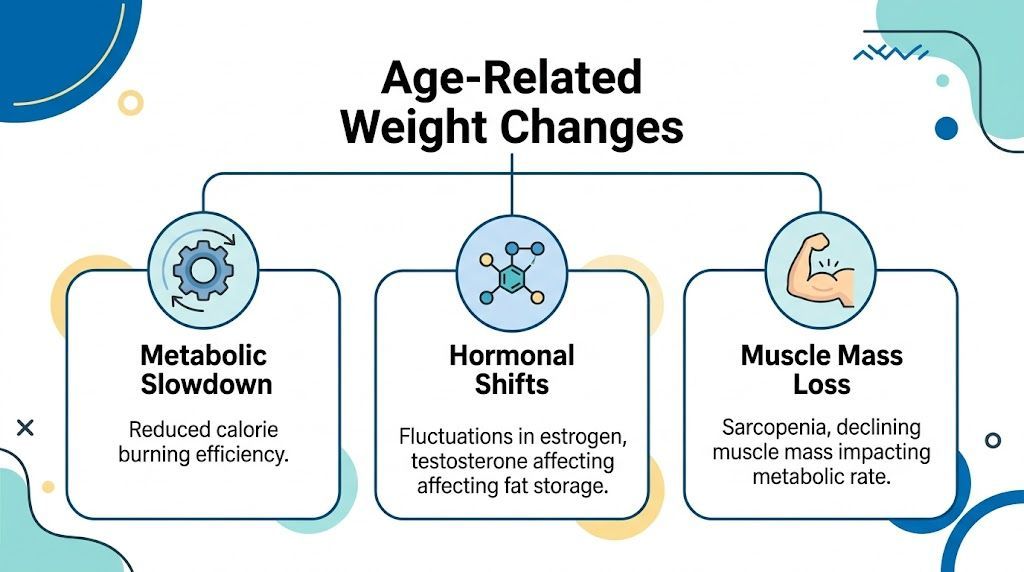
Several age-related changes tend to arrive together. Muscle becomes easier to lose. Hormones shift how energy is stored and how well lean tissue is maintained. The body also gets less responsive to the signals that normally help rebuild muscle after protein intake or strength training. That combination explains why diet-only plans often stall after 40.
Muscle loss lowers your calorie burn
Muscle works like metabolically active equipment. It uses energy all day, even at rest. As adults age, they tend to lose muscle if they are not giving the body a reason to keep it through resistance training, movement, and enough protein.
That matters because resting calorie burn is tied in part to how much lean mass you carry. If you have ever wondered why the same meals that once kept your weight steady now lead to gain, a lower resting burn is one reason. This plain-language guide to basal metabolic rate (BMR) explains that resting energy use in simple terms.
A smaller muscle “engine” means you can maintain your old habits and still end up with a smaller calorie buffer. The change is gradual, which is why it often feels confusing.
Hormonal shifts change body composition, not just body weight
Hormones act more like traffic controllers than on-off switches. They help direct where calories go, how readily fat is stored, and how well the body preserves lean tissue.
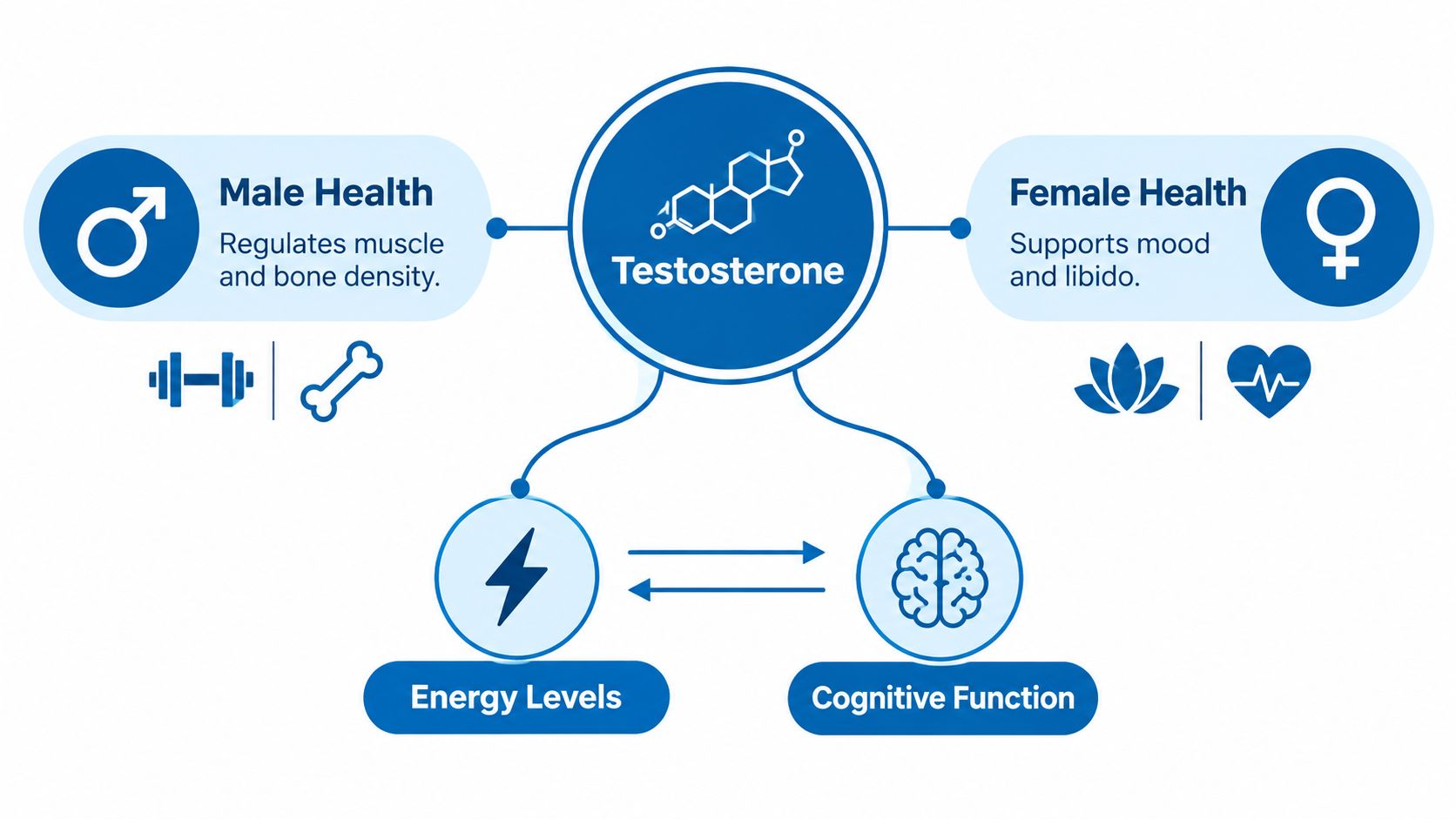
In women, the estrogen changes of perimenopause and menopause often push fat storage toward the abdomen and make visceral fat more common. In men, age-related testosterone decline can reduce support for muscle maintenance and recovery. The result is a body composition shift that many adults notice as a thicker waist, softer muscle tone, or a body that looks different even before the scale changes much. The National Institute on Aging explains these broad age-related body composition changes and why strength work matters more with age (National Institute on Aging).
This helps explain a common midlife frustration. Two people can weigh the same, eat similarly, and exercise the same number of days per week, yet one carries more abdominal fat and less lean mass because the hormonal background has changed.
Anabolic resistance makes old routines less effective
Anabolic resistance is one of the least discussed reasons weight loss gets harder after 40.
The term sounds technical, but the idea is simple. The body becomes less responsive to the usual “build and repair” signals from protein and exercise. Its operation is comparable to a doorbell that used to ring with one press and now needs a firmer push. The signal still works. It just takes more of the right input.
Researchers in the PROT-AGE Study Group found that older adults often benefit from higher daily protein intake than the standard adult minimum, especially when trying to preserve muscle during weight loss or illness. Their recommendations commonly fall in the range of 1.0 to 1.2 grams of protein per kilogram per day for healthy older adults, and higher in some situations (Journal of the American Medical Directors Association).
That has a practical consequence. The workout and protein pattern that maintained muscle at 30 may not be enough at 45 or 55. Midlife plans usually work better when protein is distributed across meals and paired with resistance training, rather than saved for one dinner or left to chance.
Why metabolism slows in a way people can feel
People often hear “metabolism slows” and picture a single switch flipping downward. The process is more layered than that.
Part of the slowdown comes from reduced muscle mass. Part can come from lower spontaneous movement during the day, such as standing less, walking less, or fidgeting less. Hormonal shifts can also affect recovery, sleep, appetite, and where the body stores fat. Each piece may be modest on its own. Together, they create the feeling that the old playbook stopped working.
This is also where a missing piece in many diet articles matters. Midlife weight resistance is not only about calories in and calories out. It is about whether the biology underneath that math is working with you or against you.
Why calorie cutting alone often backfires
Aggressive dieting in midlife often removes the very tissue that helps keep metabolism higher. If calories drop sharply without enough protein and resistance training, the body can lose muscle along with fat. That lowers resting energy use further and makes regain easier.
The pattern often looks like this:
| Change | What it does | Why it matters |
|---|---|---|
| Muscle loss | Lowers resting calorie use | Fat loss becomes slower |
| Hormonal shifts | Favors abdominal fat storage and lean-mass decline | Body composition worsens even with modest weight change |
| Anabolic resistance | Weakens the muscle-building response to protein and exercise | Old routines stop protecting metabolism |
| Hard calorie restriction | Increases the risk of losing lean mass | Weight regain becomes more likely |
A better strategy after 40 is to treat fat loss and muscle preservation as a paired goal. That is also why supervised programs and, for the right patient, carefully managed hormone replacement therapy can matter. They do more than help symptoms. They can improve the biological environment that affects appetite, recovery, lean mass retention, and where the body stores energy. That broader reset is often what turns short-term dieting into sustainable progress.
Lifestyle Contributors to Weight Resistance
A common midlife pattern looks like this. You wake up tired, rush through the morning with coffee instead of breakfast, sit through hours of work, grab something light or random for lunch, and then feel intensely hungry at night. The scale stalls, so it is easy to assume the problem is willpower.
Often, the problem is that daily habits are pressing on the same biological weak points that tend to show up after 40.

Sleep loss changes appetite and recovery
Sleep works like overnight maintenance for the appetite and stress systems. When sleep gets shorter or more fragmented, hunger tends to rise, cravings get louder, and recovery from exercise gets worse.
Research reviewed by the Sleep Foundation on sleep and weight shows that poor sleep is linked with higher calorie intake and increased appetite, especially for highly palatable foods. In real life, that often feels like doing well until midafternoon, then wanting sugar, snack foods, or oversized portions by evening.
Sleep loss also affects training quality. If you are too tired to walk, lift, or prepare meals consistently, the whole day shifts toward lower energy output and easier overeating.
Stress pushes eating and storage in the same direction
Midlife stress is rarely one thing. It is work pressure, caregiving, finances, relationship strain, poor sleep, and the mental load of keeping everything running.
Cortisol is part of that picture. Short bursts are normal. Chronic elevation is different. It can increase appetite, pull people toward quick-energy foods, and make abdominal weight gain more likely. The body starts acting like it needs to store fuel for a long emergency.
One missed workout or one stressful day does not create weight resistance. Repeating this pattern for months can.
A day often unfolds like this:
- Morning: little protein, lots of caffeine, rushed start
- Afternoon: long sitting time, delayed meals, energy dip
- Evening: strong hunger, larger portions, grazing after dinner
- Night: lighter sleep, then the cycle starts again
Sedentary time shrinks your metabolic buffer
Many adults over 40 do exercise, but they also spend most of the day sitting. That combination matters.
A single workout cannot fully offset ten or more hours of low movement. Daily movement is the background activity that helps with blood sugar control, calorie use, circulation, joint comfort, and appetite regulation. You can think of it as the body’s idle speed. When idle speed drops, the margin for error gets smaller.
That is why short walks after meals, standing breaks, carrying groceries, climbing stairs, and regular movement during the workday can matter more than people expect. For people trying to improve sleep, movement, recovery, and other daily habits in one place, wellness support for midlife health goals can be a useful starting point.
Midlife eating patterns often fail to protect muscle
Many people after 40 are not eating wildly unhealthy diets. The bigger issue is that their meals do not give the body enough repeated signals to maintain muscle.
This gets confusing fast. Someone may eat less than they did in their thirties and still feel stuck. The reason is that lower intake does not automatically mean better body composition. A breakfast with very little protein, a light lunch, and a carb-heavy dinner can leave the body underfed for muscle repair while still hungry enough to overeat later.
That matters because anabolic resistance changes the rules. After 40, the body does not respond to protein and strength exercise as efficiently as it used to. So meal structure matters more, not less. Protein distribution across the day, resistance training, and recovery start working together like parts of the same system.
A short video can help reinforce how sleep, stress, and hormones affect body weight in real life.
Hormone shifts amplify the effect of ordinary habits
The same routine that caused only minor weight changes at 30 can produce a very different result at 45 or 55. Estrogen shifts, testosterone decline, poorer sleep, slower recovery, and anabolic resistance all change how the body handles stress, exercise, hunger, and muscle maintenance.
That is the piece many diet-focused articles miss. Midlife weight resistance is usually not one problem. It is the interaction between hormones, muscle biology, and daily habits.
This is also why some patients do best with more than meal advice. Integrative hormone replacement therapy, when appropriate, and medically supervised weight loss programs can improve the biological setting in which lifestyle changes happen. Instead of asking an exhausted, hungry, slower-recovering body to fight uphill forever, the goal is to reset the conditions so good habits start working again.
Medical Issues That Block Weight Loss
A common midlife pattern looks like this. Someone cleans up meals, walks more, even adds workouts, yet the scale barely moves and abdominal weight keeps rising. At that point, the question is no longer only “What am I eating?” It becomes “What is my biology doing with what I eat?”
That distinction matters after 40 because weight resistance is often driven by overlapping medical factors. Hormone shifts can change hunger, fat storage, and blood sugar control. Loss of muscle responsiveness can lower how much energy the body uses. A slower metabolism then reinforces the whole cycle. This is why some people need medical treatment and supervised support, not just stricter dieting.
Insulin resistance can keep the body in storage mode
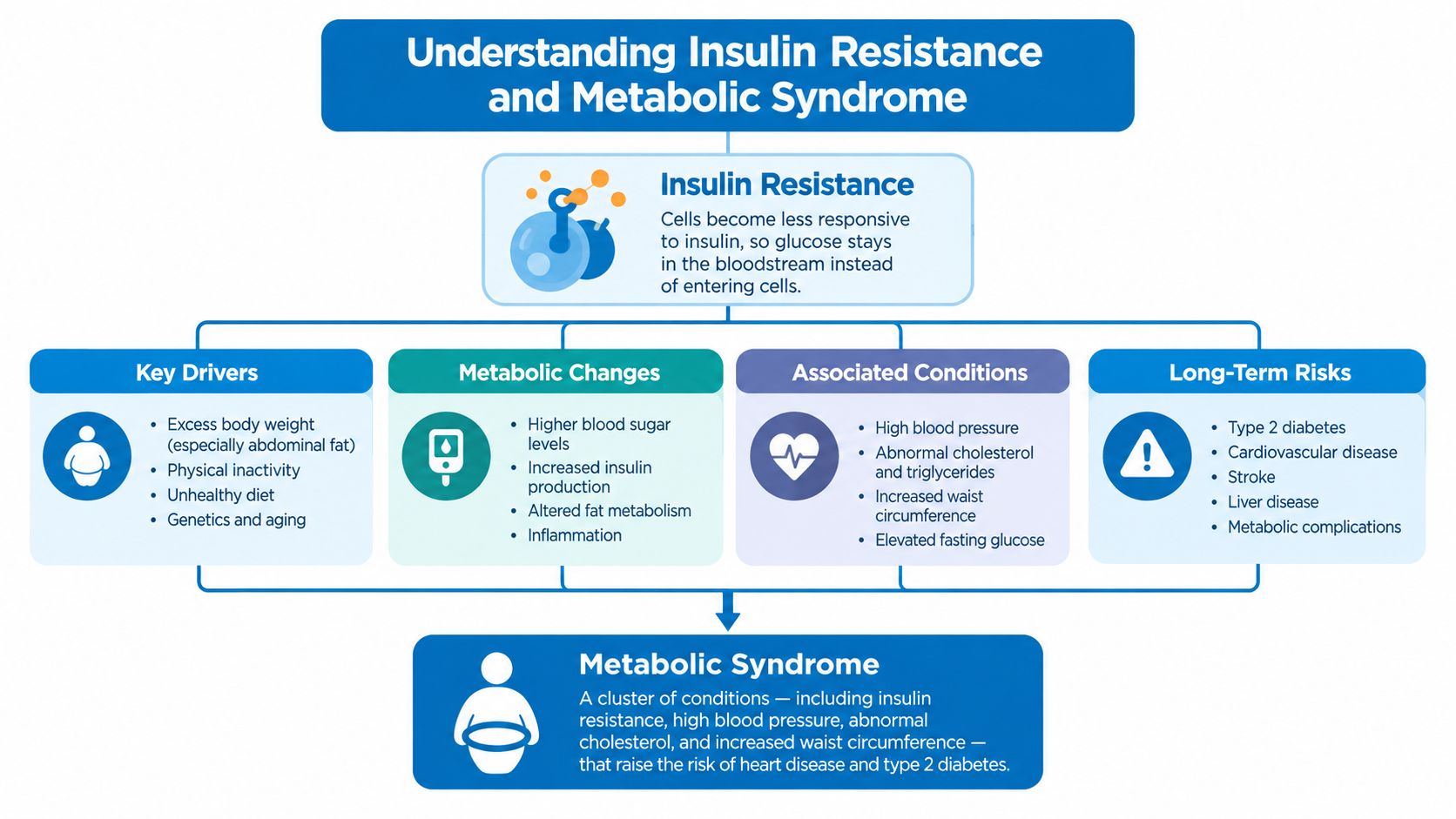
Insulin works like a key that helps move glucose out of the bloodstream and into cells. With insulin resistance, that key no longer works as smoothly. The pancreas responds by making more insulin, and high insulin levels can make fat release harder, especially from the abdomen.
Research reviewed by the National Institute of Diabetes and Digestive and Kidney Diseases explains that insulin resistance is closely linked to excess abdominal fat, prediabetes, and type 2 diabetes, all of which can make weight loss harder to achieve and maintain (NIDDK on insulin resistance and prediabetes).
This often shows up in real life as stubborn belly fat, strong cravings, post-meal sleepiness, or a pattern where calorie cutting seems to produce little visible change.
Hormone shifts can magnify the problem
In midlife, the body is rarely dealing with one signal at a time. Estrogen changes during perimenopause and menopause can affect where fat is stored and how well the body responds to insulin. Chronic stress adds another layer by raising cortisol, which can increase appetite, disturb sleep, and push the body toward central fat storage.
The result is a traffic jam of signals. Hunger cues get louder, recovery gets worse, and the body becomes less willing to use stored fuel efficiently. That is one reason integrative HRT, when appropriate and supervised, can matter. It may improve the biological setting in which nutrition and exercise are supposed to work, instead of asking an already stressed system to keep compensating on its own.
Thyroid problems deserve a closer look
The thyroid acts like a thermostat for energy use. When thyroid hormone is low, many body processes slow down, including resting energy expenditure, digestion, and day-to-day energy.
The American Thyroid Association notes that hypothyroidism can cause weight gain along with fatigue, constipation, dry skin, hair changes, and cold intolerance (American Thyroid Association on hypothyroidism). Weight change alone does not prove a thyroid disorder, but weight struggles paired with those symptoms deserve a conversation with a clinician.
For people managing thyroid disease, insulin resistance, or other metabolic conditions, structured disease state management support can provide a more useful framework than self-directed dieting.
When to ask for a medical evaluation
A plateau is not always a willpower problem. Sometimes it is a diagnostic clue.
Consider getting evaluated if you notice:
- Weight gain that feels out of proportion to your habits
- A rapid shift toward abdominal fat
- Fatigue, brain fog, poor recovery, or sleep disruption
- Cold intolerance, constipation, dry skin, or hair thinning
- Repeated plateaus despite steady effort with food and exercise
Bloodwork does not replace healthy habits. It helps explain why healthy habits may not be producing the response you would expect.
Evidence-Based Strategies for Sustainable Loss
A common midlife pattern looks like this. You clean up your meals, add more walks, try to eat less, and the scale barely moves. The missing piece is often biological, not motivational. After 40, sustainable fat loss usually depends on working with three changes at once: shifting hormones, reduced muscle-building response, and a slower resting metabolism.
That combination changes the rules. Your body does not respond to the same plan the same way it did at 25. A better strategy protects muscle, improves insulin handling, and lowers calories carefully enough that your body can keep functioning well while fat loss happens.
Put strength training at the center
Muscle works like an engine for daily energy use. When you keep more of it, you usually maintain better function, better glucose control, and a higher resting calorie burn than you would with dieting alone.
This matters more in midlife because anabolic resistance makes muscle less responsive to both protein and training. In plain terms, your body needs a clearer signal to maintain or build lean tissue. Resistance training provides that signal.
A practical starting plan often includes:
- Two or more strength sessions each week
- Repeating basic movement patterns: Squats, hinges, pushes, pulls, carries, and step-ups
- Gradual progression: More weight, more reps, better control, or improved range of motion
- Recovery between sessions: Enough time and fuel for muscle repair
You do not need a complicated split routine. Machines, dumbbells, resistance bands, and bodyweight exercises can all work if you repeat them consistently.
Raise protein with intention
Protein becomes more important in midlife because the body is less efficient at turning small amounts of protein into muscle repair and muscle retention. This is one reason low-calorie, low-protein plans can make body composition worse even if body weight drops.
Many adults over 40 do better with protein distributed across the day instead of saving most of it for dinner.
| Age Group | Protein g/kg | Notes |
|---|---|---|
| Under 40 adults | Lower thresholds may stimulate muscle protein synthesis more easily | Younger adults generally respond to less protein |
| Adults over 40 | 1.2 to 2.0 g/kg | Higher intake may help support muscle protein synthesis and recovery |
| Adults over 40 who are active or in weight loss | 1.2 to 2.0 g/kg | Aim to protect lean mass during a calorie deficit |
If you want help estimating a balanced intake pattern, a macro calculator for weight loss can be a useful planning tool.
Here is where people often get tripped up. A meal can look light and healthy but still fail the job. If breakfast is toast and fruit, or lunch is a salad with very little protein, hunger often rebounds later and training recovery suffers.
Helpful upgrades include:
- Greek yogurt paired with nuts, fruit, or another protein source
- Eggs with cottage cheese, smoked salmon, or turkey
- Salads built around chicken, salmon, tofu, beans, or lean meat
- Protein smoothies that include enough total protein to count as a meal
Use a moderate calorie deficit
Midlife fat loss usually responds better to precision than punishment. A large calorie cut can increase hunger, lower training quality, and make muscle loss more likely. That is a poor trade when muscle is already harder to hold onto.
A moderate deficit works better because it leaves room for strength training, protein intake, sleep, and daily function. Those pieces are not extras. They are part of the fat-loss process.
A simple framework looks like this:
- Keep protein high enough to support muscle.
- Continue resistance training.
- Reduce calories moderately.
- Assess progress over several weeks, not a few days.
For people who want a structured plan that coordinates these pieces, medically guided weight loss care can help match nutrition, activity, and monitoring to midlife physiology.
Build meals that control hunger and support blood sugar
After 40, appetite control is easier when meals are built to last. A useful meal usually combines protein, fiber, and enough volume to feel satisfying.
That might mean fish with roasted vegetables and potatoes. It might mean a grain bowl with chicken, beans, greens, and olive oil. It might mean tofu stir-fry with vegetables and rice. The exact cuisine matters less than the structure.
This is also where the hormone connection starts to show up. If estrogen is dropping, insulin sensitivity often worsens. If sleep is poor, hunger regulation may worsen too. Meals with protein and fiber help steady this response, which is one reason diet advice aimed only at calorie math often falls short in midlife.
Use cardio as support
Cardio still helps. It improves heart health, work capacity, stress regulation, and total energy expenditure.
But cardio alone rarely solves midlife weight resistance, especially if muscle is declining at the same time. Walking, cycling, intervals, and aerobic classes work best when they support a plan already built around strength training and protein intake.
A balanced week often includes lifting, daily walking or general movement, and some cardio matched to fitness level and recovery.
Treat recovery like part of the prescription
Sleep and stress shape food choices, hunger, and exercise quality. They also influence the hormonal environment your plan is working within.
Poor recovery acts like static on the signal. Your training signal becomes weaker. Your appetite cues become noisier. Your body is more likely to push back.
Useful recovery habits include:
- Regular sleep and wake times
- Stress outlets that do not rely on food
- Training volume that matches your actual life
- Rest days that support adaptation rather than guilt
Keep the plan repeatable
Sustainable loss after 40 usually looks less dramatic than people expect. It often comes from repeating a few high-protein meals, lifting consistently, keeping calories in a manageable deficit, and adjusting based on trends rather than daily emotion.
That steady approach fits the biology of midlife better than crash dieting. It also sets up the next step in care. Once you understand that hormonal shifts, anabolic resistance, and metabolic slowdown interact, it becomes easier to see why some people benefit from combining lifestyle work with medical supervision and, when appropriate, hormone support.
Integrating HRT and Supervised Programs
Lifestyle change is the foundation. But sometimes the foundation isn’t enough by itself, especially when hormones are part of what’s blocking progress.
That’s where medical supervision can change the trajectory.

Why hormone support can matter
Declining estrogen directly reduces insulin sensitivity, which can push the body to store carbohydrates as visceral fat rather than use them efficiently for fuel (Healthline on losing weight after 40). That helps explain why some perimenopausal and menopausal women hit plateaus even when they’re following a reasonable plan.
The issue isn’t that diet and exercise stop mattering. It’s that the hormonal environment can make the same effort produce less return.
Research summarized in that source also notes that after menopause, women naturally lose muscle while gaining fat, and that hormone replacement therapy may help restore insulin sensitivity and improve body composition independent of weight loss alone.
Supervised care can align multiple levers at once
A medically supervised program can look at more than one obstacle at a time.
That may include:
- Hormone evaluation: To see whether symptoms and labs suggest a meaningful imbalance.
- Nutrition structure: Especially protein intake, meal timing, and satiety.
- Exercise planning: So weight loss doesn’t come at the expense of muscle.
- Medication support when appropriate: Such as tools used under clinician guidance for appetite or metabolic regulation.
For people exploring this area, the overview of hormone therapy can help clarify what medical HRT is designed to address.
The integrated approach often makes more sense than another diet
A person with changing estrogen levels, rising visceral fat, poor sleep, and lower muscle mass may not need a stricter cleanse. They may need a better-aligned treatment plan.
That’s the practical case for combining medical oversight with lifestyle change. It doesn’t replace habits. It gives the habits a body that can respond better.
When midlife hormones are part of the barrier, fixing only food and exercise can leave the main obstacle untouched.
This is especially relevant for people who’ve already shown they can be disciplined. If you’ve been trying and still feel stuck, the next step may be assessment, not self-blame.
Setting Expectations and Tracking Progress
You start eating better, lifting weights, and sleeping more consistently. Two weeks later, the scale barely moves. For many adults over 40, that moment feels like proof that nothing is working. It usually is not.
Midlife progress often shows up in a different order than it did at 25. The body may improve blood sugar control, reduce waist size, build or hold onto muscle, and steady appetite before body weight changes much. That pattern makes sense once you remember what changed after 40. Hormones can shift where fat is stored, anabolic resistance makes muscle harder to keep, and a slower metabolic rate means your margin for error is smaller. If treatment and habits start correcting those pressures, the first signs of progress may be metabolic and functional, not dramatic on the scale.
Set a pace your body can hold
A slower rate of loss is often the safer and more durable target in midlife, especially if the plan is trying to reduce fat without sacrificing muscle. The CDC notes that people who lose weight gradually, about 1 to 2 pounds per week, are more likely to keep it off than people who lose weight too quickly (Centers for Disease Control and Prevention).
Some weeks will look quiet.
That does not mean the plan failed. Water shifts, menstrual changes in perimenopause, sodium intake, stress, constipation, and harder training weeks can all blur the short-term picture. A useful comparison is a retirement account. Daily numbers bounce around, but the longer trend matters more than one noisy week.
Track the signals that matter
Use a small dashboard, not a single number. One metric can miss the whole story, especially if you are strength training, improving protein intake, or starting treatment that helps your body respond more normally to those habits.
Helpful markers include:
- Body weight: Check under similar conditions and look for the trend over several weeks.
- Waist measurement or how clothes fit: Midlife fat gain often concentrates in the abdomen, so waist change can reveal progress earlier than the scale.
- Strength performance: More reps, better control, or gradual increases in weight suggest you are preserving or rebuilding lean mass.
- Hunger and cravings: Better appetite regulation often signals improving biology, not just stronger willpower.
- Energy, sleep, and recovery: These markers often improve as hormones, food intake, and training begin working together more effectively.
Review the process once a week
Weekly review works better than daily self-judgment. It gives you enough data to notice patterns without reacting to every fluctuation.
Ask yourself:
- Did I complete my planned resistance training sessions?
- Did I get enough protein on most days to support muscle retention?
- Was my sleep good enough for recovery and appetite control?
- Did stress, alcohol, or irregular meals push me off plan?
- If I have been consistent and still feel stuck, do I need a clinician to reassess hormones, medications, or other metabolic barriers?
Those questions keep your attention on causes, not just outcomes.
Adjust the plan based on biology
A plateau is a signal to assess, not a verdict on your effort. In midlife, the bottleneck may be recovery, protein intake, training quality, menopause symptoms, thyroid issues, insulin resistance, or medication effects. That is why tracking should do more than measure pounds lost. It should help you see which part of the system needs work.
This is also where integrated care stands out from diet-only advice. If HRT is appropriate and a supervised program is addressing sleep, strength training, protein intake, and medical barriers at the same time, the body often becomes more responsive. The goal is not to force weight loss through harsher restriction. The goal is to reset the conditions that allow sustainable fat loss while protecting muscle, function, and long-term metabolic health.
Conclusion and Next Steps
If you’ve been asking why is it hard to lose weight after 40, the short answer is that your body is changing in ways most diet advice ignores.
Muscle becomes harder to maintain. Hormones shift fat storage and appetite signals. Anabolic resistance raises the amount of protein and training stimulus needed to hold onto lean mass. Sleep, stress, sedentary work, thyroid issues, and insulin resistance can all make the climb steeper.
The good news is that “harder” doesn’t mean “hopeless.”
It means your strategy has to match your stage of life. Strength training matters more. Protein matters more. Recovery matters more. Medical screening matters more. In some cases, hormone-focused treatment and supervised weight-loss care may be the missing piece.
If your body isn’t responding the way it used to, that doesn’t mean you’re failing. It may mean you need a plan built for midlife physiology rather than a recycled plan from a younger decade.
If you’re ready for personalized guidance,
Pause Medical offers consultations for patients who want a more complete approach to hormone health, medical weight loss, and metabolic wellness. A clinician can help evaluate symptoms, identify root causes, and build a plan that fits your body, your goals, and your stage of life. This article is for education only and isn’t a substitute for personal medical advice, diagnosis, or treatment.