How to Lose Weight After 50: A Medical Guide
You cut portions. You walk more. You skip dessert. The scale barely moves, or it moves down briefly and comes right back. Meanwhile, weight seems to settle around your middle in a way it never did before. Many people over 50 arrive in clinic feeling confused, ashamed, or convinced they’ve lost willpower.
They haven’t. Their physiology has changed.
That matters, because generic advice often fails this age group. “Eat less and move more” isn’t wrong, but it’s incomplete. After 50, muscle loss, hormone shifts, lower day-to-day movement, poor sleep, and stress all change how the body uses energy and where it stores fat. If you don’t address those root causes, you can work hard and still feel stuck.
As a board-certified physician, I want to be direct about that reality and hopeful about what comes next. Learning how to lose weight after 50 usually means changing the strategy, not blaming yourself harder. The most effective plans protect muscle, improve metabolic health, and look closely at symptoms like fatigue, sleep disruption, hot flashes, mood changes, low libido, and stubborn abdominal weight gain. Those clues often point to more than simple overeating.
This guide is built for the person who’s tired of random tips and wants a medical explanation that fits what their body is doing now.
The Frustrating Reality of Weight Gain After 50
A common story goes like this. A woman reaches menopause, keeps eating roughly the way she always has, and notices that her waistline changes even though her habits don’t seem dramatically different. Or a man in his 50s starts feeling more tired, less strong, less motivated to exercise, and gains weight around the abdomen despite trying to “clean up” his diet.
Neither person is imagining it.
Weight gain after 50 often feels unfair because it is less responsive to the methods that used to work. Short-term dieting may drop some pounds, but energy falls, hunger rises, and muscle loss can make the next attempt harder. People interpret that as personal failure when it’s often a mismatch between an older body and a younger-body plan.
You can be disciplined and still use the wrong strategy for this stage of life.
What I tell patients is simple. If your body has changed, your treatment plan has to change too. That means looking beyond calories alone and asking better questions.
- Are you losing muscle while trying to lose weight
- Are estrogen or testosterone shifts changing where you store fat
- Has sleep become lighter or more broken
- Has arthritis, stress, or fatigue reduced your daily movement without you noticing
Those questions matter because they shape what works.
Why standard dieting often backfires
Many adults over 50 respond to weight gain by cutting food aggressively and adding more cardio. On paper, that seems logical. In practice, it often leaves them hungry, discouraged, and weaker.
When the body is already dealing with age-related muscle loss and hormonal change, an overly restrictive plan can strip away lean tissue right when you need it most. You may see the scale move, but body composition moves in the wrong direction. That’s one reason people say, “I lost weight, but I still don’t feel better.”
The better goal is not just a lower number. It’s a healthier metabolism, better strength, improved energy, and a body that’s easier to maintain.
Why Your Body Resists Weight Loss After 50
A 52-year-old patient will often tell me the same story. She is eating less than she did in her 30s, trying to walk more, and still watching the scale stall while her waistline grows. That pattern is common after 50, and it usually reflects physiology, not a lack of effort.
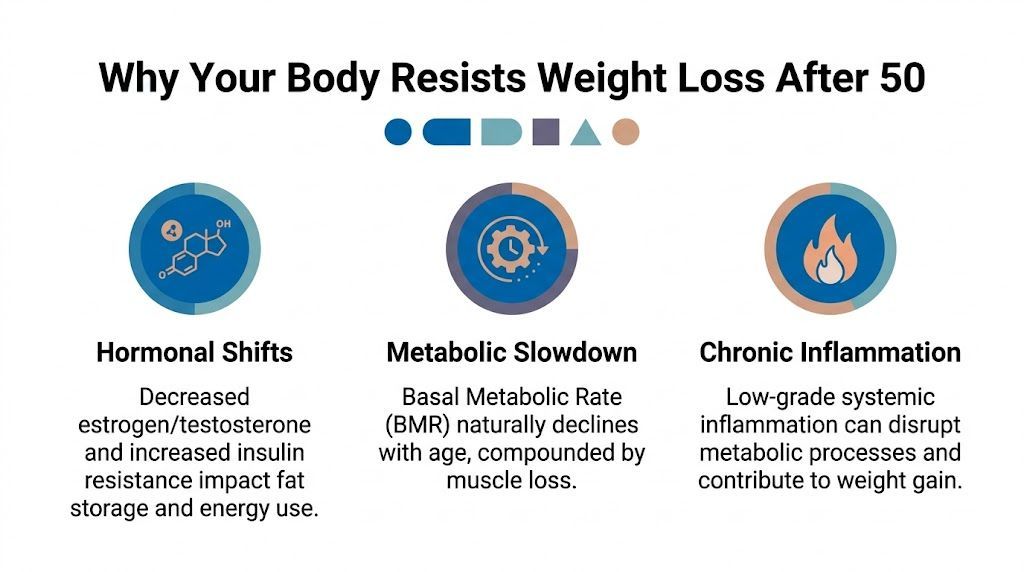
Three forces usually drive the resistance: age-related muscle loss, hormone shifts that change fat storage and appetite regulation, and a gradual drop in total daily movement. Standard diet advice rarely addresses all three at once. That is why generic plans often fail adults in this stage of life.
Muscle loss changes your baseline
Muscle mass declines with age, a process called sarcopenia. Since muscle is metabolically active tissue, losing it lowers the number of calories your body uses over the course of a day. The result is straightforward. The eating pattern that kept your weight stable years ago can now produce slow, persistent fat gain.
This changes the math of weight loss, but it also changes the strategy.
Adults over 50 usually do worse with aggressive calorie cutting if the plan does not protect lean mass. I see this often in clinic. Patients lose some weight, but they also lose strength, energy, and physical resilience. Then maintenance becomes harder because the body they are left with burns fewer calories and tolerates exercise less well.
That is one reason broad advice to "eat less and move more" is incomplete. After 50, the quality of the weight you lose matters almost as much as the amount.
For a broader consumer-friendly look at age-related metabolic changes, this discussion of why it's hard to lose weight after 40 offers a useful overview that many patients find relatable.
Hormones shift body composition
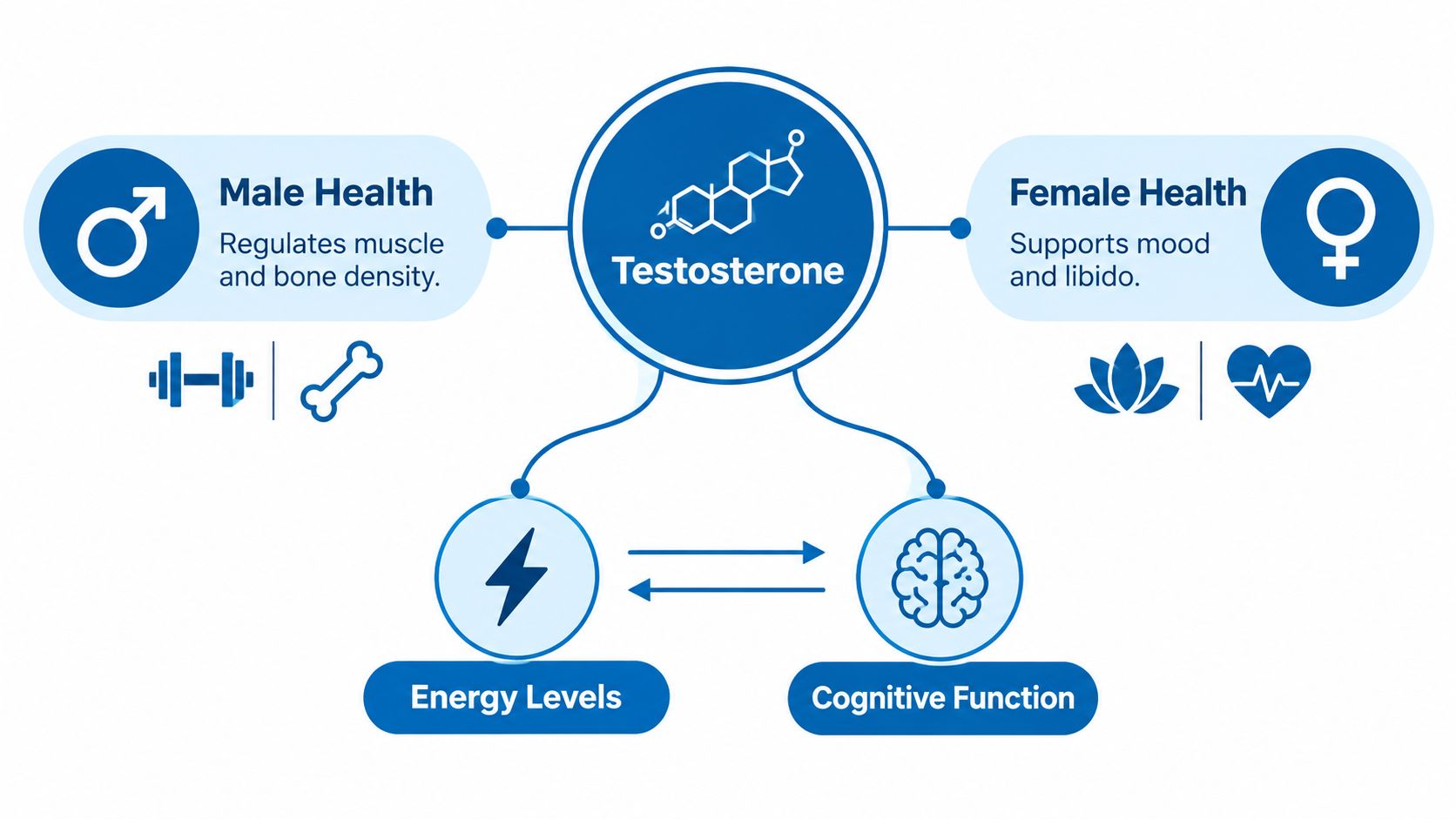
Hormones change the terrain. In women, the menopause transition often brings lower estrogen, disrupted sleep, more central fat storage, and reduced insulin sensitivity. In men, lower testosterone can contribute to loss of lean mass, lower drive to exercise, and a slower recovery pattern.
Patients usually notice this in a very specific way. Their weight may not rise dramatically everywhere, but abdominal fat becomes more stubborn.
That pattern matters medically because belly fat is more strongly linked with insulin resistance and cardiometabolic risk than weight that is distributed more evenly. It also explains why an older body may respond differently to the exact same habits.
Weight concerns rarely show up alone. Many patients who ask about weight are also dealing with hot flashes, low libido, poor sleep, brain fog, or a drop in exercise capacity. When those symptoms cluster together, it makes sense to discuss hormone therapy options with a qualified clinician who can evaluate the full picture.
Clinical takeaway: Weight gain after 50 is often a sign of changing body composition and hormone physiology. It is not a simple measure of willpower.
Daily movement often drops without notice
Formal workouts are only one part of energy expenditure. A large share comes from ordinary activity across the day: walking through stores, standing while cooking, climbing stairs, carrying laundry, gardening, and moving around at work or at home.
Those calories add up. They also disappear more easily than people expect.
A sore knee changes how often you take the stairs. Retirement removes a commute and daily walking. Fatigue leads to more time sitting. Broken sleep makes the next day less active. Each shift seems small on its own, but together they can lower calorie burn enough to block fat loss even when food intake looks reasonable.
There is another trade-off here. Pain, stress, and poor sleep do not just reduce movement. They also make appetite regulation worse and planning harder. The body starts pushing for quick energy, while daily life makes it harder to act on long-term goals. That is why a medically integrated approach works better than treating diet as the only lever.
Your Foundational Program for Nutrition and Exercise
A common pattern looks like this. You try to eat less, add more cardio, see a little movement on the scale, then stall. After 50, that approach often fails because the target is not only body weight. The objective is to reduce fat while protecting muscle, steadying appetite, and working with the hormonal changes already in play.

Nutrition needs a reset, not a crash diet
Crash diets create predictable problems in this age group. Hunger rises. Energy drops. Training suffers. Evening eating gets harder to control. I see this often in clinic, especially in patients who are trying to use the same strategy that worked at 35.
A better plan uses a modest calorie deficit and enough protein to preserve lean mass. Earlier in the article, we noted that calorie needs often decline after 50. That means portions usually need more structure than they did before, but aggressive restriction is rarely the answer.
Protein deserves special attention. Higher protein intake helps support muscle retention during weight loss, and that matters more after 50 because age-related muscle loss is already working against you. One evidence summary on how to lose weight after 50 also emphasizes pairing adequate protein with regular strength training to counter sarcopenia.
Each meal should do a job:
- Start with protein. Eggs, Greek yogurt, fish, chicken, cottage cheese, tofu, tempeh, lean meats, or a protein shake can all work.
- Add fiber. Vegetables, beans, berries, lentils, and oats improve fullness and help patients stay consistent.
- Use starches with intention. Potatoes, rice, fruit, and whole grains can fit well, but the amount should match your activity level and blood sugar response.
- Audit liquid calories. Alcohol, sweetened drinks, and high-calorie coffee add-ins can erase progress faster than people expect.
A short food log is often useful for one reason. It shows patterns. Evening snacking, larger weekend portions, and “healthy” foods eaten in calorie-dense amounts are common reasons progress stalls.
For some patients, selected supplements for metabolic and wellness goals can support consistency, especially when recovery, appetite control, or nutrient gaps are part of the picture. The right choice depends on medications, symptoms, and lab work.
Strength training is the priority
If I have to choose one form of exercise to protect long-term metabolic health after 50, I choose resistance training.
That is not because cardio is unhelpful. It is because muscle is metabolically active tissue, and preserving it changes what kind of weight you lose. In practice, patients who strength train tend to maintain function better, recover better, and keep results longer than those who rely on calorie cutting and cardio alone.
A good starting structure looks like this:
| Focus | Practical target |
|---|---|
| Strength sessions | 2 to 3 times weekly |
| Main exercises | Squats, rows, presses, deadlift variations, step-ups, carries |
| Effort | Challenging but controlled |
| Progression | Add reps, resistance, or stability over time |
Machines are acceptable. Dumbbells are acceptable. Resistance bands are acceptable. The best program is the one you can perform safely, recover from, and repeat next week.
Recovery matters here too. Poor sleep and high stress can reduce training quality and make soreness feel disproportionate. Some readers looking for extra help with evening relaxation may find this overview of Magnesium and GABA for calm and sleep useful, especially if restless nights are already interfering with exercise consistency.
Judge your program by whether it helps you get stronger and stay active, not by how exhausted you feel afterward.
Here’s a useful demonstration to pair with a beginner-friendly routine:
Cardio still matters, but it plays a different role
Aerobic exercise supports heart health, insulin sensitivity, stamina, and mood. It also helps with daily calorie expenditure. But it should not be the entire plan.
Cardio burns energy during the session. Strength training helps preserve the tissue that supports metabolic health all week. Patients do best when they stop treating cardio as punishment for eating and start using it as one part of a balanced program.
A strong weekly rhythm often includes:
- Strength training on priority days
- Walking most days, especially after meals when feasible
- Conditioning sessions such as cycling, swimming, or brisk walking
- Low-impact choices when joint pain, arthritis, or past injuries limit tolerance
Walking deserves more respect than it gets. It is joint-friendly for many adults, easy to recover from, and realistic to sustain for months.
What usually does not work
Several patterns repeatedly lead to frustration:
- Undereating during the day, then overeating at night
- Cardio-only plans that ignore muscle preservation
- “Cheat day” habits that reverse weekday progress
- All-or-nothing thinking after travel, holidays, or one missed workout
- Copying a younger body’s plan instead of adjusting for current physiology
The plan that works after 50 is often less dramatic than people expect. It is structured enough to create a deficit, protein-forward enough to protect muscle, and realistic enough to survive a busy week, a bad night of sleep, or a flare of joint pain.
Mastering Sleep and Stress for Hormonal Health
Many people tighten nutrition and improve exercise, yet progress still feels uneven. Sleep and stress are often the missing variables.
Sleep affects appetite and decision-making
After 50, sleep often changes. Menopause can bring night sweats and awakenings. Men may notice lighter sleep or fatigue that doesn’t match their time in bed. Chronic pain can fragment the night. Once sleep deteriorates, appetite control usually gets harder.
Poor sleep can increase hunger hormones like ghrelin and make cravings feel louder. It can also leave you too tired to shop, prep meals, or train with consistency. Patients often describe this as “I’m fine all day until evening, then everything falls apart.” That pattern is common when sleep quality is poor.
Try tightening the routine rather than chasing a perfect night:
- Keep a steady wake time even if bedtime varies somewhat.
- Lower stimulation at night by dimming lights and reducing late screen use.
- Cut off heavy meals and alcohol earlier if they worsen awakenings.
- Notice symptom patterns such as hot flashes, snoring, pain, or racing thoughts.
Sometimes simple sleep hygiene helps. Sometimes it doesn’t, because the root issue is hormonal or medical. If a patient wakes repeatedly drenched in sweat, can’t fall back asleep, or feels unrested every morning, that deserves a real evaluation rather than another generic sleep tip sheet.
For readers interested in common over-the-counter sleep support ingredients, this overview of Magnesium and GABA for calm and sleep may be a helpful starting point, though supplements should still be matched to the person.
Stress changes eating in predictable ways
Stress doesn’t just feel bad. It changes behavior and hormones in ways that can interfere with weight loss.
Under stress, many people become less active, eat more impulsively, and recover worse from workouts. Some skip meals all day and overeat at night. Others lose structure entirely. Cortisol is part of that picture, but the bigger issue in everyday life is that chronic stress disrupts routines that support weight control.
A stressed body rarely chooses the highest-effort healthy option.
This is why stress management shouldn’t be treated like an optional extra. It belongs in the treatment plan.
Small interventions work better than dramatic ones
You don’t need an elaborate ritual. You need practices you’ll repeat.
Consider this menu and pick two:
- A short walk after dinner to lower mental tension and break the evening snacking pattern
- Five minutes of slow breathing before bed
- A written shutdown list so tomorrow’s tasks aren’t circling in your head at night
- Brief mindfulness practice during the time of day you usually stress-eat
- Regular recovery blocks that aren’t built around food or alcohol
If broader lifestyle support is needed, structured wellness care can help patients tie sleep, stress, movement, and recovery together instead of treating each problem in isolation.
When to Seek Medical Support for Lasting Success
There comes a point when trying harder isn’t the answer. If you’ve made real changes and still feel stuck, a medical workup is not giving up. It’s using better tools.

Signs you need more than lifestyle advice
The strongest clues are usually a combination of weight resistance and other symptoms. Examples include persistent fatigue, low libido, hot flashes, mood changes, poor sleep, loss of strength, worsening abdominal fat, or repeated plateaus despite consistent effort.
Hormonal changes after 50 are a primary driver of weight gain. Declining estrogen and testosterone promote abdominal fat and insulin resistance. Among adults in their 40s and 50s, 52 percent are actively trying to lose weight, and addressing hormonal shifts through evidence-based therapy and medical oversight may be key to overcoming plateaus, as described in this review of weight loss after 50.
That doesn’t mean every person needs medication or hormone treatment. It means symptoms should guide the evaluation instead of being dismissed.
What a proper evaluation looks like
A useful medical assessment goes beyond a quick weigh-in and a lecture to eat less.
Clinicians should ask about:
- Body composition changes rather than just total weight
- Sleep quality and signs of menopause, andropause, or another hormonal problem
- Exercise tolerance and recovery
- Glucose regulation and metabolic symptoms
- Thyroid history, medications, and chronic disease factors
- Pain, arthritis, or mobility barriers
- Current food patterns, including protein intake and evening eating
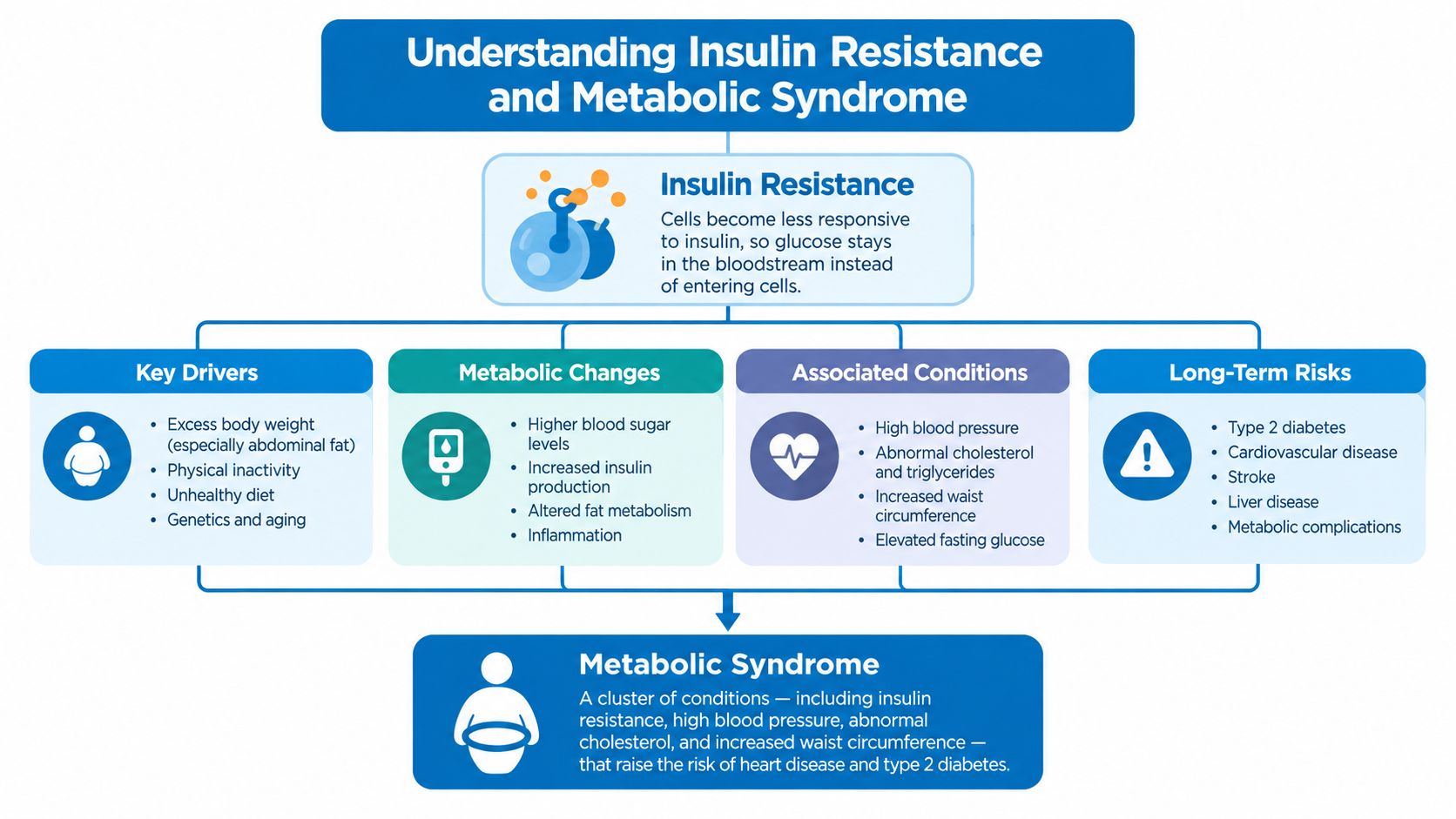
This kind of review can help separate several look-alike problems. A patient may think they have a motivation issue when they really have untreated sleep disruption. Another may think they just need a stricter diet when low testosterone or menopause-related symptoms are affecting body composition and energy. Someone else may be dealing with insulin resistance or another metabolic issue that needs direct treatment.
For patients with diabetes, thyroid disease, metabolic syndrome, or related concerns, coordinated disease state management can be an important part of building a safe plan.
The right medical plan doesn’t replace lifestyle change. It makes lifestyle change more effective.
Where hormone therapy fits
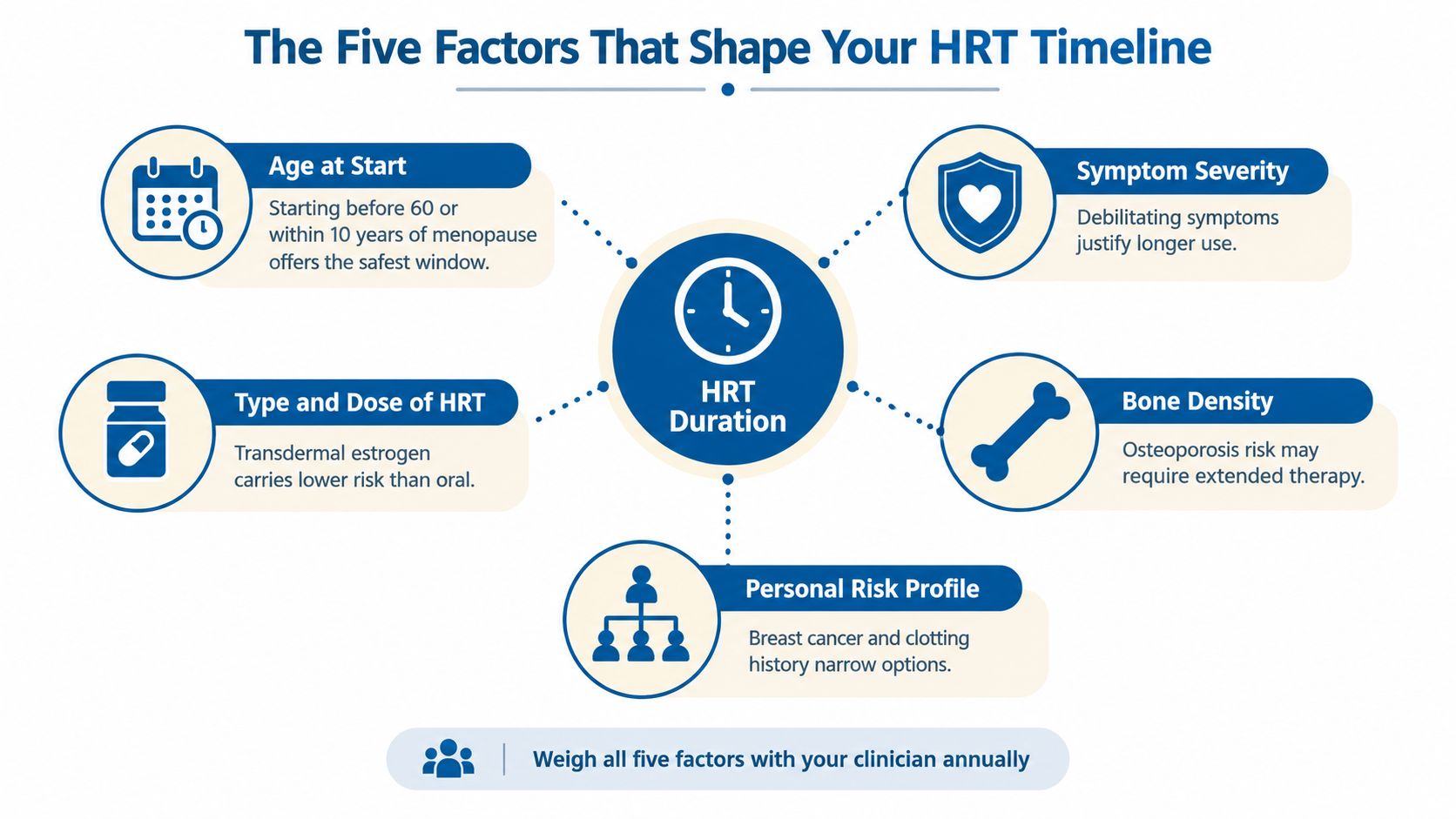
Hormone replacement therapy is not a cosmetic shortcut. Used appropriately, it can help address a physiologic problem that is contributing to weight gain, poor sleep, low energy, and unfavorable body composition.
For women, estrogen decline during menopause can alter fat distribution and worsen sleep. For men, testosterone decline can affect muscle mass, energy, and central weight gain. In both cases, treatment decisions should be individualized, based on symptoms, history, and risk profile.
The goal is not “weight loss at any cost.” The goal is improving the internal conditions that make healthy body composition more attainable.
Where GLP-1 medications fit
GLP-1 medications have changed the conversation around medical weight loss. They can reduce appetite and support better adherence to a nutrition plan, especially in patients whose hunger feels biologically louder than their effort can reliably manage.
But they are not magic, and they are not enough by themselves. If a patient uses a GLP-1 without prioritizing protein, strength training, and follow-up, they may lose weight in a way that still leaves them weaker and metabolically vulnerable. The same principle applies here as everywhere else in this article. Protect muscle. Address root causes. Monitor response.
The best candidates are people who want a medically supervised plan, not just a prescription. That includes evaluation, education, follow-up, and adjustment over time.
Your Path Forward with Pause Medical
Weight loss after 50 usually succeeds when the plan matches the biology. That means protecting muscle, addressing sleep and stress, evaluating hormone symptoms, and using medical tools when lifestyle measures alone aren’t enough.
At Pause Medical, the process is straightforward. You schedule a consultation, meet in person with a provider, review symptoms and goals in detail, and begin a personalized treatment plan built around your actual physiology. That may include evaluation for hormone imbalance, medical weight loss support, or a broader metabolic and wellness strategy.
Patients often come in thinking they need more discipline. Many need a clearer diagnosis, a better plan, and ongoing clinical guidance.
Pause Medical serves patients in Oxford, Meridian, Tupelo, Flowood-Jackson, and Starkville. The practice is designed to make care accessible, personalized, and focused on long-term results rather than short-term fixes. No insurance runaround. No one-size-fits-all template. Just careful medical oversight and a treatment plan that makes sense for this stage of life.
If you’ve been doing the work and not seeing the return, that doesn’t mean you’re failing. It may mean it’s time to stop guessing and start treating the underlying drivers.
Frequently Asked Questions About Weight Loss After 50
Is walking enough to lose weight after 50
Walking is excellent for daily movement, cardiovascular health, mood, and consistency. For many adults, it should be part of the plan. But if you want the best odds of improving body composition after 50, walking works better when paired with strength training and adequate protein.
What’s the single most important change to make
For many, the highest-impact change is prioritizing muscle preservation. In practical terms, that means regular strength training, enough protein, and avoiding crash dieting that strips lean mass.
Are weight loss medications safe after 50
They can be appropriate for some patients, especially when appetite regulation or metabolic disease is part of the picture. Safety depends on the person, their medical history, their current medications, and proper follow-up. This is not something to self-prescribe based on social media.
Why do I gain weight mostly in my stomach now
Hormonal shifts after 50 commonly change fat distribution toward the abdomen. Sleep disruption, stress, lower daily movement, and loss of muscle can add to that pattern. Belly weight at this stage is often a physiologic clue, not just a calorie issue.
How long does healthy progress take
Long-term success usually comes from steady habits and a plan you can maintain. Fast starts are less important than whether you’re preserving strength, improving energy, and building a body that’s easier to manage over time.
If you’re ready for a medical approach to stubborn weight gain, schedule a consultation with
Pause Medical. Their team provides personalized, physician-guided care for hormone imbalance, metabolic health, and medically supervised weight loss so you can stop guessing and start moving forward with a plan that fits your body.