Insulin Resistance and Menopause: A Practical Guide
At 52, she eats carefully, walks most days, and hasn't changed her routine. Yet her jeans are tighter around the waist. After a balanced lunch, she feels her energy disappear by mid-afternoon, reaches for something sweet at 3 p.m., and struggles to find the right word during a meeting. Her annual fasting glucose is still described as “normal.”
That combination can feel confusing because routine testing may not reflect the metabolic work her body is already doing. During insulin resistance and menopause , the pancreas may produce more insulin to keep glucose within the usual range, while sleep disruption, abdominal fat, changing hormones, and post-meal glucose responses shift in less visible ways.
Menopause can also affect mood, sleep, and concentration. A practical resource on the emotional side of perimenopause is Refresh Psychiatry & Therapy on perimenopause, particularly for readers noticing anxiety, low mood, or depression alongside physical changes. If weight seems harder to manage despite familiar habits, why it's hard to lose weight after 40 offers useful context.
The important question isn't whether menopause automatically causes diabetes. It doesn't. The better question is whether your body is compensating for reduced insulin sensitivity, and whether standard testing is sensitive enough to detect that change. The practical, evidence-based answers below focus on this exact life stage, including early warning signs, targeted labs, treatment choices, and a manageable first 90 days.
When the Midlife Crash No One Explains
The symptoms can arrive before the abnormal lab
The pattern often appears in ordinary moments. A woman eats a balanced lunch, feels alert for a while, then crashes mid-afternoon. She may become shaky, foggy, hungry again soon after eating, or focused on finding cookies, fruit, or a sweetened drink. Protein and vegetables were part of the meal, yet her body seems to be demanding fast energy.
Her waistline may change in parallel. The scale can move slowly while fat collects more around the abdomen. At an annual visit, fasting glucose and HbA1c may fall within the laboratory's reference range, leading to reassurance. That conclusion can miss the difference between normal glucose maintained by higher insulin and healthy insulin regulation.
A normal fasting glucose result is reassuring, but it doesn't answer every metabolic question.
A large SWAN analysis found that insulin rose steadily through the menopausal transition by about 3% per year , while fasting glucose fell by 2.2% per year , rather than changing sharply only at the final menstrual period (SWAN findings). The finding supports a broader view: ovarian aging occurs alongside changes in body composition, age-related metabolism, sleep, and daily activity.
Why your yearly checkup may feel disconnected from your life
Fasting glucose is a single measurement after an overnight fast. It does not show how much insulin the pancreas needed to produce that result, how the body responds to a meal, or whether glucose rises and drops sharply later in the day. HbA1c estimates average glucose, but an average can smooth over important highs and lows.
That is why belly fat, post-meal fatigue, cravings, and brain fog can coexist with an acceptable basic panel. These symptoms do not prove insulin resistance, and menopause can cause overlapping problems with sleep, concentration, mood, and weight. A fuller discussion can consider blood pressure, triglycerides, waist circumference, fasting insulin, HOMA-IR, and, when appropriate, an oral glucose tolerance test.
The aim is not to label every difficult day as a metabolic disorder. It is to identify a pattern early, before fasting glucose becomes abnormal, and choose a useful next test. A clinician can also consider overlapping mood symptoms, with Refresh Psychiatry & Therapy on perimenopause offering context for anxiety, low mood, or depression. For weight changes that feel resistant to familiar habits, why losing weight after 40 can become harder provides additional context.
How Menopause Reshapes Blood Sugar
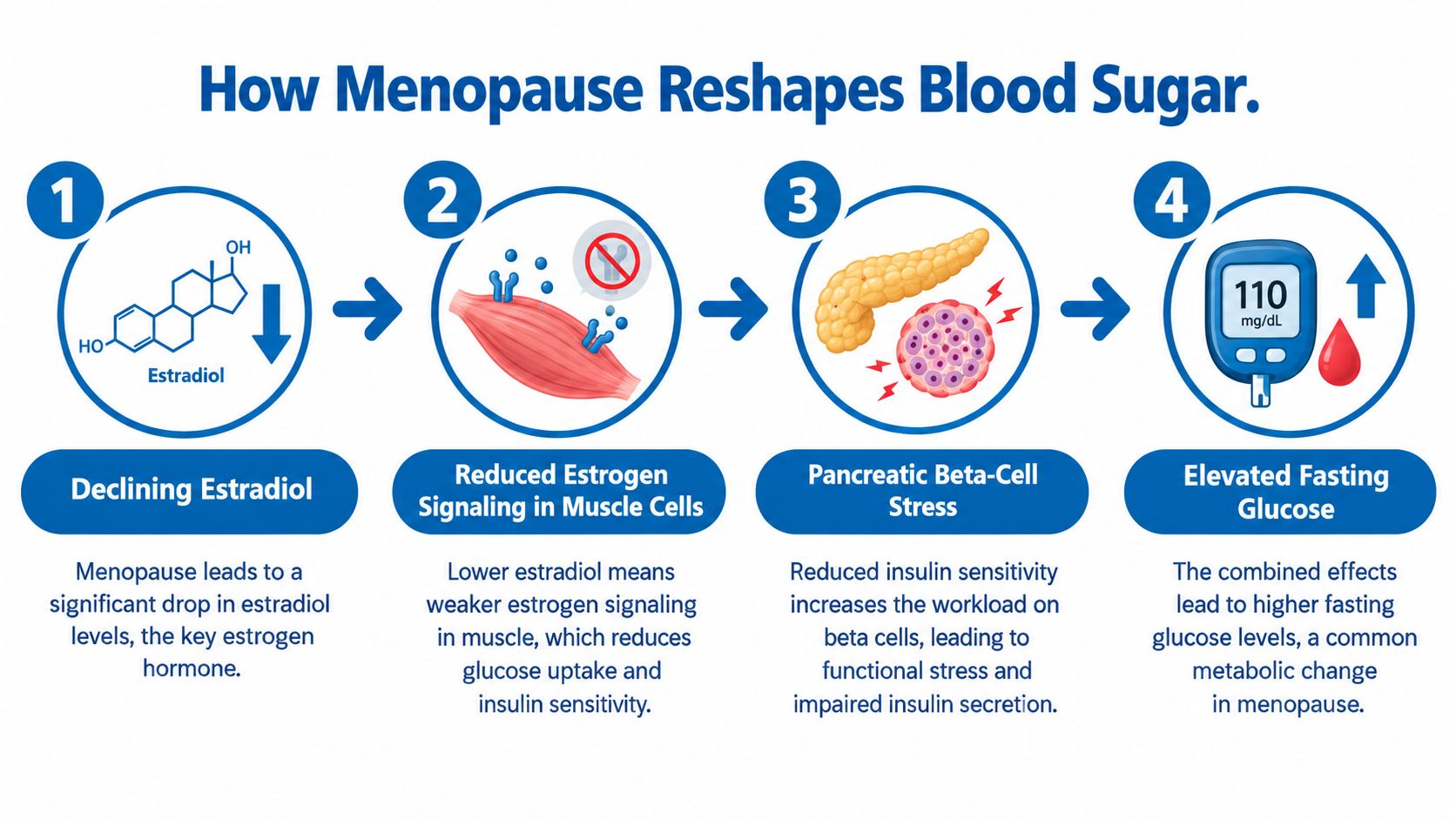
A meal that once left you satisfied may now bring a heavy afternoon slump, stronger cravings, or foggy thinking. The shift can begin before a routine fasting glucose test changes. Understanding the mechanism helps connect these early clues with the right follow-up tests.
Insulin acts like a key, helping glucose move from the bloodstream into muscle and other tissues for energy. Estrogen supports that signaling system. As estradiol declines, muscle and fat cells may respond less efficiently, so the pancreas releases more insulin to handle the same meal.
This does not mean every woman develops insulin resistance. It means the body may need more insulin to keep glucose in range. For a time, the pancreas can compensate, leaving fasting glucose looking normal while insulin demand gradually rises.
Four changes that can overlap
- Estradiol falls. Changing estrogen signals in muscle, liver, and fat tissue can affect how efficiently the body handles glucose.
- Fat distribution shifts. More fat may gather around the abdomen. Visceral fat is metabolically active and linked with inflammatory signaling.
- Muscle carries more of the workload. Muscle is a major site of glucose disposal. Less muscle, reduced activity, or poorer recovery can make glucose management harder after meals.
- Sleep becomes less reliable. Hot flashes, night sweats, anxiety, and reproductive-hormone changes can interrupt sleep, increasing appetite and reducing insulin sensitivity.
The process is not a single menopause switch. Longitudinal research found that insulin can rise gradually, with insulin sensitivity related to both chronological aging and ovarian aging (longitudinal SWAN review). A separate review reported that postmenopausal glucose regulation varies with age, BMI, and the method used to assess insulin action ( review of menopause and glucose metabolism).
Food choices still matter, but carbohydrate quality and the overall meal deserve more attention than fear of every carbohydrate. The guide to added sugars vs natural explains the difference between naturally occurring sugars and products with added sweeteners.
The lived pattern can be subtle. A stronger insulin response may come before a later energy dip. Abdominal fat can increase insulin demand, while poor sleep can intensify cravings and brain fog. Those clues do not diagnose insulin resistance, but they can justify checking fasting insulin, HOMA-IR, or, when appropriate, an oral glucose tolerance test before fasting glucose becomes abnormal.
This educational video offers another visual explanation of how insulin resistance can develop:
For a broader explanation of the reproductive hormones involved, see what hormones change during menopause and why.
Symptoms Worth Taking Seriously
Menopause and insulin resistance share several symptoms, which makes self-diagnosis unreliable. Hot flashes, night sweats, vaginal dryness, irregular cycles, and changing menstrual flow point more directly toward the menopausal transition. Hunger soon after meals, increasing waist size, post-meal crashes, and darkened skin in body folds raise a different set of questions.
The timing can help. A hot flash that wakes you at night may be primarily menopausal, but the resulting sleep loss can worsen appetite and glucose regulation the next day. A post-lunch crash that appears repeatedly, especially with shakiness or intense cravings, may deserve metabolic evaluation rather than dismissal as a normal afternoon slump.
| Symptom | Likely Menopause | Likely Insulin Resistance |
|---|---|---|
| Hot flashes or night sweats | Common, especially with changing cycles | May worsen indirectly when poor sleep affects appetite and glucose control |
| Vaginal dryness | Common from lower estrogen | Not a typical primary sign |
| Irregular periods | Common during perimenopause | Not a direct marker |
| Waist growth | May reflect changing fat distribution | More concerning when paired with hunger, triglycerides, or blood pressure changes |
| Hunger soon after eating | Can occur with poor sleep or stress | May reflect inadequate satiety and altered glucose handling |
| Brain fog | Can accompany sleep disruption and hormonal changes | More suspicious when it follows meals or occurs with shakiness |
| Darkened skin on the neck or underarms | Not typical | Can be acanthosis nigricans, a sign associated with insulin resistance |
| Elevated triglycerides or blood pressure | Can coexist | Supports broader cardiometabolic risk |
Track patterns, not isolated moments
For two weeks, note the meal, approximate timing of symptoms, sleep quality, hot flashes, activity, and cravings. You're looking for repeatable relationships, such as fatigue two hours after a higher-carbohydrate meal or hunger that appears despite a protein-rich breakfast.
The timing of glucose changes matters because fasting glucose can remain normal until later perimenopause, while fasting insulin and post-meal responses may change earlier ( review of glucose intolerance during menopause). Avoid treating any one symptom as proof. Instead, bring the pattern to a clinician who can interpret it alongside your medical history and examination.
A clinical review also associated postmenopausal status with a 60% increased risk of metabolic syndrome , even after adjustment for age, BMI, household income, and physical inactivity ( clinical review of menopause and metabolic syndrome). That finding doesn't mean menopause determines your future. It means risk deserves active attention, especially when several small signals appear together.
What Lab Tests Actually Reveal
The most useful conversation starts by separating glucose , which is the sugar in your bloodstream, from insulin , which is the hormone helping control it. A normal fasting glucose can coexist with high fasting insulin because the pancreas may be compensating for reduced insulin sensitivity.
The core panel
- Fasting glucose measures blood sugar after an overnight fast. It helps screen for prediabetes and diabetes, but it may stay within the usual range while insulin demand is rising.
- Fasting insulin estimates how much insulin your pancreas is releasing at rest. It can add context when glucose appears normal, although laboratories and clinicians vary in how they interpret it.
- HbA1c estimates average blood glucose over the preceding period. It's useful for screening, but it doesn't show post-meal spikes or rapid drops.
- HOMA-IR uses fasting glucose and fasting insulin in a calculation intended to estimate insulin resistance. It can be more informative than either number alone in an appropriate clinical context.
- Oral glucose tolerance testing shows how the body handles a measured glucose load over time. Paired insulin measurements may reveal excessive insulin demand even when glucose eventually returns to range.
A broader cardiometabolic review may include triglycerides, HDL cholesterol, blood pressure, liver markers, and waist circumference. These aren't interchangeable with direct insulin-resistance testing, but they help clinicians assess the overall pattern.
| Test | What It Measures | Target Range | Limitation in Midlife |
|---|---|---|---|
| Fasting glucose | Blood sugar at one fasting moment | No universal target can be assigned here without clinical context | May remain normal during compensation |
| Fasting insulin | Insulin released during fasting | No universal target can be assigned here without clinical context | Assays and interpretation vary |
| HbA1c | Average glucose exposure | No universal target can be assigned here without clinical context | Can hide post-meal variability |
| HOMA-IR | Estimated insulin resistance from fasting values | Interpretation depends on the laboratory and clinician | Not a direct dynamic measurement |
| Oral glucose tolerance test | Glucose handling over time | Requires clinician interpretation | More time-consuming and may not reflect every meal |
| Triglycerides and HDL | Supporting lipid pattern | Individual goals depend on risk profile | Can be influenced by diet, medication, and other conditions |
The requested “optimal” targets you may see online, such as fasting insulin under 8 mIU/L, HOMA-IR under 1.4, or a triglycerides-to-HDL ratio under 2, shouldn't be treated as universal diagnostic cutoffs. Assays, units, ethnicity, medications, health conditions, and laboratory methods affect interpretation. Ask your clinician which tests fit your history and how to follow trends rather than judging one result in isolation.
The American Diabetes Association recommendation cited by Harvard Health is that adults 35 and older should be screened at least once every three years for prediabetes and diabetes ( Harvard Health overview). If symptoms are changing between routine screenings, ask whether an expanded assessment is appropriate. The complete patient guide to insulin resistance testing can help you prepare for that discussion.
Cycle timing isn't standardized for insulin testing in the same way it can be for some reproductive hormone tests. Tell the clinician whether you're cycling, perimenopausal, postmenopausal, using HRT, or in a hormone-free interval. Consistent conditions, including fasting status and medication review, make later comparisons more meaningful.
Treatment Options That Move the Needle
A woman may finish lunch, feel suddenly exhausted, and blame herself for needing a nap. Later, she notices more abdominal fat or struggles to concentrate, even though fasting glucose still looks normal. Treatment starts by matching those early warning signs with the right lab pattern, symptoms, risks, and preferences.
Hormone therapy
Menopausal hormone therapy can improve some metabolic measures, but insulin resistance alone is not a reason to prescribe it. A 2025 meta-analysis of 17 randomized trials involving 5,772 non-diabetic postmenopausal women found that hormone therapy lowered HOMA-IR overall, with a relative mean difference of −0.24 . Estrogen-alone therapy showed a larger reduction, −0.42 , than combined estrogen-progestogen therapy, −0.14 ( 2025 hormone therapy meta-analysis). The findings suggest a possible metabolic benefit, not a guaranteed outcome or a substitute for nutrition, activity, sleep, and diabetes prevention.
Transdermal and oral estrogen differ in absorption and risk profiles, so the route matters. People with a uterus may need a progestogen for endometrial protection, but the product, dose, and schedule require individualized prescribing. “Bioidentical hormones” may describe regulated medicines or compounded preparations. Compounded products are not automatically safer or more effective. Discuss their quality, dosing, and monitoring before choosing them.
GLP-1 medications
GLP-1 receptor agonists can reduce appetite and improve glucose regulation for appropriately selected patients. They may fit a medically supervised weight-management plan, alongside a discussion of access, cost, insurance rules, gastrointestinal side effects, contraindications, and possible weight regain after discontinuation.
These medicines do not replace resistance training or adequate protein. Clinical follow-up should track nutrition, strength, symptoms, and the reason for treatment, rather than treating body weight as the only result.
Structured lifestyle change
Muscle acts as a major site for glucose disposal, which makes strength training particularly useful during midlife. Pair it with protein distributed across meals, fiber-rich foods, and regular walking after meals when practical. Snoring, morning headaches, or persistent daytime sleepiness warrant evaluation for sleep apnea, which can complicate glucose regulation and energy levels.
Some women respond well to fewer refined carbohydrates. Others need help with meal timing, portions, or consistency. Supplements, including pharmacy-grade menopause supplements, should be checked for evidence, interactions, and a documented need rather than added automatically.
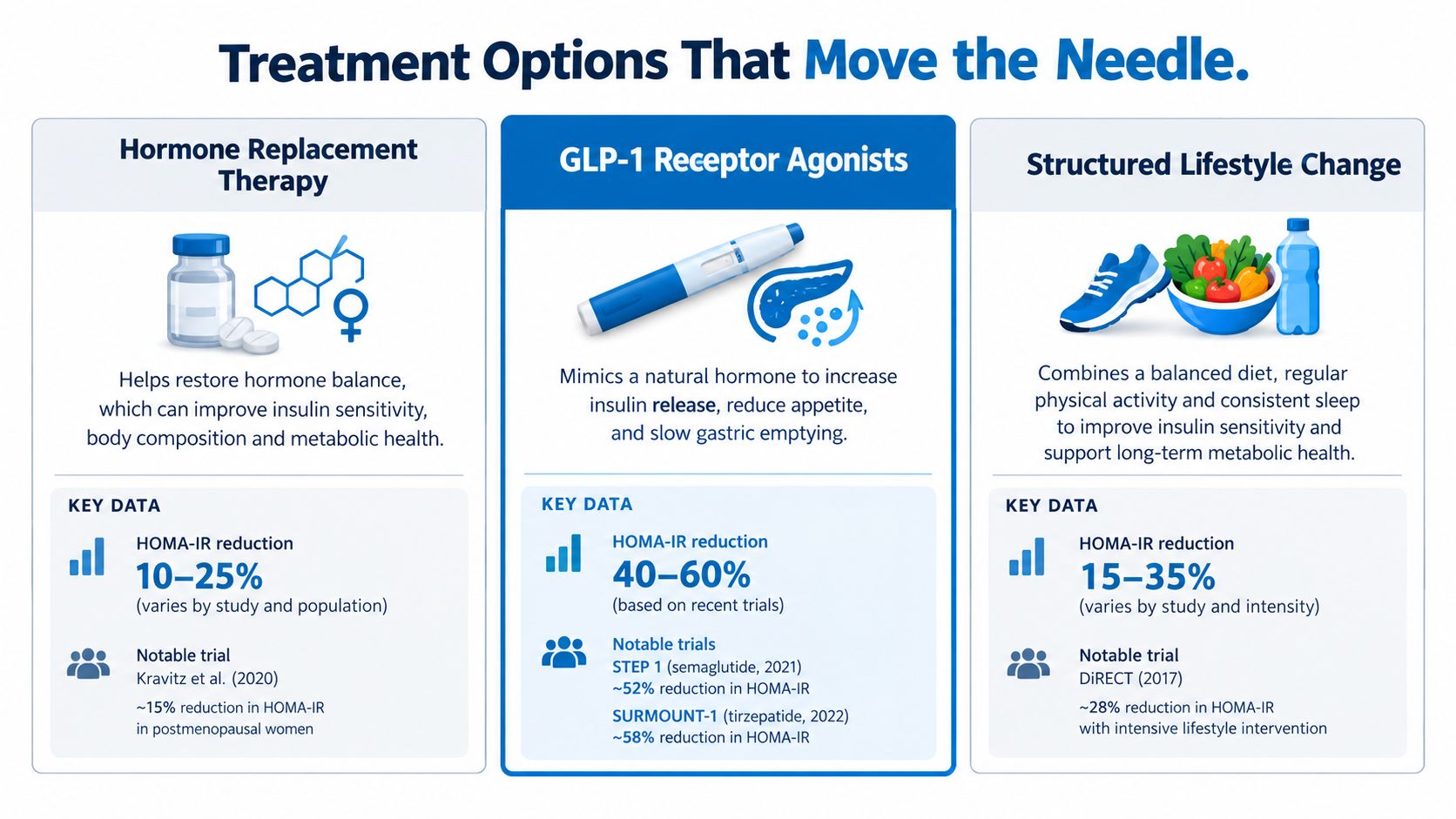
Combination plans often fit the biology better than a single intervention. For example, HRT might address bothersome menopausal symptoms while strength training supports glucose disposal. A GLP-1 medication may be paired with protein-forward meals and monitoring of muscle and nutrition. Pause Medical describes services that include HRT, medically supervised weight management, and disease management; its practical guide to insulin resistance treatment outlines options to discuss with a clinician. Benefits and risks still need to be assessed for your situation.
Beliefs That Deserve a Second Opinion
“Weight gain is the only sign”
A larger waist can signal changing insulin sensitivity, but it is not the only clue. Intense hunger, post-meal fatigue, brain fog, rising triglycerides, higher blood pressure, or darker skin around the neck and underarms may appear earlier. A stable scale does not confirm that glucose regulation is unchanged.
These symptoms can reflect several conditions, so they need context rather than self-diagnosis. Their pattern can help determine which tests deserve discussion.
“Normal fasting glucose rules it out”
Fasting glucose is a snapshot taken after an overnight fast. Early insulin resistance may show up after meals first, while the pancreas releases extra insulin to keep fasting glucose within range. Fasting insulin, HOMA-IR, and dynamic testing, such as an oral glucose tolerance test with appropriate insulin measurements, may reveal a problem when symptoms and routine glucose results disagree.
“Menopause permanently damages metabolism”
Menopause changes hormone levels and body composition, but it does not dictate one metabolic outcome. Findings from the SWAN review indicate that insulin rose gradually, with insulin sensitivity related to chronological aging as well as ovarian aging (SWAN review). Sleep, muscle mass, body composition, medications, activity, and genetics also shape the result.
“A low-fat diet is automatically protective”
Removing fat alone can leave meals dominated by refined carbohydrates and less satisfying. A more useful approach emphasizes minimally processed foods, adequate protein, fiber, and carbohydrate portions that fit your glucose response.
“Berberine, chromium, or inositol can replace assessment”
Supplements may help in selected situations, but they do not replace diagnosis, medication review, blood pressure checks, or follow-up testing. They can interact with prescriptions and vary in quality. Discuss them with a qualified clinician before adding one.
Insulin resistance is a modifiable physiologic state , not a moral judgment. Useful laboratory data, a realistic intervention, and follow-up can show whether the underlying pattern is improving.
Your First 90 Days and What Comes Next
Treat the first 90 days as a phased assessment, not a crash program. The purpose is to collect better information, make a few high-value changes, and then decide whether medication or hormone therapy belongs in the plan.
Weeks 1 and 2 focus on data
Schedule a clinical visit and ask whether fasting glucose, HbA1c, fasting insulin, HOMA-IR, lipids, blood pressure, waist circumference, and an oral glucose tolerance test are appropriate. Keep a simple log of meals, sleep, hot flashes, cravings, energy dips, and post-meal symptoms. Record a baseline waist measurement under consistent conditions, and bring your medication and supplement list.
The deliverable is not a perfect diet. It's a clear symptom and measurement baseline that lets you compare changes later.
Weeks 3 through 6 add one lever at a time
Start with a protein-forward breakfast if mornings are dominated by hunger or cravings. Add fiber-rich foods gradually, and use a practical fiber target of 30 grams per day only if your clinician agrees it suits your health and digestion. A short walk after meals can be easier to sustain than an ambitious exercise overhaul.
Establish a resistance-training baseline with movements you can perform safely, such as sit-to-stand exercises, rows, presses, or supervised weight training. If you're deconditioned, have joint disease, or have cardiovascular symptoms, get guidance before increasing intensity.
Weeks 7 through 12 support informed treatment decisions
Review the symptom log, waist measurement, energy pattern, and lab results with your clinician. This is the point to discuss whether HRT is appropriate for menopausal symptoms, whether a GLP-1 medication fits your medical profile, or whether lifestyle treatment should continue without prescription support. Recheck timing depends on the test and clinical situation, so don't order repeated labs without a reason.
A Mississippi-based consultation may include a telehealth intake, review of goals and medical history, recommended laboratory testing, a clinician evaluation, and follow-up planning. Pause Medical serves patients seeking HRT, medically supervised weight loss, and disease-management support in Mississippi, including communities near Oxford, Meridian, Tupelo, Flowood-Jackson, and Starkville. Its guide to reversing insulin resistance provides another way to organize the next conversation.
Use this article as education, not a diagnosis. Symptoms such as excessive thirst, frequent urination, unexplained weight change, chest discomfort, severe weakness, or confusion need prompt medical attention. Hormone therapy and prescription weight-loss medication also require individualized screening, prescribing, and monitoring.
Pause Medical offers Mississippi patients personalized evaluation for menopause symptoms, metabolic concerns, hormone replacement therapy, and medically supervised weight loss, with clinician-guided labs and follow-up. Visit Pause Medical to schedule a consultation and bring your symptom pattern, current medications, and questions about insulin resistance and menopause.