Testosterone and Men's Health: A Complete 2026 Guide
Some men arrive at this topic after months of second-guessing themselves. They're sleeping enough, or trying to. They're still tired. Work feels heavier than it used to. The gym results have flattened out. Sex drive isn't what it was, and that can undermine confidence, relationships, and mood.
Others don't feel “sick” at all. They just don't feel like themselves.
That experience matters. Feeling off doesn't automatically mean you have low testosterone, but it does mean your body is worth listening to. In conversations about testosterone and men's health , the hardest part is often sorting through noisy online advice. Some sources make testosterone sound like the answer to everything. Others make it sound dangerous in every situation. Most men need something simpler than that. They need a clear plan, plain language, and honest medical context.
Feeling Off Is a Sign Not a Sentence
A common story goes like this. A man in his forties or fifties notices he's less patient, less motivated, and more drained by the end of the day. He starts blaming stress, then age, then poor sleep, then himself. Months pass. He buys supplements, drinks more coffee, and promises he'll get back on track next week.
But the pattern keeps repeating.
Sometimes the issue is testosterone. Sometimes it's sleep apnea, depression, insulin resistance, medication effects, thyroid disease, or chronic stress. Sometimes it's several of those at once. That's why symptoms deserve attention without jumping to conclusions.
The symptoms are real even when they're subtle
Low testosterone rarely announces itself in one dramatic moment. It often shows up as a slow change in how you function.
- Energy feels flatter: You wake up tired or lose steam early.
- Drive starts slipping: Hobbies, exercise, and sex may feel less interesting.
- Your body changes: Strength can fall off, belly fat may increase, and recovery may feel slower.
- Your mood shifts: Irritability, low mood, or brain fog can creep in.
If that sounds familiar, it helps to compare your experience with a broader pattern of hormonal imbalance symptoms in adults. Hormones affect far more than reproduction. They shape energy, metabolism, sleep, and resilience.
Feeling different for a long time isn't a character flaw. It's a clinical clue.
Start with curiosity, not panic
The most useful first step isn't self-diagnosis. It's noticing patterns. When did symptoms begin? Are they new or gradually worsening? What else changed around the same time, such as sleep, weight, stress, or medications?
That kind of reflection turns a vague concern into something a medical provider can evaluate. It also helps you avoid a common mistake. Chasing one hormone when the bigger problem is metabolic health, poor sleep, or untreated chronic disease.
The Vital Role of Testosterone in Your Body
Think of testosterone as one of the body's general managers . It doesn't do every job itself, but it influences how multiple systems perform. That's why changes in testosterone can affect much more than libido.

More than a sex hormone
Most men first hear about testosterone in the context of puberty, sex drive, or muscle. All of that matters. But testosterone also supports a wider set of functions that shape daily life.
| Function | What men often notice |
|---|---|
| Energy and mood | Steadier drive, motivation, and emotional balance |
| Body composition | Support for muscle maintenance and healthier fat distribution |
| Sexual function | Libido and support for normal sexual health |
| Cognitive function | Focus, clarity, and mental sharpness |
| Bone and metabolic health | Bone strength and healthier metabolic signaling |
When testosterone is lower than it should be, men often don't say, “I think my hormones are off.” They say, “I'm exhausted,” “I can't build back what I lost,” or “I don't feel engaged.”
Why low levels can affect the whole body
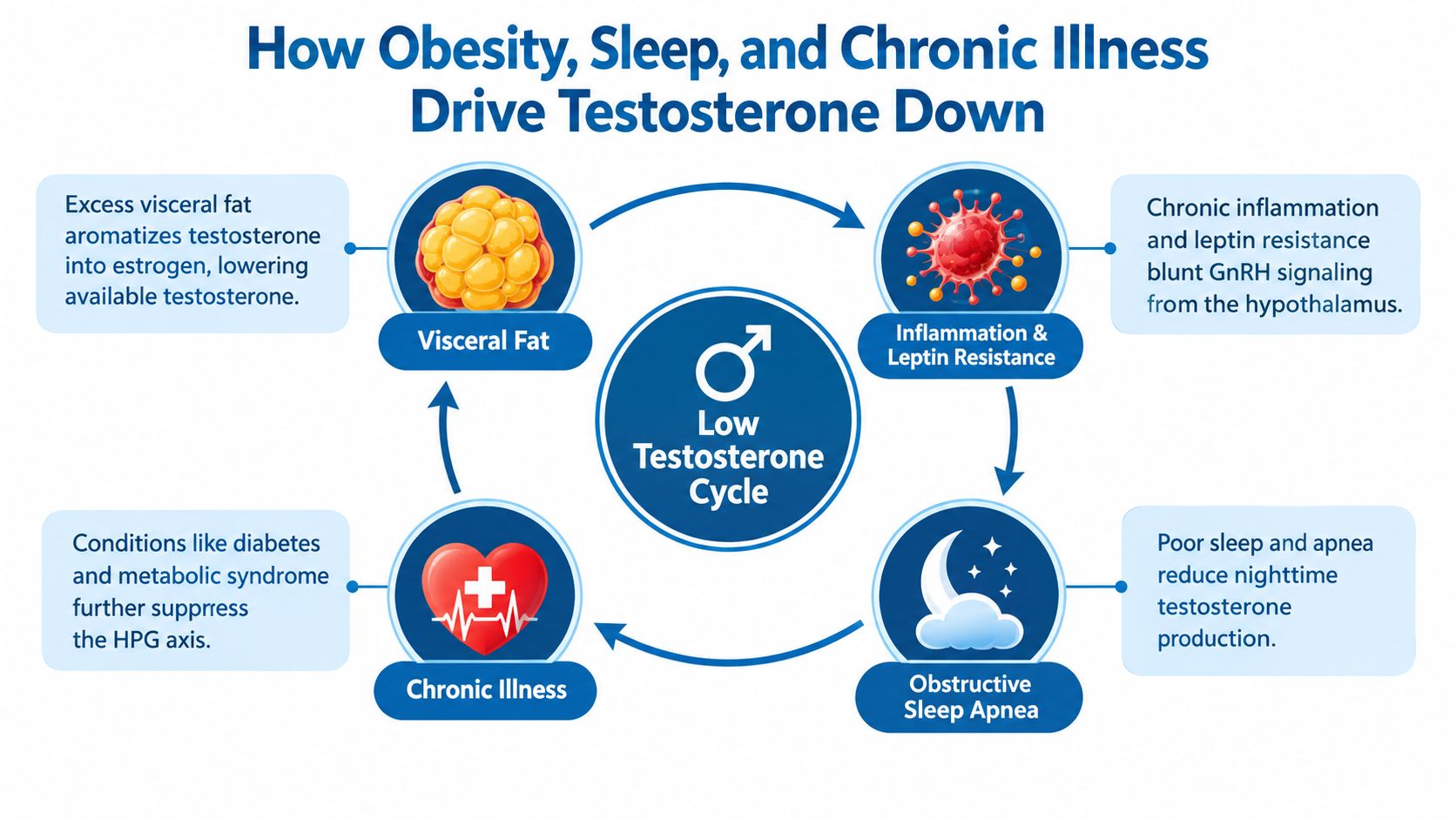
Low testosterone doesn't only change how you feel. It's also linked with broader health patterns. Men with serum total testosterone below 300 ng/dL have significantly higher risks of type 2 diabetes, obesity, and cardiovascular disease , and low testosterone contributes to visceral adiposity and insulin resistance according to this review on testosterone and metabolic risk.
That doesn't mean testosterone is the only cause. It means hormones and metabolism often move together.
Clinical perspective: If a man has fatigue, rising waist size, low motivation, and reduced libido, a provider shouldn't think only about sex hormones. He should also think about sleep, weight, blood sugar, medications, and cardiovascular risk.
Why this matters for long-term health
A healthy testosterone range helps support systems that men often care about later, after symptoms become disruptive. Bone health is one example. Metabolic health is another. The point isn't to chase “high” testosterone. The goal is balance. Enough to support function, safety, and quality of life.
That's where an integrative approach matters. Good care looks at the whole picture. Hormones, yes, but also weight, insulin resistance, sleep quality, and chronic disease management.
Recognizing the Symptoms of Hormonal Imbalance
A common Mississippi clinic visit starts like this. A man says he is still getting through work, still showing up at home, but something feels off. He is more tired than he used to be, less interested in sex, slower in the gym, and quicker to lose patience. After a few late-night internet searches, he has more questions than answers.
That uncertainty is common. Symptoms tied to testosterone can overlap with poor sleep, depression, stress, weight gain, medication effects, thyroid problems, and blood sugar changes. The pattern matters more than any single symptom, which is why a careful conversation often clears up confusion faster than another hour online.

Physical signs men often miss
Hormone changes often show up gradually. Many men adjust to them so slowly that they assume the changes are just part of getting older, being busy, or not trying hard enough.
Common physical clues include:
- Persistent fatigue: You sleep, but you do not feel restored.
- More body fat around the middle: Your eating and exercise habits may be similar, yet your waistline changes.
- Loss of muscle or strength: You notice less power, less tone, or slower recovery after activity.
- Lower exercise tolerance: Workouts or physical work feel harder than they used to.
A slow decline can make symptoms easy to dismiss. Common does not mean unimportant. If your body feels like it is no longer responding the way it used to, that is worth discussing with a clinician who can sort out hormones from other common causes.
Sexual and emotional symptoms
Men often wait a long time to mention these symptoms. That is understandable, but it can delay answers.
Lower sex drive is one possible clue. Erectile changes can be another, although erections are also shaped by circulation, stress, sleep, medications, and chronic health conditions. Mood can shift too. Some men do not describe sadness. They describe feeling flat, less driven, more irritable, less confident, or mentally foggy.
Fertility concerns can add another layer of confusion. If that is part of your story, review these important insights on male fertility challenges. Testosterone, sperm production, and sexual symptoms do not always rise and fall together.
A practical way to look at the pattern
In clinic, the goal is not to label every symptom as low testosterone. The goal is to see whether the pieces fit a pattern that deserves testing.
Three questions help:
- Have the symptoms lasted for a while? A stressful week is different from a steady change over months.
- Are several symptoms happening together? Fatigue alone is nonspecific. Fatigue plus low libido, reduced strength, and mood changes is more informative.
- Is daily life changing? Work performance, relationships, exercise, motivation, and confidence all matter.
If you want to organize your thoughts before an appointment, this checklist of symptoms of low testosterone in men can help you put clear words to what you have been noticing.
A brief video can also help put the symptom picture into plain language.
A better question than “Is this just aging?” is “What is causing these changes, and what can we do about them?”
How Testosterone Is Tested and Diagnosed
You finally make the appointment after months of feeling unlike yourself. Then the next question hits. “Do I just need a testosterone test?” In clinic, the answer is usually a little more careful than that, because diagnosing low testosterone works more like putting together a puzzle than checking a single box.
Why timing matters
Testosterone changes through the day, so the timing of the blood draw matters. Levels are usually highest in the morning, which is why clinicians often order a morning test and repeat it on a different day if the first result is low.
That repeat test is not busywork. Sleep loss, illness, alcohol, heavy training, and even short-term stress can temporarily push a result down. A diagnosis should reflect your usual state, not one rough week.
In practice, clinicians look for both symptoms and consistently low levels on properly timed testing. The number matters. Your story matters too.
Total testosterone versus free testosterone
Online advice often gets confusing. You may see one person focus only on total testosterone, while another says free testosterone is the only number that counts. Real evaluation is more thoughtful than either extreme.
| Test | What it helps show |
|---|---|
| Total testosterone | The full amount circulating in the bloodstream |
| Free or bioavailable testosterone | The portion more readily available for the body to use |
A simple comparison can help. Total testosterone is like money in your full account balance. Free testosterone is closer to the amount you can spend today. Both can be useful, especially when symptoms do not match the first lab result.
What a full evaluation should include
A careful diagnosis also looks for the reason testosterone is low, or whether something else is creating the same symptoms. At a Mississippi clinic visit, that usually starts with a conversation about energy, sex drive, erections, sleep, mood, exercise tolerance, medications, weight change, and plans for future fertility.
Then the lab work fills in the picture. Depending on your history, a clinician may check other markers such as blood counts, thyroid function, blood sugar, or hormones that help show whether the issue begins in the testicles or higher up in the brain's signaling system. That distinction matters because the treatment plan can change based on the cause.
If you want to come prepared, a broader wellness lab panel for hormone and metabolic screening can help place testosterone results in the context of your overall health.
Practical rule: Treat the patient, not just the lab report.
That approach helps prevent two common mistakes. One is brushing off real symptoms because a single number looks “close enough.” The other is starting testosterone before checking for sleep apnea, medication effects, excess weight, thyroid problems, or other causes that deserve attention first.
For many men, the biggest relief is finally getting a clear plan. You do not have to sort through scattered internet advice on your own. A good evaluation should leave you understanding what the tests mean, what they do not mean, and what your options are from here.
Understanding Testosterone Replacement Therapy TRT
Testosterone replacement therapy , often called TRT , is medical treatment used to restore testosterone levels in men who have both consistent biochemical deficiency and symptoms . It's not the same as using anabolic steroids for performance, and it isn't a quick fix for every form of fatigue.

What treatment can realistically improve
When TRT is prescribed to the right patient, the evidence is meaningful. In men with confirmed hypogonadism, TRT typically moves testosterone from subnormal levels into the mid-normal range. A systematic review reports that lean body mass often increases by 2 to 4 kg and fat mass decreases by 1 to 3 kg over 6 to 12 months . It also found lumbar spine bone mineral density increases of 2 to 6% over 1 to 3 years , and about 40 to 60% of symptomatic men report moderate improvement in libido after 6 to 12 months , compared with 15 to 25% in placebo groups, based on this systematic review of TRT in hypogonadal men.
Those results matter, but they need the right setting. TRT works best in men who have low testosterone and symptoms that fit.
Who is and isn't a strong candidate
TRT makes the most sense when a man has:
- Consistent low levels: Not one borderline result.
- Symptoms that fit the diagnosis: Such as low libido, reduced energy, body composition changes, or low mood.
- A medical plan for follow-up: Ongoing supervision is part of treatment, not an optional extra.
TRT is less appropriate when a man has vague fatigue, low-normal numbers, untreated sleep apnea, active fertility goals, or unresolved lifestyle and metabolic issues that may be driving symptoms.
Benefits, risks, and delivery methods
TRT can be delivered in forms such as injections or gels . The best option depends on preference, response, and monitoring needs.
Potential benefits may include:
- Sexual improvement: Better libido and sometimes better erectile response.
- Body composition support: More lean mass and less fat mass in appropriately selected men.
- Bone support: Improved bone density over time.
- Better symptom control: Some men report stronger motivation, more stable mood, and improved daily function.
Potential risks and cautions also deserve clear discussion. Testosterone therapy can raise hemoglobin and hematocrit , and that erythropoietic effect can lead to polycythemia , which is why routine monitoring is necessary. It can also suppress spermatogenesis and reduce sperm count , so fertility planning matters before treatment, as outlined in this review of testosterone therapy risks and benefits.
TRT is a medical tool. It works best when the diagnosis is solid, expectations are realistic, and monitoring is consistent.
If you want a practical overview of the process before meeting with a clinician, this guide on how to start hormone replacement therapy can help you prepare better questions.
Lifestyle and Integrative Support for Hormonal Health
Some men need medical therapy. Some don't. Nearly all men benefit from better foundations.
Hormones respond to the conditions you create every day. Sleep, activity, stress, nutrition, and metabolic health all shape how your body functions. That's why lifestyle work isn't “extra.” It's often the platform that everything else stands on.
The habits that support hormone balance
A useful plan usually includes several levers working together.
- Resistance training: Lifting weights or using resistance bands helps preserve muscle, improve insulin sensitivity, and support healthier body composition.
- Sleep protection: Poor sleep can intensify fatigue, sexual symptoms, appetite changes, and brain fog.
- Nutrition with enough protein and structure: Crash dieting, heavy alcohol use, and chaotic eating can work against hormone and metabolic health.
- Stress reduction that's realistic: This can mean counseling, walking, breathing practice, better work boundaries, or finally addressing burnout.
These changes don't replace evaluation when symptoms are significant. They do improve the odds that your body can function well, whether you pursue testosterone therapy, medical weight loss, medication management, or none of the above.
Integrative care means root causes matter
For some men, the first meaningful win comes from treating insulin resistance, improving sleep, or reducing excess body fat. For others, lifestyle changes make TRT safer and more effective. The point isn't to pick between medicine and habits. The point is to combine them intelligently.
If you're interested in nonprescription support, it helps to review outside information carefully. For example, this article on ashwagandha for men's health gives one perspective on a commonly discussed supplement. Just keep expectations grounded. Supplements are not a substitute for proper diagnosis.
A practical starting place is this guide on how to balance hormones naturally, especially if your symptoms are mild or you're trying to improve the basics before deciding on treatment.
Your Next Steps and Common Questions Answered
A good next step is simple. If fatigue, low libido, body composition changes, poor recovery, or brain fog have become a pattern, schedule a medical evaluation instead of guessing. A proper visit should include symptom review, lab interpretation, medication history, and discussion of sleep, metabolic health, and goals.
For patients in Mississippi, the best care path is usually straightforward. You schedule online, meet in person with a provider, review symptoms and labs, and build a plan that fits your life rather than forcing your life to fit a generic protocol.

Common questions men ask
Can younger men use TRT if they feel off? Sometimes, but not merely because they feel suboptimal. Evidence for benefit in younger men with borderline or lifestyle-driven low testosterone is sparse , and guidelines emphasize reserving TRT for men with consistent biochemical deficiency plus symptoms , not low-normal levels or vague fatigue, according to this Medicare coverage review summarizing guideline-oriented evidence.
Do “natural testosterone boosters” work?
Some men notice mild changes in energy or well-being from better sleep, resistance training, weight loss, or select supplements. But no over-the-counter product should replace proper testing when symptoms are persistent.
Will treatment affect fertility?
It can. That topic needs to be discussed before therapy starts, especially if you may want children.
What if my number is “normal” but I still feel bad?
That doesn't mean your symptoms are imaginary. It means the cause may be more complex than one hormone. Sleep disorders, depression, diabetes, thyroid conditions, medication effects, and high stress can all produce a similar picture.
What to bring to your appointment
| Bring this | Why it helps |
|---|---|
| Symptom timeline | Shows whether changes are recent, gradual, or tied to another issue |
| Medication and supplement list | Identifies possible contributors or interactions |
| Questions about goals | Helps clarify whether you want symptom relief, fertility preservation, metabolic support, or all three |
If you're comparing wellness tools in your area, broader body composition testing can also be useful. This resource on finding a body scan near me explains why some patients look beyond the scale when tracking progress.
A thoughtful plan usually starts with one honest sentence in the exam room: “I don't feel like myself, and I want to understand why.”
This article is for educational purposes only and isn't a diagnosis, medical advice, or a substitute for individualized care. Testosterone therapy, bioidentical hormones, medical weight loss, GLP-1 weight loss medications, and medication management all require personal evaluation, especially if you live with diabetes, thyroid disease, metabolic syndrome, infertility concerns, or other chronic conditions.
If you're in Mississippi and you're ready for clear answers about hormone replacement therapy, testosterone therapy, medical weight loss, or medication management, Pause Medical offers board-certified oversight, in-person evaluations, and personalized treatment plans built around your symptoms, labs, and long-term goals. Whether you're dealing with fatigue, low libido, weight gain, sleep issues, or broader hormone imbalance concerns, scheduling a consultation is the most reliable way to move from confusion to a compassionate, evidence-based plan.