Perimenopause Symptoms Age 40: An Essential Guide to Navigating the Change
If you're in your late 30s or early 40s and feel like something is just… off, you’re not imagining it. And you are definitely not alone. For many women, the first whispers of perimenopause begin far earlier than we’ve been led to believe. This transition often shows up not as the classic hot flashes everyone talks about, but as subtle, unsettling shifts in mood, sleep, and cycles that can leave you feeling confused and unlike yourself.
At Pause Medical, our board-certified medical providers understand the complexities of hormonal health. We see you, we hear you, and we want to empower you with the knowledge and personalized care you need to navigate this phase with confidence. This guide will help you understand the root causes of your symptoms and explore the integrative solutions available to restore your vitality.
Is This Perimenopause? Understanding The First Signs at Age 40
It can be incredibly unsettling when your body starts sending confusing signals, especially when you think of menopause as something that happens much later in life. Imagine your hormones during this time are like a radio signal that’s slowly losing its connection. Instead of a steady, predictable broadcast, you get bursts of static, sudden changes in volume, and unexpected quiet spells. These aren't signs of a breakdown; they're the hallmark of hormonal fluctuations—the chaotic ups and downs of estrogen and progesterone that define the perimenopause transition.
This phase often kicks off with symptoms that are easy to brush off or blame on stress. You might notice your once clockwork-like period is now a few days early or late. Maybe your PMS symptoms have intensified, leaving you feeling emotionally wrecked for days. For many of us, the very first clues aren't physical at all, but emotional. A sudden spike in anxiety, new sleep troubles that leave you dragging through your days, or a general feeling of irritability can be the first real signs your hormonal landscape is shifting.
The Unexpectedly Early Start
It's a huge misconception that perimenopause is a late-40s problem. The reality is, significant symptoms can appear much sooner, validating what countless women have been feeling for years. A revealing survey of over 4,400 American women found that a staggering 64.3% of women aged 36-40 reported moderate to severe perimenopausal issues. This number proves that what you're feeling is not only real but statistically quite common. You can read the full research on perimenopause symptom onset to see the data for yourself.
To help put this into perspective, let's look at a typical progression.
Common Early Perimenopause Signs at Age 40
The symptoms below are often the first to appear as hormonal shifts begin in the late 30s and early 40s. They can feel random at first, but they often paint a clear picture when viewed together.
| Symptom Category | What You Might Notice |
|---|---|
| Menstrual Changes | Your cycle length changes (shorter or longer), flow becomes heavier or lighter, or you start skipping periods. |
| Mood Swings | You feel more irritable, anxious, or weepy for no apparent reason. PMS symptoms may feel much worse. |
| Sleep Disruption | You have trouble falling asleep, wake up frequently during the night, or experience night sweats. |
| Fatigue | You feel a deep, persistent exhaustion that isn't relieved by a good night's sleep. |
| Brain Fog | You struggle with memory lapses, have trouble concentrating, or find it hard to find the right words. |
Recognizing these patterns is the first step toward getting back to eeling like yourself.
This timeline shows how perimenopause symptoms can start creeping in during a woman's mid-30s, often getting more noticeable around age 40 before evolving into more cognitive-related challenges.
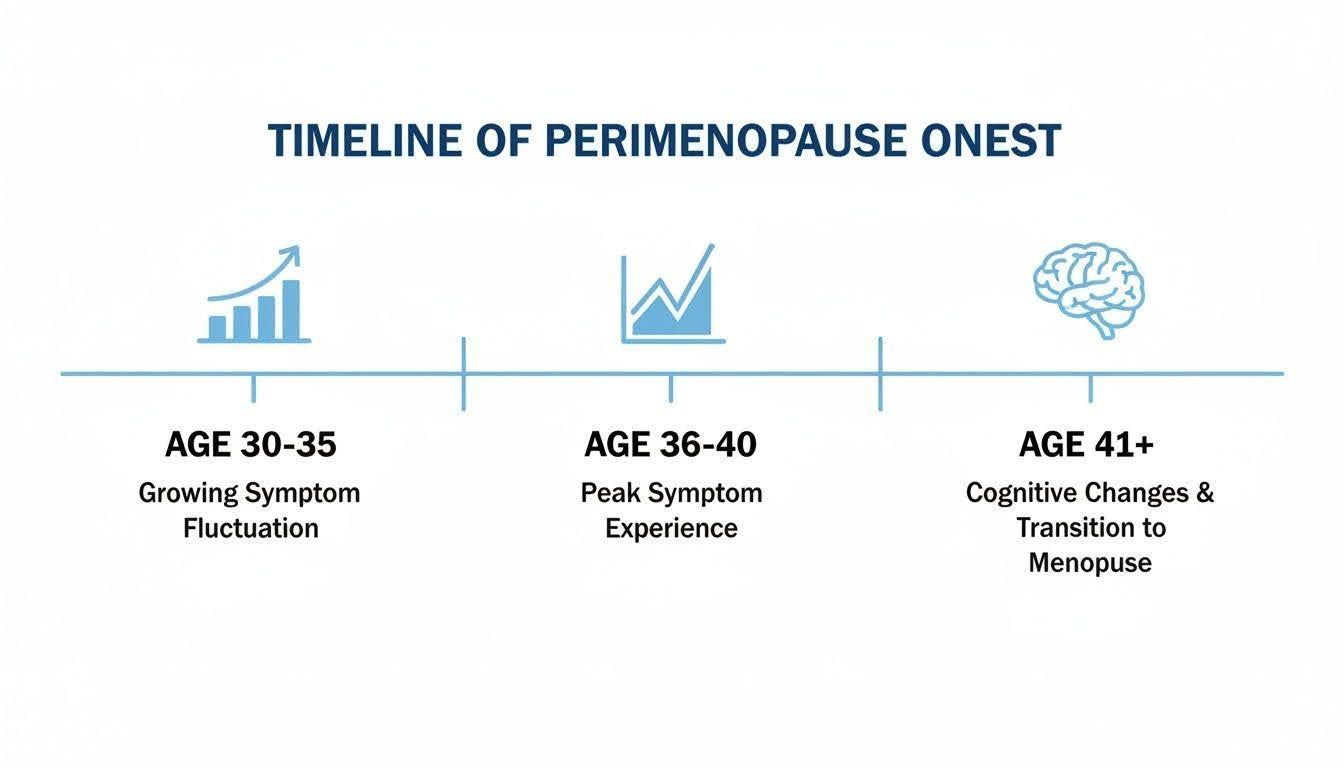
The key takeaway here is that the journey often begins years before most women expect it. Understanding this can help you connect the dots between seemingly unrelated symptoms, making you feel less confused and more in control. Early recognition is crucial for getting the support you need to maintain your quality of life.
Acknowledging these early signs is the first step toward finding relief. It’s not about "toughing it out"—it’s about understanding the root cause of your symptoms and seeking personalized medical guidance from a board-certified provider to restore balance.
Simply knowing that these changes are tied to a natural biological process can be incredibly empowering. Instead of feeling frustrated, you can start looking for solutions that address the hormonal imbalance head-on. To keep learning, you can explore more topics on the Pause Medical blog.
Unpacking the Physical Signs of Perimenopause Around 40
While the emotional rollercoaster of perimenopause gets a lot of attention, it’s often the physical changes that really make you wonder, "What is going on with my body?" In your early 40s, these symptoms can be incredibly sneaky. It’s so easy to write them off as just stress, aging, or a busy life. But more often than not, they’re the first whispers of your shifting hormones.
Think of estrogen and progesterone as the rhythm section of your body’s orchestra. When their levels start to jump around unpredictably, everything else can start to feel a little off-beat—from your monthly cycle to your metabolism. This hormonal chaos creates a whole host of physical symptoms that might seem random at first, but they’re all connected.
It’s Not All About Hot Flashes: Common Physical Signs
Most of us hear "menopause" and immediately think of hot flashes. But in these earlier stages, other physical clues are usually much more common. Learning to spot them is the first step toward getting clarity.
- Cycles Gone Wild: This is the classic first sign. That once-predictable 28-day cycle? It might suddenly be 24 days, then 35. Periods can become surprisingly heavy or so light you barely notice them. You might even skip one altogether, only for it to show up with a vengeance the next month.
- Deep-Down Fatigue: We're not talking about "I need an extra cup of coffee" tired. This is a profound, bone-deep exhaustion that a good night's sleep just doesn't seem to touch. It can zap your energy and make getting through the day feel like a marathon.
- New Sleep Problems: Even without the classic night sweats, your sleep can take a major hit. Many women find it's suddenly harder to fall asleep, or they wake up like clockwork at 3 or 4 a.m., mind racing, unable to drift back off.
These early symptoms aren't just minor annoyances; they can seriously disrupt your quality of life.
The Changes You Can See and Feel
Beyond the internal shifts, perimenopause can start to show up on the outside, too. These visible changes are tied directly to declining estrogen, which is crucial for things like skin elasticity, hair growth, and where our bodies store fat.
You might start noticing:
- That Stubborn Belly Fat: You haven't changed a thing about your diet or exercise, yet the weight is creeping on, especially around your middle. That’s your shifting hormones messing with your metabolism.
- Thinning Hair: Is there more hair in your brush or the shower drain? Does your ponytail feel a little less full? Estrogen helps keep your hair in its growth phase, so when it fluctuates, shedding can increase.
- Dry, Lackluster Skin: Your skin might suddenly feel parched, thinner, or less firm than it used to. Itchiness and fine lines can also become more noticeable as your body's collagen production slows.
While these changes can feel disheartening, they are very common and there are ways to manage them. Along with medical advice, a thoughtful approach to nutrition can make a difference. You can explore high-quality supplements designed to support your body through this hormonal transition.
The cluster of physical symptoms—from wacky periods and fatigue to changes in your hair and skin—is your body's way of sending a clear signal. These aren't just separate, unrelated problems; they're all part of the perimenopause story.
The Hormone-Sleep Connection
Trouble sleeping is one of the most frustrating and impactful symptoms of perimenopause. And it's not just you. A 2017 CDC data brief showed just how common this is. A staggering 56.0% of perimenopausal women reported sleeping less than the recommended seven hours a night. That’s a huge jump compared to premenopausal women, really underscoring how much hormones affect our rest. You can read the CDC's findings on sleep and menopause for more details.
This kind of sleep deprivation creates a vicious cycle, making other symptoms like brain fog, moodiness, and fatigue even worse. Often, the most effective way to break the cycle is to address the hormonal imbalance at its root. Restoring your sleep can have a ripple effect, improving nearly every aspect of how you feel. At Pause Medical, our board-certified providers specialize in creating personalized plans to help you do just that.
The Emotional Rollercoaster and Brain Fog
While the physical symptoms get a lot of attention, for many women, the emotional and cognitive shifts of perimenopause are what truly throw them for a loop. If you suddenly find yourself snapping at your kids, feeling a wave of anxiety wash over you in a routine work meeting, or searching for a simple word that’s just vanished from your vocabulary, you’re not losing your mind. We promise.
This is the direct result of your hormones going haywire and impacting your brain chemistry.

It’s so important to understand that these changes aren't a character flaw or some kind of personal failure. They are legitimate physiological responses to the erratic dance of estrogen and progesterone. These hormones are powerful players in the brain, influencing everything from your mood to your memory. Framing these challenges as the real medical issues they are is the first step toward finding compassionate, effective solutions.
Your Brain on Hormonal Standby
Think of estrogen as the master conductor for key brain chemicals like serotonin (the “feel-good” molecule) and dopamine (which governs motivation and focus). When estrogen levels start bouncing all over the place, the entire chemical orchestra is thrown into disarray. This neurological disruption is precisely why so many women report a cluster of new or worsening emotional and cognitive struggles as they hit their 40s.
And this isn't just anecdotal. Research involving more than 13,000 women paints a very clear picture. For women over 40, the most common perimenopause symptoms weren't hot flashes or night sweats—they were psychological.
- Mood Changes: An incredible 84% of women reported more anxiety, irritability, or feelings of depression.
- Brain Fog: A significant 77% struggled with that frustrating inability to think clearly and concentrate.
- Memory Lapses: Another 77% noticed their memory wasn't what it used to be, from forgetting appointments to losing their train of thought mid-sentence.
These numbers confirm what so many of us feel: the mental and emotional toll of perimenopause is a massive, shared experience.
So, What Is Brain Fog Anyway?
"Brain fog" isn't a formal diagnosis, but it perfectly captures that maddening feeling of mental sludge that can seriously disrupt your day. It’s walking into a room and having no idea why you went in there. It's that on-the-tip-of-your-tongue word that just won't come. It's trying to focus on a complex task at work and feeling like your brain is running at half speed.
This mental haze is directly tied to your hormones. As estrogen dips, it can affect the hippocampus (your brain's memory center) and the prefrontal cortex, which handles executive functions like planning and decision-making. The result? A brain that feels sluggish and inefficient.
It’s critical to recognize that brain fog and mood swings are not signs of incompetence or personal weakness. They are legitimate neurological symptoms driven by a biological transition, and they deserve the same medical attention as any physical ailment.
The Real-World Impact and How to Get Help
These invisible symptoms have very real, very visible consequences. A sudden flash of irritability can strain your relationship with your partner. Brain fog can make you feel insecure at work, especially in a demanding role. The cumulative effect of feeling anxious, fuzzy-headed, and emotionally unpredictable can completely erode your self-esteem and your sense of joy.
This is where getting professional guidance is an absolute game-changer. At Pause Medical, our board-certified providers truly understand the intricate link between your hormones and your brain. We don't just tell you to “push through it.” We work with you to find the root cause and create a personalized plan to help you feel like yourself again.
This plan might involve hormone replacement therapy to stabilize your brain chemistry, alongside lifestyle strategies to support your cognitive function. Learning how to manage these symptoms is a core part of our preventative wellness solutions, designed to help you feel sharp, calm, and back in control.
Why Perimenopause Can Feel So Intense In Your 40s
If you're in your 40s and feel like perimenopause has hit you like a ton of bricks, you’re not imagining things. There are very real reasons this phase can feel so uniquely intense. It's not a gentle, slow decline of hormones; it’s more like a period of chaos, defined by unpredictable and dramatic fluctuations.
Think of post-menopause as a calm river with a new, consistently lower water level. Perimenopause, on the other hand, is the raging storm before the calm, complete with sudden floods and droughts. It’s these sharp, erratic swings in estrogen and progesterone—not the steady low levels of later years—that often trigger the most severe physical and emotional symptoms.
Your body just can't get a chance to adapt. One month, your estrogen might be sky-high, causing sore breasts and heavy bleeding. The next, it could crash, bringing on night sweats, anxiety, and brain fog. This hormonal whiplash is exactly why the experience can feel so much more jarring than the more stable hormonal state after menopause.
The Perfect Storm of Biology and Life
The timing is what really makes it tough. Perimenopause in your 40s often collides head-on with one of the most demanding decades of life. This isn't just a biological event happening in a vacuum; it’s happening right when you’re juggling peak career responsibilities, raising children, and sometimes caring for aging parents.
This convergence creates a perfect storm where symptoms are amplified by external pressures:
- Intense Fatigue Meets Career Demands: The bone-deep, persistent fatigue of perimenopause makes it incredibly hard to function at a high level when work pressures are at their peak.
- Brain Fog and Family Responsibilities: Struggling with focus and memory is frustrating on its own, but it feels overwhelming when you're also managing complex family schedules and major life decisions.
- Mood Swings Strain Relationships: Sudden irritability or anxiety can put a real strain on your relationships with your partner, kids, and colleagues, adding a layer of emotional stress to an already challenging time.
This mix of internal hormonal chaos and external life stress is precisely why perimenopause symptoms in your 40s can feel so profoundly disruptive.
Your experience is valid. The intensity of perimenopause symptoms at this age is a real physiological and psychological phenomenon, driven by the unique intersection of hormonal volatility and life's demands.
Underestimating the Timeline
Many women are blindsided not only by the intensity of their symptoms but also by how long this phase actually lasts. Research shows that women significantly underestimate the duration of the transition, with 40% believing it lasts two years or less. In reality, symptoms like hot flashes and night sweats can persist for a median of 7.4 years. This profound gap between expectation and reality can make the journey feel isolating and endless.
Recognizing that this intense phase is both real and lengthy highlights the need for proactive management, not just "toughing it out." Getting expert guidance can make all the difference. At Pause Medical, our board-certified providers create personalized plans, including options like bioidentical hormone replacement therapy, to help restore balance and get you back to feeling like yourself. You don’t have to navigate this storm alone.
Your Guide to Finding Effective Symptom Relief
Navigating the disruptive symptoms of perimenopause in your 40s isn't a waiting game. It's about taking action and finding real solutions that help you feel like yourself again. The great news is there are plenty of options, from powerful lifestyle shifts to targeted medical treatments, that can bring significant, lasting relief.
It’s completely normal to feel overwhelmed by it all, but you don’t have to figure it out alone. A board-certified medical provider can be your partner in this, helping you understand that hormonal imbalance is at the heart of your symptoms and co-creating a plan to get you back on track. The goal isn't just to muffle the symptoms—it's to restore your vitality for years to come.
Building Your Foundation: Lifestyle Strategies
Before we even talk about medical options, it’s worth focusing on the powerful foundation of healthy habits. These lifestyle adjustments can make a world of difference in how you experience perimenopause symptoms at 40. For some, they’re all that’s needed.
- Nutrition as Medicine: Shifting to a diet filled with whole foods—think lean proteins, healthy fats, and lots of fiber from fruits and veggies—can be a game-changer. Cutting back on caffeine, alcohol, and processed sugar is also key to stabilizing your mood, sleeping better, and taming hot flashes.
- Movement for Mind and Body: Regular, consistent exercise is a powerhouse. A smart mix of strength training (to keep your muscles and bones strong), cardio for your heart, and something like yoga for flexibility can boost your mood, help with weight management, and ease those frustrating aches and pains.
- Mastering Your Stress: Chronic stress floods your body with cortisol, a hormone that only makes perimenopause symptoms worse. Building in daily stress-reducing practices—like meditation, deep breathing exercises, or even just a quiet walk outside—can calm your entire system down.
Think of these strategies as putting you back in the driver's seat. They create a strong, resilient baseline that makes any other treatments you might need work even better.
Medical Treatments for Deeper Relief
When lifestyle changes aren't quite cutting it for moderate to severe symptoms, medical treatments can step in and make a profound difference. The most effective tool we have for getting to the root cause of perimenopause symptoms is Hormone Replacement Therapy (HRT).
HRT works by simply giving your body back the estrogen and progesterone it’s no longer making consistently. It’s not about masking symptoms; it's about re-establishing the hormonal balance that’s gone off-kilter.
HRT can be incredibly effective at alleviating a whole host of debilitating symptoms—hot flashes, night sweats, mood swings, brain fog, and sleep problems—and dramatically improving your quality of life.
Understanding Your HRT Options
At Pause Medical, we don’t believe in one-size-fits-all medicine. We specialize in creating treatment plans that are designed for your unique body, which is why we often turn to Bioidentical Hormone Replacement Therapy (BHRT).
Bioidentical hormones are sourced from plants and have the exact same molecular structure as the hormones your body naturally produces. Because they're a perfect match, they fit into your body's hormone receptors just right, often leading to fantastic symptom relief with a strong safety profile for the right person.
Our board-certified providers start with a deep dive into your health, including a thorough review of your symptoms and comprehensive lab work, to figure out the precise type and dose of hormones you need. It’s a careful, evidence-based approach that ensures your treatment is both safe and effective. If you are a man dealing with similar symptoms of hormonal decline, you might be interested in learning about our approach toat-home testosterone replacement therapy, which is built on the same principles of personalized care.
Taking that first step toward feeling better can feel big, but it’s a powerful move toward reclaiming your health and your life. Schedule a consultation with a Pause Medical provider to talk through your perimenopause symptoms age 40 and explore a treatment plan designed just for you.
When To Talk To a Doctor About Your Symptoms
It's one thing to notice a few changes, but it's another thing entirely when those changes start running your life. Deciding when to stop "toughing it out" and actually talk to a doctor is a huge step, but a necessary one.
If you’re around 40 and the symptoms we've discussed are getting in the way of your job, your relationships, or just your ability to feel like yourself, that’s your cue. You don't have to wait until you're at your breaking point to ask for help. So many of us are quick to blame stress or just getting older, but you don't have to just power through this.
Clear Signs It's Time for a Consultation
While any symptom that bothers you is worth a conversation, some are more like bright red flags that shouldn't be ignored. These are clear signs that it’s time to get a professional opinion, rule out other potential issues, and find some real relief.
Think about booking an appointment if you’re dealing with any of these:
- Life-Disrupting Symptoms: Is brain fog making work a struggle? Is the fatigue so intense that you can’t enjoy your weekends? When symptoms steal your quality of life, it's time to act.
- Severe Mood Changes: We're not talking about just a bad day. This is when anxiety, irritability, or a persistent low mood feels completely overwhelming and not at all like the "normal" you.
- Very Heavy or Prolonged Bleeding: Your period can get weird, but certain changes need a closer look. Pay attention to bleeding that's suddenly much heavier, lasts longer than seven days, or if your cycles are coming more often than every 21 days.
- Sleep Deprivation: If you’re consistently fighting to fall asleep or stay asleep, night after night, the exhaustion is more than just a nuisance—it’s a health issue.
What to Expect at Your Appointment
So, what happens when you go in? First, your provider will want to hear your story. They’ll ask about your symptoms, your health history, and what your day-to-day life feels like. Be ready to be open and honest; the more details you can share, the clearer the picture becomes for them. They might also suggest hormone testing to see exactly what’s going on under the surface.
The whole point of this visit is to figure out if perimenopause is behind what you're feeling and, from there, create a plan that actually works for you. This is your time to ask every question you have.
At Pause Medical, our board-certified providers live and breathe women's hormonal health. We get the nuances of perimenopause and focus on creating a space where you feel seen, heard, and completely supported.
If you're done with the guesswork and ready for real answers, it’s time to take the next step. Schedule a consultation at Pause Medical today. Our team is here to give you the expert care and guidance you need to feel in control again.
Your Perimenopause Questions, Answered
It's completely normal to have a ton of questions when you start navigating perimenopause. It can feel confusing and overwhelming. Let's walk through some of the most common concerns women have when symptoms pop up around age 40, giving you the clear, expert-backed answers you deserve.
"How Do I Know It's Perimenopause and Not Something Else?"
This is one of the most important questions to ask. So many symptoms of perimenopause—like fatigue, mood swings, and wonky periods—can easily masquerade as something else. Thyroid issues, chronic stress, or even nutrient deficiencies can cause similar feelings.
The only way to get a clear answer is to work with a provider who truly understands hormonal health. At Pause Medical, we look at the whole picture. Our integrative approach involves a deep dive into your symptom patterns and may include comprehensive lab tests to see what’s really going on. This evidence-based process helps us rule out other culprits, like a thyroid disorder, before we can confidently say it's perimenopause and build a personalized treatment plan that's right for you.
"Is Hormone Therapy Safe to Start in Your 40s?"
For the vast majority of healthy women, the answer is a resounding yes. Starting Hormone Replacement Therapy (HRT) in your 40s is not only considered safe but is also the most effective way to treat moderate to severe symptoms. In fact, beginning HRT closer to when your symptoms start often yields the biggest benefits.
Today’s therapies, especially the bioidentical hormones we use at Pause Medical, are designed to be customized to your body's unique needs. Of course, a thorough conversation with a board-certified provider about your personal and family medical history is the first step. This ensures you're a good candidate and that the benefits of feeling like yourself again far outweigh any potential risks.
"Can I Get Through This Without Hormones?"
Absolutely. For women with milder symptoms, strategic lifestyle adjustments can make a world of difference. Focusing on a nutrient-rich diet, getting regular exercise, and making time for stress-reducing practices like yoga or mindfulness can have a powerful balancing effect.
But it’s also important to be realistic. If your symptoms are stealing your joy and impacting your daily life, medical treatments like HRT often provide the most significant and reliable relief. That's because they get to the heart of the issue: the underlying hormonal shift.
The best strategy is often a blend of both. Think of a healthy lifestyle as your essential foundation, with medical treatments like BHRT providing the powerful support you need to not just get by, but to truly thrive.
"If Perimenopause Starts at 40, How Long Will It Last?"
There’s a huge range here, as every woman's journey is different. On average, you can expect perimenopause to last somewhere between four and eight years. If you start noticing changes around age 40, this transition will likely continue until you officially hit menopause.
What's the official finish line? Menopause is confirmed only after you’ve gone
12 consecutive months without a single period. Since this can be a long road, getting expert support early on can completely change your experience, saving you from years of just "powering through."
Are you ready to move past the confusion and start feeling like yourself again? The board-certified providers at Pause Medical specialize in hormonal health and are here to create a personalized plan that works for you. You don’t have to do this alone.
Schedule your consultation today and take the first step toward reclaiming your vitality.
Medical Disclaimer: The information provided in this article is for educational purposes only and is not a substitute for professional medical advice, diagnosis, or treatment. Always seek the advice of your physician or another qualified health provider with any questions you may have regarding a medical condition. Never disregard professional medical advice or delay in seeking it because of something you have read in this article. All treatments, including hormone replacement therapy and medical weight loss, have potential risks and benefits that should be discussed with a qualified medical professional.