Hormone Replacement After Total Hysterectomy: 2026 Guide
After a total hysterectomy, estrogen-only HRT is usually the standard, and a 1997 cohort found that 89% of women were using HRT at 3 months. At 24 months, 85% were still using it, although whether you need treatment depends largely on whether your ovaries were removed, your symptoms, and your health risks.
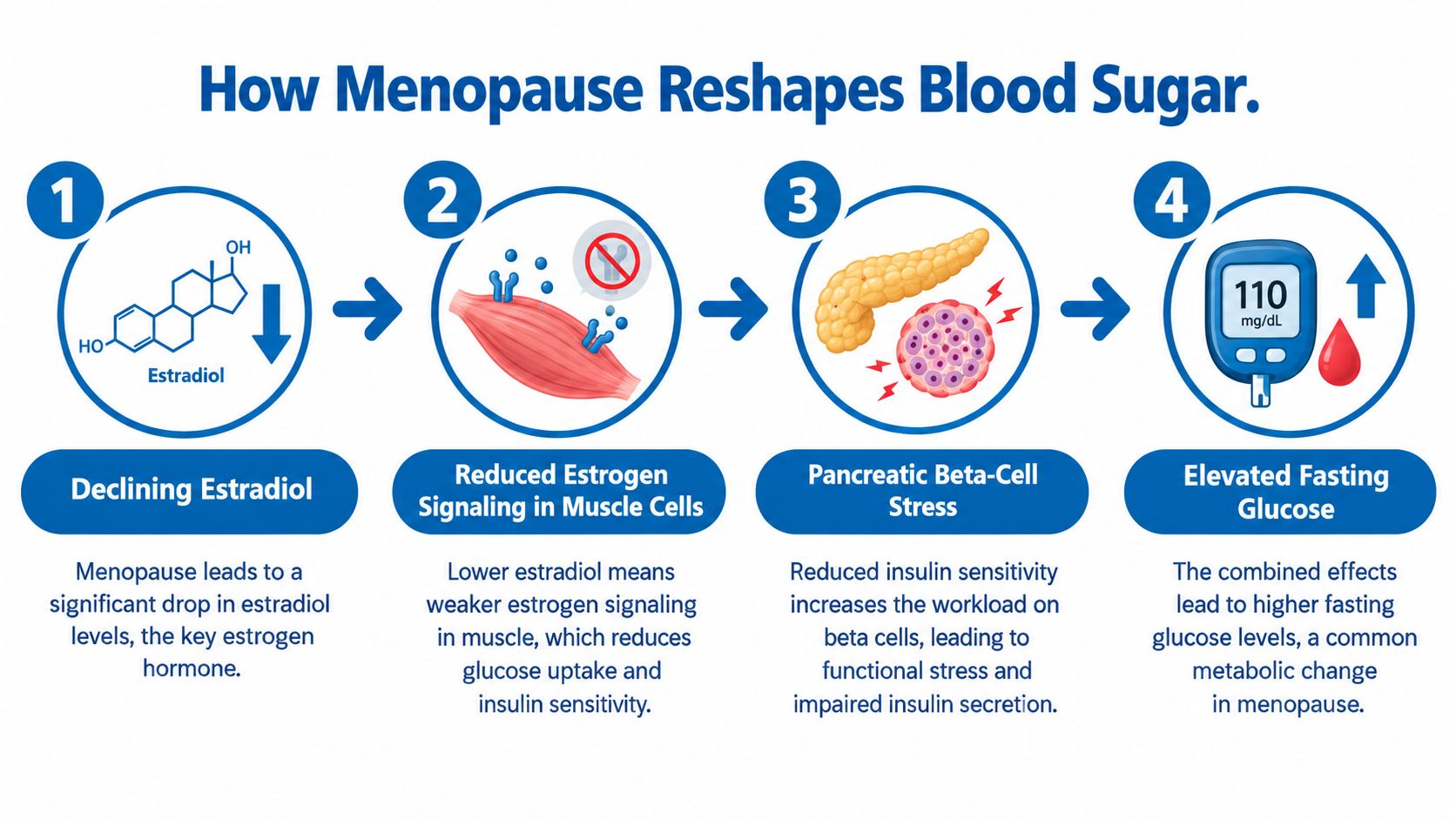
You may be recovering from surgery while also waking up drenched in sweat, struggling to sleep, or wondering why your thoughts feel unusually cloudy. It's easy to assume every new symptom is part of healing. Sometimes it is, but a sudden fall in ovarian hormones can also cause surgical menopause , and that deserves its own treatment discussion.
Hormone replacement after total hysterectomy isn't about replacing the uterus. It's about replacing or supplementing hormones that affect your temperature regulation, bones, brain, mood, and other body systems. The right plan may be simple, but it should never be automatic.
Understanding Why You Still Need Hormones After Surgery
Sarah is three months out from a total hysterectomy. Her incision has healed, yet she feels exhausted, wakes with night sweats, has trouble concentrating, and no longer feels emotionally steady. She assumes recovery is taking longer than expected. Her clinician explains that the key question isn't only whether her uterus was removed. It's whether her ovaries are still producing enough hormones.
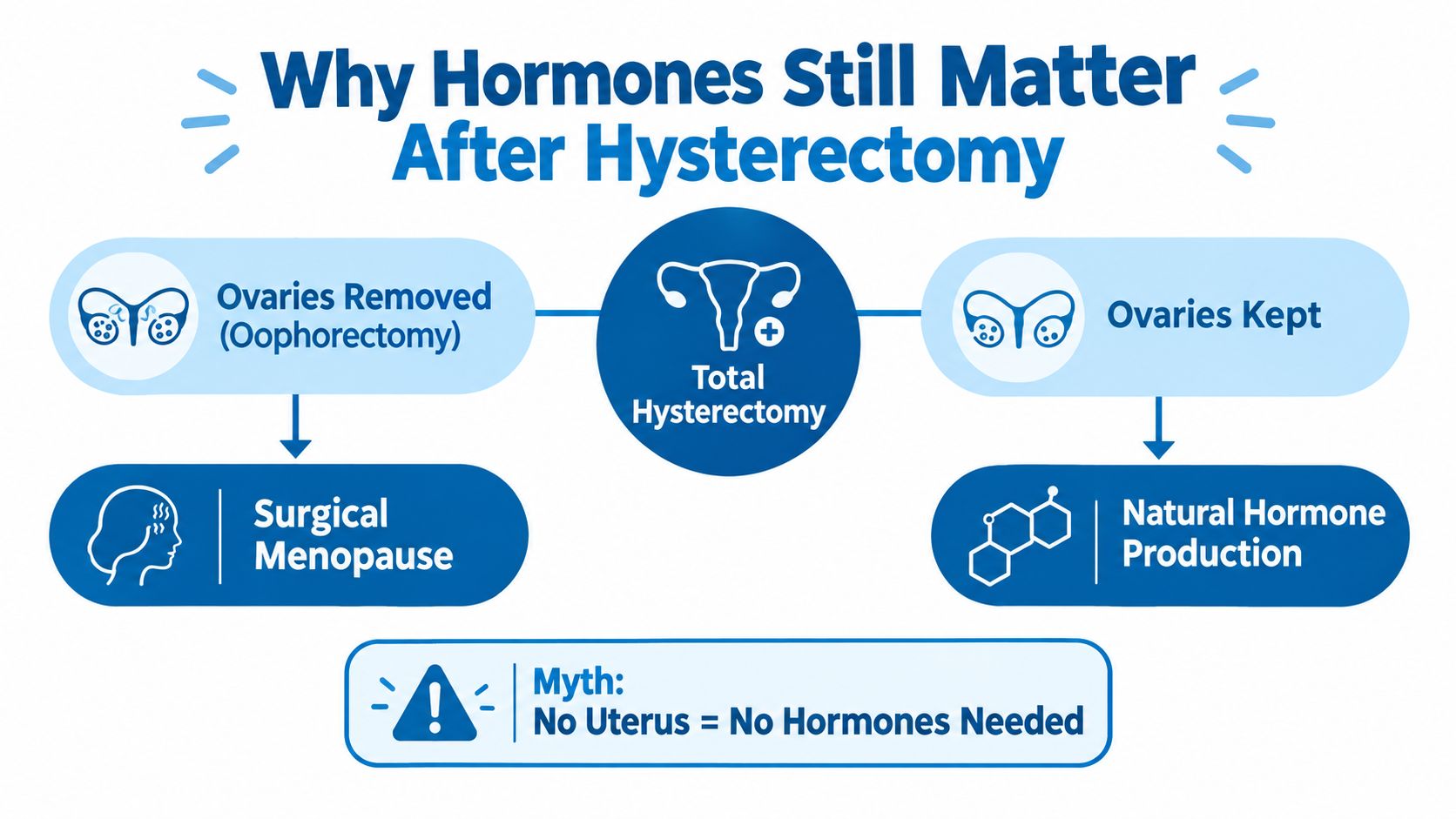
The uterus and ovaries have different jobs . The uterus supports pregnancy and contains the endometrium, the lining that responds to hormones. The ovaries produce reproductive hormones. Removing the uterus doesn't automatically remove ovarian function.
Think of the ovaries as a factory and the uterus as a warehouse that receives some of the factory's products. Removing the warehouse doesn't necessarily shut down the factory. If both ovaries remain, hormone production may continue, although the person can still experience hormonal changes. If both ovaries are removed, the hormone supply can fall abruptly and surgical menopause begins immediately. The Royal Australian College of General Practitioners explains this distinction alongside the usual preference for estrogen-only treatment after hysterectomy.
The ovarian question changes everything
If your ovaries were removed, ask your surgeon or medical record specifically whether the procedure included an oophorectomy. If they were kept, you may not need immediate systemic HRT, but symptoms still matter. Hot flashes, sleep disruption, vaginal symptoms, low mood, and brain fog shouldn't be dismissed just because the ovaries are present.
A large U.S. cohort published in 1997 followed 1,299 women across 28 hospitals . HRT use varied with menopausal status and ovarian surgery. Among postmenopausal women, 50% remained on HRT at both 3 and 24 months . Among premenopausal women with one ovary removed, use rose from 21% at 3 months to 35% at 24 months , while use among those with no ovaries removed rose from 5% to 13% . Those figures show why anatomy alone can't determine your prescription.
For a plain-language explanation of the broader hormonal transition, read what hormones change during menopause and why. Some patients also research options such as BioTe pellet therapy, but any delivery method should be evaluated by a qualified clinician rather than selected from symptoms alone.
Estrogen-Only Therapy vs Combined Hormone Treatment
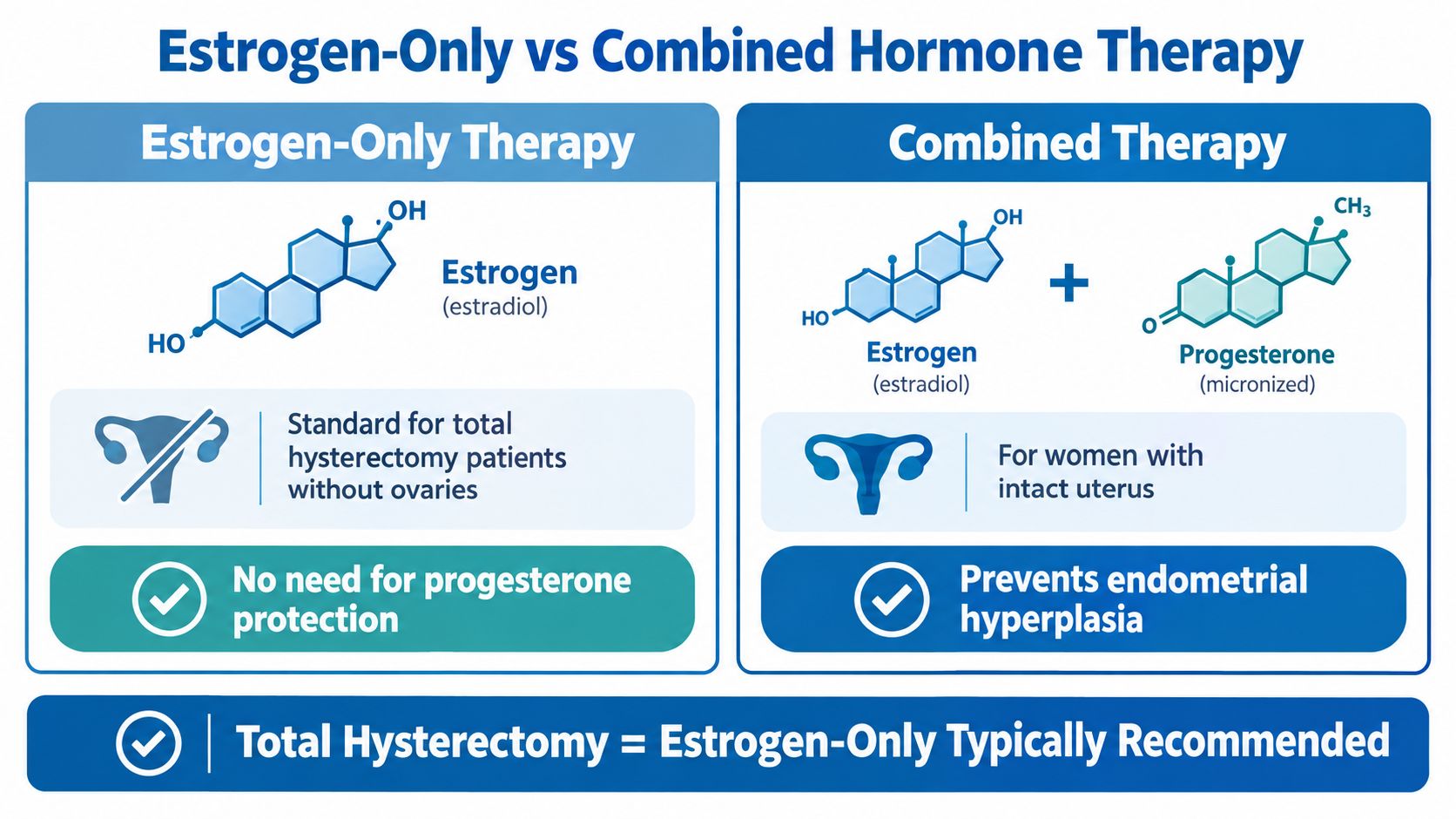
The simplest way to understand the difference is to ask what progesterone is protecting. In someone with a uterus, estrogen can stimulate the endometrium. Progestogen is commonly added to reduce that stimulation and protect the uterine lining. After a total hysterectomy , the endometrium has been removed, so that protective role usually no longer applies.
That's why estrogen-only therapy is generally recommended after total hysterectomy. The NHS overview of HRT types describes estrogen-only treatment for people who have had their womb removed, while combined treatment is generally used when a uterus remains. The European Society of Endocrinology similarly states that estrogen can be administered as monotherapy after hysterectomy and remains effective for vasomotor symptoms such as hot flashes.
When estrogen-only isn't the whole story
“No uterus, no progesterone” is a useful starting point, not an absolute rule. A history of endometriosis may change the plan because hormone-responsive tissue can remain after surgery. Residual uterine tissue, a subtotal hysterectomy, or another special clinical circumstance may also lead a clinician to consider progestogen. The Cleveland Clinic discussion of menopause after hysterectomy describes why endometriosis and remaining tissue require individual assessment.
Use these questions at your appointment:
- What was removed? Confirm whether the surgery was total or subtotal and whether one or both ovaries remain.
- What is the treatment protecting? Ask why estrogen alone, or why a progestogen has been included.
- Is there an exception in my history? Mention endometriosis, cancer treatment, or any concern about residual tissue.
- What symptoms are we treating? Hot flashes, vaginal symptoms, sleep problems, and mood changes may require different approaches.
Your prescription should make physiological sense to you. A clinician who recommends combined treatment after hysterectomy should be able to explain the specific reason, rather than just follow a template. For a deeper look at how estrogen, progesterone, and testosterone decisions may fit together, see this combination therapy guide.
Timing, Dosing, and Monitoring Your Treatment
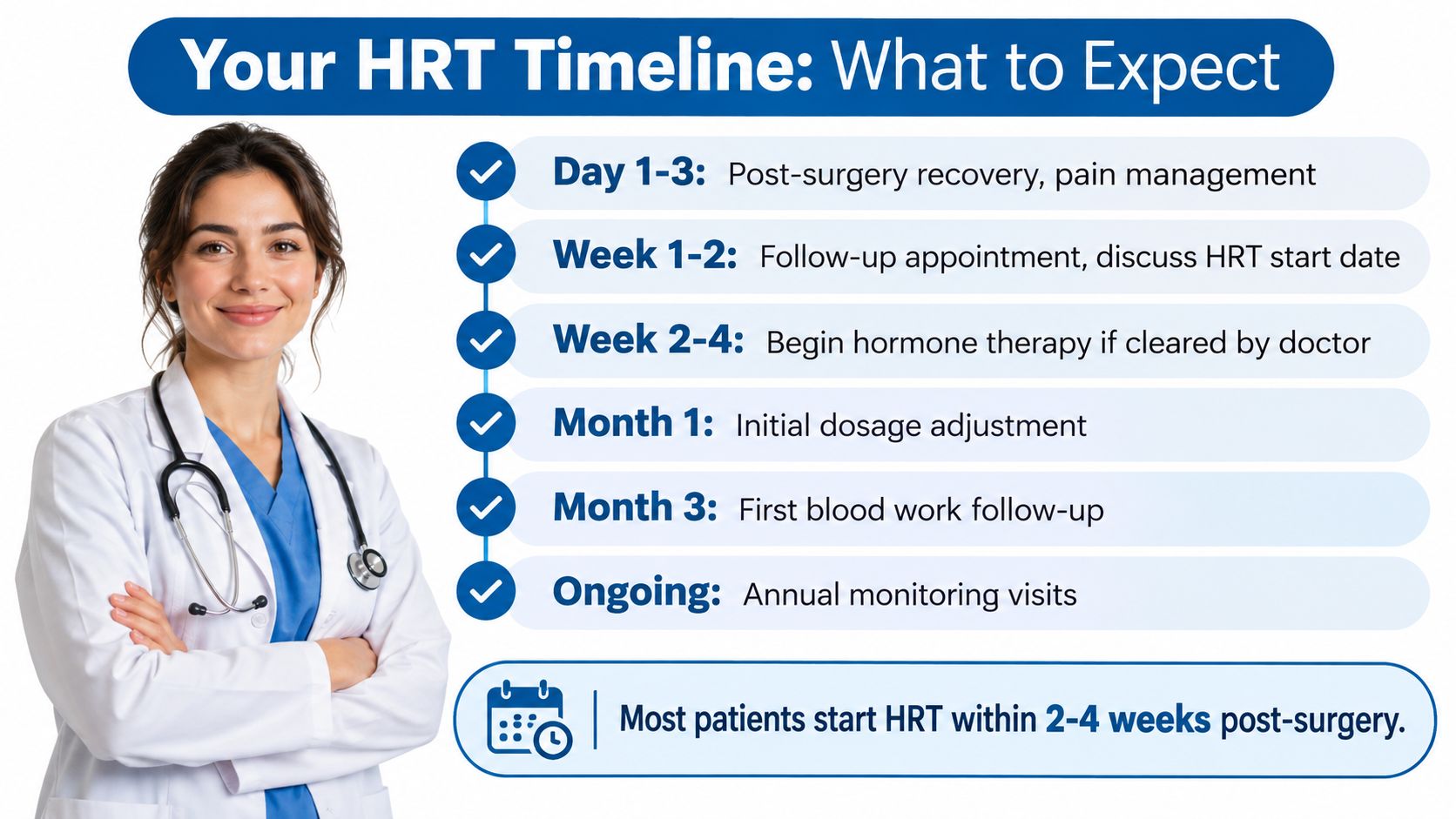
The timing of HRT after surgery depends on healing, mobility, the reason for surgery, and your personal risk profile. An NHS patient guide says HRT can usually begin as soon as a patient is mobile after surgical menopause, but your surgeon or prescribing clinician should confirm when it's appropriate for you. If progestogen is needed, it may be prescribed separately or in a combined patch with estrogen, as described in the Oxford University Hospitals hysterectomy guide.
Finding a dose that fits
There isn't one correct estrogen dose for every patient. Clinicians usually consider symptom severity, age, surgical history, route of administration, medical risks, and treatment goals. A lower starting dose may be reasonable for some people, followed by adjustment if symptoms remain disruptive or side effects develop.
Estrogen may be delivered through a tablet, patch, gel, spray, or a local vaginal preparation, depending on the symptoms being treated. Systemic treatment reaches the wider body, while local treatment is focused on vaginal or urinary symptoms. Don't change the dose, stop suddenly, or add progesterone without speaking with your prescriber.
Recent guidance is also moving away from treating a hormone blood test as the sole answer. Symptoms, response, adverse effects, and shared decision-making often provide more useful information than chasing a number. The NHS formulary menopause guideline states that there is no arbitrary limit on HRT duration, with review recommended at 3 months after starting or changing treatment and then annually.
At follow-up, bring a record of hot flashes, sleep, mood, vaginal symptoms, breast symptoms, headaches, and any bleeding. Ask what improvement should be expected, which side effects merit a call, and when your next review should occur. This 2026 patient guide to HRT guidelines can also help you prepare for a more focused discussion.
Understanding Benefits and Risks With Evidence-Based Clarity
After a total hysterectomy, it is natural to wonder why hormone treatment still matters when the uterus is gone. The answer depends partly on whether the ovaries were removed or their hormone production changed. HRT is not a routine “yes” or “no.” It is a decision about symptom relief, bone protection, personal health history, and the possible effects of treatment.
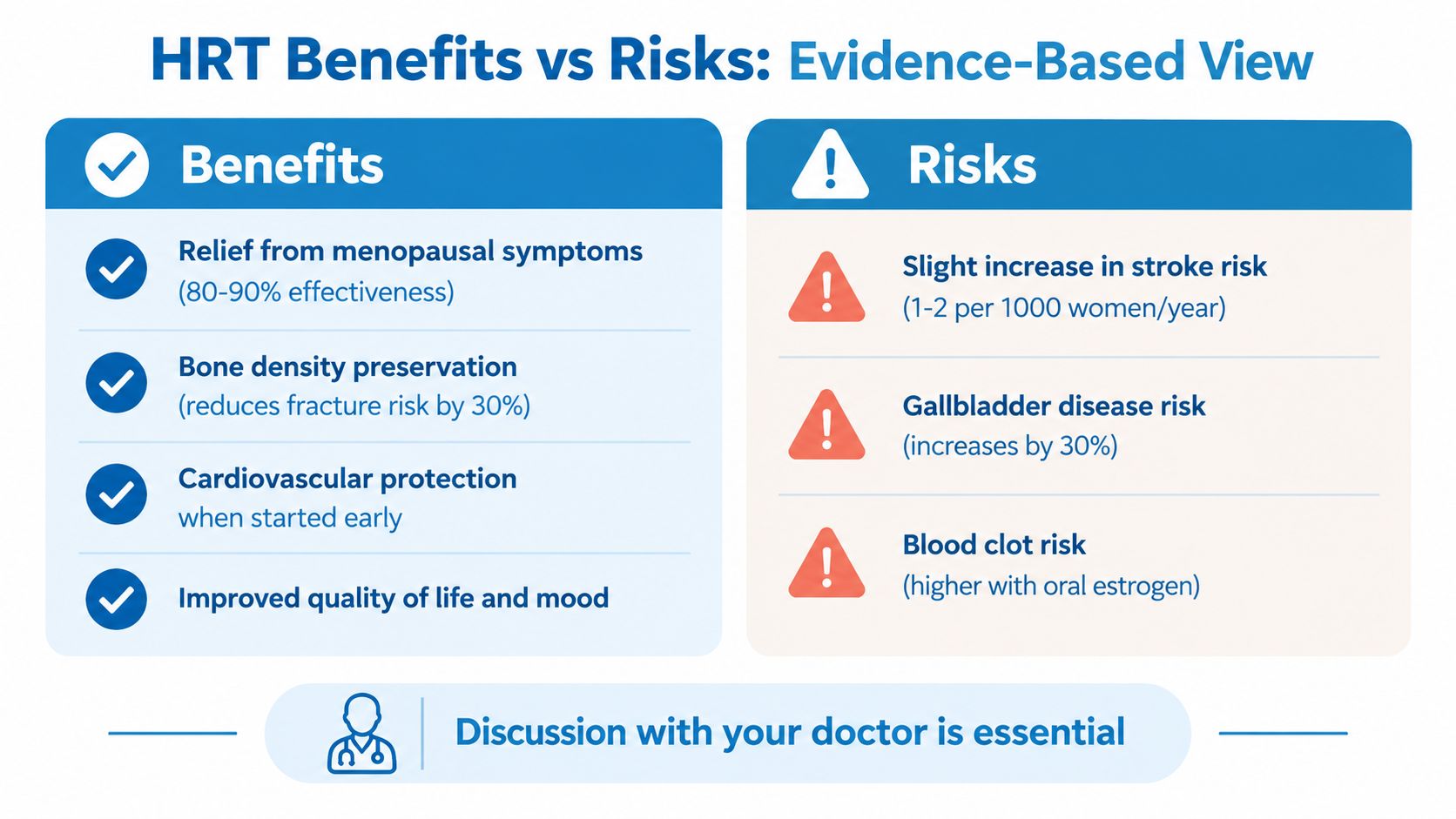
For people without a uterus, estrogen-only therapy has a specific evidence base. In the Women's Health Initiative trial involving women with prior hysterectomy, estrogen-only therapy did not significantly increase invasive breast cancer risk over about 7.2 years . The reported hazard ratio was 0.77 , with a 95% confidence interval of 0.59 to 1.01 . Pooled trial data also found little to no difference in breast cancer risk, with a relative risk of 0.79 and a 95% confidence interval of 0.61 to 1.01 . The published evidence summary explains these findings. They do not make HRT risk-free or appropriate for everyone.
What benefits may matter to you
Estrogen can ease hot flashes and night sweats, helping restore sleep and daily functioning. Estrogen-only therapy may also reduce fracture risk. The same evidence review describes possible tradeoffs, including higher stroke and gallbladder risk.
A useful discussion with your clinician can connect the evidence to your life:
- Symptom relief: Are sleep, temperature control, concentration, vaginal comfort, or mood improving?
- Bone health: Does your age or ovarian status make bone protection a priority?
- Route of delivery: Would a patch, gel, tablet, or local treatment fit your preferences and health profile?
- Duration: Does continuing treatment still offer more benefit than harm as your circumstances change?
A balanced decision: HRT is neither universally safe nor universally dangerous. The practical question is whether a carefully selected plan suits your needs, with its benefits judged alongside its risks.
A frightening headline or one family-history detail cannot answer that question alone. Share the full picture with your clinician, and revisit the plan when your health or symptoms change. This plain-language review of hormone therapy risks and benefits can help you prepare for that conversation.
Recognizing Who Should and Shouldn't Use HRT
You may leave surgery expecting one clear answer about HRT, then discover that your medical history still matters. Removing the uterus does not remove every reason to delay or avoid hormone treatment. Your clinician will review conditions such as certain cancers, stroke, heart attack, blood clots, liver disease, or unexplained vaginal bleeding. The MedlinePlus guidance on menopausal hormone therapy explains why these histories call for careful evaluation and may sometimes rule out treatment.
Use this information to prepare, not to make a diagnosis at home. A previous illness might mean choosing another treatment, consulting a specialist, or discussing nonhormonal options. It does not always create an automatic “yes” or “no.” Unexplained vaginal bleeding should be assessed before HRT begins, even after hysterectomy. The bleeding may come from a source other than the uterine lining.
Bring the pieces of your health history together
Your appointment will be easier if you gather:
- Surgical details: the operative report, whether your cervix or ovaries were removed, and the surgery date.
- Personal history: cancer diagnoses, blood clots, cardiovascular disease, liver problems, migraines, and every current medicine or supplement.
- Family history: breast or ovarian cancer, blood clots, stroke, and early menopause.
- Current symptoms: when they started, how often they occur, and their effect on work, relationships, exercise, and sleep.
The guiding principle is the lowest effective dose for the shortest necessary time , yet that does not mean everyone should stop on a preset schedule. Review the plan regularly. Early surgical menopause may lead to a longer discussion about continuing therapy, while a change in health may call for stopping or changing it. Your treatment plan should fit your risks, symptoms, and circumstances.
When to Seek Care and Advocate for Yourself
A worrying symptom after surgery deserves attention, even when you are unsure whether it is part of recovery. Contact your surgical team promptly for fever, worsening pain, heavy bleeding, wound changes, or a sudden decline in your condition.
After starting HRT, seek urgent medical attention for chest pain, sudden shortness of breath, one-sided weakness, or a painful, swollen leg. These symptoms can have several causes, but they require prompt assessment rather than waiting for a routine visit.
New or persistent vaginal bleeding also needs medical review. Do not assume it is only an adjustment to HRT. Your clinician may examine you, review the operative details, or look for a source outside the uterine lining.
Arrive at the appointment with your medication bottles or an up-to-date list, including supplements. Write down your three main symptoms, when they occur, and what improvement would matter most to you. Clear questions can turn a confusing visit into a shared treatment decision:
- Did my ovaries remain, and how does that affect my plan?
- Why are you recommending estrogen-only or combined therapy?
- Which delivery method fits my health history?
- How will we judge whether the treatment is working?
- When should I return for review?
- What symptoms mean I should call sooner?
- What alternatives are available if HRT isn't appropriate?
You deserve an explanation before agreeing to treatment. A practical care plan should name the medication, dose, route, intended benefits, possible adverse effects, follow-up schedule, and steps for adjusting it if your symptoms or health change. You do not need to prove that your discomfort is severe enough to deserve care.
For Mississippi residents seeking an in-person discussion, hormone replacement therapy near you may help identify a setting for evaluation. Choose a qualified provider who reviews your surgical history and medical risks instead of offering a fixed hormone package.
Your Path to Restored Balance and Vitality
A patient may arrive at a consultation saying, “I thought the surgery was supposed to fix this.” She may be sleeping poorly, feeling unlike herself, and worrying that needing HRT means something went wrong. The clinician's job isn't to dismiss that fear. It's to explain the difference between removing reproductive anatomy and losing ovarian hormone production, then build a plan around the patient's actual health.
The central points are straightforward:
- Estrogen-only therapy is usually standard after a total hysterectomy because there's no endometrium requiring routine progestogen protection.
- Exceptions exist , including endometriosis, residual uterine tissue, or a subtotal procedure.
- Ovarian status matters , because surgical menopause can begin immediately when both ovaries are removed.
- Monitoring continues , with treatment reviewed according to symptoms, side effects, health risks, and changing goals.
- There isn't a universal stop date , so don't discontinue therapy solely because you've reached an arbitrary time point.
- Your history matters , including cancer, clotting, cardiovascular, liver, and bleeding concerns.
Needing treatment after surgery isn't a personal failure or a sign that you're dependent on medication. For some patients, HRT replaces hormones that their bodies no longer produce adequately. For others, local treatment, nonhormonal medication, lifestyle support, or observation may be more appropriate. The safest choice comes from understanding what changed, what you're feeling, and what risks apply to you.
Keep a symptom record, request a copy of your operative report, and ask for a review whenever your symptoms or health circumstances change. You deserve care that explains the reasoning, listens to your experience, and adjusts the plan rather than asking you to endure symptoms in silence.
Pause Medical offers clinician-guided hormone replacement evaluations, prescription selection, follow-up, and medication management for Mississippi patients considering treatment after hysterectomy. Schedule an in-person consultation through Pause Medical to discuss your ovarian status, symptoms, treatment options, and a personalized monitoring plan.