What Does Low Testosterone Feel Like and What to Do
You may have noticed a slow change rather than one dramatic symptom. Morning energy feels less reliable, workouts take more effort, intimacy has become less spontaneous, and concentrating at work takes longer. You may have blamed stress, poor sleep, getting older, or a demanding season of life.
That uncertainty is understandable because what low testosterone feels like varies from person to person. Low testosterone doesn't create one universal sensation. It usually appears as a pattern involving sexual, physical, cognitive, and emotional changes, and symptoms alone can't confirm the diagnosis. A careful evaluation matters, especially for adults in Mississippi who may also be managing weight changes, diabetes, thyroid concerns, sleep problems, medication effects, or menopause-related symptoms.
The Symptom Pattern Patients Notice First
A man may finish his workday and realize that the energy for an evening walk or strength session has disappeared. His partner may notice less interest in sex before he identifies a change in libido. A coworker may see that he is quieter, more irritable, or less engaged. A woman may notice reduced desire or physical changes that overlap with menopause, medication effects, or another health concern.
Because these changes often develop gradually, people tend to assign each one a separate explanation. A weaker workout becomes a fitness problem. Brain fog becomes a sleep problem. Lower desire becomes a relationship problem. Fatigue becomes part of getting older. That slow, scattered pattern can continue for months or years without a clear explanation.
A pattern is more useful than a checklist
Clinicians look for a persistent constellation of symptoms , not one difficult week. Reduced sex drive, erectile dysfunction, or fewer spontaneous erections generally point more directly toward testosterone concerns than tiredness alone. The Endocrine Society's clinical review describes other possible features, including reduced energy, decreased muscle mass, irritability, difficulty concentrating, depressed mood, infertility, testicular shrinkage, breast tenderness or enlargement, and hot flashes when testosterone is very low.
The pattern can look different in older men and women. Older men may report changes in erections, libido, strength, or recovery. Women may describe lower desire, reduced arousal, or a change in sexual well-being, but menopause and perimenopause can produce similar experiences. These symptoms require context rather than a gender-based assumption.
Fatigue and low motivation also occur with sleep apnea, depression, thyroid disease, anemia, chronic illness, obesity, diabetes, medication effects, and chronic stress . Rest may improve symptoms caused by a stressful period. Persistent sexual changes combined with declining physical, cognitive, or emotional function warrant a medical conversation.
Practical rule: Symptoms show that something deserves attention. They cannot identify the responsible condition.
A review of symptoms, health history, medications, sleep, and laboratory results is more useful than an online score. For context on Longevity Clinics evaluation standards or guidance on reclaiming vitality and drive, readers can consult these resources before speaking with a provider.
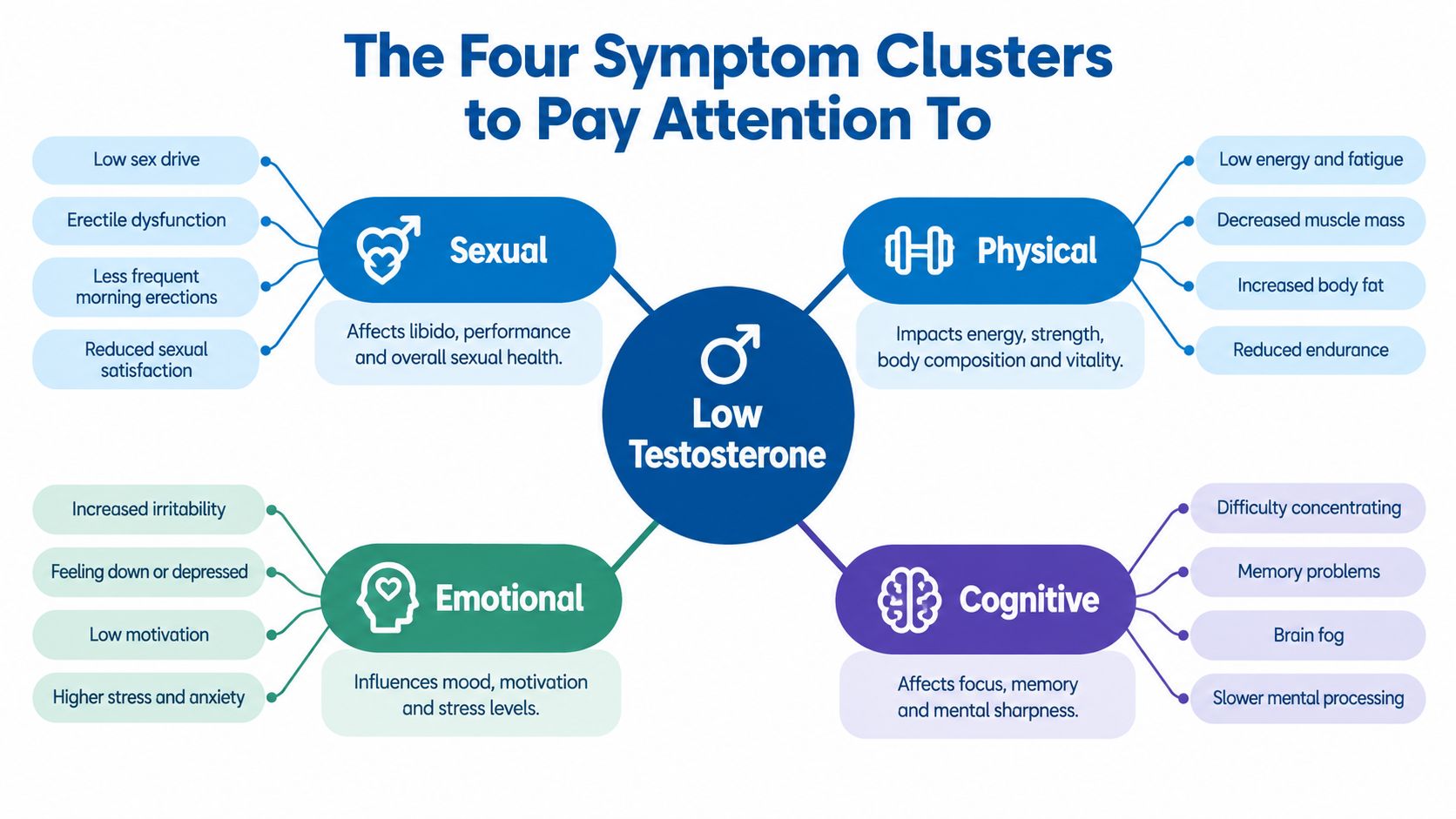
The Four Symptom Clusters to Pay Attention To
Reduced morning erections and persistent low libido typically prompt clinicians to consider testosterone deficiency before isolated fatigue does. Sexual changes are more suggestive because they connect more directly with reproductive hormone function, although they still do not identify the cause by themselves.
Sexual symptoms are the most suggestive
Persistently reduced libido, erectile dysfunction, and fewer spontaneous or morning erections deserve attention. In women, lower desire, reduced arousal, or a change in sexual well-being may lead to questions about androgen status. Menopause, perimenopause, medications, mood, pain, sleep, and relationship factors can create similar experiences, so context matters.
Physical symptoms are suggestive in combination. Reduced muscle mass, declining strength, lower exercise capacity, infertility, testicular shrinkage, or breast tenderness may strengthen the overall pattern. Increased body fat can occur alongside hormonal problems, but it is too nonspecific to identify testosterone deficiency on its own.
Cognitive and emotional symptoms need broader thinking
Brain fog, difficulty concentrating, word-finding problems, and reduced mental sharpness can interfere with work and daily life. They do not point to a particular testosterone level. Poor sleep, depression, anxiety, medication effects, chronic disease, and stress can produce the same experience.
Irritability, depressed mood, flattened motivation, and reduced vitality belong in the clinical history as well. These are nonspecific symptoms . Their importance lies in the effect on quality of life, while their cause still requires evaluation rather than assumption.
A plain-language overview of symptoms of hormonal imbalance may help readers recognize broader patterns. Guidance on when to see a doctor for low testosterone can help distinguish an occasional inconvenience from a persistent concern.
The American Urological Association states that testosterone deficiency requires compatible symptoms or signs plus low testosterone measurement . Its evidence review included 40 studies involving 37,565 men aged 43 to 82 , with reported prevalence ranging from 2% to 77% , depending on the assay threshold, population, and definition. The AUA testosterone deficiency guideline illustrates why symptom checklists cannot provide a diagnosis.
How Symptoms Differ by Age and Sex
A sudden change in sexual function can point the evaluation in a different direction from months of tiredness or reduced concentration. Age, sex, reproductive stage, medications, and other health conditions shape how low testosterone may appear, so the same symptom does not carry the same meaning in every patient.
Younger men
A younger man may notice a relatively sharp change in libido, erections, fertility, mood, or physical performance. A clinician will ask about sleep, medications, chronic illness, prior anabolic steroid use, injury, and conditions affecting the pituitary or testicles. The symptom identifies a concern, not its cause.
Sexual and fertility changes are often more suggestive of a hormone problem than fatigue alone. Fatigue, low mood, and brain fog can still matter, but they have many possible explanations and should be assessed in that wider context.
Older men
In older men, symptoms often emerge gradually. Reduced sexual function may occur alongside lower energy, strength, motivation, or mood, while obesity, diabetes, vascular disease, medication effects, sleep disorders, and ordinary changes in activity can create a similar pattern. Age by itself does not establish testosterone deficiency.
The Endocrine Society reported symptomatic androgen deficiency at approximately 6% in a population-based survey of middle-aged and older men, with prevalence increasing alongside age, waist circumference, and poorer self-rated health. The population-based Endocrine Society review supports a focused clinical interpretation. Population-level estimates of hypogonadism do not predict which individuals will be symptomatic.
Women
Women may wonder whether testosterone contributes to reduced desire, lower arousal, fatigue, mood changes, reduced muscle strength, or loss of well-being. These concerns merit a respectful evaluation. Testosterone is one possible factor, while perimenopause or menopause, thyroid disease, iron deficiency, medication effects, disrupted sleep, mental health, and relationship factors may produce overlapping symptoms.
| Group | Typical Presentation | Common Overlaps |
|---|---|---|
| Younger men | Noticeable sexual, fertility, mood, or physical changes | Sleep problems, medications, prior anabolic steroid use, pituitary or testicular conditions |
| Older men | Gradual changes in sexual function, energy, strength, or mood | Obesity, diabetes, vascular disease, medications, sleep disorders, age-related changes |
| Women | Low desire, reduced arousal, fatigue, mood changes, or reduced strength | Menopause or perimenopause, thyroid disease, anemia, medications, sleep and relationship factors |
Interpretation differs across sexes and depends on age, reproductive or menopausal status, symptoms, medications, and measured hormone levels. For further context on men's health, read this patient guide to testosterone and men's health.
Getting a Real Diagnosis Instead of Guessing
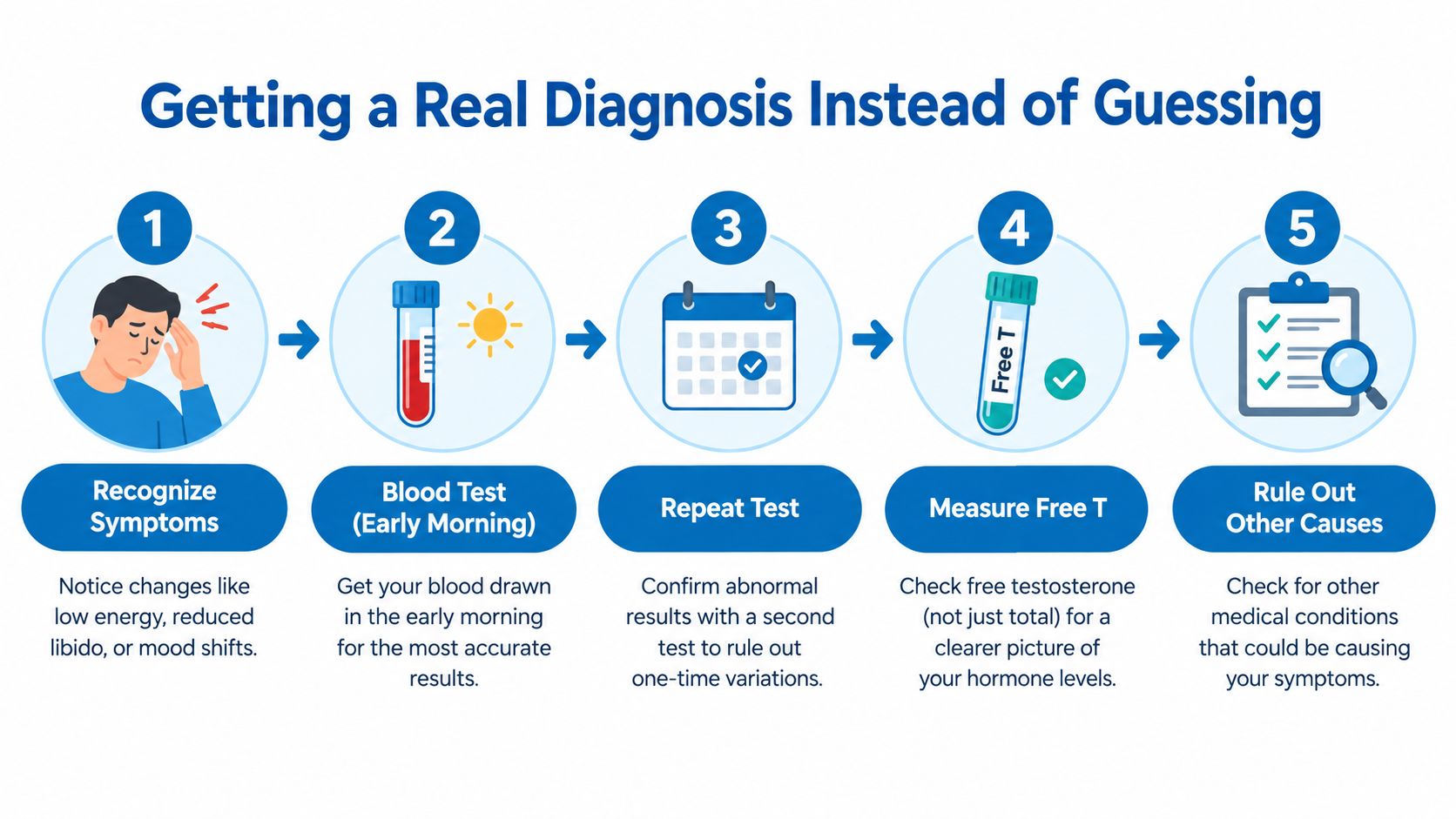
A low-testosterone diagnosis depends on the whole pattern, not one troubling symptom or one laboratory result. A clinician will ask what changed, when it started, whether it continues, and how it affects sexual function, mood, strength, sleep, and daily life. Medications, supplements, alcohol or drug use, recent illness, and other health conditions also belong in the history.
Start with appropriate testing
A fatigue-driven afternoon test can create confusion because testosterone varies during the day and may fall temporarily during illness or poor sleep. For men being evaluated for deficiency, the American Urological Association recommends two early-morning measurements on separate occasions . Medicare diagnostic-testing guidance also describes repeat fasting morning measurements. The American Academy of Family Physicians overview explains why symptoms and repeated results need to be interpreted together.
A practical overview of how testosterone level checks work can help patients understand what to ask before an appointment.
If results are borderline or do not fit the symptoms, the clinician may order targeted follow-up tests. These can include free testosterone, LH, FSH, SHBG, prolactin, TSH, a complete blood count, or a metabolic panel. Each test answers a different question: whether testosterone production is low, whether the brain and pituitary are signaling properly, or whether anemia, thyroid disease, metabolic illness, or another condition better explains the complaints.
Look for root causes
Obesity, diabetes, chronic disease, sleep disorders, corticosteroids, opioids, and other medications can affect testosterone levels. An acute illness or unusual testing condition can do the same. Addressing that factor may be more appropriate than starting testosterone immediately.
The AUA uses below 300 ng/dL as a reasonable supporting threshold, but the number alone does not establish deficiency. A compatible symptom pattern and consistently low morning results still matter. The AUA guideline describes how laboratory findings fit with the medical history and examination.
Women require careful interpretation because standard testosterone assays may be less reliable at the lower concentrations commonly measured in women. A clinician may choose a more sensitive assay and assess whether androgen status plausibly relates to the symptoms. That process helps avoid unnecessary long-term therapy while identifying treatable causes such as anemia, thyroid disease, sleep apnea, depression, or medication effects.
Treatment Options Worth Discussing With a Provider
Treatment should match the diagnosis and the patient's goals. A person who feels tired but has no confirmed deficiency may need sleep evaluation, medication review, metabolic care, mental health support, or treatment for another condition rather than testosterone therapy.
Address the contributors first
Sleep quality, physical activity, nutrition, alcohol use, body weight, diabetes, and medication exposure all belong in the discussion. These measures may support energy and metabolic health, but they shouldn't be presented as a guaranteed way to normalize testosterone. A clinician can help identify which changes are realistic and whether they address the likely cause.
For men with confirmed deficiency and compatible symptoms, testosterone therapy may be discussed in forms such as gels, patches, injections, pellets, or oral products. Each option has practical differences involving absorption, administration, side effects, convenience, and the need to reassess response. Testosterone therapy can suppress sperm production, so men who want to preserve fertility need to raise that goal before treatment begins.
| Delivery Method | Dosing Frequency | Key Advantage | Main Drawback |
|---|---|---|---|
| Transdermal gel | Depends on the prescribed product | Avoids injections | Absorption and transfer precautions require discussion |
| Patch | Depends on the prescribed product | Provides a non-injection option | Skin reactions or tolerability may limit use |
| Injection | Depends on the prescribed product and plan | A familiar treatment route | Hormone levels and symptoms may vary between doses |
| Pellet | Administered according to a clinical schedule | Doesn't require daily application | Placement is a procedure and dose changes aren't immediate |
| Oral testosterone | Depends on the prescribed product | Convenient for selected patients | Suitability, absorption, and safety monitoring require careful review |
Women with a confirmed, clinically meaningful concern may discuss low-dose transdermal testosterone with a qualified specialist. Use is individualized, and treatment shouldn't be expected to resolve every symptom involving mood, energy, sleep, or well-being.
Monitoring is part of treatment
FDA labeling states that testosterone products can increase blood pressure and recommends periodic measurement. In FDA-reviewed data for XYOSTED, ambulatory monitoring showed an average systolic blood-pressure increase of approximately 4 mmHg during the first 12 weeks and approximately 4 mmHg from baseline after one year . The FDA product labeling says treatment isn't recommended for men with uncontrolled hypertension.
That makes blood-pressure review and cardiovascular risk assessment essential. A provider may also monitor blood counts, prostate-related considerations when appropriate, symptoms, and whether benefits continue to outweigh risks. Men concerned about fertility may need a different treatment conversation than men whose primary goal is symptom relief. For a broader patient overview, see this guide to testosterone therapy for men. Readers comparing care models may also find hormone replacement therapy in Ashburn useful for general educational context.
Common Misconceptions That Lead People Astray
A patient may notice fewer morning erections and a clear drop in sexual desire, then assume every later symptom has the same cause. Sexual changes can point more directly toward low testosterone than fatigue, low mood, poor concentration, reduced strength, or increased body fat. Clinical guidance supports combining the symptom pattern with laboratory confirmation, as described in its evidence review.
Four ideas to reconsider
- “I feel tired, so my testosterone must be low.” Fatigue can also reflect sleep apnea, depression, thyroid disease, anemia, chronic illness, stress, obesity, or medication effects. Brain fog alone is similarly nonspecific.
- “A supplement can diagnose or fix the problem.” Over-the-counter products cannot replace properly timed testing or medical review. A perceived benefit may come from another ingredient, expectation, or treatment of a separate nutritional issue.
- “Higher testosterone is always healthier.” Testosterone therapy is not a general energy tonic. Unsupervised hormone or anabolic steroid use can create serious health concerns.
- “This is just aging.” Age-related changes can overlap with hormone symptoms, yet persistent sexual changes, physical decline, or mood changes still warrant individual assessment.
Women may also ask about androgen-related symptoms. Low desire, fatigue, and reduced well-being deserve attention, while menopause, thyroid disease, anemia, medication effects, sleep problems, and mental health require consideration. Older men may have several of these contributors at once, so a symptom checklist cannot identify testosterone as the cause by itself.
The practical response is to track what changed, when it changed, and which symptoms appeared together. A qualified provider can then decide whether hormone testing and evaluation for other causes are appropriate.
When to Talk to a Provider and What Happens Next
Schedule a clinical conversation when sexual symptoms persist, fatigue combines with mood changes, sleep becomes disrupted without a clear explanation, or symptoms interfere with work, relationships, exercise, or daily responsibilities. You don't need to prove that testosterone is the cause before making an appointment.
Bring information that helps the clinician see the pattern:
- A symptom log: Record energy, libido, erections or arousal, sleep quality, mood, exercise tolerance, and the timing of changes.
- A medication list: Include prescriptions, over-the-counter products, supplements, opioids, corticosteroids, and any hormone products.
- Previous laboratory results: Older results may provide useful context, even if they don't answer the current question.
- Specific questions: Ask whether two early-morning measurements are appropriate, which other causes should be considered, and how fertility or cardiovascular health might affect treatment.
After the visit, the provider may review your medical history and examination, arrange appropriately timed laboratory testing, and schedule follow-up to interpret the results. Evaluation doesn't commit you to testosterone therapy. It gives you a clearer basis for deciding whether treatment, lifestyle support, medication management, sleep evaluation, metabolic care, or another approach fits your situation.
Pause Medical offers hormone replacement therapy evaluation, medically supervised weight-loss support, disease management, and personalized follow-up for adults across Mississippi, including Oxford, Meridian, Tupelo, Flowood-Jackson, and Starkville. Visit Pause Medical to schedule a consultation and discuss your symptoms with a provider who can evaluate the pattern rather than relying on an online quiz.
This article is for education and isn't a substitute for diagnosis or medical advice. Testosterone treatment should be considered only with qualified clinical oversight, appropriate testing, and ongoing monitoring.