Hormone Imbalance Symptoms for Men: A Practical Guide
A man in his mid-40s may notice the changes gradually. He wakes up tired after what seemed like a full night of sleep, skips workouts he once enjoyed, gains stubborn abdominal weight, and feels less interested in intimacy. Nothing feels dramatic enough to explain, yet something feels different.
These experiences often lead people to search for hormone imbalance symptoms for men and wonder whether low testosterone is the answer. Symptoms can provide an important reason to seek care, but they can't establish a diagnosis. Fatigue, mood changes, weight gain, sleep problems, and low libido also occur with obesity, diabetes, sleep disorders, medications, depression, thyroid disease, chronic illness, and relationship stress. A structured medical evaluation, rather than guesswork or supplements, helps identify what's happening.
When Fatigue and Low Drive Start to Feel Personal
The man in this example may start by blaming himself. He tells himself he needs more discipline, a stricter diet, or a better workout plan. When those efforts don't restore his energy, the concern becomes more personal: “Why don't I feel like myself anymore?”
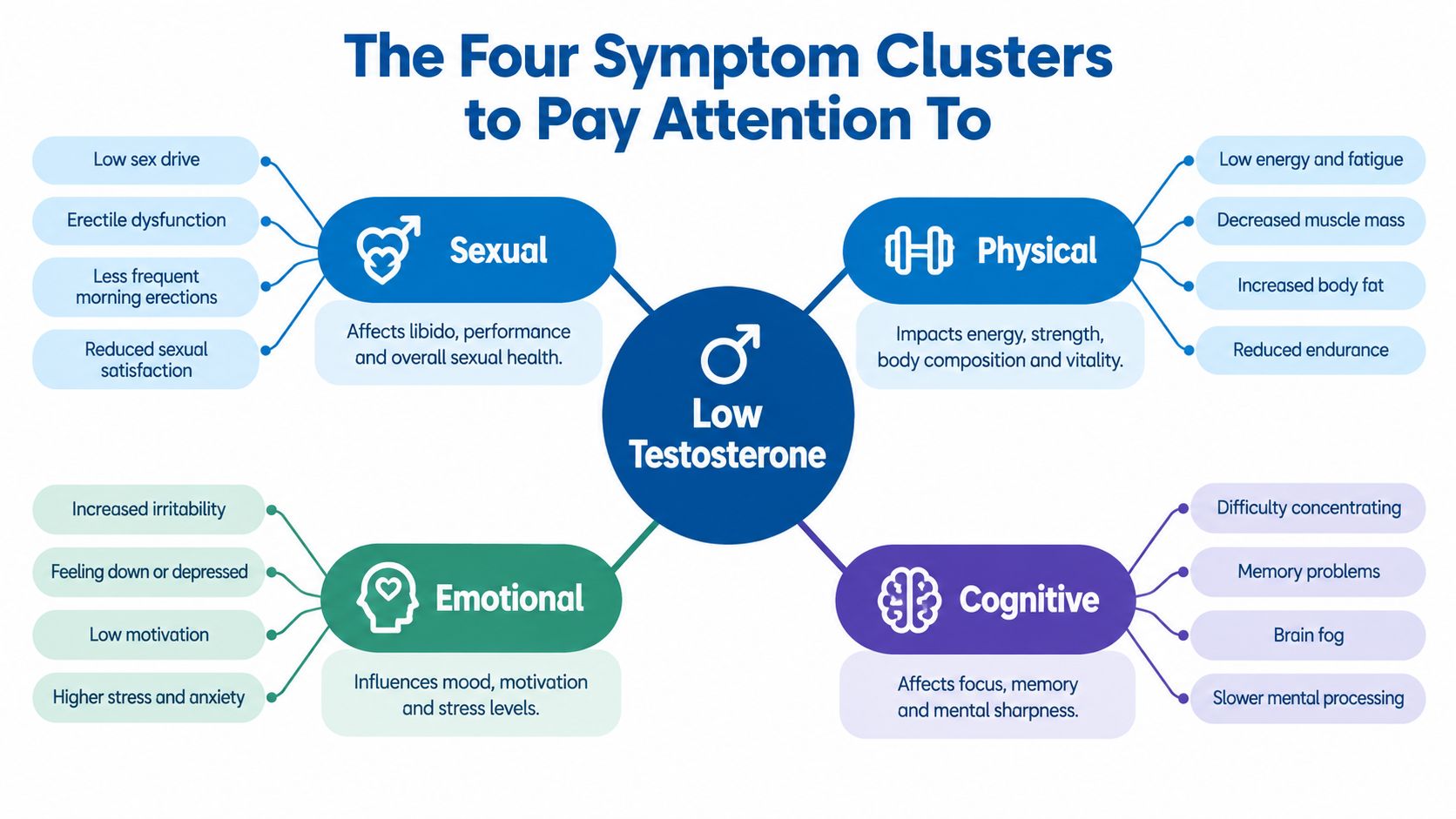
That question deserves a careful answer. Reduced energy and sexual interest can occur with hypogonadism, but the Endocrine Society describes hypogonadism as a condition requiring compatible symptoms or signs plus consistently low testosterone , not symptoms alone. Its guidance includes reduced sexual desire, erectile dysfunction or loss of spontaneous erections, infertility, lower energy, reduced muscle mass, depressed mood, irritability, difficulty concentrating, breast tenderness, testicular shrinkage, and hot flashes among possible manifestations. The Endocrine Society's testosterone therapy guidance also recommends accurate testing and confirmation with a repeat morning measurement.
A practical rule: Feeling tired is a reason to investigate, not proof that testosterone is low.
A symptom journal can make that investigation more useful. Record changes in energy, sleep quality, libido, erections, mood, concentration, exercise tolerance, and weight. Note when symptoms began and whether they remain present during restful periods. Someone looking for general wellness ideas may also explore resources about combat low energy and libido, but educational material shouldn't replace a clinical assessment when symptoms persist.
The same symptoms can point in very different directions. A man with loud snoring and daytime exhaustion may need evaluation for sleep apnea. Someone taking opioids or glucocorticoids may have medication-related suppression. Another person may have depression, diabetes, thyroid disease, or a primary testicular problem. A clinician has to connect the symptom pattern with medical history, examination, and reliable laboratory results.
Watch the video below for a visual introduction to the relationship between energy, libido, and hormone health.
If fatigue, low motivation, or reduced sexual interest has become a regular part of life, a vitality and energy consultation can help organize the next questions. The purpose of that visit should be diagnostic first and treatment second.
How Male Hormones Actually Work
Male hormone health is easier to understand as a feedback system rather than a single number. The hypothalamic-pituitary-gonadal axis , often shortened to the HPG axis, works somewhat like a thermostat.
The hypothalamus starts the signal by releasing gonadotropin-releasing hormone, or GnRH. That signal prompts the pituitary gland to release luteinizing hormone, or LH, and follicle-stimulating hormone, or FSH. LH tells the testes to produce testosterone, while FSH supports sperm production. Testosterone then feeds information back to the hypothalamus and pituitary so the system can adjust its output.
The thermostat analogy
If the testes can't produce enough testosterone, the pituitary may increase LH and FSH in an attempt to stimulate them. That pattern suggests primary hypogonadism , meaning the main problem is at the testicular level.
If the pituitary or hypothalamus doesn't send an adequate signal, testosterone may be low while LH and FSH remain low or inappropriately normal. That pattern suggests secondary hypogonadism , which may involve pituitary or hypothalamic signaling. The distinction matters because treatment should address the location and cause of the problem, not just replace a hormone without further investigation.
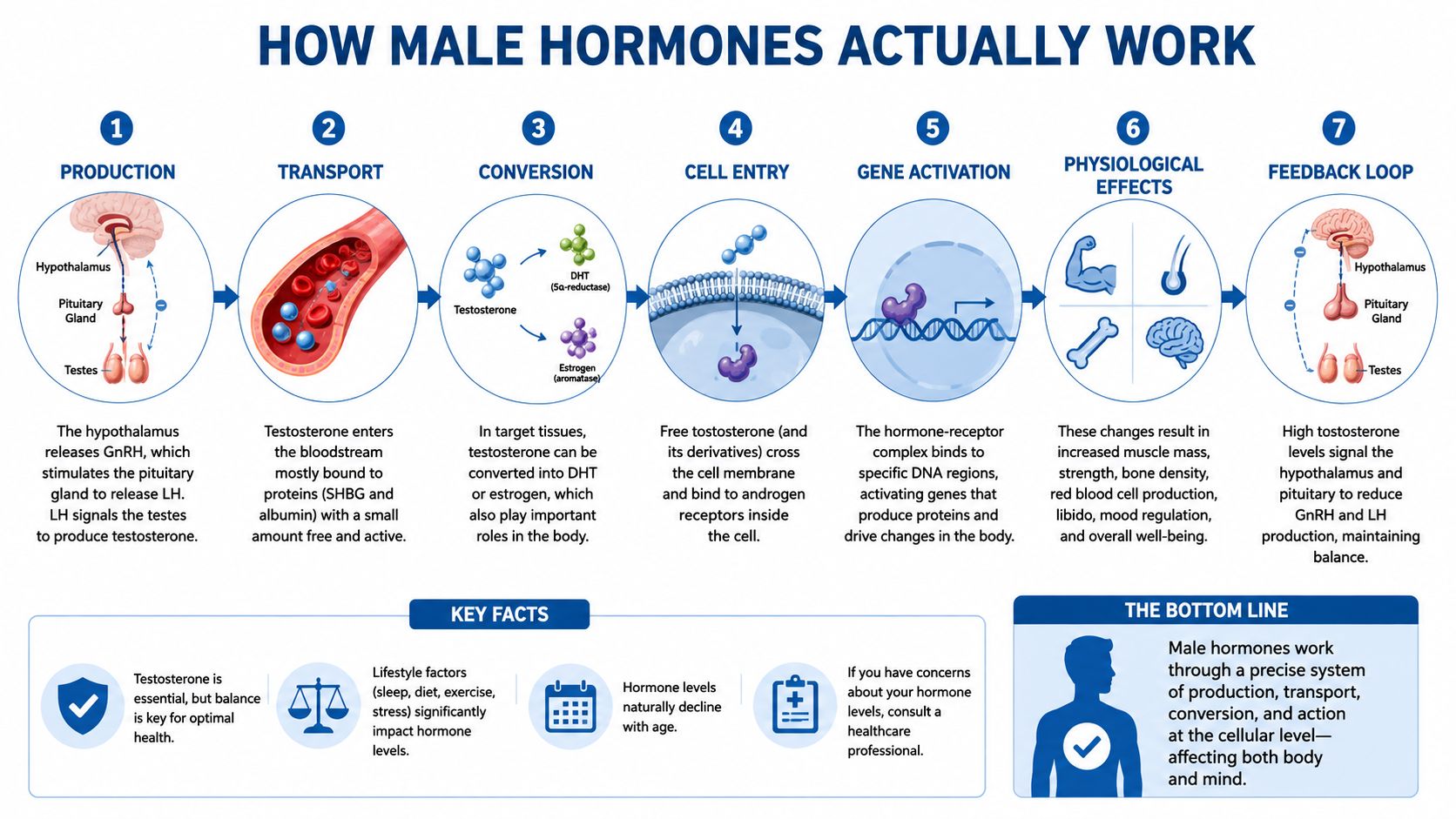
Testosterone also travels through the bloodstream in different forms. Sex hormone-binding globulin , or SHBG, binds circulating testosterone and affects how much may be available to tissues. This is one reason a clinician may consider free testosterone when total testosterone is equivocal, rather than assuming that one measurement tells the entire story.
Other hormones influence how symptoms appear. Some testosterone converts to estradiol, prolactin can affect reproductive and sexual function, and thyroid hormones influence energy, mood, metabolism, and concentration. A person can therefore experience symptoms that feel hormonal even when testosterone isn't the primary issue.
For a plain-language explanation of possible low-testosterone patterns, causes, and treatment questions, review what low testosterone may mean. The key point is simple: hormone levels are connected, and follow-up testing helps clinicians understand the system behind the symptom.
Symptoms That Point Toward Hormone Imbalance
A man notices fewer morning erections, less interest in sex, and difficulty recovering from exercise. Another feels tired after a demanding week but has no sexual or reproductive changes. Both may wonder about hormones, yet the patterns give clinicians different reasons to investigate.
Symptoms work like clues in a clinical map. Sexual and reproductive changes often point more directly toward androgen-related problems than general tiredness. A single complaint still cannot establish a diagnosis. Clinicians consider persistence, combinations of symptoms, and change from the person's usual baseline before ordering and interpreting laboratory tests.
Compare the pattern, not one complaint
| Category | More specific pattern | Less specific pattern |
|---|---|---|
| Sexual and reproductive | Reduced libido with fewer spontaneous or morning erections, erectile changes, or infertility | Reduced interest linked only to relationship concerns or circumstances |
| Physical | Testicular shrinkage, reduced body hair, breast tenderness or enlargement, or hot flashes | Weight gain, lower exercise tolerance, or gradual muscle loss |
| Cognitive | Ongoing concentration problems occurring with compatible sexual or physical findings | Brain fog, forgetfulness, or mental fatigue alone |
| Emotional and sleep-related | Depressed mood or irritability alongside more specific changes | Fatigue, poor sleep, stress, anxiety, or low motivation alone |
The manifestations described earlier can support evaluation, but they do not replace biochemical confirmation. The Endocrine Society guideline makes the same distinction between compatible findings and consistently low testosterone before diagnosing hypogonadism. Its clinical guideline
A clinician usually starts by reviewing symptom timing, medications, illnesses, fertility plans, sleep quality, alcohol use, and changes in weight or training. If testosterone testing is appropriate, the American Urological Association recommends repeating a low morning result before drawing conclusions. Its testosterone deficiency guideline Obesity, poor sleep, or suspected sleep apnea may need attention first or alongside hormone testing because reversible factors can imitate or worsen hormone-related symptoms.
Erectile changes also have several possible explanations, including vascular disease, diabetes, psychological factors, relationship stress, and medication effects. Treating every case as testosterone deficiency could therefore miss the actual problem.
Know when symptoms need prompt attention
Severe headaches, visual-field changes, markedly small testes, loss of smell, or unusual reproductive findings warrant timely medical attention. These signs do not prove pituitary or hypothalamic disease, but they increase the need for a broader assessment rather than symptom-based treatment alone.
People exploring options such as balancing hormones with peptides should apply the same standard. A product or protocol cannot identify the cause, confirm low testosterone, account for fertility goals, or replace supervised evaluation.
What Causes Hormone Imbalance in Men
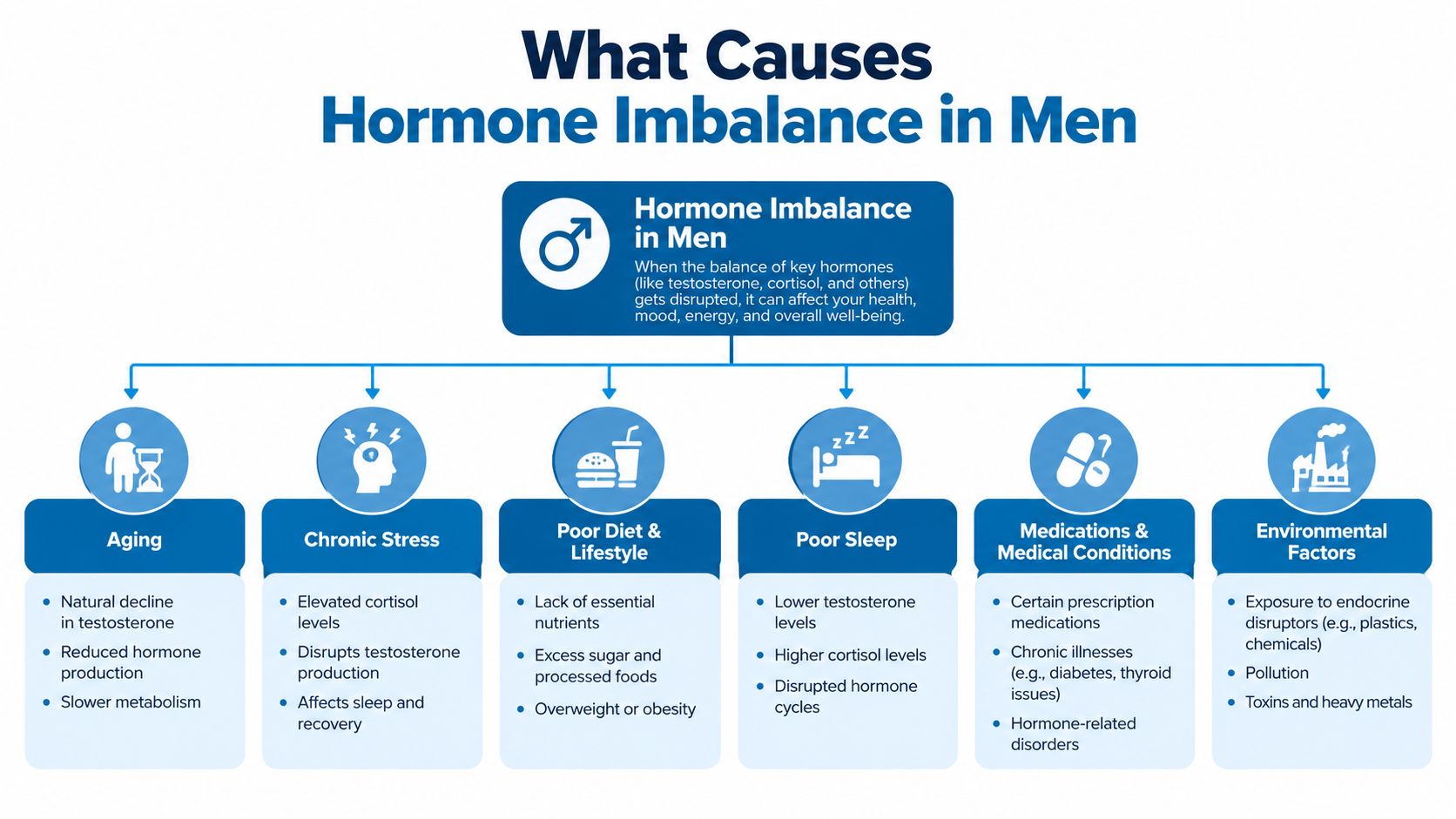
Low testosterone can originate in the testes, the pituitary or hypothalamus, or from conditions that temporarily suppress the system. Age-related changes are one possibility, often discussed as andropause or late-onset hypogonadism, but aging doesn't make every new symptom a hormone disorder.
Biochemical testosterone deficiency becomes more common with age, although the reported prevalence changes according to the laboratory threshold, the type of testosterone measured, and the population studied. In an analysis of U.S. survey data, low total testosterone, defined in that study as below 10.4 nmol/L, approximately 300 ng/dL , increased from about 2% of men aged 20 to 29 to 25% of men aged 70 and older . Low free testosterone rose from nearly 0% in the younger group to approximately 24.9% in the older group. The published analysis shows an age-related pattern, not a diagnosis for every older man.
Reversible contributors deserve attention
Obesity can affect the hormone environment through increased conversion of testosterone to estradiol and altered signaling from the pituitary. Sleep apnea can fragment restorative sleep and interfere with normal hormone patterns. Acute illness, heavy alcohol use, opioid exposure, glucocorticoids, anabolic steroid withdrawal, and some medications may also contribute.
A clinician may separate causes into two broad patterns:
- Primary testicular dysfunction: Low testosterone occurs with raised LH and FSH, suggesting the testes aren't responding adequately to pituitary signals.
- Secondary hypogonadism: Low testosterone occurs with low or inappropriately normal LH and FSH, suggesting altered hypothalamic or pituitary signaling.
Potential contributors include obesity, obstructive sleep apnea, systemic disease, pituitary disorders, iron overload, prior chemotherapy or radiation, and testicular injury. Addressing sleep, medication effects, metabolic health, and other reversible factors may change the picture before long-term hormone treatment is considered.
How Doctors Diagnose a Hormone Imbalance
Diagnosis starts with the clinical story, not a mail-order result or an online symptom quiz. A clinician reviews the timing of symptoms, sexual and reproductive changes, sleep, weight, exercise, medications, alcohol use, chronic illnesses, and fertility plans. The examination may provide additional clues, including changes in body composition, testicular volume, breast tissue, or signs of another medical condition.
The initial laboratory approach generally uses an accurate morning total-testosterone assay . Testosterone follows a daily rhythm, so a result collected at an unsuitable time may not represent the person's usual peak level. The Endocrine Society and American Urological Association both support confirming a low result with a second morning measurement on a separate day before diagnosing hypogonadism. Testing should also account for acute illness, sleep disruption, obesity, and medications that can temporarily lower levels.
What the supporting tests can clarify
| Lab | Purpose |
|---|---|
| Total testosterone | Establishes the initial biochemical measurement |
| Free testosterone | Helps interpret an equivocal total result in selected situations |
| LH and FSH | Helps distinguish a testicular problem from a pituitary or hypothalamic signaling problem |
| Prolactin | May identify an underlying pituitary or reproductive concern |
| SHBG | Helps interpret how much testosterone may be available to tissues |
| Thyroid testing | Evaluates a thyroid contributor to fatigue, mood, weight, or concentration changes |
| Blood count and metabolic testing | Looks for broader health factors that can overlap with hormone symptoms |
| Estradiol, when relevant | Helps assess selected sexual, breast, or body-composition findings |
A proper evaluation also considers whether the patient is ill, sleeping poorly, taking opioids or glucocorticoids, or experiencing a major change in weight. Free or bioavailable testosterone may be useful when total testosterone is unclear, but it isn't automatically the first test for everyone.
For a practical overview of the testing process, see how to get testosterone levels checked. The result should be interpreted alongside symptoms and examination findings. A laboratory value without compatible clinical features may not justify treatment, while symptoms without consistently low results require a broader search for other causes.
Hormones, Weight, and Metabolic Health
Hormone concerns often reveal a larger metabolic picture. Abdominal weight gain, low energy, reduced activity, sleep disruption, blood-pressure changes, and altered glucose regulation can reinforce one another. Treating testosterone as an isolated problem may miss the conditions that influence both symptoms and long-term health.
Metabolic syndrome provides a useful framework. The National Cholesterol Education Program Adult Treatment Panel III identifies five measures: waist circumference, triglycerides, HDL cholesterol, blood pressure, and fasting glucose. A person meets the framework when any three of the five are present. The listed thresholds include waist circumference of at least 102 cm, or 40 inches, in men , triglycerides of at least 150 mg/dL , HDL below 40 mg/dL in men , blood pressure of at least 130 mm Hg systolic , and fasting glucose of at least 100 mg/dL . The American Heart Association publication explains why waist size alone isn't enough to describe metabolic risk.
Weight treatment belongs in the conversation
Obesity can influence testosterone availability, insulin regulation, inflammation, sleep, and physical activity. That relationship works in both directions, so improving sleep, nutrition, movement, and weight may support hormone health even before testosterone therapy enters the discussion.
For eligible adults with overweight or obesity, medically supervised GLP-1 treatment is one possible component of a broader plan. In the 68-week STEP 1 randomized trial , 1,961 adults received once-weekly semaglutide 2.4 mg or placebo alongside lifestyle intervention. Mean body weight declined 14.9% with semaglutide compared with 2.4% with placebo, and 86.4% of semaglutide-treated participants achieved at least 5% weight loss , compared with 31.5% receiving placebo. The STEP 1 trial doesn't guarantee the same result for every patient, and treatment requires eligibility review, dose escalation, monitoring, and follow-up.
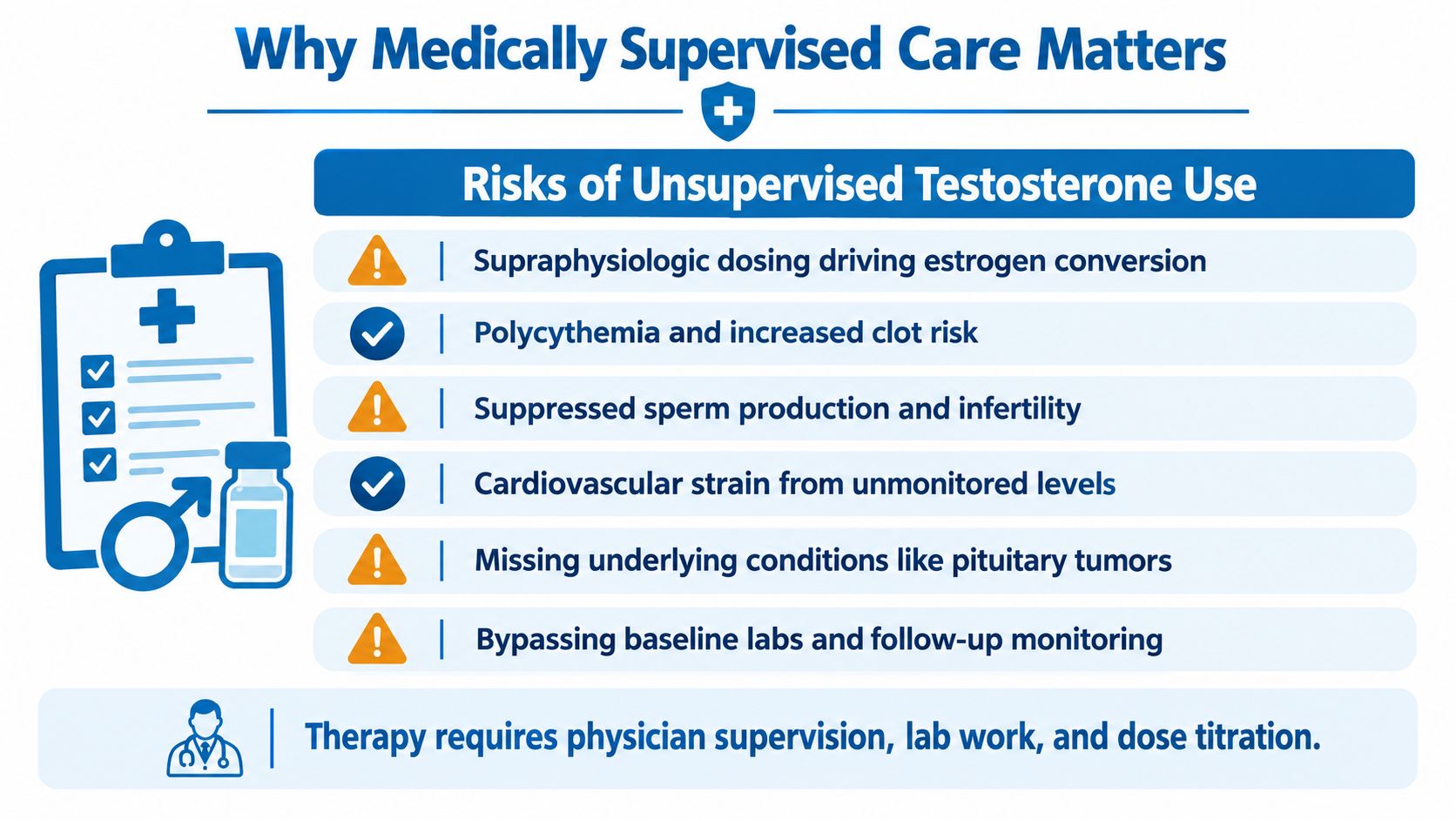
Why Medically Supervised Care Matters
A man may feel tired, lose sexual interest, and wonder whether testosterone is the answer. Those symptoms can have several causes, so treatment should follow a clinical and biochemical evaluation, not a symptom checklist. Testosterone is a medical treatment, not a general self-improvement product. Without confirmed deficiency and follow-up, it may suppress sperm production, hide a pituitary disorder, increase red blood cell production, or expose someone to treatment he does not need.
Fertility deserves early discussion. External testosterone can reduce the signals that support sperm production. A man planning children may therefore need a reproductive-focused evaluation rather than immediate testosterone replacement. Clinical guidance advises against starting testosterone in situations such as near-term fertility plans, prostate or breast cancer, an unexplained prostate nodule, PSA markedly above the reference range without urologic evaluation, high hematocrit, untreated severe obstructive sleep apnea, severe urinary symptoms, uncontrolled heart failure, a heart attack or stroke within the previous six months, or thrombophilia.
What supervision adds
A supervised plan starts with medical history, examination, baseline laboratory information, contraindication review, and clear treatment goals. Follow-up testing then helps the clinician adjust or stop treatment if safety markers, symptoms, or the response change.
Testosterone should never be used to hide an untreated sleep disorder, unexplained fertility problem, or possible pituitary condition.
The right question is why testosterone may be low. Obesity, sleep apnea, medication effects, or another illness may need attention first, and treating those factors can change the plan. Review the risks and benefits of hormone therapy, then discuss personal risks, fertility goals, and monitoring with a qualified healthcare professional.
Taking the Next Step in Mississippi
A Mississippi man who recognizes these symptoms can take practical steps without trying to diagnose himself.
Start a simple journal for two weeks. Record energy, sleep quality, libido, mood, concentration, exercise tolerance, and weight changes. The goal isn't to produce a diagnosis. It's to show the clinician whether the pattern is persistent, worsening, connected to poor sleep, or occurring alongside sexual and physical changes.
Gather prior laboratory results from the last two years if they're available. Make a complete medication and supplement list, including opioids, glucocorticoids, antidepressants, anabolic products, and over-the-counter sleep aids. A pharmacist can help identify medication effects, while a primary care clinician or hormone specialist can decide which tests are appropriate.
Prepare for the first consultation
Bring:
- A symptom timeline: Note what changed first and how symptoms have evolved.
- Your medication list: Include doses, supplements, and nonprescription products.
- Prior laboratory results: Include hormone, thyroid, glucose, lipid, and blood-count testing when available.
- Your health goals: Discuss fertility, energy, sexual function, weight, sleep, and long-term metabolic health.
- Your questions: Ask what must be confirmed, which reversible causes need attention, and how follow-up will work.
The first visit may include vital signs, a focused history, physical examination, laboratory orders, and a follow-up plan. Treatment shouldn't be assumed before the evaluation is complete. If symptoms change, new reproductive concerns appear, or severe headaches and visual changes develop, seek timely medical care rather than waiting for a routine wellness appointment.
Pause Medical offers medically supervised hormone replacement therapy for men, medical weight loss, and personalized disease-management support with in-person provider evaluation in Mississippi. Visit Pause Medical to schedule a consultation and discuss your symptoms, fertility goals, sleep, weight, and next diagnostic steps.