What Is an Age Management Center? a Mississippi Guide
You wake up tired even after a full night in bed. Your weight has changed, even though your habits haven't changed much. Your patience feels thinner, your libido lower, your focus less reliable. You may even have been told your labs are "normal," while your body keeps telling you something is off.
For many adults in Mississippi, that gap is the hardest part. You don't feel like yourself, but you also don't know what kind of care fits what you're experiencing. An age management center is one model people often explore when they want more than a quick prescription or a rushed annual visit. Done well, it looks at hormones, metabolism, symptoms, lifestyle, and disease risk together.
Feeling Tired and Unlike Yourself? You're Not Alone
A lot of people arrive at this search after months or years of brushing off symptoms. A woman in her late 40s may notice that her sleep is lighter, her mood less steady, and her midsection more resistant to every healthy habit she tries. A man in his 50s may feel less motivated, less strong, and less interested in sex, then wonder if this is "just aging."

These symptoms often cluster together. Fatigue can worsen cravings. Poor sleep can affect weight, mood, and hormone regulation. If restless mornings are part of your pattern, this practical guide to improve your sleep quality can help you think through one piece of the puzzle.
When symptoms start to overlap
Many patients don't come in saying, "I think I need age management medicine." They say things like:
- I'm exhausted all the time: even after a decent night's sleep.
- I've gained weight around my waist: and diet alone doesn't seem to move it.
- My moods feel different: more irritable, flat, anxious, or unpredictable.
- My sex drive is gone: or intimacy feels physically different.
- I can't think as clearly: and brain fog is affecting work and home life.
Those complaints are medically meaningful. They can reflect hormone shifts, thyroid issues, insulin resistance, menopause, andropause, medication effects, sleep disruption, or chronic inflammatory stress.
You are not overreacting if your body feels different and your quality of life has changed.
If that sounds familiar, a review of common symptoms of hormonal imbalance can help you put language to what you're feeling before you meet with a clinician.
Why people look beyond routine care
Traditional care is important, especially for screening and disease treatment. But routine visits are often built to identify established illness, not always to investigate subtle decline in energy, resilience, recovery, and metabolic function before it becomes a larger problem.
That's why many people start looking for a more preventive, whole-person approach. At its best, an age management center isn't about chasing youth. It's about helping you protect your healthspan , the years when you can think clearly, move well, sleep better, and feel more like yourself.
Beyond Anti-Aging What Is an Age Management Center?
You may be sitting in an exam room saying, "My labs were called normal, but I still do not feel like myself." That is often the point where age management medicine starts to make sense. An age management center is a clinical model that looks for early, treatable changes in hormones, metabolism, sleep, recovery, body composition, and inflammation before those problems grow into clearer disease.

What makes this model different
A useful comparison is preventive cardiology. A heart specialist does not wait for a heart attack before addressing blood pressure, cholesterol, sleep apnea, or insulin resistance. Age management applies a similar logic to symptoms that can appear in midlife and beyond, such as fatigue, brain fog, falling libido, poor exercise recovery, hot flashes, or stubborn weight gain.
The difference is the lens. Instead of treating each complaint as a separate problem, clinicians try to see how the pieces connect. Low energy, disrupted sleep, changing body composition, and mood shifts may involve sex hormones, thyroid function, glucose control, medication effects, or stress physiology working together.
That is why visits often include a more detailed history, a symptom review, targeted lab work, and follow-up over time rather than a one-time snapshot.
Some practices use the term age management for a very high-cost concierge model. A published overview of these clinics describes programs that may include genomic testing, multi-omics panels, advanced imaging, hormone therapy, supplements, and other personalized interventions, often bundled into expensive executive-style memberships in the United States and internationally. You can read that overview in this published review of age-management clinic models.
Why the idea resonates with patients
Many adults are not looking for a promise of "staying young." They want clear answers, a careful safety review, and a plan that matches what is happening in their body now.
That matters most with hormone care. The clinical question is not whether hormone therapy is good or bad in the abstract. The question is which hormone, at what dose, by which route, for which patient, and with what monitoring. A patch, oral capsule, cream, pellet, or injection can behave differently in the body, and those differences affect convenience, symptom control, and risk. If you want a plain-language foundation before that conversation, this guide to what hormone replacement therapy is is a helpful place to start.
Weight and metabolic treatment add another layer. Many patients now ask about GLP-1 medications alongside hormone therapy. That is a reasonable question. These treatments can complement each other in some cases, but they are not interchangeable, and they do not solve the same problem. A careful clinic should explain where they overlap, where they do not, and what safety monitoring changes when both are being considered.
Practical rule: A trustworthy age management center should be able to explain what it is measuring, why it matters for your symptoms, what treatment options exist, and how the plan will be adjusted if your response or lab results change.
That kind of step-by-step care tends to feel different for one simple reason. It treats your symptoms as clues to be interpreted, not inconveniences to be dismissed.
Core Services for Restoring Your Vitality
A good age management center treats fatigue, weight changes, sleep disruption, low libido, and brain fog as connected problems. That matters because the body rarely struggles in neat categories. Hormones affect metabolism. Metabolism affects inflammation, sleep, and mood. Medications for weight can change how hormone therapy feels. The safest clinics build treatment plans with those interactions in mind.
Hormone replacement therapy and bioidentical hormones
Hormone therapy is often one part of care because estrogen, progesterone, testosterone, and thyroid hormones influence temperature regulation, sexual function, muscle mass, concentration, sleep, and body composition. The clinical work is not merely deciding whether to use hormones. It is choosing the right formulation, route, dose, and follow-up plan for the person sitting in front of you.
That route matters more than many patients realize.
For example, oral estrogen passes through the liver first. That first-pass effect can increase clotting factors and triglycerides in some patients, which is one reason many clinicians prefer transdermal estrogen, such as patches, gels, or creams, for women with migraine, increased cardiovascular risk, or concern about blood clot risk. Transdermal delivery usually creates steadier blood levels and avoids much of that liver effect. Vaginal estrogen is different again. It is used mainly for local symptoms such as dryness, irritation, or painful intercourse, with much less whole-body absorption at low doses.
Pellets are another option. They are placed under the skin and release hormone over several months, which can be convenient for patients who do not want to remember a daily or weekly treatment. The tradeoff is control. Once a pellet is inserted, the dose cannot be lowered quickly if acne, breast tenderness, mood changes, hair growth, or other side effects appear. Creams, gels, patches, and many oral options are easier to adjust or stop. That does not make pellets unsafe by definition. It means they require careful patient selection and a clear discussion about what happens if the starting dose turns out to be too much or too little.
This is where an informed conversation matters. A center that recommends the same hormone route for every patient is oversimplifying medicine. A patient with fluctuating symptoms may prefer an adjustable transdermal product. A patient struggling with adherence may value the convenience of longer-acting therapy. Safety and practicality both count.
Medical weight loss and GLP-1 weight loss
Weight treatment in this setting should be medically supervised and tied to the reason weight changed in the first place. Insulin resistance, sleep apnea, menopause, reduced muscle mass, thyroid disease, stress, and certain medications can all push weight in the wrong direction. If a clinic skips that workup, treatment often feels frustrating because the plan addresses only appetite and not the biology underneath it.
GLP-1 medications such as semaglutide and tirzepatide can be very helpful, but they add a layer of complexity when someone is also using hormone therapy. They slow stomach emptying, reduce calorie intake, and often lead to meaningful fat loss. As body fat changes, hormone handling can change too. Fat tissue helps produce and store certain hormones. Weight loss can shift estrogen production after menopause, alter sex hormone-binding globulin levels, and change how strongly a given hormone dose is felt. In plain terms, a dose that fit your body six months ago may feel different after substantial weight loss.
That is one reason some patients notice unexpected changes during treatment. Hot flashes may improve, then return. Libido may rise, fall, or become less predictable. Testosterone replacement may need reassessment if hematocrit climbs, sleep changes, or body composition shifts. Women on estrogen therapy may need a medication review if nausea from a GLP-1 makes oral dosing harder to tolerate or if symptoms suggest the current route is no longer the best fit.
Muscle loss is another concern. Rapid weight loss can reduce lean mass along with fat mass, especially if protein intake and resistance training are poor. That matters for long-term energy, metabolic rate, balance, and healthy aging. An evidence-based clinic watches for this and does not judge success by the scale alone.
If you're exploring structured care for weight and metabolism, these medical weight loss clinics pages can help you understand what supervised treatment usually includes.
Questions a careful clinician should answer include:
- Which hormone route are you using now? Oral, transdermal, injectable, and pellet therapies respond differently to changes in body weight, adherence, and side effects.
- How fast is the weight coming off? Faster loss can change symptoms, hydration, blood pressure, and medication tolerance more quickly.
- Are you preserving muscle? Protein intake, strength training, and follow-up body composition data matter.
- Are labs and symptoms being reviewed together? Numbers help, but they do not replace a real discussion about sleep, libido, mood, bleeding changes, and energy.
Disease management and metabolic health
Strong age management practices connect symptom relief with prevention and chronic disease care. A patient seeking help for fatigue may also need screening for diabetes, insulin resistance, anemia, thyroid disease, or sleep apnea. A man asking about testosterone may need blood pressure review, fertility counseling, and discussion of red blood cell monitoring. A woman seeking menopause treatment may also need cardiovascular risk assessment, breast health review, and evaluation of abnormal bleeding before hormones are prescribed.
That patient-centered model is what separates careful care from a quick fix.
A strong clinic usually offers:
| Focus area | What it may address |
|---|---|
| Hormone balance | Menopause, andropause, low libido, fatigue, hot flashes |
| Weight and metabolism | GLP-1 support, insulin resistance, central weight gain |
| Medication management | Adjusting therapy as labs, symptoms, and goals change |
| Preventive wellness | Detecting patterns before they become more advanced disease |
Patients often improve more steadily when these concerns are treated together, because the body experiences them as part of the same system.
Who Can Benefit Most from Age Management Medicine?
Not everyone who walks into an age management center looks the same. The common thread is that something feels off, or someone wants a more proactive plan than standard symptom-by-symptom care.
Women in midlife who know something has shifted
A woman in her 40s may still have periods, but they may be irregular, heavier, lighter, or harder to predict. She may wake up at night, feel warmer than usual, struggle with vaginal discomfort, or notice that her usual stress tolerance is gone. She may also gain weight in ways that don't match her effort.
Women's health programs in this setting often combine bioidentical HRT , nutrition support, stress management, and lifestyle changes to address menopause and perimenopause, focusing on metabolic health, thyroid function, and period irregularities.
Men noticing changes in drive and recovery
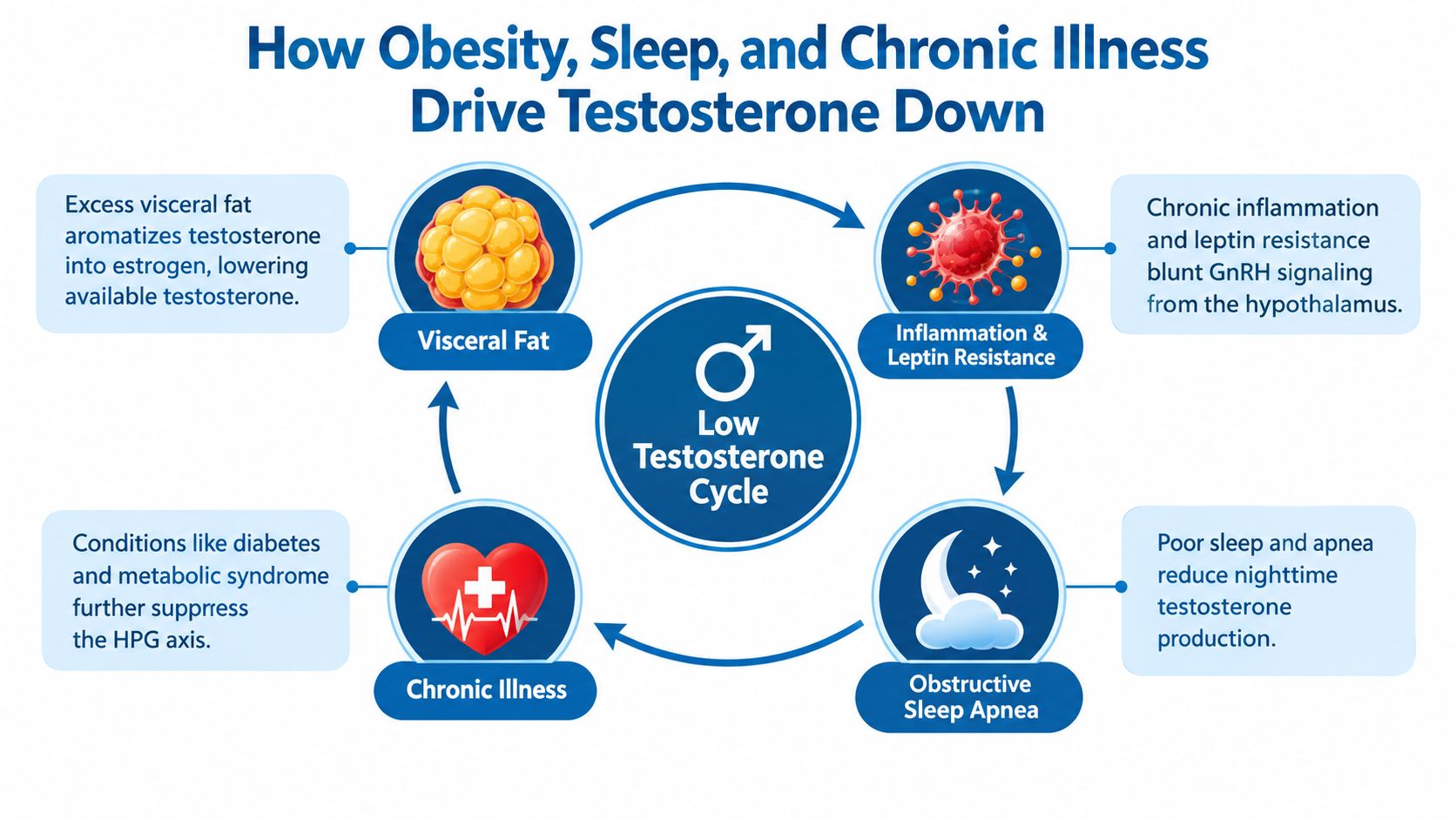
Another common patient is a man over 40 who isn't necessarily "sick" but doesn't feel at his best anymore. He may say he has less motivation in the gym, less interest in sex, less mental sharpness, and more stubborn body fat. Sometimes low testosterone is part of the story. Sometimes sleep, weight, stress, or metabolic dysfunction are just as important.
If energy, libido, strength, and mood all drop together, it's worth looking at the full endocrine and metabolic picture instead of assuming it's only stress.
Adults frustrated by weight gain that doesn't respond normally
Some people come for medical weight loss after years of trying to do everything right. They eat well, exercise, and still feel like their body is fighting them. This is common in perimenopause, after major stress, with insulin resistance, or when thyroid function is suboptimal.
The key difference is that age management medicine asks, "What is making weight loss harder in this body?" instead of assuming every patient needs the same diet advice.
People who feel decent and want to stay that way
There is also a preventive patient. This person may feel mostly well but wants to preserve strength, cognition, metabolic health, and resilience as the years go on. That's a reasonable goal. Good medicine doesn't only treat disease. It also helps patients maintain function.
Your Patient Journey What to Expect
Many people delay care because they assume the process will be confusing, expensive, or overly intense. In most well-run clinics, it should feel structured and understandable.

The first visit
The first step is usually a consultation focused on your symptoms, health history, medications, family history, and goals. Attention to detail is paramount. Hot flashes, low libido, fatigue, poor sleep, weight changes, constipation, mood shifts, and exercise intolerance all help shape the next step.
Most patients also want to know what beginning treatment looks like in practical terms. This guide on how to start hormone replacement therapy is helpful if HRT may be part of your plan.
Testing and treatment planning
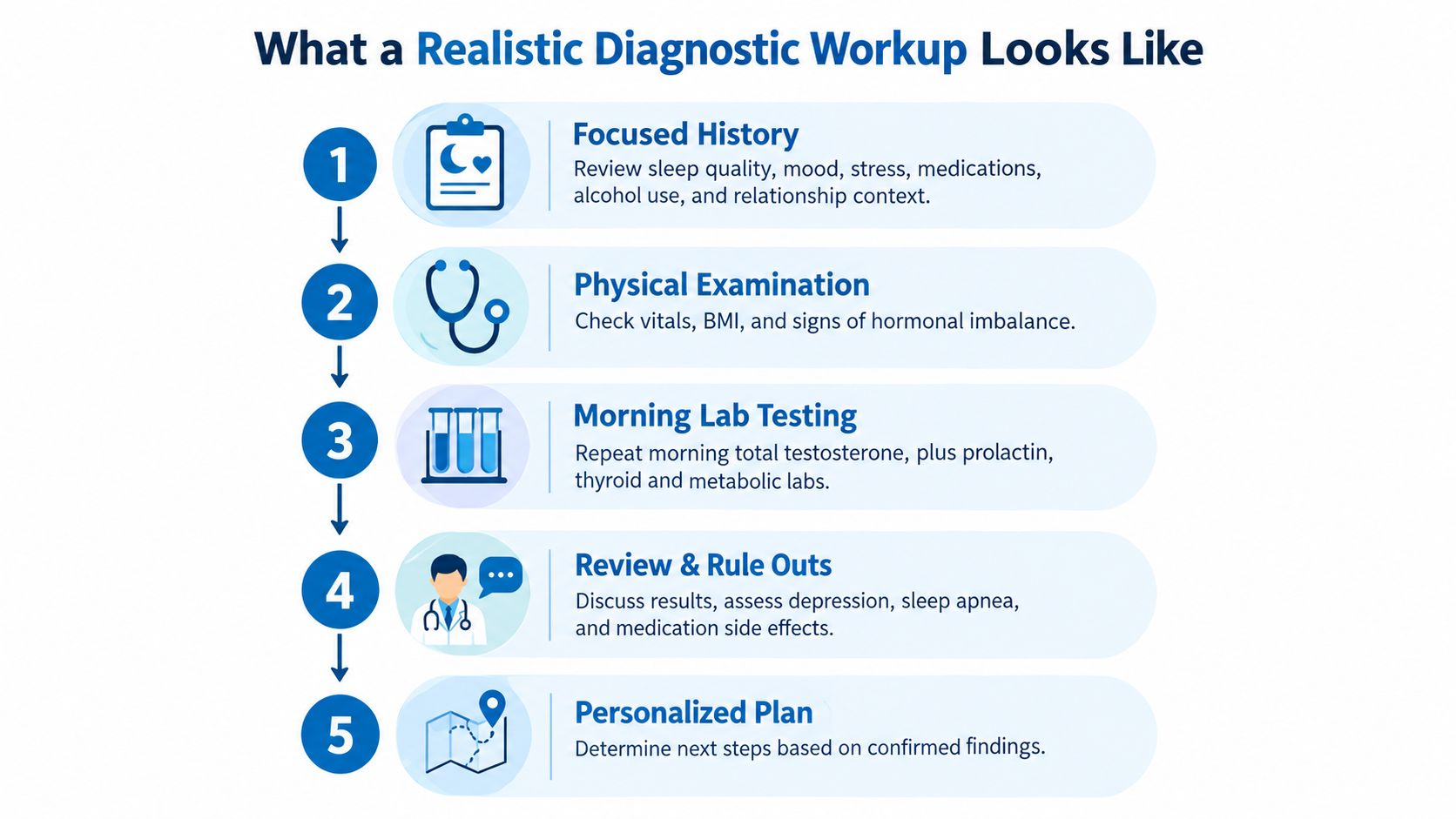
After the initial conversation, the provider usually recommends targeted testing. That may include hormone labs, metabolic markers, thyroid studies, and other evaluations based on symptoms and medical history. The point isn't to order everything possible. The point is to get enough useful information to avoid guessing.
Later in the process, your clinician reviews the findings with you and proposes a treatment plan. That plan may include medication management, bioidentical hormones, testosterone therapy, GLP-1 support, nutrition changes, sleep strategies, or follow-up testing.
A simple overview can help before your first appointment:
- Consultation: discuss symptoms, history, goals, and priorities.
- Assessment: complete lab work and any recommended evaluation.
- Plan: review options and choose a personalized path.
- Monitoring: track symptoms, side effects, and lab response over time.
For a quick visual explanation, this short video gives a useful overview of how hormone-focused care can begin in a structured way.
Follow-up is where safety lives
This is the part patients often underestimate. The best results usually come from ongoing monitoring , not from a one-time prescription. Hormones may need dose changes. Weight loss medications may need reassessment. Symptoms that improve in one month may shift again in three months.
That follow-up rhythm is where clinicians can improve comfort, catch side effects, and keep treatment aligned with your changing physiology.
Choosing a Reputable Age Management Center in Mississippi
You schedule a visit because you are exhausted, gaining weight, sleeping poorly, or feeling unlike yourself. Then the clinic visit turns into a sales pitch. You hear promises about hormones, peptides, or weight loss injections, but you leave without a clear explanation of risks, follow-up, or why one treatment would fit you better than another.
That is the moment to slow down and look carefully at the clinic itself.

A reputable age management center should feel more like a medical practice than a boutique service. The goal is not to sell a preset package. The goal is to identify why you feel poorly, explain your options in plain language, and monitor treatment with the same care used in other areas of medicine.
Start with a few basic standards. Look for a clinic with board-certified medical oversight, individualized treatment plans, clear medication instructions, and a willingness to explain benefits, side effects, alternatives, and cost before treatment starts. If you are comparing local options, this Mississippi clinic locations page can help you see what is available in your area.
Questions that reveal how a clinic actually practices
The best screening questions are specific. Broad questions such as "Do you do HRT?" or "Do you offer weight loss treatment?" do not tell you much. Nearly any clinic can answer yes. A better question asks how they choose one treatment over another and how they keep it safe.
One example is estrogen route. Oral estrogen passes through the liver first. Transdermal estrogen, such as a patch, gel, or spray, largely avoids that first-pass liver effect. That difference matters because route can affect clotting factors, triglycerides, and other risk markers. The North American Menopause Society explains that transdermal routes and lower doses may reduce the risk of venous thromboembolism and stroke in some patients compared with oral therapy, which is why a careful clinic should explain why it recommends a pill, patch, or another form for you specifically: https://menopause.org/wp-content/uploads/press-release/ht-position-statement-release.pdf
A second question involves GLP-1 medications such as semaglutide or tirzepatide used alongside hormone therapy. This is an area where generic advice often falls short. Rapid weight loss can change body fat, gastric emptying, insulin sensitivity, and medication absorption patterns. Hormones are affected by those shifts because fat tissue plays a role in hormone storage and metabolism, and changing weight can alter the dose that feels right or produces side effects. A patient who felt stable on one HRT plan before weight loss may later notice breast tenderness, mood changes, breakthrough symptoms, or a different response to the same dose. A strong clinic should already have a plan for reassessing symptoms, labs when appropriate, and medication timing during active weight loss.
Ask it plainly: "If I lose a meaningful amount of weight on semaglutide or tirzepatide, how will you reassess my hormone treatment?"
Be careful with luxury branding
Some clinics present age management as an exclusive membership product, with high-priced testing panels, concierge packaging, and executive wellness tiers. Price alone does not prove quality. In fact, very expensive care can still be poorly explained or weakly monitored.
For that reason, it is better to ask for a written breakdown of what you are paying for than to focus on prestige language. You should be able to see whether the fee covers medical visits, lab review, medication management, follow-up, and access between appointments. If a clinic cannot explain its pricing clearly, that is useful information.
Good care is usually easy to recognize. The clinician answers questions directly, explains why one hormone formulation may be safer or better tolerated than another, and treats combination therapy, especially HRT plus GLP-1 medication, as something to monitor carefully rather than something to sell quickly.
Frequently Asked Questions About Age Management
Is hormone replacement therapy safe when medically supervised?
For many patients, yes. The safer question is not "Is HRT safe?" but "Which hormone, at what dose, in which form, fits my medical history?"
That distinction matters because hormone therapy is not one treatment. A skin patch, an oral tablet, a vaginal preparation, and an injection can behave differently in the body and carry different risks and benefits. A careful clinician reviews your symptoms, age, personal and family history, blood clot risk, migraine history, breast cancer risk, and treatment goals before recommending a plan.
How is medical weight loss different from just dieting?
Dieting usually focuses on calories and willpower. Medical weight loss looks at the systems that control hunger, blood sugar, metabolism, sleep, and body composition.
That can include insulin resistance, thyroid disease, menopause, medication side effects, poor sleep, and changes in muscle mass. If prescription treatment is appropriate, medications such as GLP-1 drugs are used with follow-up, side effect monitoring, and dose adjustments, rather than leaving you to guess why you feel nauseated, stalled, or unusually fatigued.
Can GLP-1 weight loss medications affect hormone therapy?
Yes. As weight changes, hormone needs can change too.
A useful way to picture it is a thermostat in a house. If the insulation, weather, and airflow all change, the same thermostat setting may no longer keep the house comfortable. In a similar way, weight loss can affect fat tissue, insulin signaling, inflammation, and how the body absorbs, distributes, and responds to hormones. That is why some patients notice new breast tenderness, sleep changes, mood shifts, breakthrough symptoms, or changes in libido after starting semaglutide or tirzepatide.
The main point is not that GLP-1 drugs and HRT are unsafe together. The main point is that the combination often needs reassessment. If mood or libido changes appear during active weight loss, your clinician should review timing, formulation, dose, and whether the hormone plan still matches your current physiology rather than your pre-weight-loss baseline.
Do I need a referral?
Many clinics let you schedule directly. That can make it easier to get evaluated for menopause symptoms, low testosterone, fatigue, low libido, weight gain, thyroid concerns, or preventive health questions without waiting for another office to start the process.
Is this covered by insurance?
Some age management clinics bill insurance, while others use self-pay pricing. Self-pay care can allow longer visits and closer follow-up, but you should still ask for exact costs before you start, including visits, labs, medications, and follow-up adjustments.
Clear pricing is a good sign. Vague package language is not.
Medical disclaimer: This article is for education only and does not replace personal medical advice, diagnosis, or treatment. Hormone replacement therapy, testosterone therapy, GLP-1 weight loss medications, and medication management should only be started or adjusted under licensed medical supervision.
If you're in Mississippi and want a more thoughtful, medically supervised approach to hormone replacement therapy , bioidentical hormones , medical weight loss , GLP-1 weight loss , testosterone therapy , or ongoing medication management , Pause Medical offers patient-centered care with board-certified oversight, personalized treatment plans, and in-person support across multiple locations. If you're dealing with menopause, andropause, fatigue, low libido, hot flashes, sleep trouble, weight gain, thyroid concerns, diabetes, or metabolic syndrome, scheduling a consultation is a practical next step toward getting clear answers and a plan built for your body.