Low Test Levels Symptoms: A Complete Guide for Men
You may notice the change in small, easy-to-dismiss ways. A workout feels harder, afternoons drag, and intimacy no longer enters your mind as naturally as it once did. Because these changes can develop gradually, many men assume they're caused by stress, poor sleep, work, or normal aging.
Low test levels symptoms deserve a thoughtful evaluation, but symptoms alone can't confirm low testosterone. Thyroid disorders, depression, sleep apnea, chronic stress, obesity, medication effects, and other health conditions can create a similar picture. The useful question isn't, “Do I have one symptom?” It's, “Do I have a persistent pattern, especially involving sexual function, that warrants a conversation and properly timed testing?”
When Low Energy and Low Drive Are Worth Paying Attention To
At 47, a man who once woke energized, trained regularly, and rarely questioned his sexual interest may notice a gradual change. Afternoons become difficult, workouts require longer recovery, and intimacy no longer comes to mind as naturally.
Several explanations can produce that pattern. Poor or interrupted sleep, work and family strain, depression, obstructive sleep apnea, thyroid disease, alcohol use, weight gain, and chronic illness can all affect energy or desire. Low testosterone is one possible explanation, not the automatic conclusion.
Fatigue alone is a weak clue because it overlaps with many everyday health problems. A persistent drop in sexual desire is more specific, especially when it occurs with fewer morning erections or new erectile difficulty. That combination deserves more attention than a tired week by itself.
The pattern also matters when it affects several parts of life or feels unlike the person's usual response to stress. A clinician may ask about strength and muscle changes, fertility, testicular changes, medications, sleep, mood, and body composition. These questions help separate a possible hormone problem from another condition producing similar symptoms.
Paying attention doesn't mean self-diagnosing. It means giving a lasting pattern enough importance to investigate it properly.
Start by reviewing common causes of low energy and fatigue before assuming testosterone is responsible. That review can identify untreated sleep apnea, depression, anemia, thyroid disease, or chronic stress, and helps avoid treating the wrong cause with testosterone.
The key distinction is simple: sexual symptoms such as reduced libido, fewer morning erections, or erectile changes can point more specifically toward testosterone deficiency, while low energy and low mood are less specific. Diagnosis requires consistent symptoms plus repeatedly low morning testosterone , rather than a symptom checklist alone.
What Testosterone Actually Does in the Male Body
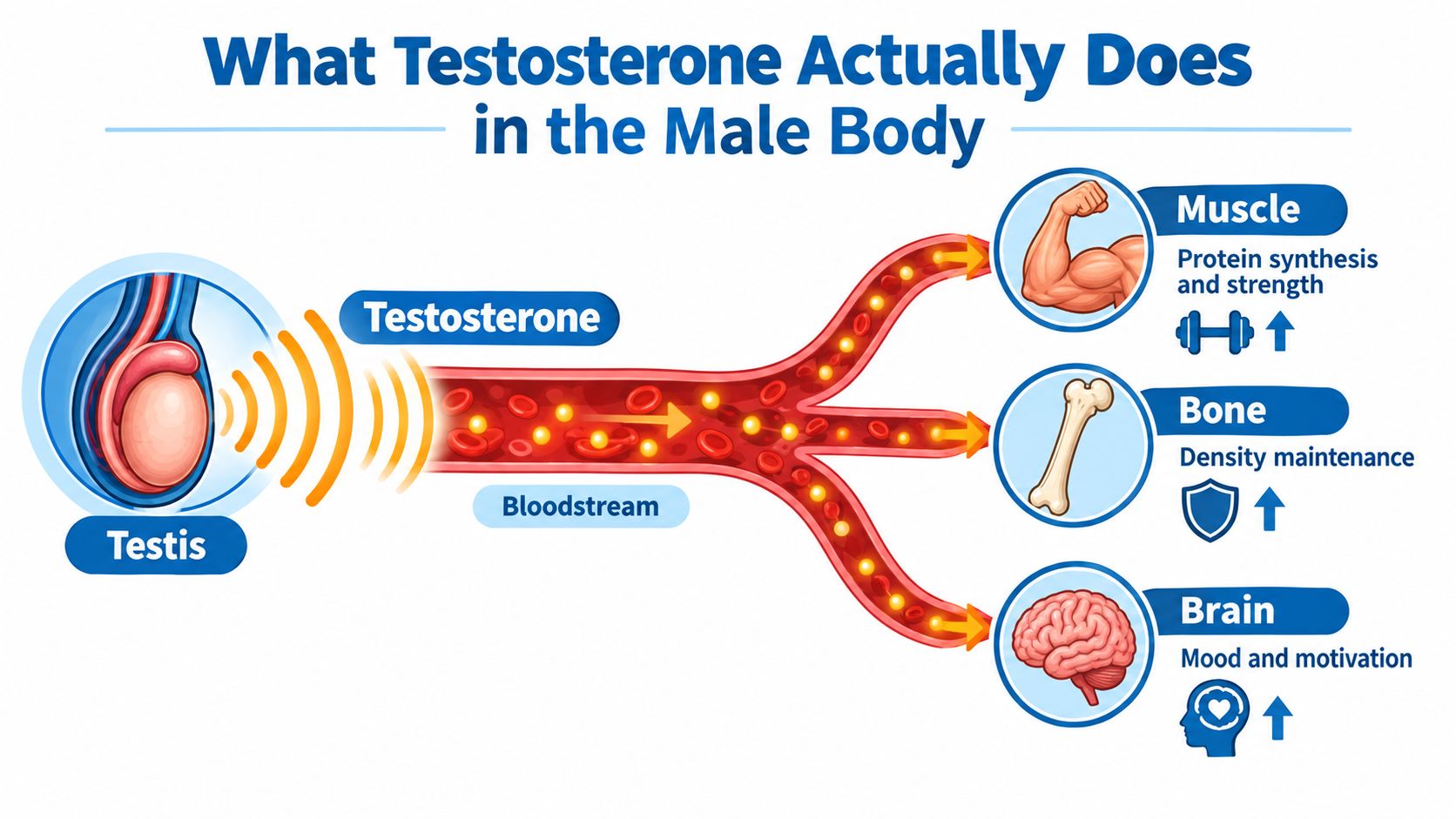
Think of testosterone as a chemical signal traveling through the bloodstream. The testes release the signal, and tissues throughout the body read it through specialized receptors. When the signal is adequate, it helps maintain activity in muscle, bone, the brain, reproductive organs, and other tissues.
That message influences sexual desire, erectile function, muscle mass, fat distribution, red blood cell production, mood, and motivation . One hormonal change can therefore appear as several seemingly unrelated problems. A man might notice weaker erections and lower libido alongside reduced strength or a flatter mood, although these symptoms still require evaluation for other causes.
Testosterone levels generally peak in the late teens and twenties and then decline gradually with age. A gradual change can be normal biology, but normal aging isn't identical to clinically significant testosterone deficiency. Expert guidance generally requires symptoms or signs that fit the condition and unequivocally low serum testosterone confirmed with repeat morning testing ( American Urological Association testosterone deficiency guideline).
For many laboratories, clinicians commonly interpret total testosterone in a broad reference range of roughly 300 to 1,000 ng/dL , although the laboratory's method and reference interval matter. A result near the lower end doesn't automatically explain symptoms, and a single low result isn't enough to establish a diagnosis. Morning levels can vary with sleep, acute illness, calorie restriction, medications, and timing.
Total testosterone measures testosterone that is both bound to proteins and circulating freely. If the result is borderline, a clinician may consider free testosterone and sex hormone-binding globulin, or SHBG, to understand how much hormone is available to tissues. This is one reason lab interpretation belongs in a clinical context rather than in isolation.
Sleep also affects how hormone results and symptoms should be understood. Readers looking for practical strategies may find this guide on how to improve sleep for hormone balance useful, especially if short or disrupted sleep is part of the picture.
Testosterone also interacts with metabolic health. For a plain-language overview of that relationship, see this testosterone and metabolism guide. The key point remains simple: symptoms plus two appropriately collected low results drive diagnosis .
The Most Common Low Testosterone Symptoms by Category
Not every symptom deserves equal weight. Sexual changes tend to be more specific, while fatigue, mood changes, and weight gain are common across many conditions. Looking at symptoms by category helps you notice patterns without turning a general health concern into a self-diagnosis.
Sexual symptoms
Reduced sexual desire, fewer morning or spontaneous erections, and new erectile dysfunction are among the most useful early clues. A lower ejaculate volume may occur, but it has many possible explanations and shouldn't be interpreted alone.
These symptoms have relatively high specificity because sleep, stress, depression, vascular disease, medication effects, and relationship factors can also affect sexual function, but a new cluster of sexual changes deserves focused assessment. Fertility concerns, testicular shrinkage, or breast enlargement can suggest more advanced or significant hormonal disruption and warrant medical attention.
Physical symptoms
Persistent fatigue, reduced muscle bulk, lower strength, increased abdominal fat, thinning body hair, and occasional hot flashes or night sweats can occur with testosterone deficiency. Their specificity is generally moderate to low , since sleep disorders, obesity, thyroid disease, chronic illness, under-eating, and aging can create the same experience.
Mood and cognitive symptoms
Brain fog, poor concentration, irritability, low motivation, and a flattened mood may accompany low testosterone. These are low-specificity symptoms when they occur alone, particularly because depression, anxiety, chronic stress, poor sleep, and medication effects can look almost identical.
| Symptom Category | Common Signs | Specificity to Low Testosterone |
|---|---|---|
| Sexual | Reduced libido, fewer morning erections, erectile changes | High |
| Physical | Fatigue, muscle loss, increased belly fat, hot flashes, thinning body hair | Moderate to low |
| Mood and cognitive | Brain fog, irritability, low motivation, low mood | Low |
Severity and clustering matter more than a single checklist item. For example, fatigue after a week of poor sleep has little diagnostic value. Persistent fatigue combined with reduced libido, fewer morning erections, and loss of strength gives a clinician a stronger reason to investigate.
Hair changes can also confuse the picture. Testosterone and androgen activity affect hair in complex ways, so readers exploring that topic may benefit from this discussion of hair science and low testosterone. Sleep disruption can further intensify fatigue and sexual symptoms, which is why the relationship between low testosterone and sleep problems deserves attention during an evaluation.
Why These Symptoms Do Not Always Mean Low Testosterone
Fatigue is real, but it isn't specific. The same applies to weight gain, low mood, brain fog, and reduced motivation. A symptom can be important without identifying its cause.
Obstructive sleep apnea may leave a person exhausted despite spending enough time in bed. Depression and chronic stress can reduce libido, motivation, concentration, and energy. Hypothyroidism can produce fatigue, depressed mood, weight gain, and slowed thinking. Obesity can also be part of a hormonal feedback problem because excess adipose tissue changes testosterone metabolism.
Natural age-related change adds another layer. Hormones can drift over time without creating a disease pattern, while an abrupt change may point toward illness, medication effects, sleep disruption, or another problem that needs attention.
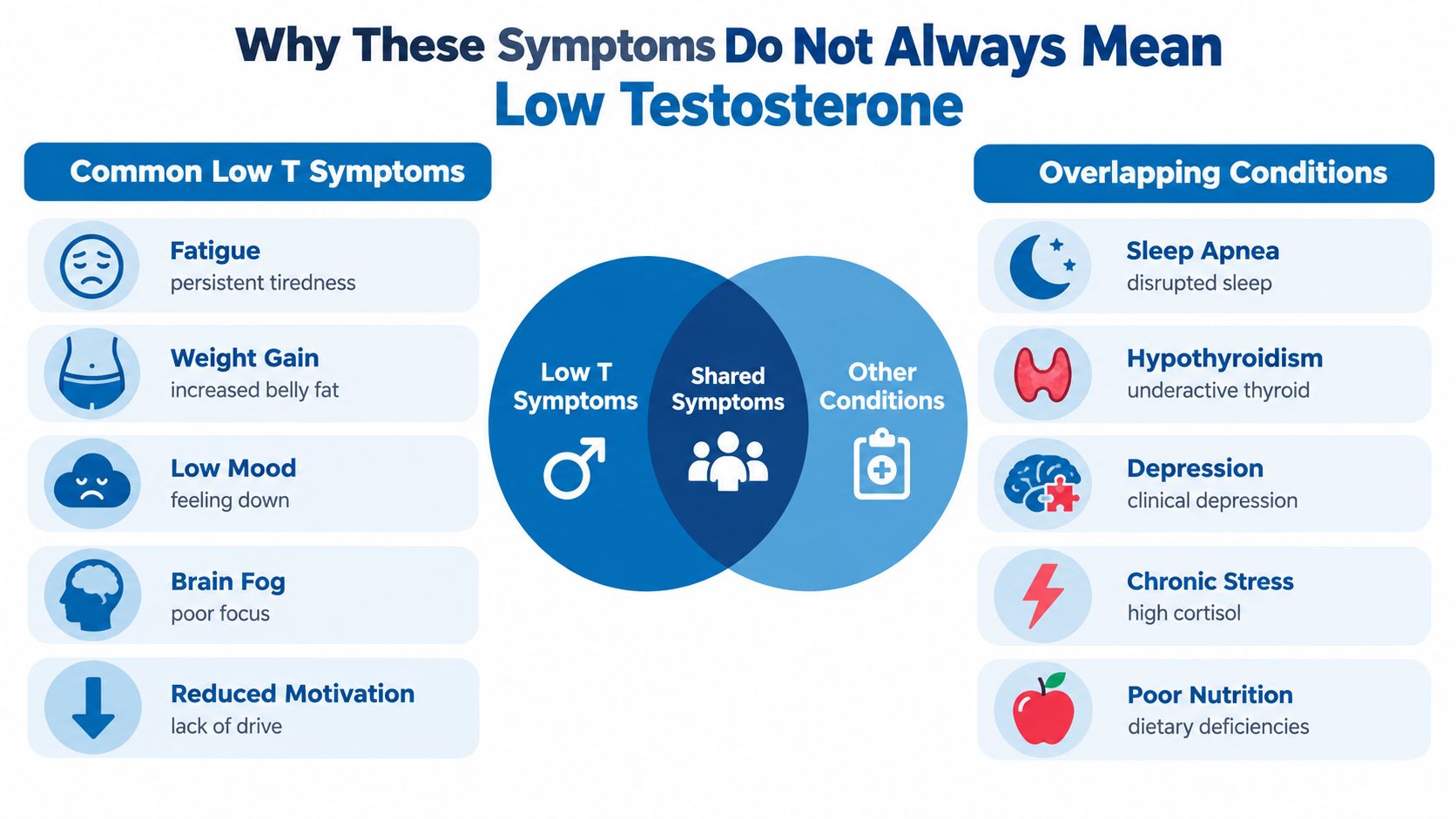
The Cleveland Clinic explains that nonsexual symptoms overlap with many conditions, which is why low testosterone symptoms shouldn't be used as a stand-alone diagnostic tool. An experienced clinician may ask about snoring, witnessed breathing pauses, mood, medications, alcohol, diet, exercise, and recent illness before deciding which tests are appropriate.
Practical rule: Fatigue alone rarely answers the testosterone question. Fatigue plus persistent sexual changes is a stronger reason to request a careful evaluation.
The practical goal is to find the driver. Treating sleep apnea, hypothyroidism, depression, medication effects, or obesity may improve symptoms that testosterone treatment wouldn't resolve. Testing becomes more useful when the pattern, examination, and medical history point in the same direction.
Who Is Most Likely to Develop Low Testosterone
Age matters, but it doesn't tell the whole story. Population research shows that biochemical testosterone deficiency becomes more common with age, while symptomatic deficiency is less common than a low laboratory value alone. In one review, estimated global testosterone deficiency ranged from 10% to 40% , while symptomatic androgen deficiency was reported at about 6% ( European Urology review).
Men with obesity or diabetes may face higher risk. A separate review describes testosterone deficiency syndrome as more common in community-dwelling men aged 40 to 70, at 6% to 9.5% , and rising to 15% to 30% among men with obesity or diabetes ( review of testosterone deficiency syndrome). These figures don't diagnose an individual, but they show why body composition and metabolic health belong in the conversation.
| Risk Factor | Approximate Impact | Why It Matters |
|---|---|---|
| Increasing age | Risk rises over time | Testicular and regulatory hormone changes become more likely |
| Obesity or visceral fat | Higher-risk profile | Metabolic dysfunction can reduce testosterone availability |
| Type 2 diabetes or metabolic syndrome | Higher-risk profile | Insulin resistance and obesity often coexist with low levels |
| Sleep apnea | Clinically important association | Fragmented sleep can mimic or worsen low-testosterone symptoms |
| Opioids or anabolic steroid use | Potentially substantial | These substances can suppress the body's hormone signaling |
| Testicular injury, chemotherapy, or radiation | Possible direct effect | Testicular tissue may produce less testosterone |
| Pituitary, kidney, or liver disease | Variable | These conditions can disrupt hormone production or regulation |
| Heavy alcohol use, inactivity, and unmanaged stress | Modifiable contributors | They can worsen sleep, weight, metabolic health, and sexual function |
A self-check is most useful when you combine factors rather than count symptoms. An older man with obesity, diabetes, poor sleep, and new sexual changes has more reason to discuss testing than a younger man with one week of fatigue after an unusually demanding schedule.
The Massachusetts Male Aging Study illustrates the distinction. Among men ages 40 to 70, laboratory-defined androgen deficiency using total testosterone below 400 ng/dL appeared in 25.3% to 39.3% , but the estimate fell to 6% to 12% when researchers required at least three compatible signs or symptoms ( Massachusetts Male Aging Study review). A low number and a clinically meaningful symptom pattern aren't interchangeable.
When to Seek Testing and What Diagnosis Looks Like
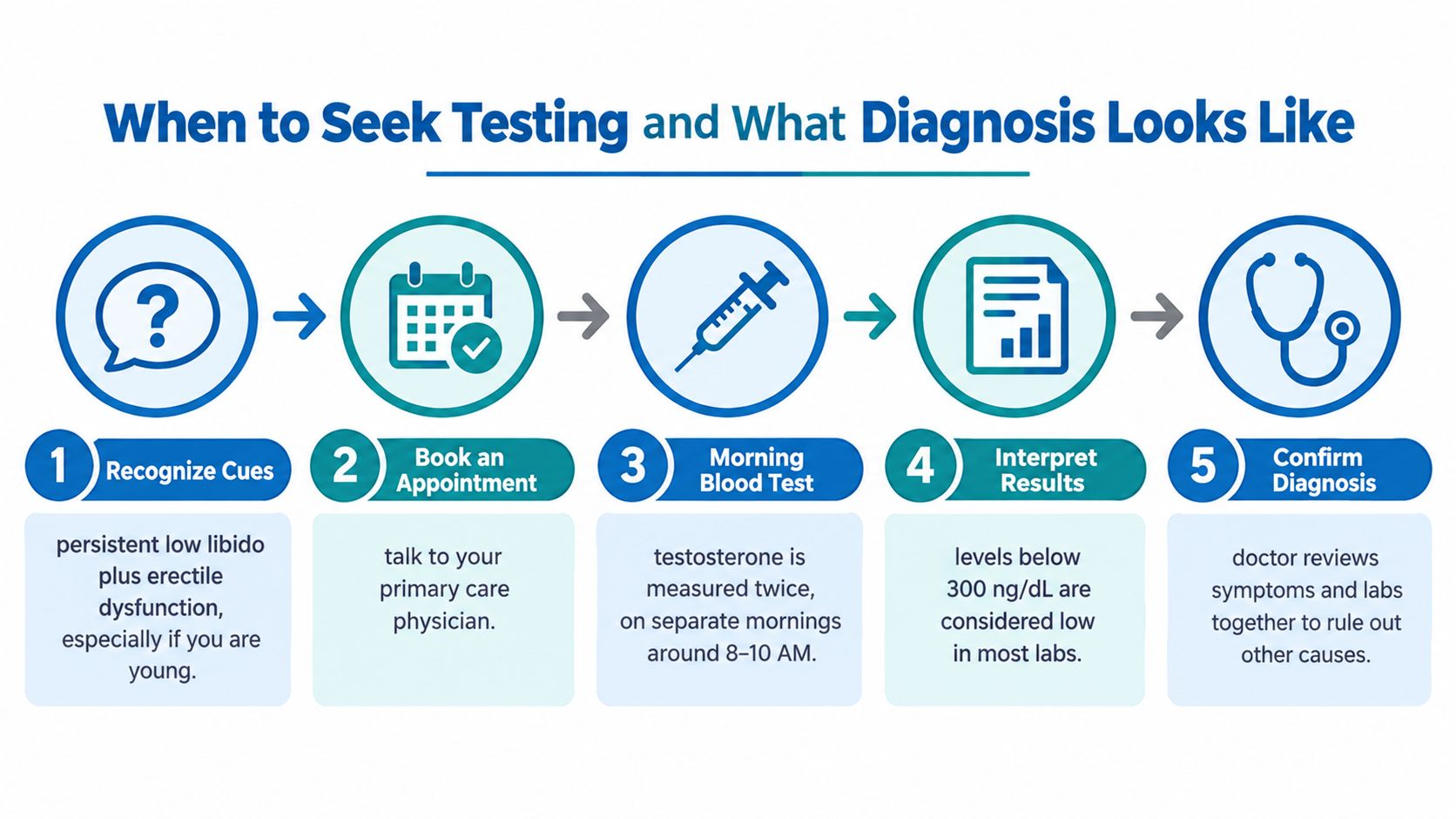
Bring up testosterone testing when symptoms persist and form a coherent pattern. The strongest everyday cues include reduced libido with erectile changes, unexplained fatigue that doesn't improve with better sleep, loss of muscle with increasing abdominal fat, or mood changes that feel accompanied by physical decline.
The evaluation begins with context
A primary care clinician or hormone-focused provider will usually review your symptoms, timing, medications, sleep, alcohol use, fertility goals, medical conditions, and examination findings. This history helps distinguish a gradual pattern from a sudden change and identifies causes that may need attention before hormone therapy.
The initial blood test is usually total testosterone collected in the morning , often between 7 and 10 a.m., when levels are more representative. Guidelines recommend repeat morning measurement on a separate day because one result can be misleading. Acute illness, poor sleep, changing work schedules, and some medications can influence the reading.
Supporting tests clarify the cause
If total testosterone is low or borderline, a clinician may assess:
- Free testosterone and SHBG: These help estimate the hormone available to tissues when total testosterone doesn't match the symptom pattern.
- LH and FSH: These help distinguish a testicular production problem from a signaling problem involving the pituitary or hypothalamus.
- Prolactin: This may be useful when a pituitary cause is possible.
- TSH: Thyroid disease can mimic several low-testosterone symptoms.
- Metabolic and lipid testing: These help identify diabetes, metabolic risk, and related health issues.
An endocrinology referral may be appropriate when results are unclear, fertility is a priority, pituitary disease is suspected, or the clinical picture doesn't fit the laboratory findings. You can review the practical details of a testosterone level lab test before an appointment.
In plain language, a total testosterone result consistently below the lower boundary used by the laboratory, commonly around 300 ng/dL , becomes more concerning when compatible symptoms are present. A value within a reference range doesn't automatically explain persistent symptoms, and a low value without symptoms doesn't automatically justify treatment.
Treatment Pathways and Next Steps After a Diagnosis
Treatment should follow a confirmed diagnosis, not a symptom checklist. A board-certified clinician first considers reversible contributors, medical risks, fertility plans, and whether symptoms match the laboratory findings.
Start with the foundation
Resistance training can support muscle and functional health. Adequate sleep, gradual weight reduction when appropriate, moderate alcohol use, nutritious meals, and a medication review may also improve the conditions surrounding testosterone production. These steps aren't a substitute for treatment when true hypogonadism is present, but they can reveal whether sleep, metabolic health, or medication effects are contributing.
Nutrition advice should stay practical. Avoid crash diets, eat enough protein, and correct documented deficiencies rather than taking a large collection of unverified “testosterone boosters.” Supplements marketed for hormone enhancement may contain ineffective or undisclosed ingredients, and they can interact with prescription medications.
Medical options require personalization
For symptomatic men with clearly low repeat morning values, testosterone replacement therapy may be considered as gels, injections, or pellets. Men who want to preserve sperm production need a different conversation because standard testosterone therapy can suppress the body's own reproductive signaling. A clinician may discuss fertility-preserving approaches such as clomiphene or hCG, depending on the situation.
Pause Medical offers medically supervised testosterone therapy for men as one possible care pathway, with evaluation and follow-up rather than automatic prescribing. Insurance questions and prior authorization can also affect access, so this prior authorization guide may help patients understand the administrative process.
Monitoring continues after treatment starts
Follow-up isn't optional. Clinicians commonly reassess symptoms and laboratory markers during treatment, including hematocrit and prostate-specific antigen, or PSA, when appropriate. The plan may include blood work at 3 and 6 months , followed by ongoing monitoring based on the medication and response.
The right outcome isn't a higher number. It's a safer plan that addresses meaningful symptoms, keeps laboratory values in an appropriate range, considers fertility and prostate health, and stops or changes treatment when the expected benefit doesn't outweigh the risks.
Frequently Asked Questions About Low Testosterone
Can lifestyle changes reverse symptoms?
Sometimes. Better sleep, weight management, resistance training, treatment of sleep apnea, and medication review may improve symptoms and hormone levels when those factors are contributing. They won't correct every cause of hypogonadism.
How quickly does treatment help?
Timing varies by symptom, cause, treatment, and individual response. Sexual symptoms, mood, energy, and body composition don't necessarily change at the same pace, so follow-up matters more than expecting an immediate transformation.
Do testosterone supplements work?
Over-the-counter boosters aren't equivalent to prescribed testosterone. Evidence and product quality vary, and some products may create safety or medication-interaction concerns.
Is low testosterone just aging?
Age-related decline can be normal, but clinically significant deficiency requires compatible symptoms and consistently low morning testing. A sudden onset of symptoms, testicular pain, a new testicular lump, marked testicular shrinkage, or other abrupt changes should prompt timely medical evaluation rather than watchful waiting.
At a primary care visit, you can say: “I have been experiencing low energy, reduced libido, and other changes; I would like my morning testosterone checked on two occasions.”
Pause Medical provides hormone replacement therapy evaluations, medically supervised weight management, and disease management support for adults in Mississippi, including patients near Oxford, Meridian, Tupelo, Flowood-Jackson, and Starkville. Visit Pause Medical to schedule a consultation and discuss your symptoms, testing options, and a personalized care plan with a provider.