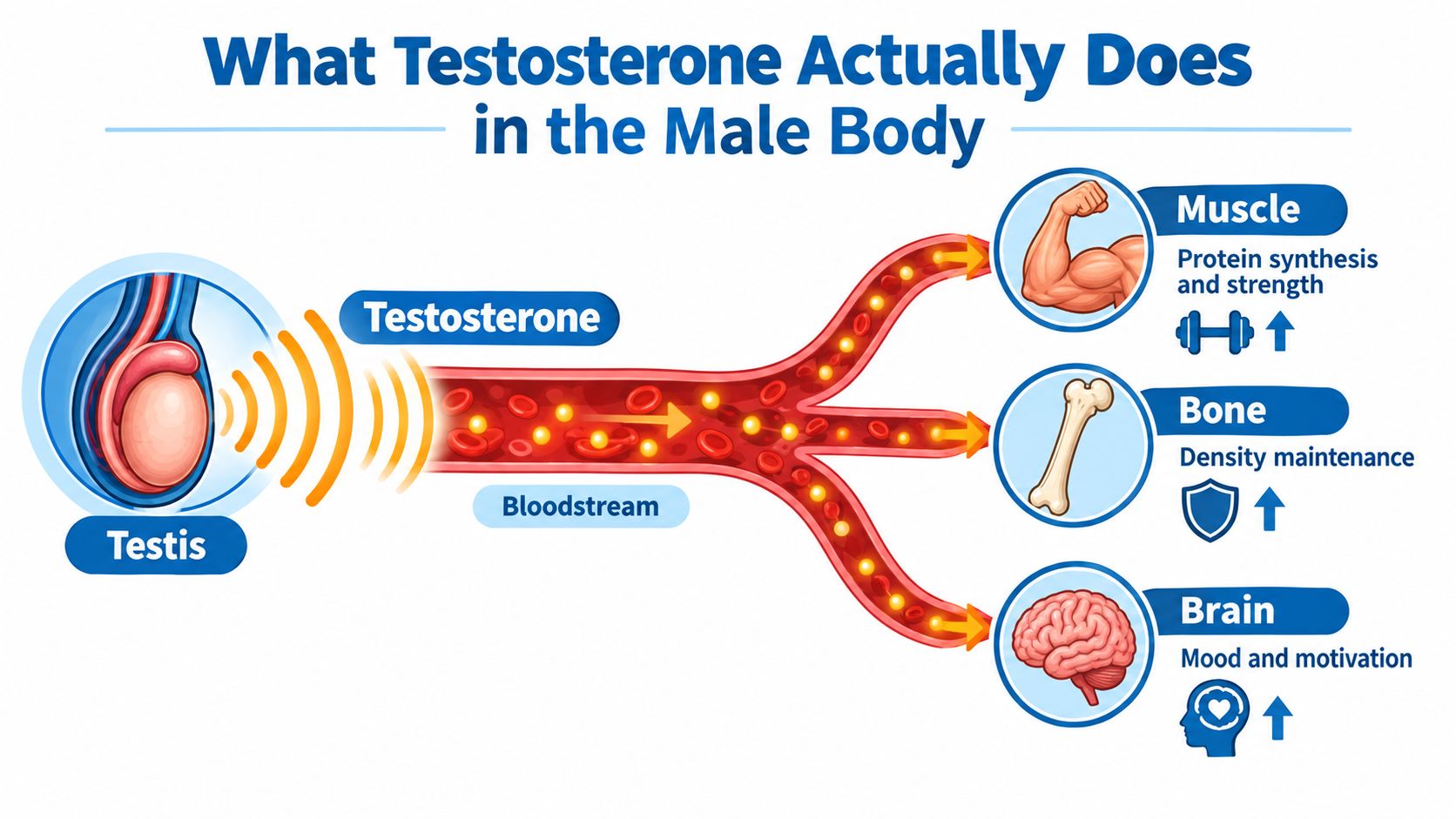
Bioidentical Hormones Estradiol: A Practical Guide
The short answer is that bioidentical estradiol is 17β-estradiol, the same molecular form of estrogen made by the human ovary. FDA-approved products and compounded products aren't equivalent, because their evidence, dose consistency, and regulatory oversight differ.
Why, then, do conversations about “natural” hormone therapy so often skip the questions that matter most? A 52-year-old who wakes at 3 a.m. drenched in sweat needs more than a reassuring label. She needs to know which molecule she's receiving, how it enters the bloodstream, whether she needs progesterone for uterine protection, and how her personal risk factors affect the decision.
This guide explains bioidentical hormones and estradiol step by step. You'll learn how 17β-estradiol differs from other estrogens, why transdermal treatment is often preferred for people with clotting or cardiometabolic risk, how FDA-approved products compare with compounded formulations, and what monitoring should look like. The information is educational and applies to adults seeking care in Mississippi. Hormone therapy requires an individualized evaluation, particularly for people with a history of cancer, blood clots, stroke, liver disease, or unexplained vaginal bleeding.
What Bioidentical Estradiol Actually Means
A patient may describe her symptoms in simple terms: hot flashes, restless sleep, vaginal dryness, mood changes, or a sudden loss of energy. The clinical question is more specific. Bioidentical estradiol is 17β-estradiol with a molecular structure identical to the estrogen produced by a human ovary.
That definition describes chemical structure , not guaranteed safety. “Bioidentical” tells you the molecule matches human estradiol. It doesn't tell you whether the product is FDA-approved, whether each dose is consistent, whether the route suits your medical history, or whether the treatment includes appropriate protection for the uterine lining.
The distinction becomes clearer when you separate two product categories:
- FDA-approved estradiol: Regulated products include oral tablets, transdermal patches, gels, sprays, and vaginal preparations. Their manufacturing and labeling undergo FDA oversight.
- Compounded bioidentical hormones: A compounding pharmacy prepares these products for an individual prescription. They don't have the same FDA approval pathway, and evidence about potency, pharmacokinetics, safety, and effectiveness is less complete.
A practical overview of the potential role of bioidentical hormone therapy should therefore begin with the product, not the marketing language. Ask whether the prescription contains 17β-estradiol, which route is being used, and why that route fits your symptoms and risk profile.
The four questions that clarify the choice
- What symptom are we treating? Systemic estradiol is commonly considered for moderate-to-severe hot flashes and night sweats. Local vaginal treatment may fit dryness, irritation, or urinary discomfort when whole-body treatment isn't needed.
- Does the person have a uterus? Systemic estrogen generally requires a progestogen for endometrial protection in people with a uterus.
- What risks affect route selection? Migraine, hypertension, obesity, diabetes, smoking, prior clotting concerns, and liver disease can influence whether transdermal delivery is preferred.
- How will response be assessed? Treatment should be adjusted according to symptom relief, side effects, blood pressure, and evolving health risks, not a “natural” label.
Practical rule: Chemical identity is the starting point. Regulatory status, route, dose, and follow-up determine how that molecule is used safely.
How 17β-Estradiol Compares to Synthetic and Animal-Derived Estrogens
Think of an estrogen receptor as a lock and each hormone as a key. 17β-estradiol fits the receptor in the same structural pattern as the body's own primary reproductive estrogen. Other estrogens can also activate estrogen receptors, but their structures, metabolism, potency, and downstream effects may differ.
The word “synthetic” doesn't automatically mean ineffective or dangerous. Synthetic estrogens, such as ethinyl estradiol, are modified molecules designed for particular pharmaceutical purposes. Estradiol valerate is an esterified form that the body converts to estradiol. Conjugated equine estrogens, historically associated with Premarin, contain a mixture of estrogenic compounds derived from pregnant mares rather than a single human-identical estradiol molecule.
| Estrogen Type | Source / Structure | Receptor Fit | Key Clinical Note |
|---|---|---|---|
| 17β-estradiol | Human-identical molecular structure | Matches endogenous human estradiol | Available in regulated oral, transdermal, and vaginal products |
| Ethinyl estradiol | Chemically modified synthetic estrogen | Activates estrogen receptors with altered pharmacology | Used in selected contraceptive formulations rather than as a direct menopausal replacement |
| Estradiol valerate | Estradiol ester converted by the body | Provides estradiol after conversion | Formulation and route still determine exposure and risk |
| Conjugated equine estrogens | Mixture of animal-derived estrogenic compounds | Multiple compounds interact with receptors | Not identical to human 17β-estradiol |
| Estrone and estriol | Endogenous human estrogens with different activity | Generally weaker or differently active than estradiol | May appear in compounded mixtures, but inclusion doesn't establish superior safety |
Route changes the comparison again. Oral estrogen travels through the digestive tract and liver before reaching systemic circulation, while a patch, gel, or spray delivers estradiol through the skin and avoids hepatic first-pass metabolism. That difference can affect clotting factors, triglycerides, binding proteins, and other liver-driven responses.
A useful patient-facing discussion of bioidentical hormones versus synthetic hormones should avoid the shortcut that one category is always good and the other always bad. Receptor fit helps explain biological activity, but it doesn't replace clinical evidence. The actual prescription, delivery route, dose, and health context still matter.
The Regulatory History That Shaped Modern Estradiol Therapy
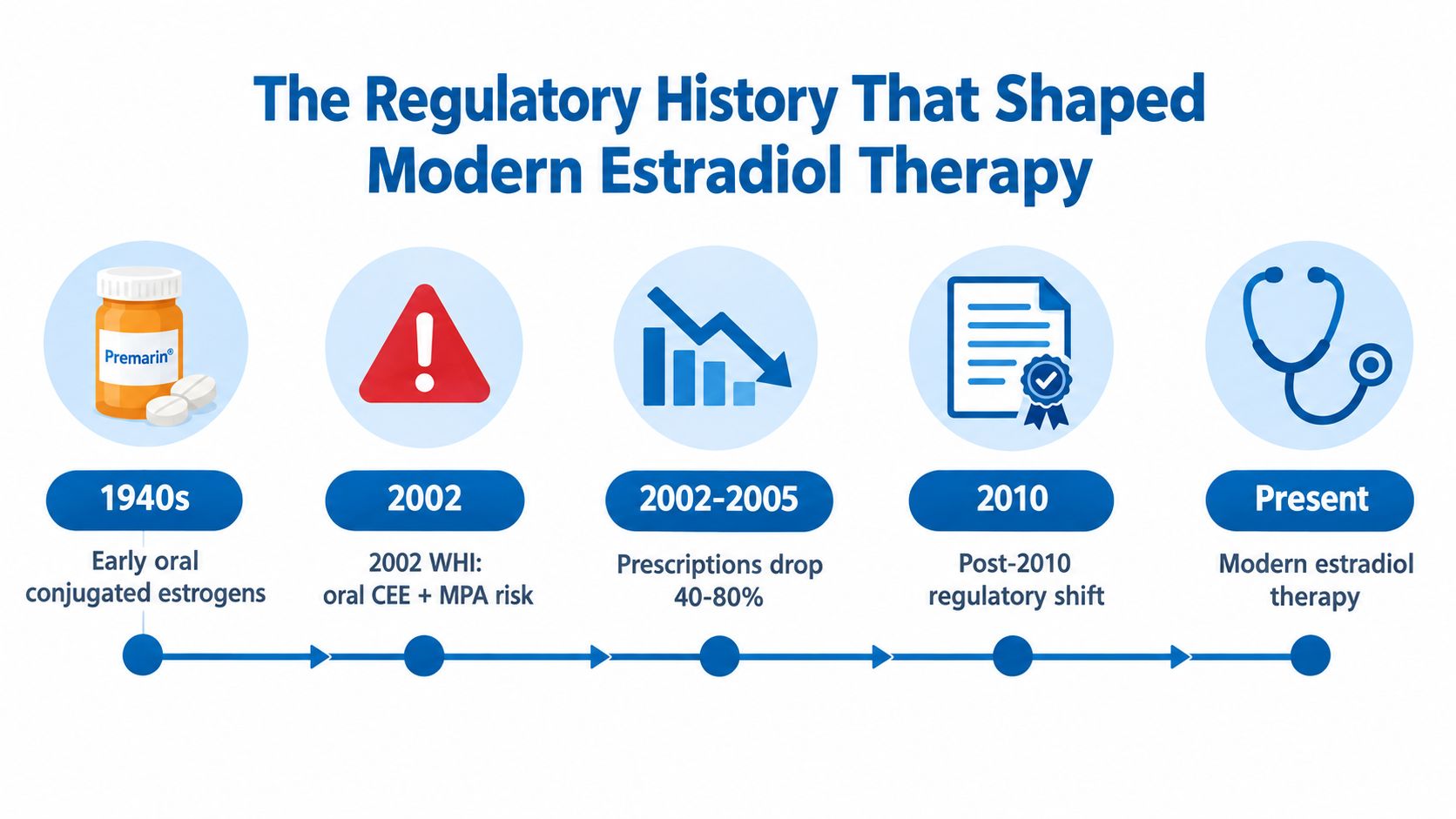
Modern estradiol prescribing grew out of a complicated history. Early oral conjugated estrogens became a familiar treatment for menopausal symptoms, but later evidence forced clinicians and patients to reconsider how systemic estrogen should be prescribed.
The Women's Health Initiative estrogen-plus-progestin arm enrolled 16,608 women and stopped early in July 2002 . In January 2003, the FDA added a class-wide boxed warning to systemic estrogen and estrogen-progestin products, including oral and transdermal options. The resulting change in counseling was substantial. Clinicians began weighing age, years since menopause, formulation, route, dose, and personal risk rather than treating all estrogen therapy as interchangeable. These milestones are discussed in the historical review of estradiol therapy and WHI-era prescribing ( medical history of estradiol).
Milestones that changed the prescription conversation
- 1975: The FDA approved oral estradiol, marketed as Estrace.
- 1986: Estraderm became the first transdermal estradiol system.
- October 2018: The FDA approved the first oral bioidentical estradiol and progesterone combination product for moderate-to-severe menopausal vasomotor symptoms.
These dates mark a move toward standardized 17β-estradiol products that match human estrogen chemistry. They also help explain why regulated patches, gels, sprays, and tablets remain central to evidence-based hormone therapy.
The WHI experience didn't make every systemic estrogen identical, nor did it eliminate the need for caution. It showed why treatment decisions must consider the population receiving therapy and the route used. Expert reviews have found randomized trial evidence supporting estradiol for menopausal symptom relief while also identifying gaps in the pharmacokinetic, safety, and efficacy evidence for many compounded “bioidentical” preparations. The broader 2026 patient guide to hormone replacement therapy provides additional context for individualized counseling.
The regulatory lesson is straightforward: approval and standardization matter . A product can contain a human-identical hormone and still lack the testing and manufacturing controls associated with an FDA-approved medicine.
Choosing a Delivery Route for Bioidentical Estradiol
Which estradiol route fits the patient's symptoms, medical history, and risk profile? The choice involves more than selecting a pill or patch. Oral estradiol passes through the liver before reaching the wider circulation, which can affect triglycerides, clotting tendency, inflammatory markers, and proteins such as SHBG.
Transdermal 17β-estradiol bypasses hepatic first-pass metabolism. Guidelines and expert statements generally favor this route over oral estrogen when a patient has increased venous thromboembolism or cardiometabolic risk. Relevant factors include obesity, hypertension, diabetes, migraine, smoking history, liver dysfunction, established cardiovascular disease, and other thrombotic concerns. A Canadian health technology assessment found similar symptom control between routes while identifying a lower venous thromboembolism signal with transdermal delivery ( transdermal versus oral menopausal hormone therapy).
| Route | Symptom Coverage | Thrombotic Risk | Dosing Flexibility | Best-Fit Patient |
|---|---|---|---|---|
| Oral tablet | Systemic symptoms, including hot flashes and night sweats | More liver-mediated clotting concern than transdermal treatment | Simple daily dosing | Patients without route-specific risk factors after clinical review |
| Transdermal patch, gel, or spray | Systemic symptoms with steady delivery | Often preferred when clotting or cardiometabolic risk matters | Patch schedules and adjustable topical products vary | Patients with higher VTE risk, migraine, obesity, hypertension, diabetes, smoking history, or liver concerns |
| Vaginal cream, tablet, or ring | Primarily vaginal and urinary symptoms | Minimal systemic exposure at standard low doses | Local dosing can be individualized | Patients whose main concerns are dryness, irritation, painful urination, or related genitourinary symptoms |
The route should also match the symptom pattern. Pelvic discomfort linked to fertility procedures or implantation may require targeted rehabilitation, such as physical therapy for IVF-related pain. This approach addresses musculoskeletal and pelvic-floor contributors instead of assuming every symptom reflects estrogen levels.
Pellet therapy raises separate questions about dose control, reversibility, and monitoring. Information on hormone pellet therapy for women can help patients compare pellets with patches, gels, and tablets before discussing a route with a clinician.
Why Bioidentical Does Not Automatically Mean Safer
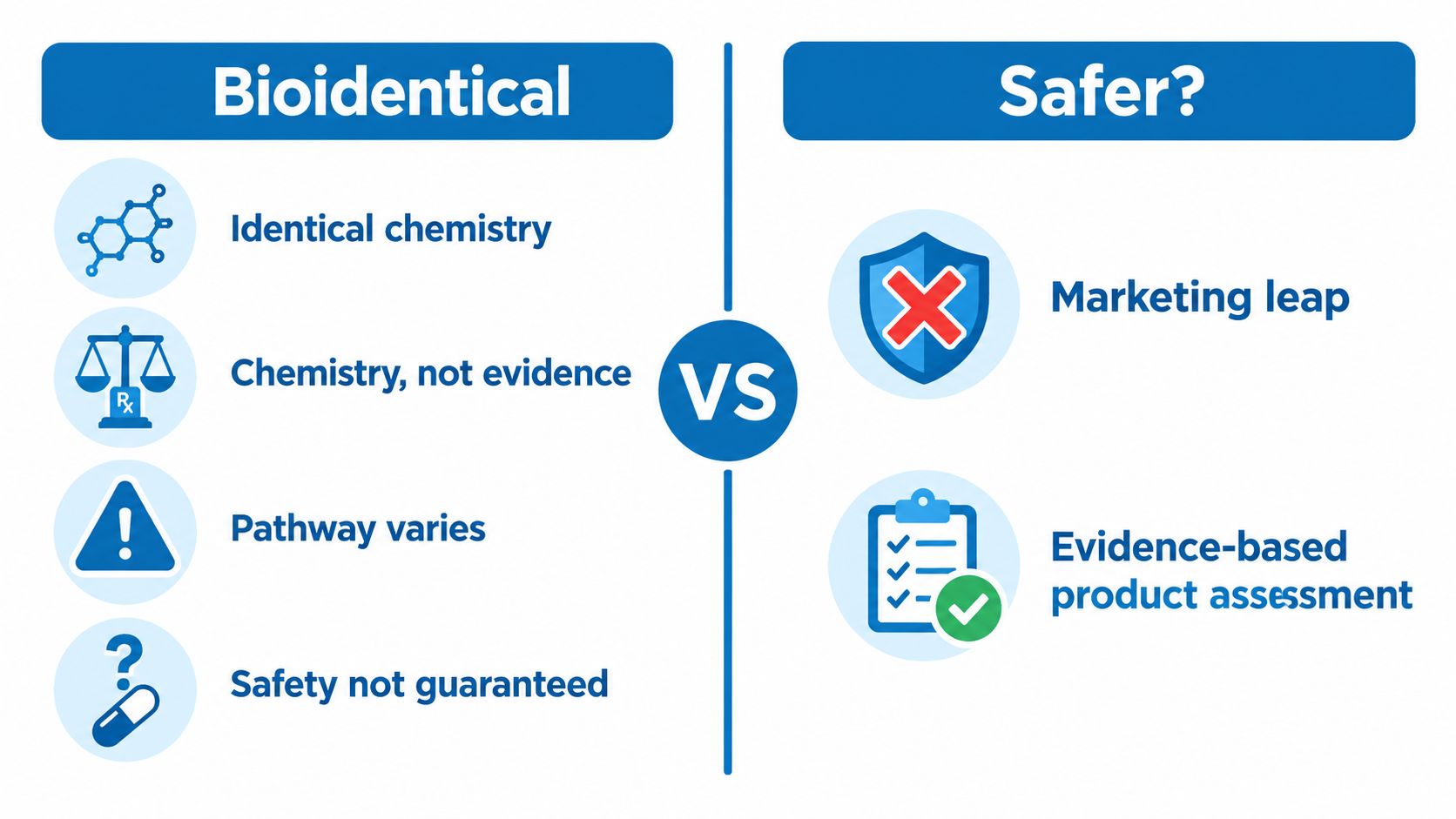
A molecule can be identical to human estradiol and still be delivered in a product with uncertain dose consistency. Bioidentical describes chemistry. It doesn't certify clinical superiority.
FDA-approved bioidentical estradiol products pass through a defined regulatory pathway. Compounded bioidentical hormone therapy doesn't have the same FDA approval, standardized manufacturing requirements, or body of large outcomes evidence. Comparative pharmacokinetic testing found that compounded Bi-est mixtures had consistently lower 24-hour and steady-state estrogen exposure than an estradiol patch across the tested doses. That finding matters because underexposure can limit symptom relief, while variable exposure makes titration harder (comparative pharmacokinetics of compounded estrogen and estradiol patches).
What the label can't answer
- Dose reliability: Does each batch deliver the intended amount?
- Evidence quality: Has the exact formulation been evaluated for symptom relief and safety?
- Route suitability: Does the delivery method fit the patient's clotting, liver, cardiovascular, and metabolic profile?
- Uterine protection: Does a patient with a uterus receive an appropriate progestogen alongside systemic estrogen?
The last question is especially important. Estrogen-only systemic therapy isn't automatically appropriate for someone with a uterus, regardless of whether the estradiol is FDA-approved or compounded. A clinician must evaluate the need for endometrial protection.
The WHI experience also illustrates why broad claims can mislead. Risk depends on factors such as age, time since menopause, formulation, route, dose, and underlying health. The practical guidance on whether compounded hormones are safe should therefore be read as a product-assessment question, not a debate over whether “natural” sounds better.
The safer question isn't “Is this natural?” It's “Is this product standardized, appropriate for my risks, and monitored over time?”
Who Makes a Good Candidate for Bioidentical Estradiol
The strongest candidate is usually a symptomatic person whose likely benefits are clear and whose baseline risks have been reviewed carefully. Menopausal hormone therapy is considered most favorable for symptomatic women under 60 years old or within 10 years of menopause , when benefits generally outweigh risks according to the cited review of menopausal hormone therapy ( age and timing of menopausal hormone therapy).
That doesn't create an automatic eligibility rule. A younger patient with unexplained bleeding still needs evaluation before treatment. A person farther from menopause may still have a meaningful quality-of-life reason to consider therapy, but the discussion becomes more individualized.
A practical candidacy screen
First, identify the symptom burden. Systemic estradiol has the clearest role for moderate-to-severe vasomotor symptoms, such as hot flashes and night sweats. It also has an evidence-based role in vulvovaginal symptoms, while improvements in mood, sleep, or libido may occur for some patients but shouldn't be promised as universal outcomes.
Next, separate local from systemic needs. Someone whose primary concern is vaginal dryness or urinary discomfort may need local vaginal estradiol rather than whole-body treatment. That distinction can reduce unnecessary exposure while targeting the affected tissue.
Finally, review conditions that may change the balance. A history of breast or estrogen-sensitive cancer, prior venous thromboembolism or stroke, active liver disease, or unexplained vaginal bleeding requires careful evaluation and may make systemic estrogen inappropriate. People with migraine, hypertension, gallbladder disease, diabetes, smoking history, obesity, or high cardiovascular risk may still be considered for treatment, but transdermal estradiol is often the route clinicians favor when systemic therapy is needed. The route-specific risk discussion is summarized in this review of transdermal estradiol and cardiovascular risk.
Candidacy also includes preferences. Some patients value a patch because they want to avoid daily tablets. Others prefer a gel or a local vaginal option. A clinician can match those preferences to safety constraints instead of allowing convenience alone to drive the prescription.
Starting, Monitoring, and Planning Long-Term Therapy
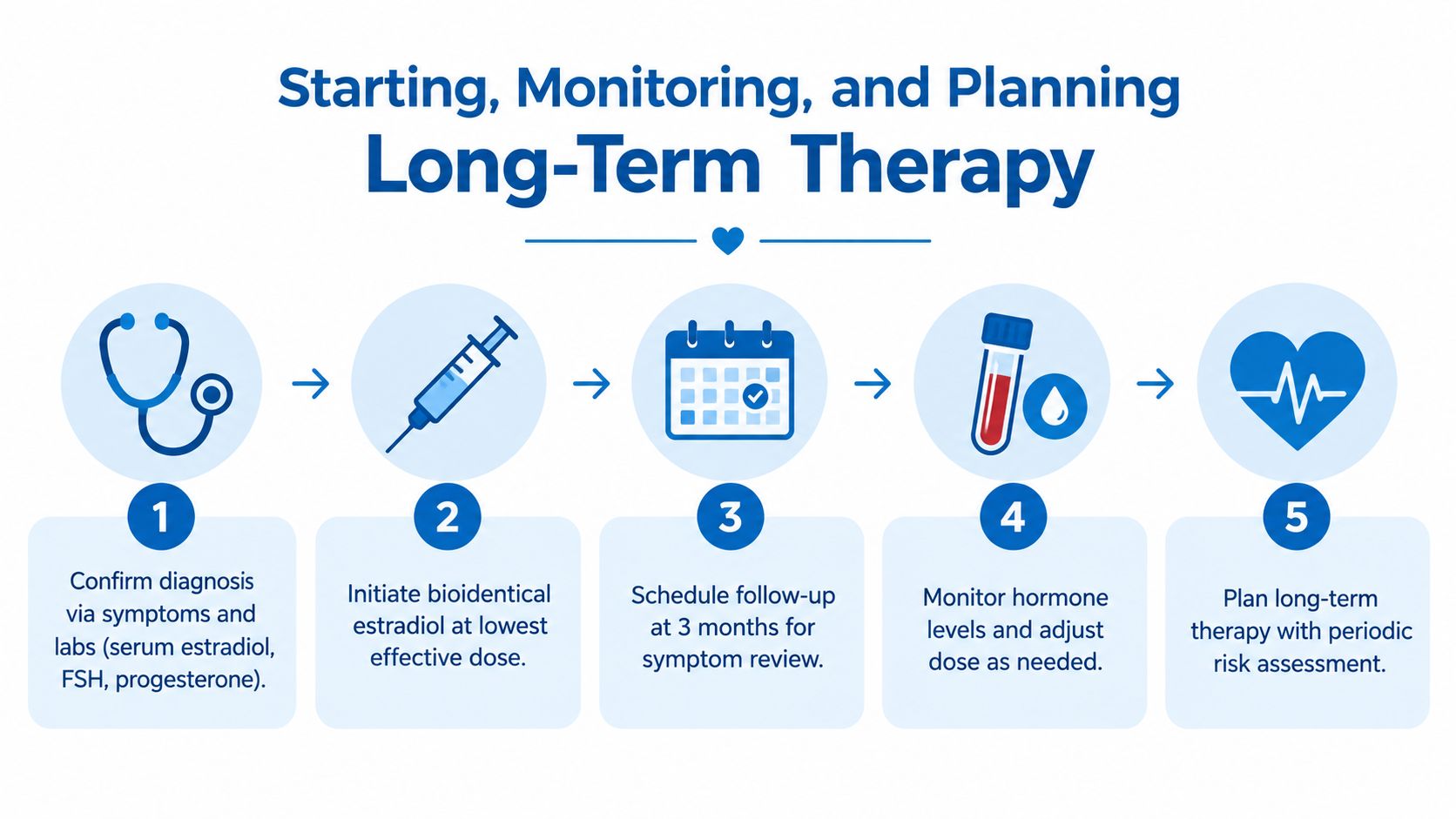
Good hormone therapy begins with a documented clinical reason for treatment. A clinician reviews the symptom pattern, menstrual or surgical history, medical conditions, medications, blood pressure, cancer history, clotting history, and relevant screening. Serum estradiol, FSH, and progesterone may be considered when the diagnosis or baseline assessment calls for laboratory support, but symptoms and clinical context remain central.
A common approach is to begin with a low dose, such as 0.5 mg of oral estradiol or 0.025 to 0.05 mg of transdermal estradiol daily , then adjust according to symptom response. These starting ranges come from the treatment framework provided for this article and should never be self-applied. Dose changes are generally assessed over several weeks rather than made repeatedly from day to day.
What follow-up should measure
- Early response: At roughly 4 to 8 weeks, review hot flash frequency, sleep quality, vaginal symptoms, mood changes, blood pressure, breast symptoms, skin irritation, headaches, and bleeding.
- Treatment fit: Around 12 weeks, decide whether the benefit justifies continuing, changing the route, adjusting the dose, or choosing a nonhormonal alternative.
- Ongoing review: An annual assessment can include age-appropriate mammography, a focused breast review, lipid testing when clinically appropriate, and renewed evaluation of cardiovascular and thrombotic risk.
- Uterine protection: Patients with a uterus need a clear plan for the progestogen component of systemic therapy and instructions about abnormal bleeding.
Treatment duration depends on the indication. Vasomotor symptoms often become less intense over time, while genitourinary symptoms may return when local therapy stops and may require ongoing low-dose vaginal treatment. A 2025 to 2026 educational summary notes that about half of women experience recurrent hot flashes after discontinuing treatment ( guidance on symptoms and long-term continuity). That possibility makes discontinuation planning part of responsible care, not evidence that treatment has failed.
If systemic estradiol is stopped, a clinician may reduce the dose gradually rather than stop abruptly, especially when rebound symptoms are a concern. Vaginal estrogen is a separate decision from systemic treatment and can remain appropriate for persistent local symptoms after systemic therapy ends.
For patients in Mississippi, Pause Medical offers clinician-guided hormone replacement therapy, individualized estradiol options, and follow-up focused on symptoms, risks, and treatment goals. Schedule an evaluation through Pause Medical to discuss whether FDA-approved bioidentical estradiol, a local vaginal option, or a nonhormonal approach fits your health history.
Medical disclaimer: This article is for education and doesn't replace diagnosis, prescribing, or follow-up with a qualified clinician. Don't start, stop, or change estradiol or progesterone without medical guidance. Seek urgent care for chest pain, sudden shortness of breath, one-sided weakness, severe headache, or heavy unexplained bleeding.