What Is the Best Age to Start HRT? An Evidence-Based Guide
There isn't a single "best age" to start hormone replacement therapy (HRT), but there is absolutely a sweet spot. For most women, the ideal time to begin is during perimenopause or within the first 10 years after their final period, and almost always before the age of 60. Starting within this "critical window" is the key to getting the most out of the therapy while keeping risks at a minimum. At Pause Medical, we believe patient education is the first step toward empowered health decisions, and our board-certified medical providers are here to guide you with personalized, evidence-based care.
The Critical Window for Starting HRT
Deciding when to start Hormone Replacement Therapy (HRT) is just as important as deciding if you should start it. Think of it like this: your body is more receptive to estrogen's protective benefits when it's still relatively accustomed to it. Waiting too long is like trying to water a plant after its roots have already dried up—you just won't get the same positive result.
This idea is backed by significant medical research and is often called the "timing hypothesis." It suggests that your cardiovascular system is most open to the protective effects of estrogen during perimenopause and the early years of postmenopause. During this time, your blood vessels are generally healthier and more flexible, allowing them to reap the full benefits of hormone therapy.
Why Timing Is Everything
Initiating HRT within this critical window—before age 60 or within 10 years of your last period—offers a powerful one-two punch. First, you get immediate relief from disruptive symptoms like hot flashes, night sweats, and brain fog right when they're at their worst. Second, you’re making a strategic investment in your long-term health.
Here's what that looks like in practice:
- Bone Health: HRT is a powerhouse for slowing down bone loss. Starting early can dramatically lower your risk of developing osteoporosis and dealing with fractures down the road.
- Heart Health: When started at the right time, estrogen can help keep your cholesterol levels in check and maintain blood vessel health, offering a real layer of cardiovascular protection.
- Symptom Management: Most importantly, it gives you back your quality of life by taming the vasomotor symptoms that can wreak havoc on your sleep, mood, and day-to-day existence.
This timeline gives you a great visual of how the different stages of menopause line up with that optimal window for starting HRT.
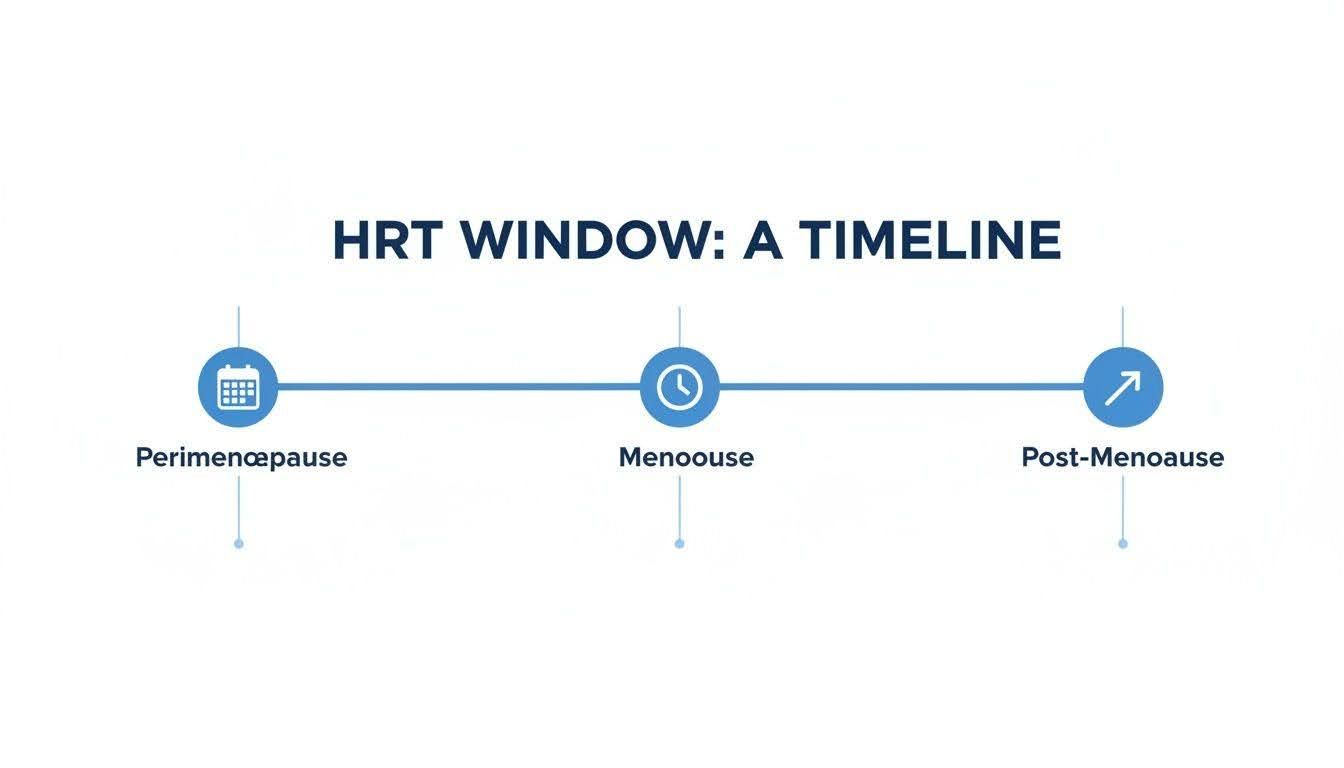
As you can see, the ideal moment to begin lines up perfectly with the perimenopausal transition and that first decade after your periods have stopped for good.
The Evidence Behind the Critical Window
Landmark studies like the Women's Health Initiative (WHI) were instrumental in solidifying this timing principle. While initial headlines from the WHI created fear and confusion, a deeper analysis of the data revealed a crucial detail: age makes all the difference.
For women who started estrogen-only therapy under the age of 60, there was actually a 19% reduction in death from all causes. After following these women for 18 years, the data confirmed that for this younger group, HRT was safe over the long term, with no significant increase in mortality, heart disease, or cancer rates compared to those who didn't take it.
The key takeaway is that starting HRT earlier is not just about symptom relief; it’s a strategic decision for long-term wellness. Delaying until more than a decade after menopause can shift the risk-benefit balance, making the therapy less effective and potentially riskier.
To help you understand the benefits and risks based on timing, here's a quick breakdown.
HRT Timing at a Glance: The Optimal Window vs. Increased Risk
| Timing Factor | Starting Early (Within 10 Years of Menopause / Under 60) | Starting Later (More Than 10 Years Post-Menopause / Over 60) |
|---|---|---|
| Cardiovascular Health | Protective: May reduce heart disease risk and improve cholesterol. | Increased Risk: Potential for increased risk of blood clots, stroke, and heart attack. |
| Bone Density | Highly Protective: Significantly slows bone loss and reduces fracture risk. | Less Effective: Some benefit, but not as effective at preventing osteoporosis as earlier initiation. |
| Symptom Relief | Most Effective: Provides powerful relief from hot flashes, night sweats, and brain fog. | Still Effective for Symptoms: Can still manage hot flashes, but the overall risk profile is higher. |
| Cognitive Function | Potential Benefit: May help protect against cognitive decline. | No Proven Benefit: Not recommended for cognitive protection when started late. |
| Overall Risk Profile | Lower Risk: Benefits generally outweigh the risks for healthy women. | Higher Risk: Risks (especially cardiovascular) may outweigh the benefits. |
This table makes it clear why timing is so crucial. Starting within the "critical window" aligns the therapy with your body’s natural state, maximizing benefits and minimizing risks.
A huge part of this is knowing your own body and asking questions like when does menopause start. Understanding where you are in your journey is the first step toward making a well-timed decision. At Pause Medical, our board-certified providers specialize in helping you pinpoint your unique timeline to create a personalized plan. You can explore our approach to hormone therapy to learn how we can support you.
Your Body's Hormonal Story Through the Decades
To figure out the best time to start HRT, it helps to first understand the story your hormones are telling. Think of your life in decades, like chapters in a book. Each one brings its own predictable shifts to your endocrine system. Once you see where you are in that story, symptoms like fatigue or brain fog start to make a lot more sense—and it becomes clear why timing is everything.

Your 30s: The Peak and the Gentle Decline
For most women, your 30s are a time of hormonal harmony. Estrogen and progesterone, the two main players, operate in a fairly reliable rhythm with your menstrual cycle. This balance keeps everything humming along, from your mood and skin to your bone strength and reproductive health.
But toward the end of this decade, something subtle starts to happen. Progesterone levels often begin a slow, almost unnoticeable dip. It’s the very first whisper of the hormonal changes that will get much louder down the road.
Your 40s: The Unpredictable Ride of Perimenopause
And then come the 40s. Welcome to perimenopause, a transition that can feel a lot like puberty in reverse. Instead of a steady decline, your estrogen levels can go on a wild ride, sometimes spiking higher than ever and then suddenly crashing.
This hormonal chaos is the engine behind those classic perimenopause symptoms.
- Irregular Cycles: Your periods might get longer, shorter, heavier, or lighter, with no rhyme or reason.
- Mood Swings: The estrogen rollercoaster can leave you feeling irritable, anxious, or just completely overwhelmed.
- Brain Fog: Those hormonal shifts can disrupt your brain chemistry, making it tough to focus or find the right word.
- Sleep Disruption: Night sweats often make their debut, and falling progesterone levels can make a good night's sleep feel impossible.
This is the decade when many women first start asking about HRT. Starting a low dose of bioidentical hormones during perimenopause can be a game-changer, smoothing out those jarring fluctuations and bringing much-needed relief by addressing the root cause.
Your 50s: Menopause and the New Normal
The average age for menopause in the United States is 51. The clinical definition is going 12 consecutive months without a period. At this stage, your ovaries have dialed down estrogen and progesterone production for good. The unpredictable swings of perimenopause are over, replaced by a new, consistently low-hormone reality.
This is when symptoms can really intensify. Without estrogen's protective effects, you might experience more severe hot flashes, vaginal dryness, and a rapid decline in bone density. This is precisely why we talk about a "critical window"—replacing those hormones now can do so much to protect your long-term health.
A crucial note for younger women: About 1% of women globally experience early menopause before age 45. For them, guidelines strongly recommend starting HRT and continuing it until at least age 50. This is vital for preventing premature cardiovascular disease and osteoporosis.
As more of the world's population ages, this conversation has never been more important. The World Health Organization reported that women over 50 made up 26% of the global female population in 2021. That's a huge demographic that underscores the growing need for proactive and effective menopausal care.
Of course, navigating these changes isn't just about one solution. Adopting a holistic approach to wellness can make a world of difference. This means looking at everything from nutrition to other strategies for vitality, like those discussed in guides on Longevity NAD Wellness Supplements. At Pause Medical, we believe in integrating these supportive measures as part of your complete preventative wellness journey.
The Risk and Reward of HRT at Different Life Stages
Deciding to start hormone replacement therapy is a personal calculation of risk versus reward, and that balance shifts significantly depending on your age and when you start. The best time to start HRT isn't just about chasing symptoms away; it's about finding the sweet spot where your body is most receptive to the benefits and least vulnerable to potential risks.
HRT in Your 40s: The Perimenopause Stage
For most women, the 40s bring the hormonal turbulence of perimenopause. If you start HRT during this time, the primary reward is often powerful and immediate symptom relief. Your body is still accustomed to having estrogen around, which makes this a very safe and effective time to begin.
The benefits here are clear and compelling:
- Symptom Control: HRT can smooth out that hormonal rollercoaster, dramatically reducing the hot flashes, night sweats, mood swings, and brain fog that can completely disrupt your daily life.
- Low Cardiovascular Risk: For most healthy women, starting HRT during perimenopause is associated with a very low risk of cardiovascular issues. In fact, some evidence suggests it may even offer protective benefits for your heart and blood vessels.
- Future-Proofing Your Health: Getting started early lays a strong foundation for bone health, helping to head off the rapid bone density loss that really picks up steam after menopause hits.
At this age, the scales often tip heavily in favor of reward. The goal is simple: restore balance and get your quality of life back during a challenging transition.
HRT in Your 50s: The Early Postmenopause Window
If you start HRT in your 50s—ideally within the first 10 years of your last menstrual period—you're still inside what experts call the "critical window." The rewards here go beyond just managing symptoms and move into significant long-term health protection.
Of course, you’ll still get help with hot flashes and sleep, but HRT also provides proven, powerful protection against osteoporosis. This is also the timeframe where research shows the most potential cardiovascular benefits. For healthy women in this age group, the pros of HRT generally continue to far outweigh the potential cons.
The decision to start HRT is always a collaborative one between you and your provider. At Pause Medical, our board-certified team helps you weigh these age-specific factors against your personal medical history to create a safe, effective, and personalized treatment plan.
HRT After 60: Weighing the Balance Carefully
The conversation changes once you’re over 60 or more than a decade past menopause. Starting systemic hormone therapy at this later stage shifts the risk-benefit equation.
The main concern is a higher relative risk of cardiovascular events, like blood clots and stroke. Your blood vessels are no longer used to estrogen, and reintroducing it now can have a very different effect than it would have a decade earlier.
However, "too late" isn't a hard-and-fast rule. Recent research and updated guidelines from The Menopause Society stress that every decision has to be individualized.
- For women with persistent, severe symptoms, the quality-of-life benefits might still justify treatment. This is often done using lower-dose, transdermal options (like patches), which tend to have a better safety profile.
- Localized estrogen (like vaginal creams) for genitourinary symptoms remains a safe and effective option for most women at any age.
Risk and Benefit Profile of HRT by Age Group
To make this clearer, here’s a quick summary of how the risk and benefit profile of HRT generally shifts as you move through different decades.
| Age Group | Primary Benefits | Key Considerations and Potential Risks |
|---|---|---|
| In Your 40s (Perimenopause) | Powerful relief from hot flashes, mood swings, and brain fog. Establishes a foundation for long-term bone and heart health. | Very low risk profile for most healthy women. Body is still accustomed to estrogen. |
| In Your 50s (Early Postmenopause) | Continued symptom relief plus significant, proven protection against osteoporosis and potential cardiovascular benefits. | Risks remain low, especially within the first 10 years of menopause. Transdermal options are often preferred. |
| 60 and Over (Late Postmenopause) | Primarily focused on quality-of-life improvements for severe, persistent symptoms. Localized estrogen is very safe for genitourinary issues. | Increased relative risk of blood clots, stroke, and heart disease if starting systemic HRT for the first time. Requires careful, individualized assessment. |
This table is a general guide, and your personal health history is always the most important factor in the decision-making process.
Managing your health as you age requires a multi-faceted approach. To better understand how interconnected systems are managed, you can learn more about our integrative approach to disease state management, which is a key part of our integrative care model. This nuanced discussion highlights why a one-size-fits-all answer simply doesn't exist.
Signs It’s Time to Discuss HRT with Your Doctor
How do you know when to move from just thinking about hormone replacement therapy to actually talking about it with a doctor? The answer isn't a single hot flash. It's about recognizing a pattern of symptoms that are starting to get in the way of you living your life.
Many people try to “tough it out,” chalking it all up to a normal part of getting older. But these signs are your body’s way of telling you that a major hormonal shift is underway—and they’re treatable. Learning to spot them is the first step toward feeling better.
Beyond the Obvious Symptoms
Hot flashes and night sweats get all the press, but they’re only part of the story. The slow decline of estrogen and progesterone can cause a domino effect of subtle yet significant changes throughout your entire body.
These less-talked-about symptoms can be just as disruptive, draining your energy, clouding your thinking, and even changing your sense of self.
- Persistent Fatigue: This isn't your average "I'm tired" feeling. It’s a deep, bone-weary exhaustion that a good night’s sleep can’t seem to touch. This is often because fluctuating hormones are disrupting your natural sleep patterns.
- Unexplained Weight Gain: Have you noticed the number on the scale creeping up, especially around your middle, even though you haven't changed your diet or exercise routine? This is a classic sign. Declining estrogen changes how your body stores and distributes fat, often contributing to metabolic changes.
- Dwindling Libido: A noticeable drop in sexual desire is incredibly common, though many people don't talk about it. Hormonal shifts, particularly lower estrogen and testosterone, directly affect libido and can cause physical issues like vaginal dryness that make intimacy uncomfortable.
These aren't personal failures or something you're imagining. They are the direct physical results of a hormonal imbalance.
The Mental and Emotional Toll
Your hormones have a powerful influence on your brain chemistry. For many, the mental and emotional symptoms are the hardest part, making you feel like you’re not quite yourself anymore.
If you're suddenly struggling with focus, memory, or mood swings that feel persistent and out of character, it’s a huge clue that hormones are the likely culprit. That "brain fog" you hear about is a real physiological response to shifting estrogen levels.
See if any of these sound familiar:
- Brain Fog and Forgetfulness: Are you constantly losing your train of thought, misplacing your keys, or struggling to find the right word? This mental haze is a hallmark of hormonal shifts impacting cognitive function.
- Mood Swings and Irritability: Feeling anxious, irritable, or weepy for no apparent reason can be tied directly to the hormonal rollercoaster of perimenopause. Estrogen is crucial for regulating mood-stabilizing brain chemicals like serotonin.
Recognizing these signs is the first step toward taking back control. You don't have to just live with them. They are clear indicators that it's time to have a conversation with a knowledgeable medical professional. Instead of just chasing symptoms, a personalized HRT plan can get to the root of the problem.
At Pause Medical, our board-certified providers are here to listen. We’ll help you connect the dots between how you're feeling and your hormonal health to create a plan that helps you feel like yourself again. Don't wait—schedule your consultation today to start the conversation.
How We Personalize Your HRT Journey
Knowing when to start HRT is one thing, but you’re probably wondering, "Okay, so what actually happens next?" Starting hormone therapy is a big step, and at Pause Medical, we make sure you're supported through every part of it. Our integrative process is built around you—your health, your symptoms, and your goals.
It all starts with a simple conversation, not a prescription pad. Your first consultation is our chance to listen. We want to hear your story, understand what you're feeling, and find out what you want to achieve. This is the time to unload everything you've been experiencing, from the relentless fatigue to that frustrating brain fog.
Your Comprehensive Clinical Evaluation
After our initial talk, you'll meet with one of our board-certified medical providers for a thorough evaluation. This isn't just about ticking boxes on a symptom checklist. We take a deep dive into your personal and family medical history, your lifestyle, and any specific health concerns you have.
This detailed review is essential. It helps us confirm that HRT is a safe and smart choice for you, giving us a complete picture of your health that becomes the bedrock of your treatment.
Data-Driven Decisions with In-Depth Lab Work
When it comes to your hormones, we don't guess. To get your treatment exactly right, we need to see what’s going on inside your body. We’ll order in-depth lab work to get a clear baseline, measuring key hormone markers to see precisely where your levels are.
This isn't just a formality. The blood work gives us hard data that we combine with your personal experience and symptoms. It’s a powerful diagnostic tool that lets us stop chasing symptoms and start correcting the root hormonal imbalances causing them in the first place.
At Pause Medical, we see this as a partnership. Your lab results, your symptoms, and your personal goals are all crucial pieces of a puzzle. We put it all together with you to create a plan that brings back your vitality for the long haul.
This evidence-based, integrative medicine approach is at the core of what we do. Getting started at the right time with a well-managed plan can restore balance, help reduce the risk of long-term health issues, and empower you to truly thrive. In fact, studies show up to 80% of women on HRT report an improved quality of life. While delaying treatment can sometimes increase risks, a personalized plan initiated at the right time works with your body to achieve the best possible outcomes. You can explore the findings on HRT's impact on long-term health to see the research for yourself.
Crafting Your Personalized Treatment Plan
Once your lab results are in and we have a full picture of your health, we sit down to create your custom treatment plan. We specialize in using bioidentical hormones, which have the same molecular structure as the hormones your body produces naturally. For many people, this means a gentler and more effective response.
Your plan is made just for you, covering everything from the precise dosage to the best way for you to take it—whether that’s a cream, patch, or pellet. But our care doesn't end with hormones. We'll also talk about lifestyle, nutrition, and other wellness strategies to support your whole body.
To see how this patient-first philosophy guides everything we do, you can learn more about why to choose Pause Medical for your care. We’ll be with you every step of the way, with ongoing monitoring and support to make any adjustments needed to keep you feeling fantastic.
Answering Your Questions About HRT, Timing, and Safety
It's completely normal to have a lot of questions when you're thinking about starting HRT. Concerns about safety, how long you'll be on it, and whether you've missed your chance are some of the most common things we discuss with patients. Let's walk through these concerns with clear, evidence-based answers so you can feel more informed.

Is It Ever Really "Too Late" to Start HRT?
You’ve probably heard about the "critical window" for starting HRT—that sweet spot within 10 years of menopause and before you turn 60. And it's true, starting within this timeframe generally offers the most protective benefits.
But "too late" isn't a hard-and-fast rule; it’s a clinical judgment call. For women who are many years past menopause and considering systemic HRT for the first time, there can be a higher risk of cardiovascular issues like blood clots.
That doesn't mean the door is closed. For instance, localized, low-dose estrogen therapies (like vaginal creams or suppositories) can be a safe and effective option at any age for treating specific symptoms like vaginal dryness. These treatments work right where you need them with very little absorption into the rest of your body.
The most important thing is to get a really thorough evaluation of your heart health and your complete medical history. At Pause Medical, our board-certified team digs deep into your personal health profile to give you a safe, personalized recommendation.
How Long Can You Stay on HRT?
There’s an old, outdated idea that you must stop taking hormone therapy after five or ten years. That’s simply not how modern menopause care works anymore. Leading groups like The Menopause Society now champion a much more personalized approach.
There is no mandatory age to stop HRT. The decision to continue is a conversation you and your provider should have every year. Together, you’ll look at a few key things:
- How are your symptoms? Is the treatment still improving your quality of life?
- What does your health look like now? Has anything changed regarding your risk for conditions like heart disease or breast cancer?
- What do you want? Ultimately, how you feel about continuing treatment is a huge part of the decision.
For many women, the benefits for their quality of life continue to outweigh any potential risks, especially when they're on the lowest effective dose. We provide that crucial ongoing monitoring to make sure your treatment plan always aligns with your current health.
What Screenings Are Needed Before Starting HRT?
Your safety is everything. Before you even think about starting HRT, a comprehensive screening is non-negotiable. This is how we make sure you're a good candidate and design a plan that’s not only effective but also incredibly safe for your body.
Here’s what that essential screening process involves:
- A Deep Dive into Your Medical History: We go over your personal and family health history, paying close attention to any past instances of blood clots, heart disease, stroke, or hormone-sensitive cancers.
- A Physical Exam: This always includes a blood pressure check and an overall wellness assessment to see where you're at today.
- Up-to-Date Preventive Screenings: We’ll confirm you're current on routine health checks like your mammogram and Pap test, based on the standard guidelines for your age.
- Baseline Blood Work: We'll order a full lab panel to get a clear picture of your current hormone levels, cholesterol, and other important markers of your metabolic health.
This thorough evaluation gives us the complete picture we need to move forward responsibly and create a personalized plan that addresses the root cause of your symptoms.
Ultimately, the "best age to start HRT" isn't a number—it’s a personal answer that depends on your symptoms, your health, and your goals. The key is to have an open conversation with a medical professional who truly understands hormone health and can give you guidance that’s made just for you.
Medical Disclaimer: The information in this article is for educational purposes only and is not a substitute for professional medical advice, diagnosis, or treatment. Always seek the advice of your physician or another qualified health provider with any questions you may have regarding a medical condition. Never disregard professional medical advice or delay in seeking it because of something you have read in this article.
At Pause Medical, our goal is to empower you with the knowledge to make confident health decisions. Our board-certified providers are here to listen, perform a thorough evaluation, and partner with you to create a personalized plan that helps you feel like yourself again.
Ready to start the conversation?
Schedule your consultation today.