Testosterone Therapy San Antonio: Your 2026 Guide
Some men in San Antonio end up on this page after months of brushing things off. They're tired even after sleeping. Their workouts don't feel the same. Their patience is shorter. Their interest in sex has dropped, and they can't tell whether it's stress, age, weight gain, poor sleep, or something hormonal.
That uncertainty is common.
If that sounds familiar, the goal isn't to self-diagnose. It's to get clear answers. Testosterone therapy in San Antonio can help the right patient, but it isn't a shortcut, and it isn't for every man who feels run down. The safest path is a careful evaluation, accurate lab testing, and a treatment plan that matches your symptoms, medical history, and goals.
Feeling Off? Understanding the Signs of Low Testosterone
A lot of men describe the same pattern. They still get up, go to work, handle family responsibilities, and do what needs to be done. But they don't feel like themselves. Coffee doesn't fix the fatigue. Motivation fades. Sex drive drops. The gym becomes frustrating instead of energizing.
Sometimes that pattern has nothing to do with testosterone. Stress, depression, thyroid disease, poor sleep, sleep apnea, medication side effects, alcohol use, and blood sugar issues can all look similar. But low testosterone is one possible reason , and it deserves a proper workup when symptoms persist.
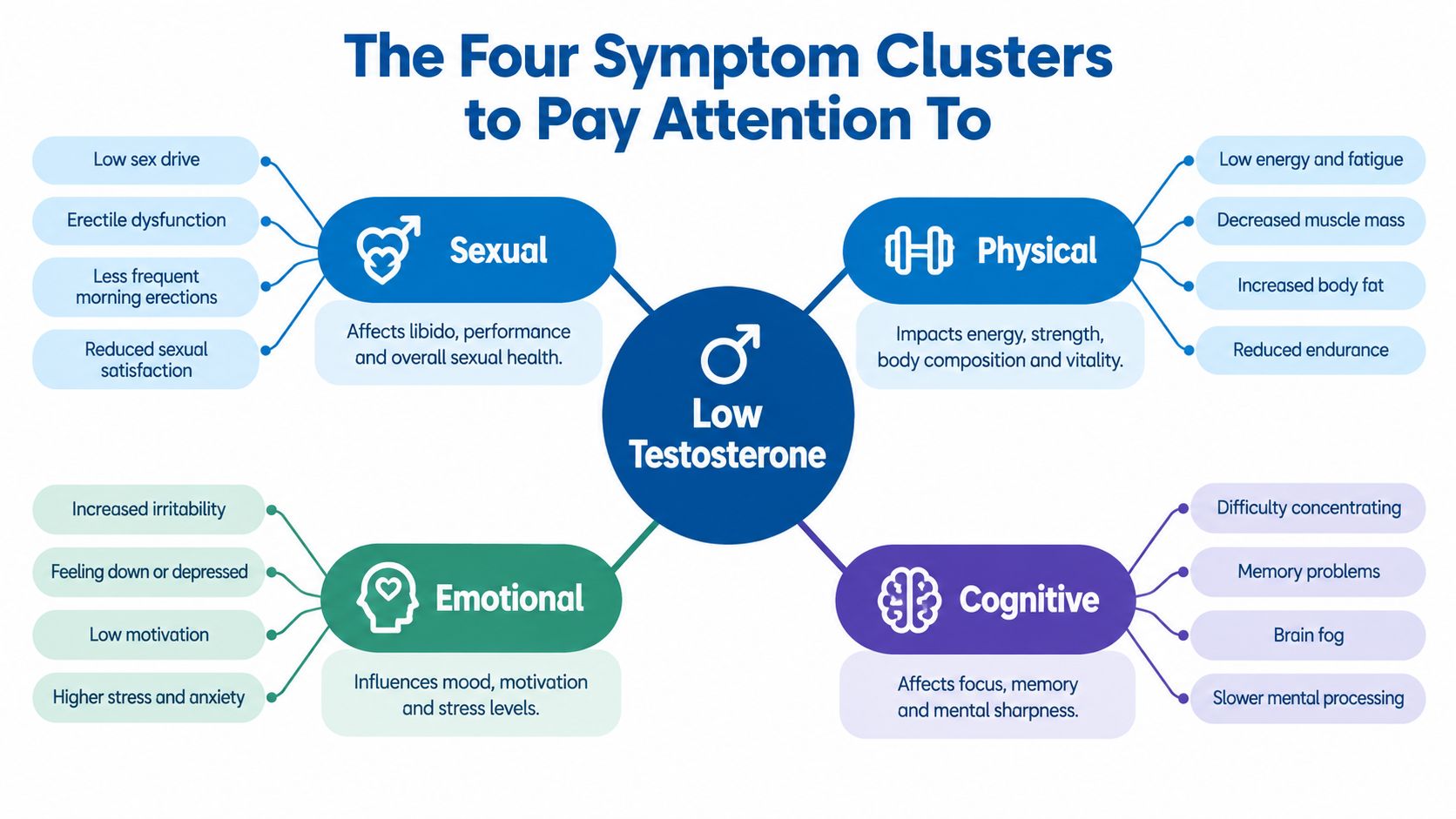
Starting around age 40, testosterone production in men declines by about 1% per year , which is a normal physiologic process and may not cause symptoms unless the decline becomes more severe, as noted by Urology San Antonio's overview of low testosterone. When testosterone is significantly low, men may develop fatigue, reduced libido, erectile dysfunction, irritability, depression, difficulty concentrating, reduced muscle mass, loss of body hair, smaller testicles, and lower bone density.
What men often notice first
The earliest signs aren't always dramatic. They're often subtle changes that build over time:
- Energy changes: You feel worn down earlier in the day and recovery takes longer.
- Sexual symptoms: Desire drops, erections may feel less reliable, or intimacy starts to feel like effort.
- Body composition shifts: Muscle becomes harder to maintain, and fat seems easier to gain.
- Mood and focus problems: You feel flat, irritable, or mentally foggy.
Low testosterone can affect quality of life gradually, which is one reason many men wait too long to get checked.
If sexual symptoms are part of the picture, it can also help to understand that not every libido or performance concern is caused by testosterone alone. Some men benefit from learning about other pathways involved in arousal and sexual function, such as this deep dive into PT-141 with Peptoro, especially when they're trying to sort out what symptom belongs to what cause.
For a fuller symptom checklist before your appointment, review these common signs of low testosterone in men. That can help you walk into a visit with better questions and a clearer sense of what has changed.
What Is Testosterone Therapy and Am I a Candidate
Testosterone therapy is a medical treatment used to restore testosterone levels in men who have a true deficiency. It's not the same as taking hormones “just to feel younger,” and it shouldn't be prescribed on symptoms alone.

The key question isn't whether you're tired. The key question is whether you have well-documented hypogonadism .
The clinical standard for candidacy
According to a review of guideline-based care in the medical literature, testosterone therapy should be reserved for men with unequivocally and consistently low morning serum testosterone levels, typically below 350 ng/dL, plus clinical symptoms of deficiency such as fatigue, low libido, and reduced muscle mass, based on this evidence summary on testosterone replacement and monitoring.
That matters because low-normal, borderline, and temporarily suppressed levels can happen for many reasons. Illness, poor sleep, obesity, medications, heavy alcohol use, and untreated sleep apnea can all affect hormone levels. A careful clinician doesn't jump from one lab draw to a prescription.
What a proper evaluation looks like
A careful testosterone therapy consultation usually includes:
-
Symptom review
Your clinician should ask what changed, when it changed, and how much it affects daily life. -
Morning blood testing
Testosterone is generally checked in the morning, when levels are most reliable for diagnosis. -
Accurate laboratory methods
The same guideline review notes that testing should use an assay certified by the CDC's accuracy-based standardization program to reduce false positives from less reliable methods. -
Medical history and contraindications
Testosterone therapy is not started casually. Certain health conditions can make treatment unsafe.
Here's a simple patient-facing resource that can help you think through whether hormone treatment is even the right lane for your situation: is HRT right for me.
A short video can also help if you're trying to understand the basics before seeing a clinician.
When testosterone therapy is not appropriate
Some men should not start treatment until other issues are addressed, and some shouldn't start it at all. The same guideline review identifies contraindications that include untreated prostate cancer, high hematocrit, untreated severe obstructive sleep apnea, or a recent major adverse cardiovascular event such as a heart attack or stroke within 6 months .
Practical rule: If a clinic is willing to prescribe testosterone after a rushed visit and little or no lab work, that's not convenience. That's a warning sign.
Comparing Testosterone Treatment Options in San Antonio
Once a man is confirmed to be a candidate, the next question becomes practical. What form of treatment fits your life? In San Antonio, the most common options are injections, topical gels or creams, and pellets.

No single option is right for everyone. The best choice depends on your schedule, comfort with self-administration, sensitivity to hormone swings, and follow-up preferences.
A side-by-side practical comparison
| Option | What daily life looks like | Main upside | Main drawback |
|---|---|---|---|
| Injections | Given periodically, often in clinic or at home depending on the plan | Familiar option for many patients | Some men notice peaks and troughs between doses |
| Gels and creams | Applied regularly to the skin | Noninvasive and easy to start | Risk of transfer to others through skin contact |
| Pellets | Inserted in an office procedure and then left in place | Fewer dosing tasks over time | Requires a procedure and isn't as easy to adjust quickly |
Pellets for men who want fewer dosing decisions
Some patients in San Antonio ask about pellets because they don't want to think about medication every few days. According to Lone Star Centers' overview of testosterone pellet therapy, testosterone pellets are inserted under the skin, typically in the hip or buttocks area, and release testosterone gradually over 3 to 6 months , which can provide more consistent levels and reduce the need for frequent dosing compared with injections, patches, or gels.
That convenience appeals to busy professionals, men who travel often, and patients who don't like needles. On the other hand, pellets aren't ideal for everyone. If your dose still needs a lot of fine-tuning, many clinicians prefer a method that can be adjusted more quickly.
If you want to understand one pellet-based approach in more detail before asking local clinics about it, Trilogy hormone pellet services offer a useful example of the kind of practical patient information people often look for.
Questions to ask before choosing a method
When you compare clinics, ask these:
- How often will I need to dose or come in? Convenience sounds great until it clashes with work, travel, or family life.
- How quickly can my dose be adjusted if I feel off? Flexibility matters early in treatment.
- What monitoring goes with this option? The medication choice and the lab strategy should fit together.
- What does this method mean for my partner or family? That's especially relevant for topical products.
For patients who are specifically exploring pellet-based treatment, this overview of testosterone pellets therapy can help frame the conversation before a consultation.
The Treatment Journey Evaluation Monitoring and Results
Good testosterone care follows a sequence. It doesn't start with a sales pitch. It starts with an evaluation, then a treatment decision, then close monitoring.
The first phase
At the beginning, your clinician should establish a baseline. That means understanding symptoms, reviewing your health history, confirming low testosterone with proper testing, and identifying conditions that could make treatment risky or less effective.
Once treatment begins, the process shifts from diagnosis to calibration. You aren't just “on TRT.” You're being monitored to see whether the plan is helping and whether your body is tolerating it safely.
For older men starting therapy, one published review suggests a target total serum testosterone range of 400 to 500 ng/dL , with levels monitored 3 months after initiation to confirm symptomatic response and safety, according to this review on management of testosterone treatment in older men.
What should be monitored
A competent provider doesn't just ask whether you feel better. Lab follow-up matters. In clinical practice, men often need monitoring that includes testosterone levels and safety markers. The local content gap many patients run into is that clinics may promise quick results without clearly explaining how estradiol, hematocrit, free testosterone, and related labs are interpreted over time.
A review from a San Antonio-area clinic notes an often-missed issue: men frequently aren't given enough guidance about estradiol elevation , even though symptoms like mood changes or libido changes can become confusing without context. That same review discusses the importance of differentiating high-normal estradiol from a clearly problematic elevation and of deciding whether the right response is dose adjustment or another strategy, as described in this discussion of low T care gaps near San Antonio Northwest.
If your symptoms improve but your labs drift in the wrong direction, your plan may need adjustment rather than blind continuation.
If you're preparing for follow-up testing, this testosterone level lab test guide is a helpful way to understand what your clinician may be checking and why.
When results usually show up
One of the biggest reasons men stop too early is unrealistic timing. A 2024 meta-analysis found that 60% of patients report noticeable energy improvement within 3 to 4 weeks, while fuller body composition changes usually take 6 to 9 months, with peak fat loss at 12 months. That means the first month and the twelfth month are not supposed to look the same.
Patience matters. If energy starts improving early, that doesn't mean your muscle mass, waistline, libido, mood, and sleep will all move at the same speed. Hormone treatment is usually a gradual process, not a dramatic overnight reset.
Navigating Costs and Providers in the San Antonio Area
Cost is one of the first questions men ask, and it should be. In real life, testosterone therapy isn't just a prescription. It usually involves an evaluation, lab work, the medication itself, and follow-up visits. Some clinics bundle those pieces into a monthly fee. Others bill them separately.

Because pricing structures vary so much, the smartest question isn't just “How much is TRT?” It's “What exactly is included?” A lower advertised price may exclude labs, follow-ups, injection teaching, or medication delivery.
How to interpret local pricing without getting misled
When comparing San Antonio clinics, ask for a written breakdown that covers:
- Initial evaluation: Is the consultation separate from treatment?
- Baseline labs: Are they included or billed on top?
- Medication form: Injection, gel, and pellet pricing may differ.
- Monitoring visits: Are follow-up visits built into the plan?
- Telemedicine access: Can routine check-ins happen remotely when appropriate?
Telemedicine can be useful, especially for established follow-up, but it shouldn't replace a real diagnostic process. A good clinic still needs reliable labs, documented symptoms, and a plan for ongoing safety checks.
Why provider selection matters more than marketing
Texas data should make patients cautious. A population study found that testosterone prescribing in Texas rose from 0.76% to 1.02% of the total population between January 2018 and December 2021, with a statistically significant increase , and that growth among younger age groups was driven largely by High Volume Prescribers . Over the analyzed period, the mean population-adjusted incidence rate was 130 per 100,000 people , ranging from 101 to 165 , and over half of patients receiving care from these high-volume sources got two or fewer prescriptions , suggesting potentially ineffective or unwarranted treatment, according to this Texas prescribing analysis.
That's the local cautionary tale. Some clinics are built around long-term care. Others are built around volume.
Ask this directly: “How do you decide I'm actually a candidate, and what labs do you follow after treatment starts?”
You can also browse patient-facing educational content like San Antonio best HRT options to see how different clinics frame care, but don't stop at the website. Call. Ask questions. Listen for specifics.
A simple checklist for vetting a San Antonio clinic
- Board-certified oversight: Who is evaluating and following you?
- Clear diagnostic standards: Do they require symptoms plus documented low testosterone?
- Transparent monitoring: Can they explain what they recheck and when?
- Straightforward pricing: Can they tell you what is and isn't included?
- Personalized delivery options: Are they matching treatment to your life, or pushing one method?
One practical resource that walks through provider-related considerations is this guide to HRT providers and therapy options. It's useful if you want a structured list of what to ask before committing to care. One option patients may come across during that research is Pause Medical, which offers physician evaluation, customized treatment plans, and follow-up-based hormone care.
FAQ Testosterone Therapy Safety and Regulations
Is testosterone therapy safe for men with heart risk
This is one of the most important questions, and the answer needs nuance. For men with hypogonadism who also had preexisting or high cardiovascular risk, testosterone-replacement therapy was noninferior to placebo for major adverse cardiac events over a mean of 22 months, with a hazard ratio of 0.96 (95% CI, 0.78 to 1.17) in a major trial published in the New England Journal of Medicine , available in the full NEJM study on cardiovascular safety with testosterone therapy.
That doesn't mean every man is automatically a candidate. It means supervised treatment, in the right patient, didn't show worse major cardiac outcomes than placebo in that study setting.
What about blood clots
Supervision matters. Earlier in the article, I covered the concern that testosterone prescribing in Texas has grown quickly. That same body of data also noted increased risk of venous thromboembolism among people receiving testosterone therapy, regardless of hypogonadism status, with particular concern in younger men. That's one reason no responsible clinician should treat testosterone as casual wellness medicine.
Can testosterone raise estrogen
Yes. Some men on treatment develop higher estradiol levels, and that can affect libido, mood, water retention, or breast tenderness. The important point is that an abnormal lab doesn't always mean panic, and not every estradiol increase needs the same response.
A careful clinician looks at symptoms, dose, timing, and the rest of the lab pattern. Sometimes the answer is adjusting testosterone. Sometimes it's watchful monitoring. Management should be individualized.
Is it legal or safe to buy testosterone online without real medical care
That's a hard no. Testosterone is a prescription medication that requires a legitimate medical evaluation and ongoing monitoring. Buying it through unregulated channels exposes you to counterfeit products, dosing mistakes, contaminated medication, and zero accountability if complications develop.
Will testosterone fix every symptom I have
No. If you have sleep apnea, depression, insulin resistance, relationship stress, thyroid disease, medication side effects, or vascular erectile dysfunction, testosterone may only address part of the problem. Good care looks at the whole patient.
The safest testosterone treatment is not the fastest one. It's the one built on diagnosis, follow-up, and honest reassessment.
This article is for education only and doesn't replace personal medical advice, diagnosis, or treatment. Decisions about testosterone therapy should be made with a licensed clinician who can review your symptoms, labs, medications, and health history.
If you want a structured medical evaluation for hormone symptoms, Pause Medical offers consultations focused on individualized treatment planning, lab review, and ongoing monitoring. If you're considering testosterone therapy, bring your questions, your symptom timeline, and any prior lab results so your visit can focus on whether treatment is appropriate and what the safest next step looks like.