Estrogen Progesterone Replacement Therapy: A Patient Guide
You're 49, teaching all day, and you haven't slept through the night in eight months. You wake drenched in sweat, struggle to concentrate during lessons, and wonder whether this is something you're expected to tolerate. Then someone mentions estrogen progesterone replacement therapy , and the first question is usually, “Do I need both hormones?”
That question matters because estrogen and progesterone aren't interchangeable. They solve different problems, carry different responsibilities, and should be selected according to your uterus, symptoms, age, medical history, and preferred route of administration. This guide explains how clinicians think through those decisions for patients in Mississippi, including the benefits, trade-offs, and practical steps involved in treatment.
What Estrogen Progesterone Replacement Therapy Actually Is
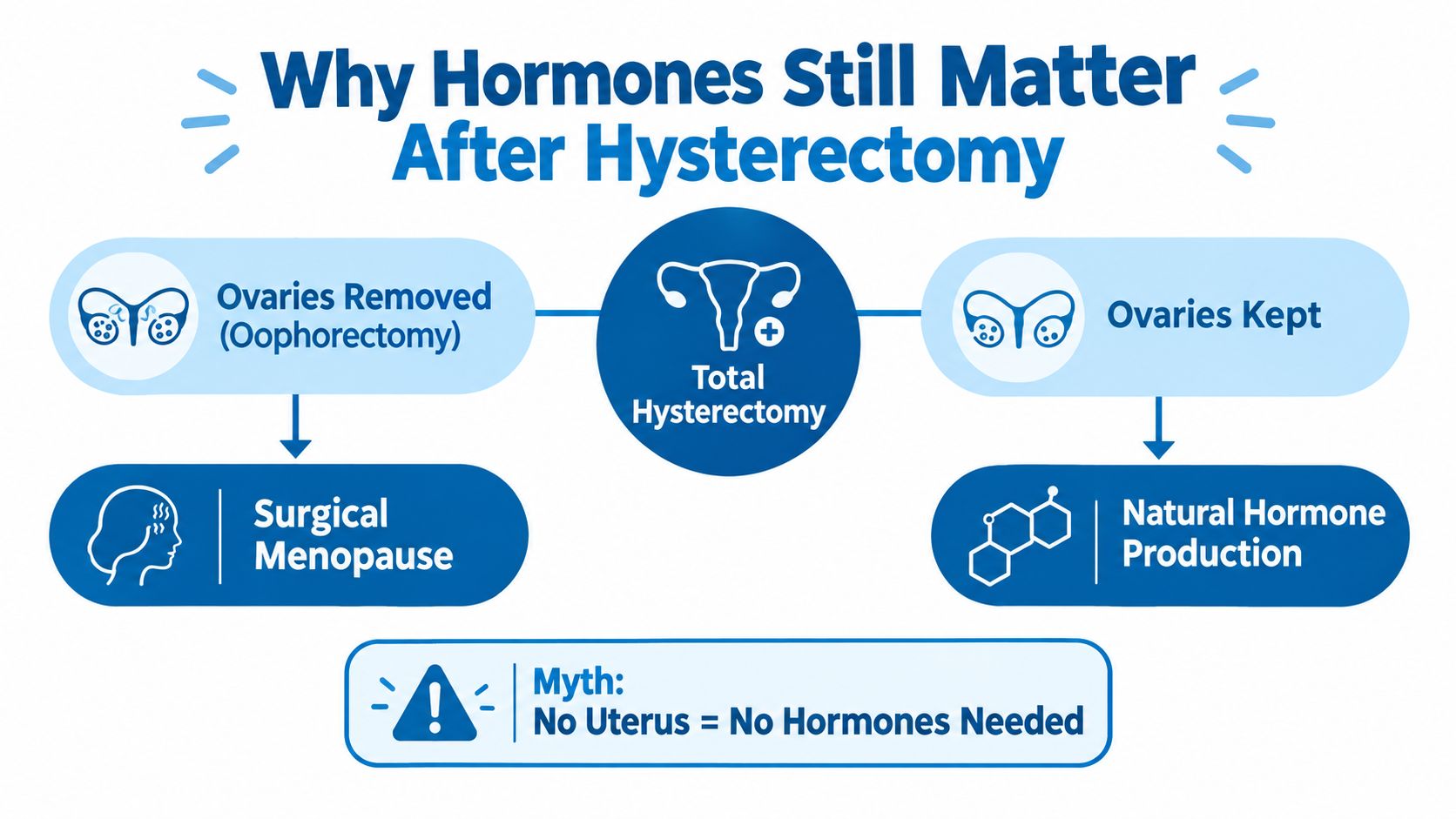
Estrogen progesterone replacement therapy is a combined prescription strategy that supplements hormones the ovaries no longer produce in adequate amounts during perimenopause, menopause, or after surgical removal of the ovaries. The treatment isn't one standard product. It may involve estradiol delivered through the skin, an oral estrogen, oral micronized progesterone, or another progestogen selected for your circumstances.
Estrogen usually does most of the symptom-relief work. It can reduce hot flashes and night sweats , ease vaginal dryness and related tissue changes, and help slow postmenopausal bone loss. Global menopause guidance identifies menopausal hormone therapy as the most effective treatment for vasomotor symptoms, with the most favorable benefit-risk profile generally seen in symptomatic women who begin before age 60 or within 10 years of menopause, as described in the 2023 practitioner's toolkit for managing menopause.
Progesterone has a different job. If you still have a uterus and use systemic estrogen, progesterone or another progestogen protects the uterine lining from excessive stimulation. That protection is the reason clinicians usually prescribe the hormones as a pair rather than treating them as one combined decision.
What the consultation needs to answer
A careful evaluation considers:
- Your symptoms: Hot flashes, night sweats, disrupted sleep, vaginal or urinary symptoms, mood changes, and sexual concerns.
- Your reproductive timeline: Whether you're still having periods, when they changed, and whether menopause followed surgery.
- Your risk profile: Blood clots, stroke, breast or endometrial cancer, liver disease, migraine, blood pressure, and cardiometabolic health.
- Your treatment preferences: Pills, patches, gels, an intrauterine device, or another formulation.
The history of HRT also explains why modern prescribing is more individualized. The Women's Health Initiative enrolled 27,347 U.S. women ages 50 to 79 between 1993 and 1998 . In 2002, investigators stopped the estrogen-plus-progestin arm early because the risks outweighed the benefits for chronic disease prevention. An NIH summary reported 12% higher overall illness or death rates in women taking estrogen plus progestin than in those taking placebo, equivalent to 20 additional major illnesses or deaths per year per 10,000 women . Use then fell sharply in several countries, including a reported 46% decline in the United States and 28% in Canada , as summarized by the National Heart, Lung, and Blood Institute.
The modern lesson isn't that every patient should avoid therapy. It's that timing, formulation, route, dose, and personal risk change the decision. A patient-friendly overview of treatment goals is available in this menopause HRT guide.
Why Progesterone Is Paired With Estrogen
The central rule is simple: systemic estrogen requires uterine protection when the uterus is intact . Estrogen stimulates the endometrium, the tissue lining the uterus. Without adequate opposition, that stimulation can lead to endometrial hyperplasia and adenocarcinoma.
The need isn't cosmetic and it isn't optional. Evidence summarized in a recent systematic review notes that unopposed estrogen significantly increases the risk of endometrial hyperplasia and adenocarcinoma, while an adequately dosed progestogen lowers that risk toward the level seen in never-users. The review describes oral micronized progesterone at 200 mg per day for 12 to 14 days each month as a regimen providing endometrial protection for up to five years in the supporting evidence, as detailed in this clinical review of progesterone and endometrial protection.
How clinicians match protection to treatment
A clinician may discuss oral micronized progesterone 100 mg at night as a continuous option for some patients, or a cyclic regimen in which progesterone is taken during part of each month. Another approach may pair a levonorgestrel intrauterine device with transdermal estradiol, such as an estradiol patch delivering 0.05 mg daily. The appropriate choice depends on estrogen dose, bleeding preferences, tolerance, contraception needs, and medical history.
Shortening the progesterone exposure without a clinical reason can leave the lining inadequately protected. As estrogen doses rise, the progestogen plan may also need adjustment. That's why changing an estrogen patch, adding another estrogen product, or switching routes should happen through the prescribing clinician rather than by using leftover medication.
| Uterine Status | Estrogen | Progesterone Required? |
|---|---|---|
| Uterus intact | Systemic estrogen | Yes, progesterone or another progestogen is required |
| Uterus intact | Low-dose local vaginal estrogen | Usually individualized, because systemic absorption and indication differ |
| Uterus removed | Systemic estrogen | Generally no , unless a specific clinical reason exists |
| Uterus status uncertain | Any systemic estrogen | Confirm surgical history before treatment |
Women who've had a hysterectomy generally don't need progesterone because there's no uterine lining to protect. However, the surgical details matter, and a clinician should confirm whether the uterus was fully removed before prescribing estrogen alone.
Micronized progesterone may also feel calming or mildly sedating for some patients, particularly when taken at night. That effect can help with sleep initiation, but it isn't a guarantee, and dizziness or morning grogginess can occur. Patients seeking a plain-language discussion of low progesterone symptoms can review this guide to progesterone balance.
Bioidentical Hormones Compared to Conventional HRT
“Bioidentical” describes chemical and structural identity , not a promise of superior safety. A bioidentical hormone has the same molecular structure as the hormone produced by the human body. Several FDA-approved products already use bioidentical estradiol or progesterone, so “conventional” and “bioidentical” aren't always opposites.
FDA-approved examples include 17-beta estradiol and oral micronized progesterone, including products such as Prometrium and Bijuva. These products are manufactured as finished medicines with established dosing, labeling, and quality requirements. By contrast, compounded bioidentical hormone preparations are mixed by special pharmacies, aren't FDA-approved as finished medicines, and may vary from batch to batch in dose and quality, as explained in this review of compounded bioidentical hormones.

What the distinction means in practice
Custom compounding can be useful when a patient has a documented allergy to an available ingredient or needs a dose or formulation that approved products can't provide. It shouldn't automatically be treated as safer just because it's labeled “natural.”
Products marketed as Biest or Triest may contain proprietary combinations, but the absence of strong outcomes data makes it difficult to assume that a custom blend has the same evidence base as an approved product. Salivary hormone testing sold alongside compounded therapy also isn't a validated way to determine menopausal dosing. Symptoms, examination, treatment response, bleeding patterns, and safety monitoring usually carry more clinical value.
Practical rule: Ask whether an FDA-approved estradiol or progesterone product can meet your needs before considering a compounded preparation.
This doesn't mean every compounded prescription is inappropriate. It means the reason for using one should be specific, documented, and understood by both patient and prescriber. The choice should also include a discussion of how the pharmacy checks potency, purity, and consistency. For a broader explanation of terminology, see this comparison of bioidentical and synthetic hormones.
Routes, Doses, and How the Choice Changes Risk
Estrogen can be taken orally or delivered through the skin with a patch, gel, or spray. The route changes how the hormone passes through the body. Oral estrogen travels through the liver first, while transdermal estrogen avoids that first-pass hepatic effect.
That difference matters most for patients with obesity, prior venous thromboembolism risk factors, migraine with aura, gallbladder disease, or cardiometabolic concerns. Guideline-level evidence summarized in an obstetrics and gynecology review of oral HRT and VTE associates oral HRT with higher VTE risk, including an overall odds ratio of 1.58 . The combination of conjugated equine estrogen and medroxyprogesterone acetate had a reported odds ratio of 2.10 , while transdermal therapy wasn't associated with increased VTE risk in the cited observational data.
Starting low doesn't mean undertreating
A clinician may discuss transdermal estradiol doses around 0.025 to 0.05 mg per day and oral micronized progesterone around 100 to 200 mg , but a starting dose isn't a personal prescription. The goal is generally the lowest dose that controls bothersome symptoms while providing appropriate uterine protection.
Progesterone may be continuous, taken every night, or sequential, taken during part of each month. Continuous treatment may reduce scheduled bleeding over time, while cyclic treatment commonly produces a predictable withdrawal bleed. Unexpected bleeding, heavy bleeding, or bleeding after a period without bleeding requires evaluation.
| Route | VTE Risk vs. Oral | Best Suited For | Typical Starting Dose |
|---|---|---|---|
| Oral estrogen | Higher | Patients without significant clot or hepatic concerns | Individualized |
| Transdermal patch | Not associated with a significant increase versus non-use in guideline evidence | Patients with obesity, migraine with aura, or elevated clot risk | 0.025 to 0.05 mg/day |
| Transdermal gel or spray | Similar transdermal rationale | Patients who prefer non-oral delivery | Individualized |
| Local vaginal estrogen | Primarily local treatment | Vaginal and urinary symptoms requiring local therapy | Product-specific |
Progesterone itself can be oral, delivered through an intrauterine device, or selected in another form. Vaginal and injectable approaches aren't interchangeable with oral regimens, and their evidence for endometrial protection must be considered separately. Hormone pellet therapy also requires careful discussion because the dose can't be removed once inserted, as outlined in this information about hormone pellet therapy for women.
Benefits and Risks in Plain Language
The strongest reason to consider menopausal hormone therapy is symptom relief. It's especially effective for hot flashes and night sweats, and it may improve sleep when vasomotor symptoms are repeatedly waking you. The therapy can also relieve genitourinary symptoms and help preserve skeletal health in appropriate patients.
Some patient education materials describe a 75% to 90% reduction in vasomotor symptoms , but that range isn't included in the verified evidence available for this article, so it shouldn't be treated as a guaranteed result. The clinically sound promise is more modest: many eligible patients experience meaningful improvement, while response varies by formulation, dose, timing, and underlying health.

The risk conversation needs context
Hormone therapy isn't risk-free. A major evidence review reported a relative risk of 1.23 for stroke and 1.86 for venous thromboembolism , with the overall decision depending on age, route, dose, formulation, and medical history, as summarized in this review of menopausal hormone therapy risks. Oral therapy generally deserves more caution when clot risk is already high.
The WHI experience also changed how clinicians discuss combined therapy and breast cancer. The continuous-combined arm used conjugated estrogen plus medroxyprogesterone acetate and showed a long-term breast cancer signal described in clinical discussions as roughly one additional case per 1,000 women per year after five years . That figure applies to the studied regimen and population, not every estrogen-progesterone combination. Estrogen-alone therapy, when appropriate for a woman without a uterus, doesn't show the same breast cancer signal in that evidence.
Other concerns include blood clots, gallbladder disease, and endometrial cancer when estrogen is used without progestin in a woman with a uterus. The decision should never be based on a single risk label.
A useful way to think about treatment is not “safe” versus “unsafe.” It's whether the expected symptom and bone benefits justify the risks for this patient , using the formulation and route that fit her profile. This discussion of HRT and breast cancer risk can help prepare you for that conversation.
What a Real Treatment Process Looks Like
A Mississippi menopause consultation should feel like a clinical assessment, not a quick request for a hormone prescription. At a practice such as Pause Medical, the visit may begin with a detailed review of symptoms, menstrual history, prior treatments, personal medical history, and family history. The clinician also needs to know about clotting events, migraines, breast symptoms, cancer history, liver disease, medications, and pregnancy possibility.
A typical evaluation may include laboratory testing such as estradiol, FSH, TSH, and a lipid panel. Depending on the history, the clinician may also consider vitamin D testing or a clotting screen. Lab results can support the assessment, but they don't dictate treatment by themselves, particularly when symptoms and menstrual timing already make the clinical picture clear.

How follow-up protects the plan
Shared decision-making comes next. You and the prescribing clinician compare oral and transdermal estrogen, select an appropriate progesterone strategy if your uterus is intact, discuss expected bleeding, and review side effects. The initial plan should include clear instructions about administration and what to do if a dose is missed.
A practical follow-up rhythm may include:
- Early tolerance check: A two-week contact can identify nausea, breast tenderness, dizziness, skin irritation, mood changes, or problematic bleeding.
- Symptom review: A six-week follow-up helps assess hot flashes, sleep, vaginal symptoms, and overall treatment response.
- Ongoing monitoring: Quarterly visits during the first year can support dose adjustments, refill decisions, and risk reassessment.
Seek urgent care: Chest pain, sudden shortness of breath, severe headache, vision changes, one-sided leg swelling, or unusual breast findings shouldn't wait for a routine appointment.
Prescription refills and dose changes should go through the prescribing clinician. Don't increase estrogen because symptoms returned, stop progesterone because bleeding is inconvenient, or substitute a different product without reviewing the change with the practice. The safety of the regimen depends on keeping estrogen exposure and uterine protection aligned.
Who Is a Good Candidate and Who Should Be Cautious
Candidacy is best understood through four questions. First, are you typically under 60 or within 10 years of menopause? Second, are hot flashes, night sweats, genitourinary symptoms, or sleep disruption affecting your quality of life? Third, do you have bone-health concerns? Fourth, does your personal risk profile make a particular route or formulation more appropriate?
The global consensus approach favors individualized treatment for symptomatic women who start within that earlier window. It doesn't support routine long-term hormone therapy solely to prevent chronic disease in broadly healthy women. Recent reviews continue to emphasize defined indications and caution that evidence is insufficient for long-term prevention in many contemporary patient groups, as discussed in this review of menopausal hormone therapy for prevention.
Factors that strengthen or weaken the case
Surgical menopause, premature ovarian insufficiency, and an osteoporosis diagnosis may strengthen the clinical case for treatment. On the other hand, unexplained vaginal bleeding, active breast or endometrial cancer, recent VTE or stroke, pregnancy, and certain serious liver conditions generally require avoidance or specialist evaluation.
Some conditions call for modification rather than automatic exclusion. Well-controlled hypertension, gallbladder disease, migraine with aura, obesity, and other cardiometabolic risks may lead a clinician to favor transdermal estrogen and closer monitoring. The progesterone choice matters too, especially when clotting or breast risk is part of the discussion.
| Generally a Good Candidate | Use Caution or Avoid |
|---|---|
| Symptomatic and typically under 60 or within 10 years of menopause | Unexplained vaginal bleeding |
| Surgical menopause or premature ovarian insufficiency | Active breast or endometrial cancer |
| Significant hot flashes or night sweats | Recent VTE or stroke |
| Genitourinary symptoms affecting daily life | Pregnancy |
| Bone-health indication after risk assessment | Serious or uncontrolled liver disease |
| No major contraindication after history and examination | Individualized evaluation for migraine with aura, obesity, or gallbladder disease |
Age alone doesn't decide eligibility, and symptom severity alone doesn't erase contraindications. A complete history is more useful than an online hormone panel or a promise that one formulation works for everyone.
Key Takeaways and Your Next Step
Five points should guide the conversation.
- Estrogen and progesterone are separate decisions. Estrogen usually targets vasomotor and genitourinary symptoms, while progesterone protects the uterus when systemic estrogen is used.
- Uterine protection is essential. If your uterus is intact, omitting progesterone from systemic estrogen treatment can expose the endometrium to excess stimulation.
- Route and dose shape risk. Transdermal estrogen may be preferable when VTE or cardiometabolic risk is a concern, while the progesterone regimen must match the estrogen plan.
- Timing matters. Benefits are generally most favorable for symptomatic women who begin before age 60 or within 10 years of menopause, particularly when symptom relief or skeletal health is the goal.
- Use evidence-based products when possible. FDA-approved estradiol and progesterone options provide clearer dosing and manufacturing standards than custom-compounded products.
The safest plan begins with a full history, relevant examination, appropriate laboratory evaluation, and a clinician who explains trade-offs in plain language. Hormone therapy should also be revisited over time because symptoms, bleeding, medications, and health risks can change.
Mississippi patients can visit Pause Medical in Flowood to discuss a personalized plan for menopause symptoms, hormone replacement therapy, medication management, and related wellness needs. This article is for education only. It isn't a substitute for individual medical advice, diagnosis, or treatment, and you shouldn't start, stop, or change hormones without speaking with your prescribing clinician.
Pause Medical offers clinician-guided hormone replacement therapy with personalized evaluation, prescription selection, follow-up, and medication management for Mississippi patients considering estrogen progesterone replacement therapy. Visit Pause Medical to schedule a consultation and discuss a plan based on your symptoms, uterus status, medical history, and treatment goals.