What Is Estrogen and Progesterone Hormones Explained
Estrogen and progesterone are the two primary steroid hormones that regulate the female reproductive system. Estrogen drives tissue growth, while progesterone prepares the uterus for implantation and helps maintain pregnancy, and both also influence bone, mood, sleep, and vascular health.
You may be dealing with hot flashes, restless sleep, fatigue, mood changes, or brain fog while routine testing comes back “normal.” That experience can feel confusing and discouraging, especially when symptoms affect work, relationships, or your confidence in your own body. Understanding what is estrogen and progesterone hormones can help you see why these symptoms may be connected, while also clarifying what hormone therapy can and can't safely do.
Why Estrogen and Progesterone Matter for Your Daily Health
A patient may sit across from a provider and say, “I don't feel like myself anymore.” She may describe waking throughout the night, feeling unusually irritable, struggling to focus, or noticing changes in her menstrual cycle. Standard tests might not reveal one obvious cause, yet the symptoms remain real and disruptive.
Estrogen and progesterone are the two primary steroid hormones that regulate the female reproductive system. Estrogen encourages endometrial growth and supports the development of reproductive tissues. Progesterone is produced by the corpus luteum after ovulation. It prepares the uterine lining for implantation, reduces uterine contractility, and helps maintain pregnancy. If pregnancy occurs, the corpus luteum initially produces progesterone, followed increasingly by the placenta later in pregnancy. These core functions are described in the NCBI overview of estrogen and progesterone physiology.
Their influence doesn't stop at fertility. Estrogen contributes to bone development, skeletal maturation, immune activity, and vascular function . Changes in estrogen and progesterone can also coincide with shifts in sleep, emotional steadiness, concentration, body comfort, and sexual well-being. Those connections don't mean every symptom is caused by hormones, but they do explain why a reproductive transition can affect the whole person.
A useful clinical perspective: A normal result on one laboratory test doesn't automatically explain away persistent symptoms. Timing, medical history, medications, thyroid function, metabolic health, and the pattern of symptoms all matter.
A thoughtful review of hormone balance for women should focus on the full picture rather than treating one isolated number. Hormones work in changing patterns, and those patterns can differ across the menstrual cycle and menopause transition. The right evaluation should also consider other possible causes, including anemia, thyroid disorders, sleep disorders, depression, medication effects, and chronic disease.
How Estrogen and Progesterone Work Together in the Body
Think of estrogen as the builder and progesterone as the stabilizer . Estrogen prepares reproductive tissues for the possibility of ovulation and pregnancy. Progesterone then changes the uterine lining into a secretory, implantation-ready state and helps keep the uterus relatively quiet.
At the beginning of a typical cycle, ovarian follicles produce increasing estrogen. Estrogen stimulates proliferative growth of the endometrium, which is the lining inside the uterus. It also participates in bone and reproductive tissue development. After ovulation, the corpus luteum produces progesterone. Progesterone supports the prepared lining and counterbalances estrogen's proliferative effects by reducing estrogen receptor signaling.

The biological conversation between the hormones
These hormones communicate with tissues through nuclear receptors , which influence gene transcription, and through faster membrane-initiated signals. Their effects are coordinated through the hypothalamus, pituitary gland, ovaries, and uterus. This network regulates ovulation, endometrial preparation, and pregnancy maintenance, as explained in this review of estrogen and progesterone action.
When progesterone falls before menstruation, the uterine lining can shed. If ovulation doesn't occur consistently, progesterone production may be lower or less predictable. Estrogen can still stimulate the lining, but progesterone may not provide the same stabilizing influence. Clinically, this pattern can coincide with irregular bleeding, heavier periods, or pronounced premenstrual symptoms, although those symptoms can also have other causes.
The term “estrogen dominance” is used widely online, but it isn't a complete diagnosis by itself. A clinician needs to ask what “high estrogen” means, when testing occurred, whether ovulation is taking place, and whether another condition explains the symptoms. Similarly, “low progesterone” can't be confirmed from symptoms alone.
For readers comparing bioidentical hormones and synthetic hormones, the important distinction is that treatment decisions depend on the specific medication, dose, route, health history, and goal. “Bioidentical” describes molecular similarity to a hormone made by the body, not automatic safety or suitability.
Effects Beyond Reproduction Including Sleep Mood and Bone Health
Estrogen and progesterone affect several body systems, but their effects aren't identical. Estrogen has established roles in skeletal development and vascular function, while progesterone's reproductive role includes preparing the uterine lining and reducing uterine contractility. Researchers are also examining how these hormones relate to sleep, mood, cognition, and other symptoms during perimenopause and menopause.
A 2025 review discusses micronized progesterone in relation to sleep and examines hormone-related mental health questions, including premenstrual dysphoric disorder, postnatal depression, and menopausal depression. It also highlights an important limit: a five-year course of oral estradiol with cyclic micronized progesterone showed no cognitive benefit or harm , whether treatment began earlier or later. That finding challenges online claims that hormone therapy reliably prevents memory decline. See the 2025 review of hormone effects beyond reproduction for the broader discussion.
| Health Domain | Estrogen Role | Progesterone Role | Evidence Strength |
|---|---|---|---|
| Vasomotor symptoms | Menopausal hormone therapy is most effective for hot flashes and related symptoms | May be included for uterine protection when estrogen is prescribed | Strong for symptom treatment, regimen-dependent |
| Sleep | May improve sleep when hormone-related night symptoms improve | Micronized progesterone is being examined for sleep outcomes | Promising, but individual response varies |
| Mood | Can relate to mood changes during hormonal transitions | May influence calming pathways and mood symptoms | Clinically relevant, not a universal treatment |
| Bone health | Supports bone development and skeletal health | Its main established menopause role is endometrial protection | Estrogen benefit is established in appropriate therapy |
| Cognition | Hormonal changes can coincide with cognitive concerns | Cognitive effects remain under investigation | No established cognitive-preservation benefit |
| Vascular function | Has vascular and immune effects | Some progestogens may modify estrogen's vascular effects | Requires individualized risk assessment |
What treatment can and can't promise
Menopausal hormone therapy can improve vasomotor symptoms and may also help sleep disturbance, mood changes, cognitive concerns, and musculoskeletal symptoms. It isn't recommended as a strategy for chronic disease prevention because randomized evidence hasn't shown a net preventive benefit. Treatment should target bothersome symptoms and specific health needs, not a promise of stopping normal aging.
Timing matters. Benefits and risks can differ by age and time since menopause, which is one reason clinicians consider the broader clinical context rather than offering a universal regimen. If brain fog is affecting daily life, a resource on brain fog and hormones may help you organize questions, but persistent cognitive symptoms still deserve an evaluation for sleep, thyroid, mood, medication, and neurologic causes.
Estrogen Only Versus Combined Hormone Therapy Explained
The most important safety question is simple: Do you have a uterus?
Estrogen stimulates the endometrium. In someone with an intact uterus, estrogen without a progestogen can keep stimulating the lining and increase the risk of endometrial hyperplasia and endometrial cancer. That's why combined estrogen and progestogen therapy became a foundational safety principle in menopause care. The NCBI discussion of progesterone and progestogens in hormone therapy explains this historical and clinical development.
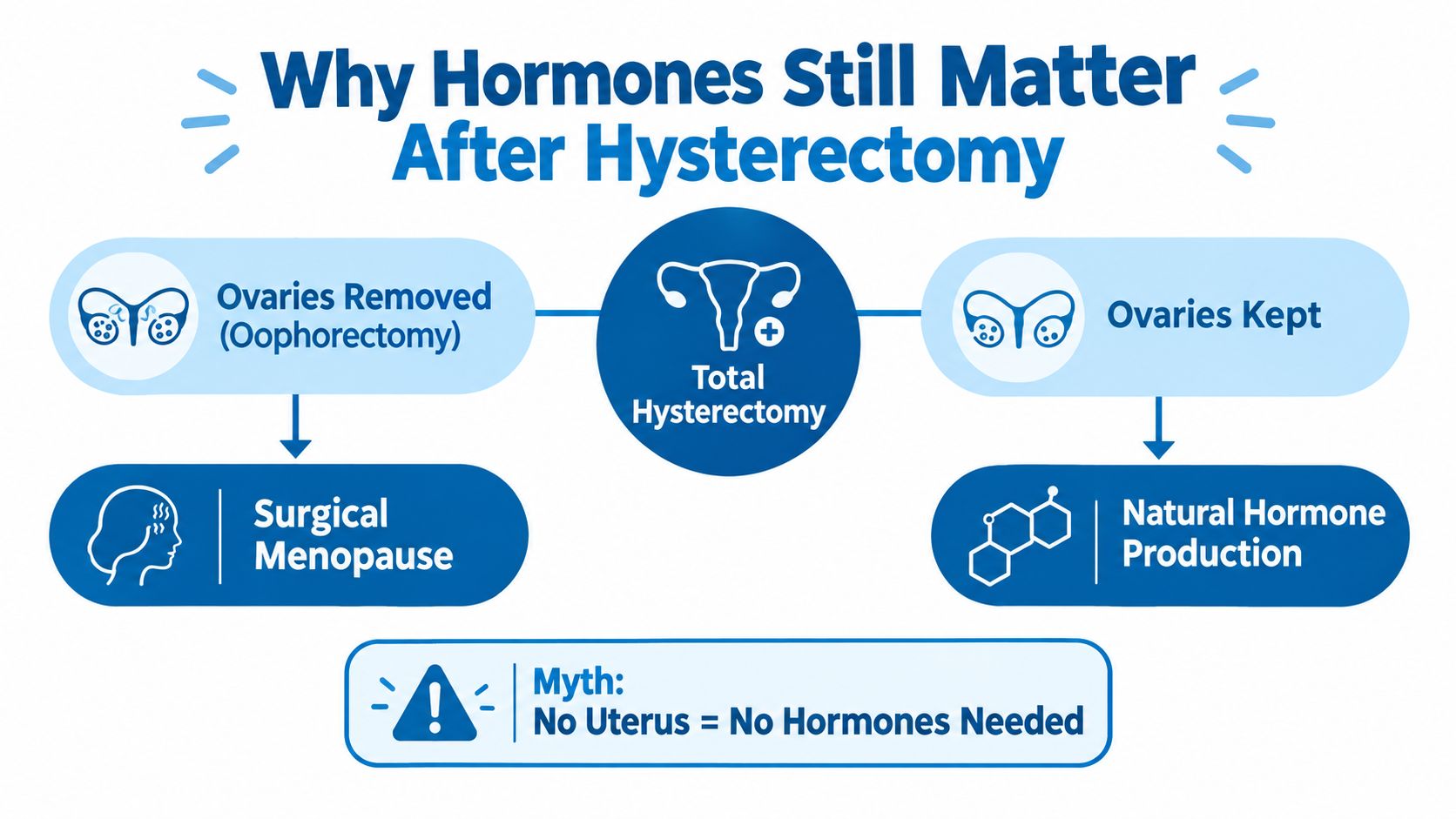
Someone who has had a hysterectomy generally doesn't need a progestogen because there's no endometrial lining to protect. Exceptions can exist, including a history such as endometriosis, so surgical history should always be reviewed rather than assumed.
| Factor | Estrogen-Only Therapy (ET) | Combined Therapy (EPT) |
|---|---|---|
| Typical use | Often considered after hysterectomy | Usually used when a uterus is intact |
| Main purpose | Treat estrogen-responsive symptoms | Treat symptoms while protecting the endometrium |
| Uterine protection | Doesn't provide protection from unopposed estrogen | Progestogen counterbalances estrogen's endometrial stimulation |
| Bleeding pattern | Depends on anatomy, route, and regimen | May be continuous or sequential, with different bleeding expectations |
| Medication choice | Estrogen route and dose are individualized | Estrogen is paired with a progestogen selected for safety and tolerability |
How combined regimens are prescribed
A continuous combined regimen uses estrogen and progesterone or another progestogen on an ongoing schedule. A sequential regimen uses estrogen continuously and adds the progestogen during part of the cycle. The chosen approach can influence bleeding patterns, symptoms, and adherence.
Commonly used progestational agents include medroxyprogesterone acetate in 2.5 mg, 5 mg, and 10 mg doses , and micronized progesterone in 100 mg and 200 mg doses , as described in this clinical review of progestational agents. Those examples don't represent a personal prescription. A clinician must account for the estrogen dose, treatment route, bleeding history, age, medical conditions, and contraindications.
Micronized progesterone is chemically identical to progesterone made by the body. Synthetic progestins are different compounds that act on progesterone receptors. Some people tolerate one option better than another, but “natural” or “bioidentical” doesn't eliminate the need for careful monitoring. The patient guide to estrogen and progesterone replacement therapy offers additional context for discussing these choices with a provider.
Recognizing the Symptoms of Hormone Imbalance
Hormone-related symptoms often arrive as a cluster rather than a single complaint. A person may notice cycle changes first, then disrupted sleep, irritability, hot flashes, vaginal discomfort, or a change in energy. The timing varies widely, and symptom severity doesn't always match a single laboratory result.

Symptoms can point to different systems
- Vasomotor symptoms: Hot flashes and night sweats can disrupt sleep and are closely associated with menopause-related changes in estrogen signaling and temperature regulation.
- Neuropsychiatric symptoms: Brain fog, anxiety, mood swings, irritability, and insomnia may appear during hormonal transitions. Progesterone-related metabolites, including allopregnanolone, interact with calming brain pathways, but individual responses differ.
- Urogenital symptoms: Vaginal dryness, painful intercourse, and recurrent urinary symptoms can accompany reduced estrogen activity in genitourinary tissues. These symptoms deserve direct treatment rather than dismissal.
- Metabolic and musculoskeletal symptoms: Fatigue, joint discomfort, and weight changes can occur alongside menopause, but they can also reflect thyroid disease, sleep disorders, medication effects, depression, or metabolic conditions.
A normal lab value doesn't automatically rule out a clinically important pattern. Hormone levels change over time, and interpretation depends on cycle stage, menopause status, medications, symptoms, and medical history. It's also unsafe to assume that every symptom reflects “hormone imbalance.”
If you want a structured starting point, the resource on identifying hormonal imbalance signs can help you organize observations for a clinical conversation. Seek an evaluation when symptoms interfere with sleep, work, relationships, exercise, or daily functioning. Unexpected heavy bleeding, bleeding after menopause, severe depression, chest pain, or sudden neurologic symptoms require prompt medical attention.
For additional patient education, review symptoms of hormonal imbalance, then bring a symptom timeline to your appointment. Note cycle changes, sleep patterns, hot flashes, mood shifts, medications, and any prior gynecologic surgery.
What a Personalized Hormone Evaluation Involves
A careful evaluation begins with your experience, not a prescription. At a Mississippi clinic such as Pause Medical, the process may include these practical steps:
- History first: Discuss menstrual patterns, menopause symptoms, pregnancy history, hysterectomy or oophorectomy, cancer history, cardiovascular risks, medications, and treatment goals.
- Targeted testing: Depending on the clinical question, testing may include estradiol, progesterone, FSH, LH, thyroid markers, and relevant metabolic markers. Timing can matter if you're still menstruating.
- Contextual interpretation: Blood, saliva, and dried urine tests have different clinical uses. No test should be interpreted without considering symptoms, anatomy, timing, and other health conditions.
- Treatment planning: Options may include lifestyle measures, nutrition support, and medication. Estrogen can be delivered through transdermal or oral routes, while some practices also discuss pellets. Route and dose require individualized risk assessment.
- Follow-up: Monitoring focuses on symptom response, adverse effects, bleeding patterns when relevant, and changes in health status.
Laboratory results shouldn't be compared mechanically with a population average. A clinician needs to ask whether the result fits your age, treatment status, cycle phase, symptoms, and goals. The plan may also include evaluation for thyroid disease, diabetes, sleep problems, or other causes of fatigue and weight change.
Hormone receptors also matter in cancer care, which is why reviewing personal and family history is essential. For background on how receptor status guides breast cancer discussions, see Hirschfeld Oncology's hormone receptor insights.

Answers to Common Questions About Estrogen and Progesterone
Is bioidentical progesterone automatically safer?
No. Bioidentical progesterone is chemically identical to the hormone the body produces, and FDA-approved micronized progesterone is one example. It still needs appropriate dosing, screening, and follow-up. A “natural” label doesn't make a treatment right for every patient.
Is progesterone optional if I still have a uterus?
Usually, no, when systemic estrogen is prescribed. Unopposed estrogen can stimulate the endometrium and increase the risk of hyperplasia and cancer. A progestogen is generally added for protection, while the exact regimen depends on the individual.
Does hormone therapy prevent memory decline?
That claim goes beyond the evidence. The 2025 evidence summary discussed earlier found no cognitive benefit or harm from oral estradiol with cyclic micronized progesterone over five years, whether treatment began earlier or later. Hormone therapy can relieve symptoms that make concentration difficult, but it shouldn't be prescribed as a guaranteed dementia-prevention treatment.
Is saliva testing reliable for choosing a dose?
Saliva testing has specific limitations and shouldn't be used in isolation to determine systemic hormone dosing. Blood testing may be useful in particular clinical situations, but the provider must interpret any result alongside symptoms, timing, anatomy, medications, and risk factors.
Are plant-derived hormones inherently superior?
No. The source of a chemical ingredient doesn't determine whether a medication is safe or appropriate. The relevant questions include molecular structure, dose, route, product quality, evidence, contraindications, and monitoring.
Pause Medical offers hormone replacement therapy, individualized estrogen and progesterone evaluations, and medically supervised care for related concerns such as menopause symptoms and metabolic health. Mississippi patients can review services and request a consultation through Pause Medical to discuss symptoms, treatment options, and a plan that fits their medical history.