Comprehensive Health Assessment: A Complete Guide
You've been exhausted for months. Your weight hasn't responded to the changes you've made, your sleep feels unrefreshing, or your mood and libido have shifted in ways you can't easily explain. Then a routine blood panel comes back “normal,” leaving you with the uncomfortable feeling that your symptoms weren't taken seriously.
A health assessment looks beyond a single result or isolated complaint. It connects symptoms, medical history, lifestyle, hormonal signals, cardiovascular risk, metabolic health, and treatment goals so a clinician can make safer decisions about hormone replacement therapy , medical weight loss , thyroid care, and long-term prevention. For adults in Mississippi, that broader view can turn a frustrating search for answers into a practical plan.
Why Routine Checkups Miss the Root Cause
A patient may arrive at an annual physical with fatigue, stubborn weight gain, hot flashes, brain fog, or reduced sexual desire. The visit may focus on immediate safety and common disease screening. If the initial results fall within a laboratory's reference range, the conversation can end before anyone examines how several modest changes may be interacting.
That doesn't mean a routine checkup is useless. It means a standard visit and a detailed assessment answer different questions. A routine exam often asks whether a recognizable condition is present today. A broader evaluation asks why you feel different, which risks are developing together, and what information is needed before starting treatment.

Symptoms need context
Fatigue can relate to sleep, mood, thyroid function, anemia, medication effects, glucose regulation, hormonal transition, or several factors at once. Weight stagnation can reflect appetite biology, body-fat distribution, insulin-related physiology, reduced muscle activity, medication exposure, or an untreated endocrine condition. A single marker rarely explains the entire pattern.
That's why a clinician may combine your history with physical findings, medication review, targeted laboratory testing, and risk assessment. The purpose isn't to order every possible test. It's to select information that can change the next decision.
People researching peptide approaches may also encounter technical discussions that sit outside a conventional office visit. A general educational resource on how to find peptide protocols for hormone balance can help you understand the terminology, but any hormone or peptide decision still requires qualified medical review.
For patients who want to understand what a broader laboratory review may involve, Pause Medical's wellness lab panel provides a useful starting point for discussing the right questions with a provider.
Practical rule: “Normal” should begin a thoughtful conversation when symptoms persist, not automatically end it.
Defining the Comprehensive Health Assessment
A health assessment is a structured review of the whole person. It combines your symptoms and goals with medical history, family history, lifestyle, physical findings, and clinically relevant laboratory data. The provider then interprets those findings together rather than treating each result as an unrelated fact.
The World Health Organization has published its annual World Health Statistics report since 2005. Its 2024 edition reviews more than 50 health-related indicators drawn from the Sustainable Development Goals and WHO's Thirteenth General Programme of Work. The WHO's Global Health Estimates add time-series information from 2000 onward , covering life expectancy, healthy life expectancy, mortality, morbidity, and disease burden at global, regional, and country levels. This history illustrates the value of tracking multiple indicators over time instead of relying on a single episodic observation ( WHO World Health Statistics).

Four layers of useful information
-
Your story: The timing, severity, and pattern of symptoms matter. Menopause, perimenopause, and andropause don't look identical in every person, so the provider needs to know what changed and when.
-
Your daily environment: Sleep, nutrition, activity, stress, alcohol exposure, work demands, and social circumstances can affect energy, appetite, mood, and metabolic function.
-
Your physiological signals: Blood pressure, lipids, glucose markers, kidney measures, body measurements, and selected hormone or thyroid tests help identify interacting risks.
-
Your treatment context: Current prescriptions, supplements, prior therapies, reproductive history, contraindications, and personal preferences influence what can be used safely.
This approach is particularly relevant when symptoms cross systems. A person seeking bioidentical hormones may also need cardiovascular and metabolic risk review. Someone considering GLP-1 weight loss may need medication reconciliation, glucose assessment, kidney evaluation, and a discussion of nutrition and symptom monitoring.
For a patient-centered overview of preventive planning, see Pause Medical's preventive health clinic resource.
The U.S. National Health and Nutrition Examination Survey, or NHANES, demonstrates how demanding whole-person measurement can be. NHANES began in 1960, became continuous in 1999, and has produced national estimates in 2-year cycles . In the 2017–2020 March cycle , 27,066 people were eligible, 9,254 were interviewed, and 8,704 completed the examination component. In the August 2021–August 2023 cycle , 22,660 were eligible, 11,933 were interviewed, and 8,860 completed the examination component ( NHANES overview). A personal assessment is smaller, but it faces the same principle: useful conclusions require coordinated, reliable information.
Key Clinical Metrics and Their Rationale
A useful assessment begins with a clinical question: which measurement could change care? Cardiometabolic review works best when vascular pressure, lipids, glucose, kidney function, and body composition are considered together. Each reflects a different pathway, and those pathways interact. This approach is consistent with the European Society of Cardiology cardiometabolic recommendations.
| Metric Category | Specific Markers | Clinical Purpose |
|---|---|---|
| Vascular pressure | Blood pressure | Assesses pressure load on blood vessels and the heart |
| Lipids | LDL-C, triglycerides, lipoprotein(a) | Evaluates atherogenic lipid exposure and inherited risk signals |
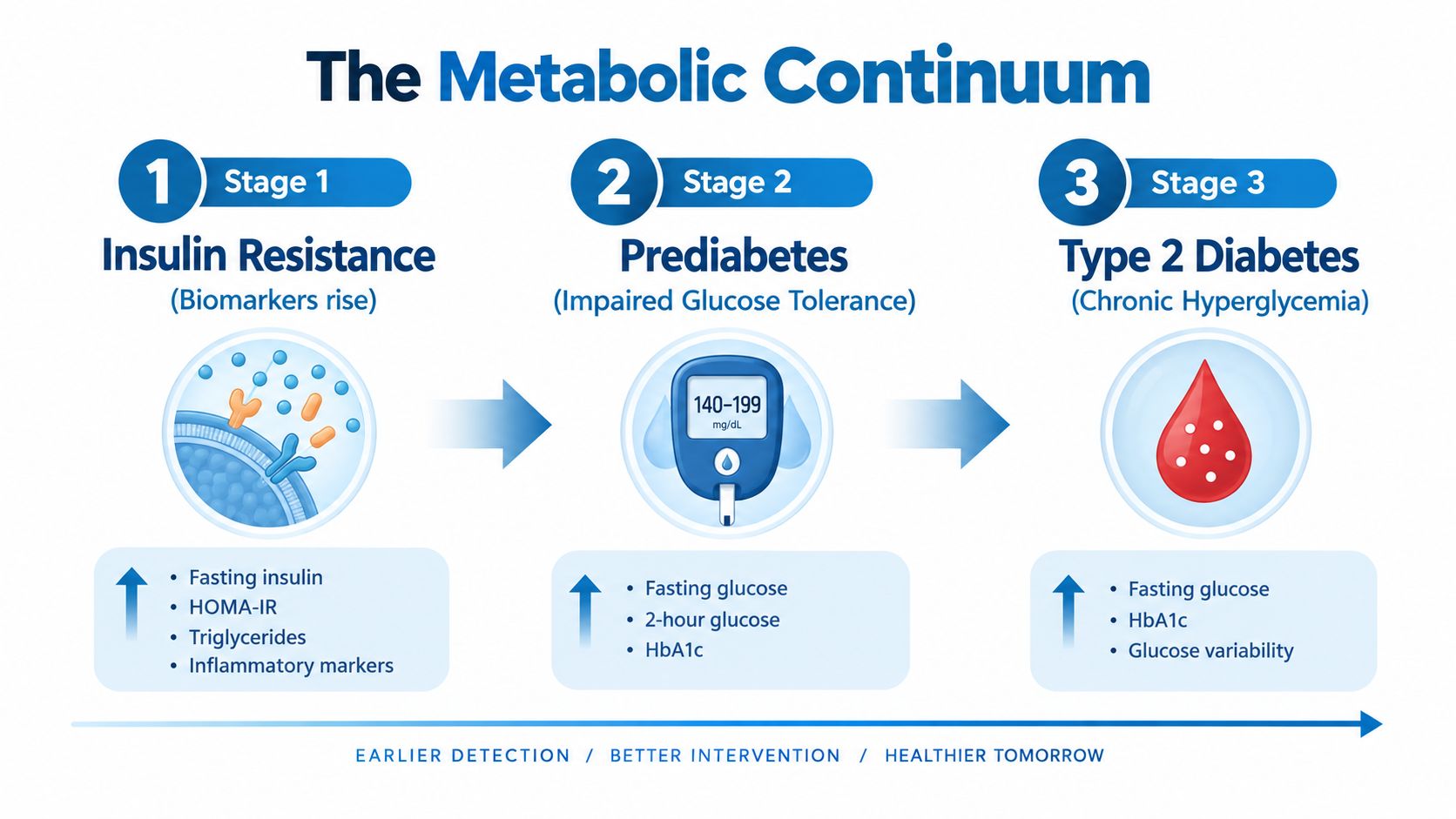
| Glucose regulation | Fasting plasma glucose or HbA1c | Identifies dysglycemia and longer-term glycemic exposure |
| Kidney health | eGFR and urine albumin-to-creatinine ratio | Detects reduced filtration and kidney damage signals |
| Body composition | BMI plus waist circumference or waist-to-height ratio | Assesses overall size and central adiposity |
Why the combination matters
Blood pressure can be high without noticeable symptoms. LDL-C and triglycerides describe different lipid patterns, while lipoprotein(a) adds an inherited-risk signal that guidance recommends measuring at least once in adulthood. Fasting plasma glucose captures current glucose levels, whereas HbA1c reflects longer-term glycemic exposure. They answer related questions, not identical ones.
Kidney testing supplies another piece of the clinical picture. eGFR estimates filtration capacity. The urine albumin-to-creatinine ratio can reveal kidney damage that symptoms do not expose. BMI places body size in context, while waist circumference or waist-to-height ratio describes central fat distribution, which may have metabolic significance.
These measures function like several instruments on a dashboard. One abnormal reading may need confirmation or context. A pattern across markers can help a clinician separate possible causes, identify safety concerns, and decide which risks deserve attention first. The metabolic health testing guide provides further explanation of these markers and their clinical relevance.
No single result establishes a need for hormone therapy or a GLP-1 medication. Instead, the full set supports safer decisions about whether those treatments fit the patient's physiology, risks, symptoms, and goals.
Systematic reassessment is recommended at least every five years , or more often for people at higher risk, because cardiometabolic risk changes with age, weight, family history, and reproductive history. The appropriate interval depends on the clinical situation rather than a calendar alone.
How Results Guide Personalized Treatment
Assessment data becomes clinically useful when it changes a decision. A lab report by itself doesn't prescribe hormone replacement therapy, testosterone therapy, or medical weight loss. A qualified provider interprets the results alongside symptoms, timing, medical history, contraindications, and your goals.
For menopause-related symptoms, the North American Menopause Society states that hormone therapy is the most effective treatment for vasomotor symptoms and genitourinary syndrome of menopause, and that it helps prevent bone loss and fractures. For women younger than 60 years or within 10 years of menopause onset, the benefit-risk ratio is favorable when there are no contraindications. Starting later has a less favorable risk profile because absolute risks of coronary heart disease, stroke, venous thromboembolism, and dementia are higher ( NAMS 2022 position statement).

The treatment decision is individualized
NAMS also recommends periodic reevaluation. Transdermal routes and lower doses may reduce the risk of venous thromboembolism and stroke, and continuation beyond age 65 may be considered for persistent symptoms, quality-of-life concerns, or osteoporosis prevention after counseling ( NAMS position statement summary). The assessment helps determine whether treatment is appropriate, which route may fit, and how monitoring should occur.
Weight management follows the same logic. In the STEP 1 to 3 semaglutide trials, once-weekly semaglutide 2.4 mg produced about 15% to 16% weight loss in adults with overweight or obesity without type 2 diabetes and 9.6% weight loss in adults with type 2 diabetes over 68 weeks ( STEP trial review). Those findings support GLP-1 therapy as a high-evidence option for medically supervised weight management, but they don't mean every patient is a candidate or will have the same response.
A thyroid abnormality, kidney concern, medication interaction, or untreated sleep problem can alter the plan. For established hypothyroidism, levothyroxine remains the primary treatment, and thyroid-stimulating hormone should be checked 4 to 8 weeks after starting or changing the dose, then after 6 months and every 12 months once stable ( American Thyroid Association and AACE guidance).
See how assessment findings can be translated into care through these personalized treatment plans.
The Value of Board-Certified Medical Oversight
A laboratory report may show an abnormal value, yet it cannot determine by itself whether that finding changes treatment. Clinical oversight connects the result with symptoms, medical history, risks, and the patient's goals.
Current cardiovascular-kidney-metabolic guidance supports validated multivariable risk equations to classify risk and set treatment intensity. Detecting disease before symptoms appear can refine decisions beyond routine laboratory results. Opportunistic checks during ordinary clinical visits may also identify people who missed scheduled assessments ( cardiovascular-kidney-metabolic guidance).
Personalized care requires clinical judgment
The same LDL-C or HbA1c value can carry different implications for different patients. Blood pressure, kidney function, fat distribution, family history, and prior metabolic exposure change how a clinician interprets that result. Board-certified oversight keeps decisions centered on the person rather than on a reference range alone.
That context matters especially when assessment results may lead to hormone replacement therapy or GLP-1 treatment. The clinician must consider whether the therapy fits the patient, how other conditions or medications could affect safety, and which follow-up findings would require a change. This turns the assessment into a decision-support system rather than a collection of disconnected tests.
Pause Medical provides hormone replacement therapy, medically supervised weight loss, and disease management services for Mississippi patients. Its care model includes physician evaluation, review of symptoms and history, targeted laboratory work, individualized treatment planning, and follow-up support. Medication review is part of that process, and its medication management service can help organize treatment decisions across multiple conditions.
Patients can also review the broader setting in which these services are delivered through this health care services industry guide. Personal treatment decisions, however, should come from a licensed clinician familiar with the patient's history.
Good oversight includes restraint. Screening can cause overdiagnosis, anxiety, follow-up procedures, and treatment harms when a finding would never have produced symptoms or death. A review of overdiagnosis describes it as an unavoidable consequence of screening and diagnostic testing. The appropriate assessment remains targeted, risk-based, and linked to a specific clinical action.
Preparing for Your Appointment
You can make a health assessment more useful before you arrive. Bring prior medical records and recent laboratory reports when available, because trends often provide more insight than one isolated result.
Prepare a complete list of prescription medications, over-the-counter products, vitamins, supplements, and hormones. Include the dose and how often you take each item. Don't stop a medication just to change a test result unless your clinician specifically tells you to do so.
Write down symptoms in plain language:
- Track patterns: Note whether fatigue, hot flashes, sleep disruption, low libido, or brain fog occurs at particular times.
- Record changes: Include when symptoms began and whether they followed a pregnancy, menopause transition, illness, medication change, or weight change.
- Clarify goals: Decide whether you're primarily seeking symptom relief, metabolic improvement, preventive guidance, or help managing an established condition.
- Bring questions: Ask what each test is intended to clarify, what findings would change treatment, and how follow-up will work.
If cardiovascular concerns are part of your history, a patient-friendly list of key cardiologist visit questions can help you prepare for a focused conversation. Mississippi patients can also ask about scheduling, in-person evaluation, laboratory timing, and follow-up at locations serving communities near Oxford, Meridian, Tupelo, Flowood-Jackson, and Starkville.
Frequently Asked Questions
How is this different from a routine physical?
A routine physical may focus on general screening and an immediate complaint. A full health assessment combines history, symptoms, lifestyle, physical findings, and targeted markers to support decisions about hormone therapy, thyroid care, metabolic risk, and weight management.
Will more testing always produce better care?
No. Broad testing can identify abnormalities that would never cause harm, leading to anxiety and unnecessary follow-up. Current evidence supports targeted, risk-based assessment and shared decision-making, with testing selected because the result could change management. Global health-data systems also remain fragmented, and gaps in nationally representative data make it difficult to apply one protocol identically to every population ( global health data recovery analysis).
How often should thyroid levels be checked after starting levothyroxine?
The cited thyroid guidance recommends checking TSH 4 to 8 weeks after starting levothyroxine or changing the dose, then again after 6 months and every 12 months once the dose is stable ( ATA and AACE hypothyroidism guidance).
What weight loss can GLP-1 therapy produce?
In STEP 1 to 3 trials, semaglutide 2.4 mg produced about 15% to 16% weight loss in adults without type 2 diabetes and 9.6% in adults with type 2 diabetes over 68 weeks ( STEP trial review). Individual results, eligibility, side effects, and long-term planning require medical supervision.
This article is educational and doesn't replace diagnosis or treatment from a licensed clinician. Hormone therapy, testosterone therapy, thyroid medication, and GLP-1 medications require individualized evaluation, discussion of contraindications, and ongoing monitoring.
Pause Medical offers thorough health assessments, hormone replacement therapy, medically supervised weight loss, thyroid and metabolic disease management, and medication review for patients across Mississippi. Visit Pause Medical to schedule a consultation and discuss a personalized plan with a provider.