The Science of Low Testosterone Weight Gain and How to Reverse It
If you’re eating right and hitting the gym but still see the number on the scale going up, you're not alone. It's an incredibly frustrating experience, and often, a hormonal imbalance is the hidden culprit. The link between low testosterone and weight gain is a real, medically recognized issue, especially when it comes to that stubborn fat accumulating around your midsection. This isn't a lack of willpower; it’s a physiological problem that needs a specific, medically-guided solution.
At Pause Medical, our board-certified providers understand the intricate connection between hormones and metabolism. We specialize in creating personalized treatment plans that address the root cause of your symptoms, helping you break the cycle and reclaim your vitality.
The Unseen Link Between Low Testosterone and Weight Gain
Have you ever felt like your body is actively working against you? You’re doing all the right things, but the pounds keep creeping on, especially around your stomach. It’s a discouraging cycle, and the real reason is often missed. Weight gain from low testosterone isn't just an inevitable part of getting older—it's a distinct metabolic shift that can make losing weight feel like an impossible battle.
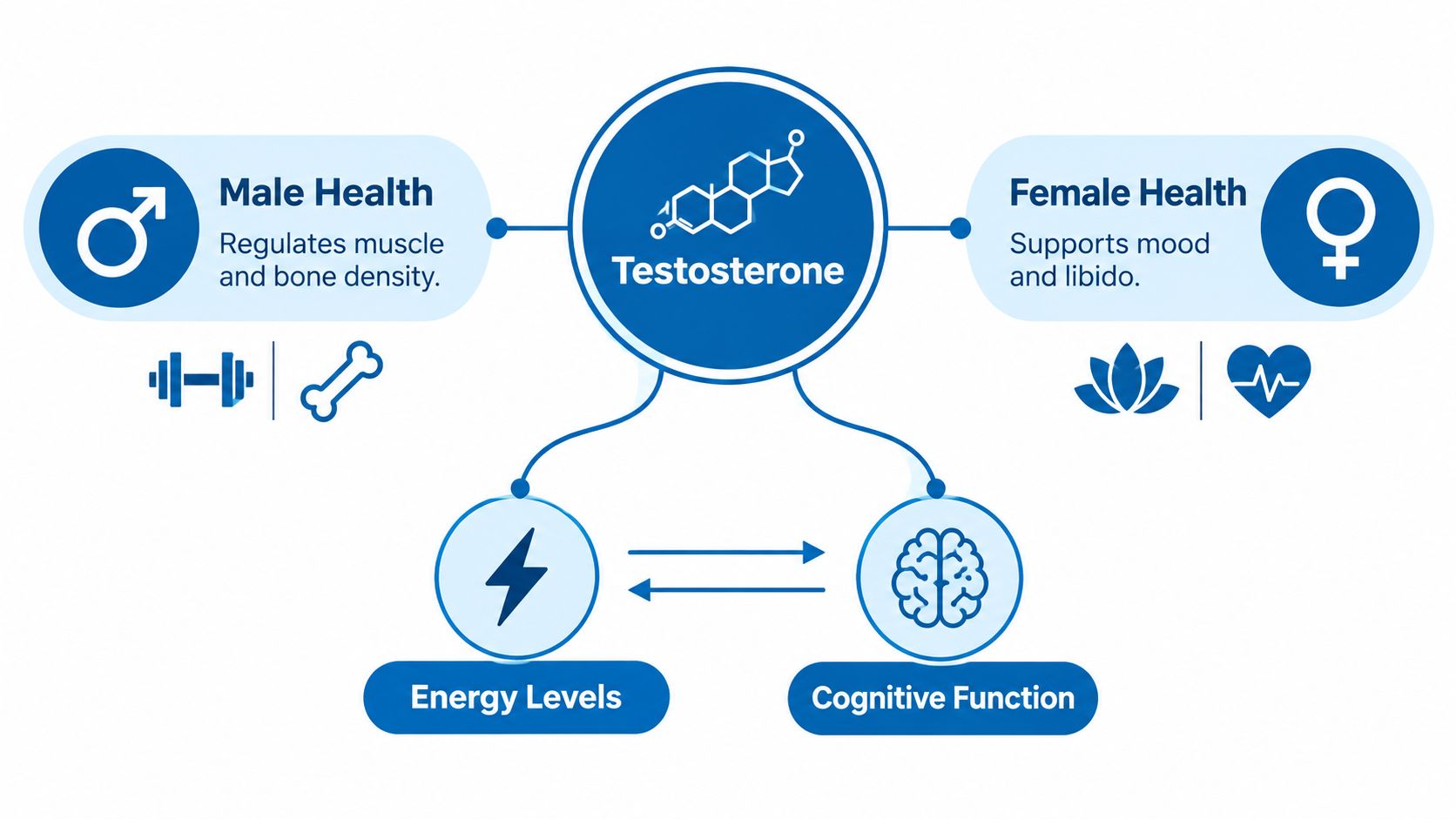
Think of testosterone as your body's metabolic engine. It's what powers muscle growth and maintenance while telling your body to burn fat for fuel. When that engine is running strong, your whole system operates efficiently. You build and keep lean muscle, your metabolism hums along, and fat is burned off as energy.
But when your testosterone levels drop, it's like the engine starts to sputter. The muscle-building process slows to a crawl, leading to muscle loss (a condition called sarcopenia). Since muscle tissue burns more calories than fat even when you're resting, losing it slows your metabolism down significantly. At the same time, your body starts storing more energy as fat, particularly the unhealthy visceral fat that pads your organs. This kicks off a challenging cycle that's tough to break with diet and exercise alone.
The Vicious Cycle of Fat Gain and Low T
The connection between body fat and testosterone is a two-way street that creates a self-perpetuating loop. Excess body fat, especially around the abdomen, is packed with an enzyme called aromatase. This enzyme's main job is to convert your precious testosterone into estrogen, creating a no-win situation:
- Low testosterone causes you to lose muscle and your metabolism to slow down.
- A slower metabolism makes it easier to store fat.
- More body fat means more aromatase enzyme is present.
- More aromatase converts even more of your remaining testosterone into estrogen.
- The resulting lower testosterone and higher estrogen levels make it even harder to lose fat and build muscle.
This biochemical feedback loop is precisely why weight gain tied to low T feels so relentless. Each problem fuels the other, which is why breaking the cycle requires correcting the hormone imbalance at its source.
In fact, obesity is considered one of the single biggest predictors of low testosterone in men, with studies showing a prevalence as high as 20-50% in those who are obese. This is largely driven by that aromatase activity in fat tissue, which keeps the cycle of weight gain and fatigue going. Evidence-based medical research confirms that medically supervised, long-term testosterone therapy can result in significant and sustained weight loss, a reduction in waist size, and a lower BMI.
You can learn more about how different aspects of your health are connected by visiting other articles on thePause Medical blog.
To help you see these connections more clearly, here is a quick breakdown of how low T symptoms translate into metabolic issues.
Connecting Low T Symptoms to Metabolic Changes
This table shows how the hormonal symptoms you might feel from low testosterone are directly tied to the physical and metabolic changes you experience.
| Hormonal Symptom (Low T) | Related Metabolic Effect | Common Physical Experience |
|---|---|---|
| Fatigue & Low Energy | Reduced motivation for physical activity and slower calorie burn at rest. | Feeling too tired to exercise, leading to weight gain. |
| Loss of Muscle Mass | Decreased resting metabolic rate (you burn fewer calories). | Noticeable decline in strength; clothes feel tighter even if weight is stable. |
| Increased Body Fat | Higher activity of the aromatase enzyme, which converts T to estrogen. | Stubborn belly fat that resists diet and exercise. |
| Mood Swings/Irritability | Can lead to stress-eating or a lack of focus on healthy habits. | Reaching for comfort foods; difficulty sticking to a nutrition plan. |
Understanding this interplay is the first step toward finding a real solution. When you realize that your physical struggles are rooted in a hormonal imbalance, it becomes clear that addressing the hormones is key to getting back in control of your health and well-being.
How Low Testosterone Throws Your Metabolism Off Track
It's easy to think of testosterone as just a "male" hormone, but it's really a master regulator of your body's entire metabolic engine. When your levels are optimal, testosterone is constantly sending signals to build lean muscle and burn fat for energy. When those levels drop, the whole system gets scrambled, and your metabolism gets sabotaged from several different angles at once.
The first and most direct hit is to your lean muscle mass. Testosterone is an anabolic hormone, which is a scientific way of saying it’s a muscle-builder. It tells your body to turn protein into strong, metabolically active muscle tissue. Think of muscle as your body’s furnace—it’s always burning calories, even when you're just sitting on the couch.
When testosterone declines, that muscle-building signal gets weaker and weaker. Your body can no longer hold onto muscle as easily, and you start to lose it over time. This slow-motion muscle loss is a condition called sarcopenia.
With less muscle, your resting metabolism (your basal metabolic rate or BMR) slows down. Suddenly, your body doesn't need as many calories to get through the day, which is why you might start gaining weight even if you haven't changed a thing about your diet or exercise routine.
The Frustrating Switch from Building Muscle to Storing Fat
As your body loses its knack for maintaining muscle, it gets a completely different set of instructions: start storing fat. Low testosterone levels actively encourage your body to pack on adipose tissue, especially the dangerous kind known as visceral fat. This isn't the fat you can pinch; it's the stuff that wraps around your internal organs and is a major risk factor for serious health problems like heart disease and diabetes.
This creates a brutal one-two punch where your body composition shifts in the exact opposite direction you want it to. You're losing the very tissue that incinerates calories (muscle) while gaining the tissue that hoards them (fat). It’s a frustrating cycle and explains why many people with low T feel like they’re working harder at the gym but getting weaker and seeing fewer results.
This whole process is a domino effect, where one problem directly leads to the next.
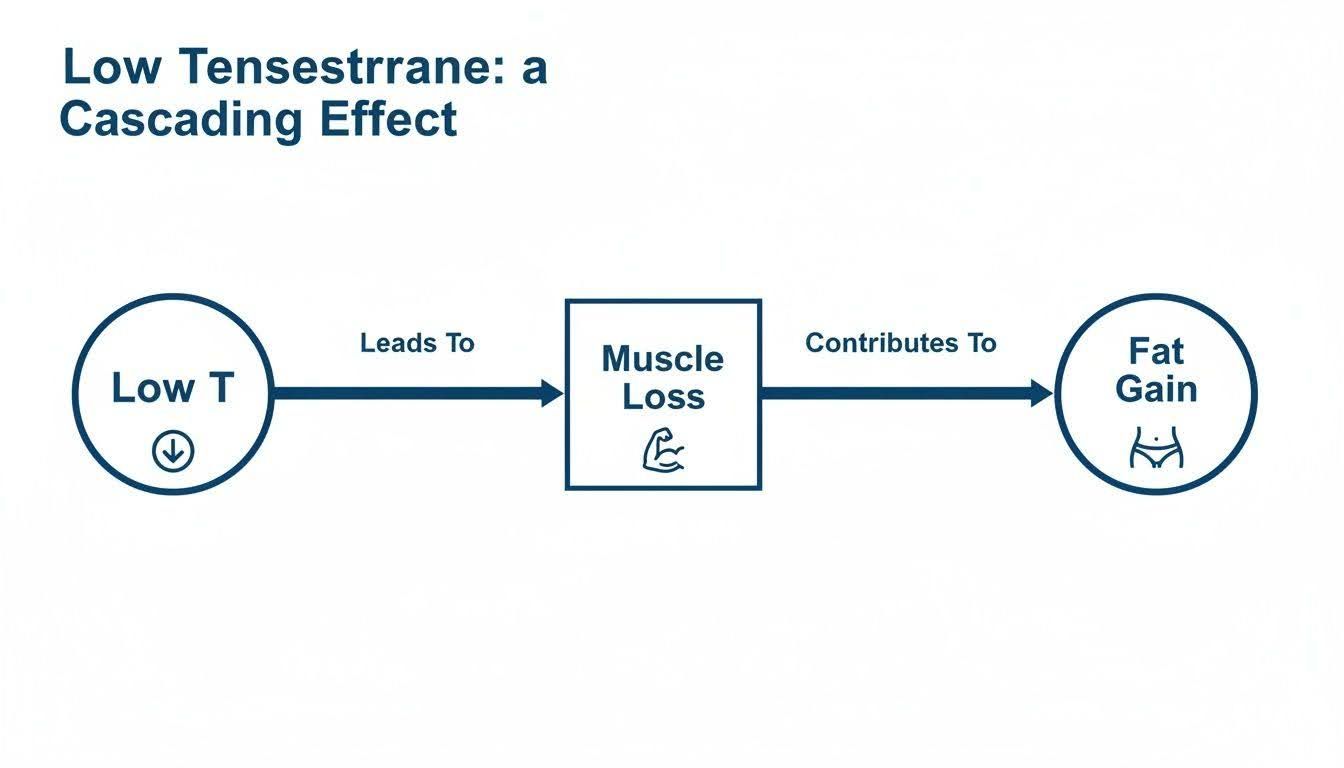
As you can see, the weight gain isn't a matter of willpower. It's a biological chain reaction kicked off by a hormonal imbalance that requires a medical intervention to correct.
The Insulin and Sugar Rollercoaster
Beyond its role in muscle and fat, testosterone is also a key player in how your body handles blood sugar. It helps keep your cells sensitive to insulin, the hormone that acts like a key, unlocking your cells to let glucose (sugar) in for energy.
When testosterone is low, your cells can become resistant to insulin’s message. They stop listening. This condition, insulin resistance, forces your pancreas into overdrive, pumping out more and more insulin just to get the job done. Unfortunately, high insulin levels are a loud and clear signal to your body to store fat.
The result is a destructive cycle. Your cells are starved for energy, leaving you feeling exhausted and mentally foggy. Your brain then screams for a quick fix, triggering intense cravings for sugary, high-carb foods. Indulging in those cravings spikes your blood sugar and insulin even more, which just fuels more fat storage and starts the whole miserable process over again.
This hormonal chaos is precisely why "just eat less and move more" is often a recipe for failure. Your body's chemistry is working against you, hard-wired to crave the wrong things and store them as fat.
That's where an integrative, medically-guided strategy comes in. At Pause Medical, we designmedically supervised weight loss programs that tackle the root hormonal problem alongside lifestyle changes. By restoring your hormonal balance, we can finally break the cycle and make your efforts at the gym and in the kitchen effective again.
Recognizing the Warning Signs Beyond the Scale
When you notice the number on the scale creeping up, it’s easy to blame your diet or a lack of exercise. But if you’re dealing with low testosterone weight gain, the problem runs much deeper, and the weight is often just one piece of a much larger puzzle. It's rarely a solo act; instead, it's usually part of a group of symptoms that can drain your energy, cloud your thinking, and impact your overall mood.
The first step is realizing you're not just lazy or unmotivated. You're likely dealing with a real medical issue that requires compassionate care.
Most people first notice the
fatigue. This isn’t your typical end-of-the-week tiredness. It’s a profound, bone-deep exhaustion that a good night's sleep just doesn't seem to touch. This constant state of depletion makes everything feel like a monumental effort, especially finding the energy to hit the gym.

This physical exhaustion often goes hand-in-hand with a shift in your mood. You might feel more irritable than usual, snap at small things, or just feel a persistent sense of being down that you can’t explain. These feelings aren't just "in your head"—they're a direct physiological result of your hormones being out of balance.
The Full Spectrum of Symptoms
The key is to connect the dots between these seemingly unrelated issues. Testosterone is a powerhouse hormone, and when its levels are low, the effects ripple through your entire body. This is exactly why simply trying another diet is almost guaranteed to fail if the underlying hormonal problem isn't fixed.
Take a step back and see if a pattern emerges from these common signs:
- Diminished Libido and Sexual Function: A noticeable drop in sex drive is one of the most classic red flags for low testosterone.
- Loss of Muscle and Strength: You might feel weaker during workouts or see less muscle definition, even if you’re putting in the work.
- "Brain Fog" and Poor Concentration: Many men describe a feeling of mental slowness, trouble focusing, or frustrating memory lapses.
- Trouble Sleeping: Whether it's insomnia or just poor-quality sleep, it becomes a major problem that only makes the daytime fatigue worse.
When you see these signs together—fatigue, mood swings, weight gain, and low libido—it paints a clear picture. This isn't just "getting older." It's your body sending strong signals that a critical system is out of balance.
Why Screening for Low T Is Crucial
The link between weight and testosterone is so well-established that medical experts now recommend screening for low T in certain men. A landmark study brought this into sharp focus, revealing that 40% of obese men also have low testosterone.
The data is clear: as a man’s body mass index (BMI) goes up, his testosterone levels tend to go down, creating that vicious cycle. For obese men who also have diabetes, that number jumps to an alarming 50%. As the research highlights, this hormonal imbalance is what fuels the fatigue, muscle loss, and additional weight gain that leaves men feeling completely drained and defeated.
Ignoring these warning signs means you’re fighting an uphill battle with your own biology. Here at Pause Medical, we look at the whole person. Our preventative wellness solutions are built to find and fix the root causes of your symptoms, so you can finally break the cycle and start feeling like yourself again.
Getting a Definitive Diagnosis for Your Symptoms
Taking that first step toward getting your energy back starts with an evidence-based diagnosis. Guesswork and online symptom checkers aren’t going to provide the clarity you need. To truly understand what's happening, you need a professional evaluation from a medical expert. The process of diagnosing low testosterone weight gain is straightforward, empowering, and the essential first step toward feeling better.
At Pause Medical, we see the whole person, not just a single symptom. Our board-certified providers begin with a comprehensive evaluation, which is a detailed conversation about your complete health picture. This is our chance to listen empathetically and connect the dots between the weight gain, the fatigue, mood shifts, and any other warning signs you've been noticing.
What Your Bloodwork Reveals About Your Health
While listening to your experience is critical, the core of a definitive diagnosis lies in specific blood tests. This isn't about checking one number in isolation. It’s about analyzing a full panel of key markers that all work together to regulate your metabolism, energy levels, and body composition.
Your comprehensive hormone panel will typically include:
- Total Testosterone: This gives us the big picture—the overall amount of testosterone circulating in your blood. It's a key baseline for your hormonal health.
- Free Testosterone: This is the most crucial measure. It’s the active, unbound testosterone your body can actually use to build muscle, burn fat, and regulate energy. Low levels here often explain why symptoms feel so intense.
- Sex Hormone-Binding Globulin (SHBG): This is a protein that latches onto testosterone, essentially taking it out of play. High SHBG can mean you have less free testosterone available, even if your total T looks normal.
- Estradiol: As we discussed earlier, fat tissue can convert testosterone into this form of estrogen. If your estradiol is elevated, it can fuel more fat storage and throw your hormones further out of balance.
An Evidence-Based Foundation for Your Treatment
By combining these lab results with your personal health history and symptoms, our medical team can confirm if a hormonal imbalance is truly sabotaging your weight loss efforts. This data-driven approach removes all uncertainty. It ensures your treatment plan is built on a solid foundation of medical science, not just a hunch.
Understanding your specific lab results is incredibly empowering. It validates that your struggle isn't a lack of effort but a physiological issue that can be corrected with the right medical support and a personalized plan.
This diagnostic process is the essential first step. It allows us to stop chasing symptoms and start addressing the root cause of your weight gain and fatigue. Once we have this clear picture, we can map out a personalized and effective path forward.
Your Path Forward: Comprehensive Treatment Options
Getting a clear diagnosis is a huge relief. It’s the moment we can stop guessing and start creating a concrete plan of action. Once we’ve confirmed a hormonal imbalance is behind your symptoms, we can build a personalized, integrative strategy that tackles both the
low testosterone and weight gain head-on. This isn't about a quick fix; it's about getting your body's metabolic engine running smoothly again for sustainable, long-term health.

Here at Pause Medical, we see hormone optimization and weight management as two sides of the same coin. Restoring your testosterone levels makes it easier to lose weight, and shedding excess fat, in turn, helps your hormones function better. This powerful synergy is what finally breaks the cycle.
Restoring Your Foundation with Testosterone Replacement Therapy
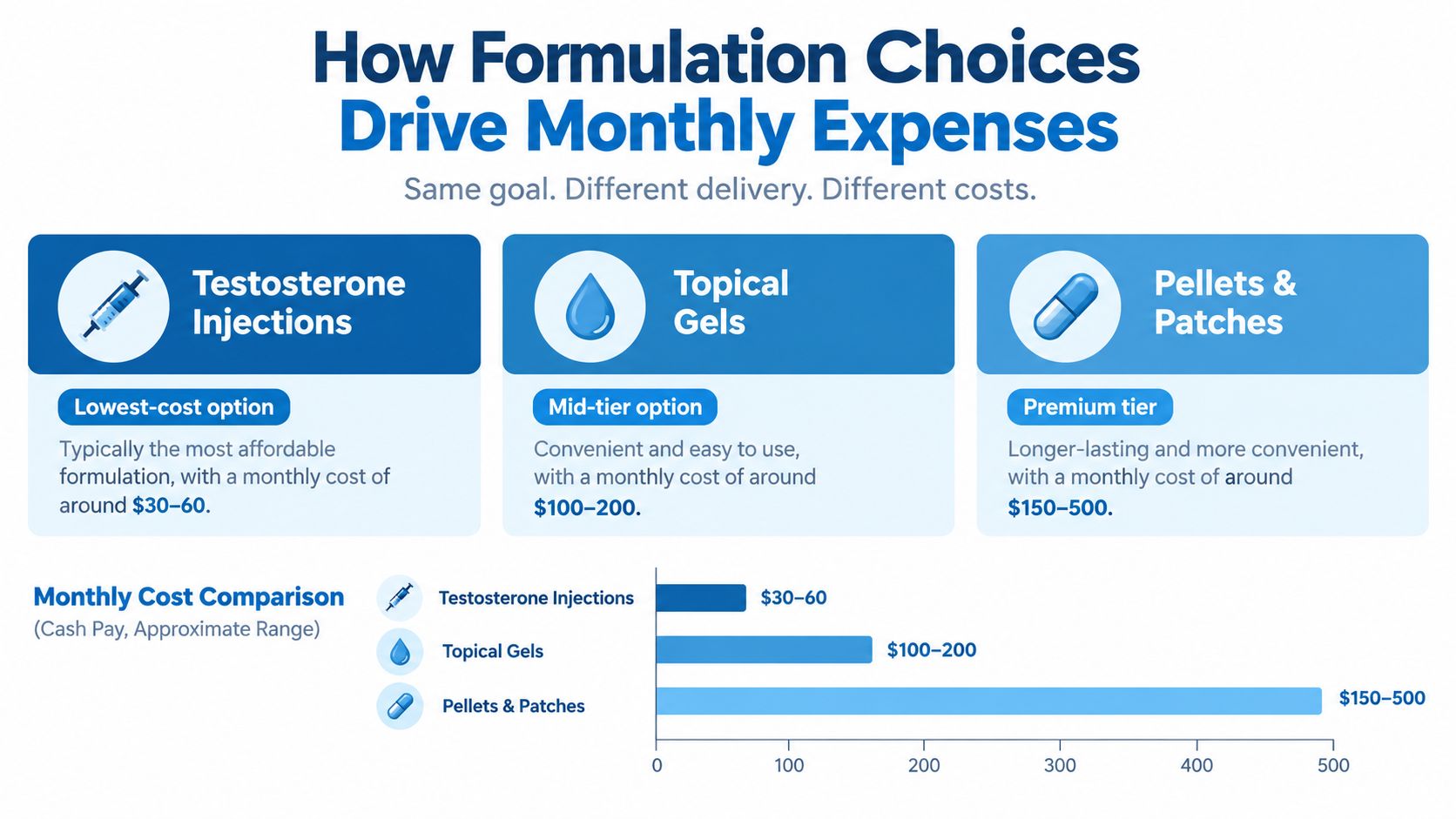
For most men dealing with symptomatic low T, Testosterone Replacement Therapy (TRT) is the cornerstone of treatment. The goal is straightforward but incredibly impactful: bring your hormone levels back into a healthy, optimal range. When managed by an experienced, board-certified medical provider, the results can be life-changing.
Think of TRT as hitting the reset button on your metabolism. As your testosterone levels are restored, you'll start to notice significant changes:
- Increased Muscle Mass: Your body gets the signal to start building and holding onto lean muscle again.
- Boosted Metabolism: More muscle means your body burns more calories, even at rest.
- Improved Energy and Mood: Patients commonly report a major lift in energy, motivation, and overall well-being, which makes it much easier to stay active.
This is a medical treatment that we customize completely to you. Our team will monitor your progress closely through regular lab work to ensure we get your levels just right, safely and effectively. You can discover more about our approach to hormone replacement therapy here.
Amplifying Results with Medically Supervised Weight Loss
While TRT rebuilds your hormonal foundation, a targeted weight loss program provides the tools to accelerate your progress. We often integrate medically supervised strategies that work hand-in-hand with your hormone therapy, including advanced options like GLP-1 medications.
GLP-1s have become a game-changer in medical weight management. They work by:
- Managing Appetite: They send signals to the brain that you're full, which helps dial down hunger and curb cravings.
- Improving Insulin Sensitivity: They help your body use insulin more efficiently, which stops the cycle of blood sugar spikes and crashes that drive fat storage.
Combining TRT with a medical weight loss program creates a powerful one-two punch. TRT gets your body back to building muscle and burning fat, while the weight loss program provides the structure and support you need to make lasting changes.
This dual approach isn't just theory—it's backed by solid evidence. Studies have shown that even modest weight loss can give your natural testosterone a boost. A plan that combines both hormone therapy and structured weight loss is simply the most effective way to break the cycle of low T and obesity for good.
Our board-certified providers at Pause Medical create a plan designed for you and only you. We make sure every part of your treatment is aligned with your body and your goals. We don't just treat symptoms—we get to the root cause to give you the best possible shot at long-term success.
Ready to Take Back Control? Let's Work Together.
If you're battling unexplained weight gain and a fatigue that just won't quit, please know this: it’s not a failure of willpower. It's biology. When your hormones are out of balance, they create real, physical roadblocks to feeling your best. But those roadblocks aren't permanent. With the right medical guidance, you can overcome them safely and effectively by getting to the root of the problem.
At Pause Medical, we look at the whole picture. You're not just a list of symptoms to us, and our entire process is built on providing a clear, supportive, and evidence-based path back to health—one that puts you and your needs first.
A Plan Built Just for You
Cookie-cutter solutions don't work for complex health issues. That’s why we focus on creating a personalized treatment plan that is built around your specific biology, your symptoms, and your personal health goals.
Here’s what you can expect when you team up with Pause Medical:
- Expert Medical Guidance: Your care is always overseen by board-certified professionals who specialize in hormone health, metabolic function, and integrative medicine. This isn't guesswork; it's precise, expert-led medicine.
- A Comprehensive, Integrative Approach: We don't just treat one issue in isolation. We often combine powerful solutions like Testosterone Replacement Therapy with proven strategies like our medical weight loss programs. This integrative approach helps break the frustrating cycle of low testosterone weight gain by fixing the hormonal imbalance and giving you the tools to manage your weight.
- Care That's Close to Home: With clinics in Oxford, Meridian, Tupelo, Flowood-Jackson, and Starkville, Mississippi, expert care is never far away. We’ve made everything from scheduling to communication as simple and direct as possible.
Getting your health back on track is absolutely possible. It all starts with a team that actually listens, understands the science behind what you're going through, and gives you a clear strategy to feel like yourself again.
You don't have to fight this frustrating battle on your own anymore. By addressing the core hormonal problem, you can finally start seeing real, lasting results.
If you’re ready to stop guessing and start moving toward a future with more energy and vitality, we're here to help. You can learn more about our patient-focused philosophy and why to choose us.
Schedule a consultation today with our team. Let's find out how a personalized, science-backed plan can help you get there.
We Get It, You Have Questions
Thinking about hormones and weight can feel overwhelming, and it’s natural to have questions. We’ve been helping men navigate this for years, so we’ve put together answers to some of the most common things we hear. Our goal is to give you clear, straightforward information so you can feel confident taking the next step.
Can I Just Fix This with Diet and Exercise?
That’s a great question, and it’s one we hear all the time. While diet and exercise are cornerstones of good health, they often aren't enough when a real hormonal imbalance is at play. When your testosterone is low, it creates real physical roadblocks—your metabolism slows down, fatigue sets in, and building muscle becomes a struggle.
It's like trying to row a boat with a hole in it. You can paddle as hard as you want (that's your diet and exercise), but you’ll feel like you’re not getting anywhere. Medically supervised Testosterone Replacement Therapy (TRT) is what patches the hole. It fixes the underlying hormonal problem so that your hard work with nutrition and fitness can finally pay off.
Is Testosterone Replacement Therapy Safe?
Yes, when it's managed by a qualified, board-certified medical professional who specializes in hormone therapy, TRT is a very safe and effective treatment. At Pause Medical, your well-being is our number one priority. We don't guess. We start with comprehensive lab work and follow up with regular monitoring to keep your hormone levels in the optimal, healthy range.
We adhere to proven, evidence-based protocols that are designed to deliver results while minimizing any potential risks. This isn't a one-size-fits-all approach; it’s responsible, personalized medical care that puts your safety first.
A personalized, medically supervised approach is key. It ensures your treatment is tailored specifically to your body's needs, avoiding the one-size-fits-all pitfalls and prioritizing your long-term wellness.
How Quickly Will I See Results?
Everyone's body responds differently, but many of our patients start feeling better sooner than they expect. It’s common to notice a boost in energy, a clearer mind, and an improved mood within the first few weeks of starting therapy. This initial lift often provides the momentum needed to commit to lasting lifestyle changes.
The more visible changes—like building more muscle and seeing that stubborn body fat start to shrink—tend to show up over a few months of consistent treatment and adherence to your personalized plan. Our team will be right there with you, tracking your progress and helping you set realistic goals for what’s ahead.
Do I Need a Referral to Get Started?
No, you don’t need a referral. We want to make it as easy as possible for you to get the help you need without having to jump through unnecessary hoops. Our direct-to-patient model means you can come straight to us.
You can book your consultation directly with our team online or over the phone. We have convenient locations across Mississippi, including Oxford, Meridian, Tupelo, Flowood-Jackson, and Starkville.
Medical Disclaimer: The information provided in this article is for educational purposes only and is not intended as medical advice, diagnosis, or treatment. Always seek the advice of your physician or another qualified health provider with any questions you may have regarding a medical condition. Never disregard professional medical advice or delay in seeking it because of something you have read here.
At Pause Medical, we want you to know that getting your energy back and reaching a healthy weight is truly possible. You don't have to figure this out on your own. Our team of board-certified providers has the expertise to get to the bottom of what's going on and create a personalized plan to help you build a healthier future.
If you’re ready to stop feeling stuck, we’re ready to help.
Schedule a consultation today and let's get started.