Find a Specialist for Men's Health in Mississippi
You wake up tired even after a full night in bed. Your motivation is off. Work feels harder to focus on. The weight around your midsection seems more stubborn than it used to be. Sex drive may be down, or your confidence may have taken a hit because your body doesn't respond the way it once did.
A lot of men shrug this off for months, sometimes years. They tell themselves it's stress, getting older, being busy, or just part of life. Friends may say the same thing. But feeling off all the time isn't something you should have to accept.
A modern specialist for men's health looks beyond one symptom and asks a better question: what's driving the change?
Feeling Off Is Not a Normal Part of Aging
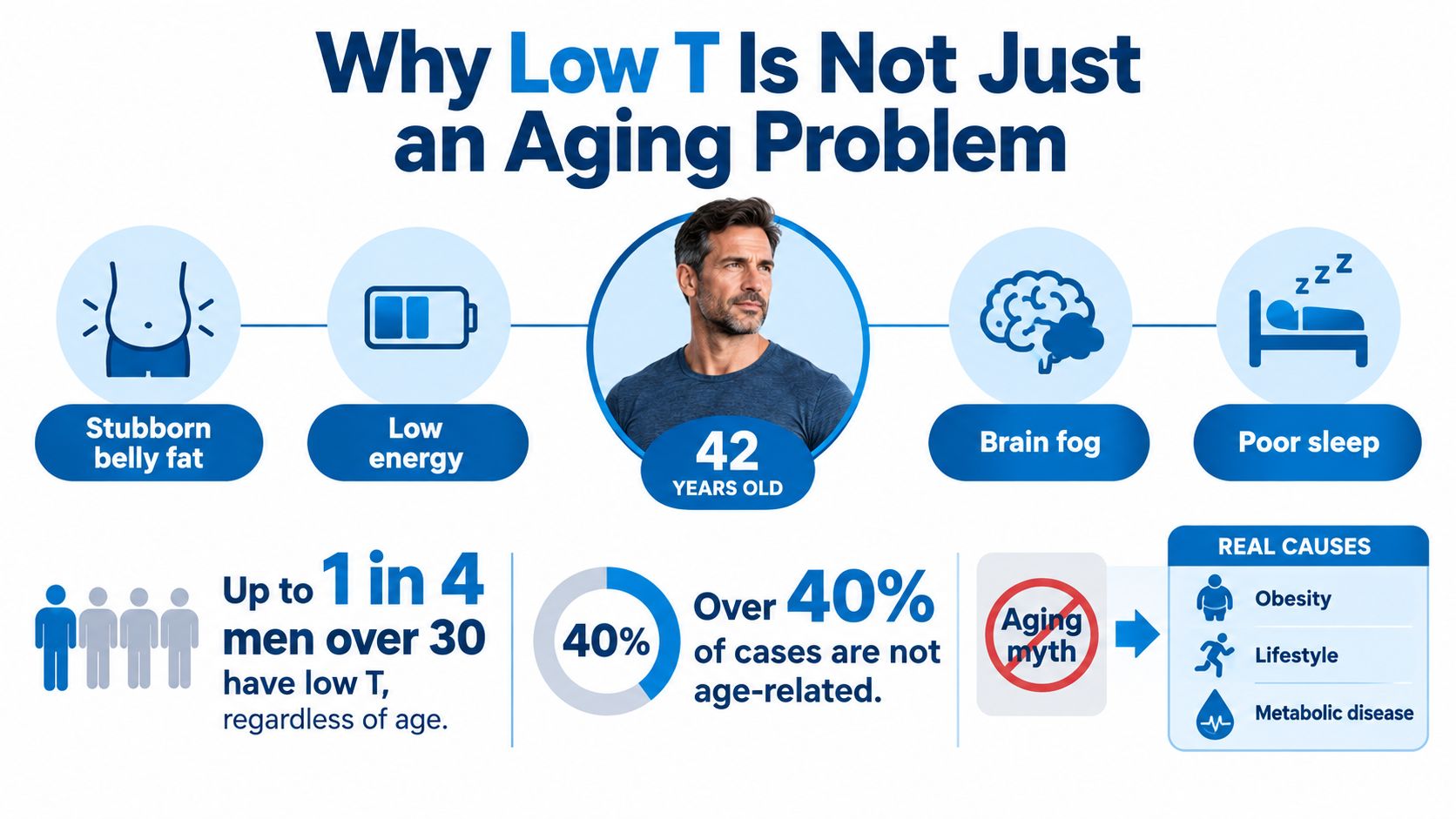
A common story goes like this. A man in his 30s, 40s, or 50s notices that his usual rhythm is gone. He's dragging in the afternoon, less patient at home, less sharp at work, and less interested in exercise because exercise no longer seems to help the way it used to. He may also notice reduced libido, slower recovery, poor sleep, or a sense that he just doesn't feel like himself.
That experience is real. It deserves attention.
The problem is that vague symptoms often get minimized. Men are especially likely to wait, self-manage, or power through. Some start over-the-counter supplements. Others double their caffeine, cut calories aggressively, or push harder in the gym. Many still don't feel better.
You don't need to show up with a diagnosis. You only need to notice that something has changed and it isn't improving.
A careful medical evaluation can help connect the dots between symptoms that seem unrelated at first. Fatigue, mood changes, low drive, increased abdominal weight, and poor sleep can overlap in ways that point to hormones, metabolic health, stress load, or another treatable issue. If you've been wondering whether your symptoms fit a pattern, this guide to signs of hormonal imbalance is a helpful place to start.
Many men feel relieved when they learn there may be an explanation beyond “you're just aging.” Aging changes the body. That's true. But unexplained decline, especially when it affects your daily function or quality of life, deserves a closer look.
What Is a Specialist for Men's Health
A specialist for men's health is a clinician who focuses on the issues men commonly face as hormones, metabolism, sexual function, sleep, mood, and preventive care intersect. That last part matters. These systems don't operate in isolation.
Years ago, many men's health clinics were built around testosterone alone. A 2019 NIH review of men's health clinics noted that clinics were originally conceived as testosterone replacement centers, then broadened by the early 2010s to include urologic issues, erectile dysfunction, sleep medicine, mental health, addiction care, cardiology, dermatology, and hair loss. The same review reported that testosterone use in the United States tripled from 2001 to 2011 as hundreds of testosterone clinics rapidly emerged. That history explains why some men still think this field is only about “Low T,” even though modern care is much broader.

How this differs from a general doctor
Your primary care clinician is still important. They handle broad screening, common illnesses, and referrals. But a men's health specialist often spends more time on patterns that men frequently describe as “I'm not sick, but I'm not well.”
That includes concerns like:
- Hormone-related symptoms such as fatigue, reduced libido, and changes in body composition
- Metabolic issues like stubborn weight gain, insulin resistance, or signs of metabolic syndrome
- Sexual health concerns including erectile dysfunction or fertility questions
- Sleep and mood changes that may worsen energy, hormone balance, and recovery
- Preventive planning that helps catch problems earlier rather than waiting for a crisis
What good specialty care looks like now
The best specialists don't jump straight to one prescription based on one symptom. They look at the whole picture. They ask when the problem started, what else changed around the same time, how you sleep, how your weight has shifted, what your stress level looks like, and whether your symptoms suggest a hormonal, metabolic, urologic, or psychological driver.
If you're trying to understand where hormone treatment fits into that bigger picture, this overview of hormone replacement therapy can help.
Clinical takeaway: A modern men's health visit should feel like a full assessment, not a sales pitch for testosterone.
Signs It Is Time to See a Men's Health Specialist
Some men book an appointment because of one obvious concern. Others wait because each symptom seems too small on its own. The pattern is often clearer when you put the symptoms together.

One reason this matters is that many men delay care. The CDC reports that 14.2% of U.S. men age 18 and older were in fair or poor health in 2024 , and men's health summaries cited alongside that discussion note that 40% wait until something feels seriously wrong before seeing a doctor. You can review the CDC page on men's health fast facts. A specialist visit can shift the focus from reacting late to evaluating problems sooner.
Symptoms that deserve a closer look
-
Persistent fatigue
You're sleeping, but you don't feel restored. Coffee helps briefly, not consistently. Fatigue can show up with hormone changes, poor sleep quality, metabolic strain, or mood issues. -
Weight gain that doesn't match your effort
Many men notice abdominal weight gain first. If you're eating reasonably well and staying active but your body composition keeps changing, that can be a clue worth evaluating. -
Reduced libido or changes in sexual performance
This is one of the most common reasons men seek care. It can be hormonal, vascular, stress-related, medication-related, or tied to sleep and metabolic health. -
Brain fog and low motivation
Men often describe this as feeling flat, dull, or less driven. That doesn't automatically mean low testosterone. It does mean the symptom pattern deserves a proper workup.
Symptoms men often overlook
This short video gives a helpful overview of issues many men dismiss for too long:
Other reasons to get checked include:
- Mood changes such as irritability, low mood, or feeling less resilient under normal stress
- Sleep problems including trouble falling asleep, staying asleep, or waking unrested
- Urinary symptoms like urgency, frequency, weak stream, or nighttime waking to urinate
- A general sense that your recovery is worse after workouts, long days, or poor sleep
When symptoms start affecting your confidence, relationships, work, or consistency in healthy habits, it's time to stop guessing.
If you're not sure whether your pattern fits a hormone-related issue, these signs you need hormone replacement therapy can help frame the conversation before you schedule care.
Your Path to Revitalization What to Expect
A good men's health evaluation should feel organized, thoughtful, and personal. The goal isn't to label you quickly. The goal is to understand why you feel the way you do, then build a plan that fits your biology and your life.

The first visit
Expect a detailed conversation, not just a symptom checklist. A strong clinician will ask about:
- Your timeline for fatigue, libido changes, weight gain, sleep disruption, or mood shifts
- Your daily routine including exercise, nutrition, alcohol use, and work stress
- Current medications and supplements because some can affect energy, weight, and sexual function
- Your goals since treatment isn't only about “normal labs.” It's about how you want to function
This is also where expectations get clearer. Some men come in convinced they need testosterone. Others are worried they'll be dismissed. Neither assumption helps. Good care starts with an open evaluation.
Testing that looks for root causes
Lab work and other testing help sort out what's driving the symptoms. Depending on the situation, that may include hormone markers, metabolic markers, and other relevant screening. The point is to avoid treating the loudest symptom while missing the actual cause.
UT Southwestern emphasizes that metabolic health and sleep quality are important for erectile function, testosterone balance, fertility, mood, metabolism, and vascular health. That's why a thoughtful plan often includes sleep habits, exercise, nutrition, weight management, and cardiovascular risk review, not just medication. The same guidance also warns against unregulated over-the-counter testosterone boosters, which may be ineffective or unsafe.
Practical rule: If a clinic recommends treatment before understanding your sleep, weight pattern, and metabolic health, the evaluation may be too narrow.
Treatment is usually a combination, not one tool
For some men, hormone replacement therapy is appropriate. For others, the first priority is improving sleep, reducing excess weight, treating a thyroid issue, addressing stress, or evaluating sexual and urinary symptoms more fully. Many men need more than one lever pulled at the same time.
A personalized plan may include:
| Focus area | What it may involve |
|---|---|
| Hormone support | Targeted treatment when testing and symptoms support it |
| Weight management | Nutrition counseling, lifestyle changes, and medically supervised options |
| Sleep restoration | Identifying habits or disorders that undermine recovery |
| Sexual health care | Evaluation of libido, erectile concerns, and contributing medical factors |
| Ongoing follow-up | Repeat assessment and plan adjustments based on response |
Some men also benefit from medical weight loss strategies that support hormone and metabolic health together. If testosterone therapy is part of your care plan, it helps to know what follow-up, monitoring, and day-to-day treatment usually involve. This guide on what to expect from testosterone replacement therapy offers a useful patient overview.
How to Choose the Right Men's Health Provider
Not every clinic offering men's health services practices the same way. Some build care around thorough assessment. Others build it around speed, volume, and a preset treatment path. That difference matters.
A well-rounded provider should address more than hormones and erections. One clinic's public men's health page includes prostate screening, testosterone replacement therapy, erectile dysfunction treatment, and screening for depression and anxiety, which reflects a broader model of care and highlights how often mental health gets treated as secondary in men's health conversations. You can see that approach on Suburban Healthcare's men's health page.
Questions worth asking at a consultation
Ask direct questions. A good provider won't be bothered by them.
-
Who is overseeing my care?
Look for board-certified medical oversight and clear accountability. -
How do you decide whether symptoms are hormonal, metabolic, urologic, or something else?
You want to hear about differential diagnosis, not instant assumptions. -
Do you require lab work and follow-up monitoring?
Ongoing monitoring is part of safe care, especially when prescription therapy is involved. -
How do you handle mood, sleep, and stress concerns?
A provider who ignores these may miss major drivers of symptoms.
Red flags to notice
Some warning signs are easy to spot once you know what to look for:
-
One-size-fits-all treatment
If everyone gets the same protocol, the clinic is treating a template, not a patient. -
Heavy supplement sales
Be cautious if the main plan seems to revolve around proprietary pills, boosters, or vague wellness bundles. -
Very little education
You should understand why a treatment is being recommended, what alternatives exist, and how success will be measured. -
No discussion of root causes
If weight, sleep, mood, and cardiovascular risk never come up, the evaluation may be incomplete.
Some patients also ask about newer performance and recovery topics. If you want a basic primer before discussing that area with a clinician, this article on understanding peptides for men gives useful background. It's not a substitute for medical advice, but it can help you ask better questions.
The right provider doesn't just prescribe. They interpret, explain, and partner with you over time.
Take the First Step in Mississippi with Pause Medical
A common story goes like this. You keep pushing through low energy, weight gain, weaker motivation, or a drop in sex drive because life is busy and you assume it is just age. Then months pass, and you still do not feel like yourself.
That is often the point where a focused evaluation helps. Many of these symptoms overlap. Hormones may play a role, but so can sleep quality, insulin resistance, weight-related metabolic strain, stress, or a combination of factors. A strong men's health program looks at the full picture, the way a good mechanic checks the whole engine instead of replacing one part and hoping for the best.
Pause Medical offers in-person care for men in Mississippi who want that broader approach. The goal is not to chase a single lab value. It is to understand why you feel off and build a treatment plan that fits your body, your priorities, and your long-term health.
If you want care close to home, you can find Pause Medical locations across Mississippi, including Oxford, Meridian, Tupelo, Flowood-Jackson, and Starkville.
From there, the process is straightforward. You schedule a visit, talk through your symptoms and health history with a provider, and review a plan built around your needs. For some men, that may include hormone treatment. For others, the biggest gains come from medical weight loss, better metabolic control, improved sleep, or a combination that works together over time.
If hormone care or body composition is part of the discussion, your provider can explain those options during your visit. What matters most is starting with a careful assessment, so the treatment matches the cause instead of forcing every symptom into a quick Low T answer.
If you are in Mississippi and ready for clear answers, Pause Medical offers a practical place to begin.
Frequently Asked Questions About Men's Health
You may recognize this pattern. A man starts by wondering whether he is just tired from work, getting older, or out of shape. Then the questions pile up. Is it low testosterone? Is it stress? Could weight gain, poor sleep, or blood sugar problems be part of it too? Those are reasonable questions, and the right answers usually come from looking at the whole system, not a single lab value.
A good men's health evaluation works like checking several connected dials on the same dashboard. Hormones matter, but so do sleep, metabolism, mood, cardiovascular health, body composition, and daily function. That broader view is what separates a true men's health specialist from a quick testosterone-only model.
Patient FAQ
| Question | Answer |
|---|---|
| Do I need a men's health specialist or can my regular doctor handle this? | Your primary care doctor may be an excellent starting point. A specialist for men's health can help when symptoms overlap across hormones, weight, sexual health, sleep, mood, and prevention, especially if the picture feels confusing or treatment has not helped enough. |
| Does low energy always mean low testosterone? | No. Low energy can also come from poor sleep, thyroid problems, insulin resistance, depression, medication effects, chronic stress, or other medical issues. |
| If I have low libido, should I assume I need testosterone therapy? | No. Libido changes can be tied to hormones, relationship stress, sleep loss, vascular issues, mood symptoms, medication side effects, or metabolic health. Treatment should match the cause. |
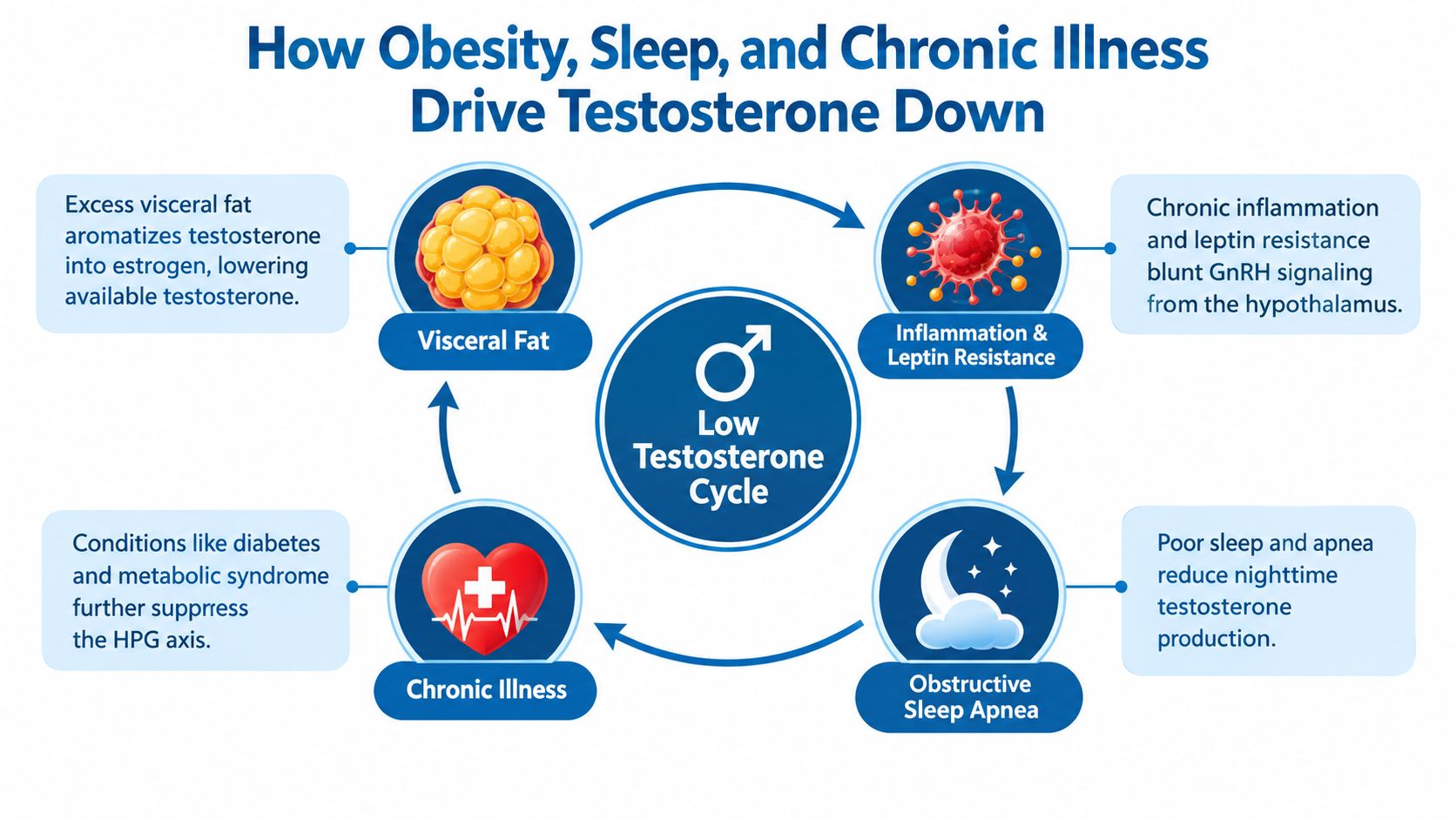
| Can weight gain affect men's hormones and sexual health? | Yes. Extra weight, especially around the abdomen, can affect insulin sensitivity, inflammation, sleep quality, testosterone levels, and blood flow. In many men, improving metabolic health improves how they feel overall. |
| Should I try over-the-counter testosterone boosters first? | It is safer to speak with a clinician first. Supplements may vary in quality, can interact with other products or medications, and may delay proper testing if they lead you away from the real cause of symptoms. |
| What makes a provider trustworthy? | Look for licensed medical care, clear testing, follow-up monitoring, individualized treatment, and a willingness to address weight, sleep, cardiovascular risk, and long-term health instead of offering the same fix to every patient. |
One more point matters. Feeling better is usually not about chasing a single number. It is about finding the combination that fits your body, whether that includes hormone treatment, weight loss support, better sleep, or another targeted plan.
This article is for educational purposes only and is not a diagnosis or personal medical advice. If you have ongoing fatigue, weight gain, low libido, erectile difficulties, mood changes, or other concerning symptoms, speak with a qualified healthcare professional for individualized evaluation and treatment.