Can Testosterone Cause Joint Pain? an Evidence-Based Guide
You wake up, swing your legs off the bed, and notice your knees feel stiff. Later, your hands ache after typing. Maybe your shoulders feel sore after a workout that used to be easy. You search online and land on the same confusing question over and over: can testosterone cause joint pain ?
That question makes sense. Hormones affect far more than sex drive and body composition. They influence how your body builds muscle, supports bone, responds to inflammation, and recovers from stress. But the honest answer isn't a simple yes or no.
Sometimes low testosterone may contribute to joint discomfort indirectly. Sometimes people notice aches after starting testosterone therapy and wonder if treatment is the problem. Sometimes the joint pain has little to do with testosterone at all. The right answer depends on your hormone levels, your sex, which joints hurt, what kind of pain you're having, and whether another medical condition is present.
If you're in Mississippi and trying to sort through fatigue, stiffness, slower recovery, or low libido along with unexplained aches, it's worth understanding the science clearly before guessing. That's what this guide is for.
The Aches and Pains You Can't Explain
A common story goes like this. A man in his 40s or 50s starts feeling off. He doesn't just feel tired. His hips feel tight when he stands up. His knees complain on stairs. His elbows or wrists seem sore for no obvious reason. At first, he blames age, bad sleep, stress, or a harder week at the gym.
Then other clues show up. Lower energy. Reduced sex drive. Slower recovery after exercise. More stiffness in the morning. That combination often makes people wonder whether a hormone issue could be sitting underneath it all.
One point of confusion is that many people aren't even sure whether they're dealing with joint pain, muscle pain, or both. If that sounds familiar, this guide on distinguishing joint vs muscle pain can help you sort out what you're feeling before you chase the wrong cause.
Another reason people get stuck is that online advice swings too far in both directions. One article says testosterone helps everything. Another says testosterone therapy causes aches. Neither is the full picture.
Joint pain can be real, disruptive, and hormone-related without testosterone being the only cause.
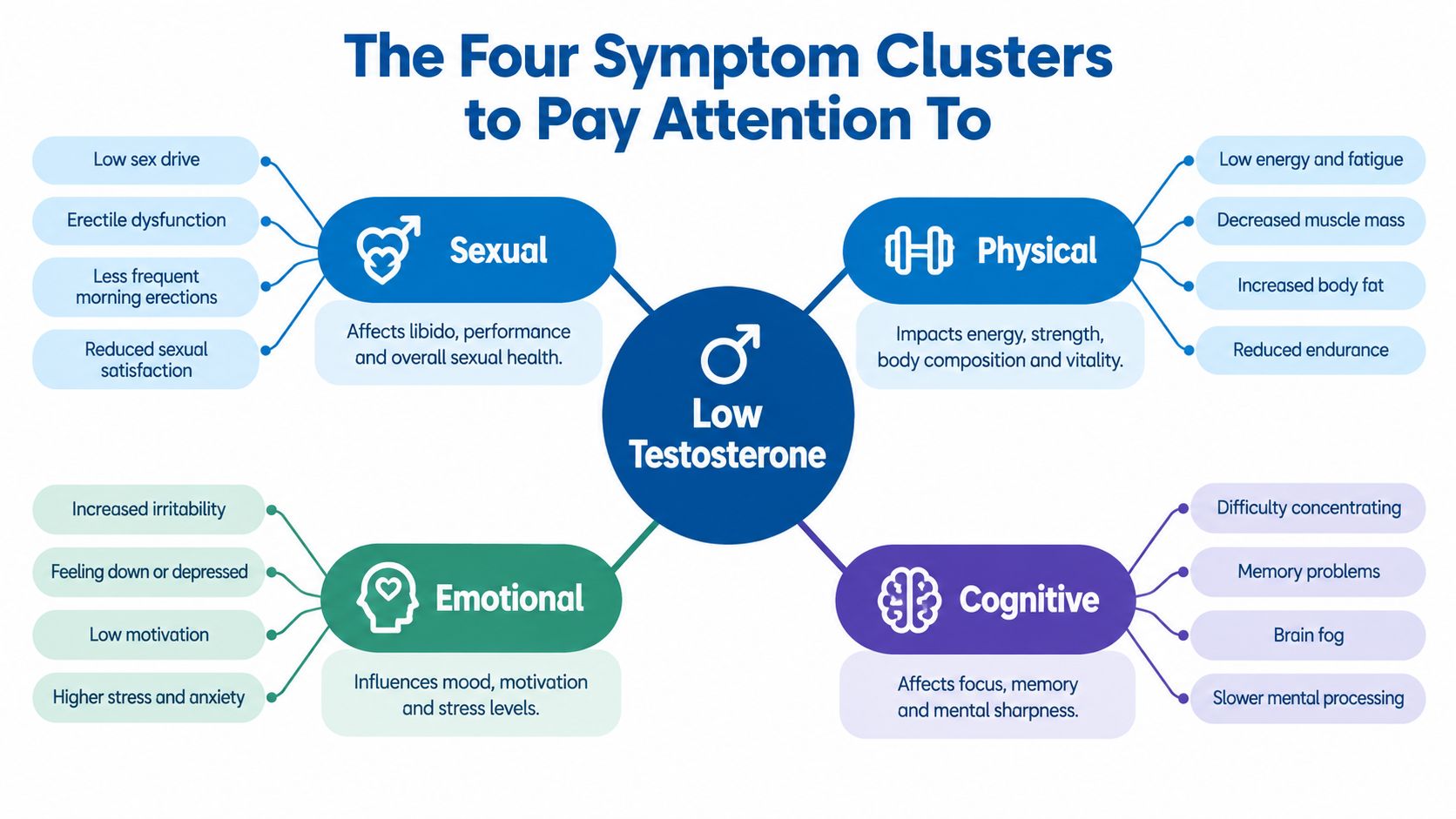
If you're also noticing symptoms often grouped with hormone imbalance, it helps to compare your experience with a more complete list of low testosterone symptoms in men. The pattern matters more than any one symptom by itself.
Why the answer isn't simple
Testosterone doesn't act on one joint in one predictable way. It affects the systems around joints. Muscle, bone, connective tissue, and inflammatory signaling all matter.
That means two people can ask the same question and need different answers:
- One person may have low testosterone, reduced muscle support, and worsening stiffness.
- Another person may start testosterone therapy and notice temporary body changes that make joints feel different.
- A third person may have osteoarthritis, rheumatoid disease, a prior injury, or thyroid dysfunction.
So yes, the concern is valid. But the better question is usually this: what role, if any, is testosterone playing in your specific joint pain?
How Testosterone Influences Your Joints
Think of testosterone as part of the body's maintenance supervisor. It doesn't do every repair itself, but it helps direct the teams that keep your joints functioning well. When levels fall out of range, the structures around a joint may lose support.

Muscle support matters more than most people realize
Joints don't work in isolation. Your knees rely on the surrounding leg muscles. Your shoulders rely on coordinated support from the chest, back, and rotator cuff. Your hips rely on glutes and core stability.
Low testosterone is not a proven direct cause of joint pain , but it can contribute indirectly by reducing muscle mass, bone density, and connective-tissue support around joints. That can increase mechanical instability and make pain more likely, especially if you're also dealing with fatigue, slower exercise recovery, or generalized stiffness, as explained in this review of testosterone and joint pain.
Bone and connective tissue also play a role
Strong bones help joints handle force. Healthy connective tissue helps absorb stress and maintain alignment. If hormonal support drops, some people feel less resilient. They may not describe a dramatic injury. They just say their body doesn't feel as sturdy as it used to.
That's one reason a broad lab evaluation matters. If you're trying to understand whether hormones are part of the problem, a comprehensive wellness lab panel gives much better information than trying to infer hormone status from symptoms alone.
Inflammation adds another layer
Testosterone also appears to influence inflammatory signaling. That's important because some joint pain is less about a structural problem and more about how irritated the tissues become over time.
This doesn't mean testosterone is an anti-inflammatory cure. It means hormone status may shape how the body responds to stress, overuse, or existing arthritis.
Practical rule: If your joint pain comes with low energy, slower recovery, and loss of strength, hormones may be one piece of the puzzle. If it comes with visible swelling, warmth, or sudden severe pain, think more broadly and get evaluated promptly.
Three practical ways to think about testosterone and joints:
- Stability: Muscles protect joints. Lower testosterone can reduce that protection.
- Resilience: Bone and connective tissue need support to tolerate everyday strain.
- Sensitivity: Inflammatory signaling may influence how much discomfort you feel.
The Link Between Low Testosterone and Joint Pain
When patients ask whether low testosterone can make their joints hurt, they're usually not asking for a textbook explanation. They want to know whether the pattern they're living with makes medical sense. In many cases, it does.
Low testosterone isn't a confirmed direct cause of joint pain. Still, evidence suggests a meaningful relationship between androgen status and osteoarthritis-related symptoms and outcomes in some populations.
A useful visual summary appears below.

What the research has shown
A key historical signal came from an 18-month study of 309 overweight adults with knee osteoarthritis , where higher testosterone levels were associated with less joint stiffness in men. In that same research line, 104 men underwent knee arthroplasty and 80 underwent hip arthroplasty , and higher concentrations of a testosterone precursor were associated with a 13 to 16% lower risk of total knee and hip replacement for osteoarthritis in overweight and obese men. Later genetic analysis strengthened that argument further, according to this summary on testosterone, osteoarthritis, and joint replacement.
That matters because it pushes the conversation beyond "I feel achy." The association reached into outcomes that patients care deeply about, including stiffness, progression, and eventual surgery.
Here's a short video that discusses the broader topic from a patient-education angle.
What low testosterone-related pain often feels like
People rarely say, "My testosterone is low and therefore my left knee hurts." The experience is usually broader.
Common patterns include:
- Morning stiffness: You feel older first thing in the day, then loosen up gradually.
- Slower recovery: A normal walk, workout, or yard project leaves you sore longer than expected.
- Generalized aches: The discomfort isn't always isolated to one injured spot.
- Reduced physical confidence: Squatting, climbing stairs, carrying loads, or getting off the floor feels harder.
If joint pain appears alongside fatigue, lower libido, and declining strength, don't dismiss it as "just aging." Patterns matter.
Why this doesn't prove every ache is hormonal
Even strong associations don't mean every person with joint pain has low testosterone. Some do. Many don't. But when low energy, stiffness, slower recovery, and body-composition changes show up together, hormone testing becomes a sensible next step rather than a random guess.
Can Testosterone Therapy Itself Cause Joint Pain
The question gets more nuanced. If low testosterone may contribute to joint problems, why do some people say they felt achier after starting testosterone therapy?
The short answer is that it can happen , but that doesn't mean testosterone is damaging the joints in a simple, universal way. In some people, the early adjustment period may come with shifts in fluid balance, activity levels, or body awareness. A person who starts feeling more energetic may also become more active and uncover pain that was already brewing in a knee, hip, or hand.
Why people can feel worse before they feel better
Hormone changes affect the whole body. When testosterone therapy changes how you retain fluid, sleep, train, or recover, your body can feel different. That may include temporary stiffness or discomfort.
This is one reason self-treating is risky. A supervised plan, such as at-home TRT with medical oversight, gives patients a safer way to track symptoms, labs, and response over time instead of guessing from day to day.
The effects aren't the same for every person or every joint
A 2025 review reported a mixed pattern: higher testosterone was linked to lower radiographic knee osteoarthritis and less chronic knee pain in women , yet higher testosterone in men was associated with worse hand osteoarthritis severity , as covered in this report on sex-specific testosterone and osteoarthritis risks.
That finding is important because it breaks a very common myth. More testosterone isn't automatically better for every joint in every person.
A better way to think about testosterone and pain
Instead of asking whether testosterone is good or bad for joints, ask three narrower questions:
- Whose hormones are we talking about? Male and female physiology differ.
- Which joint is involved? Knee findings don't necessarily apply to hands.
- What condition is present? Osteoarthritis, inflammatory arthritis, injury, and overuse are different problems.
Here is a practical comparison.
| Hormone Status | Potential Mechanism | Commonly Associated Symptoms |
|---|---|---|
| Low testosterone | Less muscle support, lower bone support, reduced connective-tissue resilience | Stiffness, slower recovery, generalized aches, fatigue |
| Changing testosterone levels during therapy | Body adjustment, changes in fluid balance, changes in activity and recovery patterns | Temporary aches, feeling "off," new awareness of existing pain |
| Higher testosterone in certain contexts | Effects may vary by sex and joint location | Improvement in some patterns, no benefit in others, possible worsening in specific joints |
One person's "TRT fixed my joints" and another person's "TRT made me ache" can both be true. They may simply be describing different bodies, different diagnoses, and different joints.
Investigating Other Common Causes of Joint Pain
It's easy to latch onto testosterone because hormone explanations feel tidy. Real medicine usually isn't tidy. Joint pain has a long differential, and some causes need attention quickly.

Common non-testosterone explanations
Many patients with joint discomfort turn out to be dealing with something else entirely:
- Osteoarthritis: Wear-related cartilage changes, often in knees, hips, hands, or spine.
- Old injuries: Meniscus tears, labral problems, rotator cuff disease, ankle sprains, and fractures can cause long-term pain.
- Inflammatory arthritis: Conditions like rheumatoid disease often cause swelling, warmth, and prolonged morning stiffness.
- Autoimmune or systemic illness: Some illnesses cause body-wide pain and joint symptoms.
- Thyroid or metabolic issues: Hormones other than testosterone can affect pain, swelling, and tissue function.
- Excess body weight: Added mechanical load can worsen joint strain, especially in weight-bearing joints.
For a broader plain-language overview, Highbar Health explains pain causes in a way many patients find helpful.
Red flags that suggest you shouldn't assume it's testosterone
Certain symptoms should widen the lens right away:
- Visible swelling in multiple joints
- Morning stiffness that lasts a long time and feels systemic
- Fever, rash, or sudden unexplained illness
- Hot, red, sharply painful joints
- Pain after trauma
- Numbness, weakness, or radiating pain
Those clues may point toward inflammatory disease, infection, injury, or neurologic issues rather than a simple hormone imbalance.
Why body weight often enters the conversation
If joint pain and hormone symptoms appear together, body weight sometimes ties the picture together. Extra weight can increase joint load while also complicating metabolic and hormonal health. For some patients, medically guided weight-loss care becomes part of a broader strategy to reduce joint stress and improve overall function.
When a symptom has many possible causes, the safest move isn't choosing your favorite explanation. It's ruling out the serious ones and confirming the likely one.
Your Path to Relief with Pause Medical
If you're living in Mississippi and trying to figure out whether testosterone is part of your joint pain, the smartest next step isn't to start a supplement, copy a friend's TRT plan, or rely on a social media checklist. It's to get a careful medical evaluation.

Why testing needs precision
Population-level data suggest the relationship between testosterone and osteoarthritis may be non-linear , with an inflection point around 51 ng/dL . Below that level, lower testosterone tracked with higher osteoarthritis risk, according to this population analysis of testosterone and osteoarthritis. That means guessing based on symptoms alone can miss the mark.
A provider-guided approach matters because hormone interpretation isn't just "low or not low." Context matters:
- Your symptoms
- Your sex
- Your joint pattern
- Your other lab findings
- Your medical history
- Your treatment goals
What good care should include
The best hormone care doesn't start with a prescription. It starts with understanding the problem.
A strong evaluation should include:
- A careful history: When the pain started, which joints hurt, what other symptoms came first.
- Targeted labs: Hormones are part of the picture, not the whole picture.
- A broader differential: Arthritis, injury, autoimmune disease, thyroid issues, and metabolic health all deserve attention.
- Follow-up: If treatment begins, symptoms and labs should be monitored rather than assumed.
Some patients also want natural strategies to support joint health alongside formal treatment. For readers exploring conservative options, AloeCure's joint support solutions offer one overview of supplement-oriented approaches. These don't replace diagnosis, but they can be part of a broader discussion.
For patients in Mississippi
If evaluation suggests hormone imbalance is contributing to symptoms, a personalized hormone therapy program may be worth discussing with a board-certified provider. The key is personalization. The right plan for a patient in Oxford may differ from the right plan for someone in Meridian, Tupelo, Flowood-Jackson, or Starkville because their labs, symptoms, and risks differ.
Frequently Asked Questions
Can testosterone cause joint pain directly
Usually, not in a simple direct way . Low testosterone is better understood as an indirect contributor that may reduce muscle support, affect bone and connective tissue, and influence inflammatory signaling. Testosterone therapy can also coincide with temporary aches in some people, but that doesn't mean testosterone is universally harming the joints.
Can low testosterone make arthritis worse
It may contribute to a body environment that makes osteoarthritis-related symptoms and structural problems more likely in some patients. That doesn't mean it's the only driver, and it doesn't replace a proper arthritis evaluation.
Will testosterone therapy fix my joint pain
Not necessarily. If hormone deficiency is part of the problem, treatment may help some patients. If your pain comes from a meniscus tear, hand osteoarthritis, rheumatoid disease, or another condition, testosterone alone won't solve it.
What tests should be considered when joint pain and low testosterone symptoms happen together
A clinician may consider hormone testing along with broader lab work and, when needed, imaging or referral. The exact workup depends on your symptoms, medical history, and exam findings.
Why do some people feel worse after starting TRT
Some people go through an adjustment period. Others become more active and notice pain that was already present. Some have a joint condition that testosterone doesn't address. That's why symptom tracking and clinician follow-up matter.
When should I get checked soon rather than waiting
Get evaluated sooner if you have swollen joints, red or hot joints, fever, significant weakness, pain after injury, or symptoms affecting multiple joints in a way that feels inflammatory or systemic.
If you're in Mississippi and you're dealing with unexplained stiffness, fatigue, slower recovery, or joint pain that might be connected to hormones, Pause Medical can help you sort out the cause with board-certified medical oversight, thorough testing, and a personalized treatment plan. The goal isn't to guess whether testosterone is to blame. It's to understand what your body is telling you and choose the safest, most effective next step for real relief. This article is for education only and isn't a substitute for personal medical advice, diagnosis, or treatment.