Low Testosterone Natural Treatment a Mississippi Guide
You may be here because something feels off, but it's been hard to name. You're more tired than you used to be. Your motivation is down. Your workouts don't seem to go anywhere, your waistline has changed, or your sex drive isn't what it was. A lot of people in Mississippi chalk that up to getting older, stress, poor sleep, or being busy. Sometimes that's partly true. Sometimes it's also low testosterone.
The tricky part is that low testosterone natural treatment can help some people a lot, and help others only a little. That's where confusion starts. Online advice often jumps straight to “T-boosting foods” or pills, without explaining a basic question first: what kind of low testosterone are you dealing with? If sleep loss, weight gain, stress, inactivity, or nutrient issues are part of the picture, natural steps may move the needle. If the cause is more complex, self-treatment can waste time and sometimes create risk.
A responsible plan doesn't force you to choose between lifestyle change and medical care. In many cases, the best path uses both.
Understanding Low Testosterone Symptoms and Causes
A common pattern looks like this. A man notices that his usual energy is gone, his waist is changing, his interest in sex is lower, and workouts that used to feel productive now feel flat. It is easy to blame stress, age, or a busy schedule. Sometimes that is true. Sometimes testosterone is one piece of a larger medical puzzle.
Testosterone affects several systems at once, so low levels can show up in ways that seem disconnected. You may notice fatigue first. Someone else may notice lower libido, less muscle, or a shorter fuse. Hormones work a bit like the background settings on a phone. When one setting shifts, several functions can feel off at the same time.

What symptoms often point people toward testing
Symptoms matter, but they do not diagnose low testosterone by themselves. Sleep apnea, depression, thyroid disease, diabetes, excess body fat, heavy alcohol use, and medication side effects can create a very similar picture. That overlap is the main reason self-diagnosis often goes wrong.
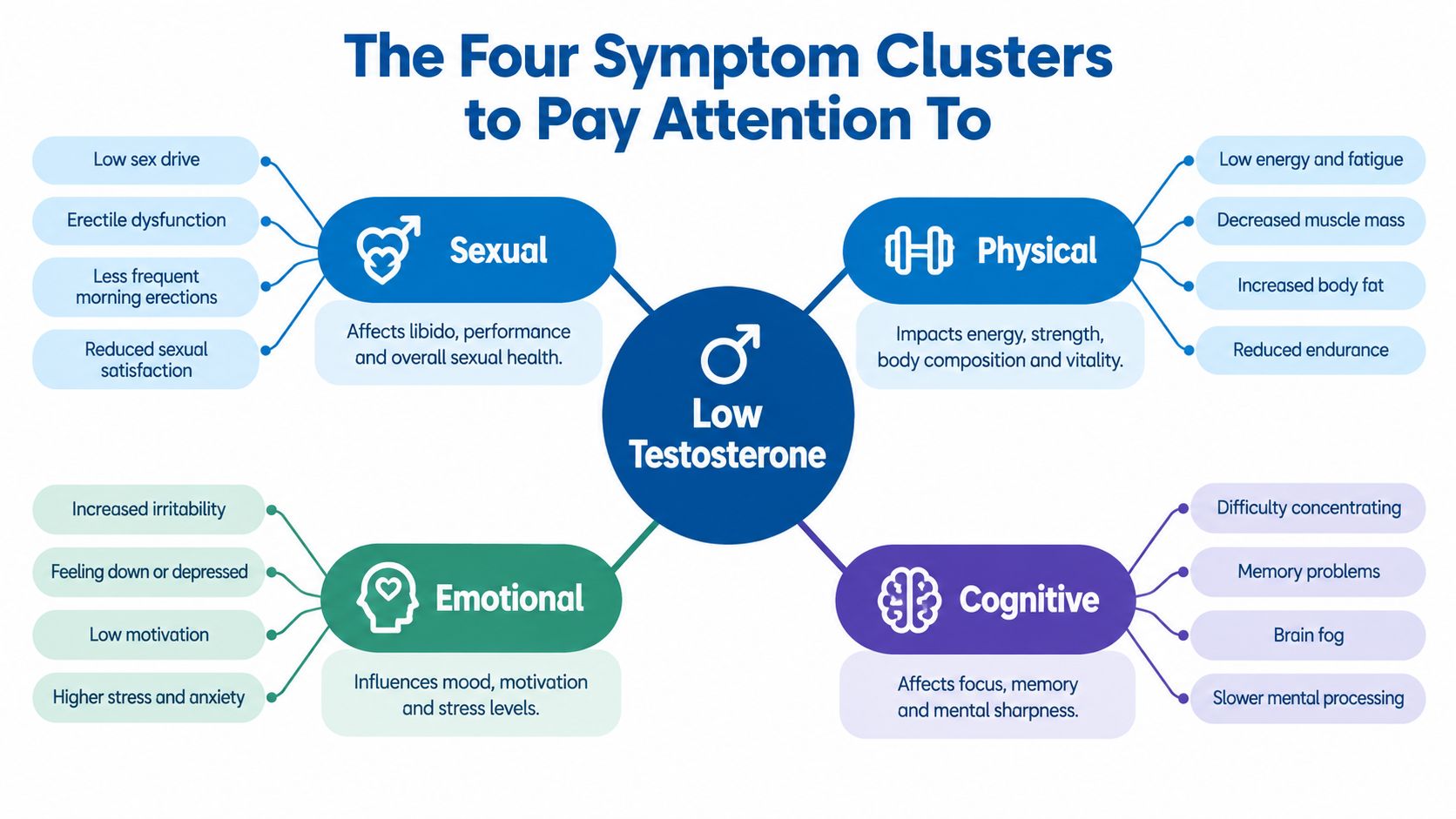
Common symptoms include:
- Persistent fatigue: You rest, but still feel drained.
- Lower sex drive: Desire drops in a noticeable way.
- Body composition changes: Muscle becomes harder to keep, and abdominal fat increases more easily.
- Mood and focus changes: Irritability, low motivation, or mental fog become more common.
- Lower physical performance: Strength, endurance, or workout recovery slips.
If you want a fuller overview of symptom patterns, this guide to low testosterone symptoms in men is a useful place to start.
Why low testosterone happens
Age is a factor, but not the whole story. Low testosterone can come from extra body fat, poor sleep, chronic illness, high stress, certain medicines, alcohol or drug use, and problems involving the testicles, pituitary gland, or hypothalamus. Some causes are more likely to improve with lifestyle changes. Others will not.
That distinction matters.
If testosterone is being pushed down by short sleep, weight gain, inactivity, or untreated sleep apnea, natural efforts may help because they address the source of the problem. If the issue comes from pituitary disease, genetic conditions, damage to the testicles, chemotherapy, or long-term opioid use, lifestyle changes alone usually will not correct it. Trying to treat those cases with internet advice can delay the care you need.
Medical groups stress that diagnosis should combine symptoms with repeat morning blood tests, not just a single lab value or a list of complaints. The American Urological Association guideline on testosterone deficiency explains that symptoms, test timing, and confirmation all matter before treatment decisions are made.
If you are also trying to rebuild strength, it can help to browse workout routines, but use exercise as one part of the plan, not proof that hormones are fine or definitely low.
The goal here is clarity. Natural steps can improve testosterone when daily habits are part of the cause. They cannot replace evaluation when symptoms are persistent, sexual symptoms are significant, fertility is a concern, or the pattern suggests an underlying medical problem.
The Foundation Proven Lifestyle Interventions
A common scenario goes like this. A man notices lower sex drive, less energy, and slower recovery in the gym, then starts searching for a food list or supplement that will raise testosterone fast. What often helps more is less exciting and more effective. You first improve the daily inputs that control hormone production, then check whether the body is responding.

Lifestyle changes matter most in the cases where low testosterone is being dragged down by poor sleep, excess body fat, inactivity, heavy stress, or related problems such as insulin resistance. In those situations, your body is reacting to conditions it can sometimes recover from. If the cause is testicular failure, pituitary disease, medication effects, or another medical disorder, these same habits still support health, but they usually do not fix the hormone problem by themselves.
Sleep and exercise do real hormonal work
Testosterone production follows a rhythm. Sleep is part of that rhythm, not dead time. Research from the University of Chicago found that restricting healthy young men to 5 hours of sleep per night for 1 week lowered daytime testosterone levels, showing how quickly short sleep can affect hormone balance in some men, as reported in this study on sleep restriction and testosterone.
Exercise helps through a different route. Resistance training gives the body a reason to preserve muscle and maintain stronger metabolic function. That does not mean every workout creates a lasting testosterone surge, and it does not mean harder is always better. It means regular strength training can improve the conditions that often travel with borderline low testosterone, especially low muscle mass, weight gain, and poor insulin sensitivity.
A practical starting plan is simple:
- Protect sleep first: Keep a regular sleep and wake time, and cut late-night light and screen exposure.
- Do resistance training consistently: Full-body lifting two to four times per week is a realistic place to begin.
- Use movement you can repeat: Walking, bodyweight circuits, and beginner dumbbell sessions count.
- Lower the stress load: Counseling, relaxation work, prayer, time off, and better scheduling can reduce the constant strain that disrupts recovery.
If you need ideas, it can help to browse workout routines and choose something basic enough to keep doing next month, not just this week.
A short visual explainer can also make the exercise piece easier to picture:
Weight loss changes hormone signaling
Excess body fat, especially around the abdomen, can push testosterone lower through several pathways. Fat tissue affects hormone conversion. It also tends to travel with inflammation, sleep apnea, and insulin resistance, all of which can work against healthy testosterone production.
This is why weight loss can help some men see meaningful improvement. The body is not just getting lighter. It is working under better metabolic conditions. For men who have struggled to lose abdominal weight despite honest effort, medical weight loss options may be worth discussing with a clinician as part of a broader hormone and metabolic plan.
Nutrition supports recovery, not magic
Food works more like steady construction material than a quick hormonal switch. A useful eating pattern usually includes enough protein, high-fiber foods, healthy fats, and mostly minimally processed meals. Extreme calorie restriction can lower testosterone further, especially if you are already under-eating or losing weight too aggressively.
That point causes confusion. “Natural treatment” does not mean doing everything alone. It means using the tools that match the cause. If sleep, exercise, body composition, and nutrition improve your symptoms and labs, lifestyle may be addressing the driver. If those areas improve and testosterone stays low, that is an important clue that you need a medical evaluation rather than more internet guessing.
Done well, lifestyle treatment is not a substitute for diagnosis. It is the first layer of a responsible plan.
Evaluating Supplements Hope Versus Hype
Supplements get a lot of attention because they sound easy. Buy a bottle, take a capsule, feel better. The problem is that marketing often moves much faster than evidence.

What the supplement market gets wrong
A 2021 review found that among products marketed to boost testosterone, 90% claimed to boost testosterone , but only 24.8% of ingredients had data showing an actual increase. In the same review, 10.1% showed a decrease and 18.3% showed no change, highlighting the gap between sales language and evidence in this review of testosterone booster marketing versus research.
That doesn't mean every supplement is useless. It means you should be skeptical of broad promises.
Which options have some support
Some ingredients have shown modest, conditional benefits in specific settings.
| Supplement | What the evidence suggests |
|---|---|
| Ashwagandha | Some studies in the literature review found increases in testosterone, including 15.3% over 8 weeks versus 2.7% with placebo . |
| Fenugreek | Some systematic review data suggest modest support in certain trials. |
| Ginger and tribulus | Some individual studies reported increases, but the overall evidence is mixed and inconsistent. |
Even when a supplement has some evidence, that doesn't make it the main treatment. It may help as an adjunct, especially if stress, recovery, or mild deficiency patterns are involved. It won't correct severe sleep deprivation, obesity, or an untreated endocrine disorder.
What to remember: A supplement can support a plan. It usually can't replace one.
If you like comparing wellness products and ingredients before discussing them with a clinician, resources on top supplements for energy can help you build better questions.
A clinician-guided review is still the safest move, especially because product quality varies and labels don't always tell the whole story. If you're trying to sort through options, this page on supplements and supportive care can give you a more structured starting point.
When Natural Approaches Are Not Enough
Some men respond well to natural treatment because the main driver is reversible. They're sleeping badly, carrying excess abdominal weight, under-recovering, or dealing with stress overload. In that situation, improving habits can lead to real hormonal improvement.
Other cases are different. If your symptoms are significant, persistent, or worsening, a “natural only” plan can delay proper diagnosis. That's especially important if the cause could involve the testes, pituitary signaling, medication effects, or another medical condition.

Situations that deserve a medical workup
The evidence for lifestyle change is strongest for men with borderline low testosterone , obesity, sleep deprivation, or nutrient deficiency. The NIH review also notes that over-the-counter herbal products are poorly studied and may carry hepatic and cardiovascular risks , which is a strong reason to seek professional evaluation through this discussion of when natural approaches have limits.
Consider medical evaluation if any of these apply:
- Symptoms are affecting daily life: Low libido, fatigue, poor recovery, mood changes, or body composition shifts aren't improving.
- You've already cleaned up the basics: Sleep, training, weight, and diet are better, but symptoms remain.
- You suspect a bigger issue: Fertility concerns, testicular changes, headaches, vision symptoms, or multiple hormone symptoms should not be self-managed.
- You're tempted to self-prescribe supplements or hormones: That's where risk tends to climb.
What proper evaluation usually looks like
A thoughtful workup connects symptoms with labs and medical history. It doesn't stop at one number. A clinician may look at testosterone levels, related hormones, medications, sleep issues, body composition, and metabolic health.
Persistent symptoms deserve more than guesswork. Testing can clarify whether you need more lifestyle time, treatment, or a broader medical evaluation.
For many patients, understanding what hormone replacement therapy is helps remove fear from the conversation. Medical care isn't the opposite of natural care. It's what you add when symptoms, labs, and root causes say lifestyle measures alone are not enough.
Your Integrated Hormone Health Action Plan
The most useful plan is usually not extreme. It's structured, realistic, and honest about what you can change on your own versus what needs clinical help.
A practical way to move forward
Start with the basics you control every day. Build a sleep routine, train with resistance work, improve food quality, and work on reducing excess body fat if that's part of your picture. Be consistent long enough to give those changes a real chance.
Then track what's happening. Write down energy, libido, sleep quality, mood, waist changes, exercise consistency, and how you feel overall. Patterns matter more than guesses.
A common mistake is trying five supplements before doing any measurement. Another is assuming natural care has failed after a short burst of effort. Your body usually needs steady inputs, not random experiments.
Where supplements fit
A systematic review found positive but modest effects from some supplements, including fenugreek with a 22.7% total testosterone increase versus -2.0% with placebo in one 12-week trial, and ashwagandha with a 15.3% increase versus 2.7% with placebo in an 8-week study , but the same review emphasizes that these are adjuncts, not replacements for fixing sleep, stress, and weight in this analysis of supplements as support rather than stand-alone treatment.
That's the bridge many people miss. Natural treatment and medical guidance don't compete. They work better together.
- First layer: Sleep, training, nutrition, stress control, and weight management.
- Second layer: Targeted supplements only when they fit your situation and are reviewed for safety.
- Third layer: Lab work and medical evaluation when symptoms persist or the picture is unclear.
If you want to understand the kinds of labs that can help sort out fatigue, weight changes, and hormone symptoms, a wellness lab panel is often where clarity starts. Some people also like reading broader overviews of testosterone and hormone support so they can ask more informed questions at their visit.
This article is educational and isn't a diagnosis or personal treatment plan. Hormone symptoms overlap with many other conditions, and supplements or hormone therapy should be discussed with a qualified medical professional who can review your history, medications, risks, and goals.
Frequently Asked Questions About Low Testosterone
How long does natural treatment take to help
It depends on the cause and how consistently you follow through. Sleep improvement, resistance training, weight loss, and stress reduction usually work gradually. If your low testosterone is tied to reversible habits, you may notice symptom changes over time. If the issue is more complex, lifestyle work may improve general health without fully resolving the hormone problem.
Can you have low testosterone even if you're young and fit
Yes. Age is only one factor. Poor sleep, stress, some medications, medical conditions, and individual biology can all contribute. A person can look healthy from the outside and still have hormone-related symptoms that deserve evaluation.
Are there foods that “kill” testosterone
No single food is the whole story. The bigger issue is your overall pattern. Diets built around heavily processed foods, excess calories, and poor nutrient quality can make weight gain and metabolic issues worse, and that can indirectly affect testosterone. A balanced eating pattern is more useful than obsessing over one ingredient.
Should I try supplements before getting tested
Not usually. Testing first gives you context. Without that, you may spend money on products that don't match your actual problem. Supplements can also distract from larger issues like sleep apnea, obesity, medication side effects, thyroid disease, or another hormone problem.
Is testosterone therapy the same as giving up on natural methods
No. It's often part of a combined plan. Many people still need better sleep, nutrition, exercise, and body composition support even if they qualify for treatment. Medical care works best when it builds on healthy habits, not when it tries to replace them.
When should I stop self-treating and book an appointment
Book an appointment if symptoms persist, interfere with work or relationships, or don't improve after a solid effort with lifestyle changes. You should also seek evaluation sooner if symptoms are severe, confusing, or paired with other health concerns.
Can weight loss help if low testosterone and belly fat showed up together
Often, yes. Excess body fat and hormone function affect each other. That's one reason some men benefit from combining hormone evaluation with a structured metabolic or weight-management plan instead of treating each symptom separately.
What should I bring to a hormone appointment
Bring a list of symptoms, medications, supplements, sleep habits, recent weight changes, and questions. The more specific you are, the easier it is for a clinician to see patterns and recommend the right next steps.
If you live in Mississippi and you're dealing with fatigue, low libido, stubborn weight gain, poor recovery, or other signs of hormone imbalance, Pause Medical can help you take the next step with medically supervised, personalized care. Their team offers hormone evaluation, treatment planning, weight management support, and ongoing follow-up designed around your symptoms, labs, and goals. Schedule a consultation if you're ready to stop guessing and build a plan that combines smart lifestyle changes with appropriate medical guidance.