Does Low Testosterone Cause Joint Pain? Your Guide to Relief
Your elbows feel stiff when you get out of bed. Your knees ache after sitting through a meeting. Your shoulders complain when you reach into the back seat. A lot of men in their 40s and 50s assume this is just aging.
Sometimes it is. Sometimes it isn't.
If you've been wondering does low testosterone cause joint pain , the short answer is yes, it can . But it's only one piece of the picture. Joint pain can also come from osteoarthritis, autoimmune disease, old injuries, extra mechanical stress on joints, or a mix of several factors at once. The safest approach is to resist self-diagnosing and look at the whole person, not just one lab value.
That Nagging Ache Is It Just Aging or Something More?
Many men dismiss early symptoms because they seem ordinary. You may notice more stiffness in the morning, more soreness after activity, or joints that feel less forgiving than they used to. If that's happening alongside low energy, lower libido, reduced exercise capacity, or changes in body composition, hormones deserve a closer look.
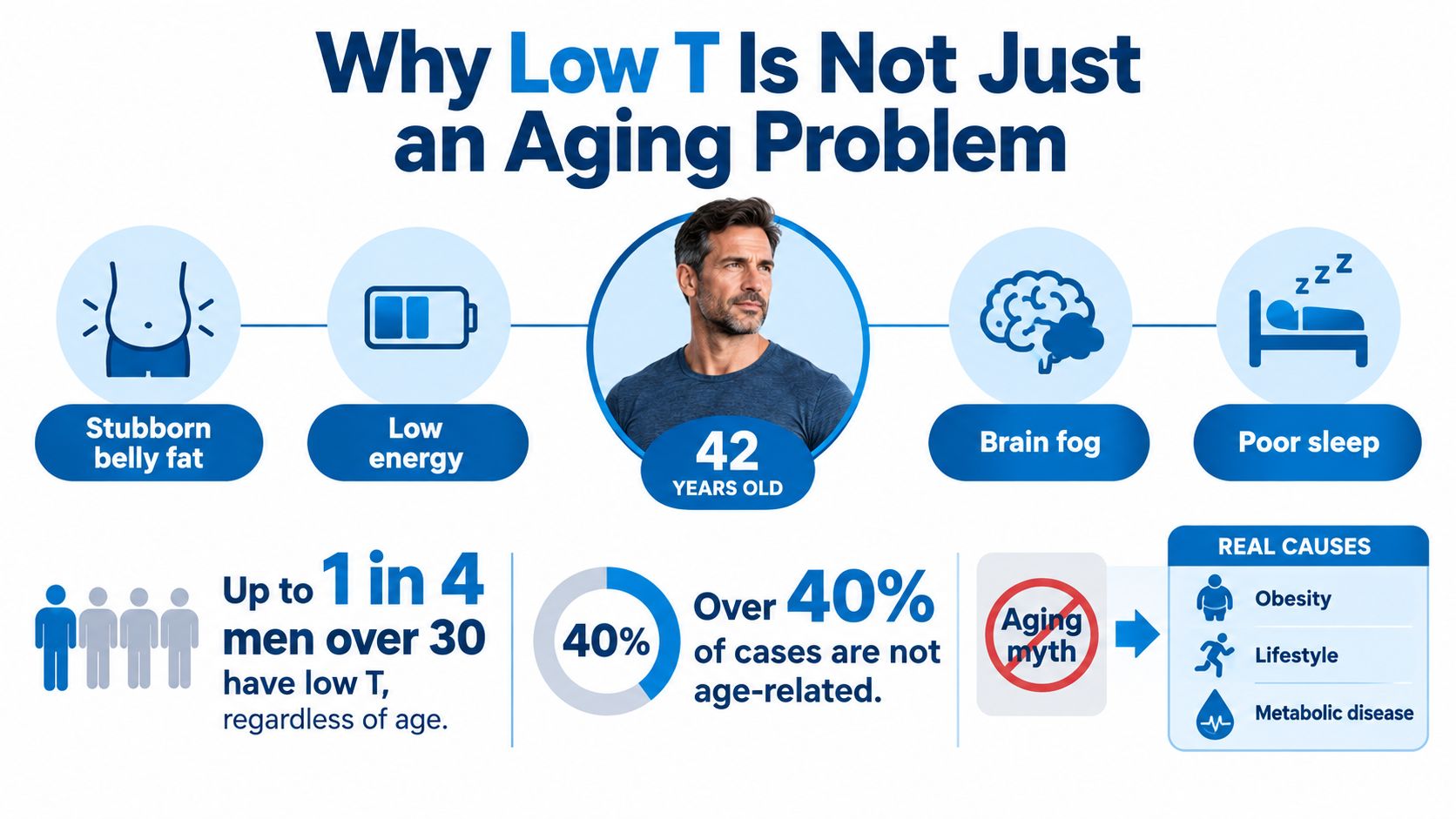
This issue is more common than many realize. Approximately 40% of men aged 45 and older have low testosterone levels according to this review on low testosterone and joint pain. That matters because the same stage of life is also when chronic joint problems become more common.
Aching joints don't automatically mean low testosterone is the cause. But low T can be part of the reason symptoms persist, especially when pain comes with stiffness, declining strength, and slower recovery.
Joint pain that appears gradually, without one obvious injury, deserves a broader medical evaluation than “you're getting older.”
If you're trying to sort out whether your symptoms fit a hormonal pattern, this guide to symptoms of low testosterone in men can help you recognize the bigger picture. And if you also want a non-hormonal perspective on musculoskeletal care, you can explore joint pain solutions that focus on movement, structure, and rehab.
When low T becomes a reasonable question
A hormone-related cause becomes more plausible when joint discomfort shows up with other changes, such as:
- Lower muscle strength that makes everyday lifting feel harder
- More body fat or weight gain that increases load on hips, knees, and ankles
- Reduced recovery after workouts or physical work
- Less flexibility and a general sense of stiffness
Those patterns don't prove anything by themselves. They do tell you it's worth looking deeper.
The Biological Connection Between Low T and Aching Joints
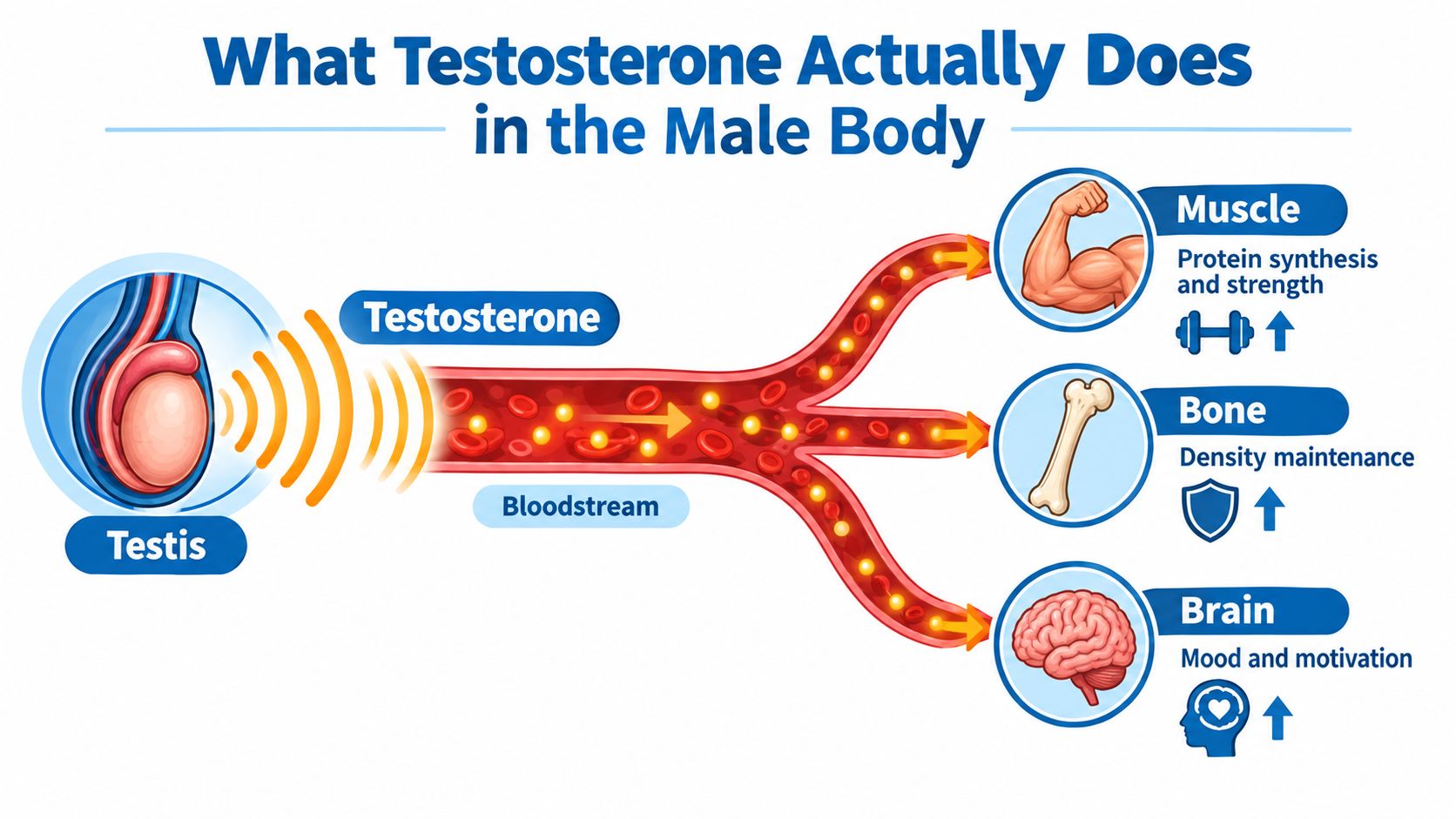
Testosterone acts a bit like a maintenance crew for the musculoskeletal system. It doesn't just affect sex drive or energy. It also helps regulate inflammation, supports the tissues around joints, and helps preserve the muscle that protects those joints during daily movement.

Inflammation control
One important link is inflammation. In men with hypogonadism, low testosterone appears to reduce the body's ability to keep inflammation in check. That can leave joints feeling more swollen, stiff, and irritable.
When patients say, “Nothing looks badly injured, but everything feels tight and achy,” this is one reason clinicians think about hormone balance.
Muscle support around the joint
Joints depend on muscle. Your knees rely on your quadriceps and hamstrings. Your shoulders rely on the rotator cuff and upper back. Your hips rely on the glutes and core.
When testosterone is low, men often lose lean muscle mass and strength. That means the joint has less support during walking, lifting, climbing stairs, and exercise. Over time, the joint can absorb more stress than it should.
Practical rule: A painful joint is often also a poorly supported joint.
That's one reason joint pain and low T often travel together. The problem isn't only inside the joint. It can also be in the muscle system surrounding it.
Structural support over time
Low testosterone may also affect the long-term health of bone and cartilage. These tissues don't fail overnight. They change gradually. A man may feel “older” in his joints for months before he realizes there may be a biologic reason.
Here's a simple way to look at it:
| Body system | What testosterone helps with | What you may feel when it's low |
|---|---|---|
| Inflammatory response | Keeps excess inflammation more controlled | More stiffness, soreness, and reduced mobility |
| Muscle mass | Maintains strength that stabilizes joints | Less support, more strain, more pain with movement |
| Bone and cartilage support | Helps preserve structural health over time | Aching, wear-related discomfort, slower recovery |
If hormonal symptoms overlap with joint complaints, a broader screen for symptoms of hormonal imbalance can be useful. For women navigating hormone-related aches, this overview of the Lila app for joint health may also offer a helpful parallel on how hormones and joints interact.
Is It Low Testosterone or Something Else?
Low testosterone can contribute to joint pain. It is not the only explanation, and sometimes it isn't the main one.
That distinction matters because treatment depends on cause. If someone has inflammatory arthritis, a meniscus injury, or advanced osteoarthritis, testosterone alone won't solve the problem. You need the diagnosis first.

Common causes that can look similar
Below is a practical comparison patients often find helpful:
| Possible cause | What it often feels like | Why it gets confused with low T |
|---|---|---|
| Osteoarthritis | Stiffness, creaking, pain with use, worse after inactivity | It often appears in midlife and later, just like low T |
| Autoimmune arthritis | Swelling, warmth, prolonged morning stiffness, multiple joints | Pain can seem “systemic” rather than injury-based |
| Old injuries | One-sided pain, instability, clicking, pain after specific movement | Symptoms can flare gradually years later |
| Lifestyle factors | General joint strain, deconditioning, poor recovery | Weight gain and low activity may happen alongside hormone shifts |
| Low testosterone | Achiness with stiffness, lower strength, lower recovery, other hormonal symptoms | It often overlaps with all of the above |
Red flags that point beyond hormones
Some features should make you think bigger than testosterone:
- Visible swelling in the joint
- Warmth or redness
- Pain after a specific injury
- Symptoms in many joints with fatigue or other inflammatory signs
- Locking, catching, or giving way
These don't rule out low T. They do suggest another process may be active too.
Good medicine doesn't force every symptom into one diagnosis.
A detailed evaluation often includes labs, symptom history, physical examination, and sometimes imaging. If you want a rehab-focused overview of arthritis care, MedAmerica Rehab for joint pain offers a useful look at how physical therapy fits into treatment. And if you're trying to understand what broader testing can uncover, a wellness lab panel can help identify hormone, metabolic, and inflammatory clues that routine checkups may miss.
The Diagnostic Process What to Expect at Pause Medical
Most patients feel better once they know what a real evaluation looks like. The process is usually straightforward. It's also more detailed than a single testosterone number on a lab slip.
A careful workup starts with your story. When did the joint pain begin? Which joints hurt? Is it worse in the morning, after activity, or at night? Are there related symptoms such as fatigue, lower libido, mood changes, reduced strength, or weight changes?
To visualize the process, here's what that diagnostic path generally looks like:

Step one is context, not conclusions
Blood work matters, but context matters first. A clinician will usually ask about sleep, stress, body weight, prior injuries, medications, exercise habits, and family history of arthritis or autoimmune disease. All of those can shape both hormone levels and joint symptoms.
The physical exam adds another layer. A provider may assess range of motion, tenderness, swelling, weakness, gait, and whether the pain seems mechanical, inflammatory, or more generalized.
Later in the evaluation, video education can also help patients understand how hormone care starts and what supervision should look like.
The lab result has to be interpreted carefully
A newer nuance in the research is that the relationship between testosterone and osteoarthritis risk does not appear perfectly linear. A 2024 NHANES-based analysis found a non-linear relationship with an inflection point at 51 ng/dL , suggesting a biologic threshold effect rather than a simple “lower is always worse” pattern, as reported in this open-access analysis of testosterone and osteoarthritis risk.
That matters in plain English. Joint pain shouldn't be blamed on hormones automatically just because testosterone is “low-ish.” A clinician needs to review the actual level, your symptoms, and whether osteoarthritis or another musculoskeletal condition may also be present.
Tests are one part of a larger diagnosis
A thoughtful evaluation may include:
- Hormone testing for total and free testosterone in clinical context
- General lab review to look for other metabolic or inflammatory contributors
- Joint-focused exam to identify arthritis patterns or injury clues
- Imaging if needed when symptoms suggest structural damage
If you're considering treatment after testing confirms a deficiency, this guide on how to start hormone replacement therapy explains what supervised care typically involves.
Pathways to Relief Treating Joint Pain at Its Source
Treatment works best when it matches the reason you're hurting. If low testosterone is confirmed and it fits the clinical picture, testosterone replacement therapy , or TRT , can be part of a root-cause plan. But it's important to be honest about what TRT can and can't do.
It is not an instant pain reliever. It doesn't work like taking ibuprofen for a sore knee this afternoon. Its role is slower and more foundational. TRT may help by improving the biologic environment around joints over time, including inflammation control, muscle support, and tissue health.

What the timeline really looks like
Patients often ask, “If my testosterone is low, will treatment stop the pain right away?”
Usually, no.
One study found that the percentage of men on TRT reporting joint pain fell from 58% at the start to 22% after nine months of therapy , highlighting long-term improvement rather than immediate relief, as summarized in this review of joint pain and low testosterone.
The goal of TRT is correction and support over time, not on-the-spot rescue for an acutely painful joint.
That expectation matters. Men who understand the timeline tend to make better decisions. They also avoid stopping treatment too early because they expected same-day results.
What treatment often includes besides TRT
Even when low T is part of the problem, joint relief usually improves when treatment is thorough.
Some examples include:
- Weight reduction when appropriate because less body weight often means less force through the knees, hips, and ankles
- Strength training and guided movement to improve muscle support around painful joints
- Anti-inflammatory nutrition that supports metabolic health and recovery
- Physical therapy or orthopedic evaluation if there's evidence of arthritis, instability, or prior injury
For some patients, medically supervised weight loss also plays a major role. Excess weight can worsen both hormone balance and joint load, so tackling both together often makes more sense than treating either one in isolation. In some cases, clinicians may discuss GLP-1 medications as part of a broader weight management strategy.
A balanced view of what helps
Here's the simplest way to think about treatment choices:
| If the driver is mainly... | The treatment focus is often... |
|---|---|
| Confirmed low testosterone | Medically supervised TRT and follow-up labs |
| Mechanical overload | Weight loss, movement changes, strengthening |
| Arthritis or structural damage | Joint-specific treatment, rehab, imaging, medication when needed |
| Mixed causes | Combination care rather than one single fix |
If you're interested in non-prescription habits that may support hormonal health alongside medical care, this Mississippi-focused guide to low testosterone natural treatment is a useful companion.
Your Questions Answered by Our Medical Team
Can low testosterone really make my joints hurt?
Yes, it can. Low testosterone may contribute to joint discomfort through inflammation, reduced muscle support, and changes in the tissues that help keep joints functioning well. But it's not the only possible cause, so testing and examination matter.
Will TRT fix my joint pain immediately?
No. TRT isn't an instant pain medication. Its value is in longer-term improvement when true hormone deficiency is part of the problem. If you need fast relief for acute pain, your clinician may also need to look at arthritis care, injury treatment, physical therapy, or other options.
If I have joint pain, should I assume I need testosterone therapy?
No. Joint pain alone isn't enough to diagnose low T. Clinicians usually look for a combination of symptoms, blood work, and the absence or presence of other explanations such as osteoarthritis or prior injury.
What symptoms make low testosterone more likely?
Joint pain becomes more suspicious for a hormonal contribution when it happens with low libido, fatigue, reduced strength, lower exercise tolerance, mood changes, or changes in body composition. That pattern doesn't confirm low T, but it raises the question.
Can weight loss help even if hormones are involved?
Often, yes. Less joint load can reduce pain, and better metabolic health may support hormone balance. For some patients, weight management and hormone treatment work better together than either one alone.
A good plan treats the person, not just the lab result.
Is this article medical advice for my specific condition?
No. It's educational. Joint pain can come from several causes, and hormone therapy should only be prescribed after an appropriate medical evaluation, lab testing, and discussion of risks, benefits, and alternatives.
If you live in Mississippi and want a medically supervised, root-cause evaluation for joint pain, low testosterone symptoms, weight concerns, or broader hormone imbalance, Pause Medical offers in-person consultations, personalized treatment plans, and ongoing support. If your symptoms have been brushed off as “just aging,” this is a good time to get real answers.