Best Testosterone Replacement Therapy for Men In
Some men in Mississippi start looking into testosterone therapy after months, or years, of not feeling like themselves. They're tired even after a full night of sleep. Their motivation is lower. Work feels harder. Exercise doesn't seem to help the way it used to. Their sex drive changes, and that can affect confidence, relationships, and mood.
That experience is common, but it's also where a lot of confusion starts. Low energy doesn't always mean low testosterone. Neither does weight gain, poor sleep, stress, depression, or reduced libido by itself. The best testosterone replacement therapy for men isn't a product you pick off a list. It's a medical plan built around the right diagnosis, the right goals, and the right follow-up.
Recognizing the Signs of Low Testosterone
A man in his 40s or 50s might tell me something like this: “I'm getting through the day, but I don't feel sharp. I'm more irritable. My workouts are flat. My interest in sex is down. I thought it was just age, but this feels different.”
That story matters because it sounds like low testosterone, but it can also overlap with sleep apnea, thyroid problems, chronic stress, weight gain, medication effects, or depression. Good care starts by taking symptoms seriously without jumping to conclusions.

What low testosterone can look like
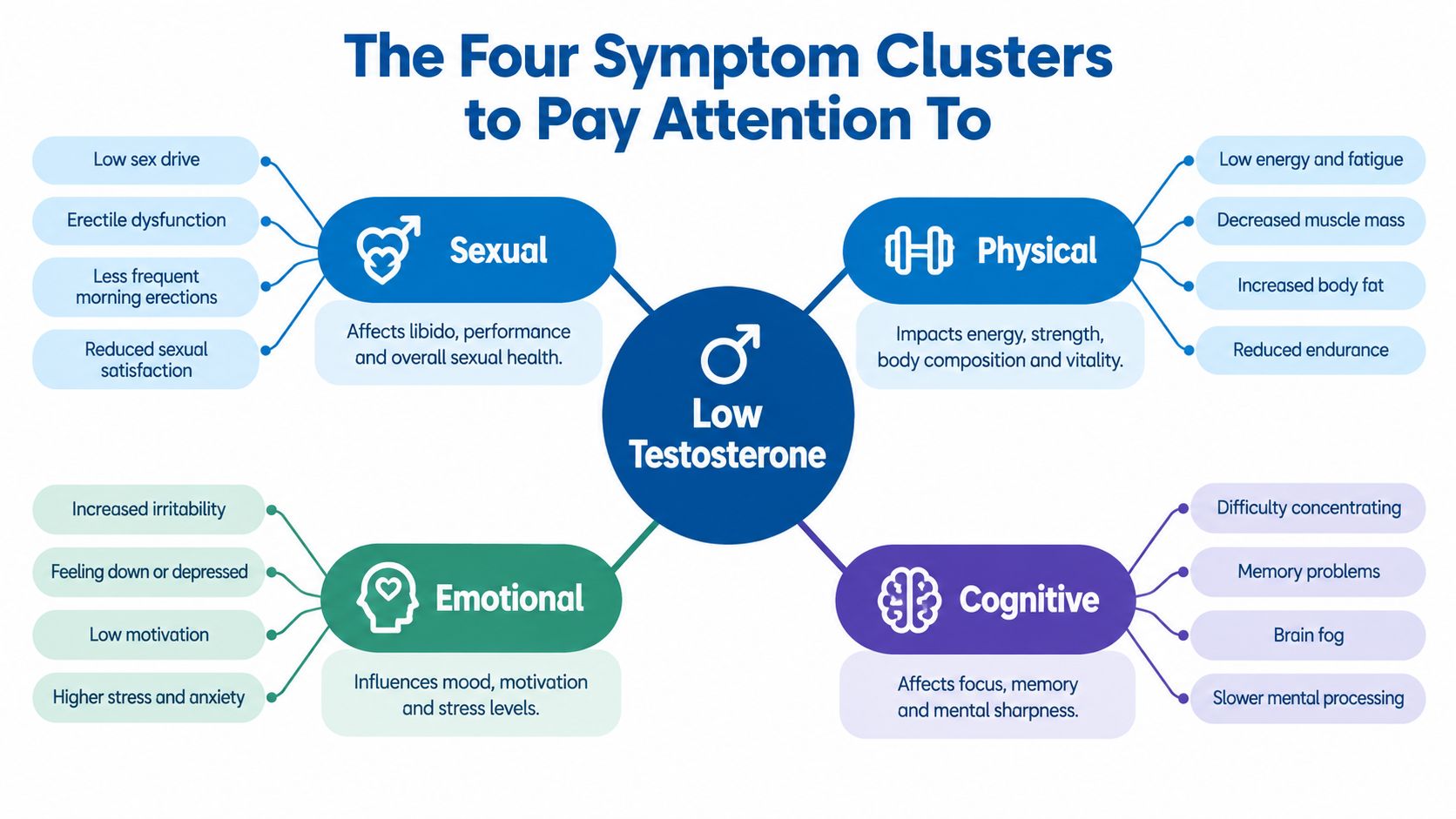
Symptoms often show up gradually. Many men notice a mix of physical, mental, and sexual changes, such as:
- Lower energy: You're functioning, but everything feels like more effort.
- Reduced libido: Interest in sex may drop, sometimes before other symptoms appear.
- Less muscle and more body fat: Especially when your routine hasn't changed much.
- Mood changes: Irritability, flat mood, or less drive.
- Poor recovery: Workouts, stress, and long days seem harder to bounce back from.
If you want a practical overview of these patterns, this guide to symptoms of low testosterone in men is a useful starting point.
What makes it a medical diagnosis
TRT is not a single “best” product. It's a medically supervised treatment for confirmed hypogonadism. Men typically need at least two separate morning blood tests showing low total testosterone, often defined as below 300 ng/dL , plus compatible symptoms before treatment is considered, as summarized by Yale Urology.
Practical rule: Symptoms matter, but symptoms alone aren't enough. Lab confirmation and a clinical evaluation are what keep treatment safe.
Some men like to start by learning what a testosterone panel measures before meeting with a clinician. A plain-language example is Goodlabs' free and total testosterone analysis, which helps explain the difference between total and free testosterone testing.
Why self-treatment can go wrong
Many online “best TRT” lists often miss the mark. They compare products as if every man has the same risks, schedule, and goals. That isn't how hormone care works.
A man who wants future fertility needs a different plan than a man who doesn't. A man with possible sleep apnea or blood count concerns needs closer attention than someone with fewer risk factors. A man who travels constantly may struggle with one treatment style and do well with another.
The right question isn't, “What's the strongest option?” It's, “What's the safest and most appropriate option for me?”
Understanding Your TRT Options An Overview
Testosterone replacement therapy comes in several forms. They all aim to raise testosterone, but they deliver it differently, and that affects convenience, monitoring, and how steady you feel between doses.

The main categories
Most men will hear about these options first:
- Injections: Testosterone is given by shot on a scheduled basis. Some men like the simplicity. Others notice ups and downs depending on the product and timing.
- Gels and creams: Testosterone is applied to the skin daily. This can feel easy and familiar, but daily consistency matters.
- Patches: These deliver testosterone through the skin over time. They're another non-injection option, though some men find skin irritation frustrating.
- Pellets: Small pellets are placed under the skin in the office and release testosterone over a longer period.
- Oral or other newer formats: In some cases, clinicians may discuss additional delivery options depending on the patient and product availability.
If you're new to the topic, this explanation of what hormone replacement therapy is gives broader context for how these treatments fit into medical care.
Why understanding the options matters
TRT use has grown substantially. A nationwide U.S. analysis reported increases from 2018 to 2022 across all adult age groups, including 86% in ages 25 to 34 , 45% in ages 35 to 44 , 35% in ages 45 to 54 , 17% in ages 55 to 64 , and 12% in ages 65 years and older . The same review emphasizes that TRT requires careful surveillance for side effects such as polycythemia, cardiac effects, and sleep apnea, according to US Pharmacist's summary of nationwide patterns in testosterone replacement therapy.
That growth is one reason patients are seeing more online products and more marketing. Some men also look at over-the-counter or nonprescription products while researching. If you're trying to understand how those differ from prescription therapy, a consumer-oriented example is exploring Testogen drops. It can help frame the difference between supplement-style approaches and actual medical testosterone treatment.
A delivery method isn't “best” because it's popular. It's only best if it fits your diagnosis, your health profile, and your ability to follow through safely.
TRT Modalities A Side-by-Side Comparison
A side-by-side comparison helps more than a generic pros-and-cons list. The most useful questions are practical. How often do you take it? How stable are levels likely to feel? How much follow-up does it require? How well does it fit daily life?
Here's a simple comparison of common TRT modalities.
| TRT option | How it's used | Dosing pattern from available guidance | What daily life feels like | Monitoring considerations |
|---|---|---|---|---|
| Topical gel | Applied to the skin | Daily dosing , with serum checks around 14 and 28 to 35 days after start or dose change | Daily routine matters. Good fit for men who prefer to avoid needles | Requires regular lab follow-up and consistent application |
| Long-acting injectable testosterone undecanoate | Given by injection | 750 mg at initiation, 4 weeks later, then every 10 weeks | Less frequent dosing, but injection visits or logistics matter | Follow-up is still needed, and some men may feel timing-related changes |
| Pellets | Implanted under the skin in office | Replaced every 3 to 6 months | Minimal daily upkeep after placement | Requires an in-office procedure and periodic replacement |
| Patches | Applied to the skin | Product-specific use pattern | Needle-free option | Skin tolerance and follow-up matter |
| Other oral or subcutaneous approaches | Varies by product | Product-specific | Can be appealing in selected cases | Best chosen case by case |
The dosing details above are summarized in US Pharmacist's review of testosterone therapy options for men.
Injections for men who want fewer dosing days
Injections often appeal to men who don't want a daily application. In practice, they can be cost-conscious and straightforward to schedule. The tradeoff is that some men report feeling more fluctuation depending on the formulation and timing.
That doesn't mean injections are a bad option. It means they work best when the patient understands the rhythm of treatment and stays engaged with follow-up.
Gels for men who value routine and needle-free treatment
Gels fit naturally into the day for some men. If you already have a consistent morning routine, daily topical treatment may feel simple. For other men, daily dosing becomes a weakness. Missed applications can lead to uneven results and frustration.
Topicals also make lab timing and dose adjustment important early on, since the clinician needs to know whether the dose is landing where it should.
Pellets for men who want long stretches without daily dosing
Pellets are attractive to men who don't want to think about TRT every day. Once placed, they offer a steadier long-duration release. The catch is that they require an office procedure, and some men prefer not to have a procedural step built into their hormone plan.
Clinical reality: Convenience means different things to different men. For one patient, daily gel is easy. For another, not having to remember anything for months is easier.
The less obvious decision factors
Most comparison articles stop at convenience. Patients usually need more than that.
Consider these questions:
- How steady do you want to feel: Some men care most about avoiding peaks and dips.
- How comfortable are you with procedures: A needle, a daily skin application, and a pellet insertion are very different experiences.
- How disciplined is your routine: Daily therapies reward consistency.
- How easy is follow-up for you: Lab work and appointments matter just as much as the prescription.
For men comparing hormone approaches more broadly, this patient guide to bioidentical hormone therapy reviews can help frame how individualized treatment decisions are made.
How to Choose the Right TRT for Your Goals
A man in Mississippi may come in asking for the best testosterone replacement therapy for men, but the safer question is, "Best for what, and best for whom?" The right plan depends on your symptoms, your medical history, your daily routine, and what you want treatment to help you do. TRT works more like tailoring a suit than picking a shirt off a shelf. The label matters less than the fit.

Matching treatment to real life
A treatment plan has to work on an ordinary Tuesday, not just sound good during a clinic visit.
If you travel often, a daily gel may feel easy at first and become annoying after a few missed mornings. If you dislike needles, an injection plan may create stress that makes it harder to stay consistent. If you want fewer treatment tasks at home, pellets may appeal to you, even though they require an office procedure.
Some men care most about steady symptom control. Others care most about flexibility, privacy, or simplicity. There is no single winner for every patient. The better question is which option fits your body and your life well enough that you can stay with it safely.
Side effects also shape the choice. For example, some men ask whether treatment could affect their joints or how they feel physically in the first few months. This evidence-based guide to testosterone and joint pain can help frame that discussion before you start.
The fertility question many guides ignore
This topic changes the plan for some men more than any other factor. Exogenous testosterone can suppress sperm production. If you may want children in the future, that needs to come up early, before a prescription is written.
Cleveland Clinic explains that fertility concerns may make non-testosterone options such as clomiphene or hCG a better first discussion for some men, because those approaches may support the body's own testosterone production, as outlined in Cleveland Clinic's TRT overview.
Say it plainly during your visit. "I may want kids later."
That single sentence can change the whole treatment strategy. Many men assume testosterone will help symptoms without affecting fertility. In practice, those goals can pull in different directions, so the plan has to account for both.
Here is a practical way to sort your priorities:
- You want to avoid needles: Topicals or patches may be easier to stick with.
- You want less frequent dosing: Long-acting injections or pellets may fit better.
- You want to preserve fertility: Non-testosterone approaches may need to come first.
- You are sensitive to ups and downs in mood or energy: A steadier delivery method may matter more than convenience.
- You are still unsure: Start with your main symptoms, your timeline, and how reliably you can complete follow-up.
A short explainer can also help clarify how clinicians talk through these choices in plain language:
Questions worth bringing to your visit
Bring your goals in writing if that helps. Patients often remember symptoms but forget the practical details that make one option a better fit than another.
- Do I want children in the future?
- Can I reliably follow a daily routine?
- Am I comfortable with injections or office procedures?
- How easy is it for me to get labs and attend follow-up visits?
- Which symptoms matter most to me right now?
- Do I care more about flexibility, steadiness, or convenience?
Pause Medical is one example of a Mississippi clinic model that includes in-person provider evaluation and personalized hormone therapy planning. That structure matters because good TRT is not just a prescription. It is an ongoing plan built around the patient, then adjusted as that patient's goals, response, and health needs become clearer.
What to Expect When You Start Testosterone Therapy
Starting treatment usually feels less dramatic than patients expect. There isn't a magic first week where everything suddenly changes. Improvement tends to happen in stages, and the early period is often about dose adjustment, symptom tracking, and safety monitoring.
The first phase is calibration
In men with confirmed hypogonadism, TRT is most consistently effective when baseline testosterone is below 300 ng/dL , and the strongest multi-system benefits are seen when dosing is titrated to maintain mid-normal physiologic levels , typically around 500 to 800 ng/dL , according to this evidence review in PubMed Central.
That target matters because more isn't automatically better. The goal is symptom relief with a physiologic level, not chasing a high number.
What improvements men often notice first
Sex drive and sexual symptoms often improve earlier than body composition changes. Energy and vitality may improve over time, but they aren't isolated to testosterone alone. Sleep, nutrition, stress, weight, and exercise still matter.
Some men get discouraged because they expected every symptom to lift at once. That's rarely how treatment works.
- Early focus: Are symptoms starting to move in the right direction?
- Middle focus: Is the dose landing in a good range without side effects?
- Longer-term focus: Are benefits holding steady, and is monitoring staying on track?
Why follow-up isn't optional
TRT requires ongoing surveillance. The prescription is only one part of care. The other part is checking that the plan is working and staying safe.
That's especially important if you develop side effects, have shifts in energy that don't feel right, or have concerns like aches, swelling, or other new symptoms. For related patient education, this evidence-based guide on whether testosterone can cause joint pain shows the kind of follow-up questions that often come up once therapy begins.
The first version of a TRT plan is rarely the final version. Good treatment usually involves adjustment.
Your Partner in Health The Pause Medical Approach
A lot of men come in after seeing ads that make TRT sound simple. You answer a few questions, pick a product, and expect your symptoms to improve. Real life is usually more complicated. Low energy, lower sex drive, weight gain, poor sleep, stress, depression, and medication effects can overlap so much that guessing is risky.
The safest way to approach testosterone therapy is with a real medical evaluation. Good care starts by asking a basic question. Is testosterone the actual problem, or is it one piece of a bigger health picture?

What personalized care should include
At Pause Medical, the goal is not to steer every man toward the same prescription. The goal is to match treatment to the person in front of us. TRT works like a custom-made suit. The right plan depends on your measurements, your routine, and what you need it to do.
That starts with a full history, symptom review, and careful lab interpretation. It also means asking about details many clinics skip, such as future fertility, sleep quality, weight changes, heart and vascular history, and whether you can realistically stick with injections, gels, or regular follow-up.
A thoughtful care process usually includes:
- Initial consultation: Review symptoms, medical history, medications, and goals.
- Appropriate testing: Confirm whether testosterone is low and whether another issue may be contributing.
- Treatment matching: Choose an option that fits your health profile, fertility goals, and daily life.
- Ongoing follow-up: Adjust the plan if needed and keep an eye on safety over time.
Why continuity matters in Mississippi
TRT is rarely a good fit for assembly-line medicine. Men do better when the same clinical team knows their starting symptoms, lab pattern, and response to treatment over time. That is especially helpful in Mississippi, where access, travel time, and follow-up logistics can shape which plan is realistic.
Continuity also helps with decisions that many online TRT guides barely mention. A man who wants to preserve fertility may need a different strategy from a man who has completed his family. A man with sleep apnea concerns, blood pressure issues, or trouble remembering weekly doses may also need a different plan. “Best” only makes sense after those details are on the table.
If you are still deciding whether hormone treatment belongs in your overall care plan, this guide on whether HRT is right for you can help you sort through that question.
A grounded way to move forward
The best testosterone replacement therapy for men is a personalized plan. It should fit confirmed hypogonadism, respect your risks, support your goals, and be realistic enough to follow safely.
If something feels off, get checked before you commit to treatment. A careful evaluation can show whether testosterone is the issue, whether another diagnosis deserves attention first, and which option makes the most medical sense for you.
Frequently Asked Questions About TRT
Does insurance cover TRT in Mississippi
Coverage varies by plan, by diagnosis requirements, and by the formulation prescribed. Many insurers want documentation of symptoms and confirming lab work before covering treatment. You should also ask whether they cover the medication only, or the visits and monitoring as well.
Is TRT a lifelong treatment
Not always, but it's not something to start casually. The answer depends on why testosterone is low, whether the cause is reversible, how you respond, and whether you still benefit over time. Some men stay on treatment long term. Others need a different strategy after reassessment.
Can I try “natural” testosterone boosters instead
You can discuss supplements, weight loss, sleep improvement, resistance training, and alcohol reduction with your clinician. Those steps can support hormone health, especially when lifestyle factors are contributing. But they aren't the same as medically supervised TRT for confirmed hypogonadism.
What if I'm worried about side effects
That's a good reason to have a full visit, not a reason to avoid asking. Side effect risk is one of the main reasons treatment should be personalized. Your clinician should review your medical history, explain what monitoring is needed, and discuss whether a non-testosterone option makes more sense in your situation.
If you're in Mississippi and want a careful, evidence-based evaluation for low testosterone symptoms, Pause Medical offers in-person consultations focused on personalized hormone care, safety monitoring, and realistic treatment planning. This article is for education only and isn't a substitute for medical advice, diagnosis, or treatment. Scheduling a consultation is the best next step if you want to know whether testosterone therapy is appropriate for you.