Testosterone Therapy Estrogen Blocker: A Patient's Guide
You started testosterone therapy because you wanted to feel better. Maybe you had more energy at first, a better mood, or a return of sex drive. Then something changed. You felt puffy, irritable, emotionally off, or your libido dipped again. You searched online and ran into the same phrase over and over: estrogen blocker .
That's where a lot of men get stuck.
The internet often makes testosterone therapy estrogen blocker discussions sound simple. Estradiol goes up, you block it, problem solved. Real hormone care usually isn't that clean. Sometimes estrogen is part of the problem. Sometimes it isn't. Sometimes the medication meant to help makes symptoms worse.
If you're trying to understand whether an estrogen blocker belongs in your TRT plan, the most useful place to start is with good medical reasoning, not fear. If you're new to treatment, this guide to home testosterone therapy in Mississippi can help you understand how a monitored plan is supposed to work from the beginning.
The TRT Journey and the Estrogen Question
A common story goes like this. A man starts TRT, notices early improvement, then begins to worry when new symptoms show up. He sees a slightly higher estradiol result on labs, reads a few forum posts, and assumes high estrogen must be the reason for everything.
That assumption can send people in the wrong direction.
Some symptoms people blame on “too much estrogen” can also happen when estrogen is pushed too low. Other times, the issue has more to do with testosterone dose, injection timing, or how the body is converting testosterone through aromatase. That's why an estrogen blocker shouldn't be treated like a routine add-on.
Why this gets confusing fast
Men usually hear two messages online that conflict with each other:
- Message one: estrogen is bad, so lower it.
- Message two: estrogen is necessary, so don't touch it.
Both are incomplete.
The primary question isn't whether estrogen exists during testosterone therapy. It should. The better question is whether a patient has persistent symptoms plus lab findings that make intervention reasonable. That's very different from reacting to one number in isolation.
Practical rule: On TRT, the goal usually isn't to erase estrogen. It's to keep hormones working in balance with how you actually feel.
A careful clinician looks at the full picture. Symptoms. Lab trends. Dose. Timing. Body composition. Medication history. Goals. Fertility concerns. Side effects. Without that context, “high estrogen” becomes a catch-all label that can hide the underlying issue.
Why Men Need Estrogen The Unsung Hero of Male Health
One of the biggest myths in men's hormone care is that estrogen is a female hormone that men only tolerate by accident. That isn't how male physiology works.
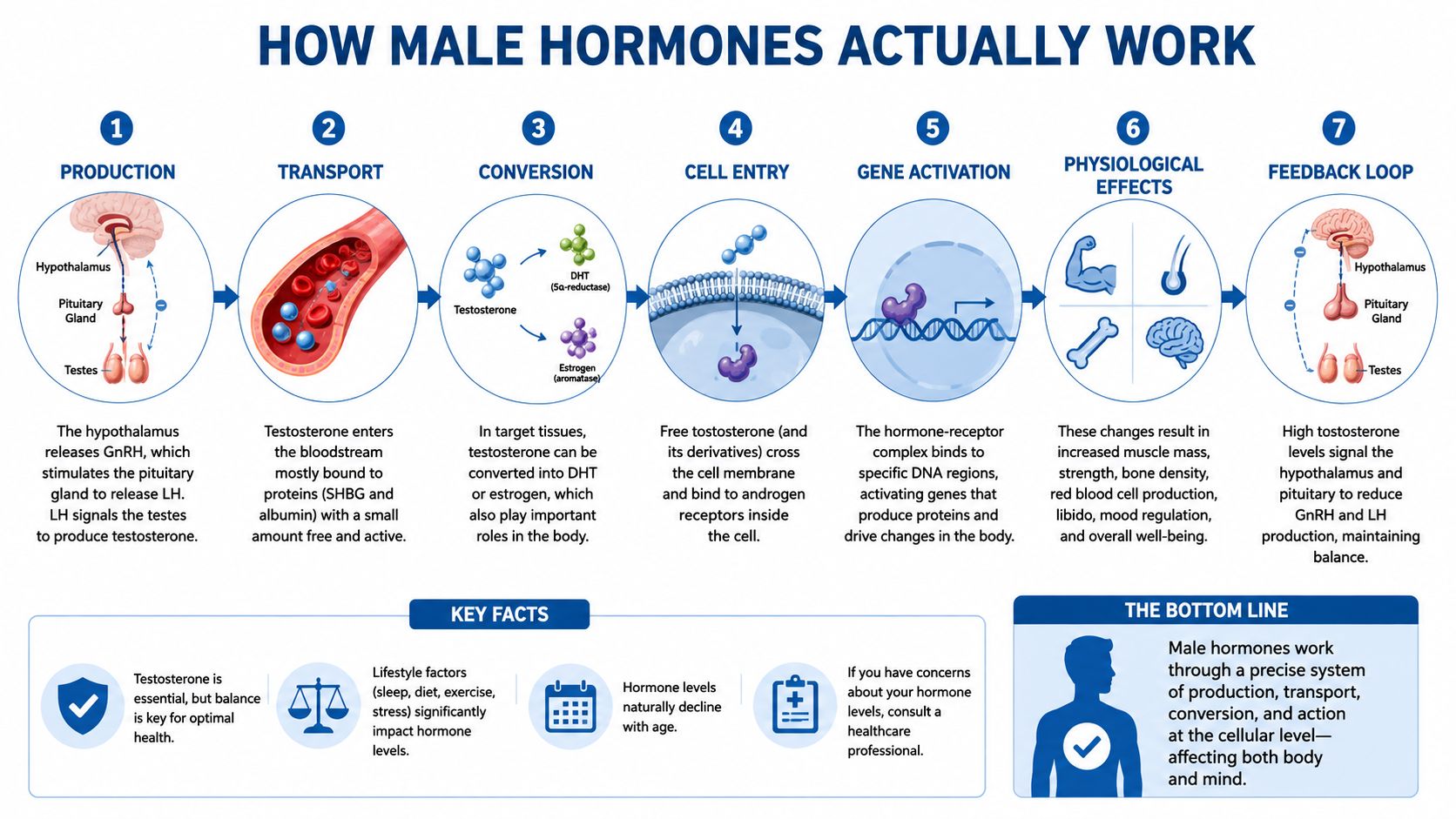
Men make estrogen naturally. Your body converts part of your testosterone into estrogen through an enzyme called aromatase . That process is normal. It isn't a failure of TRT. It's part of how the endocrine system maintains balance.

What estrogen does in male health
Estrogen plays an important role in several areas men care greatly about:
- Sexual function: It contributes to libido and erectile function.
- Mood: It appears to matter for emotional steadiness and mental well-being.
- Hormone balance: The body naturally converts testosterone to estrogen in a physiological relationship, and that balance matters.
- Whole-body health: Suppressing estrogen too aggressively can create problems even when testosterone looks “good” on paper.
Historical clinical trials have shown that estrogen is critical for male sexual health, libido, and erectile function. Men on TRT who also took an aromatase inhibitor to suppress estrogen had worse erections, reduced libido, and poorer mental health scores compared with men on TRT alone. Evidence also suggests that even slightly decreased estrogen in men is associated with sexual dysfunction. A patient-friendly discussion of hormone safety is also useful when thinking through these tradeoffs, including this article on whether bioidentical hormone therapy is safe.
Why a lab flag doesn't tell the whole story
Patients often misunderstand this point. A lab may mark estradiol as high, but that doesn't automatically mean it is harmful in your specific case. Some experts argue estradiol should be interpreted in relation to testosterone, not only by a fixed lab cutoff. That idea matters because men on TRT are not in the same hormonal state as men who are not receiving treatment.
Estrogen on TRT is not just a side effect. In many men, it's part of the benefit.
If a man feels well, has stable sexual function, and no meaningful symptoms of estrogen excess, an isolated lab value may not justify an estrogen blocker. That's why good hormone care avoids the reflex to medicate every flagged result.
AIs vs SERMs How Estrogen Blockers Work
“Estrogen blocker” sounds like one medication category. It's not. Two different drug approaches often get grouped under that label, and they work in different ways.

Aromatase inhibitors lower production
Aromatase inhibitors , or AIs , act like shutting down part of the factory that makes estrogen from testosterone. Drugs such as anastrozole reduce conversion through the aromatase enzyme, which can lower circulating estradiol.
In men on testosterone therapy with high estradiol, a 2021 clinical study on anastrozole during testosterone therapy reported that anastrozole 0.5 mg three times weekly significantly reduced estradiol while maintaining testosterone levels, and 76% of treated men normalized estradiol. That finding tells us AIs can change labs effectively in the right context.
A simple summary:
| Medication type | Main action | Typical TRT-related use |
|---|---|---|
| Aromatase inhibitor | Lowers estrogen production | Considered when estradiol is elevated and symptoms support treatment |
| SERM | Changes estrogen signaling at receptors | More often discussed for selected tissue-specific issues |
If your treatment plan involves medication changes beyond testosterone itself, this kind of decision usually falls under structured medication management, not a one-size-fits-all protocol.
SERMs block or modify the signal
Selective estrogen receptor modulators , or SERMs , work more like placing guards at specific doors. Estrogen may still be present, but the SERM changes how certain tissues respond to it. A drug like tamoxifen doesn't turn estrogen off everywhere.
That distinction matters. An AI is aimed at production . A SERM is aimed at receptor behavior in certain tissues.
Patients often don't need to memorize the pharmacology. They do need to ask the right question: “Is my doctor trying to lower estrogen across my body, or manage how a specific tissue responds to estrogen?” Those are not the same treatment goal.
The Great Debate When Are Blockers Really Needed
A common TRT scenario goes like this. A man feels better after starting testosterone, then sees an estradiol value rise on a lab report and panics because the internet says he now needs an estrogen blocker. In clinic, that is often the moment where careful judgment matters most.

The better question is not, “Is estradiol above some magic number?” The better question is, “What problem are we trying to solve, and does estrogen explain it?”
That distinction matters because there is no universally accepted estradiol cutoff that automatically calls for a blocker during TRT. In practice, clinicians often have to weigh symptoms, exam findings, dose, injection schedule, and lab context together. A lab value by itself can start a conversation, but it should not end one.
Symptoms matter, but context matters too
A blocker is usually considered only when two things line up:
- Symptoms or physical changes that fit estrogen excess
- Lab results that support that concern
The clearest examples are usually more specific than “I feel off.” Breast tenderness, nipple sensitivity, or true gynecomastia raise more concern than a vague dip in libido. Notice how different that is from the online habit of blaming almost any TRT problem on estrogen.
Here is where many patients get understandably confused. Low libido, erection changes, and mood shifts can happen with high estradiol, but they can also happen when estradiol is pushed too low. Estrogen in men works less like an enemy and more like a thermostat. Too high can cause trouble. Too low can also make you feel unwell.
A simple comparison helps:
| Symptom pattern | Can happen with higher estradiol | Can happen with lower estradiol |
|---|---|---|
| Libido changes | Yes | Yes |
| Erectile issues | Sometimes | Yes |
| Mood changes | Sometimes | Yes |
| Breast tenderness | More suggestive | Less suggestive |
| Joint discomfort | Less typical | More suggestive |
This is why symptom-first care does not mean guessing. It means matching the story, the exam, and the labs before adding another medication.
Another useful question is whether the TRT plan itself is driving the issue. A dose that is too high, or a schedule that creates bigger hormone swings, may explain the problem better than a standing estrogen blocker would. For a broader view of how clinicians individualize these decisions, this hormone replacement therapy patient guide can help.
A short explainer can help make this debate easier to understand:
The right question often isn't “How do I block estrogen?” It's “What problem am I actually treating?”
How often are blockers used in practice
They are not a routine part of TRT for every man.
One published cohort of men receiving testosterone therapy found that only a small minority were treated with an aromatase inhibitor, and only a subset had estradiol levels high enough to prompt that step after clinical review. As noted earlier, treatment in that study lowered estradiol effectively in selected patients while maintaining testosterone. The point is not that blockers never belong on TRT. The point is that they belong in selected cases, not as an automatic add-on.
That is the center of the debate. Good care focuses on why a blocker is being considered, when the full clinical picture supports it, and when doing less is safer.
Risks Monitoring and Smarter Alternatives
Adding a second hormone-related medication sounds straightforward until symptoms get more complicated after the prescription starts. A man takes an AI because he feels “estrogenic,” then develops lower libido, poorer erections, flat mood, or nagging joint discomfort. He assumes his estrogen is still too high, but the blocker may have pushed him too low.
That mismatch is common enough to deserve careful attention.

When symptoms and labs don't line up
A common clinical problem on TRT is that symptoms and lab values don't always match. Mood changes or sexual dysfunction may relate to testosterone dose, injection timing, or overly suppressed estradiol from a blocker, not “high estrogen” alone, as discussed in this clinical discussion of mismatched symptoms and lab values on TRT.
That's why safer care usually starts with re-evaluating the TRT plan itself.
Smarter moves before adding a blocker
Before a clinician reaches for an estrogen blocker, these questions often make more sense:
- Could the testosterone dose be too aggressive? More testosterone can create more substrate for aromatization.
- Would smaller or more frequent dosing help? Some men do better with steadier levels.
- Is body composition contributing? Fat tissue is an important site of aromatase activity.
- Are symptoms being blamed on the wrong hormone? Sexual symptoms can come from low estradiol as well as high estradiol.
- Do recent labs match how the patient feels? Trend interpretation matters more than panic over a single result.
For patients tracking hormone patterns over time, a structured wellness lab panel can help create a more useful baseline than chasing isolated symptoms.
Monitoring should be deliberate
If an estrogen blocker is used, follow-up matters. The goal is not just to watch estradiol move. The goal is to see whether the patient feels better without creating a new problem.
Monitoring usually includes:
- Symptoms over time: libido, erections, mood, breast symptoms, fluid retention, and joint comfort
- Hormone labs: interpreted in context, not by one isolated flag
- Protocol review: dose, schedule, delivery method, and whether another medication is still necessary
Clinical mindset: If a blocker improves the lab but worsens the patient, the plan needs to be reconsidered.
A medication can be technically effective and still be the wrong fit.
That is the central caution in testosterone therapy estrogen blocker decisions. Correcting a number is not the same as restoring health. A thoughtful plan usually tries the least disruptive fix first, then escalates only when the full picture supports it.
Your Personalized Path to Hormone Balance in Mississippi
A common Mississippi TRT visit goes like this. A man sees an estradiol result marked high, searches online that night, and by morning he is convinced he needs an estrogen blocker. The problem is that a flagged lab value and a true estrogen problem are not always the same thing.
A careful plan starts with the why and the when. Why is estradiol being checked in the first place? When did symptoms begin, and do they fit estrogen excess, or could they reflect the testosterone dose, injection timing, body fat changes, sleep problems, or even estradiol that is too low? Estrogen management works best when it follows the patient's story, not internet rules or fear about a number on a lab report.
That is why routine blocker use is often the wrong starting point. In many men, the first adjustment is simpler. The testosterone dose may need to change. The dosing schedule may need to be spread out. The delivery method may need reconsideration. Sometimes the best next step is watchful follow-up, because a mild rise in estradiol can be a normal part of treatment and may not need medication at all.
Good care also means remembering what the goal is. The goal is not the lowest estradiol possible. The goal is feeling and functioning better without creating a new problem. Estrogen in men works like oil in an engine. Too much can create trouble, but too little causes its own kind of wear, often showing up as joint discomfort, mood changes, lower libido, or poorer sexual function.
If you live in Mississippi and you are on TRT, thinking about TRT, or trying to sort out symptoms that may or may not be related to estrogen, ask for a clinician who reviews the full picture. That includes your symptoms, your lab trends, your testosterone protocol, and your health history. A routine add-on prescription may sound efficient, but personalized care is usually safer and more accurate.
This article is for education only and is not a diagnosis or personal medical advice. Decisions about testosterone therapy, aromatase inhibitors, SERMs, and lab interpretation should be made with a licensed clinician who knows your history and follows your response over time.
If you want expert help sorting through TRT symptoms, lab trends, and whether an estrogen blocker is appropriate, schedule a consultation with Pause Medical. Their Mississippi team offers personalized hormone care with in-person support in Oxford, Meridian, Tupelo, Flowood-Jackson, and Starkville so you can stop guessing and build a treatment plan that fits your body.